
What Counts as Entity Data for a Solo Clinic
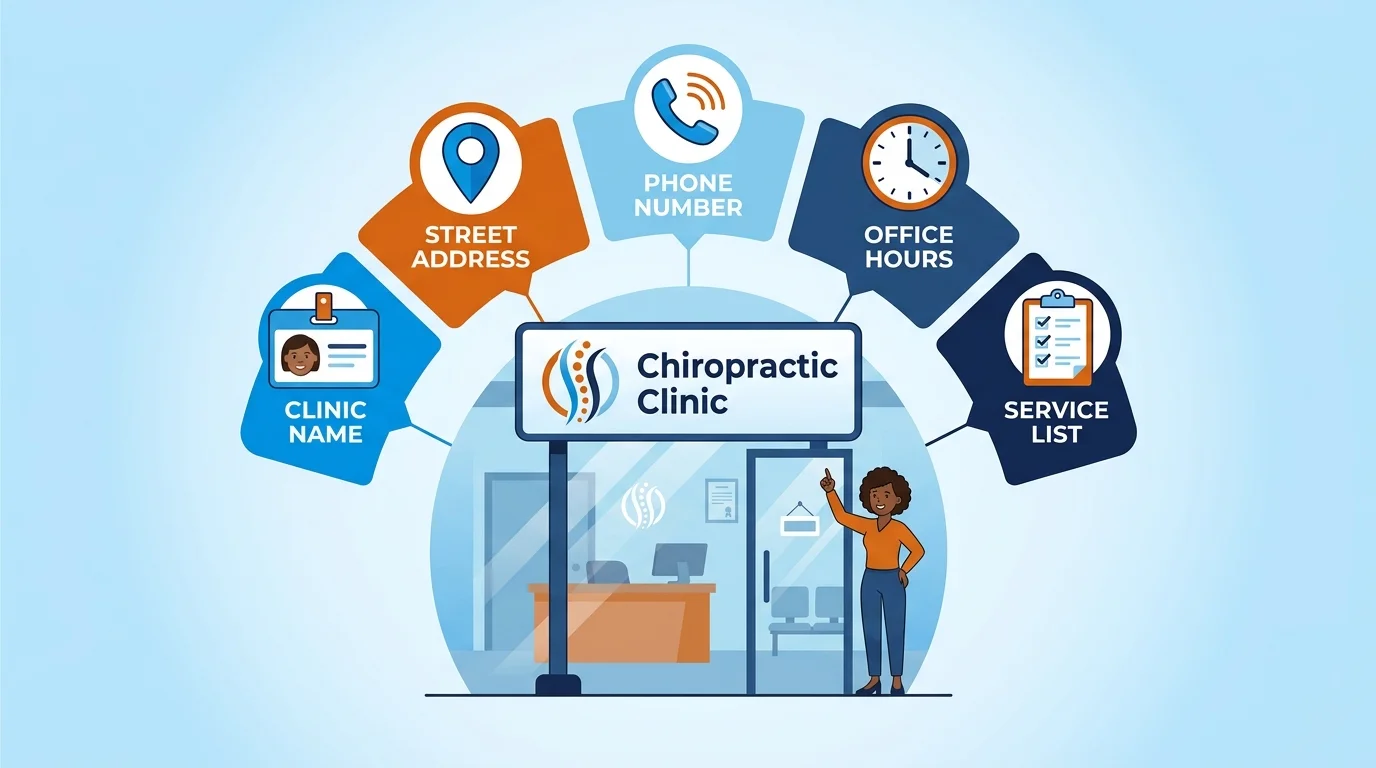
Entity data is a solo clinic's digital identity: its name, address, phone number, hours and services. That's the whole list (kinda boring, right?). Picture it as one patient chart, copied into a dozen filing cabinets by a dozen different clerks.
One wrong digit in any cabinet and the whole record stops being trustworthy. Here's the thing: who keeps that chart matters more than it looks, which is why choosing between a boutique founder-led firm and a large agency decides whether those fields stay locked or slowly drift apart.
Why Bigger Agency Means More Resources Doesn't Hold Up for Clinics
Bigger gets treated as safer. The thinking goes like this: more staff and more software must mean fewer mistakes on a clinic's listed name, address and phone number.
Let's keep it real: that assumption falls apart. The same bulk systems that scrambled a clinic's address back in the old-school search work days scramble it now that AI visibility is the game.
The Agency Scale Problem
Scale changes what a team gets paid to care about. A roster of hundreds of accounts rewards speed and template reuse, not checking every field on one storefront.
Entity resolution, the task of confirming which business a given set of attributes actually belongs to, has occupied researchers across data science for decades. Pujara & Getoor (2016) document that entity resolution, the problem of identifying the underlying entity behind references in data, has been studied for many decades, and knowledge graph entity resolution may face three major problems: intra-KG reference ambiguity, inter-KG reference ambiguity, and ambiguity when extending knowledge graphs with new facts. A single clinic needs that resolution to land on one record, every time.
How One Wrong Field Multiplies Across the Web
One abbreviated suite number does not stay in one place. Directories scrape each other, so a single error gets copied into new listings faster than anyone corrects the original.
This is the filing cabinet again. A clerk at a large agency mistypes one field, and a dozen cabinets now hold a dozen slightly different charts. Deciding who actually owns that correction, explored in the myth of more resources at larger agencies, has more bearing on accuracy than headcount ever did.
Why Standardized Agency Workflows Break Down on Single-Location Data
Standardized workflows bet that more touchpoints across more directories buy more visibility. That bet dies the moment an answer engine swaps a page of listings for one cited source.
A templated process optimizes for volume: more profiles claimed, more citations pushed, more directories touched. It was never built to confirm that one suite number, one phone line, matches everywhere it appears. The filing cabinet does not need a thirteenth copy. It needs the first twelve to agree, and fixing clinic entity data problems discovered after setup depends on that agreement existing before anything else gets layered on top.
| Dataset or Comparison | What Was Measured | Result |
|---|---|---|
| St. Louis Business Database Comparison | Agreement between two commercial business databases on the same St. Louis businesses (Hoehner and Schootman, 2010) | About a third of businesses matched |
| Advan, Data Axle, and FourSquare | Categorization of third places in one dementia-research study (Finlay et al., 2026) | Moderate accuracy, ranging from 70% to 97% |
| NETS Dataset | Categorization accuracy relative to the other tested aggregators | Weakest categorization performance among the datasets compared |
What the Categorization and Matching Numbers Actually Show
One study found low overlap between two commercial business databases. A 2010 study by Hoehner and Schootman (Washington University School of Medicine) found two commercial business databases agreed on only about a third of St. Louis businesses. That gap was measured in one metro area, but it illustrates a structural limitation in how bulk data sources handle local identity.
Categorization accuracy tells a similar story. In a dementia-research study of third places, Finlay et al. (University of Colorado Boulder, 2026) found that the data aggregators Advan, Data Axle, and FourSquare performed moderately well for categorization, at 70% to 97%, while NETS performed the worst.
What Happens When Your Clinic Entity Data Is Wrong Later
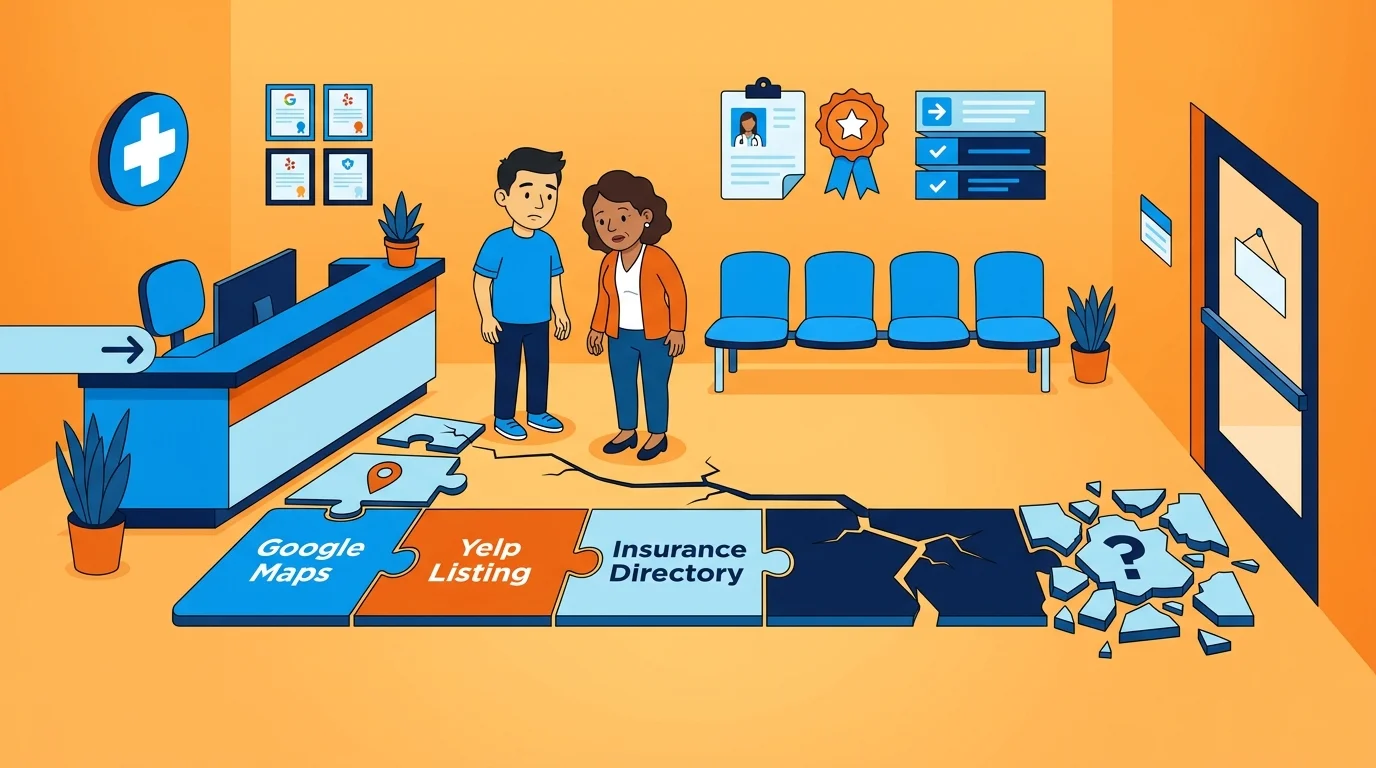
Most clinic owners figure the info listed about their practice is right. They never find out that an error slipped into some directory months back, quietly copied itself into fresh citations, and has been sitting there ever since.
A wrong phone number used to just cost one missed call. Now it can tell a language model the clinic is not a reliable source, and that model may stop citing it. Most agencies are selling a game that ended: the old scoreboard of listings and rankings never measured whether a model trusts the record enough to repeat it. Fixing that trust gap is the work behind AI Authority System services.
How Structured Data Signals a Clinic's Entity to AI Systems
Structured data gives a clinic a way to state its own facts directly, instead of leaving identity resolution to whichever directory gets scraped next.
Why Local Business Markup Only Works When It Matches Reality
Local Business markup has specific fields, and each one only helps if it matches what a patient actually finds at the front desk.
Google's documentation says structured data for local businesses may be used to tell Google about business hours, departments, and reviews.
So hours, departments and reviews all have to agree with the other eleven copies in the filing cabinet, not just the one a developer touched last.
Google asks that structured data match the visible page. Markup describing a service the clinic no longer offers, or hours that drifted after a schedule change, does not.
How AI Overviews and Generative Answers Select a Local Business to Cite
Google's documentation says that, where appropriate, Google's generative AI responses can include product listings, product information, and information about local businesses.
Auditing and Correcting Entity Data Across the Fields That Matter
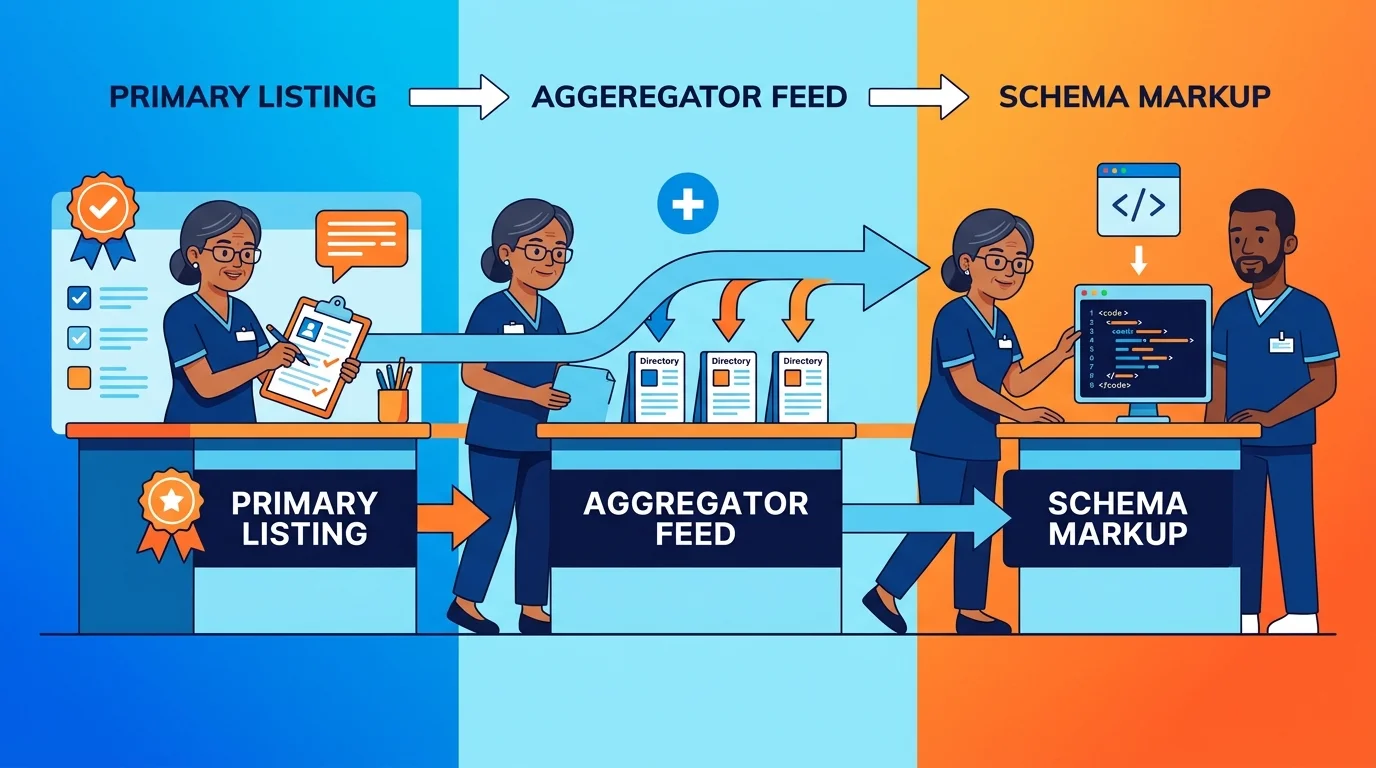
Fixing the filing cabinet starts with naming which cabinet is wrong. A practice's name, address, phone number, hours, and services only function as a usable identity once every copy of that chart agrees, so the audit has to check the primary listing, the aggregators feeding it, and the markup describing it as three separate checkpoints rather than one.
| Correction Step | Primary Target | Why Order Matters |
|---|---|---|
| Confirm the primary profile | Name, address, phone number, hours, and services as the clinic itself states them | This is the one record every other source should be copying, so it has to be correct before anything downstream gets checked |
| Trace the aggregator feed | The directories and data providers that scrape the primary profile and redistribute it | An error here multiplies instead of staying contained, so tracing it early stops a dozen cabinets from inheriting one clerk's mistake |
| Verify the markup against both | Schema fields describing hours, departments, and services on the practice's own site | Markup that disagrees with the primary profile or the aggregator feed reads as a conflicting signal rather than a confirming one |
| Re-check after any operational change | Any field tied to a schedule, staffing, or service update | A corrected chart drifts again the moment a new change isn't pushed to every copy, which is why this step repeats rather than closes |
Sequencing the Fix Across Primary Listings, Aggregators, and Markup
Visibility used to reward whichever listing got claimed first. That scoreboard stopped mattering once answer engines started citing the single record they trust most, which means the audit has to work in order: confirm the primary profile, trace what the aggregators copied from it, then verify the markup matches both before anything new gets published.
Frequently Asked Questions
The filing cabinet framing raises mechanical questions that deserve direct answers. Here are the ones that come up most often once the scope of the problem is clear.
What's the fastest way to check if my solo clinic's online data is incorrect?
Search the practice's name and address together and compare every result against the primary listing. Any mismatch in suite number, phone digit, or hours is a sign the cabinets have already drifted apart.
How does incorrect entity data for my clinic affect patient trust?
A patient who calls a wrong number or arrives at closed doors stops trusting the listing itself. That same inconsistency is what tells an answer engine the record is not reliable enough to cite.
Why don't the automated systems at large agencies catch simple data errors for clinics?
Templated workflows are built to push volume across hundreds of accounts, not to verify one field on one storefront. Speed and reuse are the metric; field-by-field accuracy on a single clinic was never the target.
Can one wrong address on a minor directory really impact my clinic's visibility in AI search answers?
Yes, because directories scrape each other, and one wrong entry on a minor site gets copied into larger aggregators. An answer engine pulling from that chain inherits the error without knowing which cabinet started it.
How long does it typically take to correct widespread entity data errors for a single clinic location?
Correction depends on how many cabinets copied the original error, not on the size of the agency doing the fixing. Tracing the primary listing, the aggregators, and the markup as separate checkpoints is what determines the timeline, not a fixed schedule.
What is entity resolution and why does it matter for a local business listing?
Entity resolution is the task of confirming that scattered references to a business all point to the same underlying record. For a local listing, that means a name, address, and phone number only count as trustworthy once every copy agrees on all three.
The Bottom Line
The filing cabinet problem was never about effort. It is about what a system is built to optimize for, and bulk workflows are built for volume, not for one clinic's twelve copies agreeing with each other.
Accurate entity data gives your practice something scale can't manufacture: a record clean enough for an answer engine to cite without blinking. A templated process was never built to protect that kind of trust, no matter how many listings it touches.
A single accurate chart beats a dozen conflicting ones every time. If a practice's name, address, hours, and services need the kind of field-by-field scrutiny this article describes, schedule an AI Visibility Check to see where the cabinets disagree.