
What 'More Resources' Actually Means When an Agency Pitches a Clinic
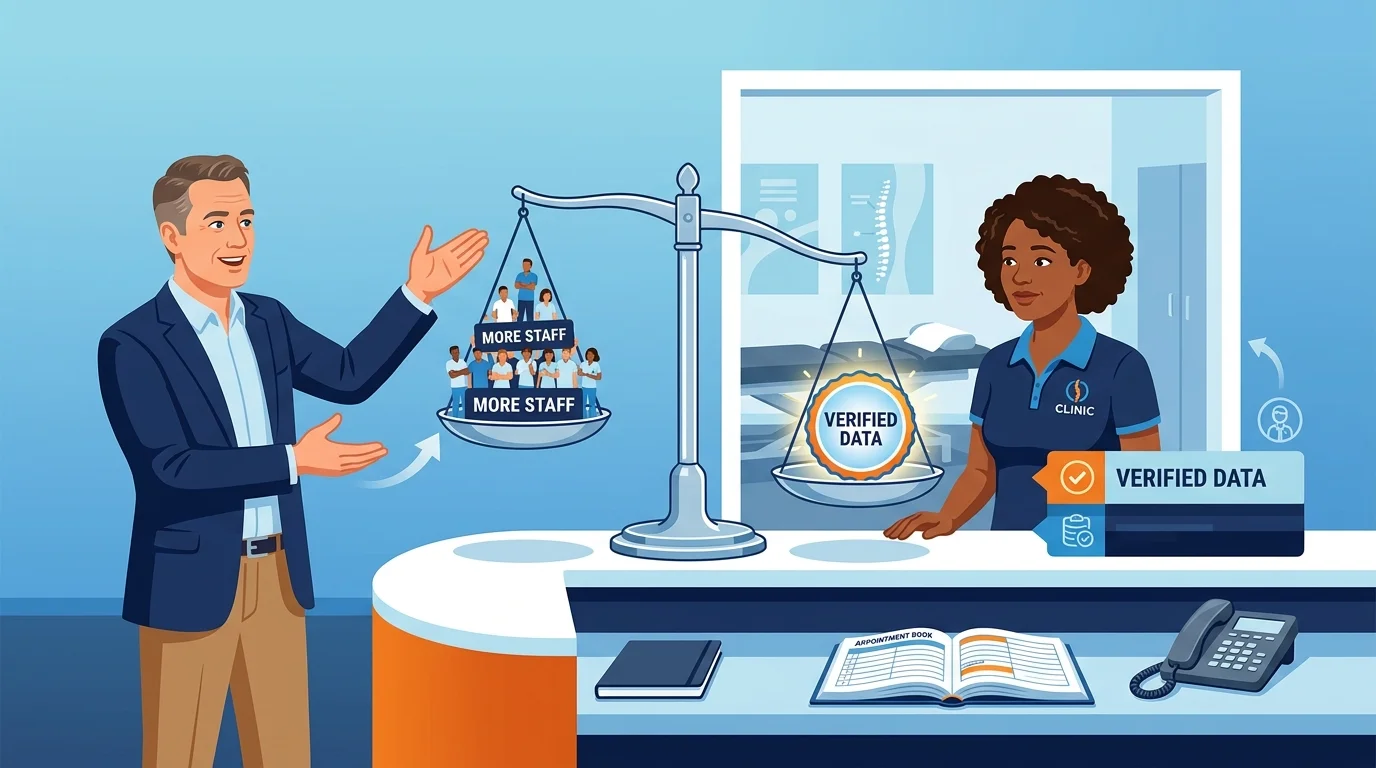
The conventional wisdom in marketing has always been that bigger agencies offer more resources, implying better results. That assumption treats headcount and office footprint as a proxy for quality, with more content and more output standing in for more visibility.
That math broke the day answer engines started reading entity data instead of counting pages. For a local clinic, resources don't mean a global office network (nice lobby, though). They mean obsessive attention to the exact data points AI engines use to recommend local providers, and a clinic owner's guide to boutique and agency tradeoffs makes that distinction concrete before we dig into where the big-agency model fails.
Why the Account-Ratio Math Breaks Down at Scale
Here's the thing: an agency's headcount doesn't buy any one clinic a fixed slice of attention. As the roster of clinic accounts grows, that capacity gets split across more files. It doesn't get poured deeper into any single one.
And that math breaks fastest for a single-location practice buried in a book of dozens of accounts. Most agencies are still pitching a volume game that ended the day answer engines started weighing verified entity data over sheer output.
| Factor | Large Full-Service Agency | Boutique Specialist Firm |
|---|---|---|
| Account Structure | Clinic accounts sit within a large roster, with attention divided across many files by standardized process | Clinic accounts make up a defined, limited roster, with attention structured around each file individually |
| Staffing Model | Specialist work is frequently outsourced or routed through multiple internal layers before reaching the account | Specialist work is handled directly, with fewer handoffs between the client and the person doing the work |
| Data Verification Approach | Entity data corrections follow a standardized workflow applied uniformly across many accounts | Entity data corrections are treated as ongoing, location-specific verification work tied to one practice |
| Response to Correction Requests | Correction requests pass through tiered support before reaching the specialist who can act on them | Correction requests reach the person managing the account without added internal layers |
Why Full-Service Agencies Keep Outsourcing the Work They Pitch
Full-service pitches promise a broad bench of specialists working a clinic's account. In practice, that breadth is frequently assembled through outsourcing rather than in-house staffing. A 2006 study of London advertising agencies by Pratt (LSE) noted agencies had outsourced functions to specialists.
How agency processes fail single-practice entity details traces exactly where the handoffs break down.
Why the Standardized Playbook Fails a Single-Location Practice
A standardized playbook exists because it scales across hundreds of accounts with zero customization. Large agencies often run on legacy models built for scale and efficiency. That can put junior staff in charge of complex local accounts, armed with one-size-fits-all templates built for volume instead of one clinic's specific data profile.
So that staffing structure isn't some side detail. It's the mechanism behind the failure, because a template stamped across dozens of clinics can't account for the service lines, credentials, or location details that make one practice different from the next.
How the One-Size-Fits-All Template Mismanages Local Entity Data
Look, the template treats every clinic's entity data like it's interchangeable.
A single-location practice needs its name, address, phone and services checked against one set of facts. A template built for a client roster can't do that. Look at comparing attention and accountability across firm types and you'll see the mismatch play out when accountability gets measured by firm structure instead of by account.
How the Junior-Staffing Model Breaks Down Under a Real Local Account
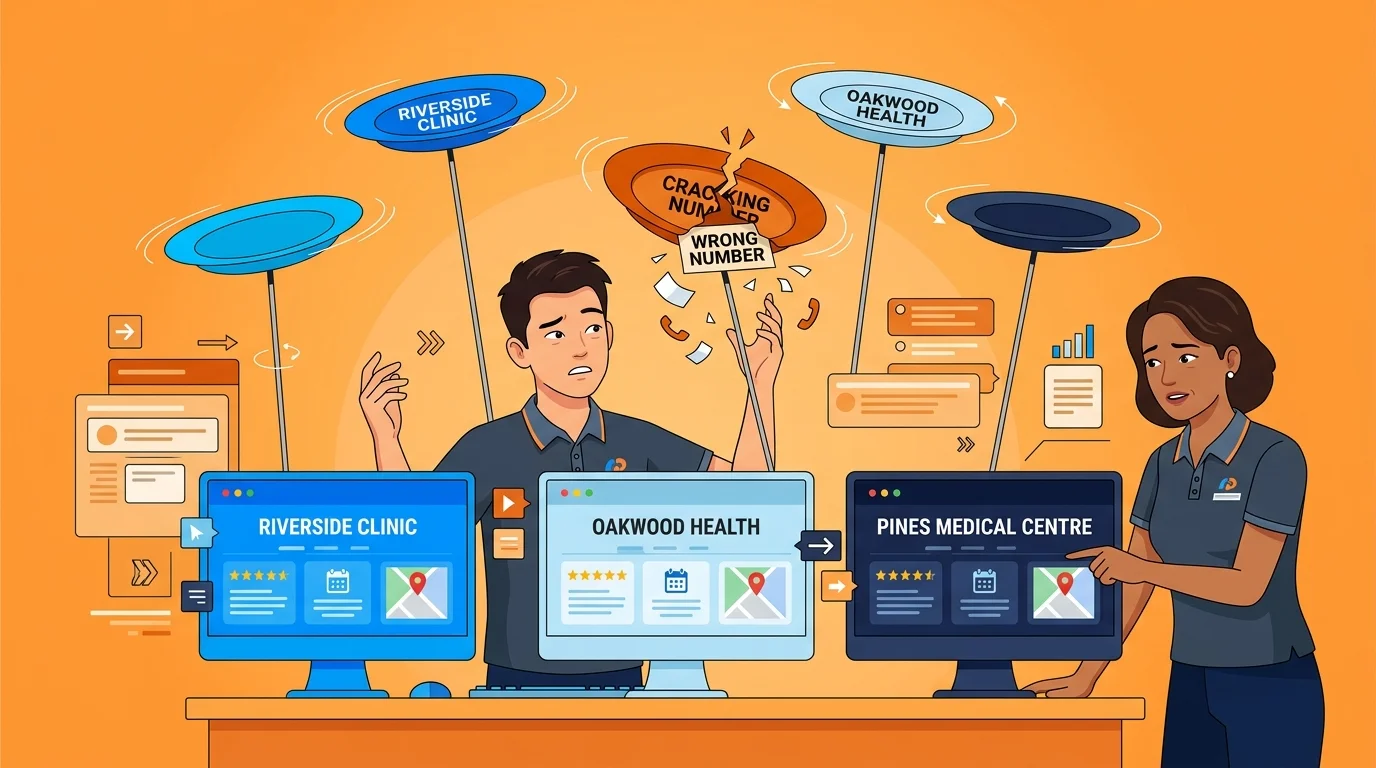
Here's the kicker: a junior account handler on a clinic file works from a template, not from any real knowledge of that practice's service lines or credentials. Their job is to run the playbook correctly. Asking whether the playbook even fits a single-location account was never part of the deal.
That structure means the person closest to a clinic's data often has the least authority to deviate from standardized instructions. Errors introduced at the template level pass straight through to the clinic's public listings, because catching them was never part of the junior role's scope.
What Happens When Entity Data Errors Go Unchecked
Now… this part matters. Being 'visible' online doesn't mean holding a spot in classic search listings anymore. It means a practice's data is structured well enough for an answer engine to cite it directly in a generated response.
An unchecked address mismatch or a stale service description feeds an answer engine the wrong facts, and it keeps feeding them every time someone asks. A junior-staffed account has no built-in checkpoint to catch that before a prospective patient reads it. Look at AI visibility services and you'll see what a dedicated entity-data check looks like at that exact failure point.
What AI Engines Actually Read When They Recommend a Local Provider
An answer engine doesn't read a clinic's website the way a patient scrolls it. It pulls structured facts, cross-checks them against other sources, and builds its answer from whichever version of those facts it trusts most.
| Data Point | Where It Appears | Why AI Engines Check It |
|---|---|---|
| Business name address phone | Google Business Profile, practice website footer, directory listings | Cross-source consistency confirms which version of a clinic's identity is accurate |
| Service descriptions | Practice website, Google Business Profile categories, directory profiles | Answer engines match a patient query to a service only when the wording is specific and consistent |
| Credentials and affiliations | Practice website, professional directories, knowledge panel | Verifiable credentials give an answer engine a reason to trust a clinic's claims over a competing listing |
| Hours of operation | Google Business Profile, website, third-party directories | Outdated hours create a contradiction during cross-checking |
How Query Fan-Out Changes What Counts as Visibility
Google's documentation says AI Overviews and AI Mode may use a "query fan-out" technique, issuing multiple related searches across subtopics and data sources to develop a response. A single query no longer triggers a single search. Each subtopic pulled into that fan-out may be a fresh chance for a clinic's data to be checked, confirmed, or contradicted by a competing listing.
That mechanism is why framing this work as a new coat of paint on old search tactics misses what actually changed. Placing in the classic ten blue links rewarded volume; a fan-out query rewards whichever entity's facts agree across every source it touches.
What a Verified Business Profile Actually Controls
Google's documentation says once a business verifies ownership of its Google Business Profile, it can provide or edit its address, contact info, business type, and photos, which then appear in Google Maps and the Google knowledge panel. Now… this part matters: that control belongs to the practice, not to whatever agency happens to manage the account. The verified owner can edit address, contact info, business type and photos.
Building the Entity Trust Workflow a Clinic Can Actually Run
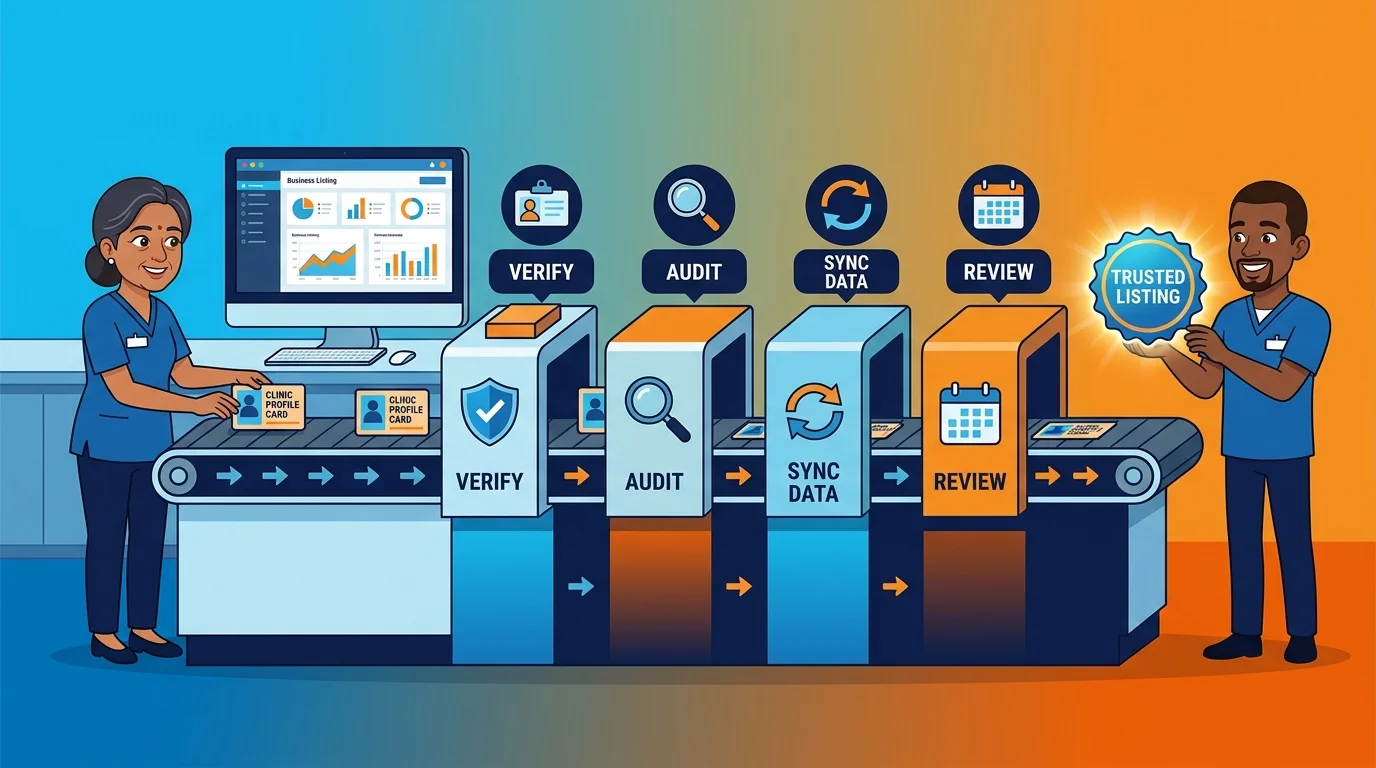
Knowing why entity data beats headcount only gets you halfway. A clinic still needs a repeatable sequence it can run itself, one that doesn't hinge on how some outside agency happens to organize its desks.
| Step | Action | What It Prevents |
|---|---|---|
| Audit | Pull every public listing for the practice and compare name, address, phone number, hours, and service descriptions against a single verified source. | Conflicting facts surfacing across different platforms when an answer engine cross-checks them. |
| Correct | Fix every mismatch at the source listing, starting with the Google Business Profile, rather than patching a single channel. | A corrected fact in one place while the wrong version keeps circulating elsewhere. |
| Claim Ownership | Verify ownership of the practice's Google Business Profile directly, rather than leaving that control with an outside account manager. | Losing the ability to edit address, hours, or service details without routing a request through a third party. |
| Standardize Service Descriptions | Write service line and credential descriptions once, in language specific to the practice, and apply that exact wording everywhere it appears. | A generic template description that does not match what the practice actually offers. |
| Monitor | Recheck listings on a regular basis as services change, staff change, or a location moves. | Stale data quietly drifting out of agreement with the practice's current facts. |
Setting Up the Verification and Audit Sequence
Start with a full listing audit across every platform where the practice shows up. Check the business name, address, phone number, service descriptions and credentials against the facts you know are right. Flag every mismatch first, and don't fix a single one until the whole list is done.
Maintaining Consistency Across Every Listing Over Time
Verification is where the work starts, not where it ends. Once a practice controls its own listing data, it decides what the address, hours and services say everywhere that data surfaces. Keeping it accurate as services change or a location moves is what holds an answer engine's trust in place.
Frequently Asked Questions
The same handful of questions shows up every time this comparison comes up. So here are straight answers.
How does a large agency's team structure typically impact a small clinic's account?
More staff layers typically mean more handoffs between the clinic and whoever actually edits its listings. Each handoff adds a delay before an error gets corrected, and a delayed correction is exactly what a trust-weighted answer engine notices.
Aren't a bigger agency's tools and software better than what a small firm can offer?
Tool licenses can't fix a template pointed at the wrong account. A smaller firm with fewer tools that checks a clinic's entity data directly wins. It beats a big platform stack aimed at a standardized playbook.
Will my clinic get lost in the shuffle at a large agency with bigger clients?
A single-location account inside a roster of dozens of clients competes for attention against bigger accounts by default. That is not speculation about priorities; it is how staff time gets allocated across a growing book of business.
How is success measured differently between a boutique firm focused on AI visibility and a traditional large agency?
A boutique firm checks that a clinic's facts match everywhere an answer engine looks. A traditional large agency still hands over rank-tracking reports.
What specific questions should I ask a large agency about how they handle local business data for AI search?
Ask who physically edits the Google Business Profile and how fast a correction goes live. Ask for the exact process that catches a mismatched address or outdated service line before a patient sees it.
What is query fan-out and why does it matter for a clinic's visibility?
Query fan-out means one patient question triggers several related searches across subtopics and sources behind the scenes. Each of those searches is a separate chance for a clinic's own facts to be confirmed or contradicted by a competing listing.
The Bottom Line
Bigger agency, more resources. Sounds like logic, right? It was only ever a headcount story, and headcount was never the thing an answer engine reads.
A clinic's address, hours, and service details are facts a practice owns outright. No roster size changes whether those facts are correct, and no office footprint corrects a mismatch an answer engine has already cited.
The clinic that controls its own data outcompetes the agency that only controls desks. That is the whole argument, and it holds regardless of which firm a practice hires next. Start by seeing where your own listings stand today with an AI Visibility Check.