
What Changes the Day After You Sign
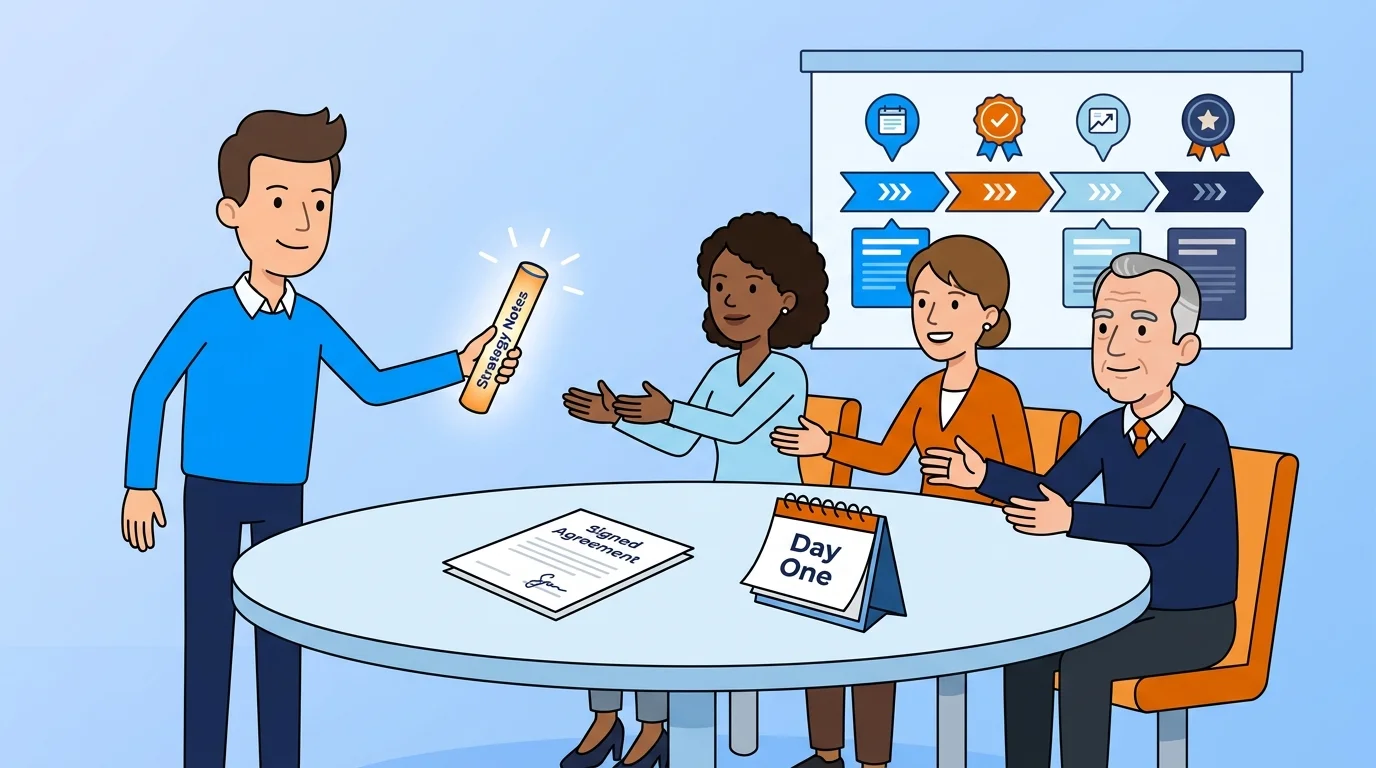
So the contract gets signed. Within days, the point of contact often changes, and the founder who ran the sales conversation steps back from daily involvement.
Here's the thing: that shift is exactly where a client's biggest fear kicks in. The worry is a quiet bait and switch, where the expert who sold the vision disappears and a junior team takes over execution. That fear makes sense on its own terms. The real question is whether the architect's blueprint survives the handoff to the builders, or whether how to pick the right fit for clinic authority needs ever even gets addressed before signing.
Why the 'Bait and Switch' Fear Exists for a Reason
Let's keep it real: this worry didn't come out of thin air. A founder's sales pitch and a founder's day-to-day availability are two different promises. Agencies have blurred that line for years.
Look at how service agencies usually run it. The senior person closes the deal, then a different team does the work, and that model only holds up when the founder's strategic logic actually makes the trip.
Why the Senior Sell, Junior Delivery Model Fails
A founder acting as the architect of a practice's strategy and an account manager acting as the project's foreman are two very different jobs. The architect decides what the finished structure has to do. And why.
So the foreman builds against that plan every day. Too often, the industry sells the architect's vision and then quietly staffs the job with foremen who never saw the full blueprint. That's why clinic owners learn to read the real difference between founder attention and staff handoffs before they sign anything.
Architect vs. Foreman: Two Different Jobs
Think of it this way: an architect designs the structure and decides what it has to do. A foreman builds to that spec, day after day, without redrawing a thing. But none of that matters if the blueprint shows up at the job site torn in half.
So the real diagnostic question isn't who answers the phone. It's whether the founder's strategic logic is built into the system the account team works from, or whether it quietly evaporated at handoff.
For a practice checking its own account, the warning signs of an account moved away from the founder are what to look for first.
| Role | Primary Function | Where the Insight Lives |
|---|---|---|
| Founder (Architect) | Sets positioning, core narrative, and the strategic logic the entity is built around | Embedded in the original blueprint, documented process, and training that shapes every deliverable |
| Account Manager (Foreman) | Executes day-to-day tasks against the plan already handed down | Applied through the blueprint, not generated independently on site |
| Account Without Process Integrity | Executes tasks with no documented link back to the original strategy | Lost at handoff, producing drift and inconsistent entity signals |
How a Flawed Handoff Breaks an Entity's AI Visibility
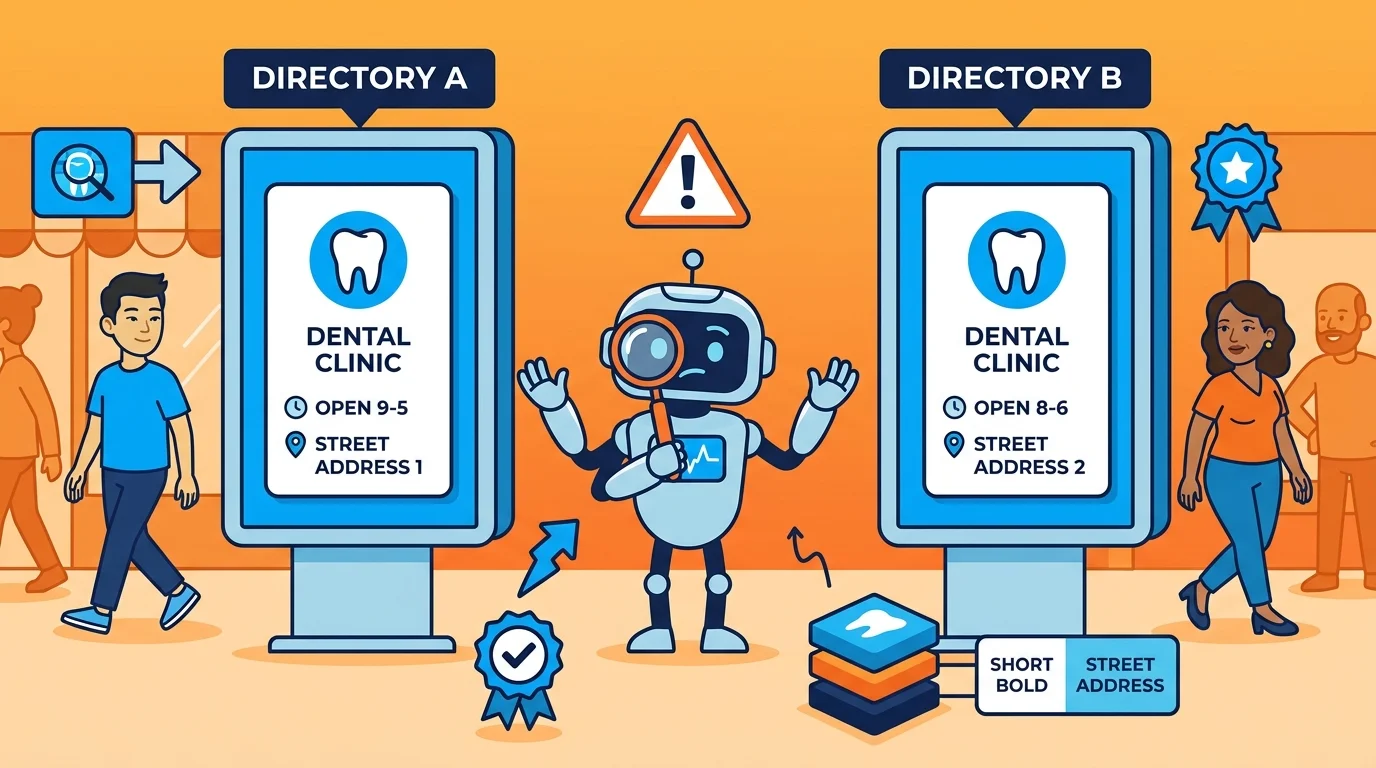
So what actually breaks when founder access shrinks into a job title instead of a process? The practice's own entity data starts drifting across every place an AI engine reads it.
Here's the anti-consensus part: AI visibility isn't traditional search optimization with new vocabulary. Rank-tracking reports measured a position on a results page. Generative engines can weigh whether an entity's facts agree with themselves everywhere they appear, and a fragmented handoff is exactly what makes them stop agreeing.
When Listing Data Disagrees With Itself
Look, handing the daily work to a trained team is how a scalable agency stays functional, and nobody should call that neglect. What matters is a process built to stop that drift before it starts. That discipline is what sits behind our AI search optimization services.
Why Inconsistent Signals Confuse Generative Search
So how does a fragmented process actually read to an AI engine scanning a practice's signals? Inconsistent, mostly. Xu, Iqbal & Montgomery (preprint) found that, on trending queries in a spring 2026 sample, overall Google AI Overview activation across the measured queries was 13.7%, rising to 64.7% for question-form queries. More content won't patch that gap, because scattering a founder's strategic logic across disconnected deliverables just hands the engine more places to catch a contradiction.
What a Structured Process Looks Like When It Works
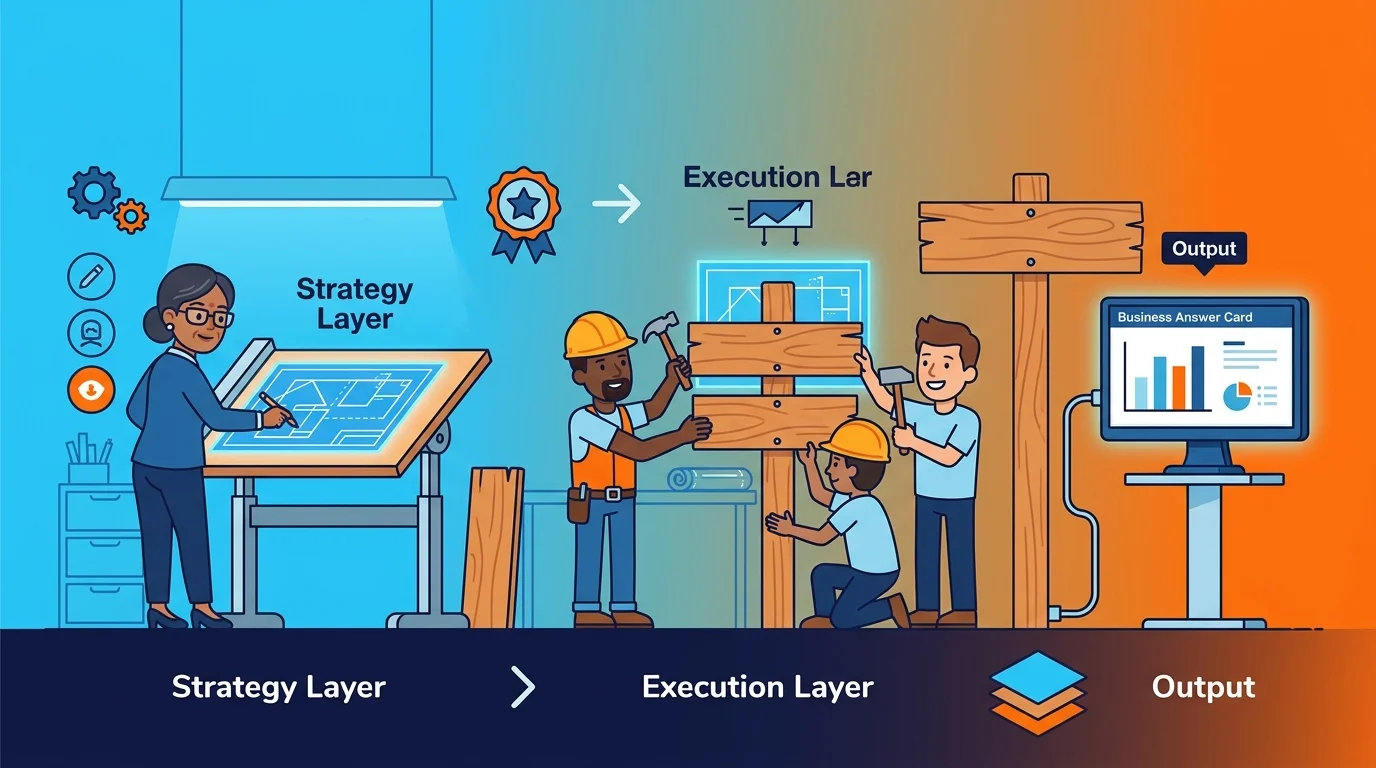
So what does an architecture built to survive the handoff actually look like? It starts with separating two layers that most agencies blur together: strategy and execution.
The founder owns one layer. A trained team owns the other, working from a blueprint that was actually handed to them.
| Signal to Check | What a Working Process Shows | What a Broken Handoff Shows |
|---|---|---|
| Who explains the reasoning | A specialist can articulate why a given approach was chosen, referencing the founder's original positioning logic | A specialist can describe only what task was completed, with no reference to underlying strategy |
| Terminology and positioning across deliverables | Consistent entity narrative and language, regardless of which staff member produced the work | Terminology and positioning shift depending on who touched the deliverable last |
| How the team is held accountable | Training materials and review checklists trace back to the founder's documented strategic logic | No documented standard exists, so execution drifts toward whatever the individual specialist assumes |
| What day-to-day contact actually is | Specialist-to-client updates on execution, built on a plan the specialist didn't invent but does understand | Specialist-to-client updates with no visible connection to any larger strategic plan |
| What the account produces over time | A coherent, citable entity profile that stays stable as staff changes | Fragmented, inconsistent signals that multiply the contradictions an AI engine has to reconcile |
The Strategy Layer vs. the Execution Layer
The strategy layer is the founder's positioning logic, the entity narrative and the terminology a practice should be known for. The execution layer is everything built against that logic day to day: articles, structured data, review responses.
Keep those layers wired together through documented process and the work stays coherent. Let them split, and the practice ends up with a pile of activity instead of authority.
Where a Capable Team Fits Into That Architecture
A capable team was never the problem. An untrained one working without the blueprint is. A structured process bakes the founder's strategic logic into the training, review checklists and standards the team answers to. That's how the work stays true to the plan without the founder signing off on every deliverable.
Reading the System, Not Just the Org Chart
Look past the org chart. Titles don't tell you whether insight survived the handoff.
What tells you is whether the system itself enforces consistency: the same entity narrative, the same terminology, the same positioning, deliverable after deliverable, regardless of who's producing them. A practice checking its own account should look for that system, not for a name on a business card.
The Questions That Reveal Whether Insight Survived the Handoff
So ask the team straight up why a particular approach was chosen, not just what got delivered. A specialist who can walk through the founder's reasoning is working from the blueprint.
One who can only describe the task is working blind. And that gap is exactly where strategic insight falls out somewhere between the architect's desk and the job site.
What Day-to-Day Contact Actually Involves
Day-to-day contact, in a structured process, is mostly specialist-to-client: execution updates, deliverable reviews, scheduling.
That's appropriate, not a downgrade, as long as the specialist is operating from a documented strategic logic rather than improvising.
Wu et al. (Stanford, Nature Communications 2025) report between 50% and 90% of LLM responses to medical questions may not be fully supported, and are sometimes contradicted, by the sources they cite.
Frequently Asked Questions
Alright, a few questions keep coming up around founder access. Here are the straight answers.
How often should a founder be directly involved after the contract is signed?
There's no fixed meeting cadence that matters here. What matters is whether the founder's strategic logic is already built into the process the account team follows, so direct involvement isn't the thing being measured.
What is the functional difference between a founder's strategic oversight and an account manager's daily role?
The founder sets the entity narrative, the positioning, and the terminology a practice should be known for. The account manager executes against that plan day to day, without redrawing it.
Does a day-to-day contact who isn't the founder mean the account carries less priority?
No. A specialist handling daily contact is normal once a documented strategic logic is already guiding the work. The concern only applies when that logic was never actually handed off.
What operational signs show that strategic insight was lost during a team handoff?
Inconsistent entity details across deliverables are the clearest sign. So is a team that can describe what was delivered but not why a particular approach was chosen.
How does consistent founder-level strategy translate into more authoritative generative search answers?
Generative engines reward consistent entity signals, not scattered activity. So a founder's strategic logic, carried intact through every deliverable, keeps those signals coherent. Lose it, and they start contradicting each other.
The Bottom Line
So here's my verdict. Strategic continuity decides whether a practice stays a citable authority, and meeting frequency has almost nothing to do with it.
The blueprint has to survive the trip from the architect's desk to the job site. A founder's insight only counts if the builders are still working from it months later, deliverable after deliverable, without the drift that quietly scrambles a practice's entity signals.
That's the actual diagnostic. Not who picks up the phone, but whether the logic behind the pitch is still running the account. If a practice can't answer that question with confidence, it's worth finding out where things stand with an AI Visibility Check.