
What Reconciling a Clinic's Listings Actually Means
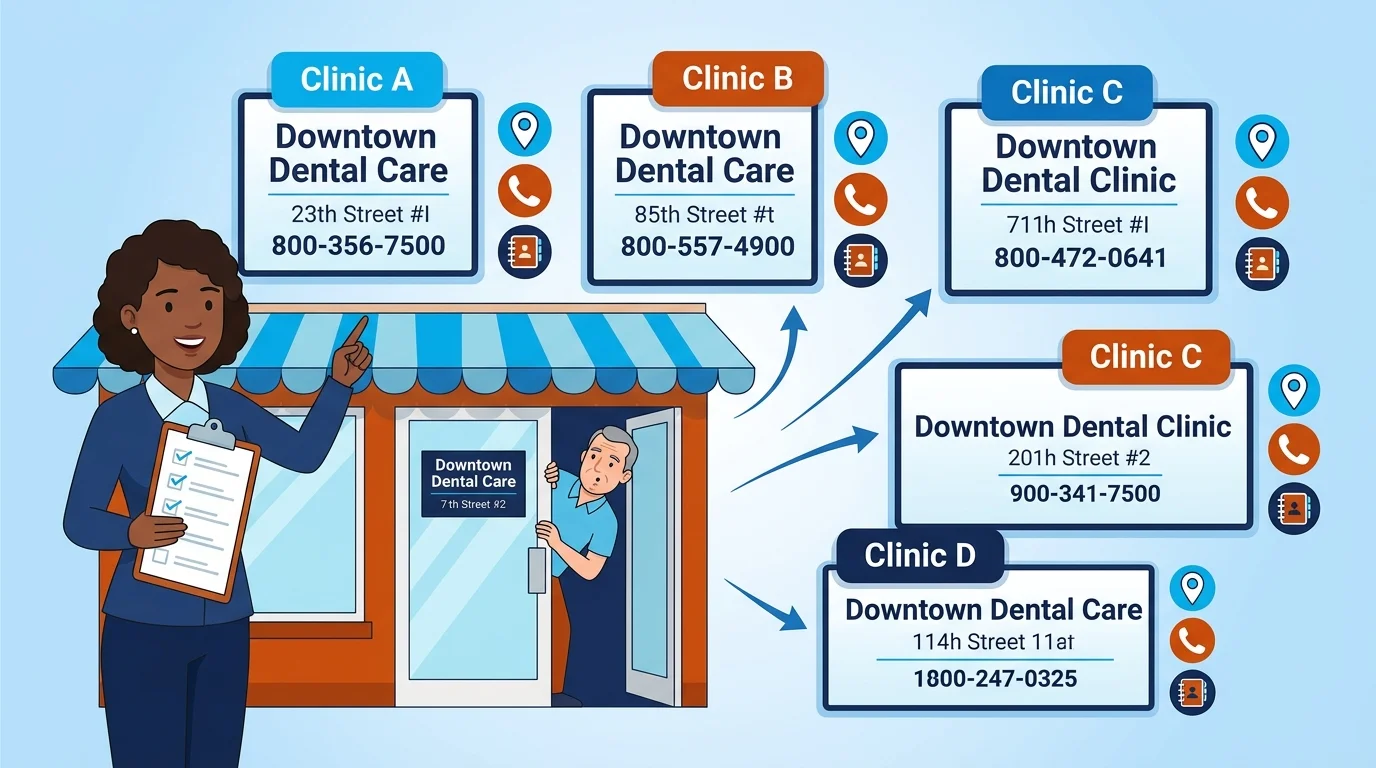
Listing reconciliation is the act of identifying, correcting, and standardizing a business's name, address, phone number, and other key data points across all online directories, platforms, and aggregators. It is a mechanical task before it is a strategic one.
Think of every directory entry as a separate witness statement about the same practice. A phone number here, an old suite number there, each one a small contradiction. Reconciliation is the work of getting every witness to tell the same story. A clinic owner working through this for the first time benefits from a clinic owner's resource for fixing listing errors that lays out where the contradictions tend to hide.
Why Treating This as a One-Time Fix Breaks Down
A clinic owner fixes the Google Business Profile, sees the new address appear, and moves on. That single correction feels complete. It rarely is.
The process of correcting clinic data is often misunderstood, seen as a one-time fix rather than the ongoing maintenance of a core business asset. Aggregators resync old records, new practitioners get added to legacy directories, and a closed location can resurface months later from a site nobody remembered submitting to.
The Submission Fallacy Most Practices Fall Into
Most practices run reconciliation as a single submission: fix the primary listing, check that it looks right, close the task. That breaks down because secondary directories scrape primary sources on their own schedule, not the clinic's. And no, a directory with more site visits isn't automatically accurate, and a pile of extra listings doesn't add up to a trustworthy footprint.
Inaccurate online listings are more than just a minor inconvenience; they represent a fundamental break in trust between a clinic and its potential patients. A patient who arrives at the wrong suite number does not blame the aggregator. Reviewing how to align mismatched clinic records across directories shows where these mismatches tend to resurface after a clinic assumes the work is finished.
How Corrected Data Actually Moves Through the Aggregator Chain
Corrected data doesn't travel in a straight line. It moves through a chain, and every link in that chain runs on its own refresh schedule, its own scraping habits, and its own tolerance for stale records.
A primary source gets fixed first. From there the correction has to travel outward through secondary aggregators, niche directories, and smaller platforms that periodically re-crawl the primary source rather than watching it in real time. a process for confirming listing corrections exists because a clinic cannot assume that outward travel finished just because the first fix held.
Where Stale Data Hides and Keeps Resurfacing
Stale data hides in the platforms nobody thinks to check. A directory that scraped a clinic's old suite number two years ago may still be serving that record to anyone who searches it, untouched since the day it was copied.
Now… this part matters: these resurfacing errors aren't random. They cluster around whichever witness statement was loudest the last time a smaller aggregator synced, and that sync could be years old.
How AI Search Systems Read Clinic Data Differently Than a Directory Does
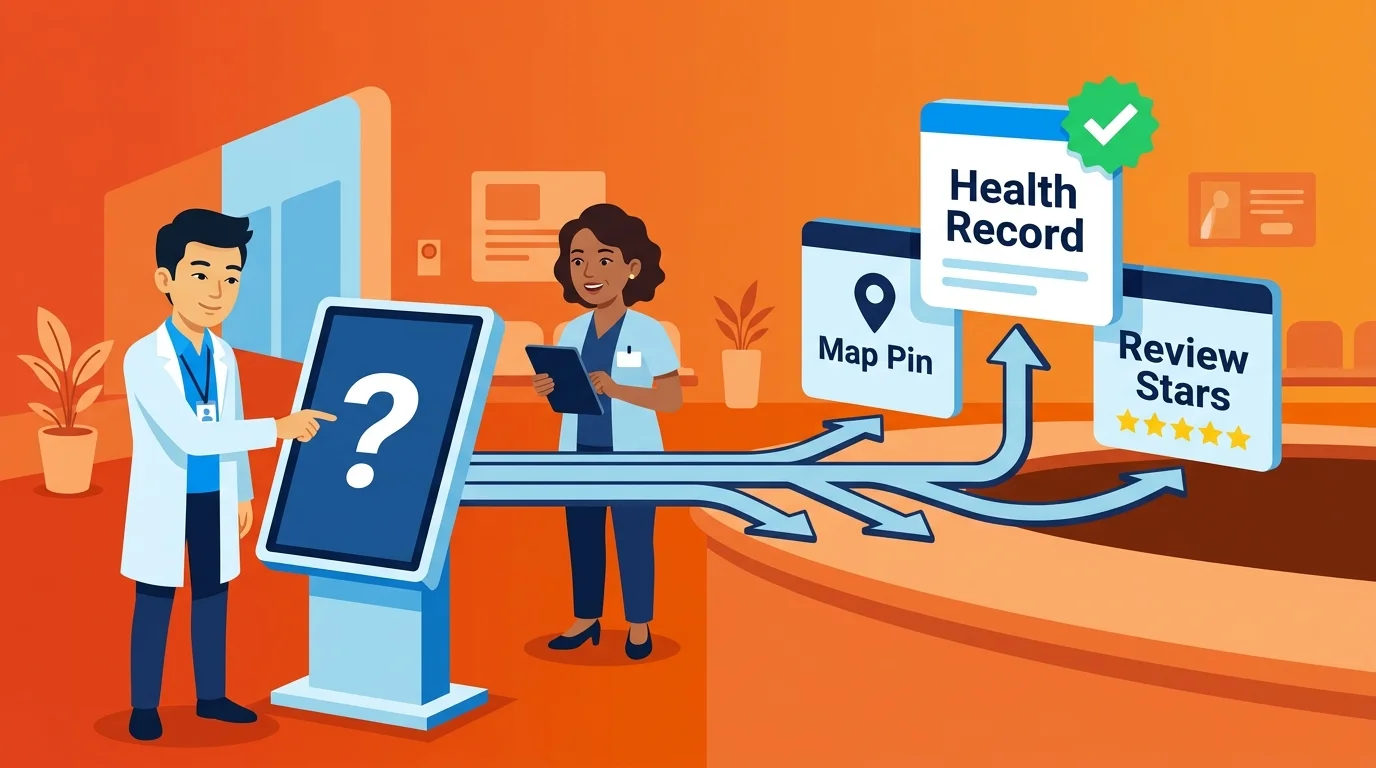
A directory freezes whatever was true the day it got scraped, but an AI engine can build its answer live by pulling from a whole pile of sources at once.
Google's documentation says AI Overviews and AI Mode may use a query fan-out technique, issuing multiple related searches across subtopics and data sources to develop a response.
So a stale address could be one of several inputs.
Old-school search work rewarded whichever listing sat highest on the results page. Citations may reward the witness whose story still matches every other witness. Attention rented from one directory entry dies the second it goes stale, and that's the gap our AI Authority System services are built to close.
What Structured Data Adds to a Reconciliation Project
Here's the thing: a witness statement carries more weight when it's written down in a format the listener already trusts. Structured data does exactly that for a clinic's name, address, and hours. It marks up the page so a machine doesn't have to guess which line is the phone number and which one's the suite number.
Google's documentation says adding structured data can enable more engaging search results, called rich results, that might encourage users to interact more with a website.
But a rich result isn't the point. The point is stripping ambiguity out of the one listing a clinic fully controls, so the correction holds instead of getting reinterpreted at the next crawl.
Building a Reconciliation Sequence That Actually Holds
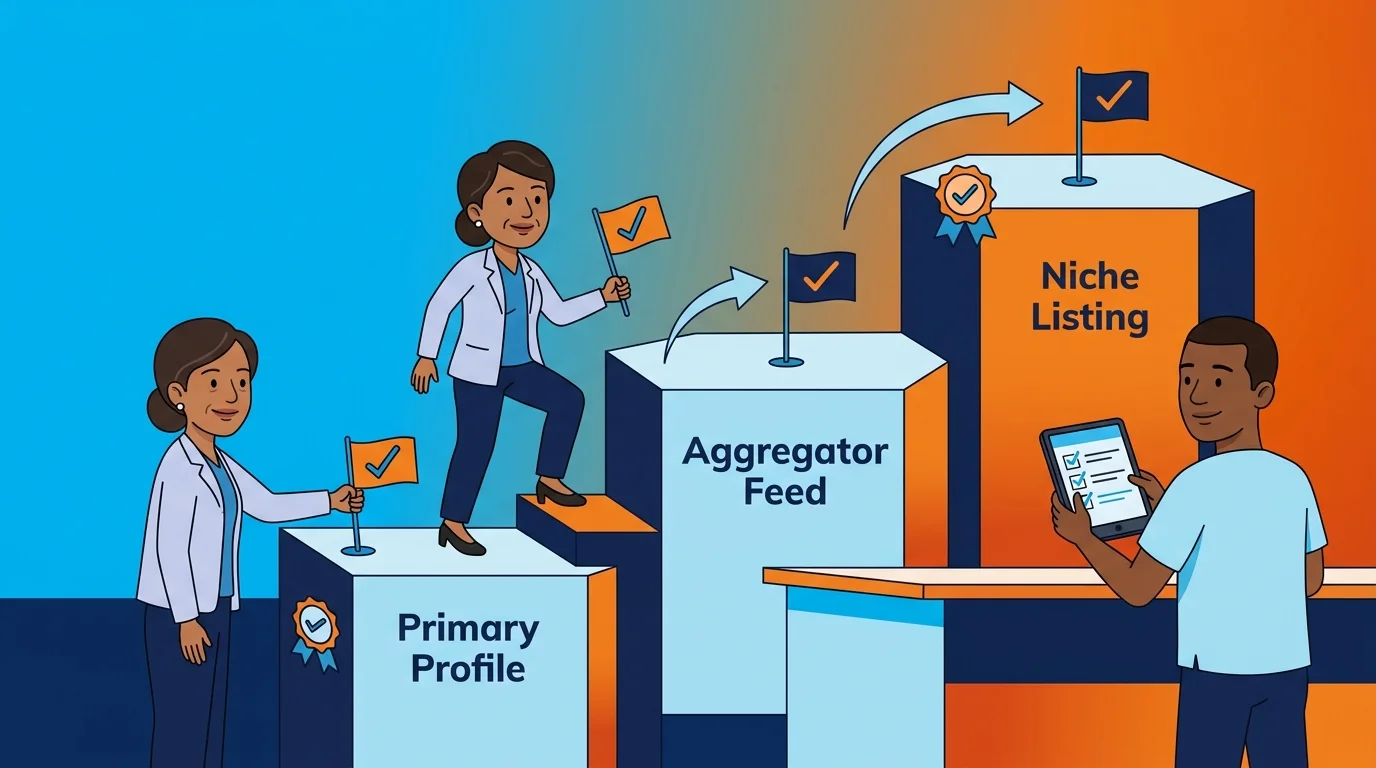
So what order does the work actually go in? A reconciliation project needs a sequence, not a scattered to-do list, because hitting every directory at once burns effort on sources with no authority to pass downstream.
Here's the sequence that holds. Start at the source aggregators may eventually check, then work outward toward the directories that can copy whatever they find there.
| Listing Tier | Examples | Typical Role in the Chain | Verification Method |
|---|---|---|---|
| Primary Source | Google Business Profile, core data aggregator feeds | Can set the record other directories draw on | Confirmed directly by the clinic owner after the submitted edit displays on the live listing |
| Secondary Aggregator | Regional and general-purpose business directories that resync from primary feeds | Copies primary source data on its own refresh schedule rather than in real time | Rechecked after the aggregator's typical resync window to confirm the correction held rather than reverted |
| Niche or Legacy Directory | Smaller industry-specific listings and older platforms that rarely re-crawl | Last in the chain, often still serving a stale record copied long before the correction | Spot-checked periodically since these sources can resurface old data without warning |
| Reconciliation Step | What Happens | Who Confirms It |
|---|---|---|
| Source Correction | The clinic or an authorized manager submits the correct name, address, phone number, and hours directly to the primary platforms that aggregators may scrape from. | The clinic owner or manager, since this step happens inside accounts the practice directly controls. |
| Aggregator Propagation | Secondary directories and data aggregators re-crawl the corrected primary source on their own schedules and pull the updated record into their own listings. | Nobody directly, since propagation runs on each platform's own refresh cycle rather than a request the clinic can trigger. |
| Downstream Verification | Niche directories and smaller platforms that copy from aggregators are checked to confirm they display the corrected record rather than a stale version. | The clinic or whoever manages reconciliation, by periodically re-checking the listings most likely to lag. |
| Recurrence Check | The same primary and secondary listings are reviewed again after a reasonable interval, since corrected records have been known to revert or resurface from an unsynced source. | The clinic or its reconciliation process, on a repeating schedule rather than a single pass. |
Setting the Priority Order Across Primary, Aggregator, and Niche Listings
Primary sources go first, because secondary directories can scrape them. A clinic's Google Business Profile and its core data aggregator feeds can set the record other sources draw on.
Niche directories and smaller platforms come last. Fixing a niche directory before the primary source is corrected just creates a new witness telling the old story.
Rented attention from a single well-ranked listing expires the moment that listing's data goes stale or that platform's relevance fades. Authority a clinic builds into its own primary record can keep compounding across downstream sources that draw on it.
Confirming a Correction Actually Stuck
A correction that shows up once isn't a correction that stuck. Check the same listing again after the aggregator's usual refresh window, because old records have a nasty habit of crawling back.
A Data Axle-commissioned survey (1,000 U.S. consumers, Feb 2026) found 66% of consumers had found a business's online information was wrong when they visited or attempted to visit it. That's exactly why verification gets its own phase instead of being tacked onto the end of the correction.
Frequently Asked Questions
A clinic owner rarely stops at the big picture questions. Here are the mechanical ones that surface once the sequence above is actually underway.
How long does it take for Google to update my clinic's address after I submit a change?
A direct profile edit can take days to months to show, depending on the platform. The surrounding data aggregator feeds can lag longer before they fully settle.
Why does my old clinic address reappear on some websites even after I've corrected it?
A secondary site scraped the old record before the correction happened, and it has not re-crawled since. Stale data sits untouched until that site's own refresh cycle runs.
Can I fix all my clinic's online listings at once, or do I have to do them one by one?
No single submission reaches every directory at once. Primary sources need correcting first, because secondary and niche platforms can copy from them rather than from each other.
Does changing my clinic's name affect how long it takes to reconcile my listings?
It can. A name change creates a second witness statement aggregators have to reconcile. That can stretch the propagation window past a simple address or phone fix.
If I use a service to fix my listings, how do I know the changes have actually stuck?
Confirm the correction twice: once immediately after submission, and once after the aggregator's typical refresh window has passed. A listing that reverted once can revert again.
What is the single most important listing I need to correct for my clinic?
The primary record other directories may scrape from. That's usually the Google Business Profile plus the core aggregator feed beneath it. Fix that witness first.
The Bottom Line
Every directory entry is a witness statement. Reconciliation is the work of getting every one of them to tell the same story, and that can take days to months, depending on the platform, not one afternoon between adjustments.
That timeline is not the inconvenience it looks like. It is the entry fee for becoming the source generative engines cite instead of merely list. A clinic that treats correction as ongoing maintenance, not a one-time submission, is the clinic whose witnesses still agree months later.
Verification closes the loop that correction alone can't. If reconciling scattered listings sounds like more than a one-person job between patients, talk it through with us.