
OCR has stated that a covered entity may not confirm or deny that a particular person was a patient, or disclose other identifiable information such as name or address. The HIPAA Privacy Rule does not stop a regulated entity from responding to online reviews. But protected health information must not be disclosed online without the patient’s written consent. Under HIPAA, PHI should never be disclosed in response to an online review or posting unless the patient has given written authorization. One suggested pre-approved response says the practice does not disclose patient information on public forums and invites the reviewer to contact the office by phone or email.
Why you can’t just rebut the claim

You can reply. The Privacy Rule doesn’t ban it. The HIPAA Journal says HIPAA-regulated entities may respond to online reviews.
But there’s a catch. Protected health information can’t go online without the patient’s written consent.
Nixon Peabody is blunt about it.
Under HIPAA, PHI should never be disclosed in response to an online review or posting. Not without the patient’s written authorization.
A patient posting their own details first changes nothing.
Nixon Peabody says that even when a patient shares information about themselves online, your reply to any review or social media posting must still comply with the Privacy Rule. If it doesn’t, you risk OCR enforcement and penalties.
Here’s the part people miss.
Mintz advises that your policies should stop you from disclosing any PHI. That includes acknowledging that the person is a patient. Even if the patient chose to disclose their own information.
So even “I remember your visit” acknowledges the person as a patient.
PHI is wider than the treatment record.
Nixon Peabody notes it covers any demographic data that relates to the person’s health care. It also covers individually identifiable health information. Name. Address. Email. Birth date. Phone number.
Want to publish results without touching any of this? It’s covered in HIPAA-Safe Ways to Publish Chiropractic Outcome Data.
What happens if you disclose details anyway
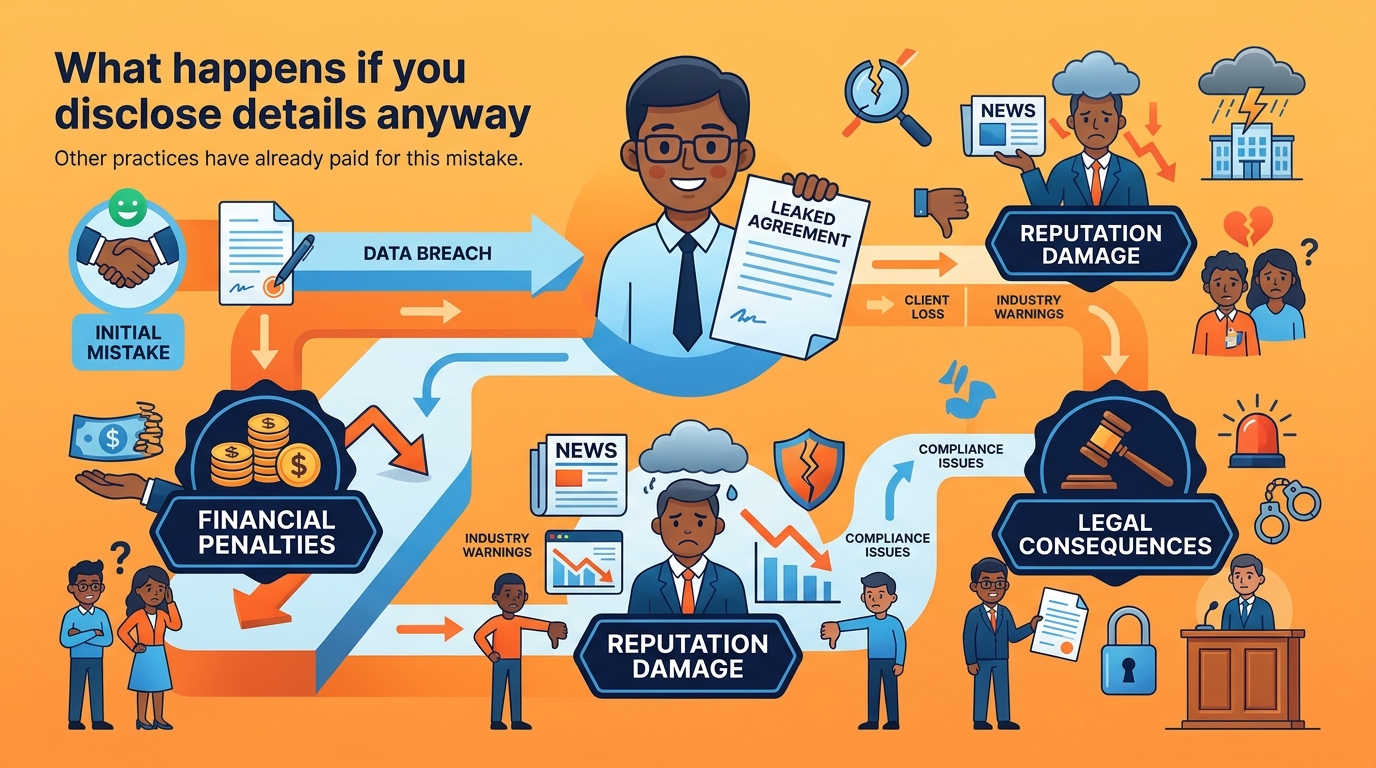
A New Jersey psychiatric provider. The HHS Office for Civil Rights agreed to settle a HIPAA violation case with a New Jersey provider of adult and child psychiatric services. The price: $30,000.
OCR investigated the Kendall Park, NJ-based provider. It found that the protected health information of four patients had been impermissibly disclosed in replies to negative Google Reviews. The details are in The HIPAA Journal’s report.
The same report says Manasa Health Center agreed to a corrective action plan. It requires the center to:
- Develop, maintain and revise written policies and procedures for HIPAA Privacy Rule compliance.
- Train every member of the workforce on those policies and procedures.
- Send breach notification letters to the people whose PHI was disclosed online.
- Submit a breach report to OCR about those disclosures.
The OCR Director said OCR will investigate and take action when it learns of these disclosures. No matter how large or small the organization.
New Vision Dental. OCR began investigating New Vision Dental in 2018 after a complaint.
The complaint said the practice repeatedly disclosed patient names, treatment and insurance information on its Yelp page. The patients hadn’t disclosed that information there themselves.
The practice agreed to pay OCR a resolution amount of $23,000. It also agreed to a two-year corrective action plan.
Under the plan, it had to remove all PHI from its Yelp page. It also had to give breach reporting to everyone whose PHI was disclosed on Yelp without valid authorization, going back to 2014. And it had to report those breaches through the HHS breach portal within 30 days.
A North Carolina dental practice. The practice replied on its Google page to a patient’s negative review.
The reply disclosed the patient’s name. The dates the patient visited. The reasons for treatment.
Then it went silent.
The practice didn’t respond to OCR’s data request. It didn’t respond or object to an administrative subpoena. By not contesting the findings, it waived its right to a hearing.
OCR imposed a $50,000 civil money penalty.
Elite Dental Associates. Elite replied to a patient’s review by disclosing her last name and details of her treatment plan and insurance.
She then submitted a complaint to OCR.
Nixon Peabody’s alert on the OCR enforcement action reports that OCR entered into settlements and corrective action plans with two dental practices. $50,000 earlier in 2022. $10,000 in October 2019.
Here’s the quick view.
The table below lines up the four cases: the amount where the source gives one, what each reply disclosed and what followed.
| Practice and amount | What was disclosed | What followed |
|---|---|---|
| NJ psychiatric provider, $30,000 settlement | PHI of four patients in replies to negative Google Reviews | OCR investigation and settlement |
| New Vision Dental, $23,000 resolution amount | Patient names, treatment and insurance information on its Yelp page | Two-year corrective action plan: remove all PHI from Yelp, report disclosures back to 2014 through the HHS breach portal within 30 days |
| North Carolina dental practice, $50,000 civil money penalty | Patient’s name, visit dates and reasons for treatment | Did not respond to OCR’s data request or subpoena, did not contest the findings; OCR imposed the penalty |
| Elite Dental Associates | Patient’s last name, treatment plan and insurance details | Patient submitted a complaint to OCR |
The safe way to reply, step by step
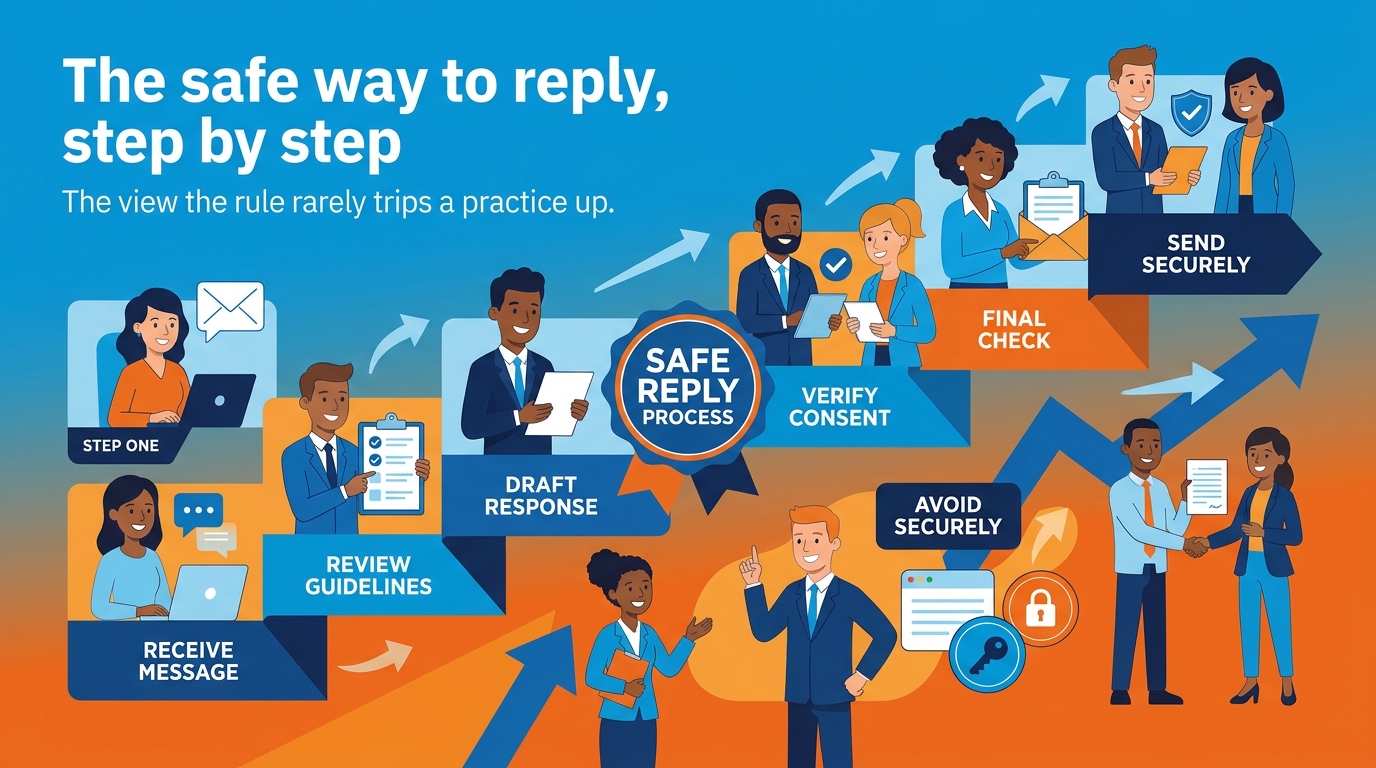
Every step closes a door. Each one blocks a way PHI sneaks into a reply.
Step 1: Acknowledge without confirming a relationship
Don’t say they were your patient. Don’t say they weren’t.
OCR is clear. A covered entity may not confirm or deny that a particular person was a patient. It also can’t disclose other identifiable details. A name. An address.
Thank the reviewer for posting. Leave out any reference to a visit.
Step 2: Avoid rebuttal and factual detail
Leave out dates, treatments, results and fees. Don’t argue the outcome.
Nixon Peabody warns that even confirming facts a patient posted online may raise compliance issues under HIPAA.
Step 3: Invite private resolution
Here’s the wording of a suggested pre-approved response: “Out of consideration for our patients’ privacy rights, we do not disclose any patient information on public forums. We encourage you to contact our office by phone or email so we can further discuss your experience.”
It says you protect privacy. It doesn’t touch the facts. And it gives the reviewer a way to reach you.
Step 4: Personalise the tone, never the facts
Here’s the catch.
BrightLocal found that templated or generic responses make half of consumers (50%) unlikely to choose a business. Paste the same block under every review and it reads like a template.
Keep the compliant core. Change the voice around it. Make it sound like someone in your office wrote it.
Add warmth. Not details.
Why replying at all still matters for new patients
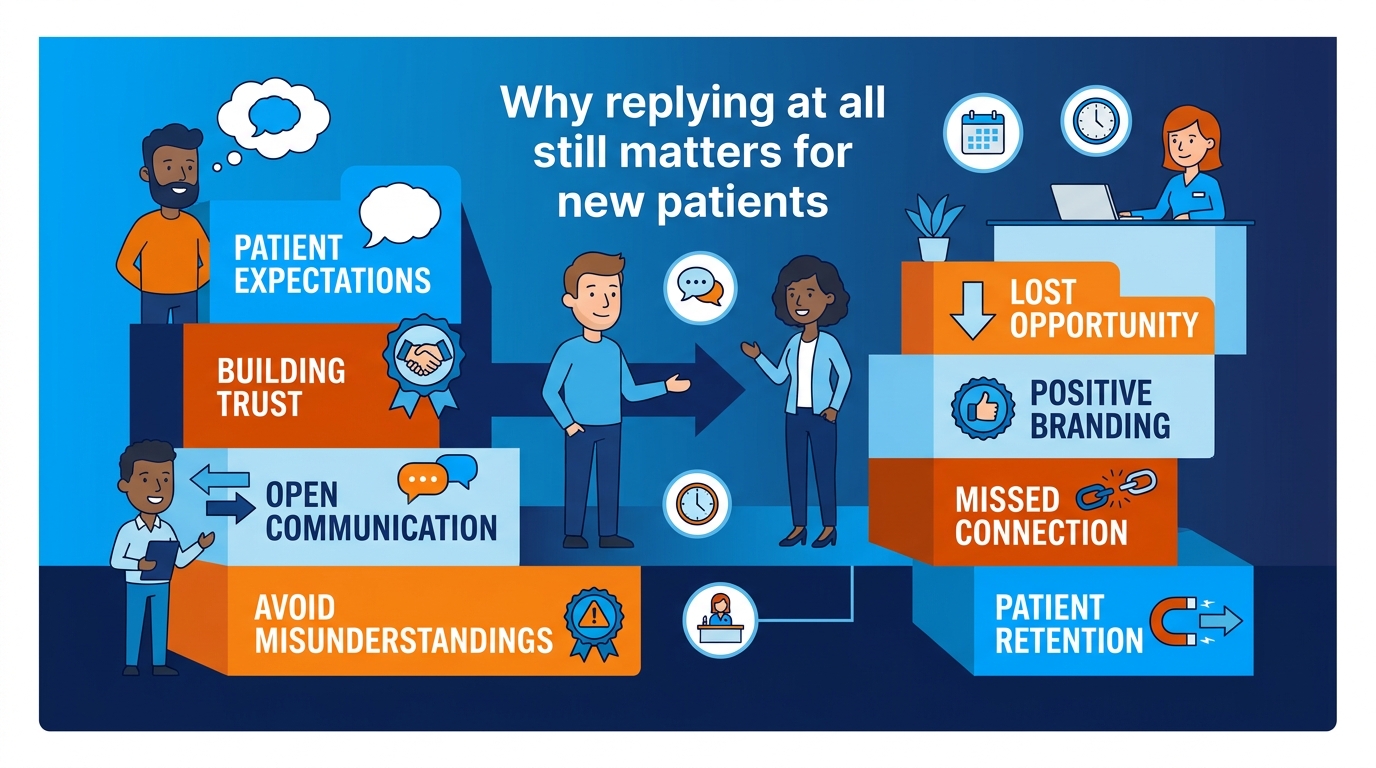
Staying quiet has its own cost.
BrightLocal’s Local Consumer Review Survey 2026 found:
- Nearly nine in ten consumers (89%) expect business owners to respond to reviews.
- Four in five (80%) say they’re likely to use a business that responds to all of its reviews.
- About four in ten (42%) say they’re unlikely to use a business that never replies.
There’s more.
BrightLocal also found that nearly one in five consumers (19%) expect a reply to their review the same day. More than four in five (81%) expect one within a week.
More than a third (37%) ranked “the business owner has responded to the review” as a factor that matters to them. More than eight in ten (85%) say positive reviews make them more likely to use a business. And more than three-quarters (77%) say negative reviews make them less likely to choose one.
BrightLocal’s Local Consumer Review Survey 2024 is the 2024 edition of the survey.
SOCi’s LDI found that nearly three-quarters of consumers (72%) are more likely to choose a business that responds to its reviews.
It also found that nearly nine in ten (87%) say they’d likely revise a negative review to a positive one if the business responds helpfully.
Now look at what businesses actually do. According to SOCi’s LVI, fewer than half of Google reviews (46.9%) get a response. The average response time is more than four days (4.3 days).
Should you let AI write the reply?
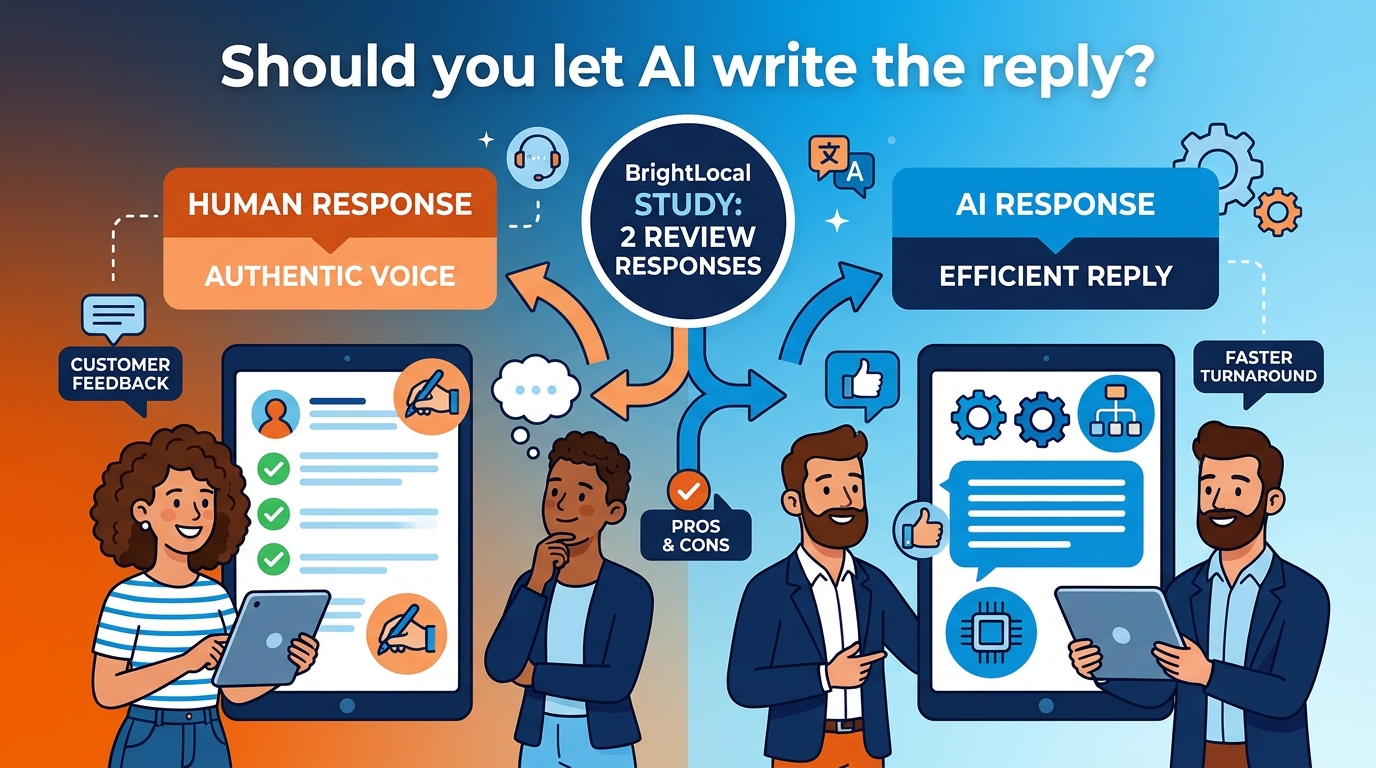
BrightLocal showed consumers two review responses. One written by a human. One generated with AI.
Nearly six in ten (58%) preferred the AI-written one.
That tells you nothing about PHI.
Nixon Peabody says public relations, social media and administrative teams should be trained on acceptable online responses. And on what content may result in a HIPAA breach.
I think that means one thing. A trained person reads every AI draft before it goes up.
To my mind, the draft is only as safe as the person who checks it.
Keeping your team from making the mistake again

- Write a policy. The National Law Review says that in its recent enforcement actions, OCR has stressed that covered entities need policies specifically addressing PHI and social media.
- Audit. Mintz recommends adding a periodic review of online platforms for improper disclosure of PHI to your auditing.
- Train often. Mintz also recommends training staff frequently on using these platforms. It guards against the Privacy Rule pitfalls of engaging with patients online.
Want to show results without records? See Proving Chiropractic Outcomes Without Health Records: A Complete Guide and Building an Anonymized Proof Profile: A Step-by-Step Walkthrough.
Nixon Peabody’s alert on the OCR enforcement action is worth circulating to staff.
Frequently Asked Questions
Can I confirm or deny that someone is a patient when replying to a review?
No. Not either way. OCR has said a covered entity may not confirm or deny that a person was a patient. It also can’t disclose other identifiable details, like a name or address. Mintz adds that your policies should stop you from acknowledging the person as a patient, even if they disclosed their own information. So write the reply to say neither.
Is it a HIPAA violation to simply confirm facts the patient already posted?
It can raise compliance issues. So don’t do it. Nixon Peabody warns that even confirming facts a patient posted online may raise compliance issues under HIPAA. Your reply must still comply with the Privacy Rule, even when the patient shared the details. Leave the facts out. Keep it general.
What should a compliant review response actually say?
Say you protect privacy. Then invite the reviewer to talk offline. One suggested pre-approved response reads: “Out of consideration for our patients’ privacy rights, we do not disclose any patient information on public forums. We encourage you to contact our office by phone or email so we can further discuss your experience.” The Privacy Rule lets you reply. But PHI can’t go online without the patient’s written consent. Keep the core. Put it in your own voice.
How much can a HIPAA violation from a review reply cost?
Expect anywhere from $10,000 to $50,000. Some came with corrective action plans. That’s what the cases on this page show.
The New Jersey psychiatric provider settled for $30,000. New Vision Dental agreed to pay $23,000 and carry out a two-year corrective action plan. A North Carolina practice never responded to OCR’s data request or subpoena. It got a $50,000 civil money penalty.
Nixon Peabody also reports settlements with two dental practices. $50,000 in 2022. $10,000 in October 2019.
Check every reply before you post it.
Does ignoring a negative review hurt the practice?
Yes, it can. In BrightLocal’s 2026 survey, nearly nine in ten consumers (89%) said they expect business owners to respond to reviews. Four in five (80%) said they’re likely to use a business that responds to all of its reviews. And about four in ten (42%) said they’re unlikely to use one that never replies. SOCi’s LVI found that fewer than half of Google reviews (46.9%) get a response. The average response time is more than four days (4.3 days). So reply promptly. And keep PHI out.
Is it safe to let AI draft the review response?
Only if a trained person checks it first. In a BrightLocal test, nearly six in ten consumers (58%) preferred the AI-written review response over the human-written one. But Nixon Peabody says teams should be trained on acceptable online responses and on what content may result in a HIPAA breach. So have someone with that training read every draft before it goes up.
Reply safely, then prove your results another way
You may respond to a review. You may not disclose PHI online without the patient’s written consent.
Under HIPAA, PHI should never go into a reply to an online review without the patient’s written authorization.
So your reply says you don’t disclose patient information on public forums. And it invites the reviewer to contact your office.
Your results still need somewhere to be seen. And that doesn’t have to expose a single record.
iTech Valet Service Plans & Pricing explains how the work is done. Want to see how AI assistants treat your practice today? Run My AI Visibility Check.