
CASRAI notes that removing a patient’s name is rarely enough, because a rare diagnosis, a named treating institution, an unusual timeline, or a clinical photograph can each re-identify the patient to people who know them. NIST defines de-identification as any process that removes the association between a set of identifying data and the data subject. A research paper in the European Journal of Psychotraumatology says direct identifiers, such as full or partial names, physical or email addresses, phone numbers and some exact dates, put people at immediate risk of re-identification. Palmer College’s library guide says case reports should be written so that others cannot identify the person described.
Why removing the patient’s name isn’t enough
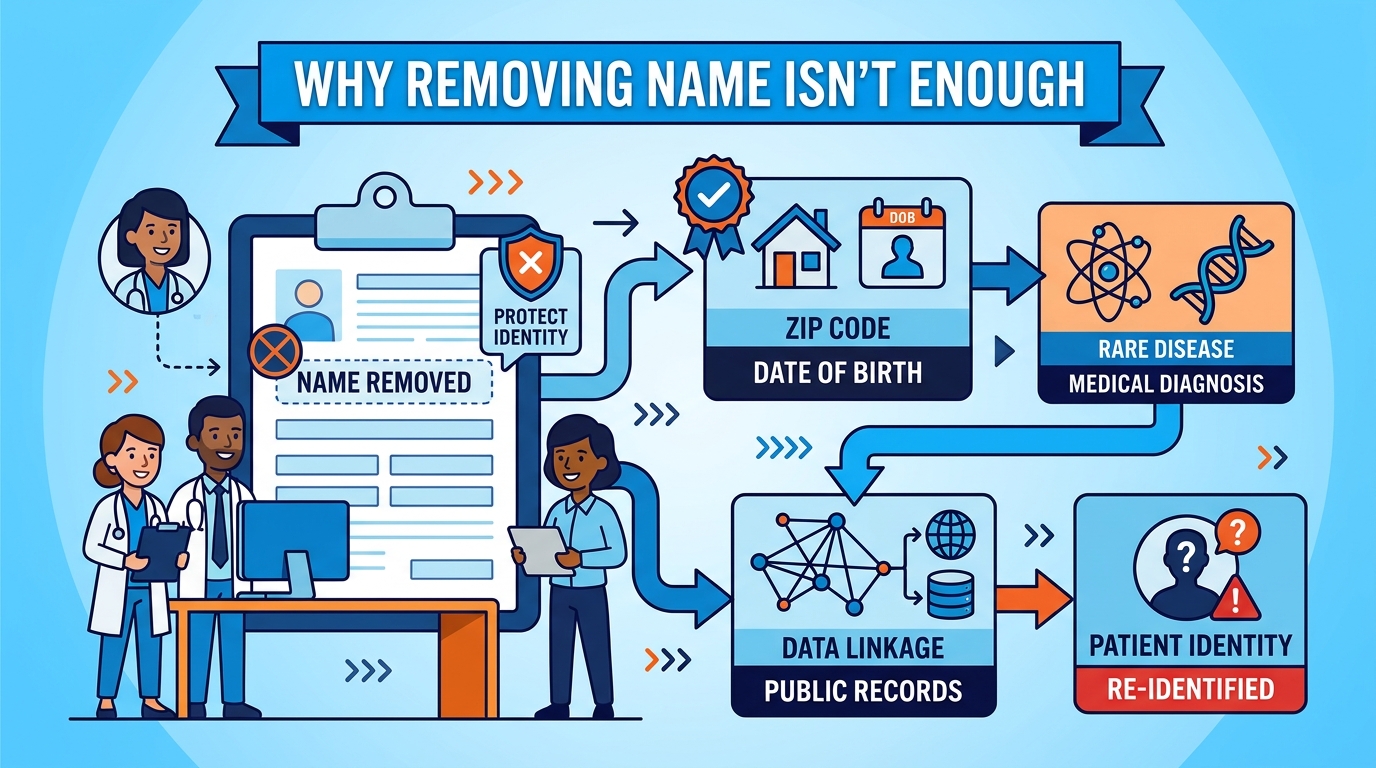
Here’s what I think. The name gets more attention than it deserves. It’s only one thread.
CASRAI says a rare diagnosis, a named treating institution, an unusual timeline or a clinical photograph can each re-identify a patient. People who know the patient can recognise them even when no name appears.
NIST defines de-identification as any process that removes the association between a set of identifying data and the data subject.
The aim is to break that association. Hiding a name doesn’t always do it.
NIST SP 800-188 lists several ways to do it. Removing identifiers. Transforming quasi-identifiers. Generating synthetic data using models.
The full list is in NIST SP 800-188 De-Identifying Government Datasets.
NIST also warns that not all tools that merely mask personal information provide enough functionality for de-identification.
A tool that blacks out a name can leave the other threads in place.
What counts as identifying information in a case summary
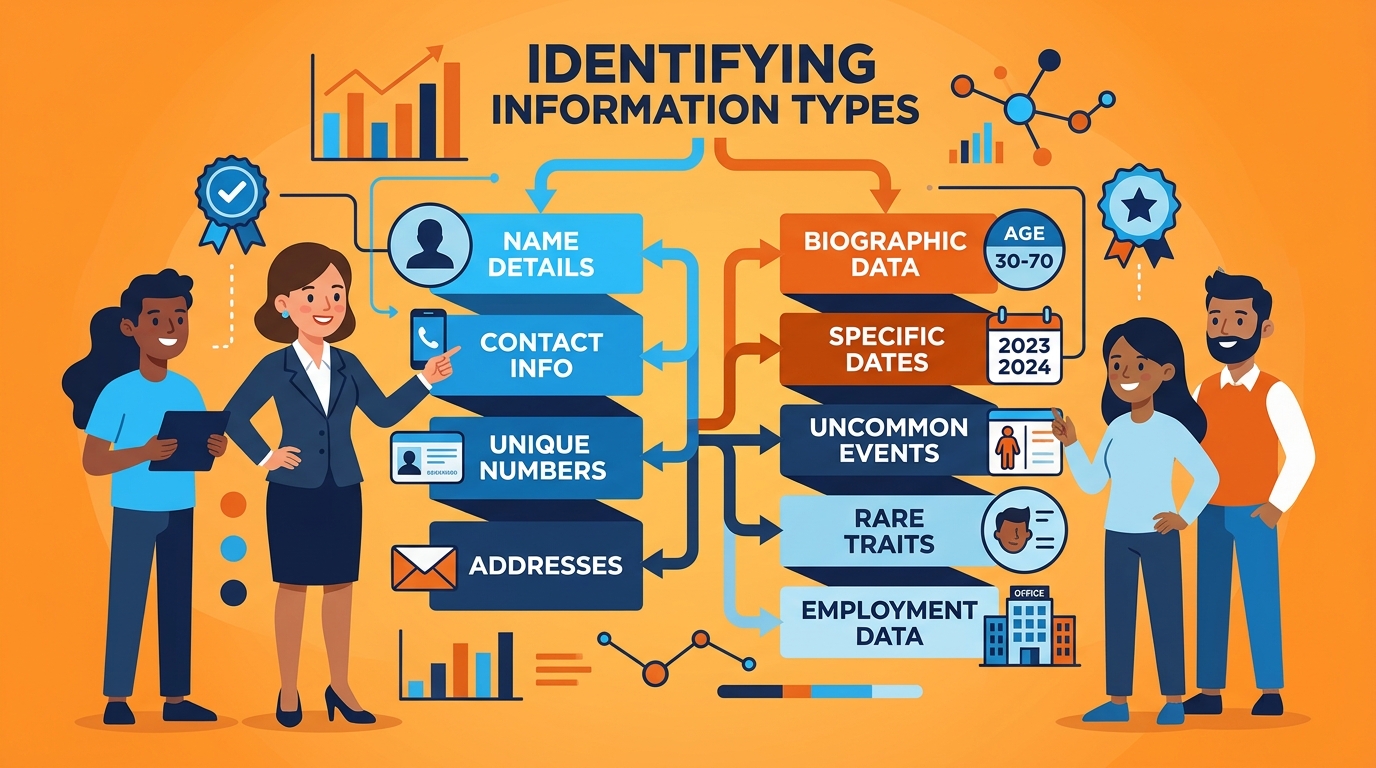
A case summary holds two kinds of identifying detail. Some you strip out. Some you make broader.
The federal list of identifiers belongs to the HIPAA side of this topic, which HIPAA-Safe Ways to Publish Chiropractic Outcome Data covers. The definitions below come from Sharing traumatic stress research data: assessing and reducing re-identification risk.
Direct identifiers to remove
Direct identifiers are the most obvious kind.
They’re variables that put people at immediate risk of re-identification. Full or partial names. Physical or email addresses. Phone numbers. Some exact dates.
Free text needs a close look too. Open-text responses can unintentionally include direct or indirect identifiers.
An Illinois Department of Public Health policy says free text fields should not be released. That covers any unstructured data that could inadvertently reveal individual identities or confidential details.
Quasi-identifiers to generalize
Quasi-identifiers are also called indirect identifiers. They don’t identify a person directly.
Used alone or combined with other data, though, they can be used to infer who the person is.
The fix is generalization. You combine more granular values into broader categories that contain more cases.
One example is recoding age from years into decades. Another is “top-coding” age, which puts everyone over 80 in one category.
How many similar cases make a detail safe to keep (k-anonymity)
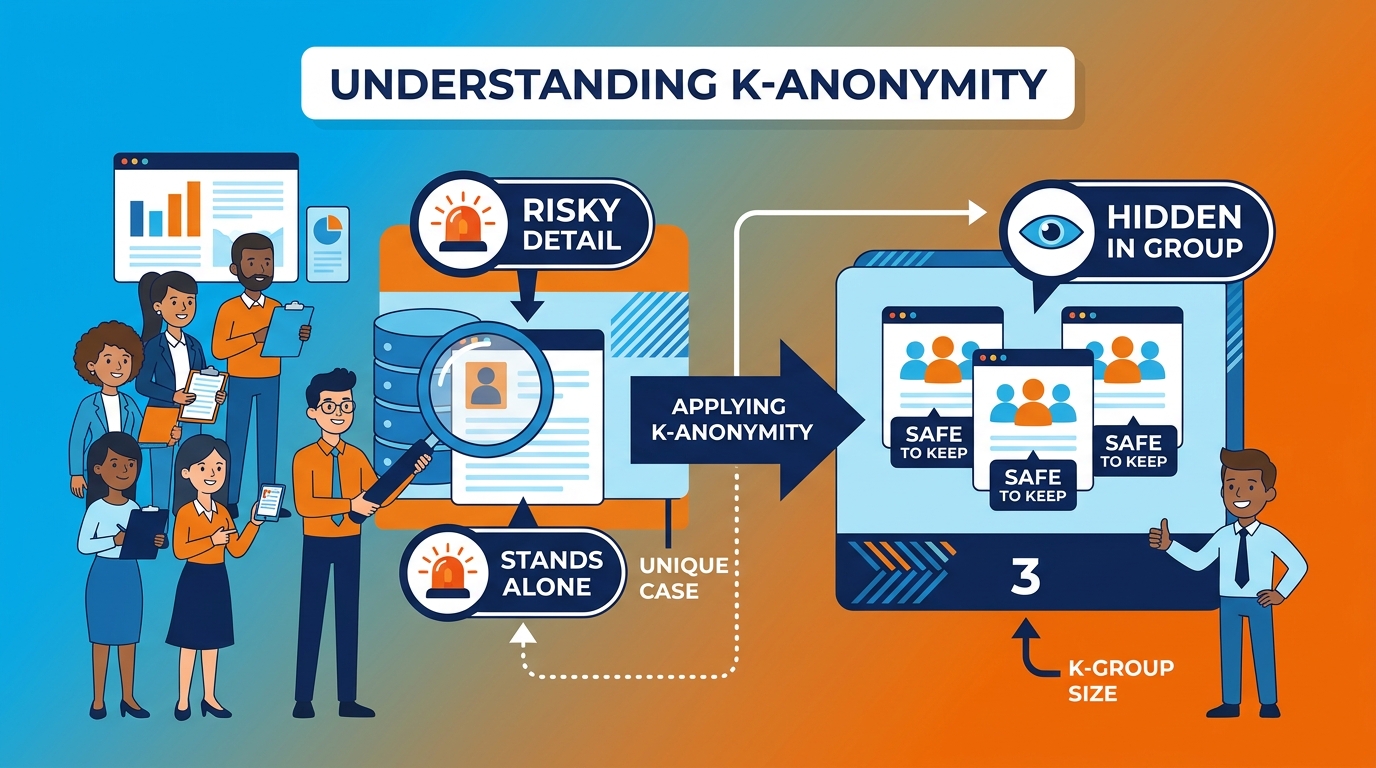
A detail is risky when it makes a case stand alone.
A case that’s the only one in a sample with a given set of quasi-identifiers is called “sample unique.” The research paper gives an example. The only 45-year-old male bus driver in a sample of disaster survivors would be sample unique based on age, sex and profession.
K-anonymity is a way to check for this.
A minimum of k = 3 is commonly suggested. That means each set of quasi-identifiers is shared by at least three cases. A combination shared by fewer than three falls below that minimum.
What a publishable case summary still has to contain
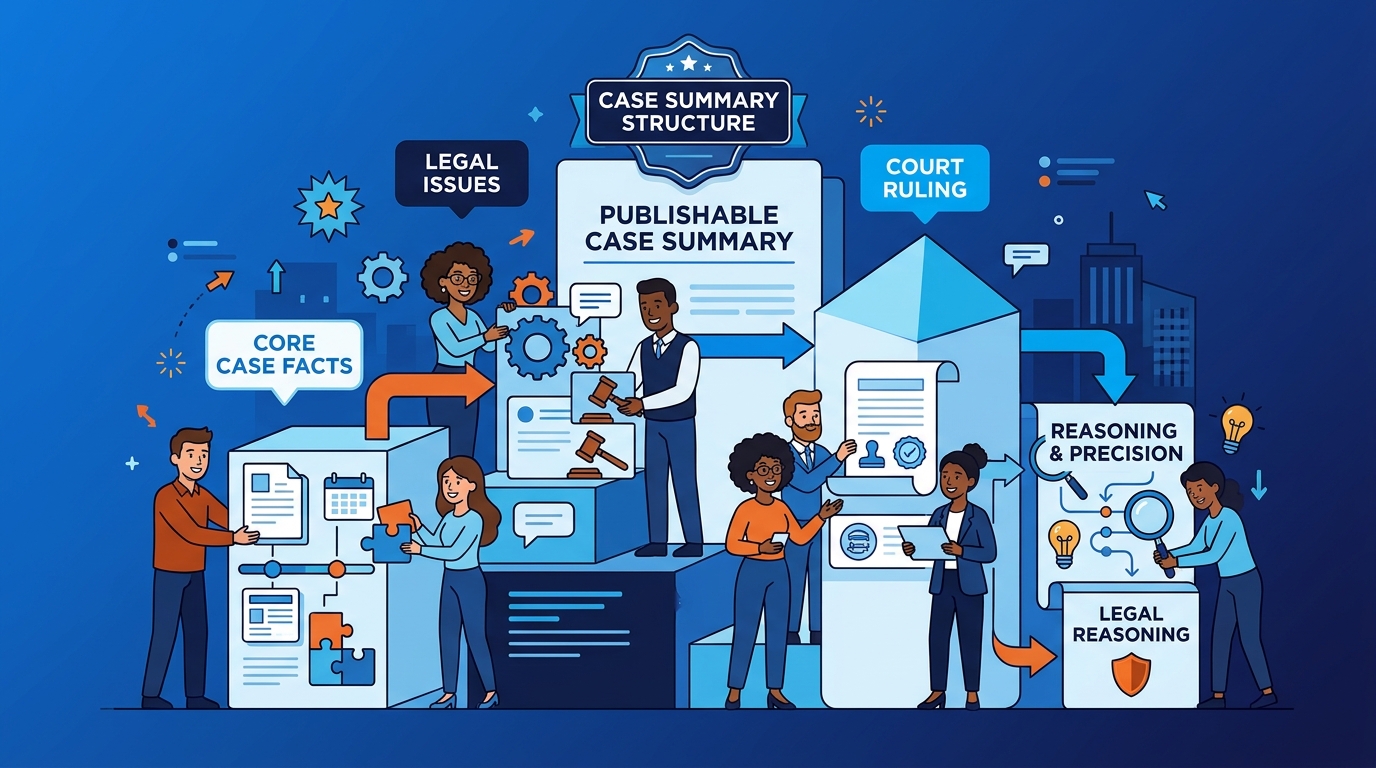
Even with the identifiers gone, the summary still has to carry the case.
Here’s my view. A summary earns its place the same way a practice earns an AI recommendation. By being easy to understand.
A tight set of facts in a sensible order does more than a longer, looser write-up.
Palmer’s guide sets the frame.
Case reports are not research. They describe what was observed or occurred in clinical settings. They’re not designed to determine cause and effect. So the summary should describe what happened without claiming a cause.
The Journal of Clinical Chiropractic Pediatrics (JCCP) lists what to keep. Its Author policy asks for:
- A brief summary of the patient’s presenting demographics, other relevant characteristics, complaints and related symptoms.
- The course of treatment, including frequency and duration.
- The patient’s clinical outcomes, using recognized outcome measures if possible.
- Whether informed consent was obtained, and whether any adverse events were reported.
JCCP also says the abstract should be 250 words or fewer.
Do your outcomes come from outside a health record? Proving Chiropractic Outcomes Without Health Records: A Complete Guide goes further on that topic.
What journals require before they’ll publish your case
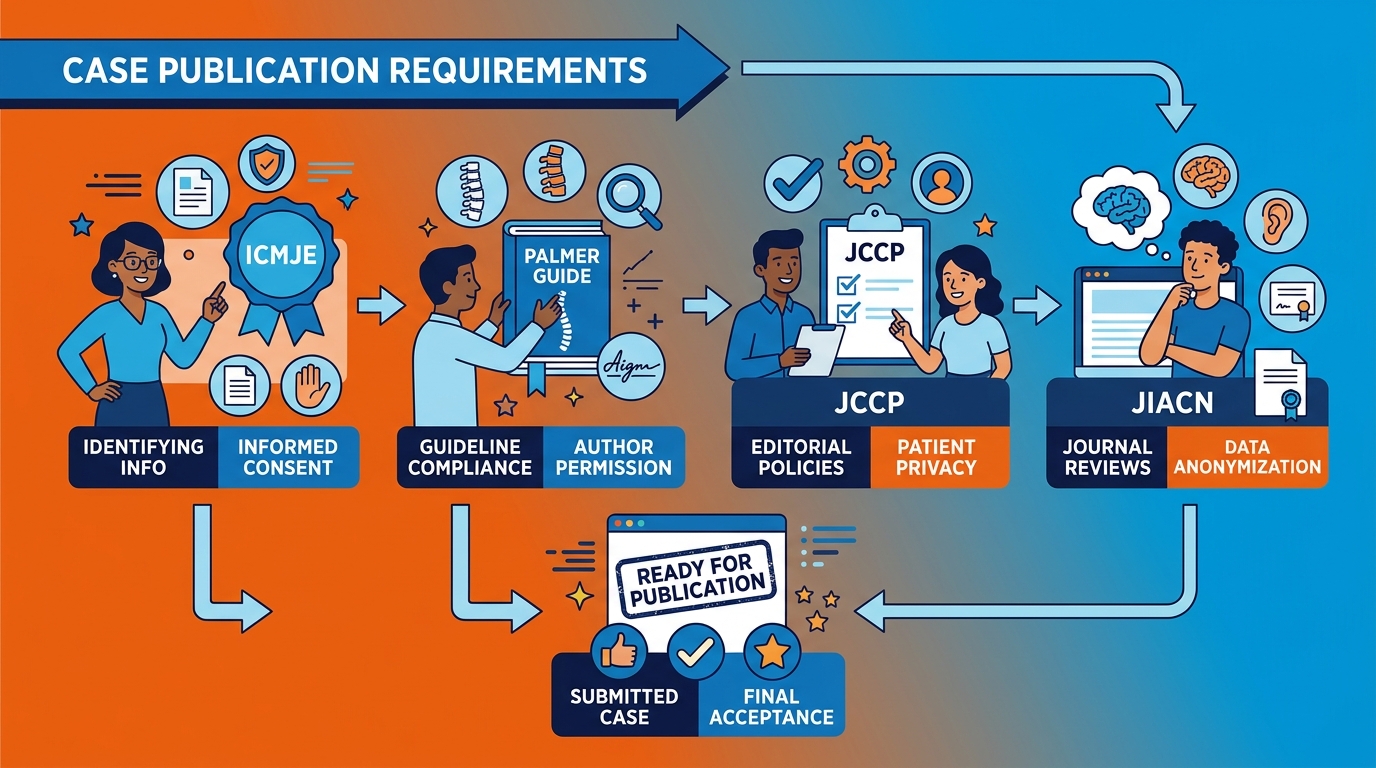
ICMJE, the Palmer College guide, JCCP and JIACN each address identifying information and consent. The details differ.
The table below sets them side by side.
| Body | Identifying information | Consent | Additional rule |
|---|---|---|---|
| ICMJE | No names, initials or hospital numbers unless essential for scientific purposes and the patient gives written informed consent | An identifiable patient must be shown the manuscript | Masking the eye region in patient photographs is inadequate protection of anonymity |
| Palmer College guide | Written so others cannot identify the person | Most scientific journals require consent forms signed by patients | IRB approval or exemption for a case series must be sought before the project begins |
| Journal of Clinical Chiropractic Pediatrics | Avoid patient names or any information that could identify a specific patient | Every case report needs a signed consent form; one permission form per case | Multiple individual forms for a case series |
| JIACN | Name and initials not published; anonymity cannot be guaranteed | Patient may refuse to sign without affecting care | Additional signed section if images of the face or distinctive body markings are published |
ICMJE’s Protection of Research Participants says names, initials and hospital numbers should not be published in written descriptions, photographs or pedigrees.
The exception is when the information is essential for scientific purposes and the patient, parent or guardian gives written informed consent for publication. That consent requires the identifiable patient to be shown the manuscript.
Authors should also tell patients whether identifiable material might be available on the Internet as well as in print after publication.
ICMJE says to leave out nonessential identifying details. If there’s any doubt that anonymity can be maintained, get consent.
Masking the eye region in a photo is not enough protection.
If authors de-identify identifying characteristics, they should assure editors that the changes do not distort scientific meaning. Written consent should be archived with the journal, the authors, or both, as local regulations or laws dictate.
Palmer College’s Case Reports LibGuide says case reports should be written so that others cannot identify the person described.
It says most scientific journals require authors to submit consent forms signed by the patients. Some journals have their own forms. Those may suggest or require that patients review the manuscript before submission.
For a case series, institutional review board approval or exemption must be sought before the project begins. Seeking it after the project is conducted or the manuscript is drafted is too late.
JCCP says patient names or any information that could identify a specific patient should be avoided.
Every case report, with or without identifying photographs, must have a consent form signed by the individual. For a minor, a parent or guardian signs. JCCP wants one permission-to-publish form per case, so a case series needs multiple individual forms.
The JIACN Patient Consent for Publication form tells patients their name and initials will not be published. It says efforts will be made to conceal their identity, but anonymity cannot be guaranteed.
Patients may refuse to sign. Refusing will not affect their care.
If images of the patient’s face or distinctive body markings are to be published, an additional section should be signed.
Here’s what these rules show about answer engine optimization.
As I see it, an engine deciding whom to recommend isn’t counting keyword placements or inbound links. It’s looking for a source it can understand and trust. Published anonymity and consent standards are the kind of trust signal it can recognize.
Getting consent without losing the right to publish later
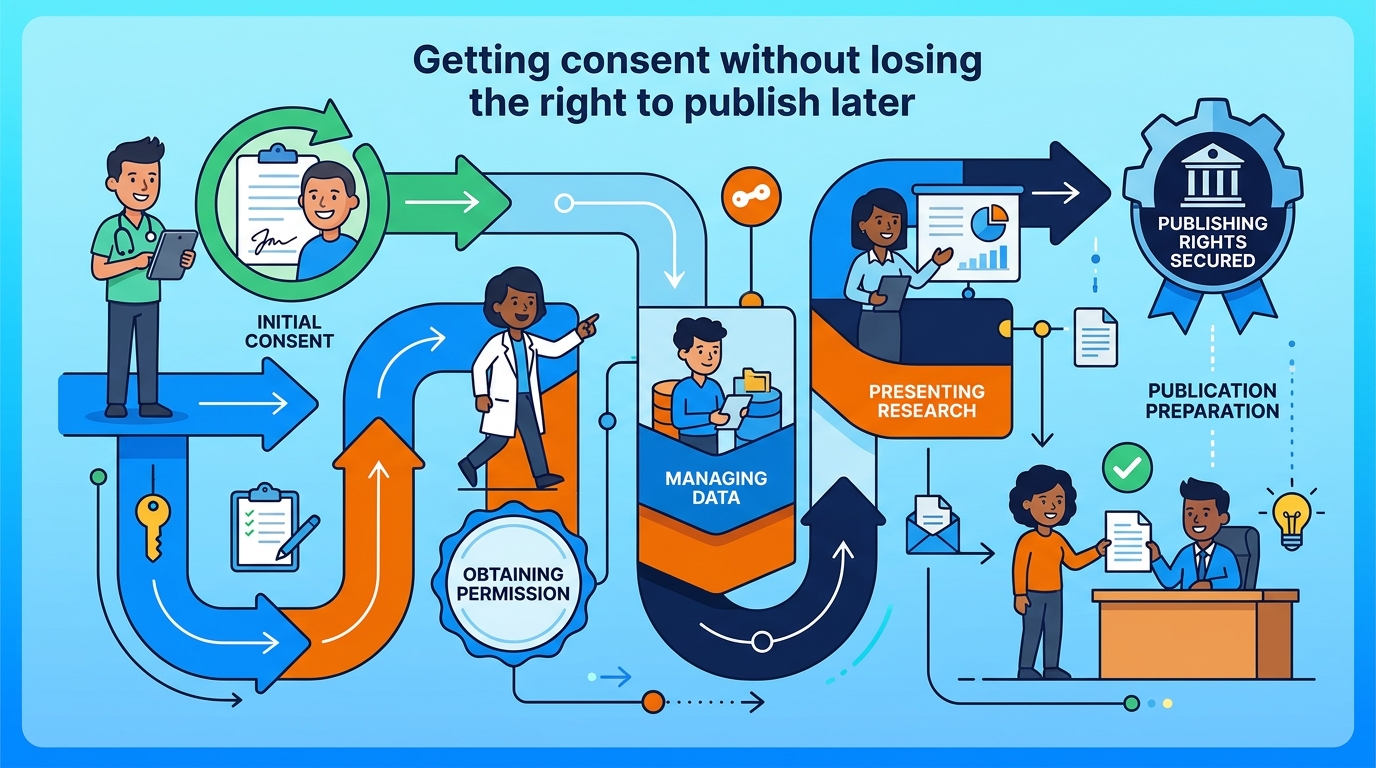
Consent comes up at several points in the life of a case report.
CASRAI covers them in Patient Consent for Case Report Publication.
First, timing.
CASRAI advises getting consent after the manuscript is drafted and showing the patient the draft, including any images.
Second, altered details.
Changing a patient’s stated age or occupation to protect them is acceptable only if the change is disclosed. And it can’t mislead the reader about the case.
Third, when consent may not be needed.
A fully de-identified retrospective case series drawn from a chart review may not require individual publication consent. But only if no detail is specific enough to permit re-identification.
The test is genuine de-identification. Not just leaving out the patient’s name.
Fourth, approvals.
IRB approval or exemption does not substitute for patient consent to publish. One is research-ethics oversight. The other is publication authorization.
Fifth, the law.
In the US, a separate question can arise. Is disclosing the underlying clinical information to the authors or the journal permitted under HIPAA? That’s governed by its own rules, including 45 CFR 164.512(i).
Last, withdrawal.
If a patient withdraws before publication, honour it. Withdraw the manuscript or remove the identifying material.
How Often Should You Refresh Published Outcome Data? covers keeping published material current.
Frequently Asked Questions
Can I publish a case report without any patient consent?
Only in a narrow case.
CASRAI says a fully de-identified retrospective case series from a chart review, with no detail specific enough to permit re-identification, may not require individual consent. The test is genuine de-identification. Not just leaving out the name.
IRB approval or exemption does not substitute for patient consent to publish.
Is HIPAA a separate issue from journal consent rules?
Yes.
CASRAI says that in the US, a separate question can arise. Is disclosing the underlying clinical information to the authors or the journal permitted under HIPAA? That question has its own rules, including 45 CFR 164.512(i).
What if the patient withdraws consent after I’ve drafted the write-up?
Honour it.
CASRAI advises getting consent after the manuscript is drafted and showing the patient the draft, including any images. If the patient withdraws before publication, withdraw the manuscript or remove the identifying material.
Can I change the patient’s age or occupation to protect them?
Yes. But only if you disclose the change and it doesn’t mislead the reader about the case. That’s CASRAI’s line.
Does removing identifying details change what the case report can claim?
No. The limit comes from the case report itself.
Palmer’s guide puts it plainly. Case reports are not research. They describe what was observed or occurred in clinical settings. They’re not designed to determine cause and effect.
Strip, generalize, keep, document
A name is not enough.
CASRAI says a rare diagnosis, a named treating institution, an unusual timeline or a clinical photograph can each re-identify a patient. NIST defines de-identification as removing the association between identifying data and the data subject. Palmer’s guide says a case report should be written so that others cannot identify the person.
Here’s my view. The full answer comes down to four steps.
Strip the direct identifiers. Generalize the quasi-identifiers. Keep the clinical elements the journal requires. Document consent before anything goes public.
IRB approval or exemption does not substitute for it.
iTech Valet Service Plans & Pricing explains how iTech Valet’s work is done. When you’re ready to see how AI describes your practice today, Run My AI Visibility Check.