
Google’s 2019 guidance said a substantially changed article can get a fresh date and time. It also said not to artificially freshen a story without adding significant information or some other compelling reason. Google advised that when a page is significantly updated, the visible date should be updated too, and a page may show both the date it was first published and the date it was updated. Google lists changing page dates to make content seem fresh, when the content has not substantially changed, as a warning sign of search-engine-first content. In AI citation tests run outside healthcare, one study found that including explicit price information and a recent timestamp also helps consistently.
Why Freshness Matters When AI Engines Retrieve Outcome Data

Here’s what I think counts: the machinery.
What a retrieval system weighs when it picks a source to cite.
It starts with a problem researchers describe.
Many real-world domains are inherently dynamic. Facts change. Entities pick up new attributes. Relations that were once valid go out of date.
Large language models (LLMs) have a related weakness. Their training data can hold outdated knowledge. It can miss information from specific domains. And they can hallucinate.
Retrieval-augmented generation (RAG) is the response.
It’s a family of techniques where an LLM can retrieve data from external sources when it answers a question. Researchers call it a promising solution. Why? It brings in knowledge from external databases.
A dated, current source gives that kind of system something to retrieve.
One study found that including explicit price information and a recent timestamp also helps consistently in being cited. An audit of what gets cited found the pillars most strongly associated with citation. Metadata & Freshness. Semantic HTML. Structured Data.
These findings come from tests outside healthcare.
Price details aren’t something a chiropractic outcomes page usually carries. So in my view, this is a strong hint about how retrieval works. Not a rule written for chiropractors.
What Google’s Date Signals Say About Freshness
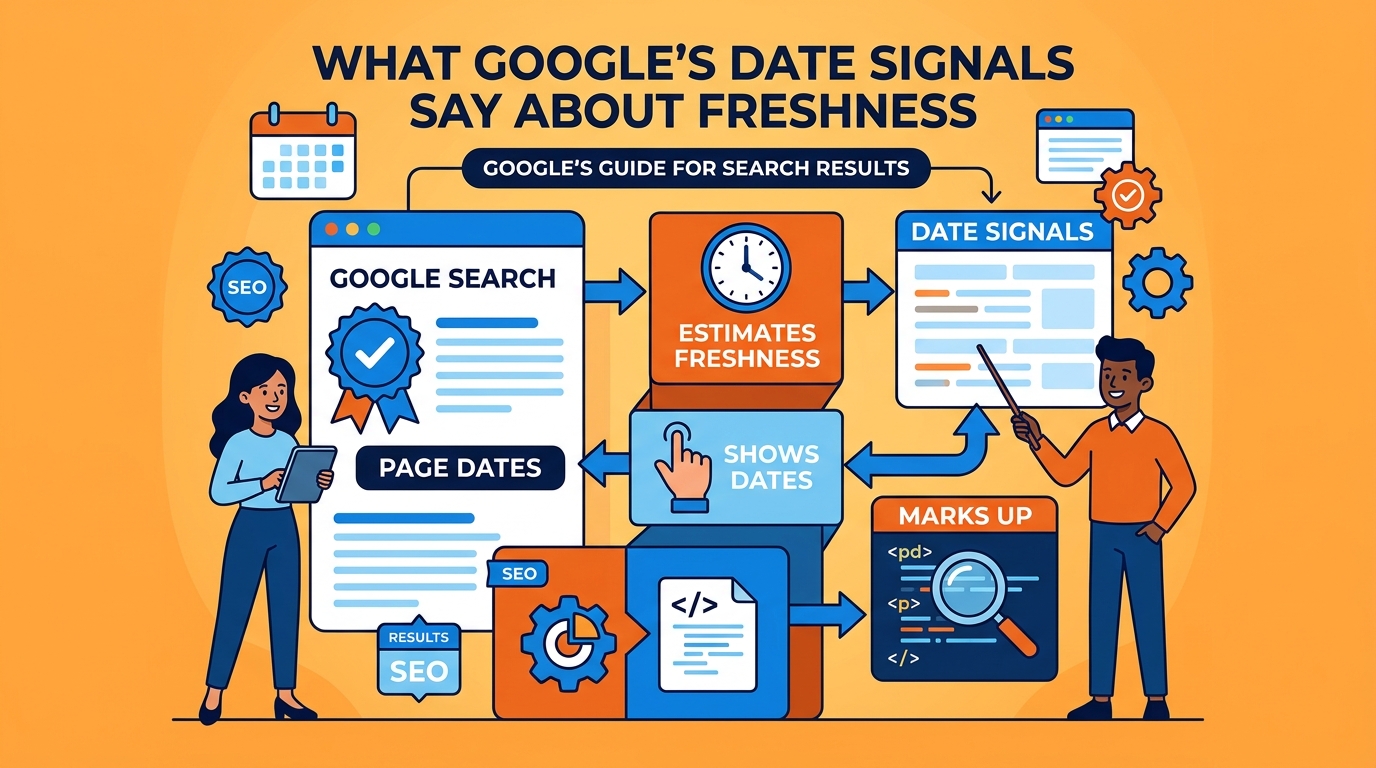
Google has written down how it estimates, shows, and marks up page dates in its Add a Byline Date to Google Search Results page.
Here’s how those rules line up for outcome data.
| Signal | Google’s guidance |
|---|---|
| Visible date label | Prominent user-visible date, labelled with text like “Publish” or “Last updated” |
| Structured data dates | A CreativeWork subtype (such as Article or BlogPosting) with datePublished and/or dateModified |
| Date format | ISO 8601 for dates in structured data |
| Precision | Date required; time not required, but time and timezone recommended |
| Consistency | Visible and structured dates (and any time and timezone) should match |
| What the date describes | When the page was published or updated, not the stories or events on it |
| Significant update | Update the visible date; showing both the original and the update date is optional |
How Google Estimates a Page’s Date
Google doesn’t lean on a single date factor. Every factor can be prone to issues.
So its systems look at several. Then they reach a best estimate of when a page was published or significantly updated.
Say your page follows the best practices and Google still picks the wrong date. Google’s advice? Remove some or all of the other dates on the page.
Visible Date and Structured Data Must Match
Google wants a user-visible date. Featured prominently. Labelled with text like “Publish” or “Last updated.”
It also recommends structured data.
That means a CreativeWork subtype, such as Article or BlogPosting, with datePublished, dateModified, or both.
In the markup, the date is required. The time isn’t.
Google still recommends a time and timezone for added precision. And dates in structured data should use the ISO 8601 format.
The visible date and the structured date should match. That includes the time and timezone, if you give them.
One more rule matters for outcome data.
A page date describes when the page was published or updated. Not the events on it. A report on last spring’s patients carries the date the page was published or updated. Not the dates of those visits.
Google doesn’t guarantee it will use a date given in structured data.
But following its guidelines helps. It gives the algorithms the date in a machine-readable way.
Why Faking a Fresh Date Backfires
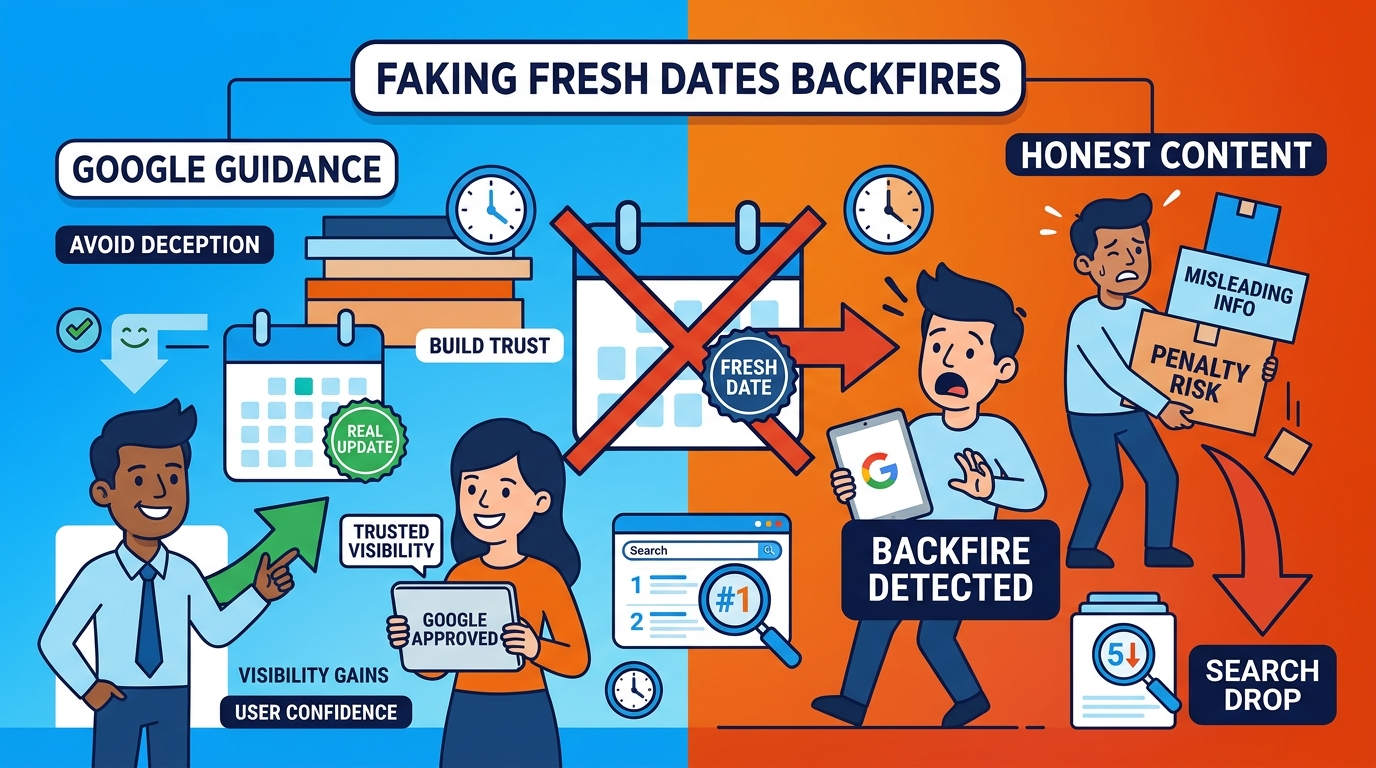
Google’s 2019 guidance is plain.
If an article has been substantially changed, a fresh date and time can make sense. But don’t artificially freshen a story. Not without adding significant information or some other compelling reason. The guidance is in Help Google Search know the best date for your web page.
The same guidance says what a real update looks like.
When a page is significantly updated, update the visible date too. If you like, show two dates. When the page was first published. And when it was updated.
Google also names the opposite habit as a warning sign of search-engine-first content.
Changing page dates to make them seem fresh. When the content hasn’t substantially changed.
Google’s John Mueller gave a similar answer when asked about refreshing title tags for the new year.
He said hacks for traditional search optimization don’t make a site great. He told site owners to give their content and users the respect they deserve.
I take the same view of dates. A date with nothing new behind it is a trick. Not a refresh.
How Fast an Update Reaches Google
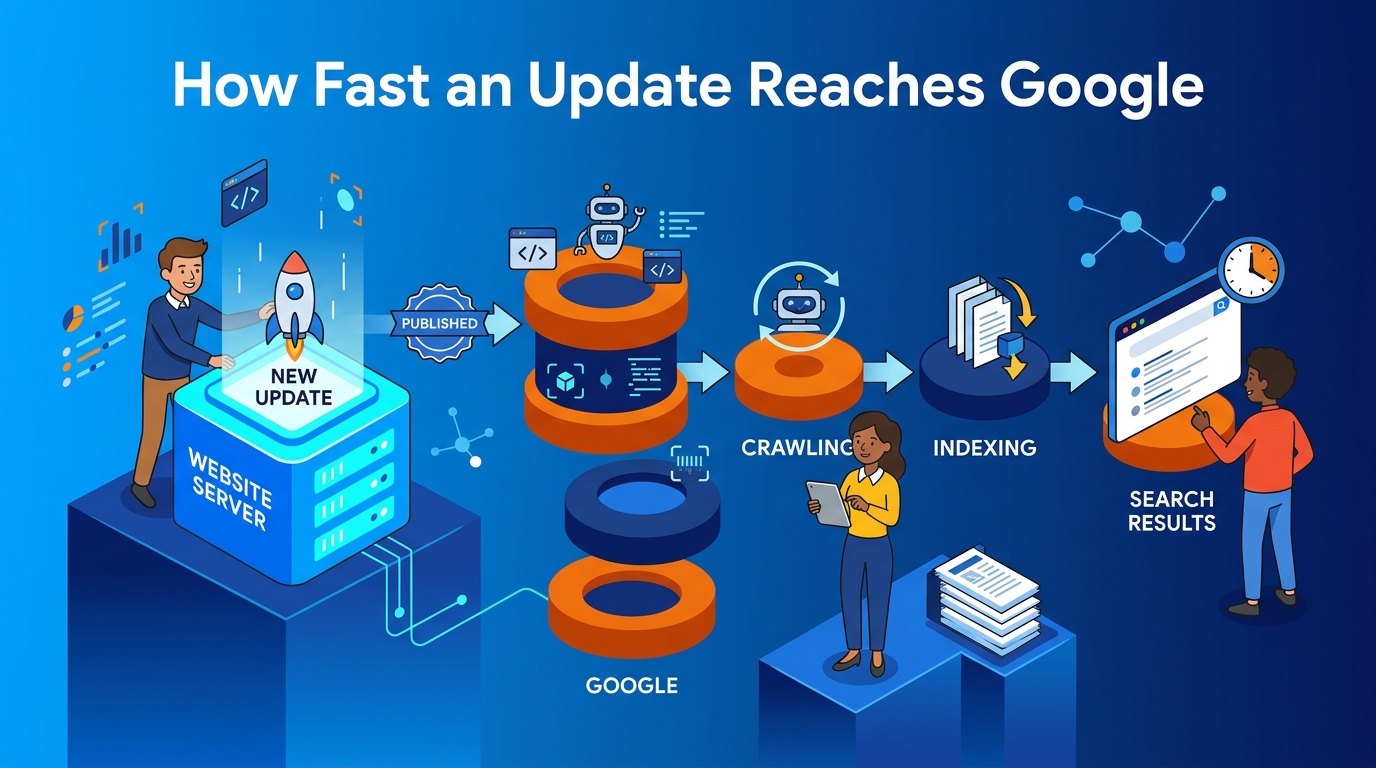
Even a real update takes time to be seen.
Google says it strives to check and index pages in a reasonably timely manner. For most sites, that’s three days or more.
A sitemap can help Google learn about a site.
It doesn’t guarantee indexing. And it doesn’t increase a site’s ranking.
Google says its crawl-management advice isn’t needed in two cases. A site without a large number of rapidly changing pages. Or a site whose pages seem to be crawled the same day they’re published.
Then there’s churn.
Several times a year, Google makes significant, broad changes to its search algorithms and systems. Google also once ran an algorithm called query deserves freshness (QDF). It tried to work out when users wanted new information and when they didn’t, as Search Engine Journal explains in Is Fresh Content A Google Ranking Factor?
I don’t build a refresh plan around any of this.
Answer engine optimization is a different discipline from traditional search optimization. It’s not the same work with new labels. Index timing, keyword targeting, and acquiring inbound links are tools for winning the old results-page game.
I think an AI engine is asking something else. Can it make sense of this practice? Can it believe what the page says?
For a page of outcome data, that comes down to one thing. Are the dated facts real?
How Often Chiropractors Actually Collect New Outcome Scores
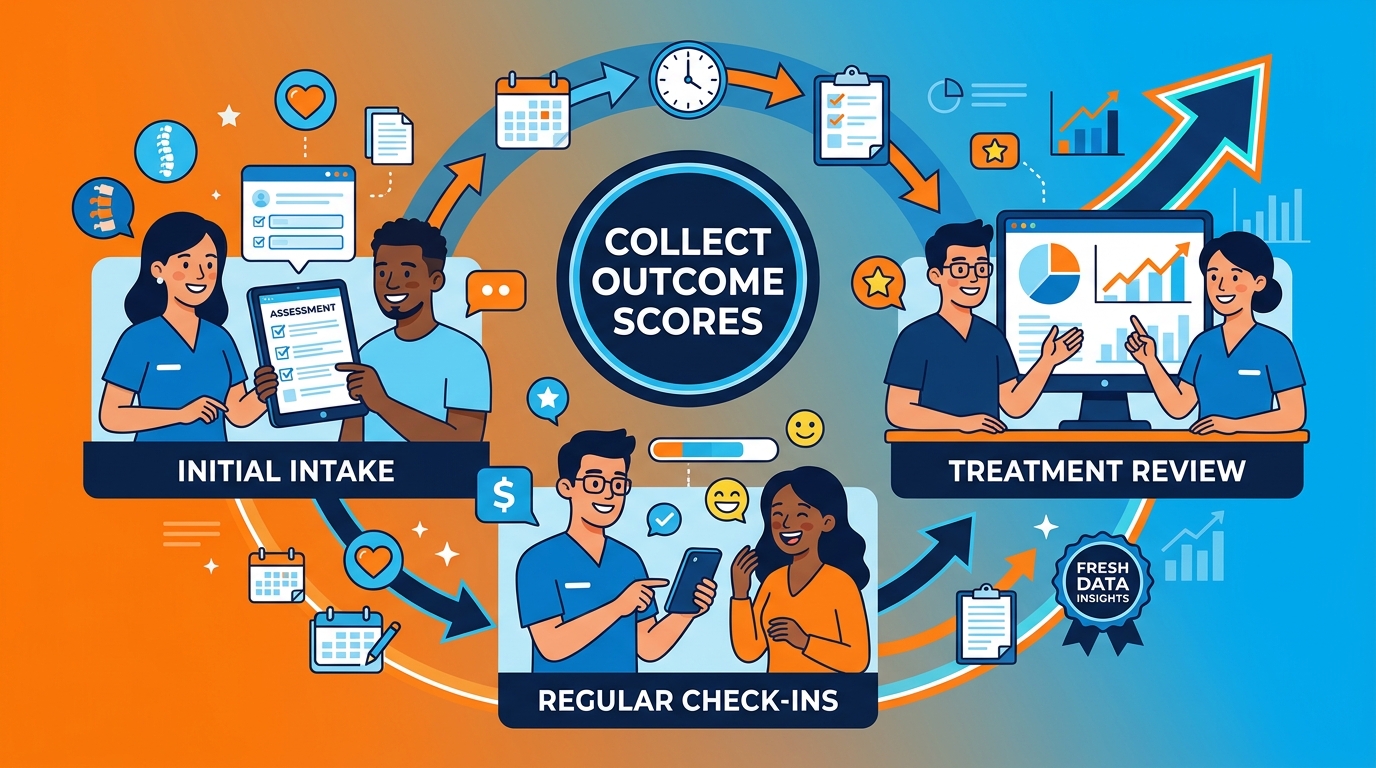
Published data can only be as fresh as the scores behind it.
No new scores, nothing new to publish. For the wider picture on proving results, see Proving Chiropractic Outcomes Without Health Records: A Complete Guide.
No clinical rule sets the timing.
Best practices for musculoskeletal pain care recommend evaluating progress with patient-reported outcome measures (PROMs). Those are the scores patients give about their own condition. But the guidance stops there. No objective advice on the timing of initial and follow-up assessment. None on how often to repeat the measures, whether after a set number of visits or a set period of time.
A survey of chiropractors in the Veterans Health Administration (VHA) shows what happens in practice: Chiropractor perspectives on the use of patient reported outcome measures: a survey of VHA chiropractors.
Over the prior 12 months, respondents used PROMs with a median of nearly all patients (95.0%) at initial visits. At follow-up visits, it was about three-quarters (74.5%).
So fewer patients get scored at follow-up.
A second figure from the same survey measures something different.
The medians describe the share of patients each chiropractor scored. The 121 respondents (nearly two-thirds, 64%) are a count of chiropractors. They cleared a cutoff: they used PROMs for more than half (50%) of their patients at both initial and follow-up visits.
Those are survey answers.
The same paper cites an earlier analysis of national VHA chiropractic health records. It confirmed that PROM documentation sat below target levels. It showed up in fewer than one in five of all notes (17%). And for just over a third of unique patients (36%).
One figure counts notes. The other counts patients.
A separate paper, Impact of a targeted education package on PROM utilisation amongst chiropractors in Australia, looked at a targeted education package for PROM use among chiropractors in Australia.
A Refresh Rule Built on Real Changes, Not a Calendar
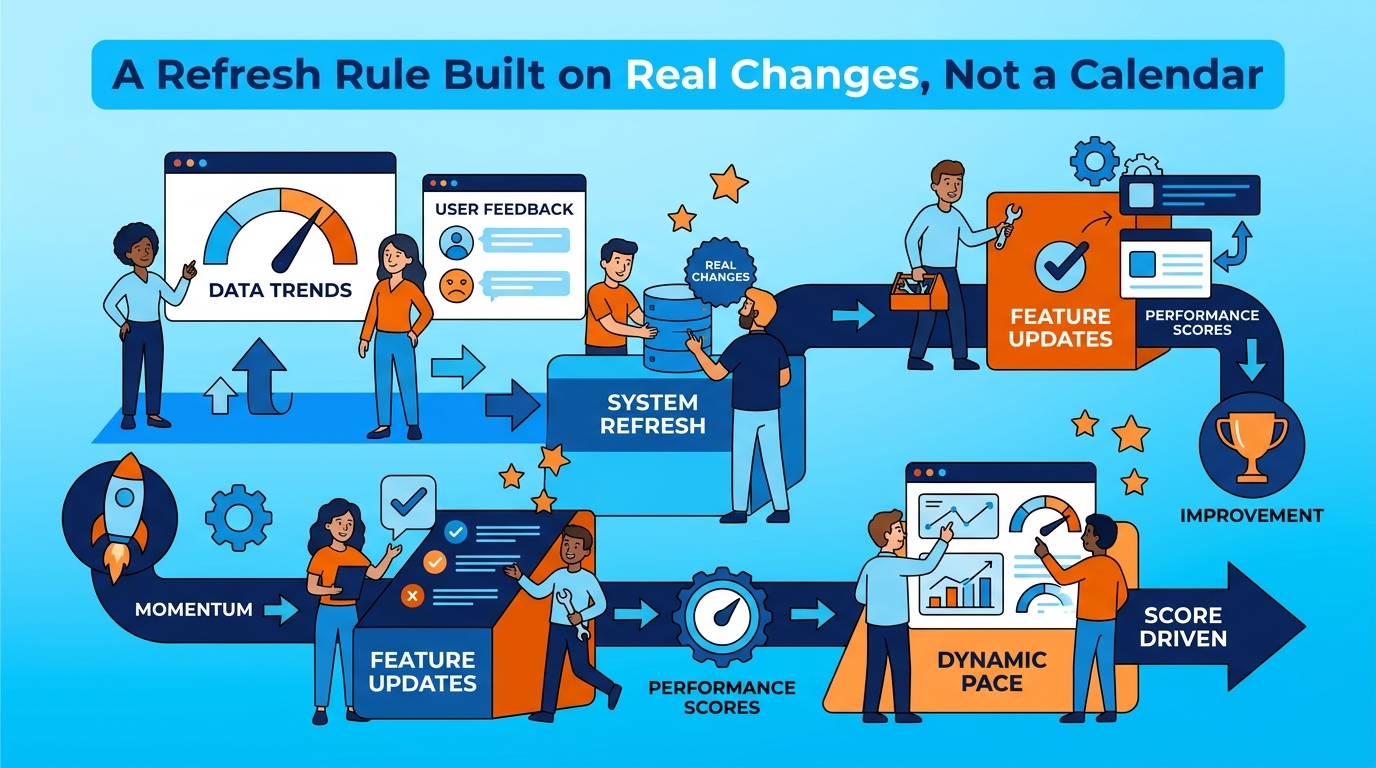
The scores set the pace. So here’s the rule I’d use.
- Refresh when a new round of scores substantially changes the numbers. A collection cycle that moves the numbers is a real change. A new month on the calendar isn’t.
- Update both dates together. When the numbers change, change the visible date and the structured date at the same time.
- Leave the date alone when the data did not change. A new date on old numbers is the cosmetic freshening described above.
I think an AI engine favours the practice whose facts it can follow. Not the one that publishes most often.
In my view, one real update with new numbers, set out clearly, is worth more than a stream of small edits. The kind that only move a date.
Outcome data may also live in more than one place. Should You Publish Outcome Data Across Multiple Platforms? covers that.
For the credentialing side, see What Credentialing Bodies Say About Publishing De-Identified Outcomes.
Frequently Asked Questions
Does changing the date on a page make it look fresher to AI engines?
No. The date has to follow a real change.
A substantially changed article can get a fresh date and time. But Google says not to artificially freshen a story. Not without adding significant information or some other compelling reason.
Google’s John Mueller said hacks for traditional search optimization don’t make a site great. Site owners should give their content and users the respect they deserve. Google also lists changing dates to make pages seem fresh, when the content hasn’t substantially changed, as a warning sign of search-engine-first content.
Do visible dates and structured data dates need to match?
Yes. Google says the visible date and the structured-data date should match. That includes the time and timezone, if you give them.
Google asks for a prominent user-visible date. Labelled with text like “Publish” or “Last updated.” It also recommends a CreativeWork subtype, such as Article or BlogPosting, with datePublished, dateModified, or both.
Does a sitemap keep outcome data pages fresh in Google’s index?
No. A sitemap can help Google learn about a site. It doesn’t guarantee indexing. It doesn’t increase a site’s ranking.
Google says it strives to check and index pages in a reasonably timely manner. For most sites, that’s three days or more.
Why does recency matter for AI tools that cite sources?
Because facts change.
Many real-world domains are inherently dynamic. Relations that were once valid become outdated. One study found that including explicit price information and a recent timestamp also helps consistently in being cited. An audit found that Metadata & Freshness, Semantic HTML, and Structured Data were the pillars most strongly associated with citation.
That research comes from outside healthcare.
How often do chiropractors actually collect follow-up outcome scores?
Less often than at first visits.
In a survey of VHA chiropractors, the median share of patients with whom respondents used PROMs over the prior 12 months was nearly all (95.0%) at initial visits. At follow-up visits, it was about three-quarters (74.5%). Count it another way and 121 respondents (nearly two-thirds, 64%) cleared a cutoff. They used PROMs for more than half of their patients at both kinds of visit.
The Refresh Rule in One Place
Refresh published outcome data when new scores substantially change the numbers. Update the visible date and the structured date together. Never re-date data that hasn’t changed.
Google says a substantially changed page can get a fresh date. It lists changing dates to make unchanged content seem fresh as a warning sign.
Clinical best practices give no objective guidance on how often to repeat the scores. So real changes in the numbers should set the schedule.
The iTech Valet Service Plans & Pricing page explains how the work is done. To see how AI engines treat your practice today, Run My AI Visibility Check.