
A randomized field experiment, where people were put into groups by chance, found that Google’s AI (artificial intelligence) Overviews cut organic clicks to outside websites by 38% on the searches where they appear. Organic clicks are clicks on regular, unpaid results. When the summaries are removed, people’s self-reported search satisfaction stays nearly unchanged. In a survey of 384 U.S. healthcare consumers, 95% of respondents have either booked a medical appointment online or would if it was available. Also, 78% of health systems have adopted some form of self-service scheduling, yet only three out of 10 consumers who try to book a healthcare appointment online will succeed.
How AI Answers Cut the Clicks That Used to Reach a Practice
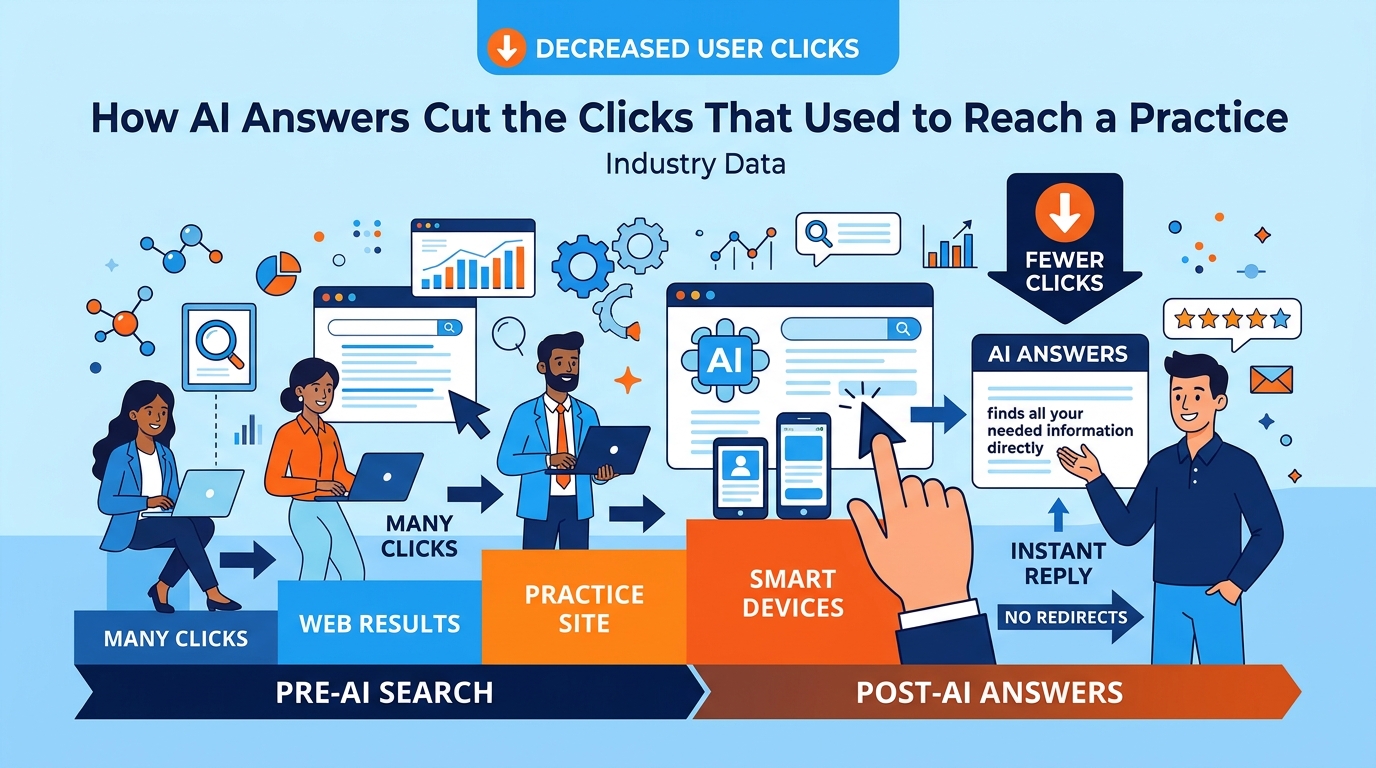
Here’s what the industry data says.
One industry analysis, cited in a paper on arxiv.org, found that organic click-through rates for position-one results fell from 28% to 19%. The cause is AI Overviews. Position one is the top organic spot.
The same analysis says zero-click searches now make up more than half (over 58%) of all queries.
Here’s a real experiment.
Search Engine Journal reports a randomized field experiment in Study Confirms Google AI Overviews Cut Organic Clicks 38%. People were put into groups by chance. Google’s AI Overviews reduce organic clicks to external websites by nearly four in ten (38%) on queries where they appear.
Take the summaries away and self-reported search satisfaction stays nearly unchanged.
AI Overviews appeared on about four in ten queries (42%). Removing them raised outbound clicks from 0.38 to 0.61 per search. Outbound clicks are clicks to outside websites. Zero-click searches end with no click to an outside site. They rose from 54% to 72%.
Here’s where it gets sharper.
Where the Overview sat made a big difference. The effects were strongest when it appeared at the top of the page. That happened more than eight times in ten (85%). Removing top-position Overviews nearly doubled outbound clicks.
Lower ones had no effect.
Pew Research found that users click 8% of the time with AI Overviews, compared to 15% without.
PPC Land, in Researchers find Google AI Overviews cut publisher clicks 39.8%, reports on a paper with a similar finding. Outbound organic clicks fell by about 40% (39.8%) when an AI Overview was shown. Zero-click searches rose by about a third (34.5%).
Clicks on sponsored results stayed flat.
PPC Land also reported on Seer Interactive research, published November 4, 2025. It looked at 42 client organizations.
On searches that show an AI Overview, the organic click-through rate fell by about six in ten (61%) between June 2024 and September 2025. On those same searches, the paid click-through rate fell by just over two-thirds (68%).
MediaNama, in Ahrefs Study: Google AI Overviews Cut Clicks By 58%, reports Ahrefs data gathered in December 2025. An AI Overview on the results page led to a drop of nearly six in ten (58%) in click-through rate for the top-ranking result.
It hits the next spots too. Click-through rate fell about half (50.8%) for links in second place. It fell nearly half (46.4%) for links in third place.
MediaNama also notes that features like Featured Snippets, Local Packs, and Top Stories increasingly resolve searches right on the results page.
Here’s how I read it.
When the top spot sits under an answer that takes the click, I stop counting position as a success measure. I treat a rank report as a number that looks good and drives nothing. I judge your practice by whether it gets found, not by where it sits in a list.
Here’s the whole picture. The table below puts the studies side by side.
| Study | What changed | Figure |
|---|---|---|
| Industry analysis cited on arxiv.org, position-one results | Organic click-through rate | 28% to 19% |
| Randomized field experiment (Search Engine Journal) | Organic clicks to external websites | Down 38% |
| Paper reported by PPC Land | Outbound organic clicks when an AI Overview was shown | Down 39.8% |
| Ahrefs, top-ranking result | Click-through rate | Down 58% |
| Seer Interactive, 42 client organizations | Organic click-through rate on AI Overview queries, June 2024 to September 2025 | Down 61% |
| Pew Research | Click rate with vs without AI Overviews | 8% vs 15% |
Which Searches Lose the Most Clicks
In the paper PPC Land covered, informational queries, which are searches for information, made up 71% of all searches in the sample. They showed a large effect that was statistically significant, meaning it was too big to be an accident of chance. The effect was a 0.26 increase in clicks per search. Navigational queries, which are searches to reach a specific site, were 18% of the sample. Transactional queries, which are searches to buy or act, were 12%. Their effects were not statistically distinguishable from zero. That means they were too small to tell apart from no effect at all.
Google’s AI Mode Cuts Clicks Further
Search Engine Journal reports that participants sent to Google’s AI Mode clicked through to outside websites less than the other groups. More of their searches ended with no click to an outside site.
They were also less satisfied at the end of the study.
PPC Land reports the numbers. Among participants who stayed compliant, people using AI Mode averaged 0.36 clicks per search to outside websites. The control group averaged 0.53.
That’s a drop of about 0.17 clicks per search.
Most Local Searchers Check More Than One Channel
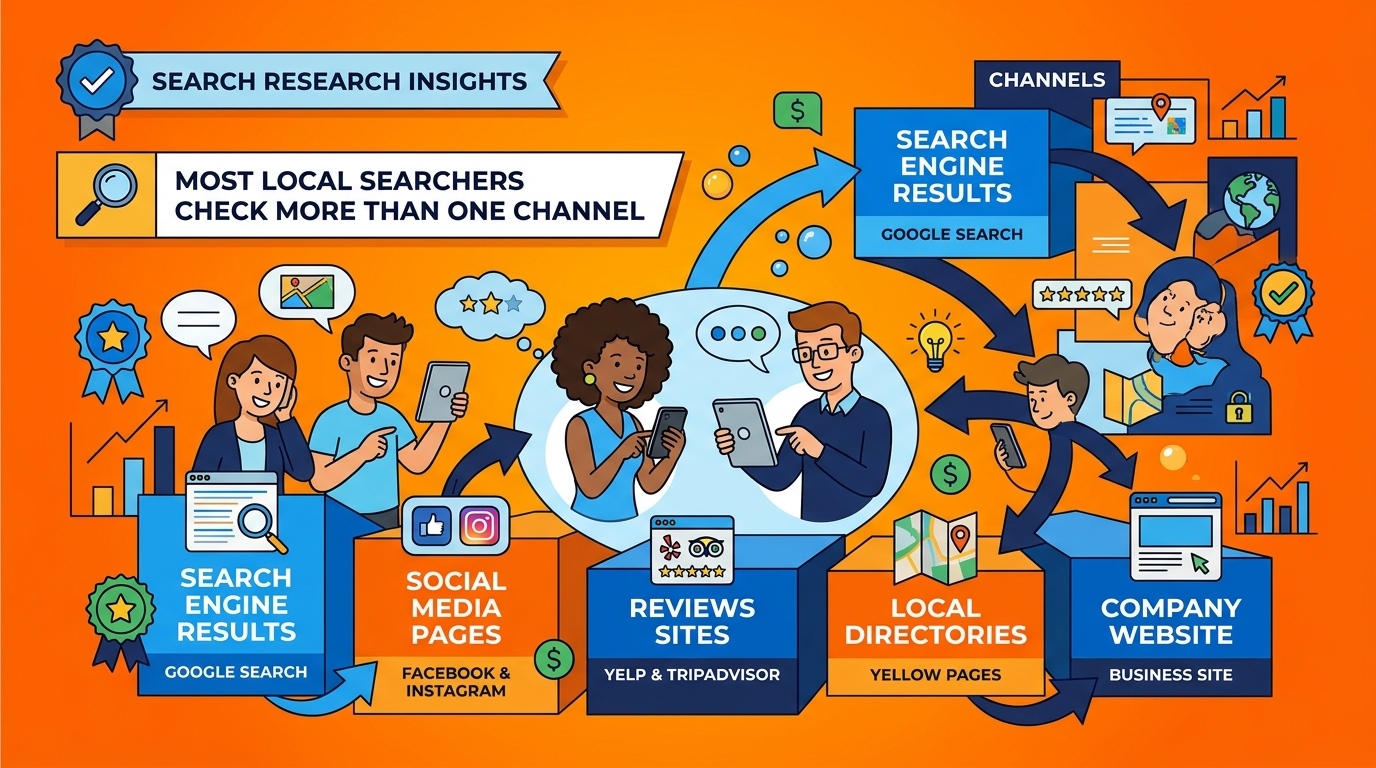
Here’s what the research says.
Google is #1 for local search. But three-quarters of consumers use more than one channel. That’s from BrightLocal’s consumer research, Google is #1 for local search, but three-quarters use more than one channel.
Your patients cross-check. So I build every recommendation to survive it.
I’d rather your practice be the source an AI names and draws on than one more line in a directory. I rank being relied on above being present.
I put your practice’s effort and money into clear, credible information you own. The same facts your patient meets on every channel. That’s visibility that keeps paying off and grows over time.
A paid placement is different. That visibility stops the day the spending stops.
I wrote about what happens when the name is given in When a Named Recommendation Converts Better Than a Listed Option. I looked at the trust question in Sponsored Ads vs. Conversational Answers: Which Do Patients Trust More?
What Patients Do Once They Decide to Book
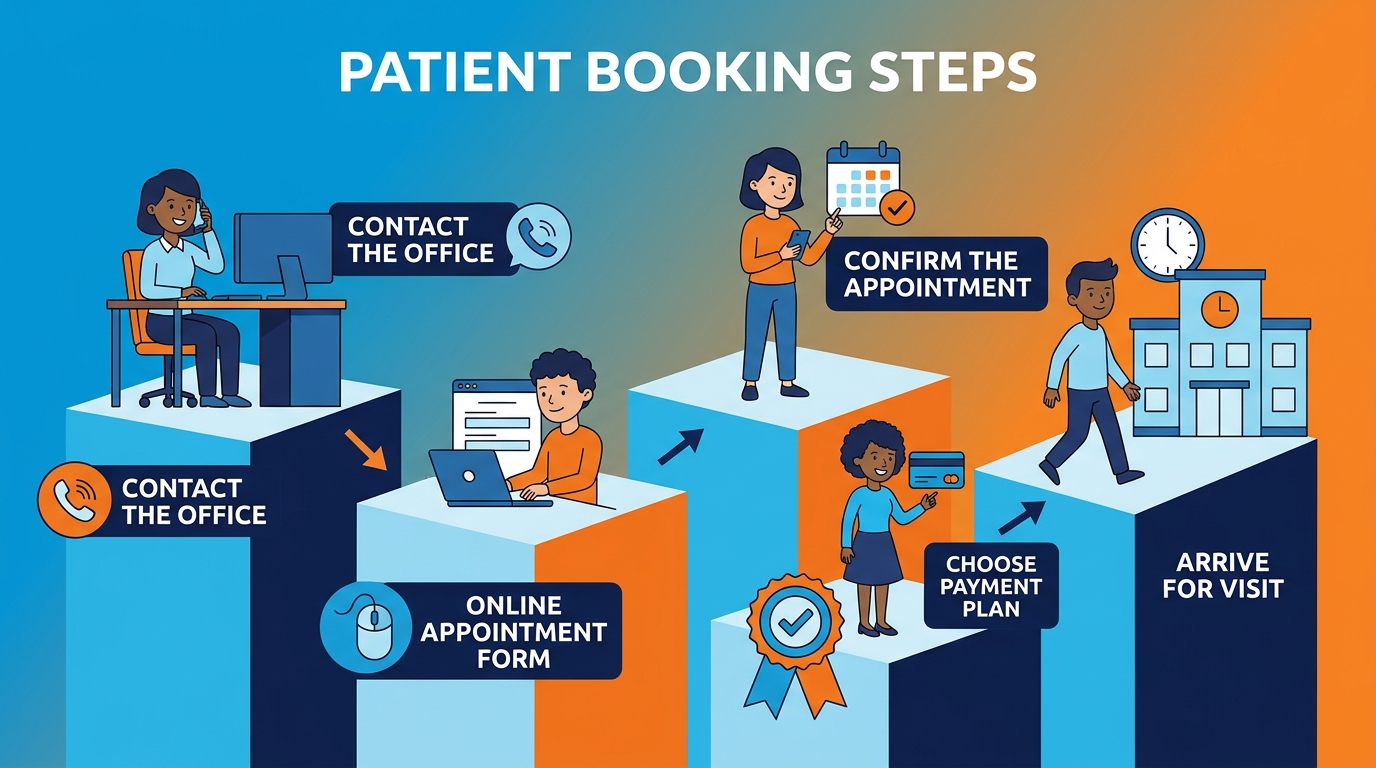
Physicians Practice reports a survey of 384 U.S. healthcare consumers in Online appointment scheduling: A missed chance to boost patient satisfaction. 95% of respondents have either booked a medical appointment online or would if it was available. Across all industries, Americans typically schedule about six in ten (60%) of their appointments with businesses online and about one in three (33%) by phone. More than nine in ten (92%) of the respondents who have booked online plan to do it again.
Zippia adds more in 23 Appointment Scheduling Statistics (2026): Online Booking Trends. Four in ten (40%) appointments are booked after business hours.
Most clients (82%) use mobile devices to book. Only 16% use desktop computers and 2% use tablets. About two out of three patients (68%) prefer providers that offer online appointment booking.
Here’s the table. It lines up these figures.
| Behavior | Figure |
|---|---|
| Survey respondents who have booked a medical appointment online or would if available | 95% |
| Appointments with businesses, all industries: online vs by phone | 60% online, 33% phone |
| Online bookers who plan to book online again | 92% |
| Appointments booked after business hours | 40% |
| Clients who use mobile devices to book | 82% |
I follow the path from the assistant’s answer to the ringing phone in From Recommendation to Ringing Phone: Tracing the Assistant Call Path.
The AI Visibility Check looks at what AI engines show for your practice.
Where Willing Patients Fail to Finish a Booking
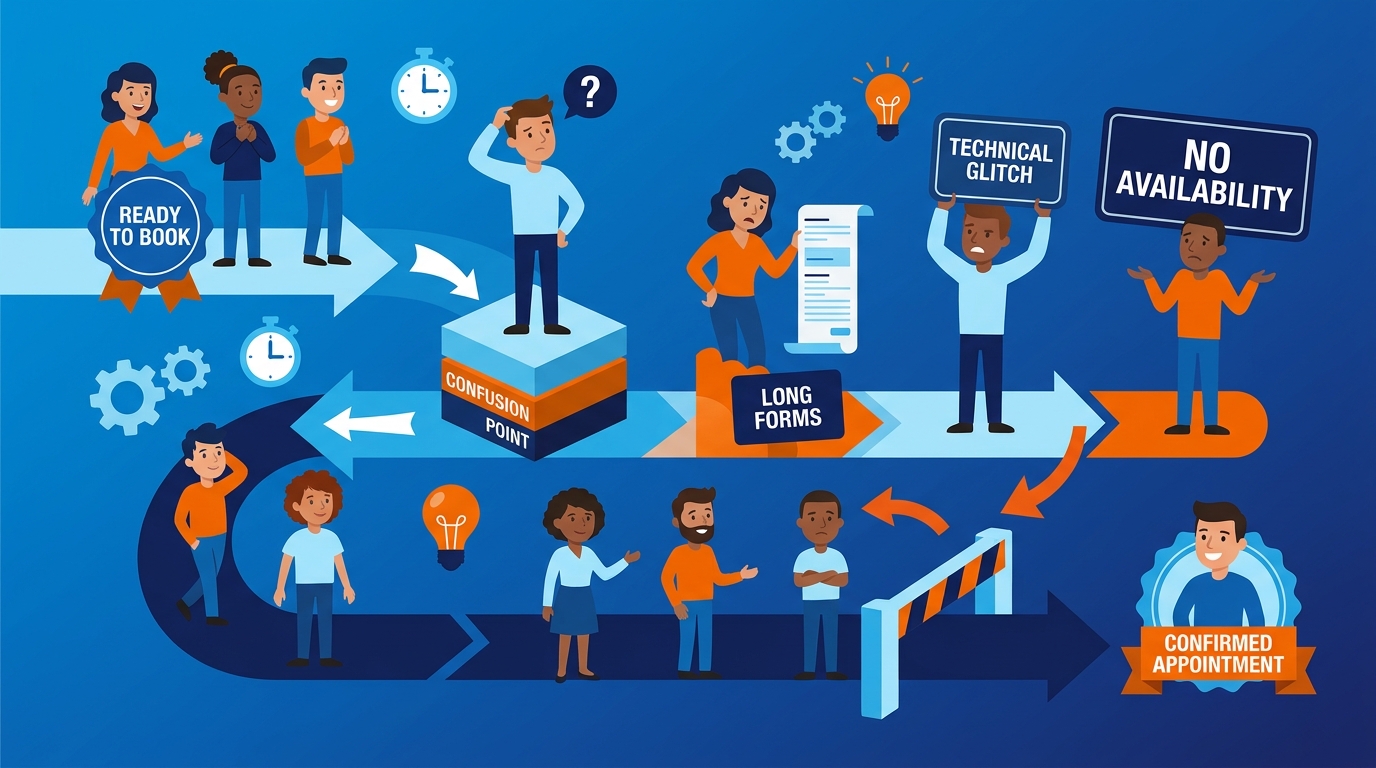
Willing isn’t the same as booked.
Nearly eight in ten (78%) health systems have adopted some form of self-service scheduling. Yet only three out of 10 consumers who try to book a healthcare appointment online will succeed.
Physicians Practice also reports why. Respondents said many providers require phone calls after an online booking.
That frustrates patients. They expect to book without making calls or filling out extra follow-up paperwork.
Here’s the gap between knowing and doing.
In English general practice survey data, nearly half of patients (581,224 out of 1,288,341, or 45.11%) were aware that online appointment booking was available. Only about one in six (203,184 out of 1,301,694, or 15.61%) had experience using it.
That comes from Investigating Patient Use and Experience of Online Appointment Booking in Primary Care in the Journal of Medical Internet Research.
I wrote about the calls that never come in The Silent Patient Drain: Calls That Never Happen After an AI Drop.
How Age Shapes Who Books Online
Age changes the answer.
In the Physicians Practice survey, about three-quarters (76%) of Millennials said they would be more likely to choose a new healthcare provider that offers online scheduling. That compares with just over half (55%) of Gen X and about one in three (36%) of Baby Boomers.
The interviews tell the same story.
Interviews in English general practice, reported in Investigating Patient Use and Experience of Online Appointment Booking in Primary Care, found that age and life stage influenced experiences and perceptions of online booking. Working patients valued the convenience. Older patients preferred to use the telephone.
I take up the older patient in Do Older Chiropractic Patients Really Use AI Assistants to Find Care?
Frequently Asked Questions
Are the clicks that still reach a practice’s site worth less than before?
The paper PPC Land covered did not find that. Back-button returns, bounces, and time on page did not differ meaningfully between the treatment group, which saw AI Overviews, and the control group, which did not. The paper says plainly that this finding is at odds with the view that AI Overviews primarily eliminate low-engagement website visits. Google says it has seen that clicks from results pages with AI Overviews are higher quality, meaning users are more likely to spend more time on the site.
Do automated reminders help once a patient has booked?
Yes. Zippia reports that automated reminders can cut no-shows by 29%. That’s nearly three in ten.
How long do patients wait when they book by phone?
Up to 8 minutes on average. Zippia reports that clients often wait that long when scheduling by phone, and about 30% of that time is spent on hold.
Do patients with ongoing conditions use online booking?
Yes, for routine visits. Interviewed patients with long-term conditions in English general practice called online booking useful for routine nonurgent appointments.
From the Answer to the Booking
Here’s the chain. It’s short.
An AI answer ends the search. Your patient may check one more channel. Then the booking either finishes or it doesn’t. Each link can lose a patient who was ready to come in.
I treat getting picked by AI answer tools as its own discipline. It’s not classic search work with a new name.
I don’t chase keywords, inbound links, or ranking position. I see that as aiming at the wrong target. As I read these systems, they’re trying to work out who a company is and whether it’s credible. So I put the effort into making that easy for them.
iTech Valet mostly serves chiropractors. We also work with dentists, attorneys, home service companies, coaches, consultants, and other service providers. These are established, service-based businesses.
Our proprietary AI Authority System is a data-first methodology. It makes service-based businesses the recommended answer in ChatGPT, Gemini, and Grok.
Want to see how the work gets done? The iTech Valet Service Plans & Pricing page explains it.
Run My AI Visibility Check to see where your practice stands today.