
Sterling Sky worked with Jepto to study call data from 179 Google Business Profiles. The results were startling: even businesses in top positions are seeing fewer calls than a year ago. Only 11% of AI Overviews cited exactly the same sites as the day before, and the first-listed source changed in 42% of searches from one day to the next. Core brands are the ones named on at least 80% of days. On ChatGPT, core brands changed by 13% from one day to the next, compared with 78% for the other brands (the tail). On Google AI Overviews, the numbers were 11% and 65%.
Patients Act on What They Read About a Provider
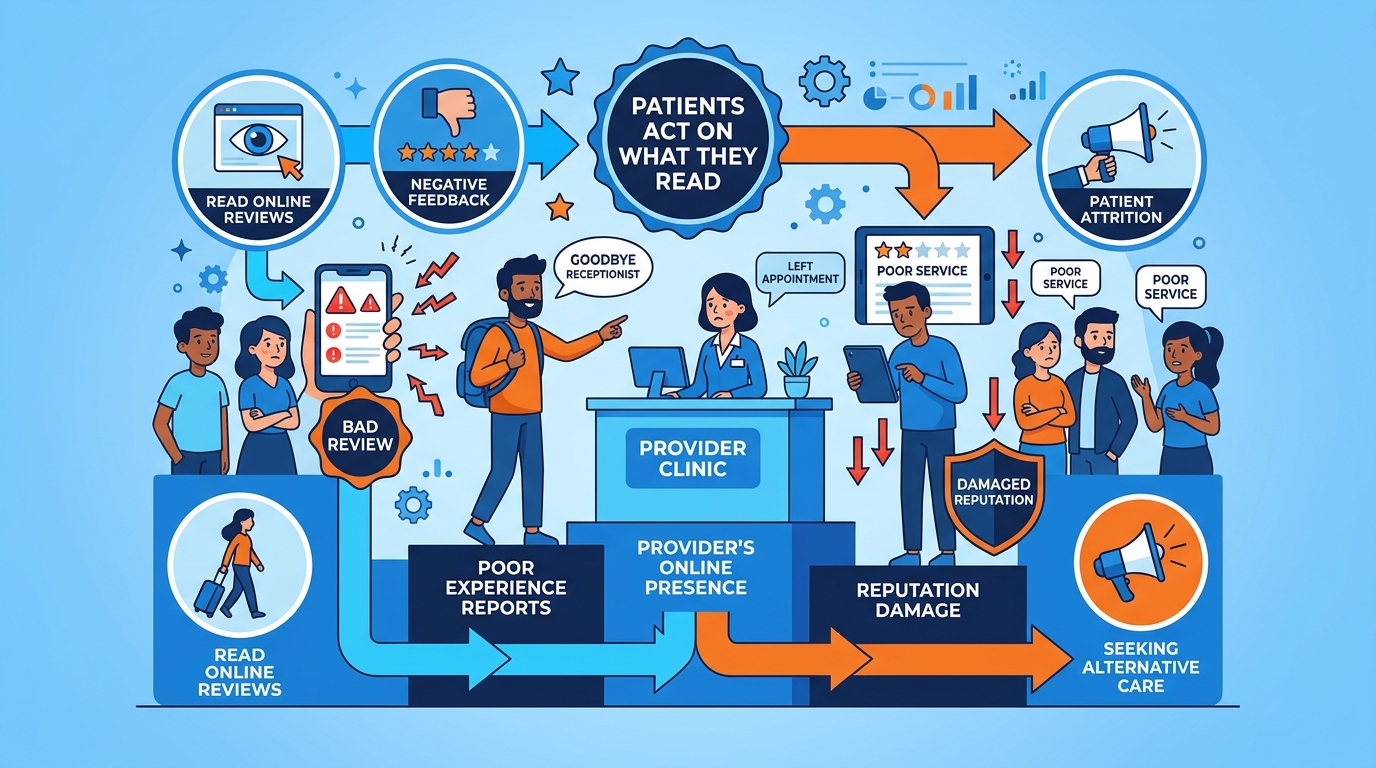
Patients leave based on what they read.
In the 2026 Patient Choice Report, 55% of patients (a little more than half) said they have walked away from at least one doctor based on what they read online. That’s up 15 percentage points between 2025 and 2026.
Many patients also take AI at its word.
In the same report, 66% of patients (about 2 in 3) said they had run into wrong provider information from an AI tool. Even so, most of them (60%) still said they trusted the AI summary without checking it further.
Review replies count too.
The majority of patients (66%, about 2 in 3) say a provider’s response to reviews directly influences their trust. That’s up 24 percentage points from 2025.
Want the booking side of this? It’s in How Assistant Answers Impact Bookings: A Complete Guide.
TechTarget looks at doctors and AI chatbots in Can docs integrate AI chatbots into the patient-provider relationship?
Why a Practice Can Fall Out Without Doing Anything Wrong
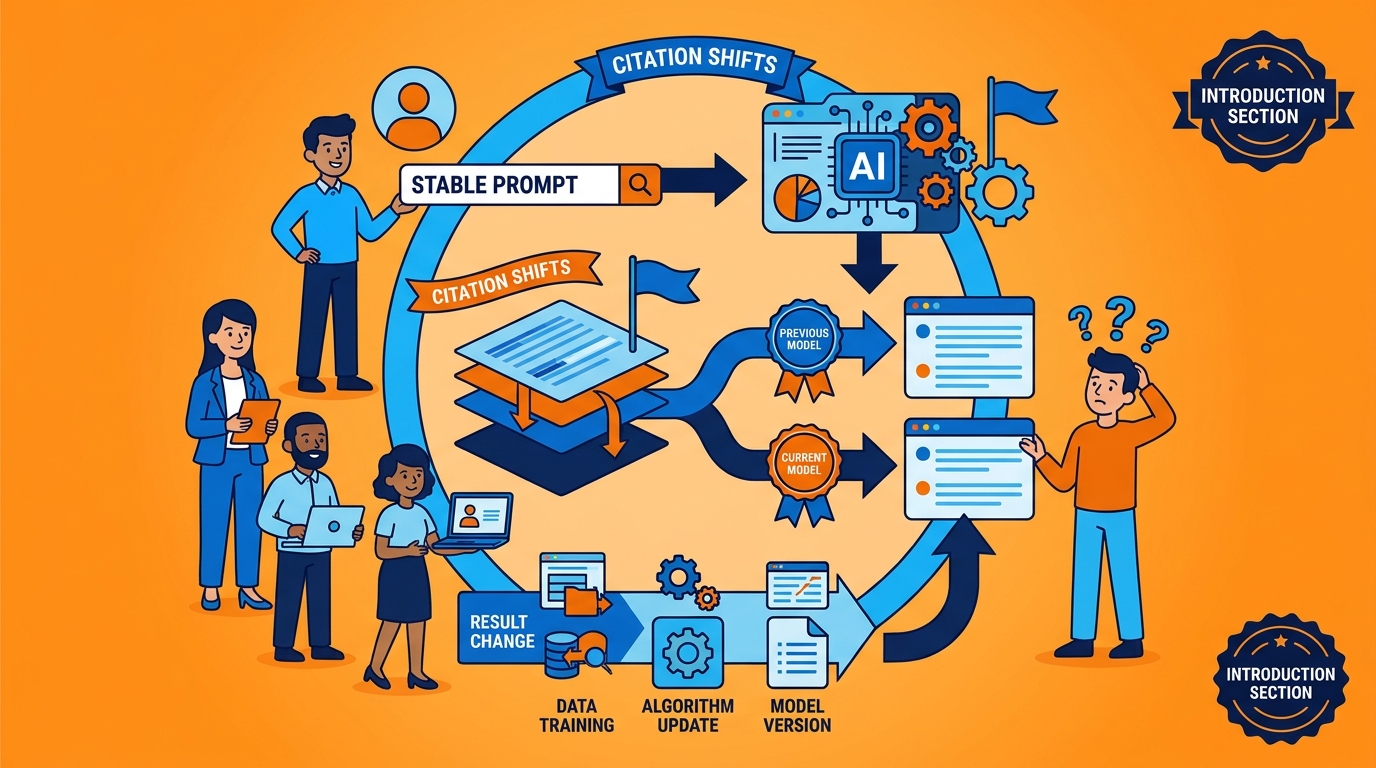
Citations shift even when the prompt stays the same.
An analysis on arXiv looked across the whole list of cited sites. It found that citation rankings are unstable from one sample to the next. That holds not only for the top-ranked domains but throughout the set of frequently cited domains.
Research on arXiv also found that AI Overviews are less consistent when they handle two runs of the same query. They’re also less robust to minor query edits.
Now zoom out to the week and the month.
SISTRIX found that more than half (56%) of Google AI Mode sources and about three in four (74%) of ChatGPT Search sources change from week to week.
As reported in Think AI Visibility Is a Done Deal? Ask Reddit About Its ChatGPT Citations, an August analysis by Alex Birkett found that just about half (49%) of the top 500 cited URLs survived a single month. That analysis also sums up earlier Profound research. It showed monthly citation drift of 40% to 59%, depending on the platform, and 70% to 90% turnover over six months.
By the day: a University of St. Gallen study, Don’t Measure Once: Measuring Visibility in AI Search (GEO), tracked AI search engines across four Swiss-German industries. It used a Jaccard value, a score for how much two lists match. A value of 0.35 implies that, on average, only about 35% of cited sources overlap between two consecutive days, so roughly 65% of sources change from one day to the next.
The same study ran the same prompts within a single day.
Source similarity averaged between 0.32 and 0.43 across campaigns. That’s the same range as the day-to-day figures. The study says this confirms that variation within a single day alone accounts for most of the observed instability.
Detailed ran a 28-day study.
For a typical prompt, pick any two days. ChatGPT gave the exact same set of brands on only 0.3% of those pairs of days. It gave the exact same set of cited domains on 2.4%. Google AI Overviews were similar: 1.1% for brands and 0.3% for domains.
Only about a quarter of the pages ChatGPT cited for a prompt were cited again the next day. On Google AI Overviews, it was around half.
Babel42 tracked 418 AI Overviews, as reported in Only 11% of AI Overviews cited the same sites two days in a row.
Not one of them cited the same set of sites every day. Each one cited about 7 sites per day. But over the 15-day window, it was 18 different sites.
Only 11% of AI Overviews cited exactly the same sites as the day before. And the first-listed source changed in more than four in ten (42%) searches from one day to the next.
The table below puts these studies side by side.
| Study | What was measured | Instability found |
|---|---|---|
| SISTRIX | Weekly source change, Google AI Mode and ChatGPT Search | 56% of AI Mode sources and 74% of ChatGPT Search sources change week to week |
| August analysis and Profound | Top 500 cited URLs over a month; citation turnover over six months | 49% of the top 500 cited URLs survived a month; 70% to 90% turnover over six months |
| St. Gallen study | Day-to-day source overlap | Roughly 65% of sources change from one day to the next, on average |
| St. Gallen study | Same prompts within the same day | Source similarity averaged 0.32 to 0.43 across campaigns |
| Detailed, 28 days | Identical brand set on any two days, typical prompt | 0.3% ChatGPT, 1.1% Google AI Overviews |
| Babel42 | AI Overviews citing exactly the same sites as the day before | 11% |
Why One Day or One Surface Can Mislead
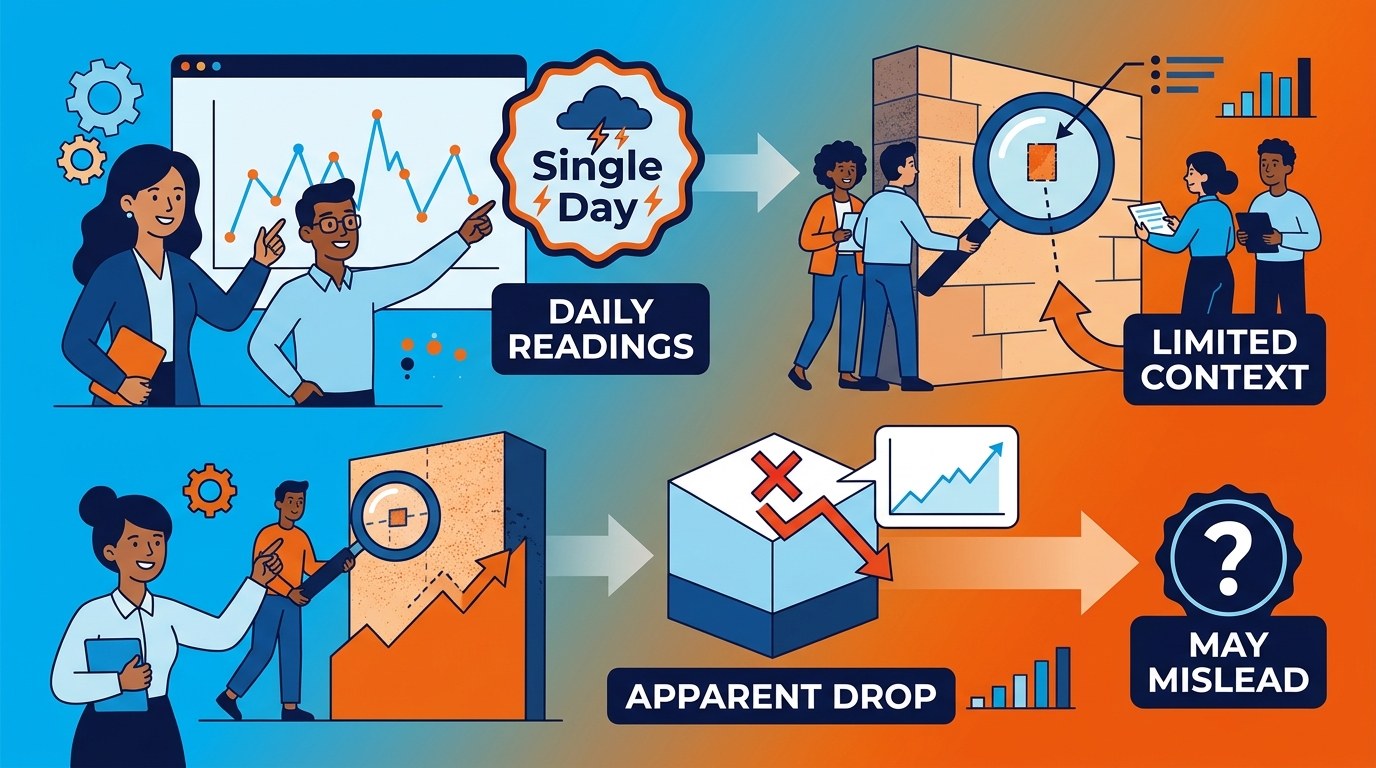
Some apparent drops aren’t drops.
Detailed checked 55 brands by hand. Not all brands. For those brands, more than a third (36%) of apparent drop-offs on ChatGPT and about three in ten (30%) on Google AI Overviews were the same company under a different name the next day. So the drop you see may not be real.
Surfaces disagree. For the same prompt, ChatGPT and Google AI Overviews agreed on the most-present brand only 27% of the time.
For the same search on the same day, Google’s AI Overviews and AI Mode had only about one-third (33%) of their cited sites in common.
Your own name doesn’t guarantee a showing.
In the SISTRIX study, brand websites showed up in fewer than half (43%) of the searches that used their own brand name, across the whole study period.
Who Stays Named: The Stable Core
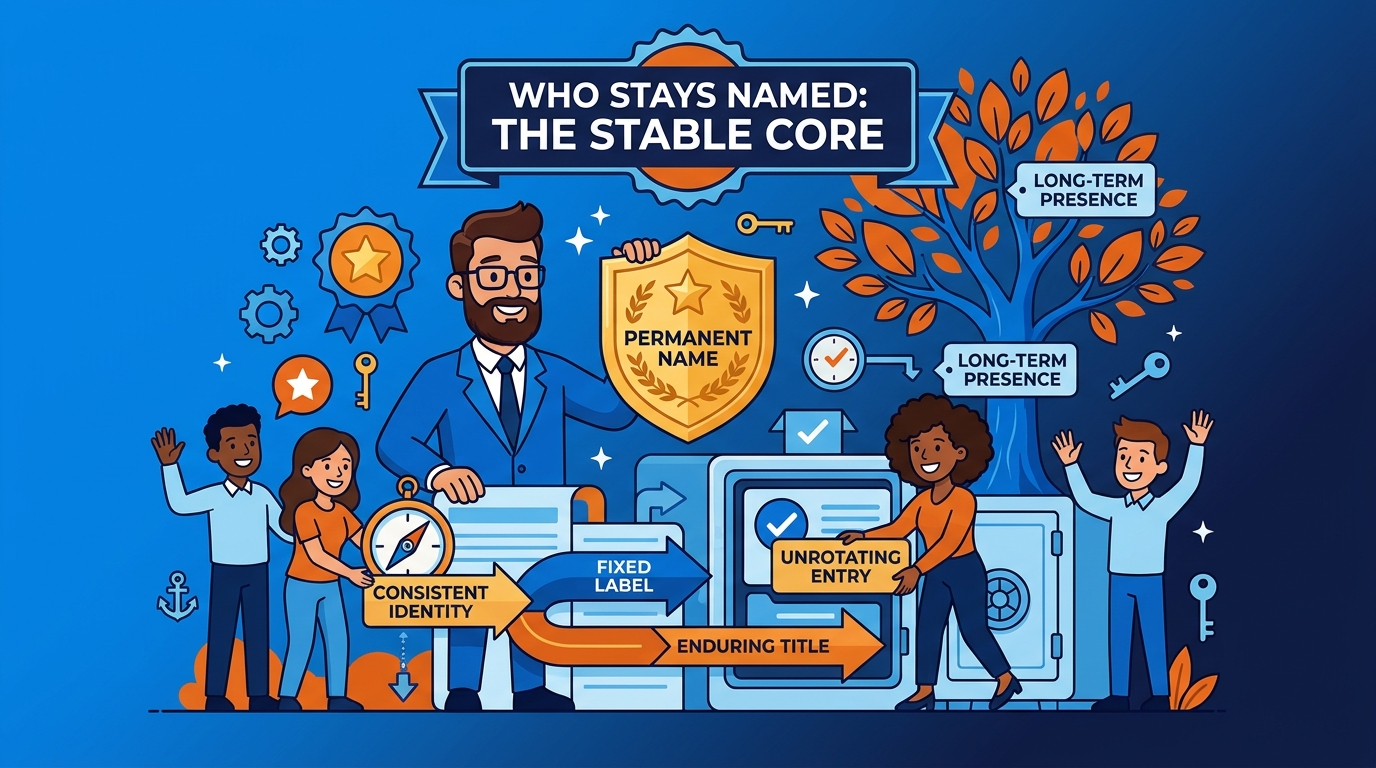
Some names don’t rotate.
In more than 8 in 10 AI Mode prompts (86%), SISTRIX found a stable core of one to five domains. They were cited reliably, week after week. Everything around them rotated at nearly 9 in 10 (89%) per week.
Now look at the leading brand, the one named most often. In Detailed’s data, for a typical prompt, it showed up on just over 8 in 10 days (82%) on ChatGPT. On Google AI Overviews, it’s higher: nearly 9 in 10 days (89%).
Detailed counts a brand as core when it’s named on at least 80% of days. That 80% is the cutoff. The 82% and 89% are how often the leading brand actually appeared.
Core brands barely move. On ChatGPT, they changed by about 1 in 8 (13%) from one day to the next. The tail changed by nearly 8 in 10 (78%). On Google AI Overviews, the numbers were about 1 in 9 (11%) and about two-thirds (65%).
A core isn’t always there.
Only about half of the ChatGPT prompts that named brands had a core brand. On Google AI Overviews, it was around 6 in 10. When a core existed, it was usually just one or two names. The full numbers are in Detailed’s study, How Volatile Are AI Responses? (70K Answer, 28 Day Study).
The St. Gallen study adds two points.
First, brand mentions were somewhat more stable than individual source citations. Their Jaccard values (how much two days’ lists match) were 0.45 to 0.59. That’s markedly higher than source similarity.
Second, the study measured the Gini score. It shows how concentrated citations are. Higher means more concentrated. The mean across all campaigns and engines was 0.715. Google AI Mode had the highest citation concentration (0.782). Perplexity had the lowest (0.671).
I build your practice to be one of the few names an engine relies on. The source it names and draws on. Not a line in a directory.
I treat getting picked by AI answer tools as its own discipline. It’s not classic search work renamed. I don’t chase keywords, inbound links or ranking position.
Here’s my premise. Engines settle on businesses they understand. So I put the effort into making it easy for them to work out who you are and whether you’re credible.
Here’s what to do when an assistant keeps naming a rival: How to Respond When an Assistant Keeps Naming a Rival Clinic.
Rank Position Doesn’t Predict Who AI Cites
Ranking high doesn’t mean getting cited.
Babel42’s data found that almost half (46%) of the sites cited by Google’s AI Overviews don’t rank in Google’s top 10 for the same search.
And the ground keeps shifting. Google says that several times a year, it makes significant, broad changes to its search algorithms and systems.
Local results follow their own factors. Google says local results are “mainly based on relevance, distance, and popularity.”
Distance? Google defines it as “how far each business is from the customer who’s searching.”
AI tools now give direct answers instead of lists of links. So I’ve stopped reading a site’s place in a results list as a sign that a business gets found.
Position reports are numbers that look good without driving outcomes. I read them that way. I no longer use position tracking as a measure of success.
Where a Drop Shows Up in a Practice’s Own Numbers
Start with calls.
Sterling Sky worked with Jepto to study call data from 179 Google Business Profiles. The results were startling. Even businesses in top positions are seeing fewer calls than a year ago.
If you book appointments, here’s what to watch in your Google Business Profile. Bookings, if a booking provider is connected. Plus calls.
No connected provider? The bookings metric stays empty, as Google Business Profile performance metrics: which numbers matter explains.
These numbers can be followed over time. The date range selector at the top of the Google Business Profile Performance report allows up to six months of history. Interaction metrics are reported with daily granularity, while search terms are updated monthly. Sterling Sky walks through the report in Google Business Profile Performance Report: Metrics Explained.
What happens when the calls never come? That’s the subject of The Silent Patient Drain: Calls That Never Happen After an AI Drop.
What AI assistants say about your practice is the subject of the AI Visibility Check page.
Frequently Asked Questions
How fast is ChatGPT’s audience growing?
Fast. ChatGPT’s weekly active user base, meaning the people who use it in a given week, grew from about 100 million (100,000,000) in January 2024 to about 780 million (780,000,000) in September 2025. That’s according to the St. Gallen study.
Do people search less on Google once they use AI search?
Yes. Research by Padilla and co-authors (2025) tracked what people click online. Traditional search queries fell by more than 20% (more than 1 in 5) once people adopted generative search, where AI writes the answer. The drops were especially strong for informational and question-based searches.
Can one platform change shift citations almost overnight?
Yes. Promptwatch data show Reddit averaged 3.83% of ChatGPT Search citations from July 18 to August 7. From August 14 to 17, it averaged 0.52%. That’s a drop of about 9 in 10 (86%) in four days.
Should a practice judge its numbers right after a Google core update?
No. Google says to compare the right dates. Wait at least a full week after a core update completes before you analyze your site in Search Console.
Do providers feel the effects of wrong AI information in appointments?
Yes. In the Zocdoc survey, more than 8 in 10 providers (83%) said they need to correct AI-generated information that patients take in. About 6 in 10 (63%) said it adds time to appointments.
Drops Are Common, and Staying Named Takes Steady Work
AI citations churn by the day, the week and the month.
Look at the Sterling Sky and Jepto study of 179 Google Business Profiles. Even businesses in top positions are seeing fewer calls than a year ago.
iTech Valet’s view? The moment you stop making content, competitors who are still publishing start closing the gap.
I don’t treat staying in the stable core as a one-time fix. I put effort and money into clear, credible information you control. I count on it to keep paying off and to grow over time.
I steer away from visibility bought through ads or paid placements. It stops the moment the spending stops.
Here’s how the work gets done: the iTech Valet Service Plans & Pricing page lays it out.
Want to see where your practice stands? Run My AI Visibility Check.