
What Separates an Answer Engine Agency From a Traditional Promoter

Generative AI in search results created a fundamental split in the marketing agency landscape. One side still sells positions on a page of links. The other sells citations inside an answer.
A traditional promoter is an agency whose work is primarily measured by a website's position on a search engine results page. An Answer Engine Agency is a partner focused on making a brand the citable, authoritative source within AI-generated answers. Most agencies are still selling a game that ended the day answers replaced links.
Both models say they deliver visibility. But their deliverables, their metrics and their whole idea of how visibility gets earned have drifted miles apart. So Choosing an AEO partner starts with one question: which scoreboard is this agency actually built to serve?
Why Rank-Tracking Reports Stopped Measuring What Matters
A rank-tracking report measures one thing: position on a page of links. And that page isn't what most searchers see first anymore.
Citing a working paper by Agarwal and Sen, Washington University in St. Louis researchers report a randomized field experiment found that AI Overviews may reduce organic click-throughs by 38% and increase zero-click searches by 33%. So an agency still mailing out a monthly rank-tracking report is measuring a surface fewer searchers ever reach. A position on the list stopped being a guide to who gets cited the moment a generated answer became the first thing on the screen.
What a Rank Report Can No Longer See
A results-page position number can't tell you whether a brand got named inside the answer itself.
Let's keep it real: a brand can hold a strong spot in traditional ranked results and still be invisible inside the summary a searcher actually reads. That's exactly where the practical shift in what to expect after onboarding starts, the moment a practice stops grading itself on a scoreboard that no longer shows where answers get built.
How Deliverables Compare Line by Line
Put the two deliverable sets side by side and the split stops being abstract. A traditional promoter hands over acquiring inbound links, rank-tracking reports and keyword-targeted articles, all built for a page of links. An Answer Engine Agency hands over schema markup, entity consistency audits and answer-formatted content, all built for a generated answer.
Comparing the deliverables of each model reveals the deeper strategic shift from chasing rankings to building citable authority. One set of deliverables still assumes a searcher scrolls a list. The other assumes a model composes a paragraph and either names a brand inside it or doesn't. Vocabulary alone does not bridge that gap. AI visibility work that still reports success through the old scoreboard is traditional search optimization wearing new terminology, not a different discipline. The agency's underlying skillset either shifted toward structure and entities, or it didn't. A practice can check which skillset it's actually paying for by reviewing the standards an Answer Engine Agency's qualifications should meet.
| Deliverable | Traditional Promoter Approach | Answer Engine Agency Approach |
|---|---|---|
| Performance Reporting | Search position reports and site visits pulled from a dashboard built around a page of links | Citation presence and entity consistency tracked across the brand's online footprint |
| Content Deliverables | Keyword-targeted articles built to hold a spot in classic search listings | Answer-formatted content structured to be pulled directly into a generated response |
| Technical Work | Acquiring inbound links aimed at strengthening a page's position on a results page | Schema markup and structured data built so a generative model can parse and cite the brand |
| Underlying Assumption | Visibility is earned by climbing a ranked list of links a searcher scrolls through | Visibility is earned by being named inside an answer a searcher never has to click through |
| Success Definition | A higher spot in traditional ranked results compared against a prior reporting period | A confirmed citation inside a generated answer, tied to consistent entity signals |
| Metric | Traditional Promoter Reports This | Answer Engine Agency Reports This | What It Actually Shows |
|---|---|---|---|
| Report Focus | Search position reports showing where a site sits in search position reports | Citation presence and entity consistency across the brand's online footprint | One metric tracks a page of links; the other tracks whether a generated answer names the brand at all |
| Traffic Source Breakdown | Site visits broken down by queries, pages, and countries pulled from a dashboard built for the old scoreboard | Citation presence inside generative AI responses, not site visits from a search dashboard | The Search performance report shows how much traffic a site gets from Google Search, including breakdowns by queries, pages, and countries |
| What Success Means | A ranked position on a page of links a searcher may never scroll to | A cited source inside the answer itself, regardless of position on any page of links | Comparing the two deliverable sets reveals the shift from chasing rankings to building citable authority |
Reporting Formats, Old and New
Want the fastest tell? Look at the report. A traditional one centers on where a site sits in search position reports.
Google reports the Search performance report in Google Search Console may show how much traffic a site receives from Google Search, broken down by queries, pages, and countries. An Answer Engine Agency's reporting instead centers on citation presence and entity consistency across the brand's online footprint, not site visits pulled from a dashboard built for a different scoreboard.
Where Structured Data and Entity Signals Actually Work
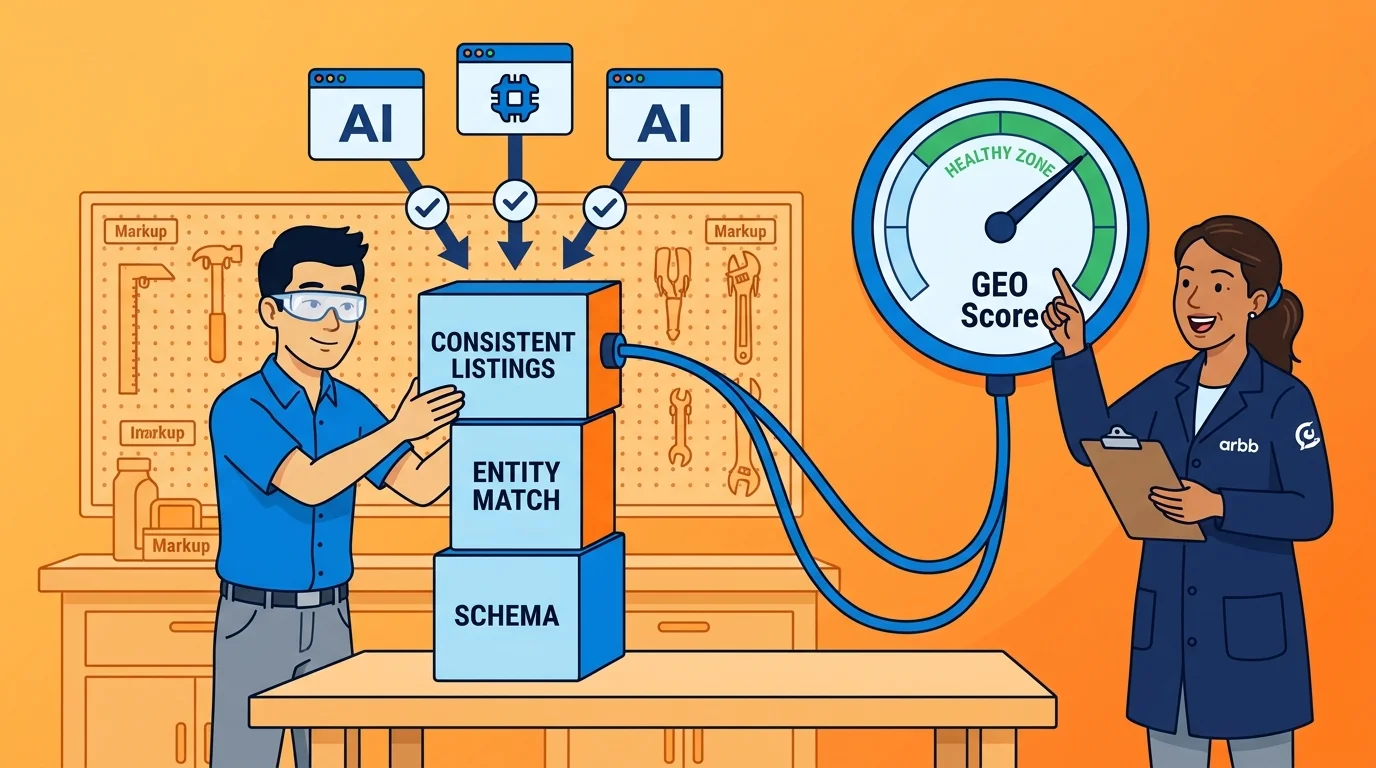
So what actually makes the second scoreboard tick? Structured data and entity consistency. Schema markup tells a generative model what a page's content is, in plain terms the model can read without guessing.
More content does not raise that signal. A site publishing volume without structural clarity is still unreadable to a model deciding who to cite — the deliverable that moves the number is structure, not word count.
Structure Versus a Position Number
Weighing AI Authority System services against acquiring inbound links means weighing structural work against a position number, two measures built for two different scoreboards.
Where a Rank-Tracking Deliverable Still Fails Under Load
A rank-tracking report bets that a searcher scrolls a page of links before deciding what to click. That bet already got shaky once AI Overviews started eating clicks. And it falls apart completely when a summary answers the question before the list of links even loads.
So why can a brand hold a strong spot and still go unmentioned in the summary sitting right above it? A results-page position number can't tell you, because it was built to describe a different scoreboard. That gap is structural, not cosmetic, and it opened the moment a generated answer replaced the list of links as the first thing a searcher reads.
Building the Deliverable Stack Step by Step
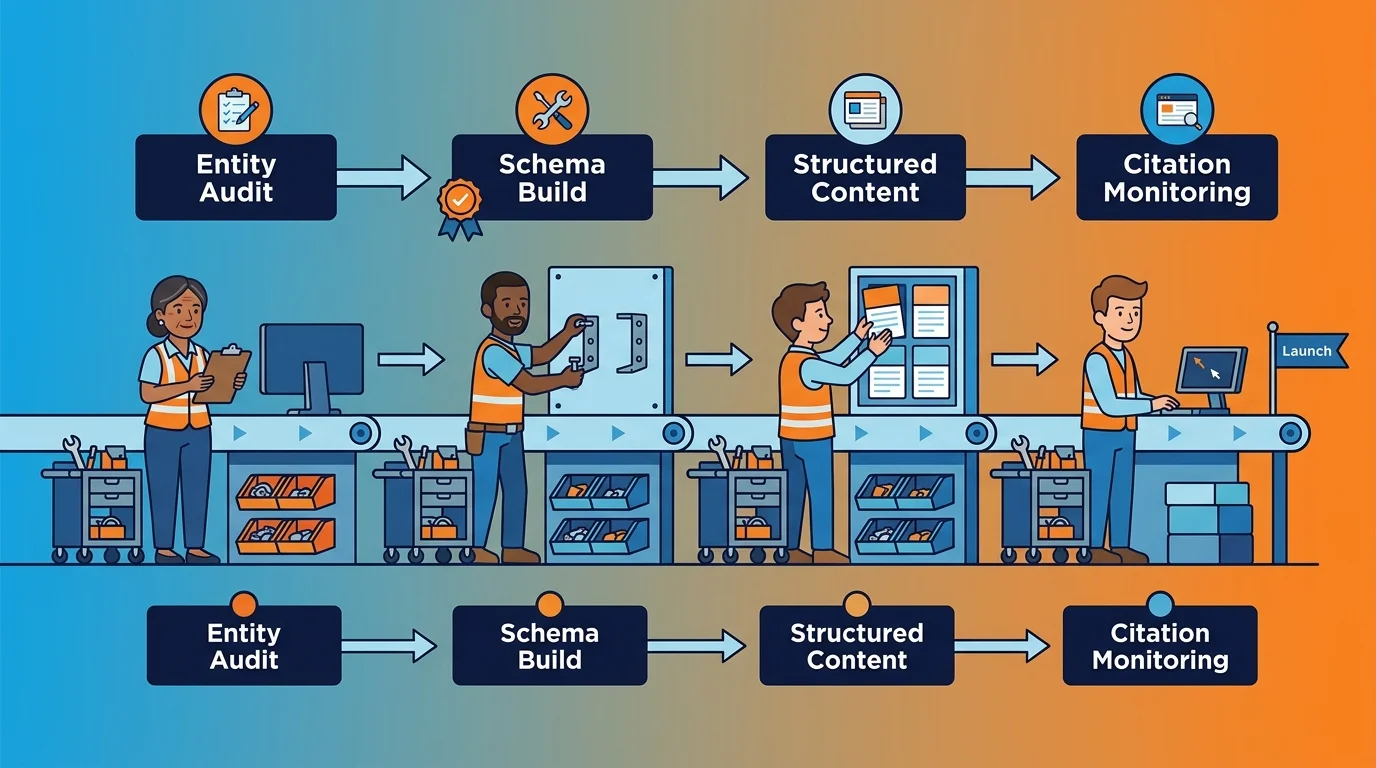
A working deliverable stack runs in order. Structure goes in first, and content gets layered on top of it second.
Flip that order and you've got the most common failure in an answer-engine engagement. Content without structure is prose a model can't break down into a citable fact, no matter how good it reads.
| Build Sequence Step | What Gets Built | Why This Order Matters |
|---|---|---|
| Structural Foundation | Schema markup and entity consistency across a brand's online profiles | A model reads structure before it reads sentences, so citability depends on this layer existing before any content is evaluated |
| Answer-Formatted Content | Content written and structured specifically to be pulled into a generated answer | Content built without the structural layer underneath it is prose a model cannot parse into a citable fact, no matter how well it reads |
| Citation Verification | Review of whether the brand is actually appearing as a named source inside generated answers | Position on a page of links says nothing about presence inside an answer, so this step checks the scoreboard that actually matters now |
Sequencing the Technical Work Before the Content Work
Why does the technical layer go first? Because a model reads structure before it reads sentences. Schema markup and entity consistency across a brand's profiles tell the model what a page is about before a single paragraph gets judged.
Only after that structural layer is locked in does answer-formatted content get written against it. Skip the sequence and a practice is still playing the old scoreboard's game, publishing volume first and hoping structure catches up later. The citation scoreboard rewards the exact opposite order.
Frequently Asked Questions
So, a few mechanical questions always pop up once the two scoreboards sit side by side. Here are straight answers, specific and not theoretical.
What is the single biggest difference in the monthly report from an AEO agency versus a traditional promoter?
Look at what the report actually counts. A traditional promoter's report centers on search position reports and site visits. An Answer Engine Agency's report tracks citation presence and entity consistency across the brand's footprint.
Do traditional promoter deliverables like keyword ranking reports still have value?
Keyword position tracking still shows where a page sits in a list of links. But it can't show whether a brand got named inside a generated answer. And that's the scoreboard that counts now.
How does an Answer Engine Agency measure success if not by winning the old results-page game?
By citations, not positions. Success means getting named inside generated answers, with a consistent entity across profiles. A position number just isn't on that scoreboard anymore.
What technical deliverables does an AEO agency provide that a traditional agency does not?
Schema markup implementation and entity consistency audits are the two deliverables a traditional agency typically skips. Both build the structural signal a generative model reads before it ever reads a sentence.
Can a traditional promoter just add AEO to its services, or are the core skills different?
Adding the label doesn't add the skillset. The underlying work shifts toward structure and entities, and an agency either rebuilt its deliverables around that or it's still selling the old scoreboard with new terminology.
What makes a page ready to be cited by an answer engine?
Structure and entity signals. A page is ready when its structured data and entity details match what answer engines need before they cite a source.
The Bottom Line
Two scoreboards, then. One counts spots on a page of links a searcher might never scroll to. The other counts citations inside the answer that replaced that page.
Only one of them still tracks anything a generative model actually acts on. A results-page position number can't explain why a brand's missing from the summary sitting right above it. Structured authority and entity consistency can.
No hedging here. A practice still grading itself on the old scoreboard is optimizing for a surface fewer searchers ever reach, while the citable scoreboard keeps running without it. The deliverables compared above are not two flavors of the same service, they are two different bets on how visibility gets earned, and the structural one is the bet the evidence supports. A practice ready to see where its own pages stand against that structural bet can start with an AI Visibility Check.