Articles in this cluster
- A pre-hire checklist for AI citation agencies — 12 Questions to Ask Before Hiring an Answer Engine Agency
- Comparing answer engine agencies with traditional promoters — Answer Engine Agency vs. Traditional Promoter: Deliverables Compared
- Building a proper scope of work for AI visibility agencies — What an Agency Scope of Work Should Include, Line by Line
- Signs an agency actually understands entity data — 5 Signs an Agency Understands Entity Data, Not Just Search Phrases
- Handling red flags in an agency's answers — What to Do When an Agency's Answers Raise Red Flags
- What changes after switching to an answer engine agency — After Switching to an Answer Engine Agency, What Changes First?
- Choosing between a generalist agency and an answer engine specialist — Generalist Agency or Answer Engine Specialist: How to Decide
- Credentials an answer engine agency should actually hold — What Credentials Should an Answer Engine Agency Actually Have?
- The phases of a specialized answer engine service — What a Specialized Answer Engine Service Includes, Step by Step
- Agency claims that cannot be independently verified — Common Claims Agencies Make That Can't Be Independently Verified
- Checking agency progress at the 90-day mark — 90 Days In: How to Tell If Your Agency Is Actually Working
What Answer Engine Optimization Actually Is (And Why the Name Confuses People)
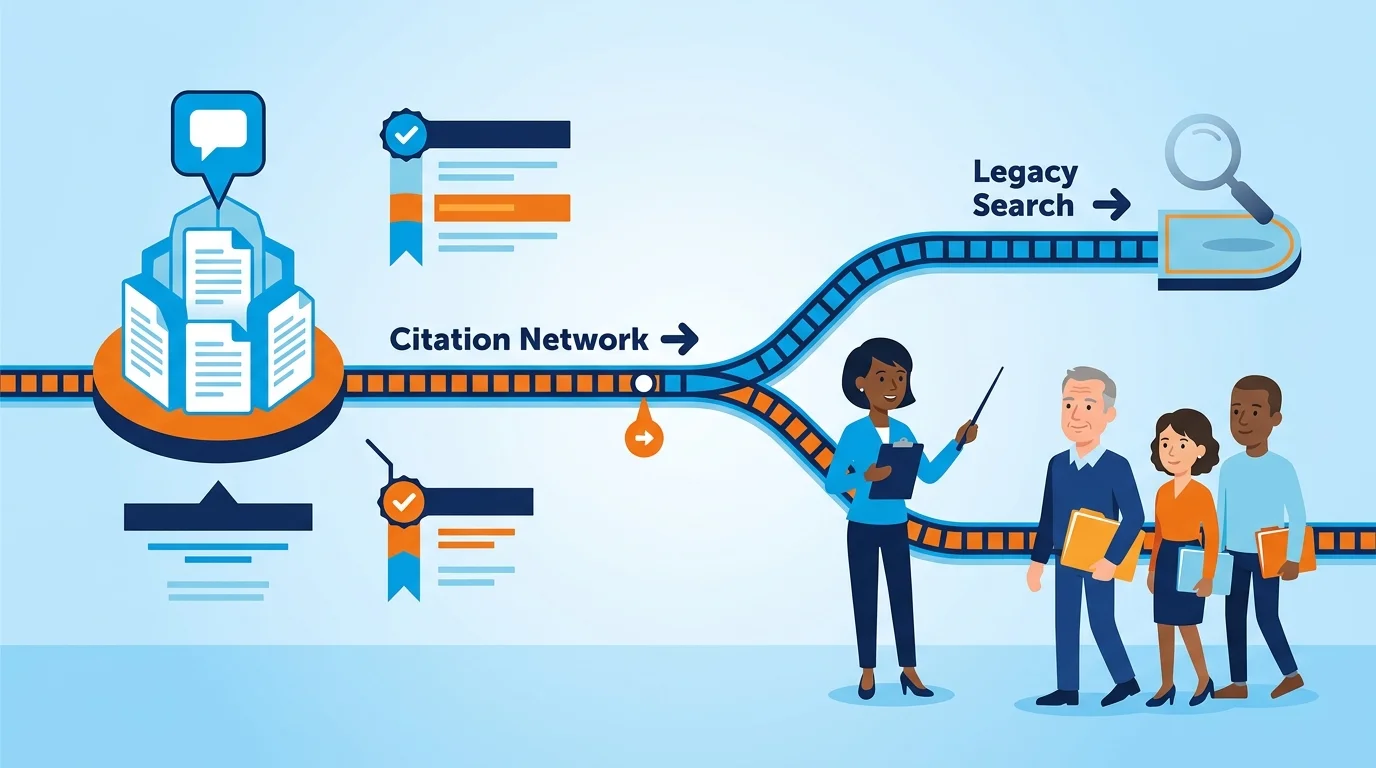
Let's clear up the name first, because it trips people up. Folks hear Answer Engine Optimization and figure it's traditional search optimization in a new jacket, repackaged for an AI headline.
That assumption misreads the mechanism. Answer Engine Optimization, or AEO, isn't just a new name for old-school search work; it's a different discipline focused on making a business the citable, authoritative source an AI system pulls into its generated answer.
The Boundary Between Legacy Search Work and Citation-Based Authority
Here's where the line actually sits: what gets measured. Legacy search optimization asked one question. Did the page hold a spot in classic search listings, where a human could scan it and click?
Citation-based authority measures something else entirely: whether a system judges a page trustworthy enough to quote or summarize inside its own answer. Holding a top spot in the classic ten blue links is becoming less relevant in a world where the answer itself replaces the list. AI visibility services exist to work toward that second outcome, not the first.
Why 'New Name, Same Service' Is the Wrong Frame
Treating AEO as relabeled legacy search optimization is an assumption about the market, not a fact about it. The claim that AI visibility is old-school search work with new vocabulary assumes the underlying mechanism stayed the same while only the terminology shifted.
It didn't. A results-page position predicted who'd click on a page of links, and it tells you nothing about whether a generative system picks a source to cite. Once the scoreboard flipped from position-on-a-page to presence-inside-an-answer, the old measurement stopped describing the game, no matter what anybody calls either discipline.
Why the Old Scoreboard Stopped Counting
Search behavior already moved, whether agencies noticed or not. According to the Pew Research Center, about 58% of sampled U.S. adults conducted at least one Google search in March 2025 that produced an AI-generated summary.
Think about what that means. An AI-generated summary now sits between the question and the list of links, so a spot in classic search listings can exist on the page and never get seen (kinda like a billboard behind a wall).
| Search Scenario | Click Behavior | What It Measures |
|---|---|---|
| Search with an AI-generated summary present | A traditional search result link gets clicked in 8% of visits | Whether a cited source inside the answer satisfies the query before a link is ever opened |
| Search without an AI-generated summary present | A traditional search result link gets clicked in 15% of visits | Whether a listed link still earns the click when no generated answer intercepts the question |
| U.S. adults searching Google in March 2025 | About 58% encountered at least one AI-generated summary during that month | How often a generated answer appears at all, setting the scale of the shift away from the old scoreboard |
What Happens to a Click When an AI Summary Answers the Question First
Now… this part matters, because the click is where the shift stops being theory and starts being a number. The same Pew analysis found users who saw an AI summary in search results may have clicked on a traditional result link in 8% of visits, compared with 15% of visits without one.
Fewer clicks reach a page once a generated summary answers the question above it. That is a finding about clicks. It does not say which pages a system chooses to quote, and it does not measure publishing volume either way.
Why Keyword Rank Tracking Can't Tell You What You Need to Know
A keyword position report can sit dead steady for months while the pages it tracks quietly stop reaching anyone. Why? Position on a page of links was never the same thing as presence inside an answer, and treating them as interchangeable is exactly where most rank reports fall apart.
The Mechanism Behind a Rank Report That Looks Fine and Means Nothing
Rank-tracking reports measure where a page sits among search position reports, a number built for a results page that fewer searches ever fully display. A page can hold that number and still go unseen once a generated summary answers the question above it. The report stays accurate about position while saying nothing about citation, which is the metric that now determines whether anyone reaches the page at all.
What Cheap Retainers Are Actually Optimizing For
Cheap retainers built around monthly search position reports are optimizing for a number that stopped predicting outcomes. That pricing model sticks around because a position report is easy to produce and easy to screenshot, not because it has anything to do with getting a business cited inside an AI-generated answer. A retainer scoped around results-page position numbers keeps score on the old scoreboard while the business is playing on the new one.
How AI Engines Decide What to Cite
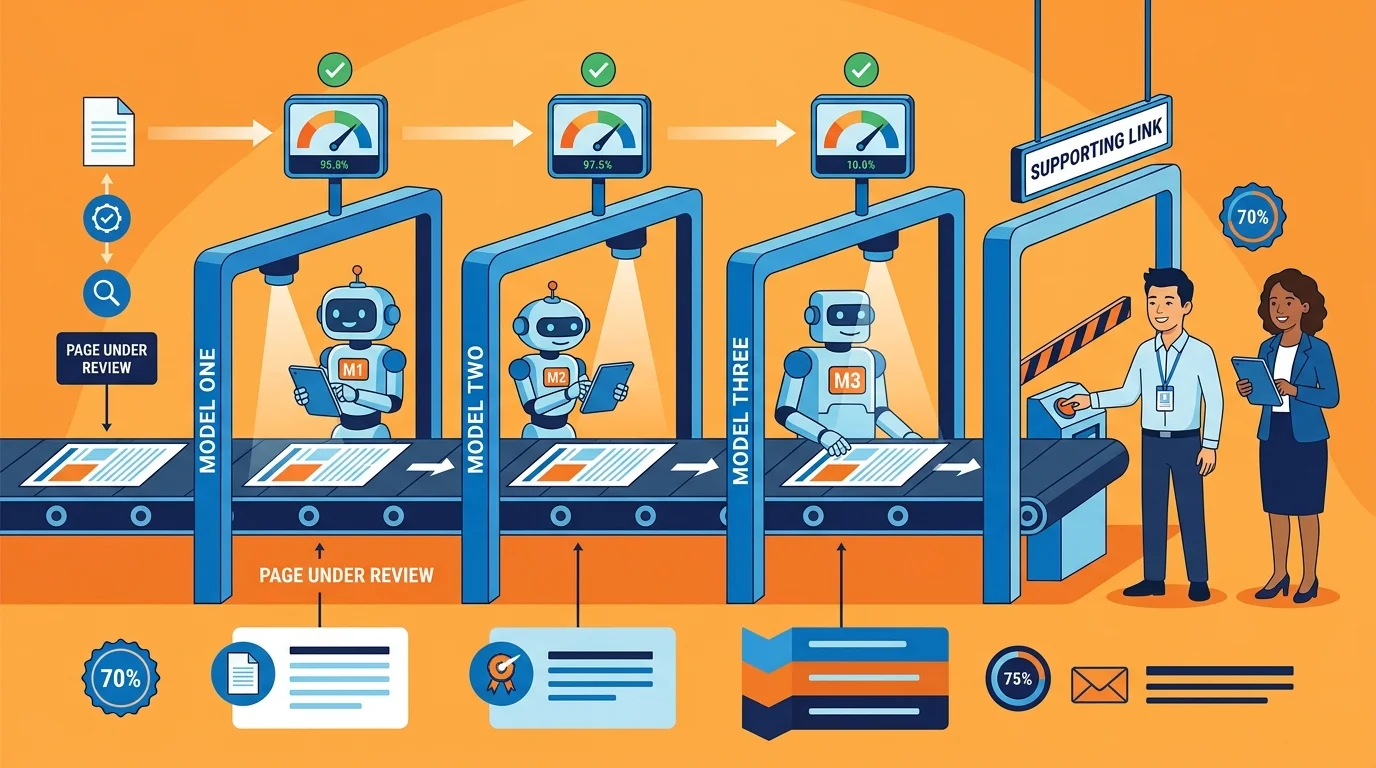
Citation is not awarded for keyword density. It is awarded when a system judges a source credible enough to quote without checking further.
That judgment happens differently depending on the model asked, and it happens before a single click is counted.
| Evaluation Layer | What It Checks | Why It Matters for Citation |
|---|---|---|
| Source Credibility | Whether a page's claims align with patterns the system associates with trustworthy, well-sourced content | A page judged low-credibility is filtered before it ever reaches citation consideration |
| Structural Parseability | Whether headings, lists, and direct statements let the system extract a clean answer without guesswork | Content written as narrative prose for a human scroll resists clean extraction, even when accurate |
| Schema and Markup Accuracy | Whether structured data matches the visible text on the page rather than contradicting or exceeding it | Mismatched markup signals unreliability and can disqualify a page regardless of content quality |
| Existing Index Eligibility | Whether the page already meets standard technical requirements for appearing with a snippet in search | Citation builds on an existing eligibility bar rather than a separate AI-specific submission path |
| Entity Consistency | Whether the business's expertise and identity are reinforced consistently across multiple trusted pages | A system favors a source it can corroborate across several locations over one it sees only once |
How Credibility Gets Scored Across Different Models
Alright, quick reality check: language models don't all grade credibility the same way, but their verdicts tend to huddle together.
Research published through Northeastern University and Indiana University found eight widely used large language models from OpenAI, Google, and Meta may be only moderately aligned with human expert evaluations when rating the credibility of news sources (average ρ = 0.59), although they agree strongly with one another — a laboratory finding rather than a study in people.
The study rated news outlets, not business websites, and it measured credibility ratings, not citations. It does show that a model's read on credibility is not the same as an expert's.
What Google Requires for a Page to Surface as a Supporting Link
Google sets a lower bar than most agencies assume.
Google's own AI features documentation (linked below) puts the bar at being indexed and eligible to show a snippet in Search. No separate schema tier or AI-specific submission process sits on top of it.
Where Structured Data Fits (And Where It Doesn't)
Structured data earns a page no special exemption from accuracy. It only works when it describes what the page already says.
Google's documentation says structured data that matches the visible text on a page may support that page's presence in AI-generated features.
A schema tag asserting a fact the visible text never states is not a shortcut into an AI-generated answer. It is a mismatch a system can detect.
Why Mismatched Schema Gets a Page Excluded
Markup that overstates or contradicts the page content gets treated as unreliable, and unreliable sources get excluded from citation regardless of how complete the markup looks. The mechanism rewards agreement between code and copy, not the volume of tags applied.
An agency adding schema without auditing it against the visible page is building exclusion into the page it claims to help. Google's rules say structured data (schema) must match what's actually visible on the page.
Why Volume-Based Content Production Fails as a Strategy
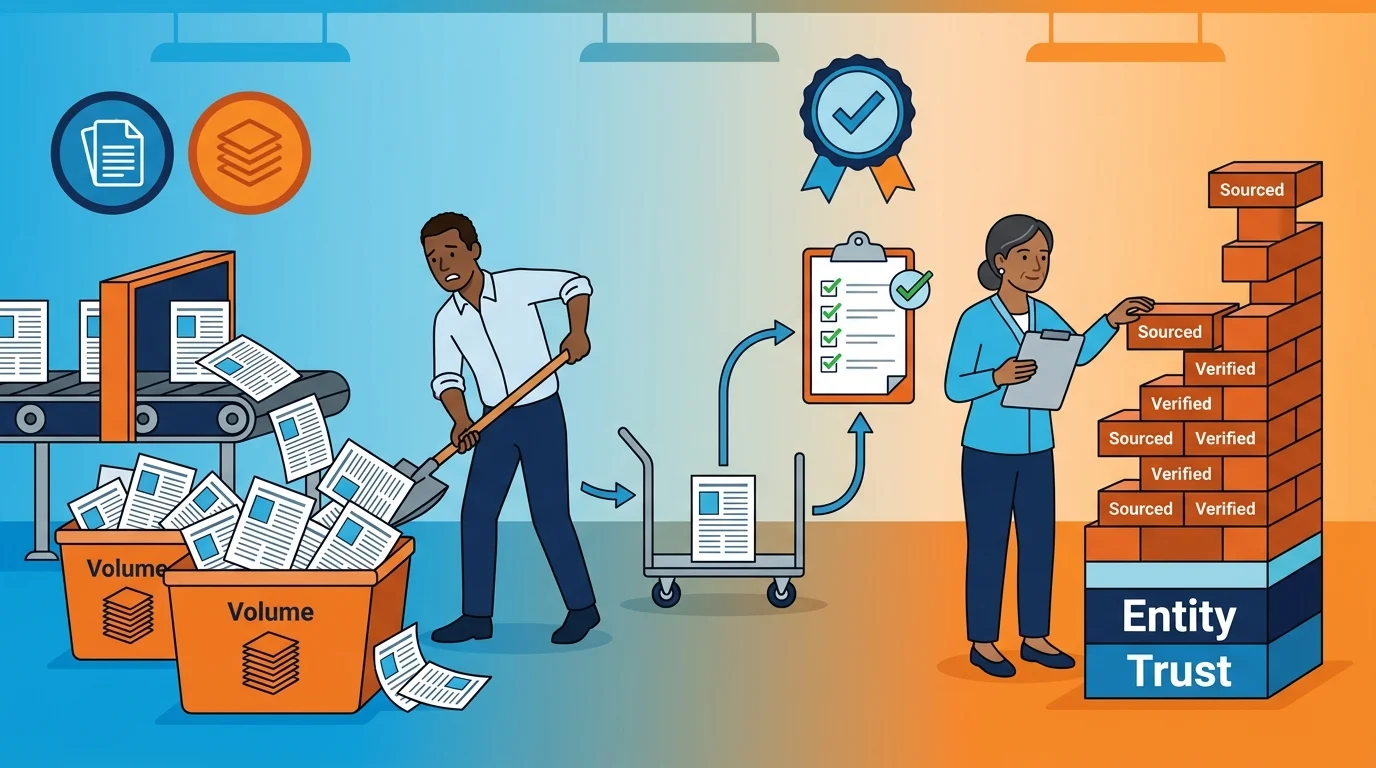
More pages, more visibility? That belief is a leftover from a system that rewarded pages on a results page, not sources inside an answer. So cranking out more keyword-targeted articles doesn't stand in for structural authority, no matter how full the calendar looks.
| Engagement Model | What It Produces | What It Measures Against |
|---|---|---|
| Volume-based content production | A high count of keyword-targeted articles published on a fixed schedule | A results page built for scanning, where more entries once meant more chances at a click |
| Task-list engagement | A checklist of deliverables completed on schedule, billed as activity rather than outcome | A retainer scope, where completed tasks justify the invoice regardless of citation |
| Entity authority building | A smaller set of pages engineered for structural accuracy and recognized expertise | A generative system's trust threshold, met before a single new page is drafted |
| Strategic framework engagement | A durable authority structure that compounds across every page already published | Whether a source gets quoted inside an answer, independent of how many pages exist |
The Difference Between Publishing Volume and Building Entity Trust
Volume counts output. Entity trust asks a tougher question: does a system already recognize a source as credible before it writes a single word? No publishing calendar builds that on its own.
What an Operational Engagement Checks Before It Writes Anything
Choosing a digital partner is a critical decision, but the criteria for making that choice have fundamentally changed. The right agency isn't selling a list of tasks; they're providing a strategic framework to build durable authority in the age of AI, which is checked before any page is drafted, not assembled after the fact.
Frequently Asked Questions
A few questions pop up every single time this scoreboard shift gets explained. So here are the straight answers.
What's the difference between an AEO agency and a traditional search optimization agency?
Legacy search optimization chases a high place on the results page. Answer Engine Optimization builds entity trust so a generative system cites the business inside its own answer.
What specific deliverables come out of an Answer Engine Optimization engagement?
Expect schema audited against the visible page, plus an entity trust map. Then AI Authority articles built for citation, and a citation-tracking framework. Each one targets presence inside an answer, not a spot on a results page.
How is success measured in Answer Engine Optimization if not by rank-tracking reports?
Success is measured by whether a system names, quotes, or recommends the business inside a generated answer. A results-page position number cannot show that, so it gets replaced rather than supplemented.
Does Answer Engine Optimization matter beyond Google, or just for one AI engine?
It matters across every generative system a buyer might ask, not just one search engine. The credibility call behind a citation happens wherever an AI engine picks and summarizes sources.
What does a realistic timeline look like for an Answer Engine Optimization strategy to show results?
No credible agency promises a fixed timeline for citation. Entity trust builds as a system re-evaluates a source over repeated encounters, and that pace is not a number anyone can guarantee upfront.
Can an in-house team run Answer Engine Optimization or does it require specialized execution?
An in-house team can handle pieces of this, and most haven't built the rest yet. Auditing schema against visible content and mapping entity trust signals takes specialized judgment. The gap is expertise, not effort.
The Bottom Line
The scoreboard flipped. Where a page sits on a list of links doesn't tell you whether a system will cite it anymore.
Here's the thing: any agency still pricing itself on acquiring inbound links or results-page position numbers is defending a game that already ended. The one worth hiring measures citation, entity trust, and whether a generative answer names your business at all.
That's the whole decision, right there. Start by seeing where AI systems place your business inside their own generated answers today with the AI Visibility Check.