


How Chiropractors Can Use AI to Create Better Content in 2026
 by Gerek Allen ~ Last Updated: January 21st, 2026 ~ 12 Min Read
by Gerek Allen
~ Last Updated: January 21st, 2026 ~
~ 12 Min Read ~
Short answer? Yes. You can absolutely use AI to create better chiropractic content.
And honestly? You should already be doing it.
Here's the thing. AI tools combined with Answer Engine Optimization (AEO) are completely changing how practices attract patients. But most chiropractors mess this up. They either fear AI will make everything sound robotic... or they use it as a lazy shortcut without adding real expertise.
Both approaches miss the point.
The smart play? Use AI for the grunt work—first drafts, research, structure. Then layer in your clinical voice and patient insights that no algorithm can replicate.
This hybrid approach lets you publish way more helpful content while spending less time at your keyboard. It's the same principle behind stopping no-show revenue leaks—systems that work so you don't have to.
Now... this part matters.
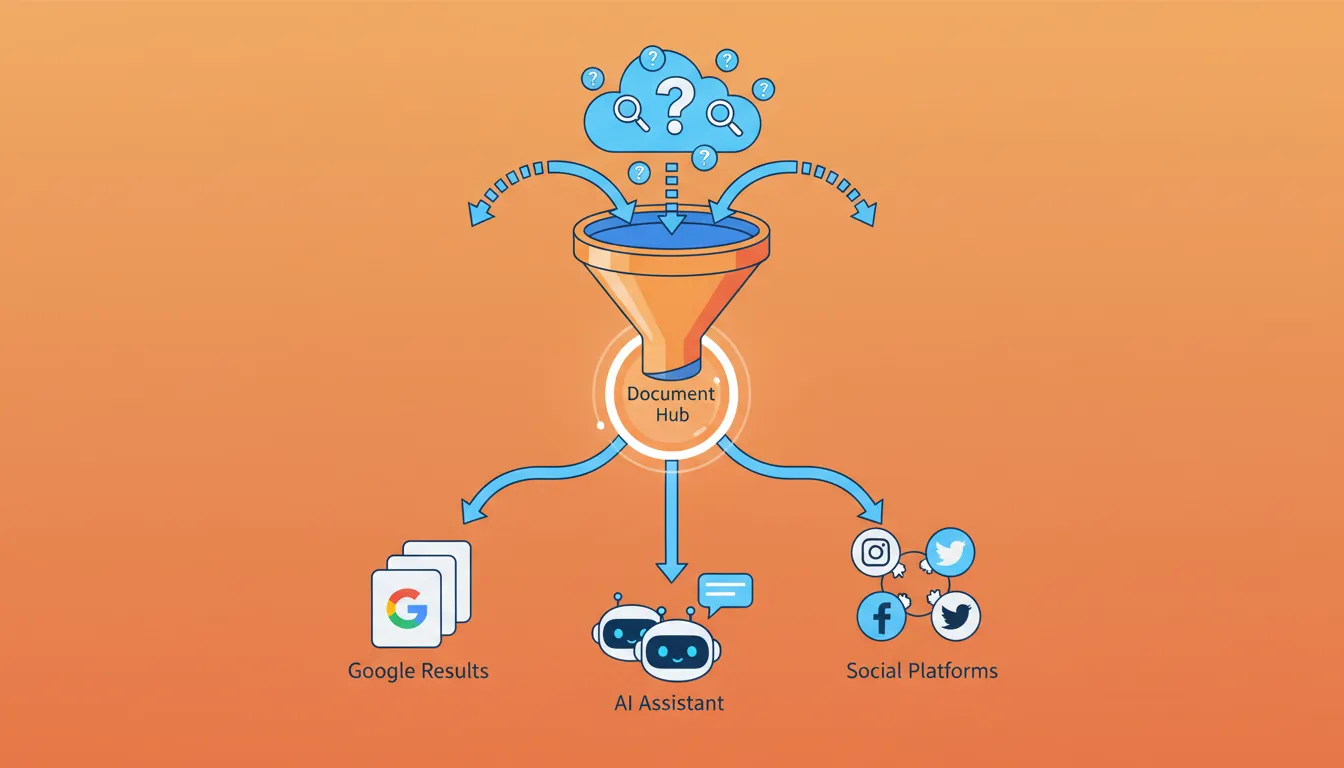
Every week, patients in your area ask AI stuff like "Who's the best chiropractor for sciatica near me?" If your practice isn't creating content AI can cite? You're invisible.
This isn't some future problem either.
38% of U.S. internet users now use AI tools like ChatGPT and Perplexity for health questions. Up from 8% in 2023. The shift is happening now.
The practices figuring this out will dominate local markets. The ones waiting will wonder where their patients went. If you're trying to scale your chiropractic practice in 2025 and beyond, this is non-negotiable.
Why AI Content Matters for Chiropractic Practices in 2026
Let's talk about what's actually happening right now.
The way patients find healthcare providers has fundamentally changed. Search engines used to be the gatekeepers. Now AI assistants are becoming the first point of contact.
The Zero-Click Reality
Nearly 60% of Google searches end without a click. Patients get their answers directly from AI Overviews, featured snippets, and conversational AI tools.
Gartner predicts 25% of organic search traffic will shift to AI chatbots by 2026.
What does this mean for your practice?
Traditional SEO still matters. But it's not enough anymore.
When someone asks "What causes sciatic nerve pain?"—the AI pulls from multiple sources.
If your content is comprehensive and authoritative? You get cited.
If not? Your competitor does.
Why Chiropractors Specifically Need This
Let's be real about practice life.
You're spending 40+ hours adjusting patients. Managing staff. Fighting insurance. And somehow you're supposed to create consistent marketing content too?
Most chiropractors know content matters.
They've heard about blogging. Email newsletters. Social media.
But execution stalls because writing takes time you don't have.
The result? A blog untouched for 18 months. Email list collecting dust. Social media that's sporadic at best.
AI changes that equation.
What took 4 hours—research, outline, draft, edit—now takes 45 minutes. Not because AI writes perfect content. It doesn't. But it handles groundwork so you can add the expertise that matters.
Here's the kicker.
The chiropractic market is projected to grow at 7.8% CAGR through 2034. More growth means more competition. Practices using AI for content will outpace those doing everything manually.
The Content-Trust Connection
Here's what most chiropractors miss.
Patients trust practices that educate them.
When someone finds your article explaining exactly why their back hurts after sitting all day? They remember who helped.
When they need an adjustment, they're not shopping around. They're booking with you.
Content builds trust before patients walk through your door.
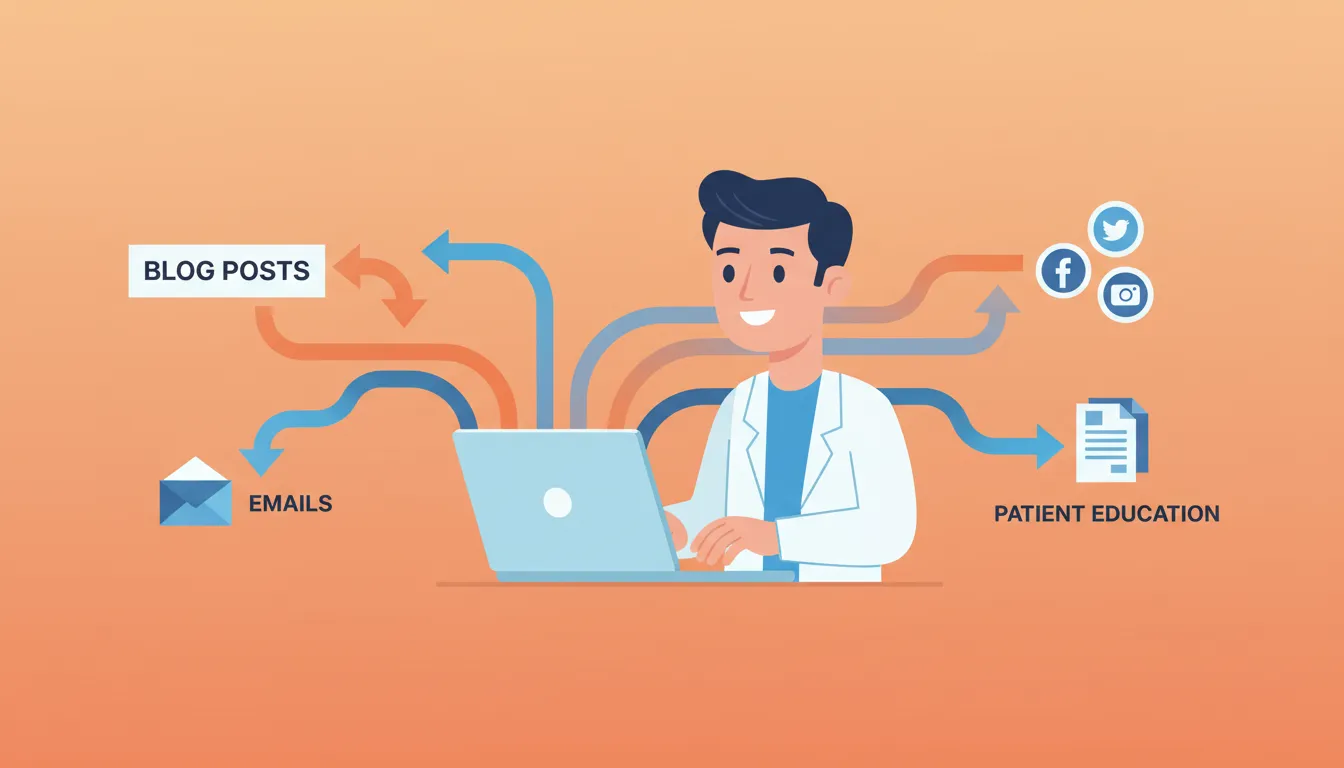
And in 2026, that content needs to work across multiple channels. Your blog. Google's AI Overviews. ChatGPT conversations. Email sequences. Social feeds.
AI makes multi-channel content actually manageable for a busy practice.
Choosing the Right AI Tools for Your Practice
Quick reality check.
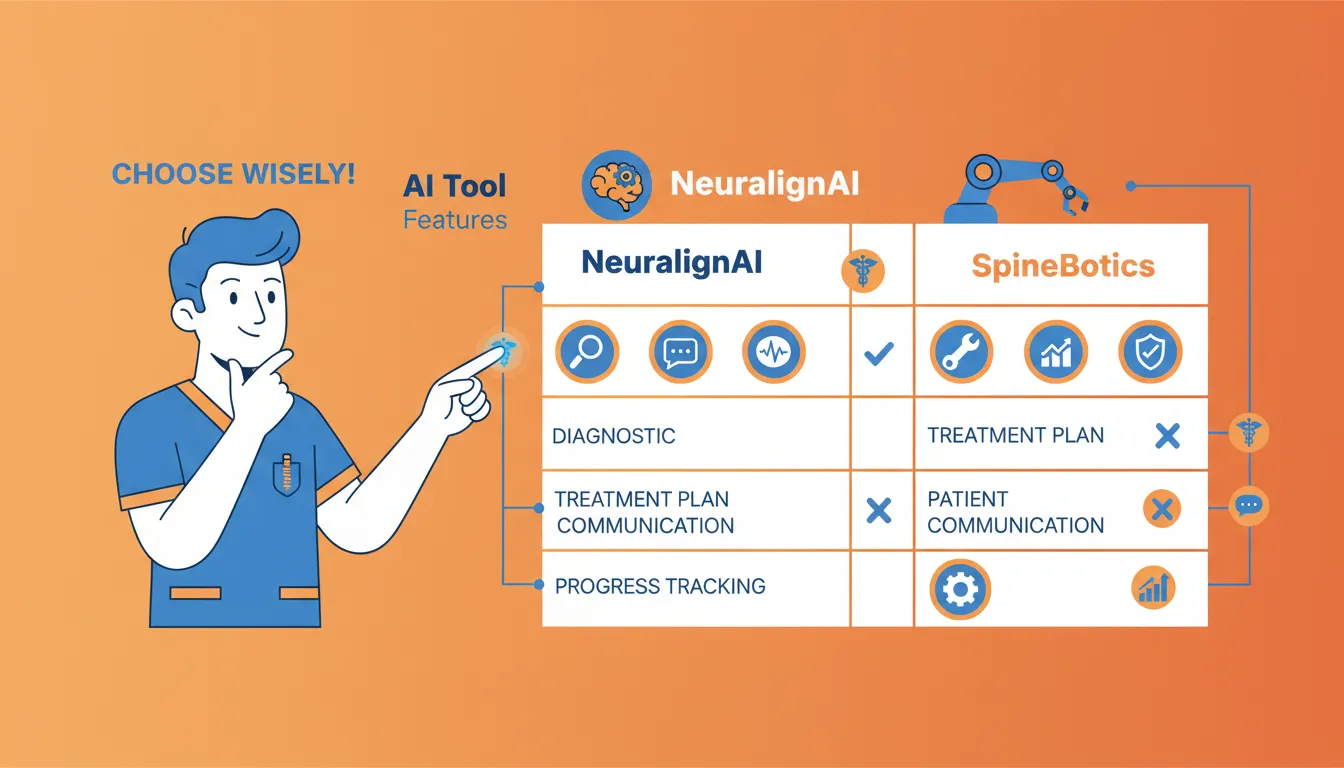
Not all AI tools work for healthcare. Wrong choice creates compliance nightmares you don't need.
Here's what works for different needs.
General Content Creation Tools
For marketing content without patient info—blogs, general emails, social media—standard AI tools work great.
- ChatGPT (OpenAI) - Most popular option. Free tier available. Plus at $20/month. Best for blog drafts, social captions, email subject lines, brainstorming. Limitation: not HIPAA-compliant for patient data.
- Claude (Anthropic) - Strong reasoning, handles long-form content well. Free tier plus Pro at $20/month. Great for detailed blog posts, longer articles, content strategy planning.
- Jasper - Built for marketing teams. Around $59/month per user. Pre-built templates for various content types. Brand voice training. Particularly good for social media and marketing emails.
Copy.ai - User-friendly interface. Plans start around $49/month. Strong for short-form content—ad copy, social posts, email sequences.
HIPAA-Compliant Options
For anything involving patient information—even de-identified scenarios—you need tools with Business Associate Agreements.
- BastionGPT - Purpose-built for healthcare. HIPAA-compliant with signed BAAs. Handles clinical content, patient communication drafts, even PI narrative letters. Secure enough for actual practice use.
- ChatGPT for Healthcare (OpenAI) - Launched January 2026 with official BAA option. Enterprise healthcare tier with compliance certifications. Worth evaluating if you're already comfortable with ChatGPT interface.
ChiroAI - Chiropractic-specific AI assistant. Trained on chiropractic research and protocols. Useful for clinical content and patient education materials. Understands specialty terminology natively.
AI Clinical Documentation Tools
These aren't content marketing tools, but they're game-changers for practice efficiency—and they can inform your content strategy.
- ChiroTouch Rheo - 92% time savings on SOAP notes—8.5 minutes down to 42 seconds. Understands chiropractic terminology. Never shares data with third parties.
- PatientNotes - Works across devices. Integrates with practice management. Reduces admin burden while keeping documentation accurate.
Strategic play? Use AI scribes for efficient documentation. Mine those notes for patient education content ideas. What you explain repeatedly becomes blog topics.
Quick Tool Selection Guide
| Blog posts | ChatGPT or Jasper | Cost-effective, good output |
| Patient emails | Jasper or Copy.ai | Brand voice, templates |
| Clinical correspondence | BastionGPT | HIPAA-compliant with BAA |
| PI narrative letters | BastionGPT | Healthcare-specific, secure |
| SOAP notes | Rheo or PatientNotes | EHR-integrated, time savings |
| Social media | ChatGPT or Jasper | Quick, scalable |
| Practice Q&A | ChiroAI | Chiropractic-specific |

NEED MORE CLIENTS?
Free conversion-focused analysis uncovers the 3 biggest problems killing your bookings — we'll walk you through your results personally
Creating Content That Ranks AND Gets Cited
Here's truth about AI content.
The tool doesn't matter as much as the strategy.
Best AI in the world still produces garbage without the right approach.
Let's fix that.
Forget keyword stuffing. Forget thin content.
AI search rewards completeness, clarity, and genuine expertise.
Start with the direct answer. When someone asks "How does chiropractic help headaches?"—don't bury the answer. Open with it. AI loves content that gets to the point.
Then go deep. Cover related questions before they're asked. Writing about headaches? Hit tension headaches, migraines, cervicogenic headaches, cervical spine connection, treatment approaches, timelines, when to seek additional care.
Use question-based headings. Not "Benefits of Chiropractic." Instead: "What Are the Benefits of Chiropractic Care for Back Pain?" Mirrors how people query AI.
Add structured data. Tables. Bullet points. FAQ sections. Helps AI parse and cite your content. Mayo Clinic dominates healthcare AI citations with 14.1% visibility partly because their content structure is impeccable.
Writing Prompts That Actually Work
Most chiropractors give AI terrible prompts.
Bad prompt: "Write a blog post about back pain."
Good prompt: "Write a 1,500-word blog post for my chiropractic practice website explaining the top 5 causes of lower back pain in office workers. Target audience: professionals aged 35-55 who sit at desks 8+ hours daily. Include: symptoms to watch for, when to see a chiropractor vs. wait it out, 3 desk stretches they can do today, and a section on how chiropractic adjustments address the root cause. Tone: conversational but professional, avoid medical jargon, use simple analogies."
The difference? Night and day.
Prompt formula:
- Content type and length
- Specific topic/angle
- Target audience details
- What to include
- Tone and style guidance
Better prompts equal better output.
The Human Layer
AI generates. You elevate.
After AI creates your first draft:
- Add local references - "Here in [City], I see this pattern constantly with patients who commute on [Local Highway]..."
- Include real scenarios - "Last month, a patient came in unable to turn her head left. Desk setup was the culprit." (De-identified, of course)
- Layer clinical expertise - AI knows general information. You know what actually happens in your adjusting room.
- Inject personality - AI tends toward generic. Your voice, opinions, and approach make content memorable.
The hybrid approach works because it combines AI efficiency with human authenticity. Improves chiropractic patient engagement better than either approach alone.
Content Quality vs. Quantity
Let's settle this debate.
Do you need to publish daily? No.
Does consistency matter? Absolutely.
The sweet spot for most practices: 2-4 high-quality pieces per month. Blog posts, patient education articles, or comprehensive guides.
Each piece should:
- Answer a specific question thoroughly (1,500+ words for blogs)
- Include helpful visuals or tables
- Link to related content on your site
- Provide clear next steps for readers
One excellent article beats five mediocre ones. Every time.
It's both.
AI handles efficiency. You add expertise.
Content Topics That Perform
Based on what patients ask and what AI pulls for answers:
| Symptom explanations | "What causes sciatic nerve pain?" | Direct match to queries |
| Treatment expectations | "What happens at your first adjustment?" | Reduces anxiety, builds trust |
| Condition comparisons | "Chiropractor or physical therapist?" | Decision-making stage |
| Prevention guides | "Desk posture tips for neck pain" | Evergreen, shareable |
| Local relevance | "Back health activities in [City]" | Local search intent |
| FAQ compilations | "10 Chiropractic Questions Answered" | Matches AI answer structure |
Maintaining HIPAA Compliance With AI

Let's be direct.
Using AI incorrectly creates real legal problems.
But following clear rules keeps you safe while getting AI benefits.
The Golden Rule
Never input Protected Health Information into non-compliant AI tools.
Period.
PHI includes: patient names, dates, phone numbers, emails, SSNs, medical record numbers, health plan IDs, account numbers, device identifiers, photos, and any unique identifying info.
If your prompt says "write a follow-up email for John Smith about his L4-L5 disc bulge treatment"—you just violated HIPAA.
Safe approach: "Write a follow-up email template for patients who got their first adjustment for lumbar disc issues. Include encouragement, home care reminders, what to expect over the next few days."
See the difference?
Useful content. Zero patient-specific info.
New AI Regulations in 2026
Healthcare AI regulation is expanding.
Texas's TRAIGA law and California's AB 2013—both effective January 1, 2026—impose disclosure requirements for AI in patient care.
Under these laws:
- Written disclosure of AI use in diagnosis or treatment
- AI systems can't discriminate based on protected characteristics
- Human review of AI-generated clinical recommendations required
For marketing content, these clinical requirements don't apply. But they signal where regulation is heading.
Practical Compliance Workflow
Marketing content (blogs, social, general emails):
- Use any AI tool
- Never include PHI in prompts
- Review for accuracy before publishing
- No BAA required
Patient communication templates:
- Any AI for general templates
- Avoid condition-specific language identifying patients
- Fill patient details manually after AI generates template
- Or use HIPAA-compliant tools throughout
Clinical documentation or correspondence:
- Only HIPAA-compliant tools with signed BAAs
- Verify BAA is current
- Follow tool-specific security protocols
- Maintain audit trails
Patient-specific education:
- Consider HIPAA-compliant options if referencing specific conditions
- De-identify all examples
- General health education without PHI can use standard tools
When in Doubt, De-Identify
Safest approach? Always work with de-identified info.
This means:
- Replace names with generic references ("Patient A")
- Remove specific dates (use "recently")
- Omit unique characteristics
- Generalize conditions ("lumbar disc issues" not "L4-L5 disc bulge with left-sided radiculopathy")
The HIPAA Journal confirms properly de-identified data falls outside HIPAA scope. If AI can't link info to a specific person, no violation.
Ready to See How We Fix Chiropractic Websites?
We've transformed 150+ service-based websites using our proven 4-step system. See exactly how we combine premium design with conversion science.
Building Your AI Content System
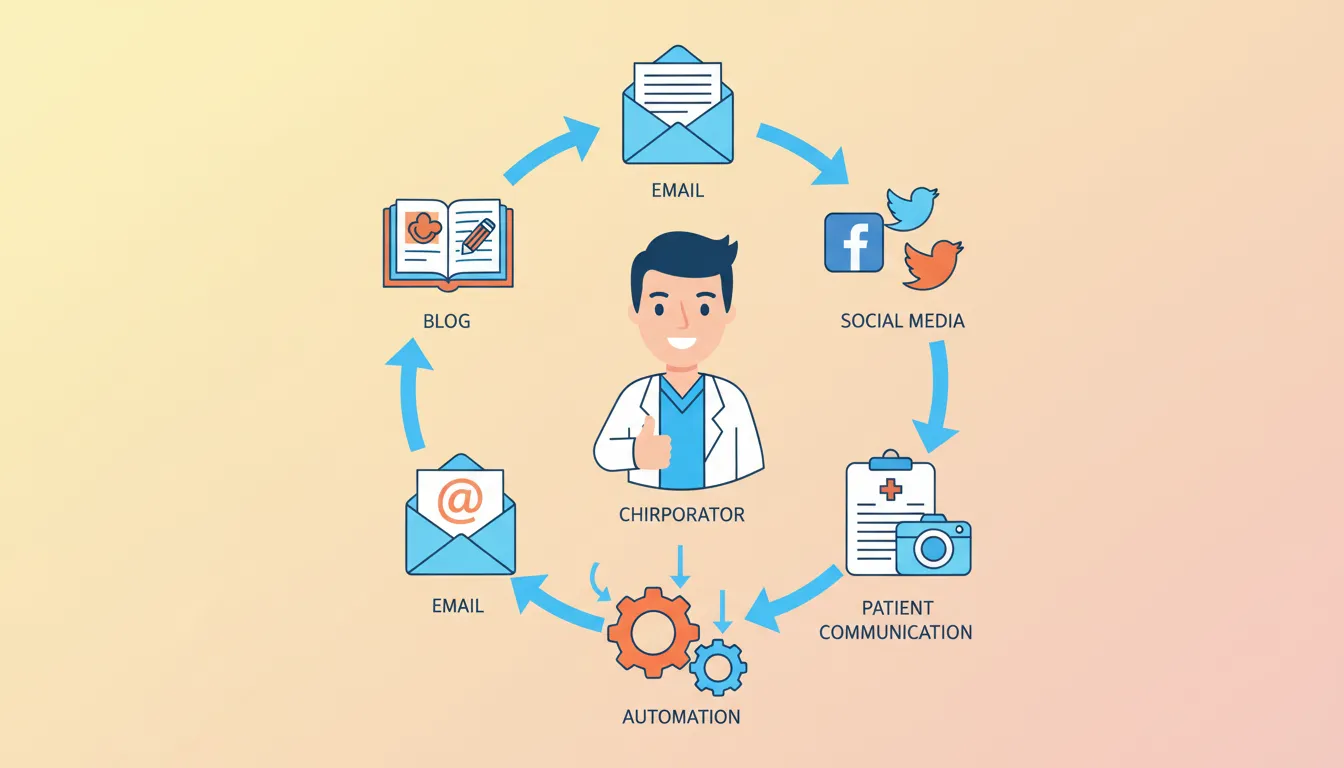
Random content creation doesn't work.
You need a system producing consistent output without eating all your time.
Here's how to build one that runs on autopilot.
The Content Batching Approach
Don't create content daily. You won't maintain it.
Batch into focused sessions instead.
Same principle as automated chiro reminder systems—set it up once, let it run.
Monthly content sprint (one afternoon):
- First hour: Plan 4 topics based on patient questions, seasonal relevance, or conditions you're seeing frequently.
- Next 2 hours: Generate first drafts for all 4 posts using AI. Don't edit—just generate. You're capturing momentum, not perfection.
- Following 90 minutes: Edit and enhance each draft. Add your clinical expertise, local references, personal anecdotes. Transform AI output into your voice.
- Final hour: Create derivative content—pull social posts, email content, and patient education snippets from each blog post.
This single day produces: 4 blog posts, 12-16 social media posts, 4 email newsletter sections, and patient education material. That's a month of content from one focused session.
Content Pillar Strategy
Organize your content around pillar topics that reflect your practice's expertise and patient needs. Each pillar becomes a cluster of related content.
Example pillar structure:
Pillar 1: Back Pain (your most common patient concern)
- Main pillar page: "Complete Guide to Back Pain Treatment in [Your City]"
- Supporting content: Lower back pain causes, upper back pain, sciatica, disc issues, pregnancy-related back pain, athlete back care, desk worker back pain
- Each piece links to others and to the main pillar
Pillar 2: Neck and Headaches
- Main pillar page: "Understanding Neck Pain and Headache Relief Through Chiropractic"
- Supporting content: Tech neck, tension headaches, migraines, cervicogenic headaches, whiplash, sleep position and neck pain
Pillar 3: Wellness and Prevention
- Main pillar page: "Proactive Chiropractic Care for Long-Term Health"
- Supporting content: Posture improvement, exercise recommendations, ergonomic setup, maintenance care benefits, pediatric chiropractic, senior wellness
This structure helps AI understand your topical authority and increases citation likelihood across related queries. When you're the comprehensive resource on back pain, AI assistants are more likely to cite you for any back-pain-related question.
Tools for Content Automation
Beyond AI writing tools, you need systems to automate distribution:
- Metricool or Later - Schedule social media posts weeks in advance. Upload your batched content, set posting times, forget about it.
- Email platforms (ActiveCampaign, Mailchimp) - Create email sequences that automatically nurture new subscribers with your best content over time.
- Google Calendar or Monday.com - Track your content calendar and publishing schedule. Tracking chiro growth with dashboards includes content performance metrics.
Zapier - Connect your tools so content flows automatically. New blog post? Automatically create social posts, add to email queue, update your content tracker.
Transforming Clinical Knowledge Into Patient Content
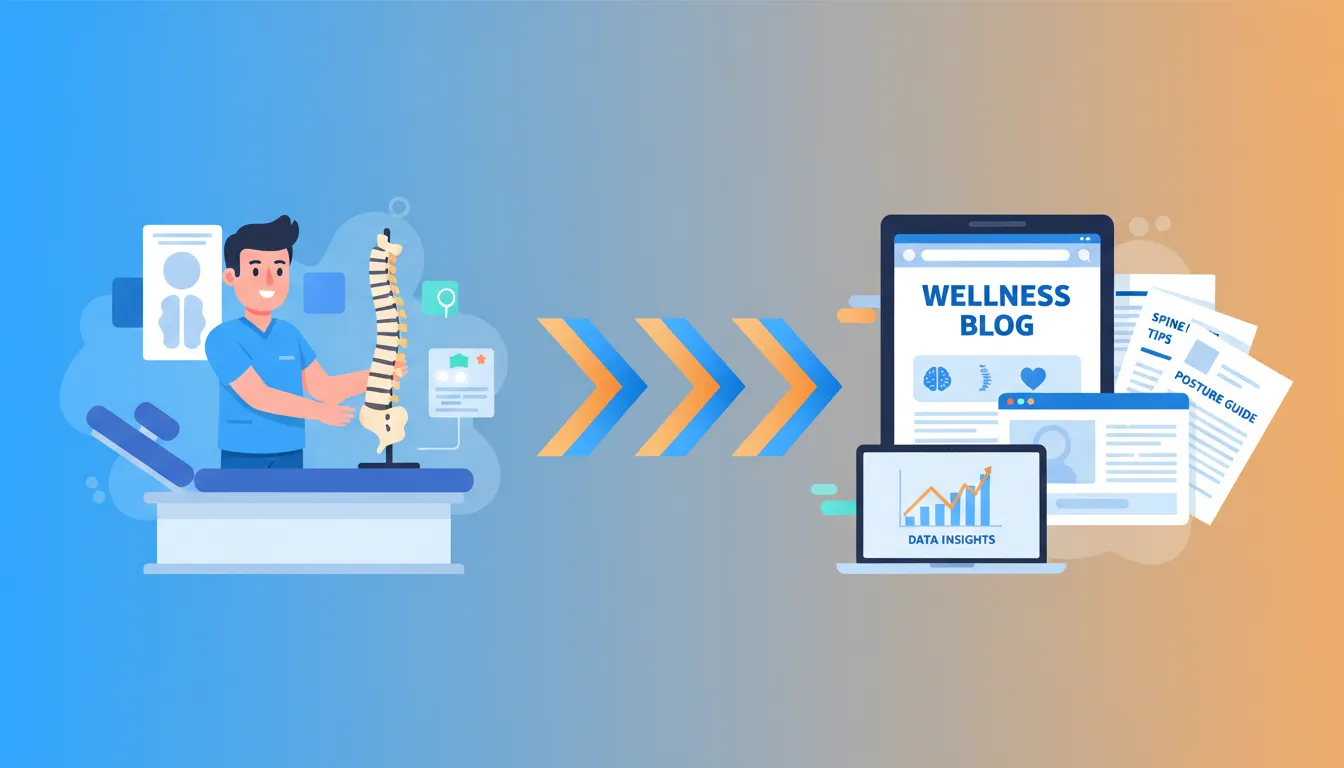
Your biggest content advantage? You answer patient questions all day.
Every explanation you give is a potential blog post. Every concern you address is an email topic.
AI helps capture and scale that knowledge.
Mining Your Daily Interactions
- Start noticing patterns in what patients ask.
"Why does my back hurt more in the morning?"
"Should I use ice or heat?"
"How long until I feel better?"
"Is cracking my own neck dangerous?"
These questions become content gold.
Weekly habit: Keep a note on your phone. After each patient interaction that involves explanation, jot down the question. At month's end, you have 15-20 proven content topics people actually want answered.
The Explanation Expansion Method
Take any explanation you give repeatedly and expand it.
What you tell patients verbally (2 minutes):
"Your desk posture is probably contributing to that neck pain. When you hunch forward, it puts extra strain on your cervical spine. Try these two stretches..."
What AI helps you create (1,500-word blog post):
Expanded version covering anatomy basics, why desk work specifically causes problems, multiple stretch options with descriptions, when posture correction isn't enough, how adjustments complement home care, prevention strategies, ergonomic recommendations.
AI handles the expansion. You provide the clinical foundation.
Creating Multi-Format Content
One clinical insight becomes multiple content pieces:
| Desk posture explanation | "Why Your Desk Job Is Killing Your Neck (And What to Do About It)" | "Quick posture reset you can do at your desk" | Before/after posture comparison graphic | Take-home stretching guide |
| Ice vs. heat guidance | "Ice or Heat for Back Pain: When to Use Each" | "The cold truth about using ice wrong" | Simple decision tree graphic | Protocol sheet for home use |
| Recovery timeline | "How Long Does Chiropractic Treatment Take to Work?" | "What to expect after your adjustment" | Week-by-week recovery graphic | Treatment plan overview |
AI helps create each format. Your expertise ensures accuracy.
Patient Engagement Through AI-Powered Communication

Content isn't just blogs and social posts.
Your most valuable content reaches patients directly—emails, text sequences, follow-up communications.
AI makes personalized communication scalable.
Email Sequence Automation
New patients need nurturing. AI helps create sequences that feel personal without requiring constant attention.
Example: New Patient Onboarding Sequence
- Day 1 (after first visit): Welcome email, what to expect, home care reminders
- Day 3: Check-in, common questions answered, encourage reaching out
- Day 7: Educational content related to their condition
- Day 14: Progress expectations, importance of follow-up
- Day 30: Long-term wellness benefits, maintenance care intro
AI drafts each email. You customize for your voice and practice specifics. Email platform sends automatically based on triggers.
Same approach works for best chiro CRM software for 2025—automation that feels personal.
Reactivation Campaigns
Patients drift away. Life happens.
AI helps you bring them back without awkward "we miss you" messaging.
Better approach: Educational reactivation.
"Hey [Name], we noticed it's been a while. Wanted to share this article about [relevant topic] that might be helpful. When you're ready, we're here."
Provides value first. Opens door without pressure.
AI creates variations for different patient segments:
- Athletes who stopped coming after season ended
- Office workers whose pain "got better" (temporarily)
- Wellness patients who switched to crisis-only visits
Review Request Automation
Reviews drive local visibility. But asking feels awkward.
AI helps craft natural review requests:
"Hi [Name], hope you're feeling better! If you have a minute, sharing your experience helps other people in [City] find quality chiropractic care. Here's a quick link: [Review Link]. Either way, thanks for trusting us with your care."
Simple. Not pushy. Effective.
Schedule to send 24-48 hours after positive visits when experience is fresh.
FAQ: AI Content Creation for Chiropractors
Is AI-generated chiropractic content HIPAA compliant?
Standard AI tools like ChatGPT are NOT HIPAA compliant by default.
However, HIPAA-compliant options exist. BastionGPT and OpenAI's new ChatGPT for Healthcare (launched January 2026) offer Business Associate Agreements (BAAs).
The key rule: Never input patient names, conditions, or any Protected Health Information (PHI) into non-compliant AI tools.
For marketing content that doesn't involve PHI—blogs, general newsletters, social posts—standard AI tools work fine. Just keep patient specifics out of your prompts.
Can I use ChatGPT to write my chiropractic patient emails?
Yes, for general patient education emails and newsletters that don't include any personal health information.
Write emails about topics like "desk posture tips" or "benefits of regular adjustments" without referencing specific patients.
For individual patient communications that mention their conditions or treatment plans, you'll need a HIPAA-compliant AI solution with a signed BAA.
How do I make AI-written content sound like my own clinical voice?
Start by providing AI tools with examples of your existing content that captures your voice.
Include specific phrases you use, your typical sentence length, and your communication style.
Most AI platforms let you create "brand voice" profiles that remember these preferences.
Always review and edit AI output to add personal anecdotes, local references, and your unique perspective on chiropractic care. The editing layer is where your voice really comes through.
Will Google penalize my chiropractic blog for using AI?
No.
Google has explicitly stated they don't penalize AI-generated content. What they care about is quality and helpfulness.
If your AI-assisted content provides genuine value, answers patient questions comprehensively, and demonstrates expertise, it will perform well.
The key is using AI as a starting point, then adding your clinical expertise, local relevance, and personal experience to create truly helpful content.
What are the best prompts for chiropractic blog topics?
Effective prompts include specific context about your practice, target patient concerns, and desired tone.
Try: "Write a 1,500-word blog post explaining how chiropractic adjustments help office workers with neck pain. Use conversational language, include 3 actionable tips they can try today, and explain when they should see a chiropractor. Target audience: professionals aged 35-55 who sit at desks 8+ hours daily."
The more specific your prompt, the better your output. Include audience details, desired length, tone preferences, and specific elements to include.
How does AEO differ from traditional SEO for chiropractors?
Traditional SEO focused on ranking in Google's blue links to drive website clicks.
AEO (Answer Engine Optimization) focuses on getting your content cited by AI assistants like ChatGPT, Google's AI Overviews, and Perplexity.
With nearly 60% of searches now ending without clicks, AEO ensures your practice gets mentioned when patients ask AI "Who's the best chiropractor for sciatica near me?"
The goal shifts from rankings to citations.
Practically, this means: clear question-and-answer content structures, comprehensive coverage of topics, FAQ sections, schema markup, and building entity authority so AI systems recognize you as a trusted source in your specialty area.
Can AI scribes help create patient education materials?
Absolutely.
AI scribes like ChiroTouch's Rheo can capture clinical language from patient visits and help transform those insights into patient-friendly education materials.
The workflow: AI captures your clinical notes efficiently, you identify key educational points from common explanations you're giving, then use content AI to reframe those points as patient-friendly blog posts, handouts, or email sequences.
This bridges your clinical expertise with patient communication without requiring you to start from scratch on every piece of content.
How much time does AI automation save on clinic marketing?
Most chiropractors report saving 5-10 hours per week on content creation tasks.
ChiroTouch reports their AI scribe Rheo reduces documentation time by 92%—from 8.5 minutes to 42 seconds per SOAP note.
For marketing specifically, AI can cut blog writing time from 3-4 hours to 45 minutes, email sequence creation from days to hours, and social media content batching from weekly tasks to monthly planning sessions.
The compounding effect is pretty significant: practices using AI effectively publish 4-8x more content than those doing everything manually.
Bringing It All Together
AI isn't replacing chiropractors or eliminating the need for genuine clinical expertise.
It's eliminating the excuse that you don't have time to create consistent, helpful content.
The practices that will dominate in 2026 and beyond are the ones building content systems now. They're using AI to handle first drafts while layering in clinical insights that establish authority. They're optimizing for both traditional search AND AI citations. They're creating patient education content that builds trust before the first appointment and reinforces it after every visit.
The barrier to entry has never been lower. The tools are accessible, affordable, and increasingly sophisticated. What used to require a marketing team or hours of personal effort can now happen in focused, batched sessions.
Start small if you need to. Pick one AI tool, create one piece of content this week, and establish one system to repeat the process. Then build from there.
If you're looking to scale your chiropractic practice in 2025 and into 2026, content marketing powered by AI isn't optional anymore. It's the foundation everything else builds on.
Look, I get it—you're already stretched thin managing patients, staff, and the endless operational details of running a practice.
If you're thinking "this all makes sense, but I don't have time to do it right," you're not alone. Most successful chiropractors we work with felt the same way before they realized their website and online presence were quietly costing them 15-20 qualified patient leads every single month.
That's why we created our Free Website Conversion Analysis. It's not a sales pitch—it's a genuine walkthrough of the 3 biggest problems killing your bookings, delivered personally via Loom video within 24 hours.
We'll show you exactly:
- Why visitors leave without booking
- What's broken on mobile devices (where most searches happen)
- Missing trust signals costing you patients
- Where you rank vs. local competitors
- Simple fixes that drive more calls this month
You'll also get an instant case study while you wait, showing real examples of how other chiropractors fixed these exact problems.
Get your free analysis here — no credit card, no obligation, just actionable insights you can use whether you work with us or not.
Because every day your content strategy sits on the back burner is another day competitors with AI-powered systems are capturing the patients searching for help right now.

Gerek Allen
Co-Owner iTech Valet
Entrepreneur, patriot, CrossFit junkie, IPA enthusiast, loves to travel to tropical destinations, and knows way too many movie quotes.


About iTech Valet
iTech Valet specializes in web design and content marketing for online entrepreneurs who want to share their expertise.
Services Include:
- Web Design
- Graphic Design
- Sales Copy
- Funnel Building
- Authority Sites
- Membership Sites
- Course Creation
- Email Systems
- Content Marketing
- Competitive Analysis
- Tech Integrations
- Strategic Planning
NEED MORE CLIENTS?
Free conversion-focused analysis uncovers the 3 biggest problems killing your bookings — we'll walk you through your results personally

621 Enterprises, Inc. | Copyright 2022 | All rights reserved