


How Do I Create a Content Marketing Strategy for My Chiropractic Practice?
 by Gerek Allen ~ Last Updated: November 27, 2025 ~ 8 Min Read
by Gerek Allen
~ Last Updated: November 27, 2025 ~
~ 8 Min Read ~
Start with three foundational decisions: what content formats you'll create, who you're creating it for, and how often you'll publish. Most successful chiropractic practices combine blog posts (for SEO and authority), video content (for engagement), and email newsletters (for patient retention).
Here's the reality: the average chiropractic practice publishes content sporadically with no strategy and wonders why it doesn't work. Random blog posts every few months don't build authority or drive traffic.
A proper content marketing strategy requires consistent execution across 6-12 months before you see significant results. The practices dominating local search right now started their content systems 12-18 months ago.
This guide walks you through building a complete content marketing strategy from goal-setting to measurement, with realistic timelines and proven tactics that work for small practices.
Why Most Chiropractic Content Marketing Fails

Most chiropractors approach content marketing backwards. They create content they want to write about instead of content their ideal patients are searching for.
The typical failure pattern looks like this: publish 3-4 blog posts, see no immediate results, give up and declare "content marketing doesn't work for chiropractors."
But here's what actually happened. They picked random topics with no search volume. Published inconsistently. Never promoted the content beyond posting once on Facebook. Expected immediate results from a long-term strategy.
Content marketing isn't broken—the approach was flawed from the start.
The Three Content Marketing Mistakes Killing Your Results
No clear strategy or goals. You're creating content without knowing what success looks like. Is the goal traffic? Bookings? Email list growth? Without defined objectives, you can't measure what's working.
Inconsistent publishing schedule. Content marketing compounds over time. Publishing once a month for three months doesn't work. You need consistent output for 6-12 months minimum to see traction.
Creating content in isolation. Your blog post should become social media content, email newsletter material, and video scripts. One piece of core content should generate 10+ assets across channels. Most chiropractors create everything separately and burn out within weeks.
Why Content Marketing Actually Works for Chiropractors
According to the Content Marketing Institute, healthcare practices using content marketing generate 67% more leads than those relying solely on paid advertising. The compound effect of consistent publishing creates unstoppable momentum.
Consider this: a single comprehensive blog post about local SEO can rank for 20-30 related search terms. That one article generates qualified traffic 24/7 for years.
Compare that to paid ads where you stop getting results the moment you stop paying. Content is the only marketing asset that appreciates over time instead of depreciating.
The practices winning in 2026 aren't necessarily spending more on marketing—they're investing in content systems that compound. Once you hit critical mass (typically 40-60 quality blog posts), organic traffic accelerates dramatically.
Step 1: Define Your Content Goals and Target Audience
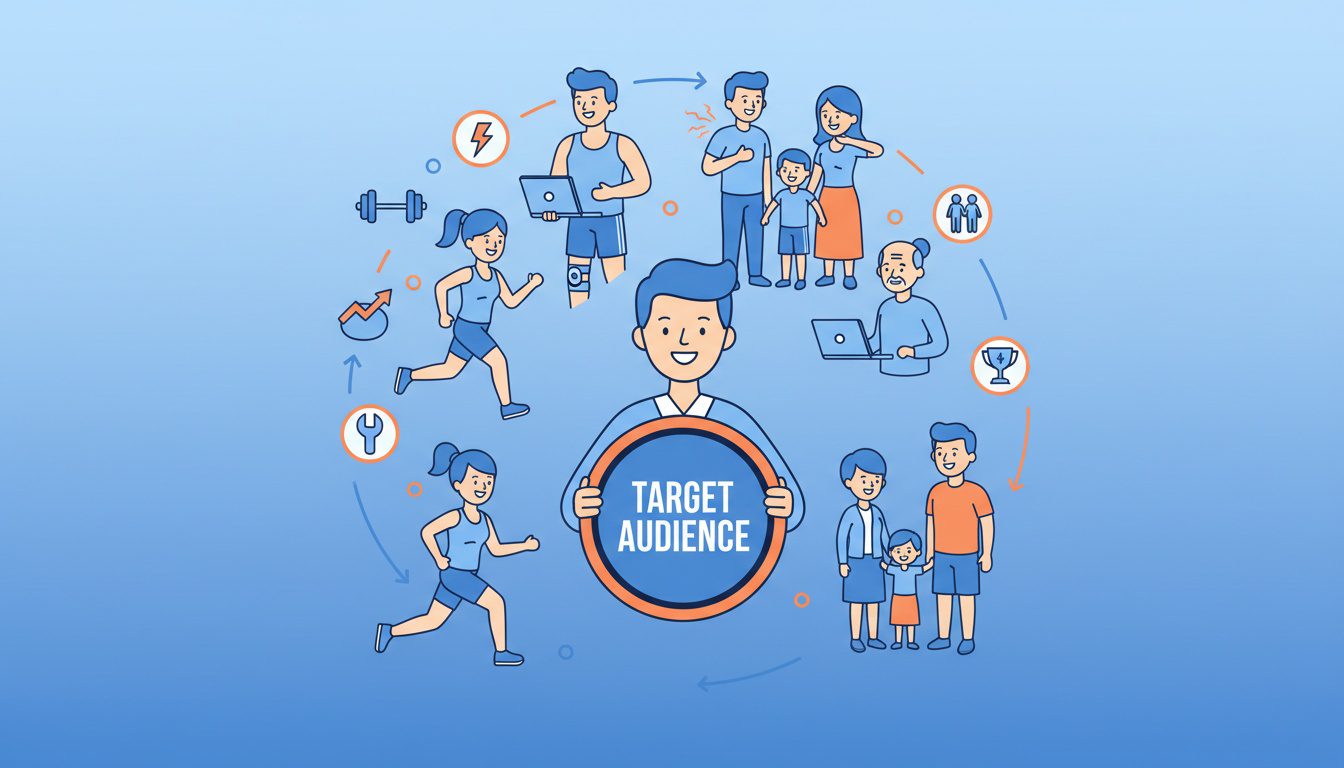
Before you create a single piece of content, answer two questions: What do you want content marketing to achieve? Who are you trying to reach?
Vague goals like "get more patients" don't work. You need specific, measurable objectives tied to business outcomes.
Setting SMART Content Marketing Goals
Your content goals should align directly with practice growth objectives. Here are realistic benchmarks:
- Traffic Goals - Increase organic website traffic by 50-100% within 6 months, 200-300% within 12 months
- Lead Generation Goals - Generate 5-10 qualified inquiries monthly from organic search within 6 months
- Authority Goals - Rank on page 1 for 10-15 local condition-specific keywords within 12 months
- Email List Goals - Grow email list by 50-100 subscribers monthly through content upgrades
- Engagement Goals - Achieve 500-1,000 monthly social media engagements from content distribution
Notice the timelines. Content marketing is a 6-12 month strategy, not a 30-day sprint.
According to HubSpot's 2024 State of Marketing report, businesses publishing 16+ blog posts monthly generate 3.5X more traffic than those publishing 0-4 posts. Consistency matters more than perfection.
Creating Detailed Patient Personas
Generic "everyone with back pain" targeting doesn't work. You need specific patient personas based on actual data from your practice.
Review your last 50 new patient intakes. Look for patterns:
What age ranges dominate? What conditions are most common? What's their typical income level? How did they find you? What objections came up during consultations?
Build 2-3 detailed personas representing your ideal patients. Here's an example:
Persona: Active Angela - 32-year-old marketing manager, suffers from desk posture-related neck pain and headaches, earns $65k annually, values natural health solutions, researches extensively before booking, concerned about cost and time commitment, found chiropractors through Google search "headache relief near me."
Create content that speaks directly to Angela's specific concerns, search behavior, and objections. This targeted approach outperforms generic content every time.
Aligning Content Topics with Patient Journey Stages
Your content should address patients at different stages of awareness:
Problem Aware (Early Stage) - They know they have pain but don't know what's causing it or how to fix it. Content: educational articles explaining conditions, causes, and treatment options.
Solution Aware (Middle Stage) - They're researching different treatment approaches including chiropractic care. Content: comparison guides, treatment explanations, success stories.
Provider Aware (Late Stage) - They've decided on chiropractic care and are choosing a provider. Content: practice differentiators, credentials, patient testimonials, booking incentives.
Most practices only create late-stage content. The winning strategy captures patients at all three stages, building trust long before they're ready to book.

NEED MORE CLIENTS?
Free conversion-focused analysis uncovers the 3 biggest problems killing your bookings — we'll walk you through your results personally

Step 2: Choose Your Content Formats and Channels

You can't do everything at once without burning out. Start with 2-3 core content formats based on your strengths and your audience's preferences.
Here's the strategic hierarchy for most chiropractic practices: blog posts as foundation, video content for engagement, email newsletters for retention. Let's break down why.
Blog Posts: Your SEO Foundation
Blog posts drive long-term organic traffic and establish topical authority. Every comprehensive article becomes a 24/7 patient acquisition machine.
According to recent data from Backlinko, the average first-page Google result contains 1,447 words. Comprehensive content outranks thin content consistently.
Your AI-powered blog workflow can produce 8-12 quality posts monthly without overwhelming your schedule. That's enough volume to build serious authority within 12 months.
Target these blog content types:
- Condition-Specific Guides - "Complete Guide to Treating Sciatica" (1,500-2,500 words)
- Treatment Explanations - "What to Expect at Your First Chiropractic Adjustment" (1,000-1,500 words)
- Local SEO Pages - "Best Chiropractor for Sports Injuries in [City]" (1,200-1,800 words)
- FAQ Posts - "Top 10 Questions About Chiropractic Care Answered" (1,500-2,000 words)
- Comparison Content - "Chiropractic Care vs. Physical Therapy: Which Is Right for You?" (1,800-2,500 words)
Publish minimum 8 posts monthly for first 6 months, then maintain 4-6 monthly to sustain momentum. Front-load your content production to reach critical mass faster.
Video Content: Engagement and Trust
Video builds trust faster than any other format. Patients want to see you, hear your voice, and get a feel for your personality before booking.
YouTube remains the second-largest search engine. YouTube Shorts and Instagram Reels generate 10-20X more reach than static posts according to Meta's 2024 algorithm updates.
Your video strategy should include:
- Educational Shorts (30-60 seconds) - Quick tips on posture, stretching, ergonomics. Post 3-5 weekly across YouTube Shorts, Instagram Reels, TikTok.
- Treatment Demonstrations (2-5 minutes) - Show what treatments look like, explain techniques, walk through the patient experience. Post 1-2 weekly on YouTube.
- Patient Success Stories (1-3 minutes) - Testimonials showing real results with permission. Post 1-2 monthly across all channels.
- Q&A Sessions (5-10 minutes) - Answer common patient questions in detail. Post 1-2 monthly on YouTube.
Don't overthink production quality. Smartphone video with good lighting and clear audio outperforms highly produced content with no personality. Authenticity beats polish.
Check out proven video marketing strategies for chiropractors to see what's working right now.
Email Newsletters: Patient Retention
Email keeps your practice top-of-mind between visits. According to Mailchimp's healthcare industry benchmarks, chiropractic practices average 21-23% open rates on newsletters—significantly higher than most industries.
Your email strategy needs three types of content:
- Weekly Educational Newsletter - One valuable tip, article, or video. Keep it short (200-300 words). Goal: open rate above 25%.
- Monthly Practice Updates - New services, staff spotlights, community involvement. Goal: maintain connection and personality.
- Automated Sequences - Welcome series for new subscribers, re-engagement for inactive patients, post-appointment follow-ups. Goal: conversion and retention.
Start building your email list immediately through website opt-ins, in-office signups, and content upgrades (free guides in exchange for email addresses). A list of 500-1,000 engaged subscribers is worth more than 10,000 social media followers.
Implement email marketing automation to nurture leads without manual work.
Social Media: Distribution and Community
Social media isn't a primary content format—it's a distribution channel for your core content. Repurpose blog posts and videos into social content rather than creating everything from scratch.
Platform priority for chiropractors in 2026:
- Facebook - Best for local community building, event promotion, and reaching 40+ demographics. Post 3-5X weekly.
- Instagram - Best for visual content, Reels, and reaching 25-45 demographics. Post 5-7X weekly including Stories.
- YouTube - Best for long-form educational content and SEO. Post 1-4X weekly depending on video production capacity.
- LinkedIn - Best for professional networking and corporate wellness partnerships. Post 2-3X weekly.
Skip TikTok unless you're specifically targeting Gen Z or have bandwidth for another platform. Focus beats dilution every time.
Get proven social media content ideas that actually engage patients.
Step 3: Build Your Content Calendar and Production Workflow
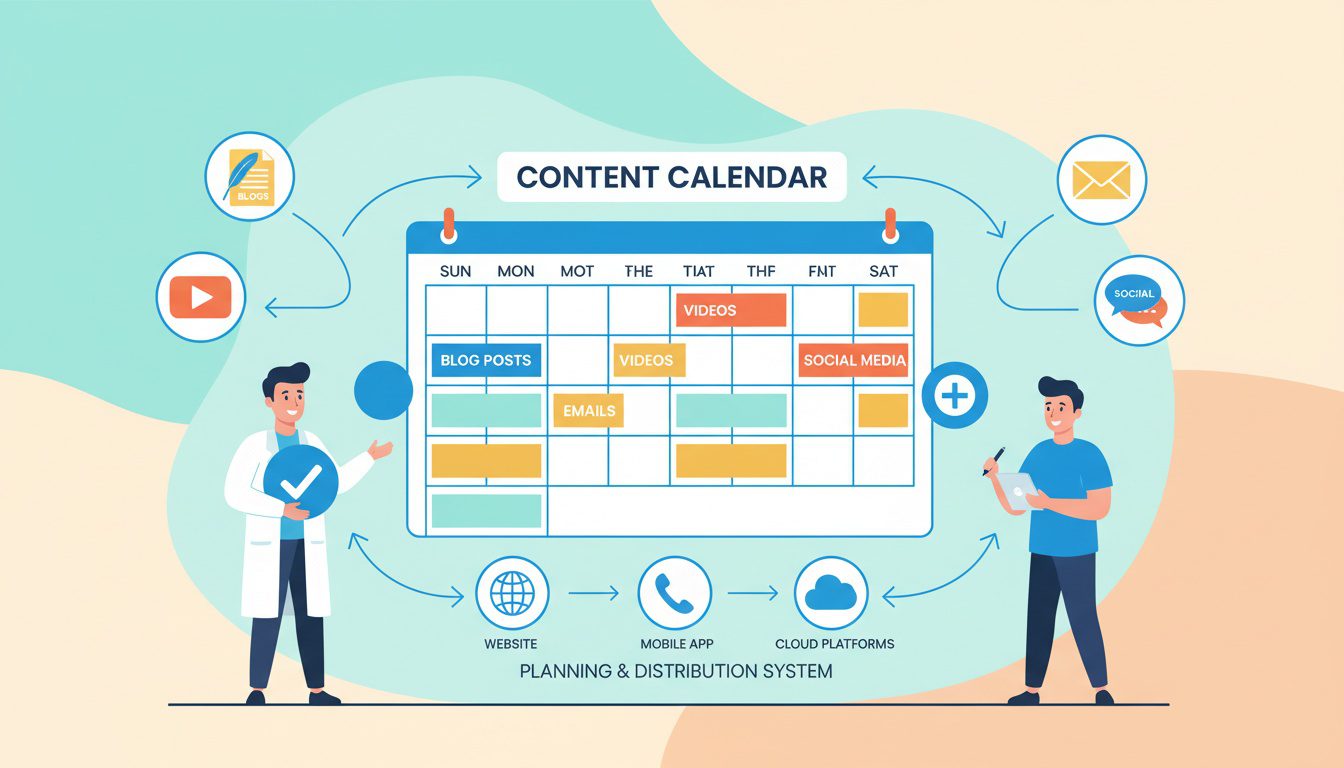
A content calendar turns good intentions into consistent execution. Without it, you'll publish sporadically and never build momentum.
Your calendar should plan three levels: quarterly themes, monthly topic clusters, and weekly publishing schedule. This cascading approach maintains strategic focus while allowing tactical flexibility.
Planning Quarterly Content Themes
Organize content around quarterly themes aligned with patient needs and seasonal patterns. This creates topical depth that search engines reward.
Example quarterly themes:
- Q1 (January-March): New Year, New You - Focus on injury prevention, posture correction, wellness goals. Capitalize on resolution momentum.
- Q2 (April-June): Spring Sports and Activity - Focus on sports injuries, athletic performance, active lifestyle content. Target weekend warriors.
- Q3 (July-September): Back-to-School and Workplace Wellness - Focus on desk ergonomics, student athletes, managing increased activity. Target parents and office workers.
- Q4 (October-December): Holiday Stress and Pain Management - Focus on stress-related tension, holiday survival tips, gift guides. Address seasonal pain increases.
Within each theme, create 12-16 pieces of core content (blog posts, videos) and 40-60 social media posts. Everything connects to the overarching theme.
Building Your Monthly Topic Clusters
Each month within your quarterly theme focuses on a specific sub-topic. Create content clusters where multiple pieces link to a comprehensive pillar page.
Example for Q1 "Posture Correction" month:
- Pillar Page: "Complete Guide to Correcting Poor Posture" (2,500-3,000 words)
- Cluster Posts: "5 Desk Stretches to Fix Forward Head Posture" (1,200 words)
- Cluster Posts: "Best Sleeping Positions for Spinal Alignment" (1,500 words)
- Cluster Posts: "How to Set Up an Ergonomic Home Office" (1,800 words)
- Cluster Posts: "Tech Neck: Why Your Smartphone Is Destroying Your Posture" (1,400 words)
All cluster posts link to the pillar page. This internal linking structure signals topical authority to search engines.
Learn more about content strategy for chiropractors to maximize your results.
Creating Your Weekly Production Schedule
Break content creation into repeatable weekly blocks. Consistency beats intensity—small daily actions compound faster than sporadic marathon sessions.
Here's a realistic weekly schedule for a solo practitioner or small practice:
Monday (Content Planning & Research)
- Review calendar for the week
- Research keywords and topics
- Outline blog post
- Script video content
- Time required: 60-90 minutes
Tuesday (Content Creation Day 1)
- Write blog post or record video
- Create primary content asset
- Time required: 90-120 minutes
Wednesday (Content Creation Day 2)
- Edit and finalize primary content
- Create social media repurposing
- Schedule email newsletter
- Time required: 60-90 minutes
Thursday (Publishing & Distribution)
- Publish blog post
- Upload video
- Schedule social media posts
- Time required: 30-60 minutes
Friday (Engagement & Measurement)
- Respond to comments and messages
- Review analytics
- Adjust next week's plan
- Time required: 30-45 minutes
Total weekly time investment: 4-6 hours. That's manageable for most practitioners when systemized properly.
Tools for Content Calendar Management
Use dedicated tools instead of scattered notes and mental tracking. Here are the best options:
- Notion - Free, flexible, great for solo practitioners. Create databases linking content pieces to calendar dates.
- Airtable - $10-20/month, spreadsheet-database hybrid. Perfect for practices with multiple team members.
- Trello - Free-$10/month, visual board system. Best for those who think in kanban-style workflows.
- CoSchedule - $29-99/month, marketing-specific calendar. Includes social media scheduling and team collaboration.
- Google Sheets - Free, simple, works for everyone. Start here if you're overwhelmed by dedicated tools.
Pick one system and commit to it for at least 90 days. Switching tools constantly wastes more time than imperfect systems.
Step 4: Create Your Content Production System
Developing Content Templates and Frameworks
Create standardized templates for each content type. Templates maintain quality while reducing decision fatigue.
Blog post template structure:
- Introduction (200-300 words) - Hook, problem statement, preview of solution
- Problem explanation (300-400 words) - Why this matters, common pain points
- Solution framework (800-1,200 words) - Step-by-step guidance, specific tactics
- Implementation tips (300-400 words) - Practical next steps, realistic expectations
- FAQ section (300-500 words) - Address common objections and questions
- Call-to-action (100-150 words) - Clear next step for readers
Video script template structure:
- Hook (first 5 seconds) - Attention-grabbing question or statement
- Problem (10-15 seconds) - Relate to viewer's pain point
- Solution (30-40 seconds) - Deliver the valuable content
- Call-to-action (5-10 seconds) - Like, follow, book appointment
Templates don't limit creativity—they create consistency while freeing mental bandwidth for insights and personality.
Leveraging AI Tools for Content Production
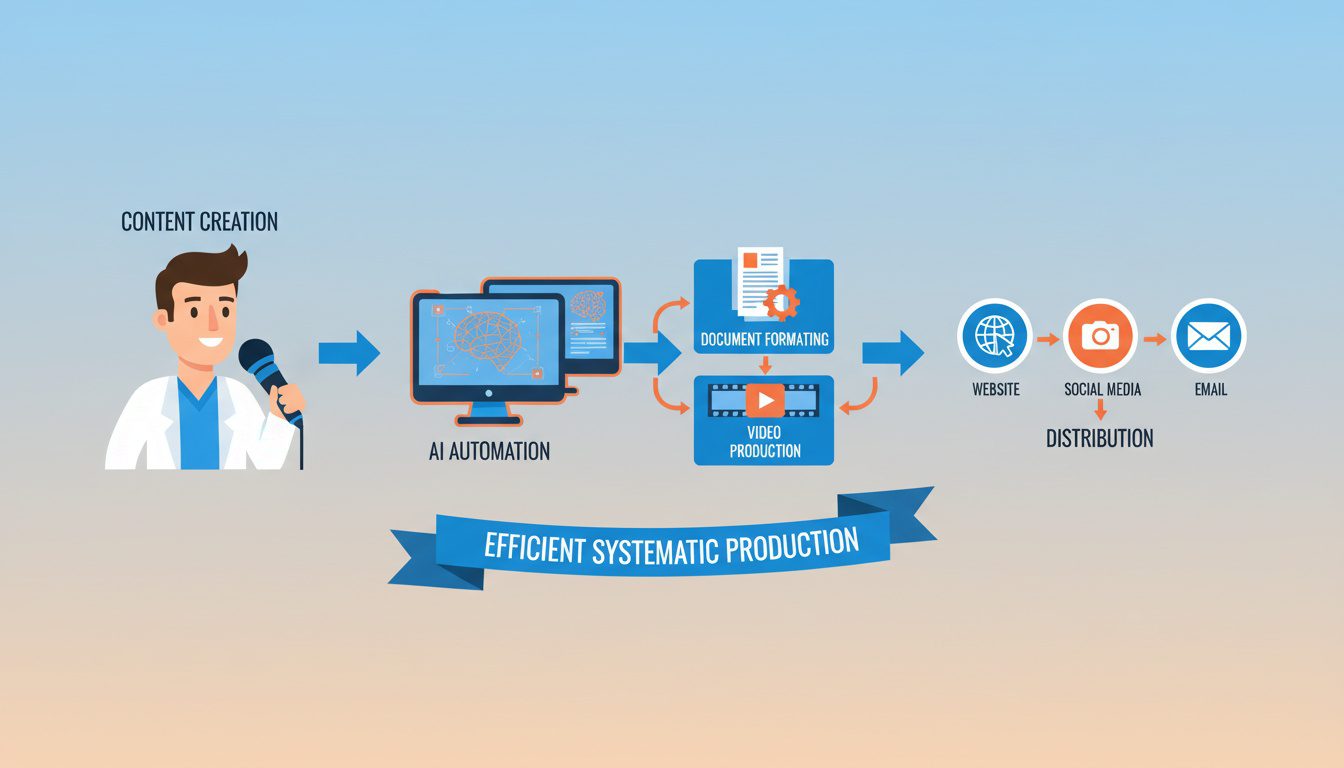
AI dramatically reduces content creation time when used correctly. The key is AI as assistant, not replacement.
Your role: Provide expertise, voice, and patient insights. AI's role: Handle research, first drafts, and formatting.
Best AI tools for chiropractic content in 2026:
- ChatGPT or Claude - For blog post outlines, first drafts, repurposing content. Cost: $20/month.
- Descript - For video editing and transcription. Cost: $12-24/month.
- Canva - For graphics and social media templates. Cost: $13-30/month.
- Jasper or Copy.ai - For specialized marketing copy and social posts. Cost: $39-99/month.
A hybrid workflow looks like this: You record 10-minute voice notes explaining a topic. AI transcribes and creates first draft. You edit for accuracy and personality (15-20 minutes). AI generates social media repurposing.
One 10-minute voice note becomes a 1,500-word blog post, 5-7 social media posts, and an email newsletter—all within 30-40 minutes total.
Dive deeper into AI blog writing for chiropractors to maximize efficiency.
Building a Content Library and Asset Repository
Create a library of reusable assets that speed up production:
- Image library - 50-100 stock photos of chiropractic care, exercises, office settings
- Video intros/outros - Branded 5-second clips for consistent video opening
- Social media templates - Pre-designed Canva templates in brand colors
- Standard CTAs - 5-10 variations of booking language
- Frequently used stats - Pre-researched data with sources saved
Building this library takes 4-6 hours upfront but saves 15-20 minutes per piece of content created. Over a year, that's 100+ hours recovered.
Outsourcing and Delegation Strategies [H3]
You don't need to do everything yourself. Strategic delegation maintains quality while freeing your time for higher-value activities.
What to keep in-house:
- Strategy and topic selection
- Personal stories and insights
- Patient interactions and testimonials
- Final approval and voice consistency
What to delegate:
- Blog post first drafts (AI or freelance writer)
- Video editing (freelance editor via Upwork or Fiverr)
- Graphics and social media templates (designer)
- Scheduling and distribution (VA or automation tools)
Realistic costs for delegation:
- AI Writing Tool - $20-50/month for unlimited blog drafts
- Freelance Blog Writer - $100-300 per post (1,500-2,000 words)
- Video Editor - $30-75 per video edit
- Virtual Assistant - $15-25/hour for scheduling and distribution
- Graphic Designer - $150-400 per month for social templates
Most practices find the sweet spot is AI for drafting, you for editing and voice, VA for distribution. Total monthly cost: $100-200 for dramatically increased output.
Step 5: Implement Distribution and Promotion Strategy
Creating content is only half the battle. Distribution and promotion determine whether anyone actually sees it.
Most chiropractors publish content and hope for the best. Strategic distribution amplifies reach 10-20X without creating additional content.
The Content Repurposing Framework
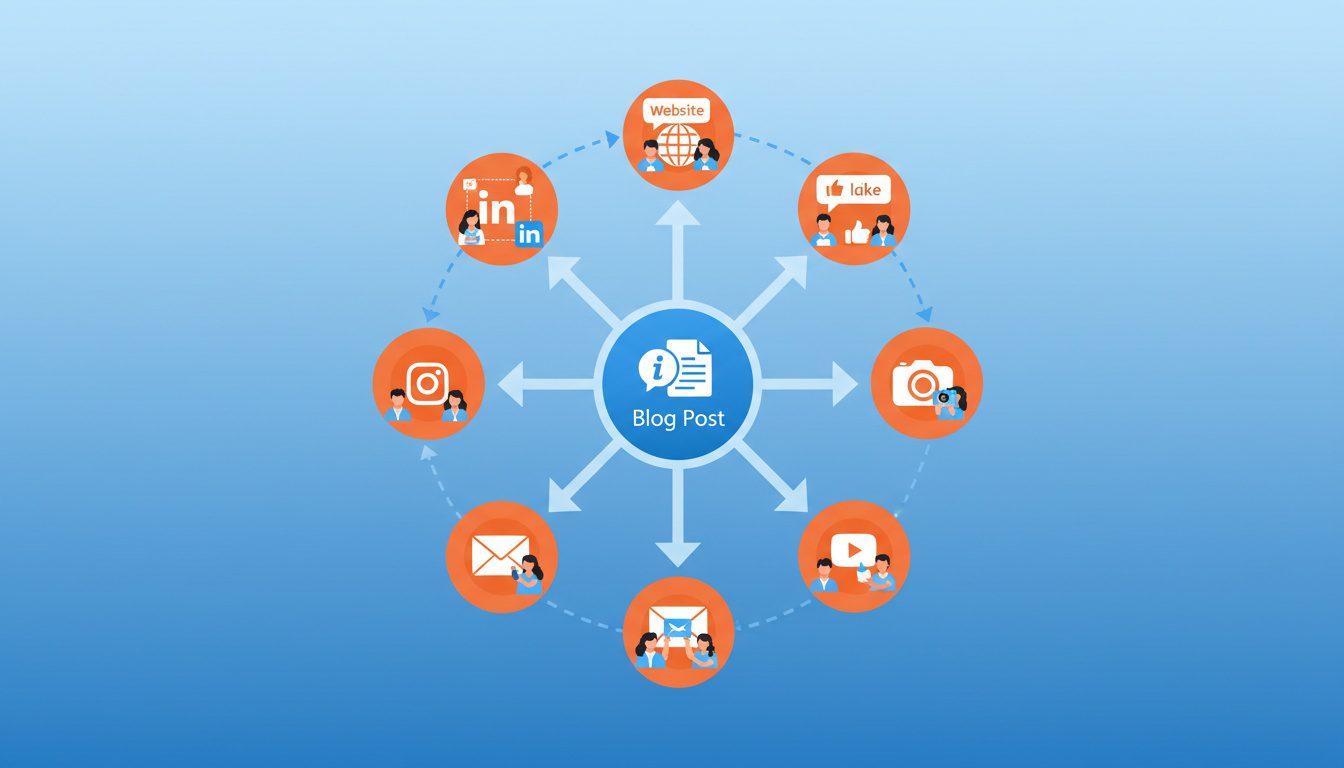
One piece of core content should generate 10+ assets across channels. This approach maintains consistent presence without creating everything from scratch.
Here's the repurposing workflow for a single blog post:
- Core Asset: 1,500-word blog post on "5 Exercises to Fix Forward Head Posture"
- Email Newsletter: 300-word summary with link to full post
- Facebook Post: Key takeaway with engaging question (100 words + image)
- Instagram Feed Post: Carousel with 5 exercise images, caption with condensed tips
- Instagram Reels: 30-second video demonstrating one exercise
- YouTube Short: Same 30-second video, different caption
- LinkedIn Post: Professional angle about workplace ergonomics (150 words)
- Pinterest Pin: Infographic with all 5 exercises
- Twitter/X Thread: 5-tweet thread, one exercise per tweet
One blog post just became 9+ separate promotional assets. Record time to create all of them: 45-60 minutes using templates and tools.
Building Your Automated Distribution System
Manual posting every day leads to burnout. Automation maintains consistency while freeing your time.
Essential automation tools:
- Buffer or Hootsuite - Schedule social media posts across platforms. Cost: $6-15/month.
- Mailchimp or ConvertKit - Automate email sequences. Cost: $0-40/month depending on list size.
- Zapier - Connect tools and automate workflows. Cost: $20-50/month.
- WordPress Plugins - Auto-post blog content to social media. Cost: Free-$50/month.
Set up these automated workflows:
- New blog post published → Automatically shared to Facebook, LinkedIn, Pinterest
- New video uploaded to YouTube → Automatically sent to email list
- New subscriber joins list → Automatically receives welcome sequence
- Patient books appointment → Automatically added to post-care email sequence
Initial setup takes 2-4 hours but runs on autopilot afterward. You're maintaining 10+ touchpoints weekly while spending 60-90 minutes on actual content creation.
Leveraging Email for Content Distribution
Your email list is your most valuable distribution channel. You own it, unlike social media platforms that can change algorithms overnight.
Every piece of content should include an email component:
- Weekly Newsletter: Feature your latest blog post with compelling excerpt and clear CTA
- Monthly Roundup: Compile your top 3-4 posts from the month with brief descriptions
- Automated Drip Sequences: New subscribers receive your best-performing content over 6-8 weeks
According to Campaign Monitor's healthcare industry data, emails with video content increase click-through rates by 96%. Embed video thumbnails linking to YouTube rather than large video files.
Segment your list for better targeting:
- Current patients - Focus on retention, wellness tips, practice updates
- New leads - Focus on education, building trust, booking incentives
- Inactive patients - Focus on re-engagement, special offers, "we miss you" messaging
Your email marketing automation system should handle segmentation and distribution without manual effort.
Paid Promotion for Content Amplification
Organic distribution builds over time. Strategic paid promotion accelerates results while you're building momentum.
Allocate 10-20% of your content budget to promotion:
- Facebook/Instagram Ads: $5-10/day boosting your best-performing content to local audiences
- Google Ads: $300-500/month targeting bottom-funnel keywords where you have comprehensive content
- YouTube Ads: $100-200/month promoting your most engaging videos to local viewers
Don't promote everything. Only boost content that's already showing strong organic performance. The goal is amplification, not compensating for poor content.
Run ads for 7-14 days, measure results, double down on winners. A single well-promoted blog post can generate 50-100 qualified leads when targeted correctly.
Learn how to run effective Google Ads for your chiropractic practice to complement organic content.
Step 6: Measure Results and Optimize Performance

You can't improve what you don't measure. Monthly tracking identifies what's working and what needs adjustment.
Most chiropractors track vanity metrics like social media followers. Focus on metrics that actually correlate with new patients.
Essential Content Marketing Metrics to Track
Track these metrics monthly using Google Analytics, email platform reports, and social media insights:
Traffic Metrics:
- Total website sessions (goal: 10-20% monthly growth)
- Organic search traffic (goal: 15-30% monthly growth)
- Pages per session (goal: 2.5+)
- Average session duration (goal: 2+ minutes)
- Bounce rate (goal: below 60%)
Engagement Metrics:
- Email open rate (goal: 22-28% for newsletters)
- Email click-through rate (goal: 3-5%)
- Social media engagement rate (goal: 2-4%)
- Video view completion rate (goal: 30%+ for longer videos)
- Comments and shares (goal: consistent upward trend)
Conversion Metrics:
- Contact form submissions (goal: 2-5% of traffic)
- Phone calls from website (goal: 1-3% of traffic)
- New patient bookings from content (goal: 5-10 monthly by month 6)
- Email list growth (goal: 50-100 subscribers monthly)
- Cost per new patient from content (goal: below paid advertising CPL)
Create a simple spreadsheet tracking these metrics monthly. Trends matter more than individual data points.
Setting Up Google Analytics for Content Tracking
Google Analytics 4 is free and essential for understanding content performance. Set up these critical tracking elements:
- Goal Tracking: Track contact form completions, phone clicks, booking page visits
- UTM Parameters: Tag all social media and email links to identify traffic sources
- Event Tracking: Monitor video plays, PDF downloads, scroll depth
- Custom Reports: Create dashboards showing content performance at a glance
Key reports to review monthly:
- Landing Pages Report: Which pages drive the most traffic and conversions?
- Acquisition Report: Which channels send the highest-quality traffic?
- Behavior Flow: How do visitors navigate through your content?
- Conversion Paths: What content touchpoints lead to bookings?
Most chiropractors discover 20% of their content drives 80% of results. Double down on content formats and topics showing strong performance.
Identifying and Scaling Top-Performing Content
After 3-6 months of consistent publishing, patterns emerge. Some content dramatically outperforms the rest.
Look for posts that:
- Generate 3X+ more traffic than average
- Show high engagement (long session duration, low bounce rate)
- Drive actual conversions (contact forms, calls)
- Rank on page 1 for target keywords
- Get shared frequently on social media
Once identified, scale these winners:
- Update and expand high-performing posts - Turn 1,500-word posts into comprehensive 3,000-word guides
- Create related content clusters - Build 4-5 supporting articles linking to your winner
- Invest in paid promotion - Boost proven performers to expand reach
- Repurpose into different formats - Turn winning blog posts into video series or downloadable guides
According to Orbit Media's annual survey of 1,000+ bloggers, updating old content drives 38% more traffic than creating new content. Your winners deserve continued investment.
Conducting Quarterly Content Audits
Every 90 days, audit your complete content library. Identify opportunities to improve existing content rather than always creating new.
Quarterly audit checklist:
- Update statistics and data - Replace outdated information with current research
- Improve SEO optimization - Add internal links, optimize meta descriptions, improve headers
- Enhance visual elements - Add images, infographics, or videos to text-heavy posts
- Fix broken links - Internal and external links decay over time
- Consolidate thin content - Combine multiple short posts into comprehensive guides
- Delete or redirect underperforming content - Remove outdated or irrelevant posts
This maintenance ensures your content library stays valuable and competitive. Search engines favor websites that update and improve content regularly.
Implement a content marketing analytics system to track performance systematically.
Content Marketing Investment and ROI Expectations

Content marketing requires upfront investment before generating returns. Understanding realistic costs and timelines prevents premature abandonment.
Most chiropractors underestimate required investment and overestimate speed of results. Let's set proper expectations.
Monthly Content Marketing Budget Breakdown
A comprehensive content marketing program costs $900-1,500 monthly for small practices. Here's where the money goes:
| Content Creation Tools | $100-150 | AI writing, video editing, design tools |
| Freelance/Outsourcing | $400-700 | Writers, editors, VAs, designers |
| Distribution/Promotion | $200-400 | Paid social amplification, ads |
| Software/Platforms | $150-250 | Email platform, scheduling tools, analytics |
| Education/Training | $50-100 | Courses, resources, staying current |
This investment generates 8-12 blog posts, 12-16 videos, 20-30 social posts, and 4 email newsletters monthly—enough volume to build serious momentum.
Compared to traditional advertising, content marketing costs 62% less per lead according to Demand Metric's Content Marketing ROI study. The assets you create continue producing value for years.
Expected Timeline for Content Marketing Results
Content marketing is a compound interest strategy. Early months show minimal results, then acceleration happens suddenly.
Realistic timeline expectations:
| Months 1-3 | Minimal traffic increase, 0-2 new patients from content | Building foundation, search engines indexing content |
| Months 4-6 | 30-50% traffic increase, 3-7 new patients monthly | Early ranking improvements, compounding begins |
| Months 7-9 | 75-150% traffic increase, 8-15 new patients monthly | Multiple posts ranking, authority building |
| Months 10-12 | 150-300% traffic increase, 15-25 new patients monthly | Critical mass reached, exponential growth |
| Months 12+ | Continued growth, 25-40+ new patients monthly | Compounding in full effect, sustainable flow |
Practices quitting at month 3-4 miss the exponential growth phase. Those pushing through to month 10-12 build unstoppable momentum.
Calculating Content Marketing ROI
Track these numbers to calculate ROI:
- Total monthly content investment: $900-1,500
- New patients from content: Track via source attribution in booking system
- Average patient lifetime value: Typically $1,500-3,000 for chiropractors
Example ROI calculation at month 9:
- Monthly investment: $1,200
- New patients from content: 12
- Patient lifetime value: $2,000
- Monthly patient value generated: $24,000
- ROI: 1,900% (or 19:1 return)
Even with conservative numbers (6 new patients at $1,500 LTV), you're generating $9,000 in lifetime value from $1,200 investment—a 650% ROI.
Unlike paid ads where ROI stops when spending stops, content continues generating returns indefinitely. That month 9 blog post ranks and converts for years afterward.
Common Content Marketing Challenges and Solutions
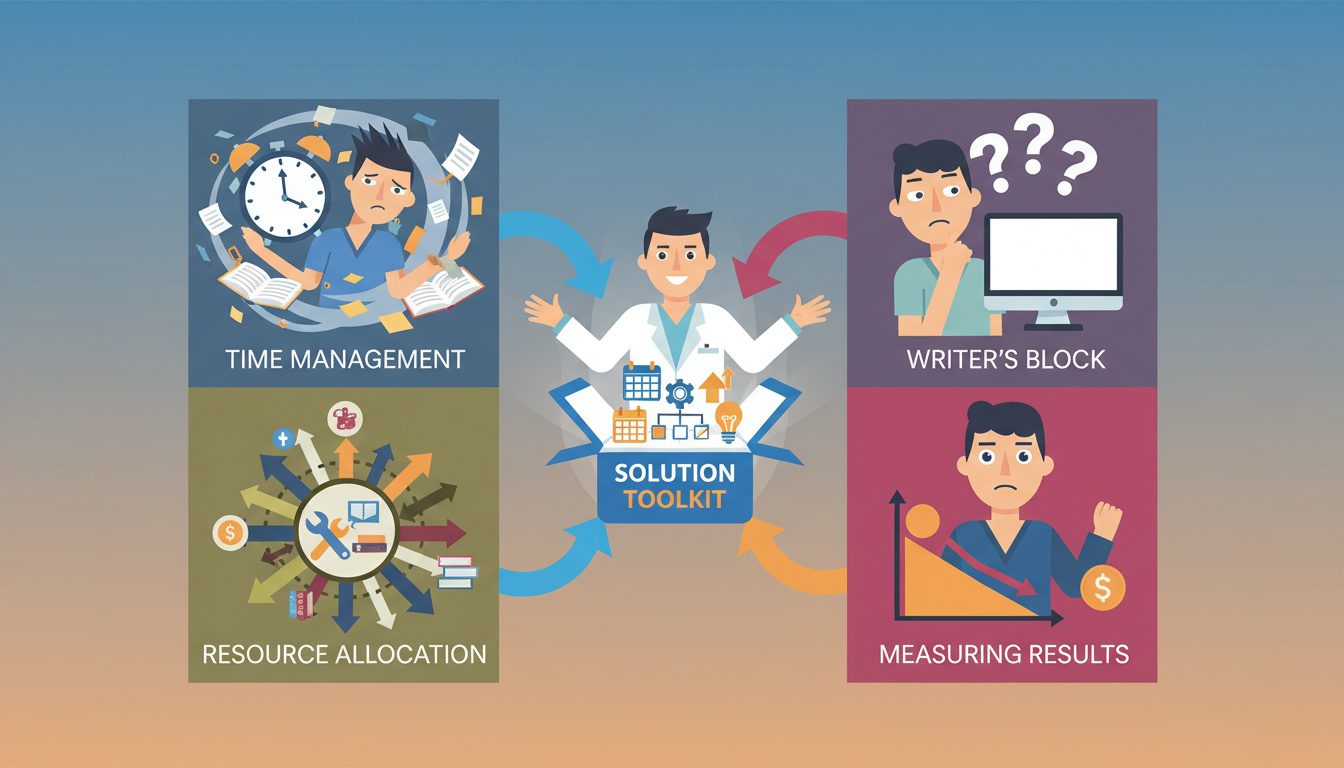
Even with a solid strategy, you'll face obstacles. Here's how to overcome the most common challenges.
Challenge: "I Don't Have Time to Create Content"
Solution: You're not creating time, you're protecting time through systems.
Block 60-90 minutes twice weekly on your calendar specifically for content. Treat these blocks as patient appointments—non-negotiable.
Batch your content creation. Record 4-5 video topics in one session. Write outlines for an entire month of blog posts in one sitting. AI tools draft the content, you edit for 15-20 minutes per piece.
Most time waste comes from context switching. Dedicated content blocks eliminate this efficiency killer.
If you genuinely can't carve out 2-3 hours weekly, you need to delegate content creation entirely. That's what outsourced content marketing services exist for.
Challenge: "I Don't Know What to Write About"
Solution: Your patients tell you what to write about daily.
Keep a running note on your phone. After every patient consultation, jot down questions they asked. After 30 days, you'll have 50-100 content ideas straight from your target audience.
Use these research tools:
- AnswerThePublic - Shows questions people actually ask about any topic
- Google Search Console - Reveals what searches already bring people to your site
- YouTube Search Autocomplete - Type "chiropractic" and see what suggestions appear
- Reddit and Quora - Real discussions showing actual pain points and concerns
You're never out of ideas when you listen to your market. The practices struggling to find topics aren't paying attention to what patients are asking.
Check out proven blog topic ideas for chiropractors when you need inspiration.
Calculating Content Marketing ROI
Track these numbers to calculate ROI:
- Total monthly content investment: $900-1,500
- New patients from content: Track via source attribution in booking system
- Average patient lifetime value: Typically $1,500-3,000 for chiropractors
Example ROI calculation at month 9:
- Monthly investment: $1,200
- New patients from content: 12
- Patient lifetime value: $2,000
- Monthly patient value generated: $24,000
- ROI: 1,900% (or 19:1 return)
Even with conservative numbers (6 new patients at $1,500 LTV), you're generating $9,000 in lifetime value from $1,200 investment—a 650% ROI.
Unlike paid ads where ROI stops when spending stops, content continues generating returns indefinitely. That month 9 blog post ranks and converts for years afterward.
Challenge: "My Content Isn't Getting Traffic"
Solution: Traffic takes time, but you can accelerate it.
First, verify you're targeting keywords with actual search volume. Use tools like Semrush, Ahrefs, or free alternatives like Ubersuggest to research before writing.
Second, improve on-page SEO:
- Include target keyword in H1, first paragraph, and 2-3 times naturally throughout
- Write comprehensive content (1,500-2,500+ words for competitive topics)
- Add internal links to related posts
- Optimize images with descriptive alt text
- Ensure mobile-friendly formatting
Third, build backlinks. Guest post on local health blogs. Get featured in local news. Partner with complementary businesses (gyms, massage therapists) for mutual linking.
Most importantly, keep publishing. Google favors websites with consistent, comprehensive content. One post won't rank. Forty posts over 6 months build topical authority that ranks.
Challenge: "I'm Not Converting Readers into Patients"
Solution: Compelling content without clear CTAs leaves opportunities on the table.
Every piece of content needs a specific next step:
- Educational content: Offer related downloadable guide in exchange for email
- Treatment explanation content: "Ready to experience this? Book your first visit."
- Comparison content: "Not sure which approach is right? Let's talk. Schedule a free consultation."
Make booking frictionless:
- Online scheduling directly embedded in content
- Click-to-call phone numbers prominently displayed
- Contact forms requiring only essential information
- Clear value proposition ("15-minute consultation, no obligation")
Test different CTAs monthly. A simple change from "Contact Us" to "Book Your Free Consultation Now" can double conversion rates.
Optimize your website conversion strategy to turn traffic into patients.
What's the best content format for chiropractors in 2026?
Blog posts remain the foundation because they drive SEO and establish authority. Video content (especially YouTube Shorts and Instagram Reels) generates the highest engagement. Email newsletters keep patients connected between visits.
The winning strategy combines all three formats working together. Your blog posts provide depth and rank in search engines. Videos build trust and show personality. Email nurtures relationships and drives repeat visits.
Don't start with five formats. Master 2-3 before adding more. Most successful practices focus on blogs + short-form video, then add email once they've built an audience.
How much should I spend on content marketing for my chiropractic practice?
Content marketing typically requires 3-5% of gross revenue for established practices. A practice generating $30,000 monthly should invest $900-1,500 per month. This covers content creation tools, freelance writers or AI services, video equipment, and promotion.
New practices may need 7-10% until they build momentum. This higher initial investment accelerates the timeline to critical mass where compound effects kick in.
Compare this to traditional advertising where 7-10% is standard with no residual value. Content you create today generates returns indefinitely.
How long before content marketing generates new patients?
Blog content takes 4-6 months to start ranking and driving organic traffic. Social media can generate engagement within 2-4 weeks but takes 3-6 months for consistent lead flow. Email marketing shows results fastest at 2-4 weeks if you're building a list simultaneously.
Plan for 6-12 months to see significant ROI from a comprehensive content strategy. The compound effect accelerates dramatically after month 6-8. Practices that push through this initial phase build patient acquisition systems that run indefinitely.
The practices dominating your local market right now started their content systems 12-24 months ago. That head start compounds into insurmountable advantages unless you start now.
Should I write content myself or hire someone?
Most successful chiropractors use a hybrid approach. They provide expertise and voice through quick recordings or outlines, then use AI tools or freelance writers to produce polished content. This maintains authenticity while saving 10-15 hours per week.
You bring the expertise, patient insights, and personality. AI or writers bring research, structure, and polish. You edit for accuracy and voice in 15-20 minutes per piece.
Outsourcing completely often loses your unique perspective. Doing everything yourself leads to burnout. The hybrid model scales without sacrificing quality.
What topics should my chiropractic content cover?
Focus on three content pillars: condition-specific education (back pain, headaches, sports injuries), treatment explanations (what to expect, techniques used), and lifestyle advice (ergonomics, exercises, prevention).
Address actual patient questions from your consultations. These are proven high-interest topics because patients are already asking. Review your last 50 intake forms and consultations for recurring themes.
Balance bottom-funnel topics (treatment comparisons, booking incentives) with top-funnel education (condition causes, prevention tips). Top-funnel content builds authority and captures early-stage searchers. Bottom-funnel content converts ready-to-book patients.
Use AI-powered keyword research to identify high-value topics in your market.
How do I measure content marketing ROI?
Track website traffic growth, organic search rankings for target keywords, new patient inquiries from content, email list growth, and social media engagement rates. Use Google Analytics to identify which content drives bookings.
Calculate cost per new patient from content channels compared to paid advertising. Most practices find content generates patients at 50-70% lower cost than ads while building long-term assets.
Set up proper tracking in your booking system to attribute new patients to content sources. Ask "How did you hear about us?" and track digital sources specifically. Without attribution data, you're flying blind.
Monthly reporting takes 30-60 minutes but reveals exactly what's working and what needs adjustment. The practices winning at content marketing measure everything and optimize relentlessly.
Conclusion
Creating a content marketing strategy for your chiropractic practice isn't complicated—it just requires commitment to consistent execution over 6-12 months.
Start with clear goals and target audience definition. Choose 2-3 core content formats you can maintain long-term. Build a realistic content calendar and production workflow. Implement systematic distribution across channels. Measure results monthly and optimize based on data.
The practices dominating local search in 2026 aren't necessarily smarter or better funded. They started their content systems 12-18 months ago and stayed consistent through the initial low-return phase.
Your competitive advantage compounds every month you publish while competitors quit after 2-3 months of effort. That persistence creates moats competitors can't cross.
Look, I get it—this is a lot to implement on top of actually running your practice and treating patients.
If you're thinking "this all makes sense, but I don't have time to do it right," you're not alone. Most successful chiropractors we work with felt the same way before they realized their website and online presence were quietly costing them 15-20 qualified patient leads every single month.
That's why we created our Free Website Conversion Analysis. It's not a sales pitch—it's a genuine walkthrough of the 3 biggest problems killing your bookings, delivered personally via Loom video within 24 hours.
We'll show you exactly:
- Why visitors leave without booking
- What's broken on mobile devices (where most searches happen)
- Missing trust signals costing you patients
- Where you rank vs. local competitors
- Simple fixes that drive more calls this month
You'll also get an instant case study while you wait, showing real examples of how other chiropractors fixed these exact problems.
Get your free analysis here — no credit card, no obligation, just actionable insights you can use whether you work with us or not.
Because every day your content marketing strategy sits unbuilt is another day patients are choosing your competitors instead.

Gerek Allen
Co-Owner iTech Valet
Entrepreneur, patriot, CrossFit junkie, IPA enthusiast, loves to travel to tropical destinations, and knows way too many movie quotes.


About iTech Valet
iTech Valet specializes in web design and content marketing for online entrepreneurs who want to share their expertise.
Services Include:
- Web Design
- Graphic Design
- Sales Copy
- Funnel Building
- Authority Sites
- Membership Sites
- Course Creation
- Email Systems
- Content Marketing
- Competitive Analysis
- Tech Integrations
- Strategic Planning
NEED MORE CLIENTS?
Free conversion-focused analysis uncovers the 3 biggest problems killing your bookings — we'll walk you through your results personally

621 Enterprises, Inc. | Copyright 2022 | All rights reserved
Frequently Asked Questions About Chiropractic Content Marketing Strategy