What Makes a Marketing Claim Impossible to Verify
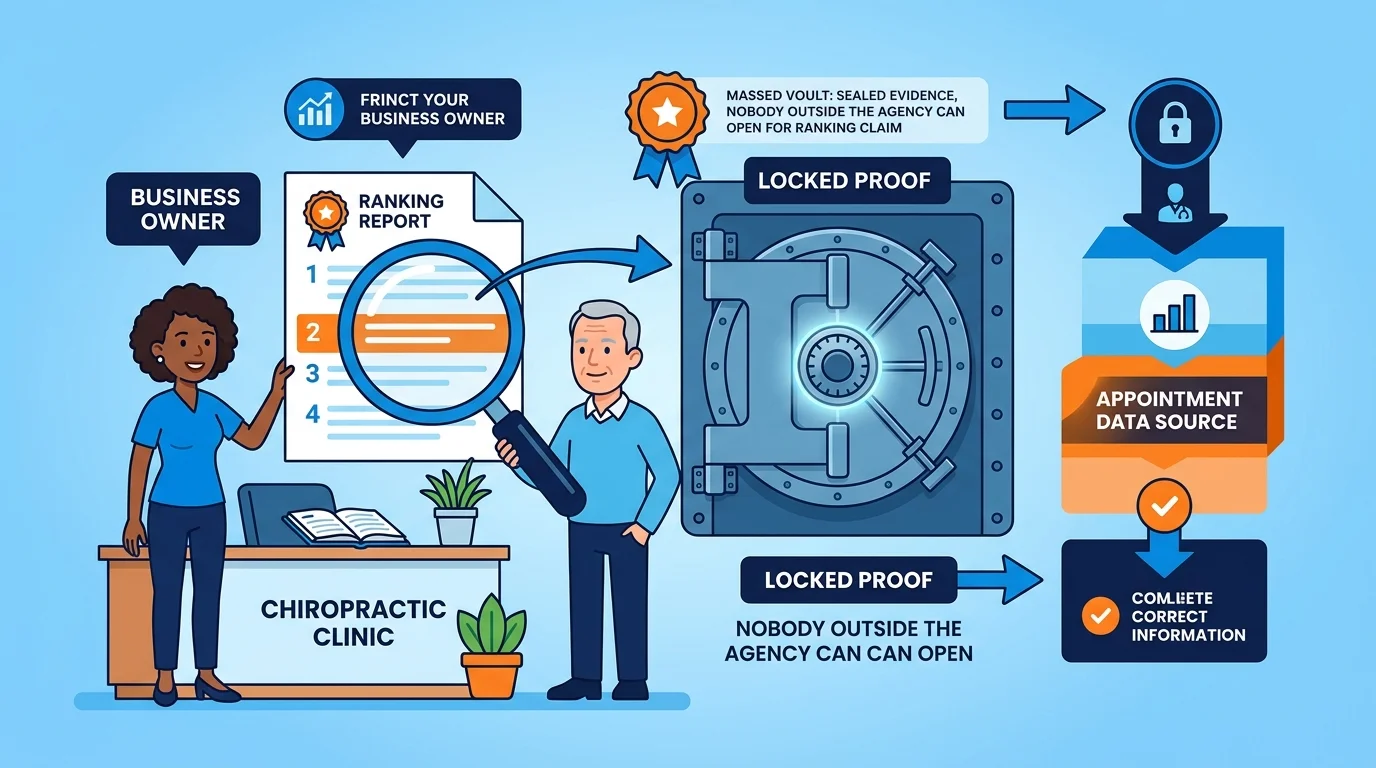
Here's the definition, and it's tighter than you'd think: an unverifiable claim is any promise whose evidence the agency controls entirely, with no clear path for anyone outside to confirm it. The agency holds the only record. Nobody else can pull that same number and check it against anything external.
A claim needs a source a client can check, not a confident tone standing in for one. For context on what a legitimate standard looks like before signing anything, see choosing an answer engine agency.
Why the Promise Is the Product
Answer engines swapped a landscape of links for a landscape of citations, and a lot of old agency metrics didn't survive the move. A ranking position told you where a page sat in a results list. It never told you whether an AI system would cite that page as the answer.
In digital services, promises are currency. But not all currency is real. A verifiable claim is backed by something you can check, while an unverifiable one is backed by the agency's word and nothing else.
Why Cheap Retainer Pitches Lean on Promises Instead of Proof
Let's keep it real: a low-cost retainer built on promises instead of proof lives in the gap between what gets sold and what gets shown. Current, checkable evidence takes more effort than that price supports, so the pitch leans on projected outcomes. Confident language is cheaper to produce than documented method (funny how that works out).
A retainer priced to win the sale rather than fund the work has little room left for audits, logs, or outside verification. So the promise becomes the product, standing in for evidence that was never budgeted. For a breakdown of what actually shifts once that pattern ends, see what changes after switching agencies.
What the Numbers Actually Show About Rankings and AI Answers
Here's the pitch: AI visibility is traditional search optimization with new vocabulary. The mechanism under that pitch never changed. Only the label the agency slaps on it did.
The data shows why that distinction matters. A page sitting at the top of a results list no longer guarantees a click, let alone a citation. The Pew Research Center reports users who encountered an AI summary clicked on a traditional search result link in 8% of visits, compared with 15% for users without one. That gap between position and attention is exactly what a ranking-only report hides from a client.
| Search Scenario | Clicks on a Traditional Result | What This Means for a Position Report |
|---|---|---|
| AI summary present | 8% of visits produced a click | A position report cannot show that clicks fell by nearly half once a summary appeared. |
| No AI summary present | 15% of visits produced a click | This is the baseline a ranking-only report quietly assumes still holds. |
Where Keyword Position Reports Stop Meaning Anything
A search position number was never built to measure citation odds.
For a clearer picture of what should replace that report, start with the credentials an agency should document.
How an Agency's Claim Fails Once Nobody Can Check It
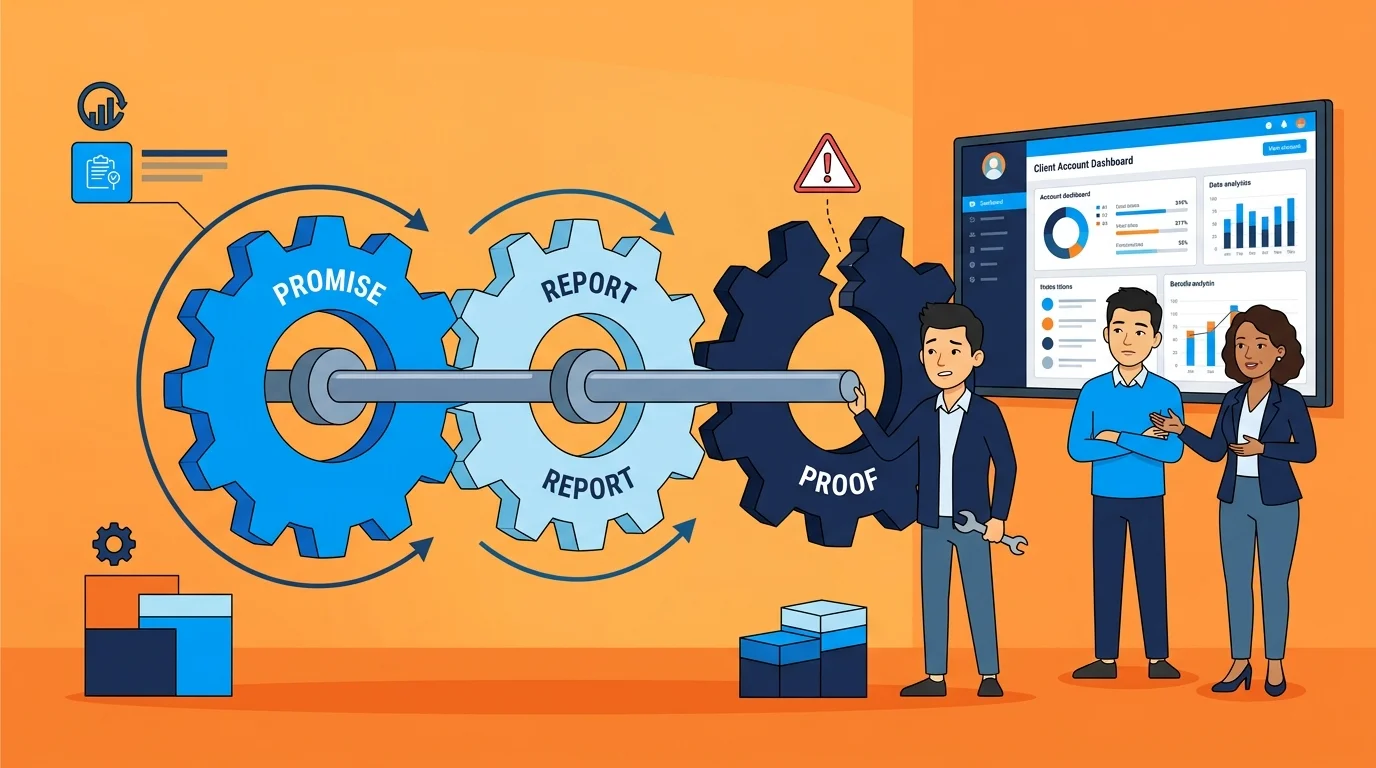
A claim dies the second someone outside the agency tries to check it and finds nothing there. The report looks rock solid right up until a client asks, "Okay, where's the source?"
And that breaking point is totally predictable. Evidence the agency fully controls can be shaped, trimmed, or spun before it ever lands in a client's inbox.
The Reporting Loop That Breaks Down Under Scrutiny
Here's the loop most monthly reports run on. A dashboard shows movement, a friendly paragraph explains why that movement is great, and the client has zero independent record to hold it up against.
That loop holds together only as long as nobody asks for the raw log behind it. Once a client requests the original data, a closed reporting system has nothing left to show beyond its own summary. Agencies offering authority infrastructure services should expect that request and have the source material ready before it's made.
What Actually Counts as Verifiable Evidence in AI Visibility Work
Verifiable evidence starts with a mechanism, not a dashboard. Retrieval-augmented generation lets a language model pull data from outside sources when it answers a question, which can help cut down on hallucinated and outdated answers. And that mechanism is checkable, because an agency can show which sources a model pulled from and when.
That mechanism never ran on more content. A pile of keyword-targeted articles that no retrieval system ever reads proves nothing beyond its own word count. Volume doesn't change what a model retrieves or how much weight it gives a source.
| Claim Type | Independently Checkable Signal | Where to Look |
|---|---|---|
| AI citation inclusion | A documented log of the exact prompts, dates, and AI platforms used to test whether a page gets cited | A shared log file or exported chat history the client can review directly, not a summary paragraph |
| Indexing and snippet eligibility | Whether the page is indexed and eligible to be shown with a snippet in standard search results | Search console data pulled from a platform the agency does not control |
| Retrieval-readiness | Whether a page's structure lets a retrieval system pull a clear passage as an answer, not how many pages exist | A side-by-side view of the page's structure and the exact passage a model would retrieve from it |
| Site visit quality | Site visits tied to referral source and on-page behavior, not a raw total detached from context | Analytics data the client can log into directly, independent of the agency's own dashboard |
| Proprietary method claims | Technical documentation or a third-party audit describing how a stated method actually functions | Written methodology the agency is willing to hand over, not a verbal description of a secret process |
The Technical Signals Behind a Legitimate Claim
Google's stated bar for citation inside its AI features is structural, not a volume game. Google reports a page must be indexed and eligible to be shown in Google Search with a snippet to be eligible as a supporting link in AI Overviews or AI Mode, with no additional technical requirements.
Retrieval mechanics carry a similar limit worth naming plainly. As the Laboratory for Analytic Sciences at NC State University reports, retrieval-augmented generation can let a language model pull in data from external sources when answering questions, which may help reduce hallucinated and outdated answers. That framing comes from a stated position, not a controlled study, and a client checking it should treat it as such.
How to Pressure-Test an Agency's Claims Step by Step
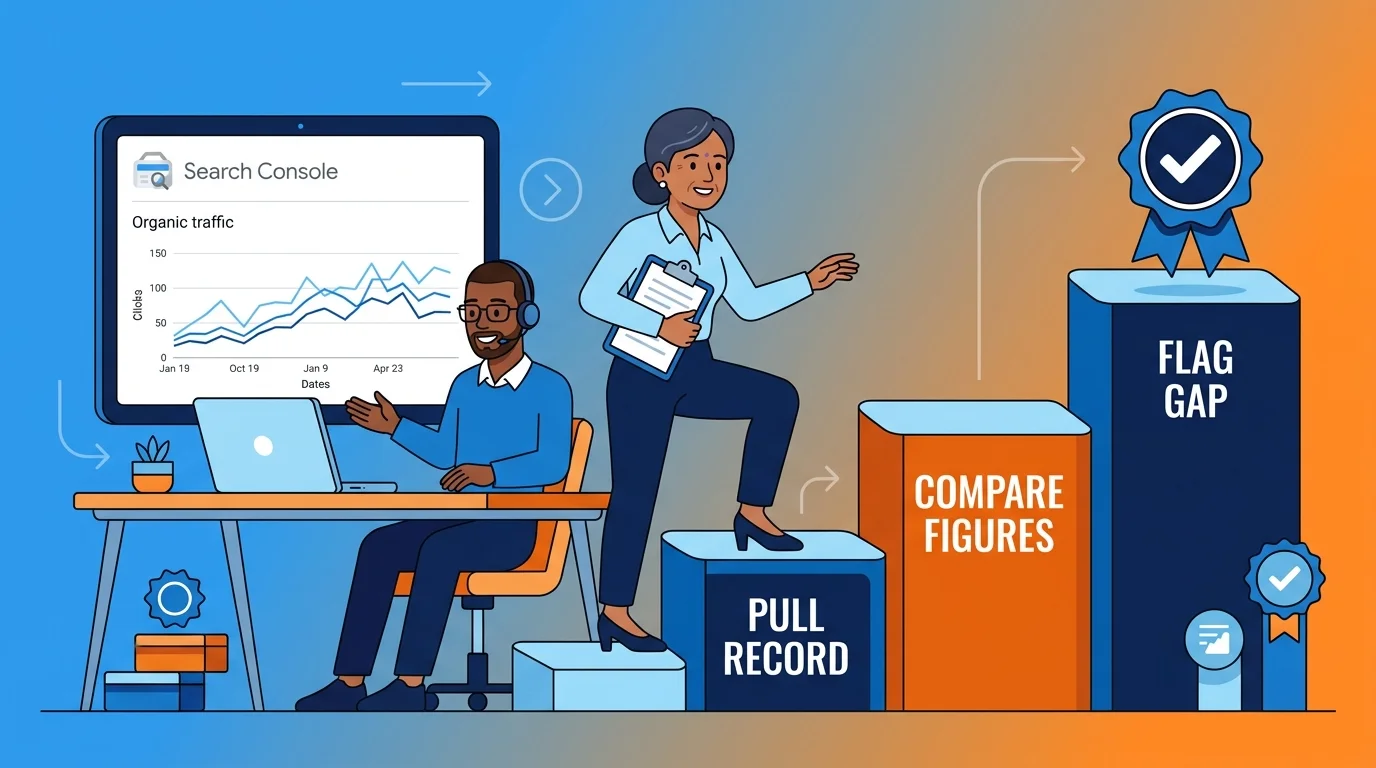
Good news: pressure-testing a claim doesn't take technical chops, just knowing which record to pull and refusing a summary in its place. Three checks catch most unverifiable claims: the raw site visit log, the documentation behind the 'proprietary' method, and the actual prompts sitting behind any citation count.
| Verification Step | Tool or Record Used | What a Pass Looks Like |
|---|---|---|
| Cross-check the site visit log | Google Search Console, compared directly against the agency's dashboard | Click and impression numbers in the independent record match what the dashboard reports, with no unexplained gap |
| Request the proprietary method's documentation | Named technique, published description, or a third-party audit | The agency can point to public documentation or an outside review, not just a label for a closed process |
| Pull the citation count's actual prompts | A dated log of specific AI prompts and the responses returned | Each cited mention traces to a real prompt and response the client can read, not a summary figure alone |
| Verify indexing and snippet eligibility | The page itself, checked against whether it shows with a snippet in standard search results | The page is indexed and eligible to appear with a snippet, which is the structural bar for AI citation |
| Ask what sources a model actually retrieved | The agency's explanation of retrieval mechanics for a specific query | The agency names the external sources pulled and when, rather than describing the process in vague terms |
Pulling the Record Straight From Google Search Console
Google Search Console sits outside the agency's control, and that's exactly why it matters here. Anyone with login access can hold a dashboard summary right up against the platform's own click and impression data. If a reported number doesn't match that record, the dashboard was built to flatter, not to inform.
Cross-Checking a Proprietary AI Claim Against What's Public
A proprietary AI claim should point to something public: documentation, a named technique, or a third-party audit. Retrieval mechanics aren't a trade secret, because how a model pulls sourced data is already publicly described. An agency that can't explain its method in those terms is selling a label with nothing underneath it.
Frequently Asked Questions
The verification sequence above answers the structural question. The questions below are the ones that come up once someone actually tries to run it.
How can I verify if an agency's claim of a guaranteed top ranking is legitimate?
Skip the dashboard summary and ask for the raw data behind the claim. If the only proof lives inside the agency's own reporting, nobody outside can confirm that guarantee. A legit claim points to a record the client can pull alone.
What are the red flags in a monthly report that suggest the numbers can't be checked?
Watch for movement with no source attached. A chart showing gains in site visits or impressions, with no referral data or outside log behind it, is a summary wearing an evidence costume. Ask where the raw number lives before you trust the trend line.
If an agency claims it uses proprietary AI, what evidence should back that up?
Ask for documentation, a named technique, or a third-party audit. Retrieval mechanics are publicly described (no trade secret here). An agency that can't explain its method in those terms is selling a label.
Why isn't a high volume of impressions or site visits a verifiable success metric anymore?
Volume never decided whether a model cited a page as an answer. A big site visit count with no record of what happened after the visit proves nothing but its own total.
What specific data from Google Search Console can confirm or contradict a performance claim?
Pull click and impression data directly from the platform and compare it against the agency's summary. If the two numbers do not match, the report was built to flatter rather than inform.
How does retrieval augmented generation change what counts as a checkable source?
It shifts the test from position to retrieval. A source either gets pulled by the model and shown, or it does not, and that pull is something an agency can document rather than merely claim.
The Bottom Line
A claim is currency. So here's the real question: is anything actually backing it?
A results-page position report, a closed scoring system, a site visit total with no referral data attached? Those are notes printed by the same agency that spent them, and no outside bank will honor them. A verifiable claim points to a record you can pull yourself, without asking anyone's permission first.
iTech Valet stands behind the second kind only — the claim with a source standing behind it, not the one that asks to be trusted on volume or confidence alone. That is the standard worth holding any agency to before a contract is signed. See where that standard starts by requesting your AI Visibility Check.