
An assistant model’s data snapshot is already months old at launch, the public release. Google’s Gemini grounds responses with Google Search, so its consumer answers can reach well past the January 2025 parametric cutoff. ChatGPT browses the live web within its app when a query benefits from it. Most Google Business Profile edits, such as hours, phone, website, description and photos, go live within a few hours to a couple of days. Name, address and category changes take longer because Google often reviews them. Allow 6-12 weeks for corrections to flow through aggregator networks to their partner directories.
An Assistant Model Only Knows Its Training Snapshot
Here’s the thing about AI chatbots.
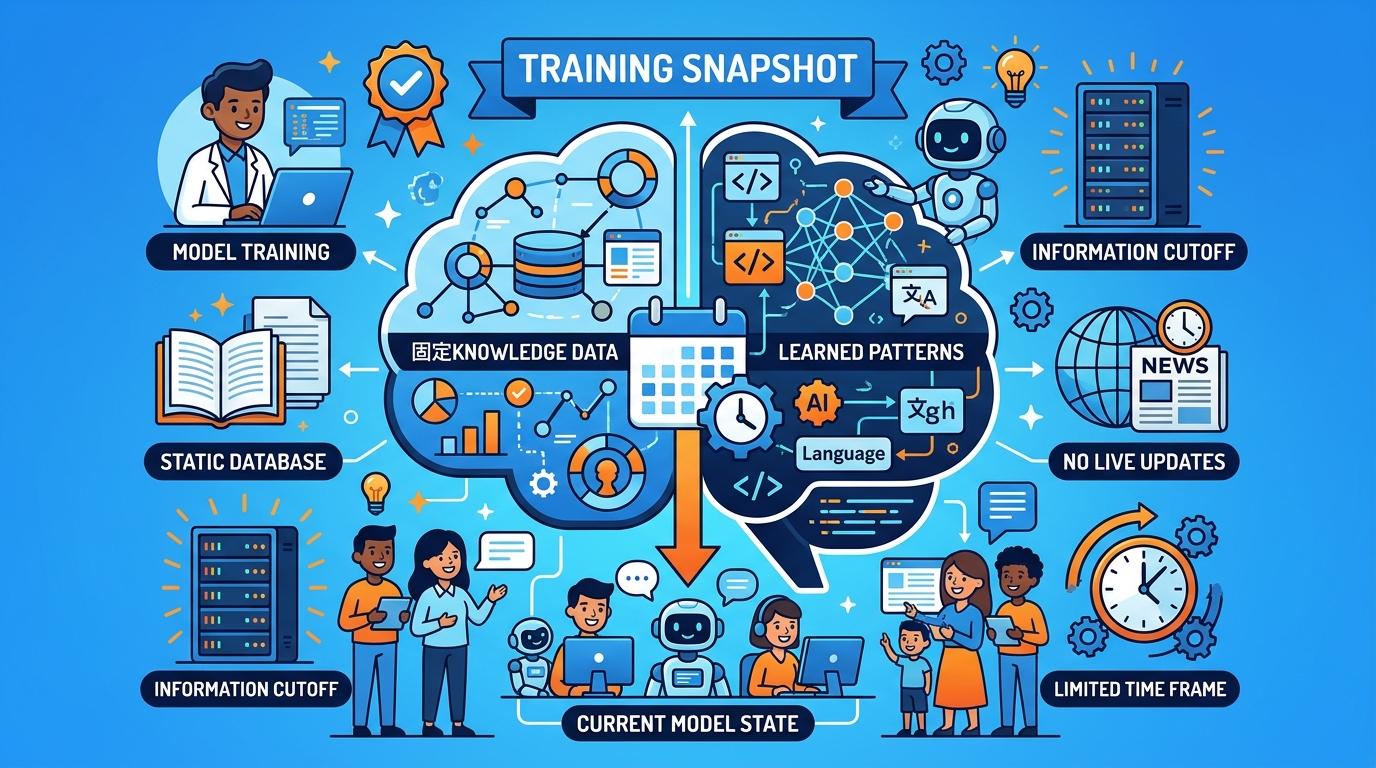
They don’t know recent events. Their knowledge is frozen at a fixed training date. It’s called the knowledge cutoff.
Anything that happened after that date? Never in the data it learned from.
That snapshot is old before you ever touch it.
By the public release, the data is already months old.
OpenAI lists GPT-5.5’s cutoff as December 1, 2025. Right on its developer model page.
Google’s documentation places Gemini 3 and the 3.1 Pro preview at a January 2025 cutoff.
Researchers say it straight.
LLMs face challenges. Hallucination. Outdated knowledge. Missing information from specific domains in the training data.
They also often hit knowledge conflicts. That’s when the model’s internal parametric knowledge and the information in the prompt context don’t agree.
Live Web Search Is How Assistants See Changes Between Models
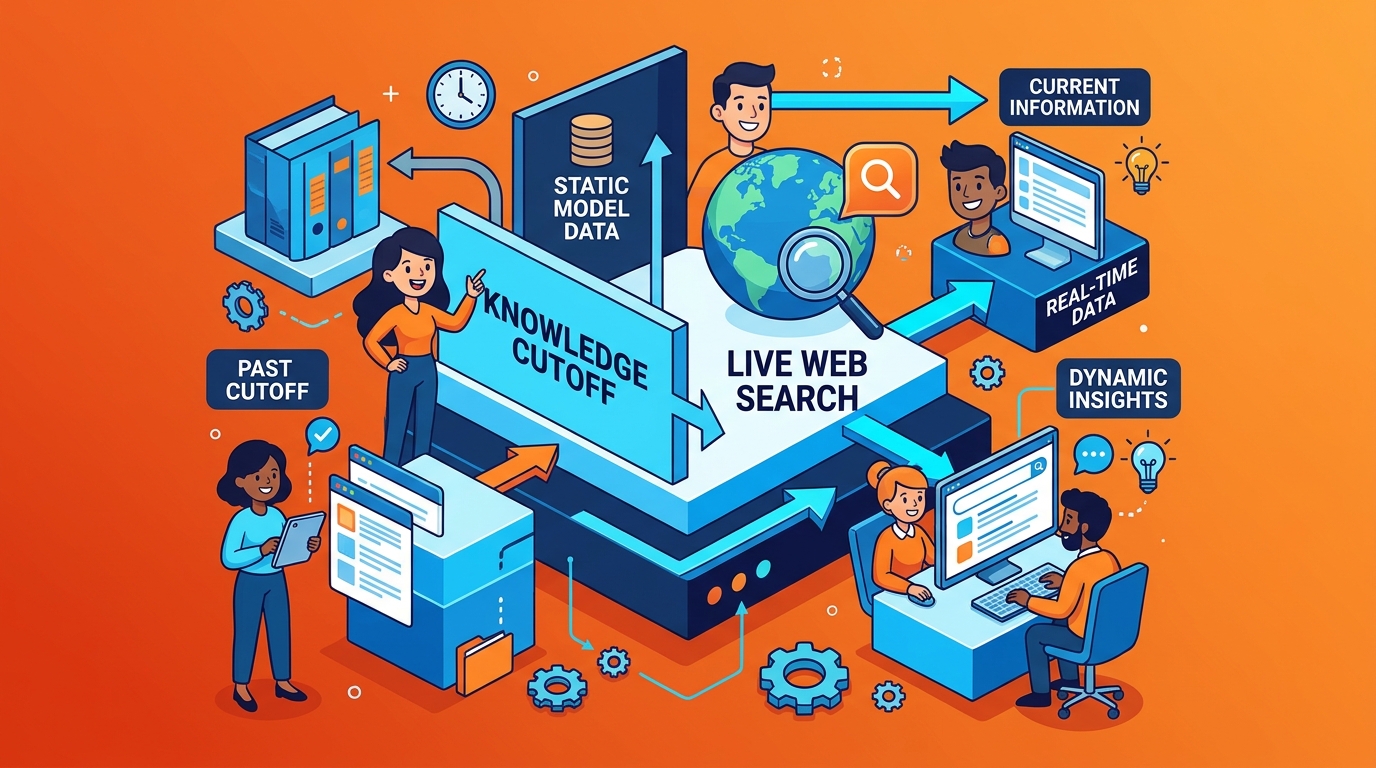
Here’s how they get past the cutoff.
Google’s Gemini grounds responses with Google Search. So its consumer answers can reach well past the January 2025 parametric cutoff.
ChatGPT browses the live web within its app when a query benefits from it.
This is retrieval. Not learning.
The model reads the fetched snippets. It summarizes or reasons over them. Then it forgets them.
Nothing it learns from a search is stored back into its parameters.
The research world has a name for this. RAG.
It refers to a family of techniques where an LLM can retrieve data from external sources when responding to questions.
Retrieval-Augmented Generation has emerged as a promising solution. It brings in knowledge from external databases.
Bing’s Index Decides What ChatGPT Search and Copilot Can Cite
Here’s the rule.
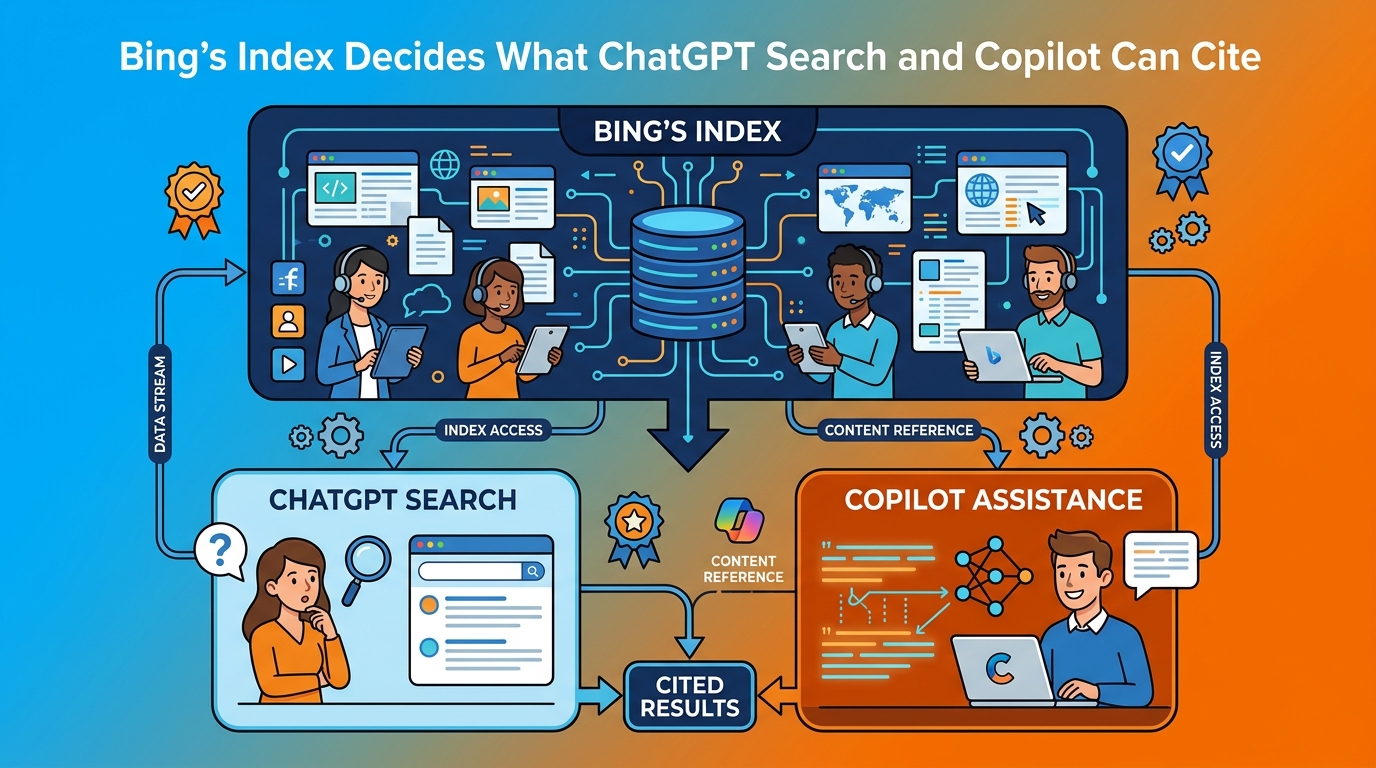
When ChatGPT Search or Microsoft Copilot answers a question that needs live web information, it retrieves candidate pages from Bing’s index. Then it reads them and synthesizes an answer with citations.
If Bing hasn’t indexed your page, it’s not in the candidate pool.
It can’t be cited. No matter how well it would answer the question.
Jetfuel Agency’s Bing Webmaster Tools: Setup, Sitemaps & IndexNow (2026 Guide) gives the timings below.
IndexNow changes the wait
Without IndexNow, Bing’s crawler can take anywhere from a few days to several weeks to discover new pages. It depends on your site’s crawl budget and domain authority.
With IndexNow configured, two things happen.
Bing validates the ping within 24 hours. And it typically crawls within 1-3 days.
Microsoft Bing and Yandex launched IndexNow in 2021. It’s now maintained as a shared standard at indexnow.org.
Google doesn’t participate.
Google uses its own crawl and a limited Indexing API for specific page types.
Sitemaps and verification
No submitted sitemap? Bing follows links from your homepage outward.
Deep pages can take weeks to get indexed. So can new posts. So can pages without many internal links.
DNS verification fails? Allow 24-48 hours for propagation.
Google Business Profile Edits: Hours to Days, Longer for Reviewed Fields
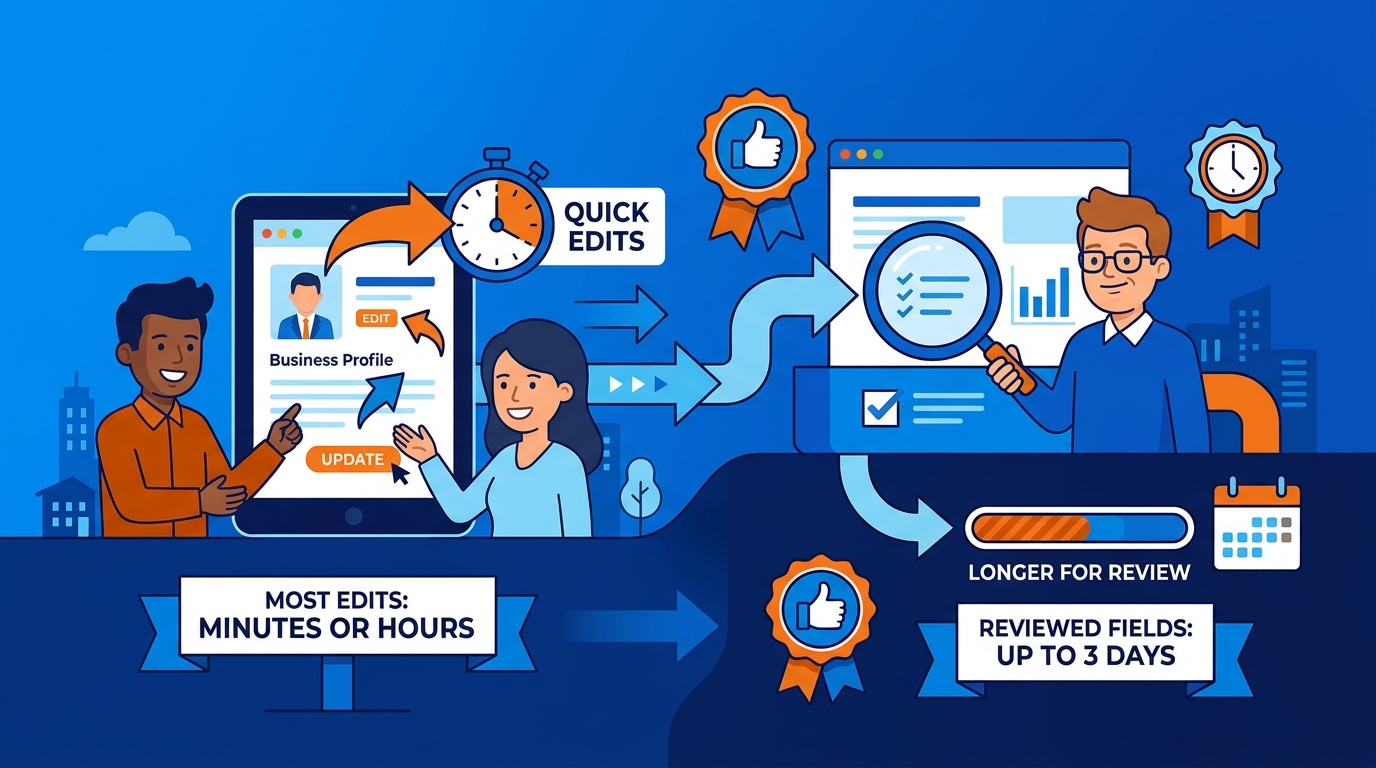
Most Google Business Profile edits go live fast. A few hours to a couple of days.
That covers hours, phone, website, description and photos.
Name, address and category changes take longer. Google often reviews them.
Don’t resubmit the same edit
Checking obsessively won’t help. Neither will resubmitting the exact same edit during that window. It rarely speeds anything up.
In some cases it backfires. Your change goes back into the review queue as if it were new.
The clock resets. It doesn’t shorten.
Here’s when to act.
If the status hasn’t moved after a week or more past normal processing time, contact support. Don’t keep waiting.
Suggested edits can overwrite yours
Here’s what most people miss.
Google allows the public to submit suggested edits. A lower-risk suggested edit from another user can sometimes apply around the same time as your own change. And overwrite it.
Once you’re notified, you have 4 days to accept or reject the suggestion.
Want to know how listings feed the map pack? See tekRESCUE’s Why Local Citations for SEO Still Decide Who Ranks in the Map Pack.
Aggregator Corrections Take Weeks to Reach Directories
Here’s why the aggregator matters.
Data providers like Data Axle, Localeze, and Foursquare feed hundreds of smaller directories automatically.
Fix your record at the aggregator level and the corrections cascade downstream. You don’t touch each small site.
Aggregators also supply business listings to directories, mobile apps, GPS devices, and voice assistants like Alexa and Siri.
Why the aggregator comes first
Fixing thirty individual directories without correcting the aggregator just guarantees that the aggregator overwrites your corrections within sixty days. A single submission to a major aggregator can propagate the business information across dozens of downstream directories within thirty to sixty days.
The windows
Aggregators don’t distribute your information instantly.
Most update their partner directories monthly or quarterly. Through batch data feeds.
Prospelle gives separate figures for separate steps.
An aggregator’s review takes 2-4 weeks. Propagation to its partner directories occurs over the following 4-6 weeks.
For your business information to appear on directories fed by these aggregators, expect 4-8 weeks. Some directories update faster. Others may take 12+ weeks.
For corrections to flow through aggregator networks to partner directories, allow 6-12 weeks.
The One Hour NAP Playbook for Local Owners gives its own windows.
Tier 1 edits typically reflect within 24 to 72 hours.
Aggregator propagation takes 2 to 8 weeks.
Local pack ranking changes usually follow 4 to 8 weeks after the data settles.
| Change | Typical time |
|---|---|
| Tier 1 listing edits | 24 to 72 hours |
| Aggregator propagation | 2 to 8 weeks |
| An aggregator’s review, then propagation to partner directories | 2-4 weeks review, then 4-6 weeks |
| Business information appearing on aggregator-fed directories | 4-8 weeks; some faster, others 12+ weeks |
| Corrections flowing through aggregator networks | 6-12 weeks to partner directories |
| One submission to a major aggregator | Can reach dozens of downstream directories within 30 to 60 days |
Aggregator updates run on their own schedule. Typically 6 to 8 weeks.
Resubmitting over and over before that window closes doesn’t speed anything up.
Prospelle suggests setting calendar reminders to check citation propagation 6-8 weeks after submission.
Prospelle’s How To Submit To Data Aggregators For Local SEO walks through the submissions.
For the refresh cycle on the rating side, see Why Your Rating Won’t Improve Overnight: The Refresh Cycle Explained.
While Your Data Disagrees, Assistants Fall Back to Competitors
Here’s what happens behind the scenes.
These systems cross-reference NAP data across multiple sources before they recommend anyone.
When the data is consistent across structured directories, social profiles, and editorial mentions, the AI surfaces have the confidence they need to recommend the business.
When the data conflicts, they fall back to safer, more verifiable competitors.
When I set up a practice’s record, I aim for one thing. I want it to be the source an AI names and draws on. Not one more entry in a directory list.
I’ll take being relied on over merely being present.
The lag is the risk
The lag between the actual change and the propagation of corrections can be weeks or months.
During that gap, the business looks inconsistent to Google’s verification systems.
Turning a Diagnostic Report Into a Repair Roadmap covers moving from a list of mismatches to the fixes.
What keeps the record consistent
- Match your site to your canonical NAP. Match your website’s structured schema data to your canonical NAP. Search engines and AI tools get a clean, authoritative source to cross-reference against messy third-party listings. That can reduce the weight given to an outdated directory entry. Even before that directory gets around to fixing it.
- Keep tracking numbers off your main phone listing. A tracking number as your primary public phone on GBP or in directory listings creates a permanent NAP mismatch. The moment a campaign ends.
- Claim the platform profiles. Apple Business Connect powers Apple Maps and Siri location results. Healthcare providers need profiles on Healthgrades, Zocdoc, Vitals, WebMD, RateMDs. LaFactory’s Local Citations: What They Are and How to Build Them covers citations in depth.
What to expect
Fixing inconsistencies and merging duplicates often moves rankings faster than adding new citations. Measurable changes show up in roughly 4 to 12 weeks.
The first few weeks? No visible ranking change. Propagation hasn’t caught up yet.
Then visibility in the map pack starts shifting. Once aggregator corrections take hold.
RankLocalToday explains stuck profile changes in Why Your Google Business Profile Edits Won’t Show Up.
iTech Valet’s AI Visibility Check page covers how a business looks from the AI assistant side.
No Business Data Source Is Ever Fully Current
Here’s what the research says about commercial business lists.
Neither company provides a completely accurate census of businesses.
Inaccuracies stemmed from outdated or incorrect addresses and non-fixed locations.
Concordance and coverage estimates were lowest for health-care facilities and leisure/entertainment businesses.
They were highest for popular walking destinations, eating places, and alcohol/tobacco establishments. They also varied somewhat by population density.
One study looked at geocoding accuracy and categorization over 21 years of data in 23 counties surrounding New York City.
The finding? Health-related business environments change considerably over time.
Google describes its Knowledge Graph as a system that understands facts and information about entities. It draws on materials shared across the web, plus open source and licensed databases.
It has amassed over 500 billion facts about five billion entities.
Research on knowledge graph construction points to a catch.
KGs are currently often created in a batch-like manner. Their pipelines are unfit to incorporate new incoming facts without full re-computation of the individual tasks.
MemX covers the model side in Why AI Doesn’t Know Recent Events.
Frequently Asked Questions
When is a paid citation cleanup service worth considering?
When mismatches persist past the eight-week mark. Even though your aggregator submissions are correct.
That’s your signal. Consider a paid citation cleanup service. Don’t keep waiting.
Is AI search sending meaningful visits to websites yet?
It’s small, but it’s growing fast.
Similarweb data from March 2026 shows AI search engines (ChatGPT, Perplexity, Gemini, and Claude-powered surfaces) collectively driving under 1% (0.9%) of all web referral site visits. That’s up five times (5x) year-over-year.
ChatGPT reached 900 million weekly active users by February 2026. That’s from OpenAI’s own data.
Does Claude look up current information about a practice?
Only when it chooses to.
Anthropic added web search to Claude in 2025. But it runs as a tool the model chooses to call. It isn’t on for every message.
On the raw API, you have to explicitly enable the web search tool.
What does direct submission to a data aggregator cost?
Premium services run $50-300 per year per aggregator. That’s Prospelle’s number.
Plan for Weeks to Months, and Keep One Record Assistants Can Check
Here’s the timeline.
Profile edits can land within hours to days.
Aggregator corrections take 6-12 weeks to reach partner directories. During that lag, the business can look inconsistent.
Assistants cross-reference NAP data across multiple sources before they recommend a business.
When the data is consistent across structured directories, social profiles, and editorial mentions, they have the confidence to recommend it.
When it conflicts, they fall back to safer, more verifiable competitors.
Match your website’s structured schema data to your canonical NAP. Search engines and AI tools get a clean, authoritative source to cross-reference against messy third-party listings.
That can reduce the weight given to an outdated directory entry. Even before the directory fixes it.
I put a practice’s effort and money into that owned record first. It keeps paying off and it grows. Paid placement stops the day the spending stops.
The iTech Valet Service Plans & Pricing page explains how the work is done.
Want to see what assistants find when they check your practice? Run My AI Visibility Check.