
An edit to an existing page waits on a recrawl that typically comes around 30 days after the last one, so checking rankings a week later can measure nothing. A delay in one stage carries into the next: a page is not indexed until it has been crawled, and it is not shown until it has been indexed. Core updates run roughly every three to four months, and the improvements made after being hit often won’t be fully re-evaluated until the next core update rolls out.
Crawl, Index and Serve Run in Sequence, So Fixes Wait Their Turn
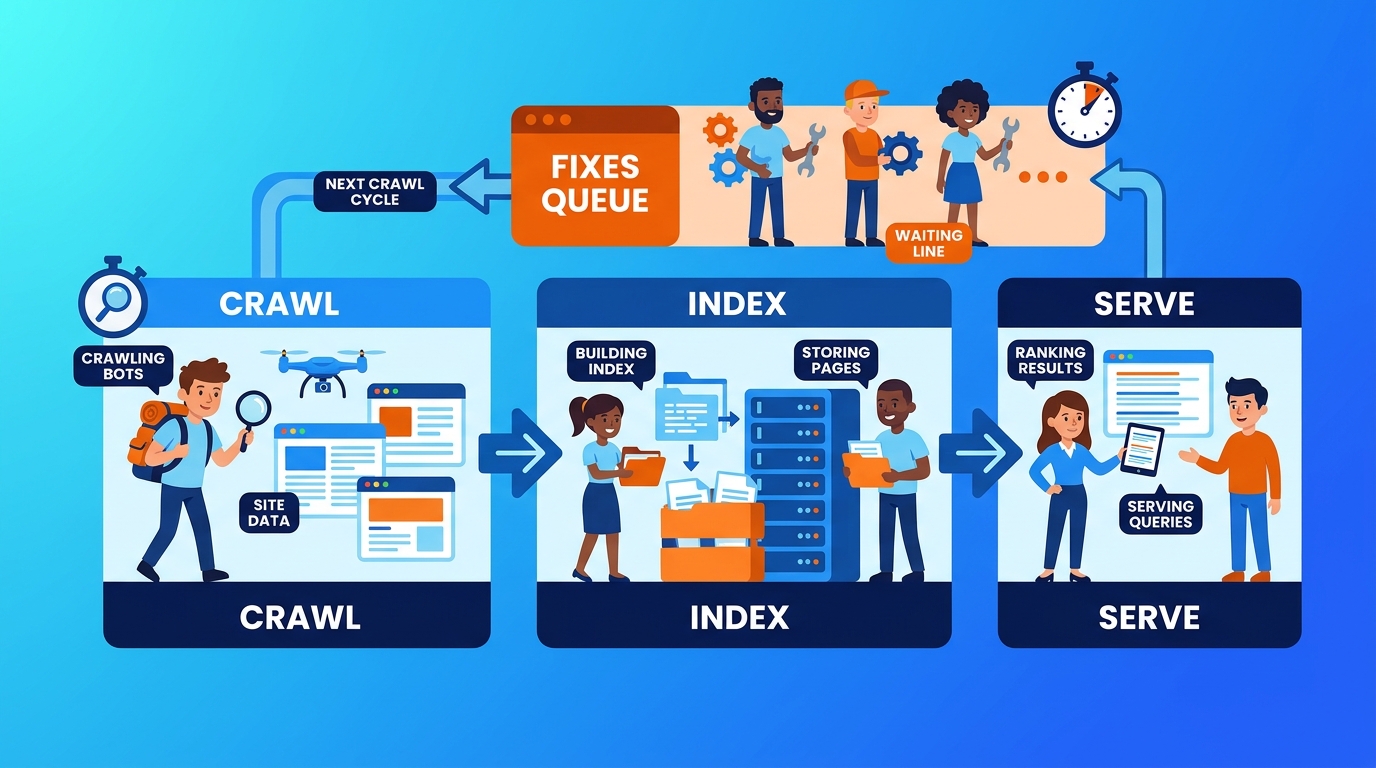
Here’s how the pipeline works.
A delay in one stage carries into the next. A page isn’t indexed until it’s been crawled. And it isn’t shown until it’s been indexed.
That sequence is what a fix waits on.
Change something on a page that already exists? Google typically takes around a month to come back to it. Until then, as far as Google’s concerned, the page is still the old one.
An edit waits on a recrawl. That recrawl typically comes around 30 days after the last one. Check rankings a week later and you can end up measuring nothing.
Two clocks. Two very different speeds.
Google takes about 20 hours to discover a new URL. It takes about 30 days to come back to one it already knows.
The first figure is for discovering a new URL. The second is for revisiting a known page. That revisit is the one an edit waits on.
I stopped using position-tracking as my measure of success. AI tools started giving direct answers instead of lists of links, and that settled it.
Where a site sits in a results list tells me little about whether a business gets found. I don’t treat a rank report as an outcome.
I read a snapshot rating the same way. It’s what the pipeline has processed so far. Not a verdict on the fix.
For more on reading a low result, see Common Misreadings of a Low Diagnostic Rating, Corrected.
Intender also covers the timing in How Long Does Google Take to Index Changes?
How Long Each Type of Change Takes to Show
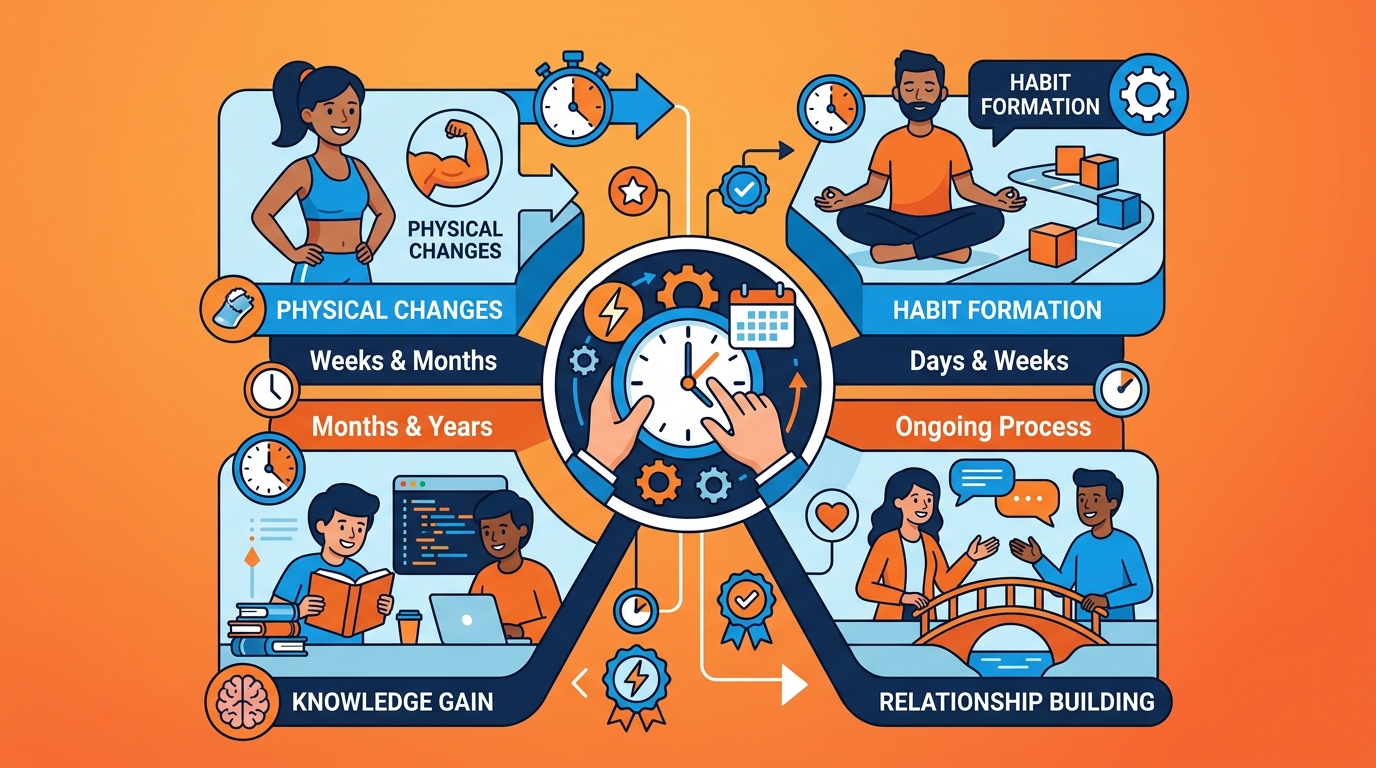
Each type of change has its own clock.
A new title shows in 1 to 2 days. A canonical change takes 1 to 3 weeks. A domain migration takes 1 to 3 months.
Here’s what Google says.
SEOCOM notes that in its documentation on asking Google to recrawl your URLs, Google says “Crawling can take anywhere from a few days to a few weeks.”
Google’s developer documentation says the same thing in other words. Crawling can take anywhere from several days to several weeks. It depends on how often its systems determine content needs to be refreshed.
Other changes run on their own timing:
- robots.txt: Picked up in roughly 24 hours. At most, about 25. Google caches the file and refreshes that cache about once a day.
- Structured data: Hours to 1-2 weeks. At the slowest, weeks or never. The cause is quality.
- Link annotations: These are the signals Google takes from links pointing at a page. They can take anywhere from minutes to weeks to count. So new internal links won’t change anything overnight.
- The slow end: Intender puts it at weeks to months. Partly because the page has to be recrawled first. Partly because Google rewrites titles and snippets when it thinks it can do better.
The table below puts these ranges side by side.
| Type of change | Typical time to show |
|---|---|
| New title | 1 to 2 days |
| Canonical change | 1 to 3 weeks |
| Domain migration | 1 to 3 months |
| Robots.txt change | About 24 hours, at most about 25 |
| Requested recrawl | A few days to a few weeks |
| Structured data update | Hours to 1-2 weeks; at slowest weeks or never |
| Crawling (Google’s developer documentation) | Several days to several weeks, depending on how often content needs to be refreshed |
| Link annotations counted | Minutes to weeks |
Want to read your own results against these ranges? Use Interpreting Practice Diagnostic Results: A Complete Guide.
The title, canonical, migration, recrawl and structured data ranges come from SEOCOM’s post, How long does Google take to index a change?
What Speeds a Recrawl, and What Doesn’t
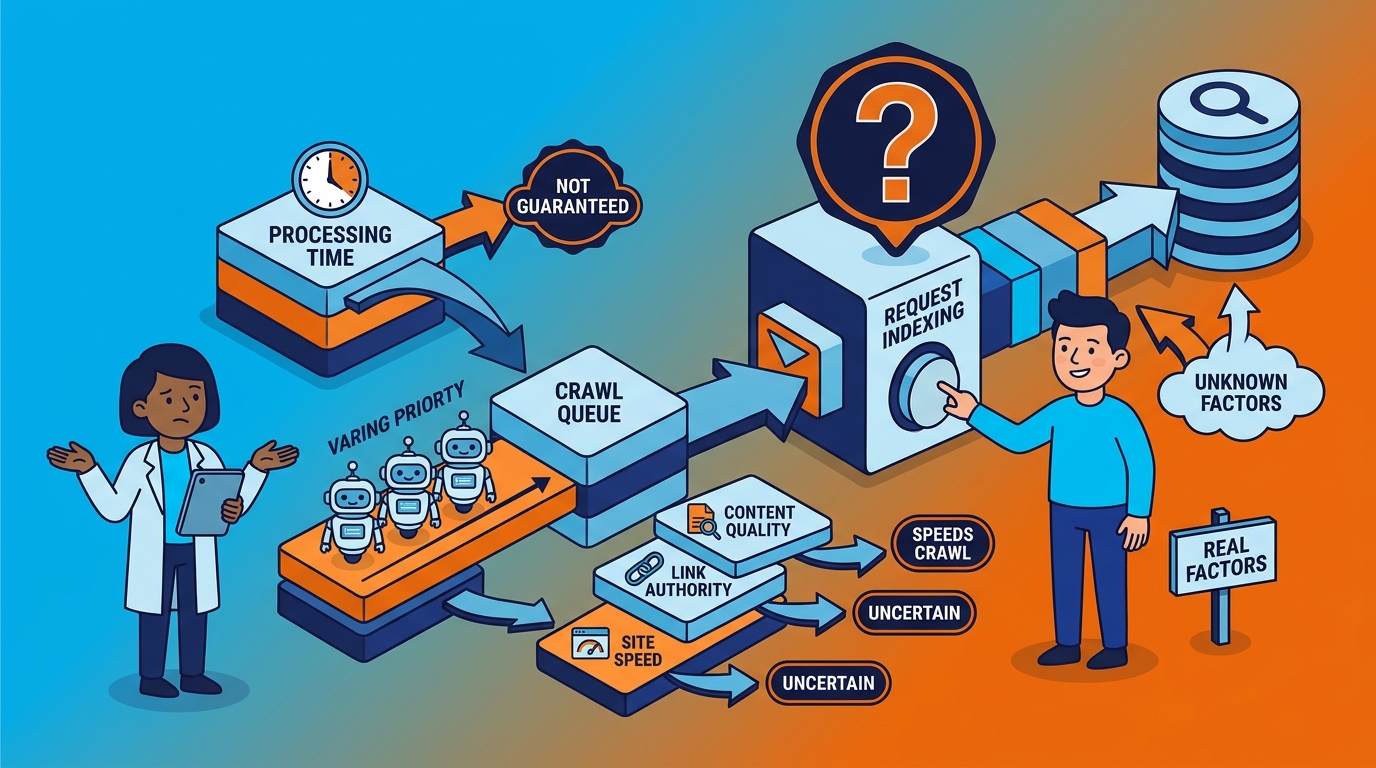
Requesting indexing guarantees nothing.
There’s a quota for submitting individual URLs. And requesting the same URL several times won’t get it crawled any faster.
Here’s what does move the needle.
Pages that change often and attract links get revisited more frequently. Static pages deep in the archive get revisited less.
Then there’s lastmod.
Google uses the lastmod value only when it’s “consistently and verifiably” accurate. It says the value should reflect the last significant update to the page.
Bing goes further. It says lastmod is a key freshness signal for AI-powered recrawling and reindexing.
Core Updates Can Push Recovery to the Next Cycle
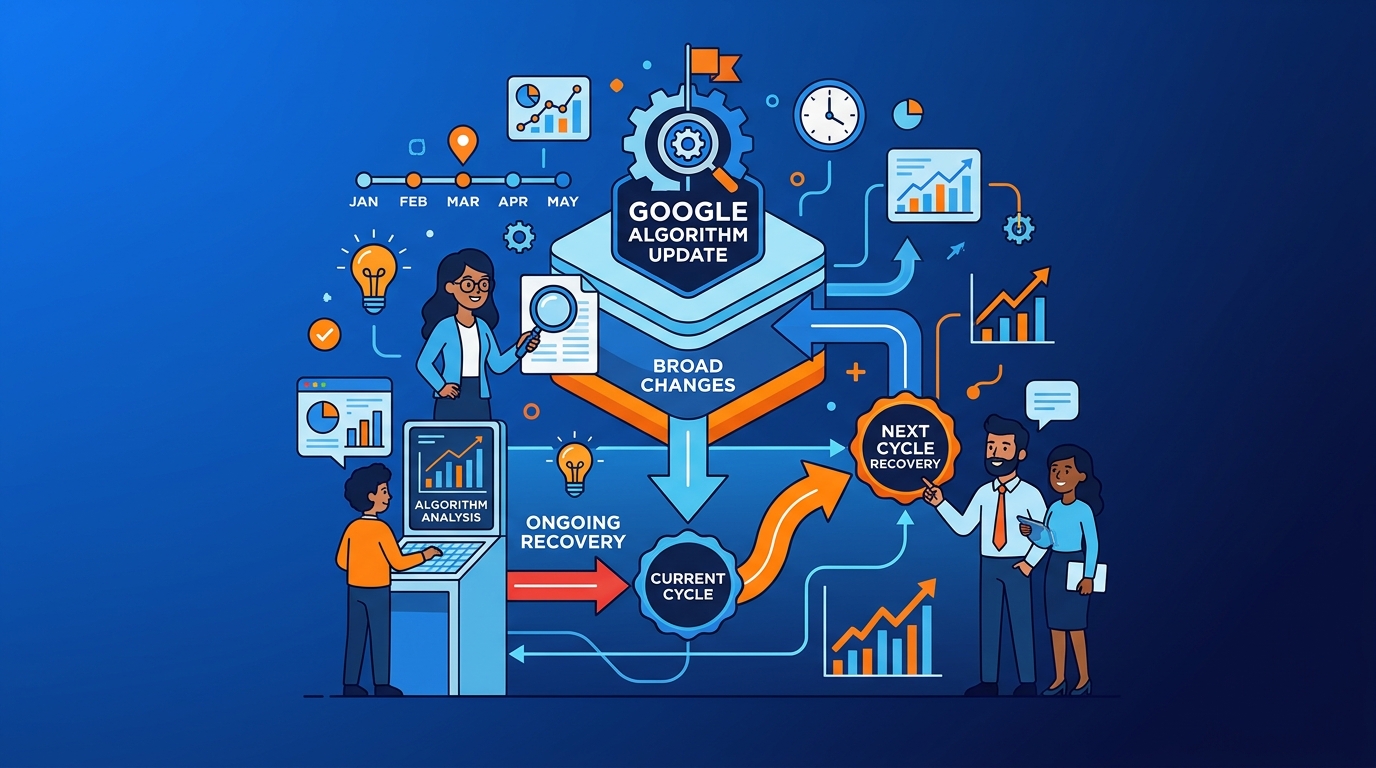
Several times a year, Google makes significant, broad changes to its search algorithms and systems.
Core updates run roughly every three to four months. The improvements you make after being hit often won’t be fully re-evaluated until the next core update rolls out.
If a core update caused your drop, the fix date isn’t the date that counts.
If a core update has hurt you, you typically wait three to six months to recover. If you have to wait for the next update, it’s six months to a year.
Kompozy has the figures on core update timing. They’re in Google crawling, indexing, and recovery timelines (2026).
Listing Corrections Run on a Slower, Separate Clock
Here’s what happens when you fix one directory by hand.
The aggregator pushes its version of your data right back to that directory. Within weeks or months. Your manual correction gets overwritten.
Fixing the aggregator doesn’t end the risk.
Even when a business updates its information directly with an aggregator, the aggregator’s next data merge from an older source can overwrite the correction. That’s the primary cause of citation reversion.
The order of the work matters.
Businesses that fix aggregator data before fixing individual directories see almost three-quarters (73%) less citation reversion at 6-month follow-up.
Aggregators occasionally re-scrape sources. They pull in old data.
So theStacc’s advice is simple. Run a citation audit yearly. Catch the regressions.
Some listings you can fix directly.
Verify yourself as the owner of a listing, and you can provide or edit your address, contact info, business type, and photos.
Here’s what trips people up. Any snapshot, the AI Visibility Check included, records the listings on the day it’s run. A correction still moving through aggregators and directories can show as unfixed.
For the assistant side of this, see How Long Until Assistant Models Refresh Your Local Data?
Source pages on aggregators: Flento’s Data Aggregators for Local SEO (2026), Keepers Digital’s Data Aggregator: What It Is and Why It Matters for Local Search and theStacc’s Data Aggregator: Definition and How It Works (2026).
AI Assistants Run on Their Own Citation and Cache Clocks
Here’s a number worth knowing.
In May 2026, Josh Blyskal of Profound analyzed about 900 newly published marketing pages. The median time from publication to citation on either ChatGPT or Claude? Almost seven days (6.81 days).
HubSpot points to documented behavioral findings about OpenAI’s cached index.
How quickly it refreshes for trending stories. And that pages remained accessible in cache-only mode more than 30 days after indexing.
OpenAI’s crawlers do not render JavaScript. A March 2026 experiment by Writesonic confirmed that ChatGPT is an HTML-only parser. Content that appears only after JavaScript runs is not rendered by those crawlers.
There’s no ChatGPT equivalent of a Google Search Console.
So marketers use third-party AEO tools instead. They track how their site appears in ChatGPT responses to specific prompts.
I don’t chase publishing volume to get a business recommended by AI.
I build for how easily AI can grasp the business’s information. Clear, factual content. In a sensible order. Served as plain HTML it can parse.
Clarity comes before how much we produce.
HubSpot has the full write-up in How to get indexed by ChatGPT (2026).
For research from Brigham Young University on predictions generated by large language models, see LLM Generated Distribution-Based Prediction of US Electoral Results, Part I.
For local data, see How Long Until Assistant Models Refresh Your Local Data?
Google Doesn’t Crawl or Index Everything Right Away
Even the highest-throughput crawlers don’t claim to crawl the whole web.
They don’t claim to keep up with all the changes either.
Google strives to check and index pages in a reasonably timely manner. For most sites, that’s three days or more.
Here’s who Google’s advice is for. Sites with a large number of pages that change rapidly.
If that’s not you, or your pages seem to get crawled the same day you publish them, Google says you don’t need it.
In general, the most common reason a site isn’t indexed is simple. It’s just too new.
Google’s advice? Be patient. And ask Google to crawl and index it.
Submitting a sitemap is merely a hint.
It doesn’t guarantee Google will download the sitemap. Or use it for crawling URLs on the site.
Where Google’s Timing Figures Come From, and Their Limits
SEOCOM’s warning comes first.
Google has not defined what “typical” means.
Kompozy adds that Google has not formally published these figures with a methodology or a sample size. They come from attendees recapping a conference slide.
Some changes never show up at all.
Intender finds that in almost every case, “never” is tied to quality.
Frequently Asked Questions
How soon after a fix should I check my rating again?
Give it at least a week. Google advises waiting that long after publishing or requesting indexing before you assume something’s wrong.
After a core update, check the right dates. Wait at least a full week after the update completes. Then look at your site in Search Console.
Does resubmitting a listing correction speed it up?
No. Expect several weeks, not days. Plan your citation strategy around that.
Re-submit repeatedly within days of an update and you can create duplicate processing. Not faster results.
Why does my listing look different on different sites after a correction?
Some downstream directories update within days of an aggregator submission; others may take several weeks. During that window, your business appears differently depending on which platform the consumer uses. Some directories update on weekly cycles; others update monthly or quarterly. The full downstream effect of an aggregator correction is typically visible within 60-90 days.
Does submitting a sitemap guarantee Google indexes my pages?
No. A sitemap can help Google learn about your site.
But it doesn’t guarantee indexing. And it doesn’t increase your site’s ranking.
A Rating Shows a Refresh Cycle, Not Whether the Fix Worked
Here’s what most people miss.
Until Google revisits an edited page, it’s still the old one as far as Google’s concerned. And a core update fix often waits for the next update.
A rating taken before those cycles come round shows the last refresh. Not the fix.
We work for systematic compound growth through infrastructure and content depth. Not hacks. Not tricks. Not shortcuts.
Stopping has a cost.
The moment content production stops, competitors who are still publishing start closing the gap.
Here’s where I’d put your money.
I’d put effort and money into assets the business controls. Clear, credible information about itself. Before ads or paid placements.
The first keeps paying off across refresh cycles. The second? I expect it to stop the moment the spending stops.
How we do this work is laid out in iTech Valet Service Plans & Pricing.
When your next cycle has passed, Run My AI Visibility Check and see what changed.