
What a Queryable Knowledge Graph Actually Is (And What It Isn't)
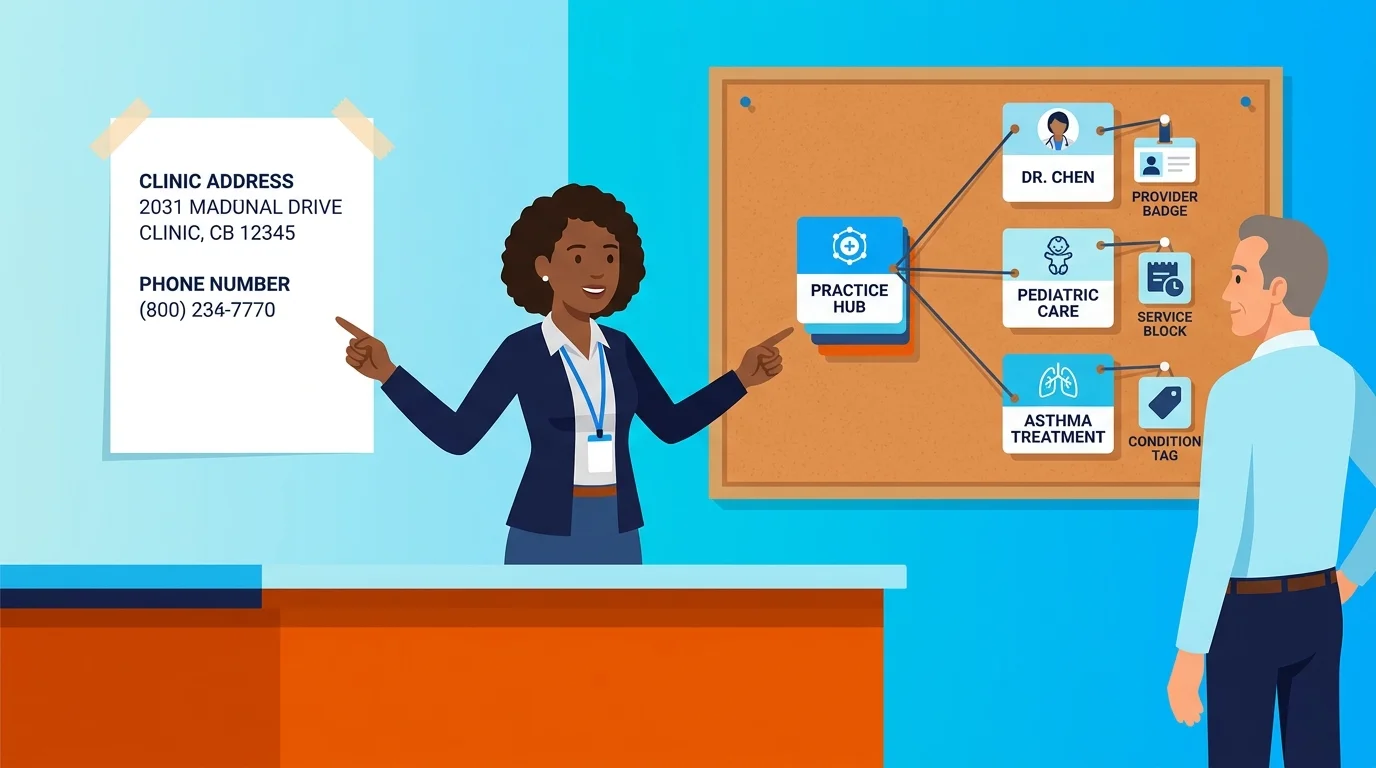
A knowledge graph is way more than a database parked behind a website. It's a living model of a practice's expertise, entities, and relationships, built so machines can actually understand it.
That's what separates it from the static filing cabinet most practice websites still are. A filing cabinet holds pages at an address. A knowledge graph holds meaning a system can query, and that's exactly what a practice's full authority stack now depends on to stay visible.
Treating this as one more round of traditional search optimization misses what changed. Rank-tracking reports measured where a page sat on a results page, but a generative system's citation asks whether an entity's data is structured well enough to be lifted and repeated as fact. So the goal moved, from being a listed address in search results to being the citable source AI pulls from when it answers patient questions.
Why Flat JSON-LD Isn't the Finish Line
Here's where most practices stall: they drop one block of JSON-LD on a page and call it done. That move misreads what the technology actually rewards.
More structured data is not the same as better structured data. A market that equates volume with visibility will keep flooding pages with tags that add bulk, not meaning, which is the assumption an AI-readable site rebuild is built to correct.
Why Most Practices Stop at a Single Schema Tag
Start with the measured result: a flat JSON-LD tag on its own buys only modest retrieval gains. WordLift reports an enhanced entity page format with structured navigation and agent instructions may raise accuracy in standard RAG by about 29.6% compared with plain HTML, while JSON-LD markup alone is associated with only modest improvements in retrieval accuracy. The gap opens up when markup sits isolated from the navigation and context a retrieval system can actually use.
Enhanced entity pages that pair structured markup with navigation and agent instructions moved standard retrieval-augmented generation accuracy up by about 29.6% against plain HTML.
How Entity Pages Outperform Plain HTML in Retrieval Accuracy
Here's the verdict: entity pages win because they hand a retrieval system structure it can actually navigate, while bare tags only give it something to parse. That navigation layer is what separates an enhanced entity page from a flat markup drop. It's also the whole reason the accuracy gap between the two formats exists at all.
Plain HTML makes a retrieval system guess at meaning from paragraph context (and machines are lousy guessers). An entity page removes the guessing, because attributes, relationships and agent instructions sit right in the structure, ready to be queried directly. It's the same architecture behind condition-led clusters AI engines quote first.
| Page Format | Structural Elements Present | Retrieval Accuracy Outcome |
|---|---|---|
| Plain HTML page | Paragraph text only, no labeled entities, no agent instructions | Retrieval systems must infer meaning from prose, producing lower accuracy |
| Page with flat JSON-LD markup | Structured tags layered on top of unchanged content, no navigation framework | Modest accuracy improvement, markup exists but remains isolated from context |
| Enhanced entity page | Structured navigation, labeled attributes and relationships, agent instructions a system can follow | Measurable accuracy gain because the retrieval system can navigate structure rather than guess at it |
How AI Systems Actually Query and Cite Structured Entities
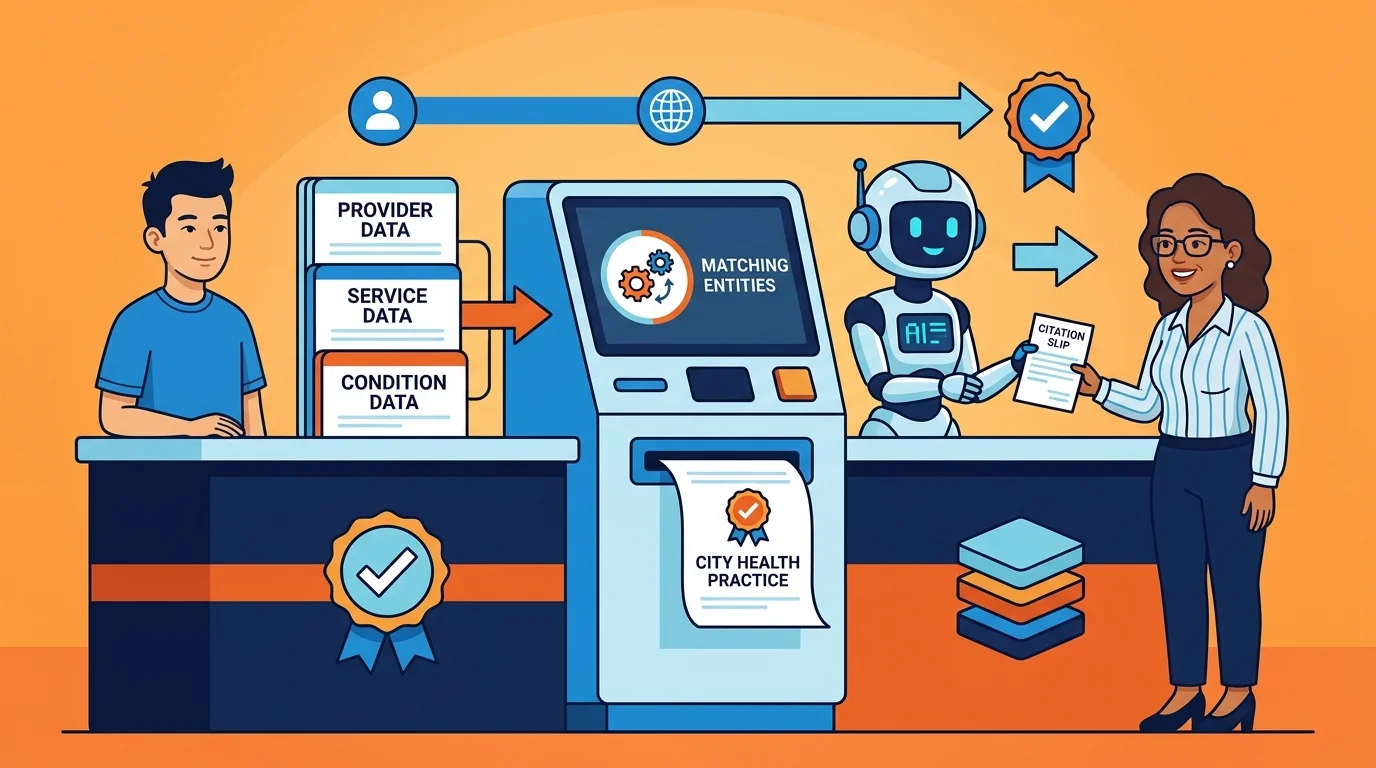
One documented limit shows how a system can read only part of what a page declares.
As Google reports, Google Dataset Search may only use the first 5000 characters of any textual property, and textual properties are recommended to be limited to 5000 characters or less. That limit belongs to Google Dataset Search, not to every system. It is still a reason to keep entity descriptions concise, labeled and bounded, which is what our AI Authority System services are built to enforce across a practice's structured data.
Where Oversized or Disconnected Entity Data Breaks Down
Research on citation writing shows a related habit. Indraprastha Institute of Information Technology reports earlier citation text generation methods mostly produced a single citation sentence for a single reference, whereas real-world writing often cites multiple references in one sentence or paragraph. That work is about scientific writing, not practice websites. The useful habit it points to is building entity data that still reads clearly when it sits beside several other sources.
A practice that scatters unlinked tags across pages is still operating a filing cabinet, just with labels on the folders. Rankings measured placement on a page. Citation measures whether a system can lift a fact and trust it, and authority built into that structure compounds while rented attention expires.
Mapping the Entities a Medical Practice Must Define
Before anyone writes a single line of markup, a practice needs an inventory. Every entity that defines the business gets named, bounded, and kept clearly separate from every other entity it touches.
That inventory starts with providers, services, and conditions treated, then reaches out to locations, accepted insurance plans, and the credentials tied to each provider. One catch: a living model of a practice's expertise only works once its entities and relationships are actually defined. Assumed doesn't count.
| Entity Type | What It Defines | Why AI Engines Need It |
|---|---|---|
| Providers | Names, credentials, specialties, and the relationships linking each provider to the services and conditions they treat | A retrieval system needs a bounded entity to cite when a question names a provider or a specialty directly |
| Services | Every procedure or treatment the practice offers, defined as a distinct entity rather than a paragraph on a services page | Distinct service entities let an AI system match a patient question to the exact offering instead of an entire page |
| Conditions Treated | The specific conditions each service addresses, linked back to the providers and services that treat them | Condition entities are what connect a patient's symptom question to a verifiable answer tied to the practice |
| Locations | Every physical address, hours, and service area tied to the practice, structured as its own entity | Location entities let an AI engine confirm where a cited service or provider is actually available |
| Accepted Insurance Plans | The specific plans and networks the practice accepts, defined separately from general service descriptions | Insurance entities answer a common qualifying question directly, without forcing a system to infer coverage from prose |
| Credentials | Licenses, board certifications, and affiliations tied to each provider as a labeled attribute | Credential entities give a retrieval system a verifiable trust signal to attach to a cited provider |
Building the Graph: From Entity List to Queryable Structure
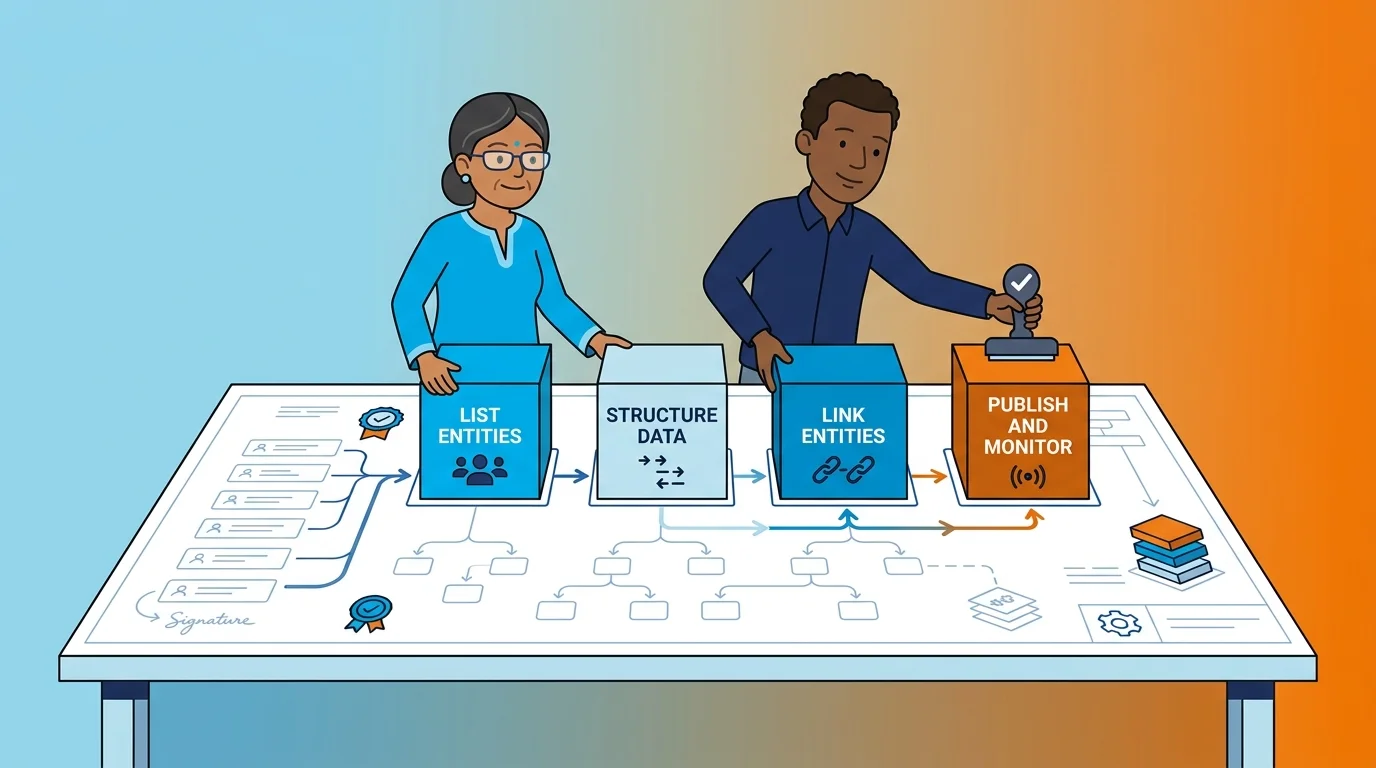
Once the inventory exists, the job flips from naming things to connecting them. Each provider links to the services they perform, each service links to the conditions it treats, and each condition points back to the providers qualified to handle it.
That web of relationships is what turns a list into a graph. A filing cabinet keeps providers, services and conditions on separate pages that never talk to each other. A graph spells it out (this provider treats this condition with this service), and that's exactly the shape a retrieval system needs to answer a specific question.
| Build Step | Entity Focus | Structural Output |
|---|---|---|
| Entity Inventory | Providers, services, and conditions treated, named and bounded as distinct records | A flat list of identified entities with no relationships defined yet |
| Attribute Encoding | Locations, accepted insurance plans, and credentials attached to each provider and service | Labeled attributes sitting inside each entity, ready for structured markup |
| Relationship Mapping | Connections between providers, the services they perform, and the conditions those services treat | A linked web where each entity points to every related entity it touches |
| Sequential Markup | One entity cluster encoded and validated before the next cluster begins | A series of verified structured blocks rather than one sprawling tag |
| Ongoing Synchronization | Provider changes, new services, and shifting insurance networks reflected in the structured layer | A current, queryable graph instead of a static snapshot that drifts out of date |
Sequencing the Build Without Overloading a Single Page
Plenty of builds assume one dense entity page is more efficient than several smaller ones. That assumption dies the second a retrieval system has to parse it.
Cram markup onto an overloaded page and the system has to untangle unrelated attributes before it can use any of them. So sequence the build: encode one entity cluster, validate it, then move to the next. Dumping one sprawling block and calling the project finished is just the filing cabinet wearing a new label.
Keeping the Graph Current as the Practice Changes
Now… this part matters: a knowledge graph doesn't get built once and left on a shelf. Providers change, services get added, insurance networks shift, and every one of those changes has to reach the structured layer, not just the visible page text.
A market that treats structured data as a one-time project is still thinking in filing cabinet terms, where an outdated page just sits there unnoticed. A queryable graph that falls out of sync gets queried anyway, and a retrieval system has no way to know the fact it just cited is stale. OpenAI runs separate bots for AI training and for search citations — so a site can block the training bots and still get cited.
Frequently Asked Questions
The same mechanical questions show up every single time one of these gets built. Here are the straight answers.
What is the difference between a knowledge graph and a standard website sitemap for AI engines?
A sitemap just lists pages so crawlers know what to index. A knowledge graph defines entities and how they connect. So a machine can query one specific fact instead of guessing from page text.
How does a knowledge graph for my practice help get cited in AI Overviews?
Citation comes down to one thing: are an entity's attributes structured clearly enough to lift as fact? A graph hands a generative system that structure directly. No more forcing it to dig meaning out of paragraphs.
Can a small medical practice realistically build and maintain its own knowledge graph?
Yes, absolutely. The real work is sequencing entities and relationships on purpose, one cluster at a time. It's a discipline problem, not a scale problem reserved for big health systems.
What specific information about my practice should be included in a knowledge graph?
Start with providers, the services they perform, and the conditions they treat. Then add locations, accepted insurance plans and each provider's credentials. Every one has to live as its own linked entity, not as text scattered across pages.
How does a knowledge graph handle sensitive patient data and HIPAA compliance?
A knowledge graph structures operational and clinical-service facts, not individual patient records. Patient data obligations stay governed by existing healthcare privacy rules. Those rules sit completely separate from what the graph itself exposes.
The Bottom Line
The filing cabinet and the graph were never two flavors of the same website. They're two completely different bets on where the next decade of patient questions gets answered.
A filing cabinet survives as long as someone is willing to browse it page by page. A knowledge graph survives because a machine can query it directly, verify what it finds, and cite it without ever loading a page at all. The strategic goal has shifted from being a listed address in search results to becoming a citable source for generative AI when it answers patient questions, and only one of these two structures was built for that shift.
Bet on the filing cabinet and you're betting your address still counts for something, but it doesn't when the answer itself is the product. Your practice gets cited from a graph, not from a cabinet. So start the inventory, encode your entities, and see exactly where your structured data stands today with the AI Visibility Check.