Why Placing In The Classic Ten Blue Links No Longer Fills Your Schedule
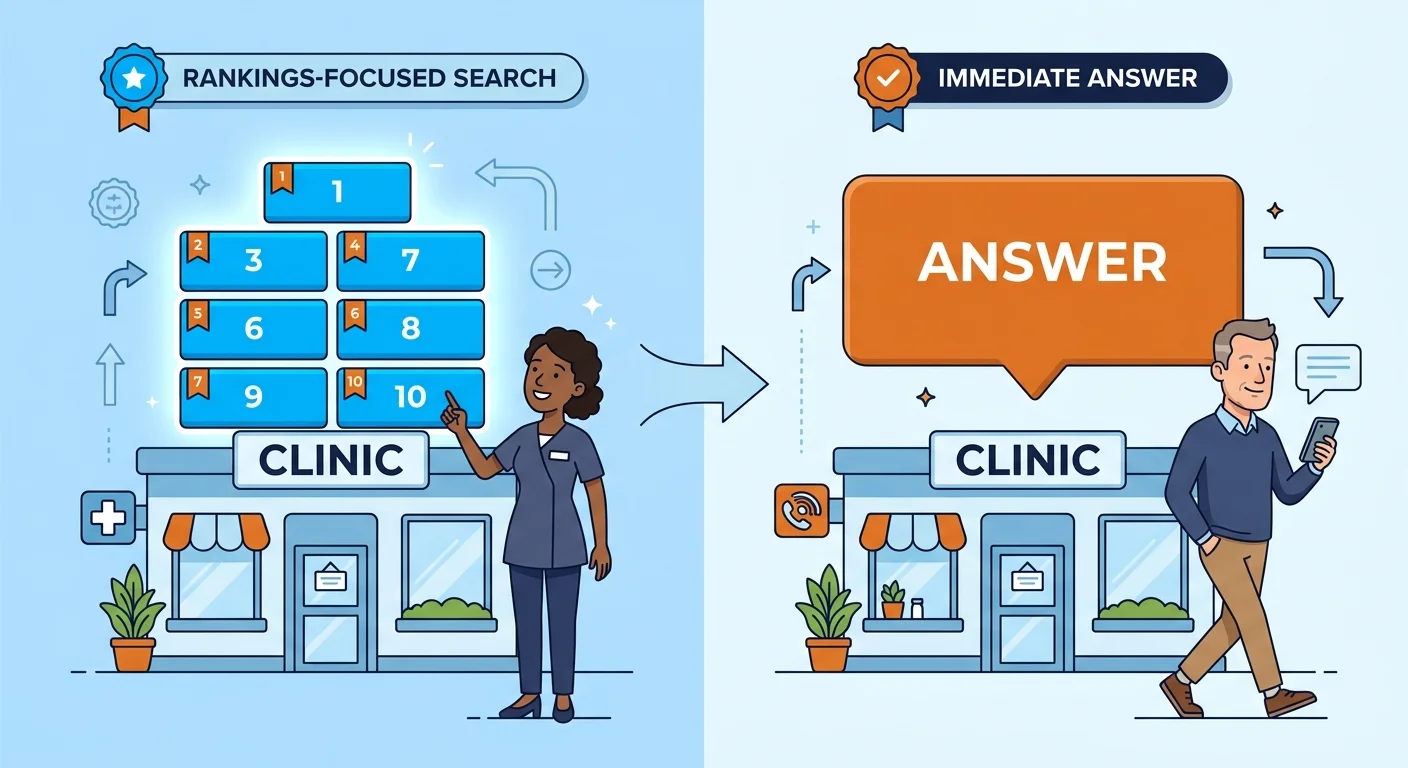
For years, the math was simple. A steady flow of referrals and a strong local listing kept the schedule full. That model paid whoever placed in the classic ten blue links, because the phone was the scoreboard. Strong listing, ringing phone.
Then generative AI search showed up. Google's AI Overviews and the rest rewired how patients find and pick a provider. Now the scoreboard sits inside an answer box the clinic never sees. And the front desk phone quit telling the truth about demand the second that shift landed.
Here's the proof. Ahrefs' research dug into 300,000 keywords and found that when an AI Overview showed up, the top-ranking page took a 34.5% lower average clickthrough rate than similar informational keywords without one. Translation: a clinic can own the top spot in the classic ten blue links and watch fewer patients ever reach it.
That gap between ranking and getting chosen is exactly why owners start noticing why their clinic's phone calls are dropping while competitors dominate AI search long before anyone names the real cause. The listing looks fine. The calls just stop matching it.
Why Chasing Keyword Position Tracking Is a Dead End Now
Chasing keyword position tracking is a dead end because it measures a game AI engines already stopped playing. A clinic can climb every spot on a tracked keyword list and still never show up inside the answer a patient actually reads.
Here's why that disconnect happens. Position tracking measures placement in the classic ten blue links, not selection into an AI-generated recommendation. Two different systems, two different rulebooks, and only one of them still moves the phone.
So clinics that keep funding traditional search optimization built around keyword position tracking are optimizing for a scoreboard the AI engine no longer checks first. The budget goes toward proving relevance to a ranking algorithm, not proving trustworthiness to a recommendation engine.
| Old Ranking Signal | What It Measured | AI Verification Signal It Is Replaced By | What That Measures Instead |
|---|---|---|---|
| Keyword Position Tracking | Where a page placed in the classic ten blue links for a chosen phrase | Entity Consistency | Whether the clinic's name, address, phone number, and credentials match everywhere the AI engine looks |
| Backlink Volume | How many other sites linked back to the clinic's pages, treated as a proxy for authority | Structured Verification | Whether the clinic's facts are presented in a format machines can parse and confirm, not just one patients can read |
| Star Rating Average | A single aggregate score meant to summarize patient satisfaction at a glance | Review Interpretation | What the review text actually says about wait times, bedside manner, and treatment outcomes |
| Keyword Density on Page | How often a target phrase appeared in the clinic's own content | Cross-Source Data Verification | Whether independent sources corroborate the clinic's claims before an AI engine will recommend it |
What an AI Engine Actually Checks Before It Recommends a Clinic
An AI engine doesn't read a clinic's site the way an old search crawler did. It cross-checks the name, address, phone number, and credentials against multiple sources before it trusts the listing at all.
And consistency matters way more than keyword density here. A clinic whose hours, provider names, or specialties don't match across its own site and its directory listings just handed the AI engine a reason to look elsewhere.
Here's the kicker: nearly all the sources an AI engine cites aren't massive platforms. They're individual business websites. Around 93% of the domains cited in generative AI answers belong to businesses themselves, according to published research data — which means a clinic's own site still carries enormous weight in whether it gets named.
The Three Layers an AI Engine Reads Before It Trusts a Clinic
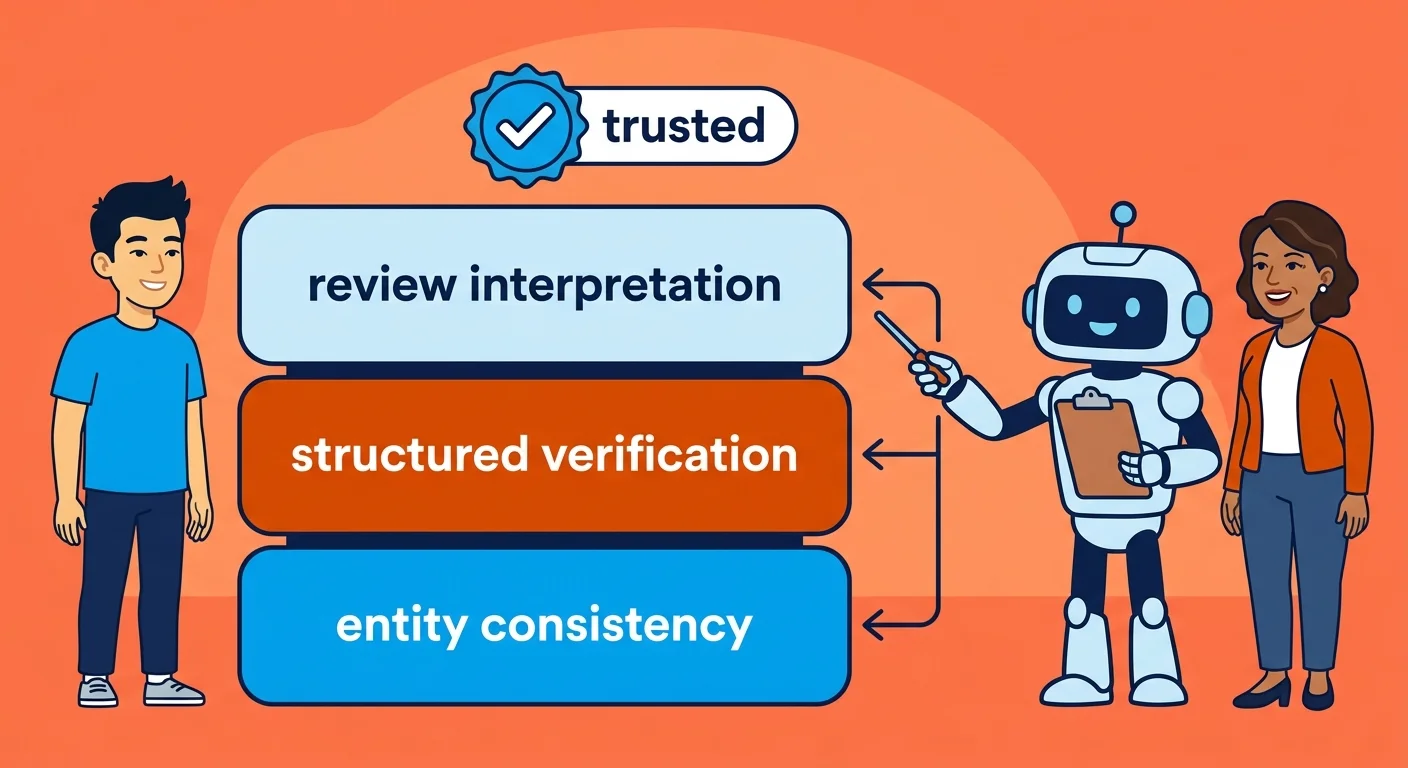
Three layers decide whether that trust gets handed over. Entity Consistency, Structured Verification, and Review Interpretation each answer a different question the AI engine is quietly asking before it recommends anyone.
Entity Consistency asks whether the clinic is the same clinic everywhere it shows up online. Structured Verification asks whether the clinic's facts sit in a format machines can parse with confidence, not just a format patients can read.
Review Interpretation asks what the reviews actually say, not just how many stars they average. A clinic can pass one layer and flunk another, and failing any single one is often enough to get quietly cut from the recommendation.
How Reviews Get Read, Not Just Counted
Reviews used to be a simple score. Now an AI engine treats them as a body of text it can read, pulling out specific mentions of wait times, bedside manner, or treatment outcomes instead of just tallying a star average.
That shift matters because trust in the underlying tech isn't automatic, especially for health decisions. Trust in AI was strongly tied to willingness to use it for high-stakes calls like health, according to a paper indexed in PubMed Central covering generative AI for health information seeking — which is exactly why patients lean on a confident, well-supported AI answer once they decide to trust it. Clinics still leaning on referrals alone should read why word-of-mouth referrals can no longer save clinics from AI invisibility before assuming reputation travels on its own.
Who This Diagnosis Isn't For
Let's keep it real: this diagnosis isn't for every clinic reading it. Some practices are genuinely fine, and pretending otherwise would be dishonest.
If a clinic doesn't care where new patients come from, none of this matters. A schedule kept full by existing referrals, with zero appetite for growth, doesn't need machine trust solved.
But that's a narrow exception, not the norm. Most clinics reading this already feel a quieter phone and chalk it up to seasonality, which is exactly the wrong bet to make in 2026.
| Month | Referral Leakage Signal | Invisible AI Cost Signal | Net Effect on New Patient Inquiries |
|---|---|---|---|
| Month One | A patient mentions the clinic in passing, but the referral never converts because a name or number was misremembered. | The clinic is already excluded from AI-generated answers due to inconsistent listings, though nothing visibly changes yet. | Inquiries dip slightly, easy to mistake for a slow month. |
| Month Three | A satisfied patient tells a friend, who never follows up without a direct nudge. | The AI engine has now recommended competitors enough times that the pattern is established, not incidental. | Inquiries decline further, with owners still attributing it to seasonality. |
| Month Six | Word of mouth continues at its normal, limited pace, unable to compensate for what the clinic is losing elsewhere. | The clinic has become a near-permanent absence from the recommendation pool for its core services. | The front desk phone rings noticeably less, and the cause remains undiagnosed without a machine trust review. |
What the Revenue Leak Actually Looks Like Month to Month
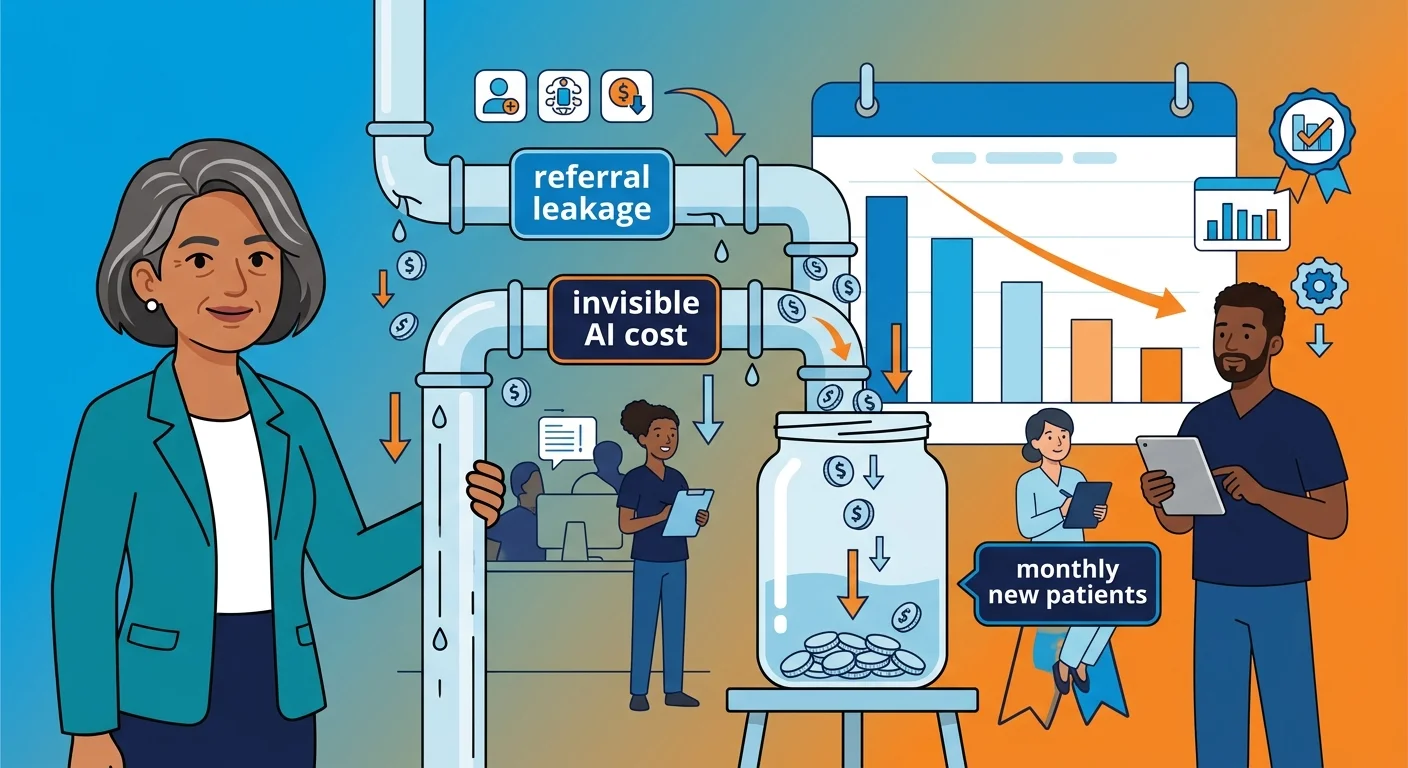
The revenue leak rarely announces itself. It's a handful of fewer calls one month, then a few more the next.
Owners tend to watch total patient volume, not where that volume comes from. So the drop gets pinned on a slow month, a holiday week, or a competitor's promotion.
And this isn't a future problem. The shift is happening now, and clinics that don't adapt are already watching new patient inquiries quietly slip month over month, with no single event to blame.
Referral Leakage vs the Invisible AI Cost
Referral leakage and AI invisibility get confused all the time, but they're separate problems with separate fixes. Referral leakage is when an existing patient recommends a clinic and that recommendation dies somewhere before it converts.
The invisible AI cost is a different animal. It hits before a human recommendation ever enters the picture, because the AI engine already cut the clinic from consideration.
So a clinic can plug referral leakage completely and still bleed to AI invisibility, because the two problems live at different points in the patient's decision path. Fix one without the other and half the leak stays wide open, which is exactly what a proper agency readiness review looks for when it checks a marketing partner's actual grasp of AI recommendation systems.
But Doesn't Word of Mouth Still Protect Us?
Doesn't word of mouth still protect a good clinic? It used to. Now it only protects the clinics whose reputation the AI engine can actually verify.
A glowing reputation that lives only in patients' memories is invisible to a recommendation engine. If the AI can't confirm it, it can't recommend it, no matter how many patients would vouch for the clinic in person.
Getting a Clinic's Entity Data Structured for Machine Verification
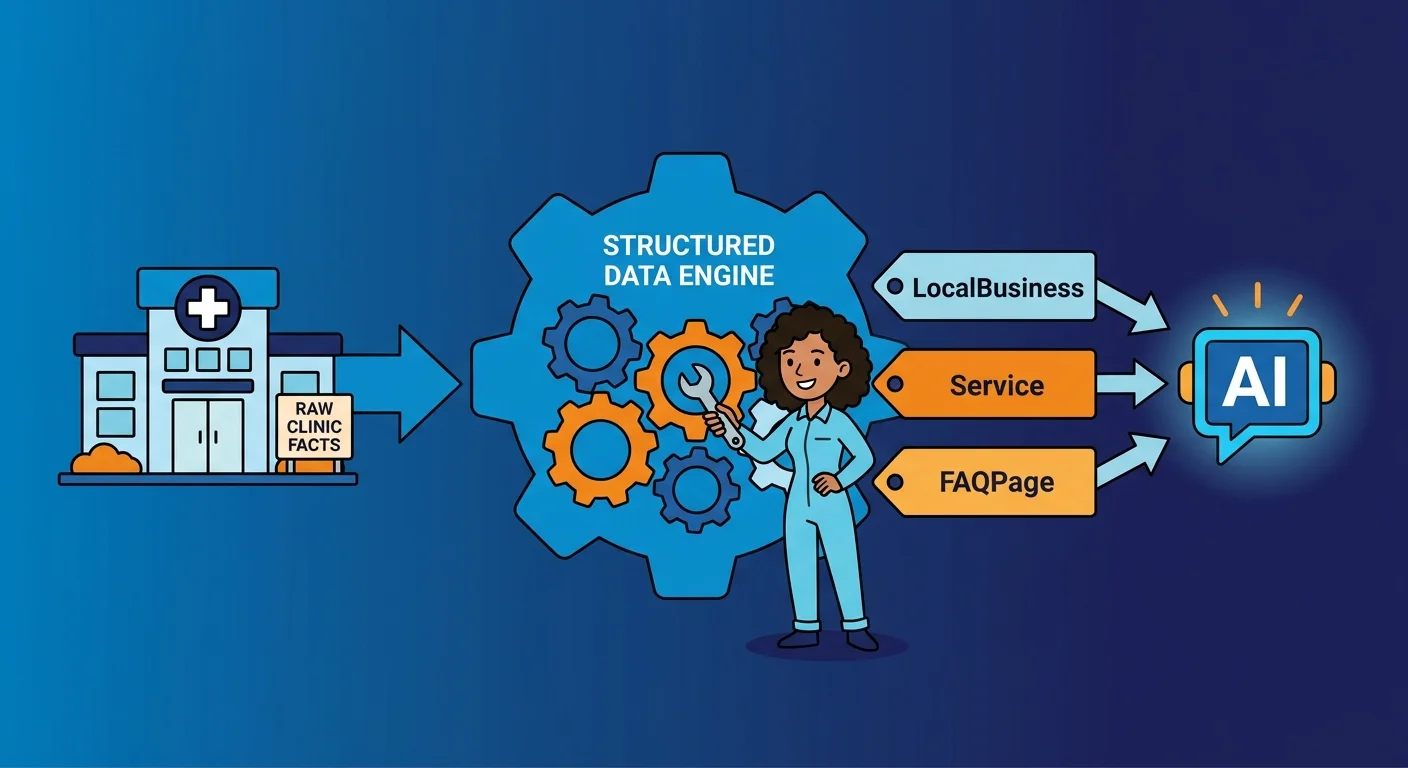
Fixing AI invisibility starts with the least glamorous job on the list: making sure a clinic's basic facts say the same thing everywhere they show up.
And that's not a copywriting project. It's a data project, and most clinics have never once treated it like one.
Here's the thing: an AI engine can't call the front desk to sort out a detail that looks off. It just moves on to a clinic whose facts already agree with themselves, which is exactly what how to interpret an AI authority snapshot to prioritize immediate repairs is built to help a clinic catch before that quiet exclusion ever lands.
| Schema Type | What It Verifies | Why an AI Engine Weighs It | Accountability Layer It Supports |
|---|---|---|---|
| LocalBusiness Schema | Name, address, phone number, and hours as a single verified block | An AI engine cross-checks this block against outside sources before trusting a recommendation, since accountability for a wrong recommendation is still unresolved industry-wide | Entity Consistency |
| Service Schema | Which specific treatments and procedures the clinic actually performs | Removes the guesswork an AI engine would otherwise face when inferring services from prose alone, lowering the odds of an unfounded claim reaching a patient | Structured Verification |
| FAQPage Schema | Pre-formatted answers to the exact questions patients are already asking | Gives the AI engine confident, verifiable source material for health-related questions, where trust in the answer strongly shapes whether the patient acts on it | Review Interpretation |
The Schema Types That Carry the Most Verification Weight
Structured Verification is where this gets technical. It leans on a vocabulary called schema markup, code baked into a site that states facts in a format machines read directly instead of guessing at them from the visible text on a page.
Now, not every schema type pulls the same weight for a clinic. LocalBusiness schema locks the name, address, and phone number into one verified block. Service schema spells out exactly which treatments the clinic performs, and FAQPage schema hands the AI engine pre-built answers to the questions patients are already asking.
A site with great prose but no structured data is still asking the AI engine to infer facts it would rather just confirm. Structured Verification kills the guesswork entirely.
Where Accountability for Bad AI Recommendations Actually Sits
So who's on the hook when an AI engine gets a clinic recommendation wrong? Here's the honest answer: nobody's fully decided yet, and that uncertainty should worry any clinic betting its visibility on hope alone.
Federal government agencies should work with stakeholders to make recommendations about applying existing liability rules and standards to AI systems, according to published research data on AI accountability. The same guidance calls for supplementing those rules as needed to pin down who gets held accountable for harms across the value chain, specifically when AI systems impose unacceptable risks or make unfounded claims.
But that framework is still being built. And a clinic can't sit around waiting for it to finish before its own entity data becomes trustworthy enough to get recommended right in the meantime.
Frequently Asked Questions
Same questions land on every clinic owner's desk once this diagnosis does. So here they are, answered straight.
How is being 'visible' to an AI different from ranking on Google?
Placing in the classic ten blue links is about position, and a patient still has to click to reach you. AI visibility is different. It's whether an engine trusts you enough to name you right inside the answer, no click required.
Can my clinic rank high in traditional search but still be invisible to AI recommendations?
Yes, and it happens all the time. A clinic can sit high in the classic ten blue links while its data flunks the entity checks an engine runs before recommending anyone. That's the trap: operationally sound, structurally untrustworthy to the machine.
What specific information does an AI look for when recommending a local clinic?
It wants a consistent name, address, phone, and provider details across every source it can cross-check. Then it wants structured facts about services and credentials it can parse with confidence. And it reads what reviews actually say, not just the star average stapled to them.
Is there a way to see if my clinic is being recommended in AI-generated answers?
The only reliable move is to check directly. A clinic can't read its own standing off patient volume alone. A structured look at your current entity data against what AI engines are actually citing shows the gap right away.
If AI answers the question directly, will my website get any site visits at all?
Sometimes, sure. But that's not the goal worth chasing anymore. The goal is getting named as the trusted answer, because most individual business websites cited in these answers earn their spot on data trust, not site visits.
How much does traditional search optimization matter for AI visibility?
It still matters, just not the way most clinics got sold on it. Traditional search optimization built around keyword position tracking can support visibility. It can't stand in for the entity trust an engine demands before it recommends a clinic.
Where This Leaves Your Clinic's Schedule
Here's the thing: the front desk phone was never the scoreboard. It was only the echo of a decision already made somewhere else — first inside a patient's referral network, now inside an AI engine's answer box.
That answer box is the real scoreboard now. Most clinics have never seen it, let alone checked where they stand. So a quieter phone isn't a slow month — it's often the sound of a clinic already cut from an answer it never knew was being written.
Traditional search optimization built around keyword position tracking can't fix that. It was never built to answer the question an AI engine is actually asking. Entity Consistency, Structured Verification, and Review Interpretation are the three questions that matter now, and staying silent on even one is enough to get left out entirely — so the only responsible move is to see it first, clearly and specifically, starting with a free AI visibility check.