
Why a Clinic's Move Fractures Its Digital Identity Before the Staff Even Unpacks
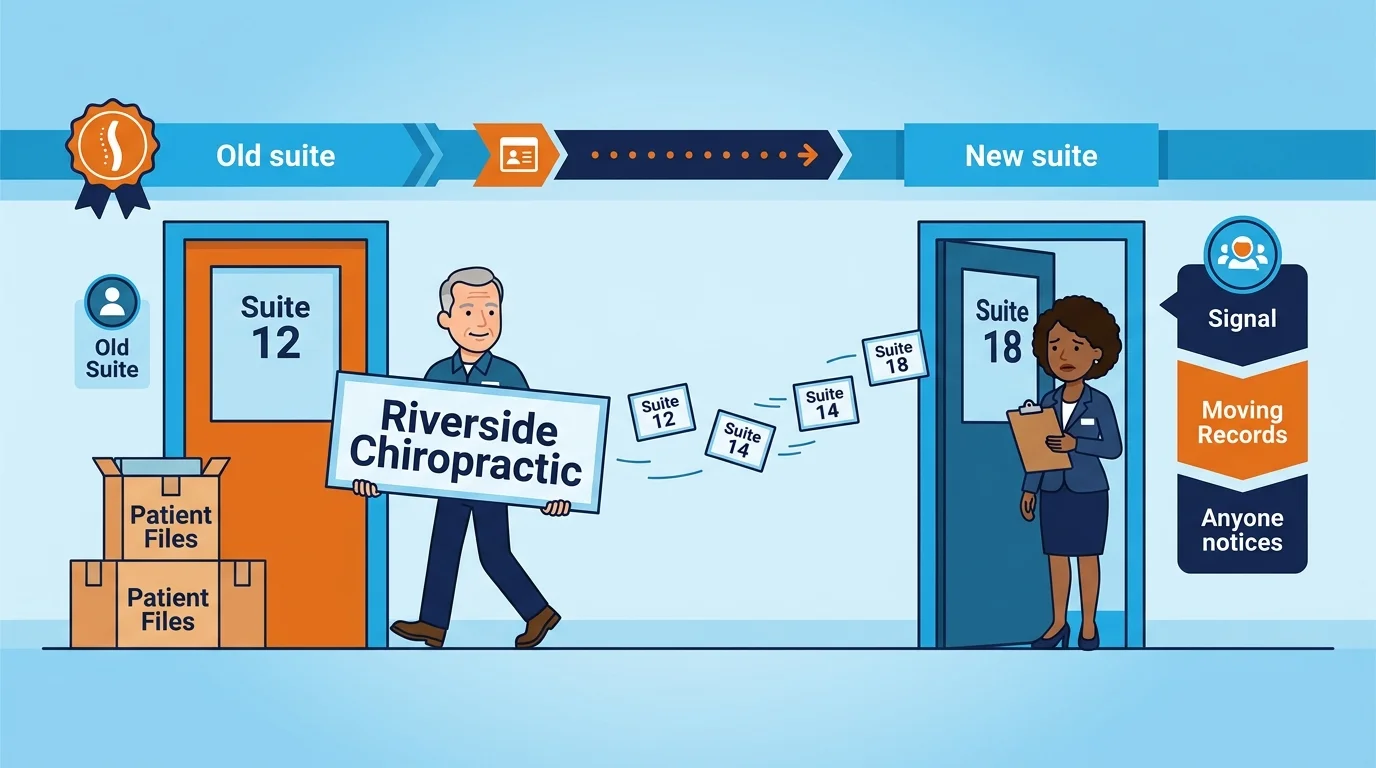
One move. One truck, one new suite door. But online, that single event splits into dozens of separate records, and each one clings to its own stale copy of the address.
Here's the kicker: the old suite number doesn't vanish. It just sits there on every platform, unattended, until something or someone finally corrects it.
Where the Fracture Starts
So where does it actually break? Right at the moment a practice assumes one update covers every platform (spoiler: it doesn't). Business profile listings, data aggregators, insurance directories and the practice website each store the address on their own.
AI visibility gets treated as a rebrand of old-school search work, as if a new vocabulary changed the underlying mechanism. But the systems verifying a clinic's location may cross-reference more sources than classic search listings ever did, which raises the cost of any unresolved fracture rather than lowering it. Resolving that fracture starts with making clinic details reliable for AI systems across every platform still citing the old suite.
Why Treating a Relocation Like a Simple Address Edit Fails
Agencies still sell relocation fixes as a single edit to a single listing, treating the move like a results-page optimization task from an era when one correction could ripple outward on its own. That game ended. AI-powered recommendation engines may cross-reference an entity across many platforms before trusting it enough to recommend it, so one corrected listing sitting beside a dozen uncorrected ones may not be enough for the systems doing the verifying.
So what does AI see when two suite numbers disagree? Not a typo waiting on cleanup, but uncertainty, and AI may dodge uncertainty rather than sort it out, so it can skip the clinic or point patients to the wrong door. That same risk shows up whenever the identity changes on paper instead of on the map, which is why keeping AI systems current through a rebrand deserves the same scrutiny as a physical move.
How AI Systems Actually Verify a Business's Location
So how does an AI system actually decide which address is real? Spoiler: it may not ask just one source and call it a day.
It can build a composite picture from the platforms it can reach. Then it may weigh each one against the others before it's willing to state an answer with any confidence.
The Query Fan-Out Mechanism
Here's the mechanism underneath that confidence: a single location query may not stay a single query.
Google's documentation says AI Overviews and AI Mode may use a query fan-out technique, issuing multiple related searches across subtopics and data sources to develop a response, so an AI answer can draw on several sources at once.
Data Aggregators and the Distribution Problem
But the listings an AI system checks may not come from the clinic directly. Many can trace back to a handful of data aggregators feeding many smaller directories at once.
Let's keep it real: an aggregator still holding the old suite number can quietly reseed that error across every directory it supplies, including the same ones that matter for updating AI records after an associate's departure. So fixing one listing while the aggregator keeps pushing the stale version? That just restarts the fracture somewhere else.
What Happens When Conflicting Records Compete for the Same Entity
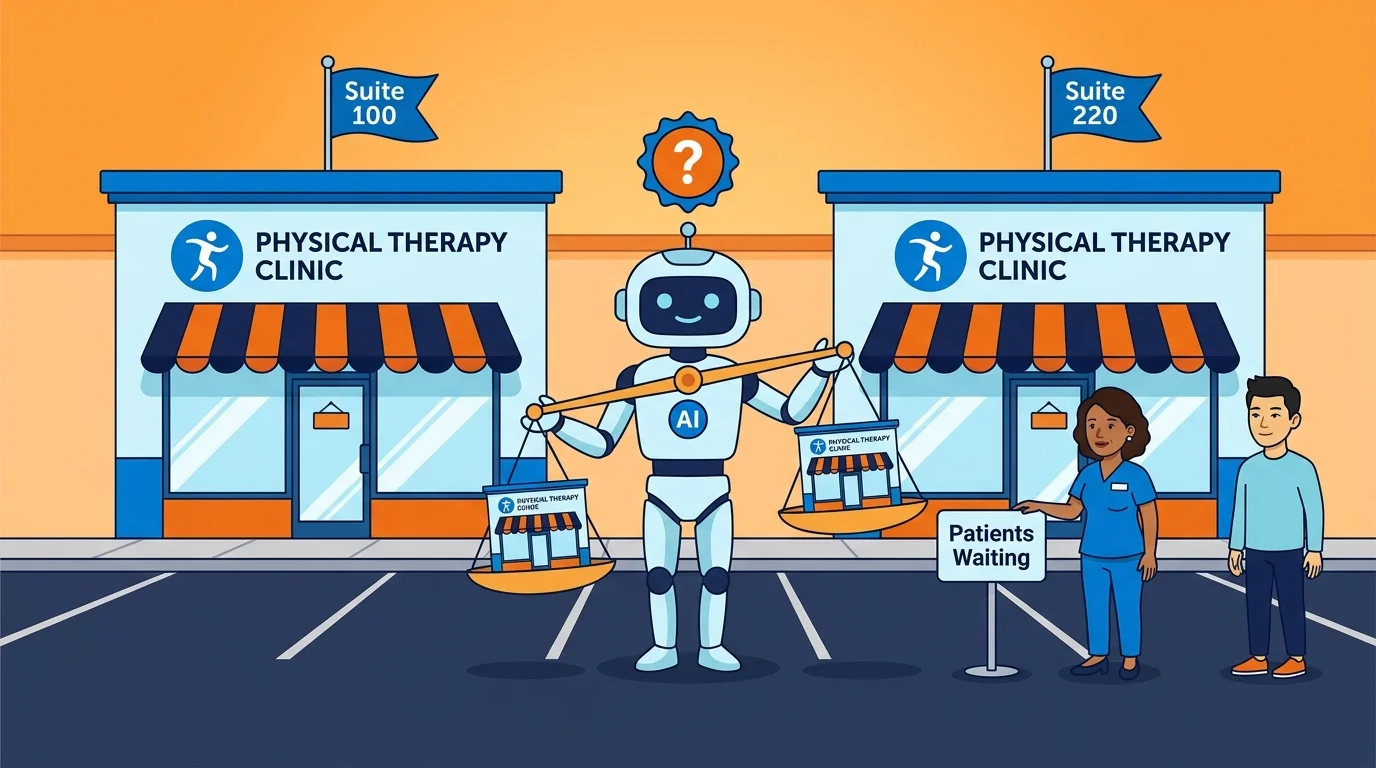
Conflicting records do way more damage than one muddy lookup. They pit two versions of the same clinic against each other. And an AI system may have to pick a winner before it'll answer anything at all.
| Scenario | What the Record Shows | How an AI Engine Responds |
|---|---|---|
| Old suite number persists on a handful of directories while the new address appears on the primary listing | Two conflicting versions of the same address exist across the entity's footprint, with neither fully corrected | The engine may weigh both records against each other, find no clear majority, and either omit the location or hedge the answer |
| A data aggregator still carries the old suite and keeps reseeding it into smaller directories after the main listing is fixed | The record shows one corrected source surrounded by several silently refreshed stale copies | The engine may treat the aggregator-fed majority as more authoritative, citing the old suite despite the primary correction |
| A duplicate profile exists for the old suite alongside a separate profile for the new one | The record shows two distinct entities rather than one relocated practice | The engine may not be able to confirm the two profiles describe the same business, so it may cite either, neither, or flag the entity as unverified |
How Duplicate Listings Erode Confidence in a Single Answer
So what happens when neither version looks more authoritative than the other? Confidence can drop, and the system may hedge rather than commit.
More listings scattered across more platforms does not fix that. It only hands the verification problem more conflicting inputs to weigh, which is why flooding directories with copies of an address never substitutes for one record every platform can confirm against.
What an Unresolved Duplicate Costs Over Time
An unresolved duplicate doesn't expire on its own, so it can sit there feeding future queries that touch it. Long after the move is forgotten, that stale record can keep resurfacing in fresh AI answers. Getting ahead of that mess is exactly what our AI visibility services are built to do.
Building the Sequence That Makes One Record the Authoritative One
Most agencies still pitch a relocation fix as one edit, submitted somewhere and then forgotten. That play was built for a market where a single correction rippled outward on its own. That market's gone, and a sequence has to replace it.
| Step | Platform Type | Why Order Matters |
|---|---|---|
| Step 1 | Primary Business Profile Listing | Aggregators and directories may draw on this record, so an uncorrected primary listing can undermine downstream fixes. |
| Step 2 | Website Location Schema | Keeping the site's markup accurate and matching the visible page is good practice, and it's the part the practice controls. |
| Step 3 | Data Aggregators | Aggregators can reseed whatever they hold across many smaller directories, so correcting them before the directories helps keep the old suite number from resurfacing downstream. |
| Step 4 | Secondary Directories and Insurance Networks | These platforms pull from aggregators rather than from the clinic directly, so updating them earlier than the aggregator just recreates the same conflict later. |
| Step 5 | Remaining Niche or Obscure Listings | Low-traffic platforms carry less weight individually, but left uncorrected they still supply one more conflicting input an AI system may have to weigh before trusting any address. |
Verifying Ownership Before Editing Anything
Alright, quick reality check: nothing gets corrected until ownership is confirmed. Google's documentation says a business can provide or edit its address and contact details after verifying ownership of its Business Profile, and Google may take about a week to update site details in Search results. On Google Business Profile listings, verified ownership is the key that unlocks editing the address, contact details and business type in the first place.
Sequencing the Update Across Primary and Secondary Platforms
So the primary listing gets corrected first, since aggregators and directories may draw on it. Secondary platforms follow in sequence rather than all at once, because a scattershot update can leave just as much conflicting data behind as no update at all.
Where Structured Data Closes the Gap Directories Can't
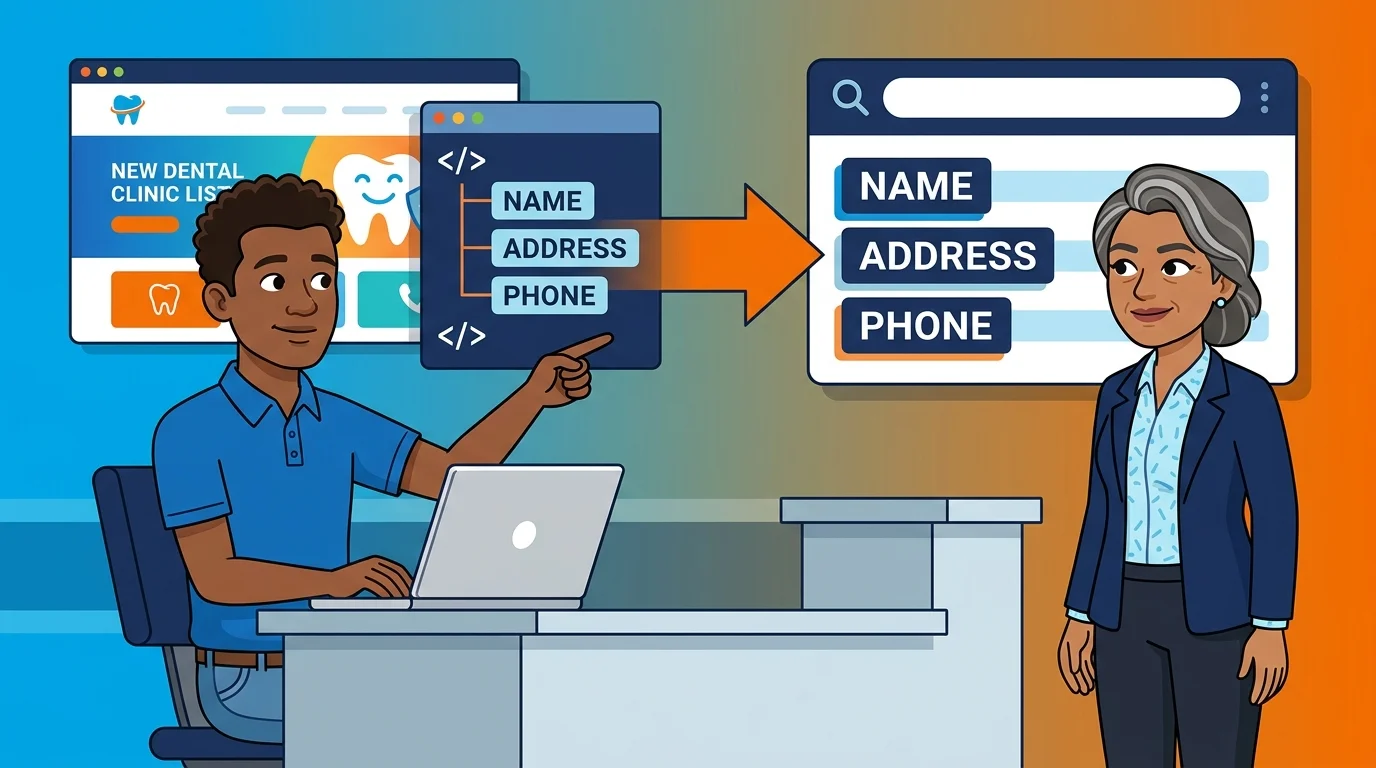
Manual fixes across listings and aggregators close most of the gap. LocalBusiness schema tucked into the site's code hands AI systems a machine-readable statement of the current address.
| Schema Field | What It Signals | Why It Matters at Relocation |
|---|---|---|
| streetAddress | The current building number and street name as a distinct machine-readable field | Confirms the new suite sits inside a street-level location AI systems can match against aggregator records |
| suite (inside streetAddress) | The specific office within a shared building; the suite goes inside the street address | Distinguishes a relocated practice from others still listed at the same building after a move within it |
| telephone | The verified contact number tied to the business entity | Gives AI systems a second identifier to cross-check against the address when resolving conflicting listings |
| @type (business type) | The category of practice the entity belongs to, stated in a format search systems parse directly | Prevents an AI system from attributing a corrected address to an unrelated business type at the same location |
What LocalBusiness Schema Actually Communicates
Schema markup spells out fields such as street address (with the suite inside it), phone and business type, each one tagged so a machine can parse it without guessing. Keeping the site's markup accurate and matching the visible page is good practice, and it's the part the practice controls.
Frequently Asked Questions
A move raises operational questions no architecture diagram answers on its own. Here are the specific ones a practice runs into once boxes start moving.
How long does it take for AI to recognize my clinic's new suite number?
There is no fixed clock. Recognition depends on how quickly the primary listing, the schema, and the aggregators feeding smaller directories all align on the same suite number.
What is the most critical business listing to update first when my clinic relocates?
The primary business listing comes first. Aggregators and directories may draw on it, so correcting it anchors the downstream fixes that follow.
Will moving to a new suite, even in the same building, hurt my practice's AI visibility?
It can, if the old suite number persists anywhere an AI system checks. The distance of the move matters far less than whether every platform agrees on the current address.
Can I update my clinic's address with directories before the official move-in date?
Updating ahead of the move invites the same conflict it's meant to avoid. A listing showing a suite number nobody can walk into yet creates its own mismatch for systems to weigh.
What happens if an old suite number continues to exist on a few obscure websites?
A stale suite number on even one obscure site can keep feeding conflicting data into future queries. Obscure does not mean invisible to the aggregators and crawlers compiling a composite record.
How does schema markup help signal a change of address to AI search engines?
LocalBusiness schema tags fields AI systems can parse: street address (with the suite inside it), phone and business type, each one labeled.
The Bottom Line
Here's the thing: a relocation doesn't end at the new suite number. It ends when every platform citing the practice points back to one corrected record, not a dozen conflicting copies.
And none of that happens by default. A scattered address stays scattered until the primary listing, the schema and the aggregators feeding smaller directories all confirm the same current location.
Being listed somewhere was never the bar. Being the source other platforms can rely on is, and that is the gap an AI Visibility Check is built to close.