
Why AI Engines Are Rejecting Your Marketing Copy
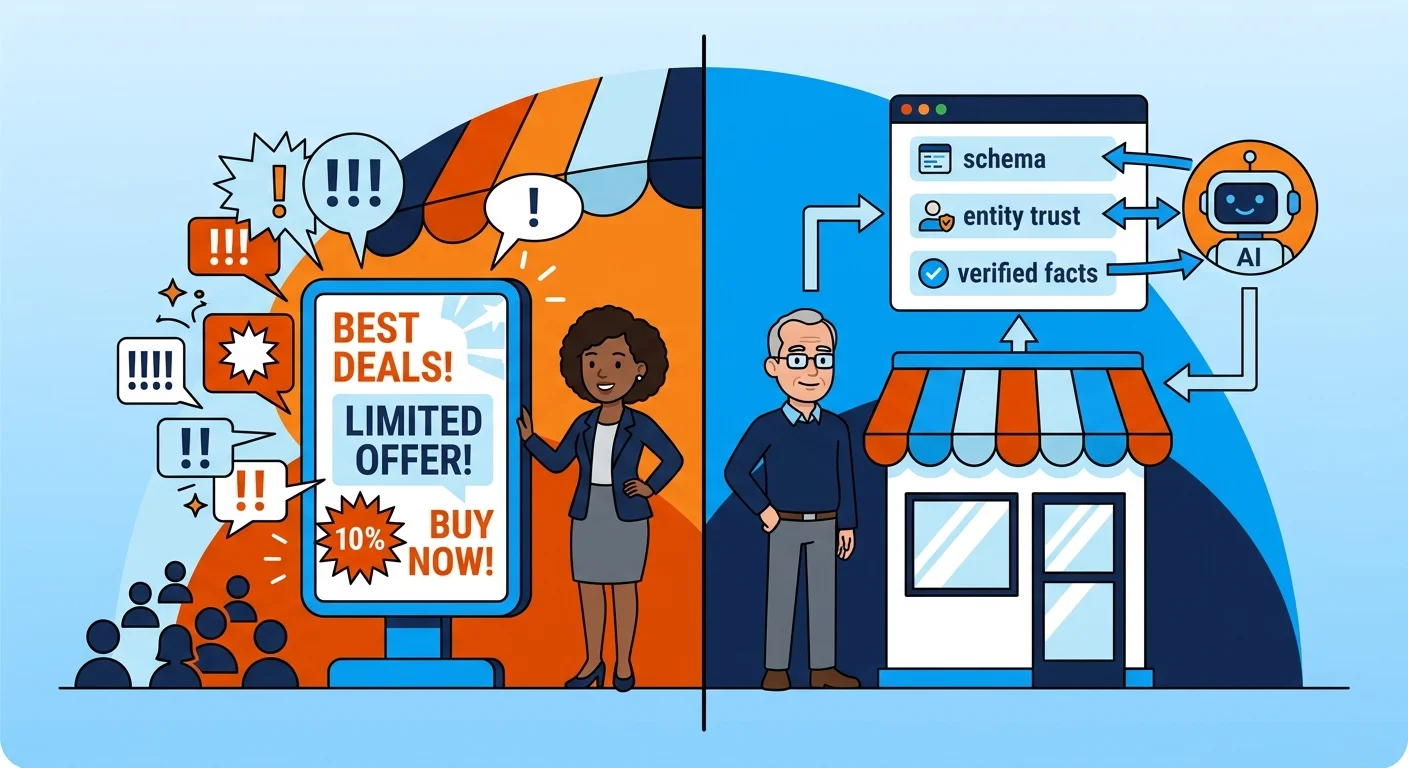
Here's the thing: most business websites are still writing to win over a human. Every headline, every testimonial, every "trusted" and "industry-leading" was built to nudge a reader's gut toward trust.
But that era of writing persuasive copy for human eyeballs is over. The primary audience for your authority signals is now the machine, and machines don't feel persuaded. They check for structure.
So when a generative engine hits a page full of confident adjectives and zero structure, it has nothing to verify. These engines aren't "reading" your site the way a person does. They're ingesting structured data and knowledge graphs to build an answer, which means prose alone just isn't the input format they're built to trust.
That's exactly why a business's structured proof layer matters more than its prose going forward. Back in the courtroom this article opened with, a static marketing claim is still just a witness talking. Without a notarized document behind it, that testimony rarely survives cross-examination.
The Unsupported Claims Problem Inside AI Overviews
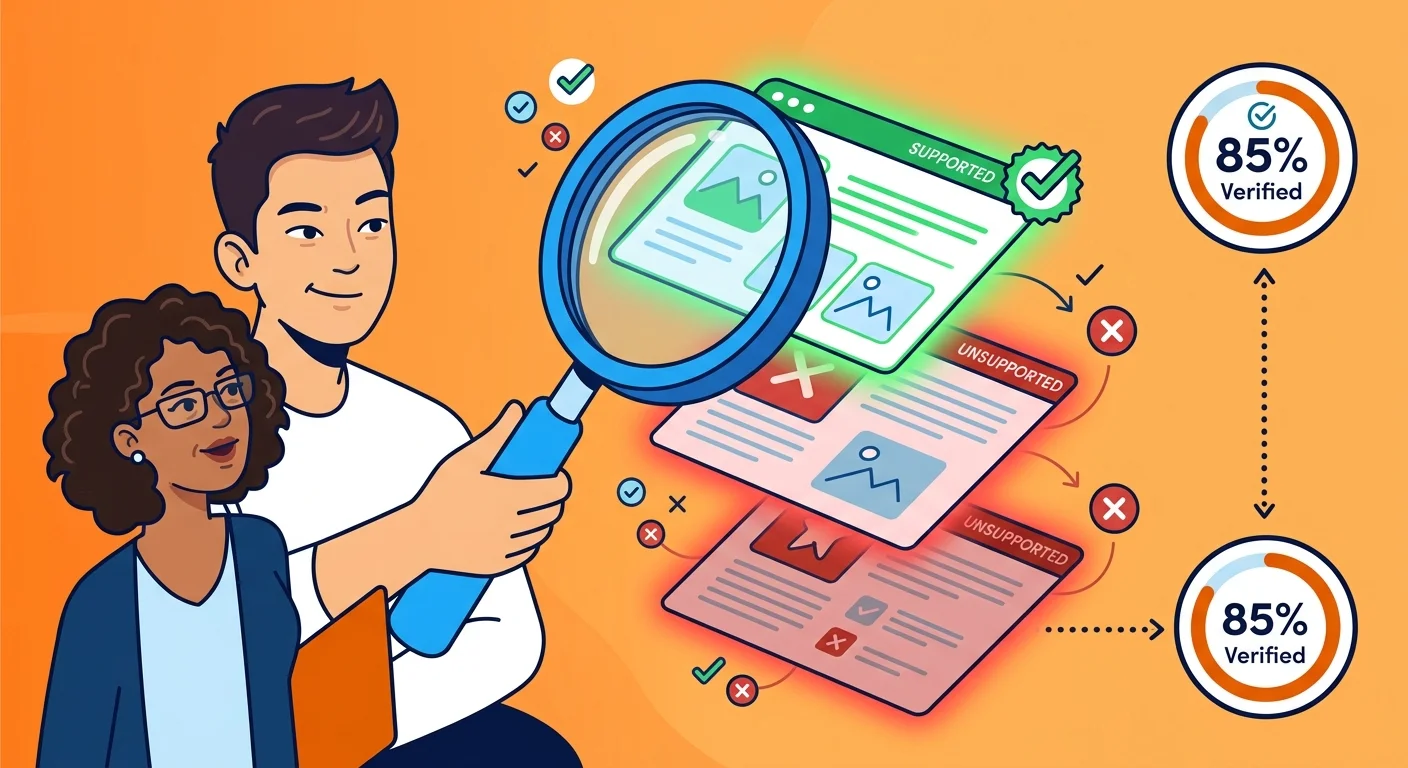
So what happens when an AI engine trusts a page it shouldn't have? Researchers at Washington University in St. Louis broke AI Overview responses down into thousands of individual claims to find out.
The result: 11.0% of claims in Google AI Overviews weren't backed by the pages cited as evidence, measured across responses gathered in March–April 2026. That's not a rounding error. That's roughly one in nine cited claims resting on a source that never said it.
The dominant failure mode behind that number was omission, documented in a working paper hosted on the arXiv preprint server. A citation showed up. The proof behind it just didn't.
| Claim Type | What AI Overviews Do With It | Verification Outcome |
|---|---|---|
| Static marketing claim ('industry-leading service') | Omitted from the synthesized answer, or cited without a way to confirm it against the source | Unsupported — no structured object exists for the engine to check |
| Verifiable Proof Object tied to a specific credential or track record | Ingested as structured data and connected to a known entity in the knowledge graph | Confirmed — the assertion can be checked against its own structured evidence |
| Persuasive adjective with no underlying data ('trusted', 'award-winning') | Treated as decorative text rather than a checkable fact | Filtered out — the claim carries no structure to verify |
| Structured entity data published behind a claim about expertise or authority | Surfaced directly inside a generated answer as a citable fact | Trusted — the machine can confirm the claim rather than merely repeat it |
Why Persuasive Copywriting Fails as Machine Evidence
Persuasive copywriting was built to win over a human skimming a page in seconds. Confidence, tone, and repetition do the work — a reader rarely stops to ask for a source.
But an AI engine doesn't skim. It breaks a page down into atomic claims and checks each one against what the page actually supports.
That's where adjectives collapse. A claim without structure gives a machine nothing to verify, so the engine either drops it or, worse, cites it anyway without confirming it holds up.
Now think about a business whose authority claims live only in persuasive prose. The engine has no structured object to check, so it either drops the claim or pins it to a citation that can't actually back it.
And this failure mode isn't unique to marketing copy — it shows up anywhere entity claims lack a verifiable structure, which is exactly what a clinic-level entity trust framework is built to close. A witness testifying without a notarized document behind them is precisely how a claim ends up unsupported in the record.
What Actually Counts as Machine-Readable Proof
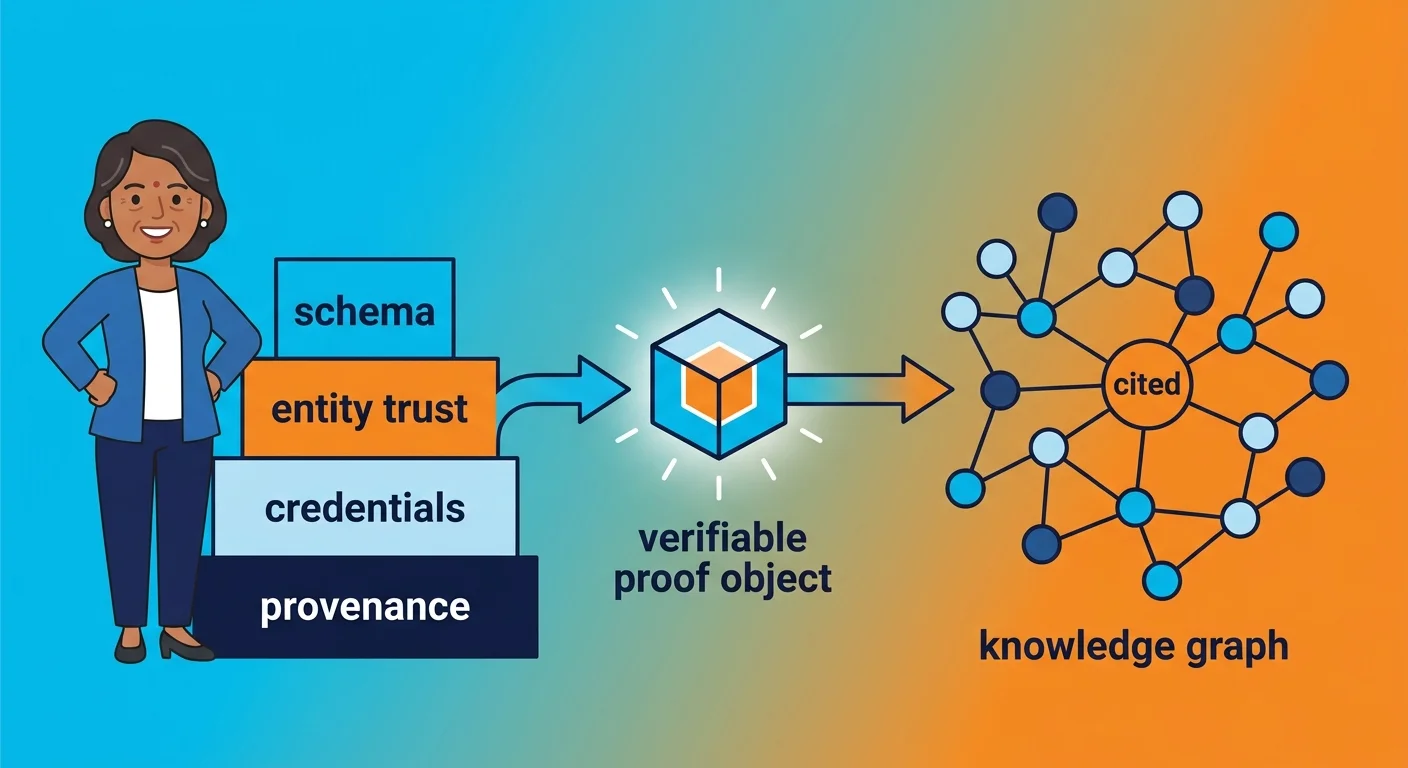
So what actually counts as proof a machine can use? Not every structured field earns it, and not every markup tag carries weight.
Real machine-readable proof has two properties a marketing claim never will. It's formatted to a standard an AI engine already parses, and it's checkable against a known entity instead of taken on faith.
Two systems do most of that work right now. One is the structured data layer already sitting beneath the surface of the web. The other is a newer layer of cryptographically signed credentials, built so a machine never has to guess.
| Proof Component | What It Verifies | Where AI Engines Consume It |
|---|---|---|
| Schema.org Markup | What an entity is, how it relates to known categories and identifiers | Ingested during knowledge graph construction, before a query is ever asked |
| Verifiable Proof Object | Whether a specific claim about that entity holds up, cryptographically, without alteration | Checked at answer-generation time, when an engine decides what to cite as fact |
| Persuasive Marketing Prose | Nothing a machine can independently confirm; intent and tone, not structure | Rarely consumed as evidence; typically omitted or cited without verification |
| Knowledge Graph Entity Record | Confirms an entity's identity against a format the engine already recognizes | Referenced whenever an engine needs to resolve who or what is being discussed |
Schema.org and the Knowledge Graph as Proof Infrastructure
Start with the infrastructure AI engines already trust. Schema.org markup is how a business tells a machine what it is, not just what it claims to be.
Google's own Knowledge Graph Search API shows exactly what that trust demands. It uses standard schema.org types and complies with the JSON-LD specification to return entity information, which means the data an engine surfaces has to arrive in a format it already recognizes, not one a copywriter invented.
That's worth sitting with. A generative engine isn't weighing how confidently a business describes itself. It's checking whether that description arrives in Google's documentation's own accepted structure, tied to an entity it can verify on its own.
But schema markup alone only answers half the question. It tells a machine what an entity is. It doesn't tell that machine whether a specific claim about that entity can be trusted, which is exactly the gap why plain-text endorsements get skipped over in AI search results exists to explain.
Verifiable Credentials and Content Provenance Standards
Here's where the second layer comes in. A Verifiable Proof Object is a machine-readable, cryptographically signed assertion of fact that an AI can process without human-like interpretation.
That signature is the whole difference. A schema tag describes an entity. A signed credential proves a specific fact about that entity hasn't been touched since it was issued.
Think back to the courtroom. Schema.org puts a witness's name, address, and role on record. A signed credential is the notarized document that witness hands over, the one that survives cross-examination because nobody can quietly change it after the fact.
So the two systems aren't competitors. Structured entity data tells an engine who's speaking. A signed proof object tells that same engine the claim being made actually holds up, and together they're what a Machine-Readable Proof Architecture is built from.
Where Static Claims Still Fail and Who This Approach Is Not For
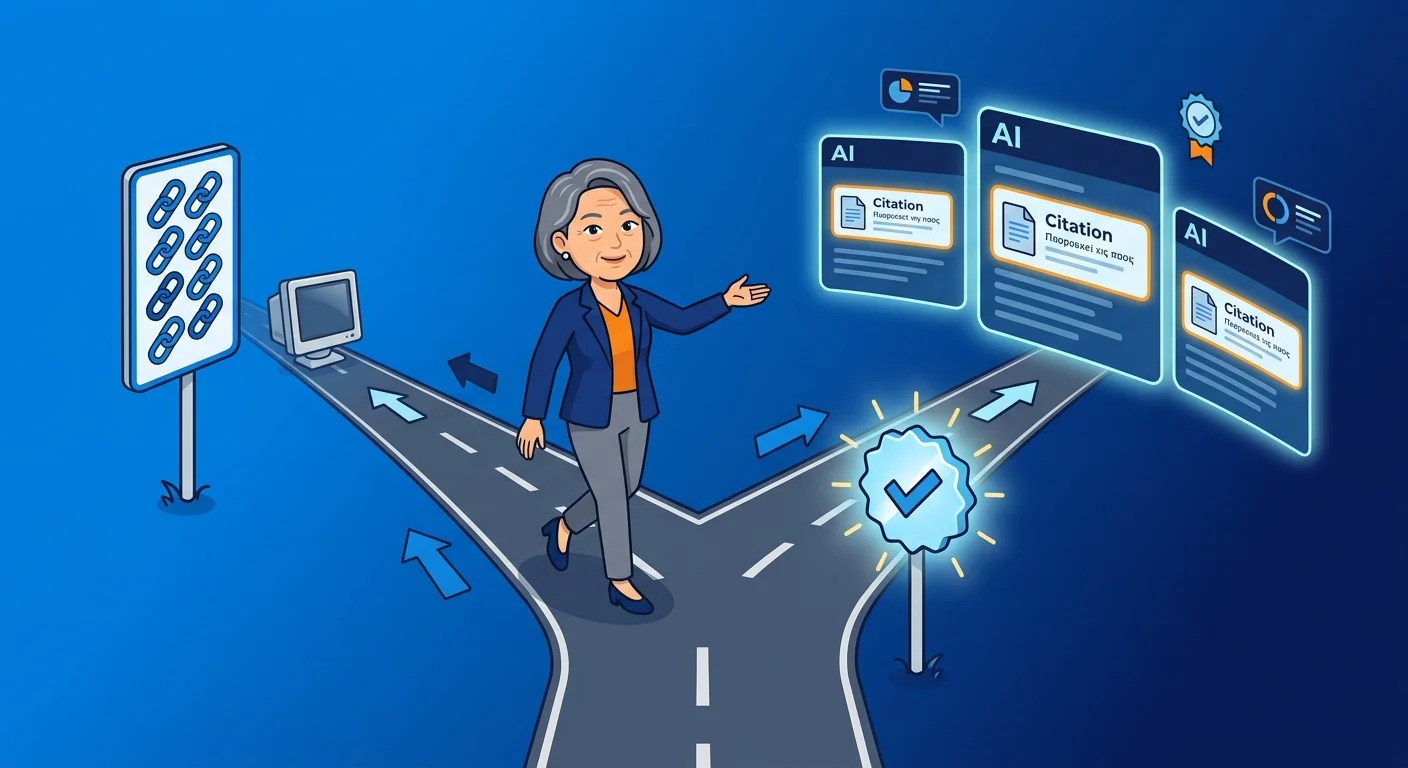
So where does this actually fall apart in the real world? Look at any commercial-intent query and the pattern jumps right out.
For decision-stage product comparison queries, AI Overviews showed up in 88.5% of prompts, the exact moment a shopper is weighing one option against another. That's not some niche edge case. That's the majority of high-stakes commercial searches now running through a synthesis layer that checks structure before it repeats a claim — a pattern Search Engine Journal's reporting has tracked closely as AI Overviews spread into comparison-heavy queries.
So a business still leaning on persuasive adjectives at that exact moment is gambling its visibility on the one format the engine trusts least. The real shift in digital authority is moving from demonstrating expertise to humans to proving facts to algorithms. That shift isn't coming. It's already deciding who gets cited at the exact query stage where a sale is won or lost.
This Is Not for Businesses Chasing Classic Ten Blue Links Placement
This isn't for a business still chasing placing in the classic ten blue links as its entire visibility strategy.
That goal assumes a human is scrolling a results page and picking between blue links off a headline. Generative engines already changed what gets surfaced and why, and a business still optimizing purely for that older pattern is solving yesterday's problem with today's budget.
And if the plan is to out-write competitors with punchier copy and call it a strategy, this framework isn't the fit. A Machine-Readable Proof Architecture asks a business to structure and verify its claims, not just phrase them more persuasively.
But Doesn't Good Copywriting Still Matter for Conversion?
But doesn't good copywriting still matter for conversion? Sure it does — once a reader actually lands on the page.
Here's the distinction that matters: copywriting persuades the human who arrives. It does nothing to get that business surfaced by the machine that decides who arrives in the first place. A page can read beautifully and still be invisible to an engine that found nothing structured to verify.
So the two aren't in competition. Structured, verifiable proof earns the citation. Persuasive prose earns the conversion once a reader's already there, and a business that treats those as one job keeps losing the step that happens before a human ever sees the page.
Building the Proof Layer: Structured Data, Provenance and Trust Signals
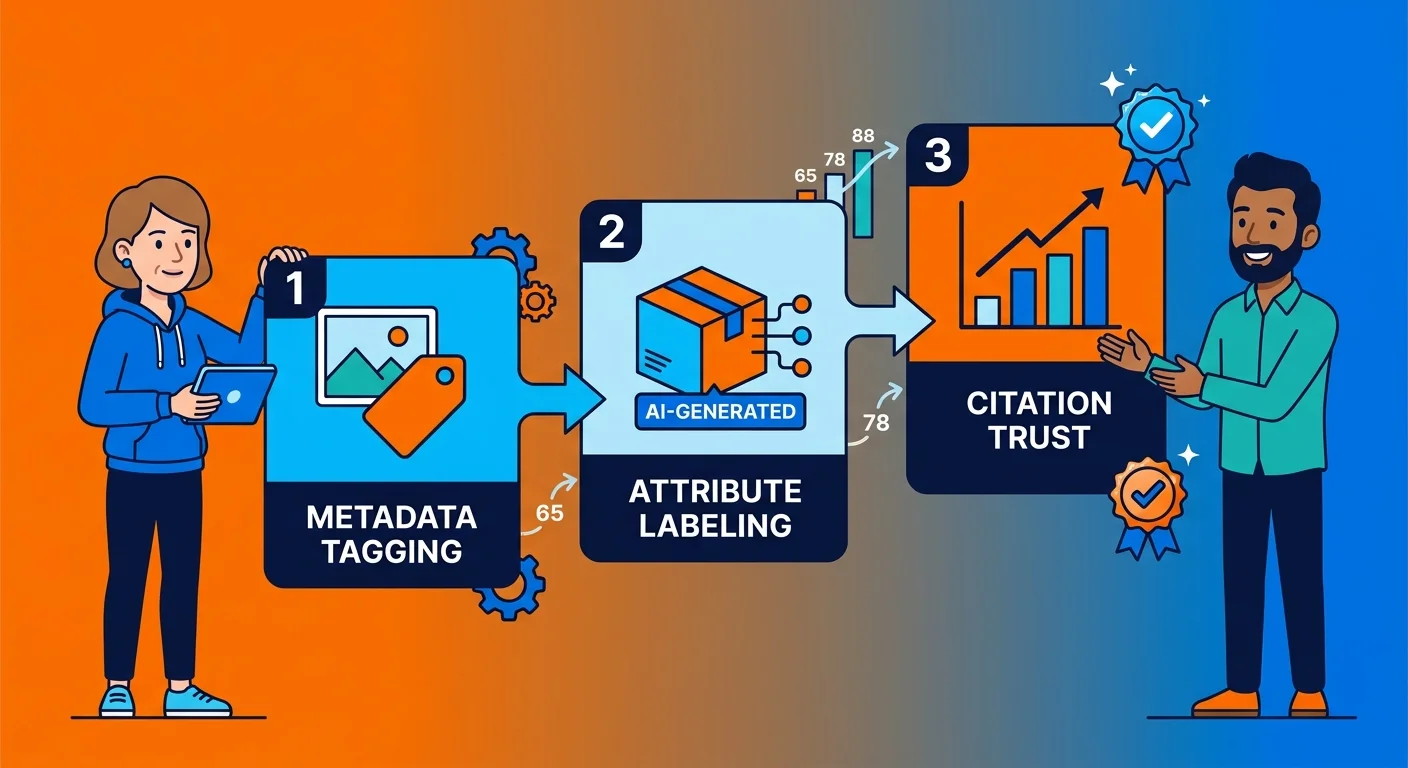
So what does building a proof layer actually take? Not another round of persuasive copy, and not another schema tag bolted on for its own sake.
It means handling every claim on a page the way a court handles evidence. Each one needs a format the machine can check, and a source the machine can trust.
Two places this gets concrete right now: e-commerce metadata and citation behavior. Both show how far past theory the demand for proof has already moved.
| Implementation Step | Proof Element Added | Verification Requirement |
|---|---|---|
| Label automatically generated media | Disclosed origin metadata on images and text | Images must carry IPTC DigitalSourceType TrainedAlgorithmicMedia metadata |
| Separate and flag generated attributes | Distinct, labeled title and description fields | AI-generated product attributes must be specified separately and labeled as AI-generated |
| Attach a citation to every claim | A visible source reference on the assertion | Users reported significantly higher trust in AI-generated responses when citations were present |
| Verify the citation is genuinely relevant | A checked, non-random source link | a result that held true even when the citations were random |
E-Commerce Metadata Rules and Product Attribute Labeling
Here's where the rule stops being abstract. Google requires AI-generated images in e-commerce to carry metadata using the IPTC DigitalSourceType TrainedAlgorithmicMedia metadata.
That one requirement is a preview of where every industry lands. A machine won't take a product photo at face value anymore without knowing how it was made.
The same logic runs into text. AI-generated product attributes such as title and description have to be specified separately and labeled as AI-generated, so automatically generated website content now carries its own disclosure requirement baked into the metadata.
Notice what that changes. A description isn't just words on a page anymore — it's a labeled object with a declared origin, checked the same way Google Search Central checks any other structured field before it trusts what a page claims about itself.
How Citation Trust Compounds Once Proof Objects Are in Place
But here's the part that should rattle a business leaning on prose alone. Trust in a citation doesn't need the citation to be correct — it only needs the citation to exist.
Research from the University of Notre Dame found that users reported significantly higher trust in AI-generated responses when citations were present, even when those citations were picked at random instead of being relevant. That finding came out of a study on LLM-generated question-answering responses, hosted on the arXiv preprint server.
Sit with that a second. A citation's mere presence moves trust, whether or not it's the right citation. That isn't a flaw in the reader. It's a signal about how much weight structure carries once a machine, or a human reading a machine's output, decides what to believe.
So picture what happens once the citation isn't random but actually verifiable. A Verifiable Proof Object doesn't just sit there looking like proof the way an arbitrary citation does. It survives the check a random one would fail, and that's the compounding edge a real proof layer is built to earn.
Frequently Asked Questions
So let's close the gaps a courtroom analogy can't quite cover. Here are the questions this shift actually raises once a business starts building its own proof layer.
What is a Verifiable Proof Object in the context of AI search?
It's a machine-readable, cryptographically signed assertion of fact that an AI can process without reading into tone or intent. Think of it as evidence a machine can check, not a claim it has to take on faith.
How do generative AI engines treat static marketing claims versus machine-readable proof?
Static claims get treated like unverified testimony — weighed, but never fully trusted. Machine-readable proof gets treated like admitted evidence, checked once and then cited with confidence.
Why is a cryptographically signed claim more valuable than a simple citation link in 2026?
A simple citation link only has to exist to move trust, relevant or not. A signed claim goes further. It proves the underlying fact hasn't been altered, and that's a stronger kind of trust entirely.
What is the first step for a business to start creating Verifiable Proof Objects for their website?
Start with the entity data already sitting in your Schema.org markup and make sure it's accurate and complete. That structured foundation is what a signed credential eventually attaches to.
Can Verifiable Proof Objects help protect a brand from being misinterpreted by AI search engines?
Yes, because a signed proof object anchors a specific fact to a specific source. That makes the claim far harder for a generative engine to distort, paraphrase wrong, or pin on the wrong entity.
The Bottom Line
So here's the verdict this whole article's been building to. In the courtroom an AI engine actually runs, a static marketing claim is a witness telling a story with nothing to back it up. A Verifiable Proof Object is the notarized document entered into evidence, and the ruling never goes to the witness who can't prove a word.
So the verdict's already in. Authority used to mean persuading a human reader. Now it means proving a fact to a machine that only cites what it can check itself, and a business still writing for the witness stand while its competitors submit notarized evidence isn't losing on quality — it's losing on format.
Look, a Machine-Readable Proof Architecture isn't a project to schedule for later. It's the structure deciding right now which businesses get cited and which get quietly skipped. So the next move isn't another page of persuasive copy — it's an honest look at what your site currently hands a machine to verify, and iTech Valet's AI visibility check is where that look starts.