
Practice acts give licensing boards the power to discipline licensees, up to and including license revocation. False, misleading or unethical advertising is one of the grounds. Advertising must be truthful, and providers must be able to back each claim with valid research, whether it appears in print, radio, video, websites or social media. Under the FTCA’s guidelines, testimonials should reflect what patients will generally achieve, and advertisers must be able to show that a significant portion of patients will get similar results. The ACA Code of Ethics says chiropractors should protect a patient’s confidential information unless the patient directs or consents, or the law requires otherwise. Model advertising language presented by the Federation of Chiropractic Licensing Boards (FCLB) lets chiropractors accurately say they are licensed. The same language bars promotional materials that are false, misleading, deceptive or could be misleading.
Published Outcome Data Is Advertising, and Your Name Is on It

Outcome numbers on a website or a profile are advertising.
The FTC says what a claim says is “consumer-driven.” It turns on what reasonable consumers understand the marketing materials to communicate.
Boards act on this.
Practice acts give licensing boards the power to discipline licensees. Up to and including license revocation. The trigger is defined unprofessional conduct, and false, misleading or unethical advertising is on the list.
Advertising must be truthful. You must be able to back each claim with valid research. That covers print, radio, video, websites, social media and anything said directly.
The ad stays with the practice. No matter who wrote it.
As Dynamic Chiropractic puts it, providers are responsible for advertising that appears in their name, even if they didn’t create it.
In my view, a bargain-rate monthly retainer is a false economy here.
Say the writer posts outcome claims nobody can substantiate. The writer moves on. You keep the exposure, because the ad runs in your name.
Posting the same figures on several platforms is a separate question. It’s covered in Should You Publish Outcome Data Across Multiple Platforms?
The Federal Floor: FTC Substantiation and Endorsement Rules
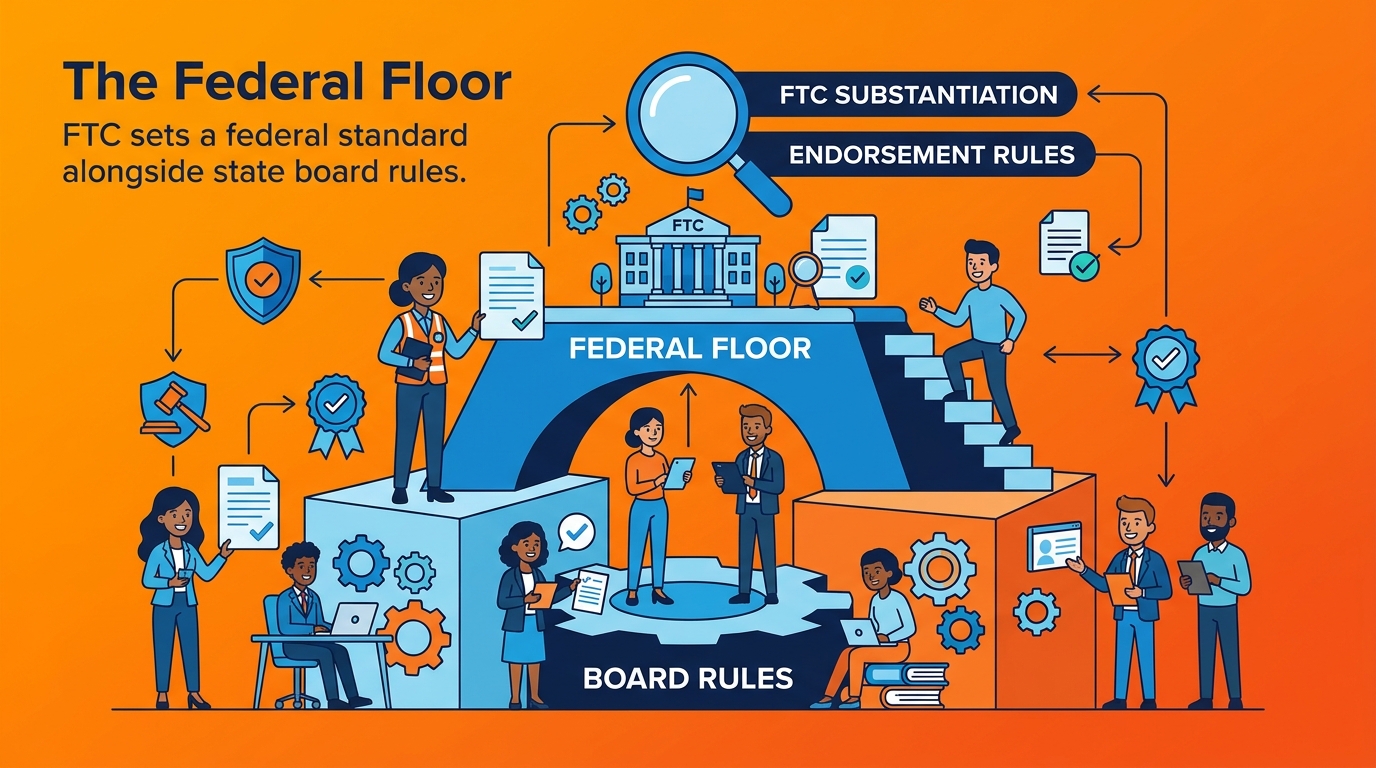
The FTC sets a federal standard alongside the board rules.
Before a company runs an ad, it needs a “reasonable basis” for the claims.
Health claims get their own standard.
The FTC says that, as a general rule, claims about the health benefits or safety of foods, dietary supplements, drugs and other health-related products need competent and reliable scientific evidence. Accountable says the same for efficacy, safety and comparative claims. Often that means well-controlled studies.
I’d skip straight to the working tool. The substantiation file.
Accountable advises matching it to each express or implied claim in your copy, visuals and testimonials. In my view, every claim should have its entry in the file before it goes live.
The FTCA and state consumer protection acts (CPAs) both demand truthful advertising. It has to be verifiable with current, reliable and objective proof.
Violators of the FTCA face fines and imprisonment. CPAs provide for punitive damages.
Testimonials bring in what Accountable calls the Endorsement principles:
- Make sure testimonials reflect typical results, or add prominent qualifiers.
- Disclose material connections.
- Never suppress negative reviews.
Agencies are on the hook too.
The FTC says that, in addition to the advertiser, the advertising agency may be held legally responsible for misleading claims in ads. Agencies have a duty to make an independent check on the information used to substantiate ad claims.
They can’t just take the advertiser’s word that the claims are substantiated.
What the Profession’s National Bodies Say: ACA and FCLB
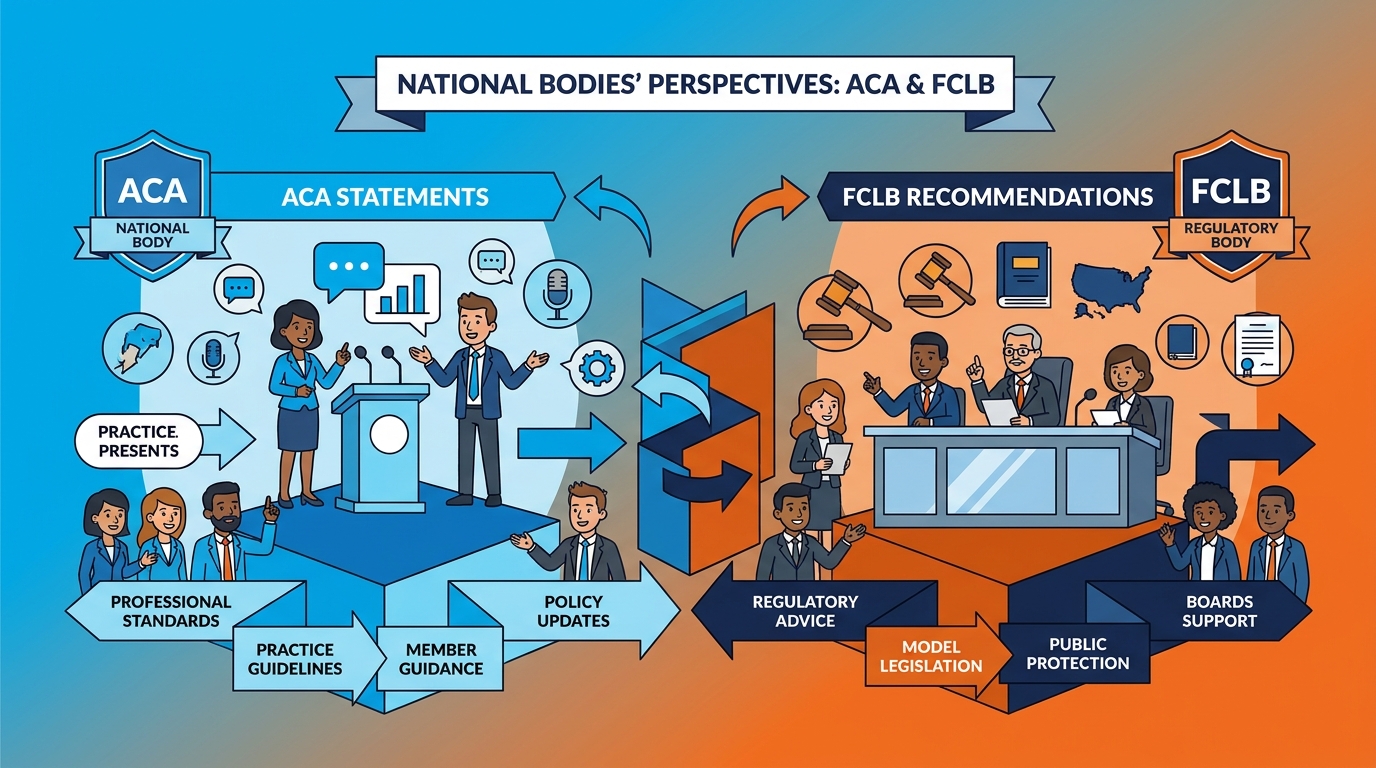
Two national bodies speak to this topic.
The American Chiropractic Association (ACA) sets an ethics code. The Federation of Chiropractic Licensing Boards (FCLB) writes model text for the bodies that draft state rules.
Different roles. The table below sets them side by side.
| Body | Rule | Legal force |
|---|---|---|
| ACA Code of Ethics | Don’t mislead patients into false or unjustified expectations of the results of treatment | Ethics code ratified by the ACA House of Delegates in 2023 |
| ACA Code of Ethics | Protect confidential patient information, except as the patient directs or consents, or the law requires otherwise | Ethics code ratified by the ACA House of Delegates in 2023 |
| ACA Code of Ethics | Keep advertising, including social media, truthful, not misleading and in line with governmental jurisdictional rules | Ethics code ratified by the ACA House of Delegates in 2023 |
| FCLB model advertising language | May state licensure accurately; no false, misleading, deceptive or potentially misleading promotional material | Model language presented by the FCLB |
| FCLB model advertising language | No “specialist”, “board certified” or “diplomate” unless the board has approved the credential’s issuer | Model language presented by the FCLB |
The ACA Code of Ethics on Expectations, Confidentiality and Advertising
The ACA Code of Ethics was ratified by the ACA House of Delegates in 2023.
Four parts of it bear on outcome data.
- Expectations. Doctors of chiropractic should not mislead patients into false or unjustified expectations of the results of treatment.
- Confidentiality. Doctors should preserve and protect the patient’s confidential information, except as the patient directs or consents, or the law requires otherwise.
- Advertising. Doctors should follow ACA’s published Advisory Guidance on Advertising. Advertising should be truthful and accurate about the doctor’s professional qualifications and degree of competence. Advertising, including social media, should not exploit the vulnerability of patients, should not be misleading, deceptive or fraudulent, and should conform to all governmental jurisdictional rules on professional advertising.
- Scholarship. Doctors should maintain the highest standards of scholarship, education and training in the accurate and full dissemination of information and ideas.
The FCLB Model Practice Act and Model Advertising Language
The FCLB Model Practice Act for Chiropractic Regulation is a reference guide.
It’s for governments, legislatures and licensing boards. The ones adopting a new chiropractic act, amending an existing statute, or writing standards and regulations.
Here’s the catch.
The FCLB says the act doesn’t represent or purport to be a legal standard within any member jurisdiction. It’s for educational purposes. It may be amended at any time.
Article V of the act groups advertising, disclosures, confidentiality and mandatory reporting.
Section 501 covers advertising and promotional materials. Section 503 covers required disclosures. Section 504 covers confidentiality.
The model advertising language is shown in the FCLB Attorney Panel presentation. It says chiropractors may accurately state that they’re duly licensed by the board.
It bars advertising and promotional materials of any type that are false, misleading, deceptive or could be misleading to the public. That includes materials meant to induce patients and prospective patients to engage in professional services.
It also bars chiropractors from calling themselves a specialist, board certified, a diplomate, or anything else that suggests specialization, board certification or advanced recognition.
One exception. The board has approved the issuer of the credential.
Testimonials Need More Than De-Identified Data Does

A testimonial is one patient’s account. The duties below are written for testimonials.
The FTCA has specific guidelines for testimonials.
They should reflect experiences representative of what patients will generally achieve. You must be able to substantiate that a significant portion of patients will get similar results. Dynamic Chiropractic lists more duties:
- A testimonial may only involve a patient the provider personally treated.
- The provider must be able to substantiate what the testimonial says.
- It should note that results may vary.
- It must disclose any compensation.
- It should be current, within the past few years.
- Readily available information must be kept to show the testimonial is representative of actual practice.
- The practice should keep a signed copy showing the testimonial is true and that the patient gave permission to publish under a HIPAA-compliant authorization.
The details of that authorization have their own page: HIPAA-Safe Ways to Publish Chiropractic Outcome Data.
I’d take a handful of pooled, documented figures in a clear order over a wall of testimonials. Any day.
To my mind, they carry less risk. And they give an AI engine something it can actually make sense of.
Piling up more stories doesn’t do that.
How a State Law Reads Outcome Claims: California as the Worked Example

Here’s what one state’s law can require. California’s healing-arts statute is the example.
It’s one state’s law. Not a national rule. Other states’ laws may differ.
Start with the core rule.
California Business and Professions Code § 651 makes it unlawful for a licensee to disseminate a public communication with a false, fraudulent, misleading or deceptive statement, claim or image. That covers anything meant or likely to induce professional services. Causing someone else to disseminate it counts too.
What’s a public communication? Mail. Television. Radio. Motion pictures. Newspapers. Books. Lists or directories of healing arts practitioners. The Internet and other electronic communication. And that’s only among other things.
The full text is on FindLaw.
The statute does leave room.
Licensee advertising may include any other item of factual information that isn’t false, fraudulent, misleading or likely to deceive.
And a board or committee can’t unreasonably block truthful, nondeceptive price or otherwise lawful advertising. Not by outright prohibition. Not by onerous disclosure requirements.
The table below shows how the statute treats each kind of claim.
| Claim type | Rule |
|---|---|
| False expectation of results | Misleading if intended or likely to create false or unjustified expectations of favorable results |
| Before-and-after images | Must be comparable in presentation, and must state that the same results may not occur for all patients |
| Superiority claim | Misleading unless relevant to the service and substantiated with objective scientific evidence |
| Comparative claim | Must be based on verifiable data; the advertiser must be prepared to show the comparison is accurate |
| Scientific claim | Misleading if it cannot be substantiated by reliable, peer-reviewed, published scientific studies |
Creating False Expectations of Results
Leave out a material fact and the statement is misleading. That’s when it’s likely to mislead or deceive because of what’s missing.
A statement is also misleading if it’s intended or likely to create false or unjustified expectations of favorable results.
That includes any photograph or image that doesn’t accurately depict the results of the procedure being advertised.
Before-and-after views come with two rules.
They must be comparable in presentation. Favorable poses, lighting or other features can’t distort the results.
And they must state that the same results may not occur for all patients.
Comparative and Superiority Claims
Claiming professional superiority is risky. So is claiming you perform services in a superior manner.
It’s misleading unless it’s relevant to the service being performed. And you can substantiate it with objective scientific evidence.
Say your ad refers to services, or costs for services, and uses words of comparison. Then it must be based on verifiable data.
You have to be ready to hand over enough information to establish that the comparison is accurate.
Scientific Claims, Testimonials and Paid Publicity
A scientific claim is misleading if reliable, peer-reviewed, published scientific studies can’t substantiate it.
Same goes for any statement, endorsement or testimonial. If it fails to disclose material facts, it’s misleading. That’s when it’s likely to mislead or deceive.
Paid publicity has its own rule.
A licensee may not compensate a representative of the press, radio, television or other communication medium. Or give them anything of value. Not in anticipation of professional publicity. Not in return for it.
Unless the publicity itself makes the compensation known.
What a Chiropractic Board Adds: California’s Board of Chiropractic Examiners
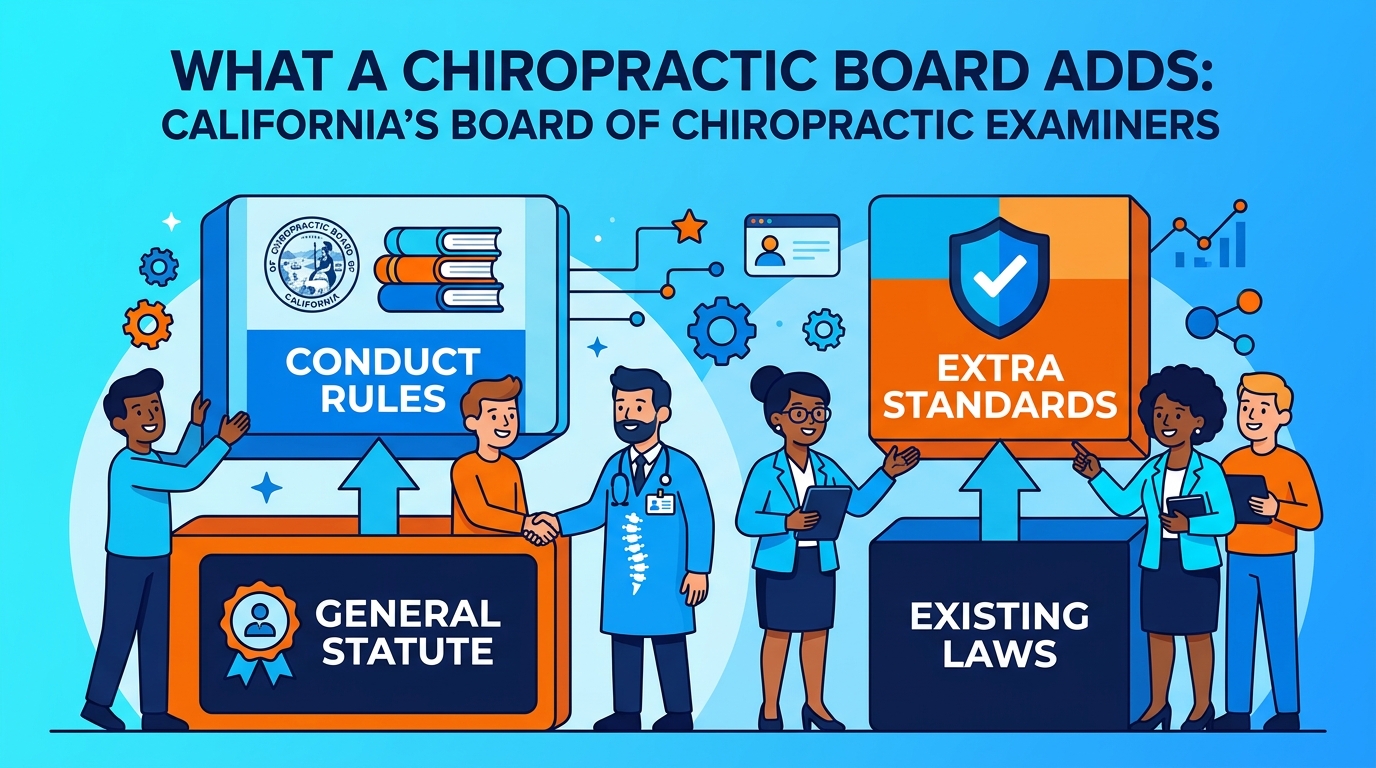
A chiropractic board stacks its own conduct rules on top of the general statute.
In California, Cal. Code Regs. Tit. 16, § 317 lists unprofessional conduct. Two items bear on outcome data:
- Except as may be required by law, unauthorized disclosure of any information about a patient revealed or discovered during examination or treatment.
- Chiropractic advertising that violates section 17500 of the Business and Professions Code.
The board has no choice here. It must take action against any license holder guilty of unprofessional conduct that’s been brought to its attention.
The Board of Chiropractic Examiners regulations add rules on what chiropractors may advertise:
- A chiropractor may advertise the authorized modalities as part of a course of chiropractic treatment.
- A chiropractor may not claim to hold any license other than a chiropractic one, or use the term “physical therapy” in advertising, unless he or she holds that other license.
- A chiropractor may not market or advertise laser use for purposes other than treatment consistent with section 302 and the product’s FDA approval or clearance.
What Happens If You Get It Wrong: Penalties and Discipline
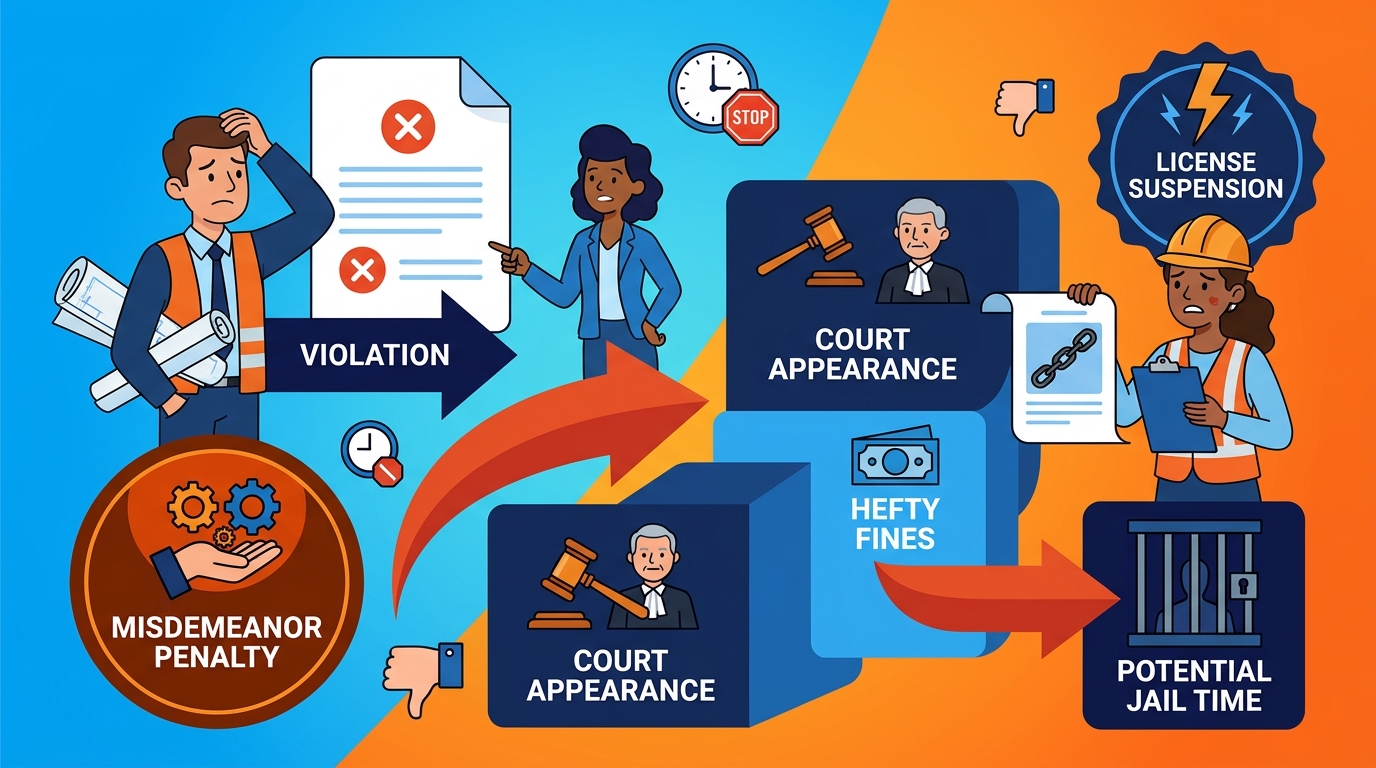
Break § 651 and it’s a misdemeanor. That’s under BPC § 651 for any licensee who violates it.
It’s also good cause for revocation or suspension of the license. Or for other disciplinary action.
Here’s how the California Board of Chiropractic Examiners sees it.
False, misleading or deceptive advertising (317(p)) goes in Category II. So do unauthorized disclosure of patient information and failure to maintain confidentiality (317(r)).
The minimum penalty for Category II is revocation stayed, with 3 years of probation. The maximum is revocation.
The board recommends Category II for violations with a more serious potential for harm. For violations that show greater disregard for chiropractic law and public safety. And for violations that reflect on ethics, care exercised or competence.
The table below sets out the penalties.
| Violation | Classification | Consequence |
|---|---|---|
| Violation of BPC § 651 by a licensee | Statutory penalty | Guilty of a misdemeanor |
| Violation of BPC § 651 by a licensee | Licensing | Good cause for revocation or suspension of the license, or other disciplinary action |
| False, misleading or deceptive advertising; unauthorized disclosure of patient information | Category II violation | Minimum: revocation stayed, 3 years’ probation; maximum: revocation |
| Any disciplinary case | Cost recovery | Board seeks all investigative and prosecution costs up to the hearing |
The Disciplinary Guidelines add two more points.
The board seeks recovery of all investigative and prosecution costs up to the hearing. In all disciplinary cases.
And its position is simple. Revocation should always be an option whenever grounds for discipline exist.
There’s one more piece. Under the FCLB Model Practice Act, boards have the power to publicize all qualifying disciplinary or pertinent actions. They can also collect demographic data about the profession.
How to Publish Outcome Data That Passes Every Body’s Test

Four steps follow from the sources above.
- Use pooled, de-identified figures. Report the group, not the person.
- Keep the substantiation file. Build the claim-by-claim file described in the federal section above before anything goes live.
- Add plain disclosures. Advertising can’t create an unjustified expectation or guarantee a cure. Appropriate disclosures and informed-consent forms can help.
- Have counsel review it on a schedule. Have counsel who know your state’s particular laws review your website and other marketing materials periodically.
Want to build the proof itself? See Proving Chiropractic Outcomes Without Health Records: A Complete Guide.
I think there’s a payoff here beyond compliance.
An aggregate figure with proof behind it gives an AI engine something to quote. A boast like “best in town” just adds another name to a list.
In my view, being the practice an engine points to as its source is worth far more than being one more entry in a directory.
Frequently Asked Questions
Can I publish aggregate outcome statistics without naming any patient?
Yes, if the figure is factual and not misleading. California’s BPC § 651 lets your advertising include any other item of factual information that isn’t false, fraudulent, misleading or likely to deceive. So the test is the figure itself. Don’t leave out material facts. Don’t create false or unjustified expectations of favorable results. Check every number against both before you publish.
Is the FCLB Model Practice Act binding in my state?
No. Not on its own. The FCLB says the act doesn’t represent or purport to be a legal standard in any member jurisdiction. It’s a reference guide for governments, legislatures and licensing boards adopting, amending or writing chiropractic rules. The FCLB’s model advertising language does two things. It lets you accurately state that you’re licensed. And it bars promotional materials that are false, misleading, deceptive or could be misleading. Check your own state’s rules for what actually binds you.
What evidence do I need before I claim my treatment outperforms others?
You need objective scientific evidence. In California, a superiority claim is misleading unless it’s relevant to the service and you can substantiate it that way. The FTC wants competent and reliable scientific evidence behind health benefit or safety claims. Accountable adds that comparative claims often need well-controlled studies. So keep a substantiation file. One entry for each express or implied claim.
Can a patient testimonial substitute for aggregate outcome data?
Not easily. Under the FTCA’s guidelines, a testimonial should reflect what patients will generally achieve. You have to show a significant portion of patients will get similar results. It can only involve a patient you personally treated. It should say results may vary. It must disclose any compensation. And it should be current, meaning within the past few years. Keep the information showing it’s representative of actual practice close at hand.
If an agency writes my outcome page, who is responsible for what it claims?
You are. The agency may be too. Advertising that appears in your name is your responsibility, even if you didn’t create it. The FTC says an advertising agency can also be held legally responsible for misleading claims. Agencies must independently check the information behind ad claims. The advertiser’s word isn’t enough. So ask to see the substantiation.
What can happen to my license if a published claim is found misleading?
Discipline, up to and including revocation. Practice acts let boards act against licensees for false, misleading or unethical advertising. In California, any BPC § 651 violation is good cause for revocation, suspension or other disciplinary action. And under the Board of Chiropractic Examiners’ guidelines, a Category II violation carries a minimum of revocation stayed with 3 years of probation. The maximum is revocation.
Why I Write Outcome Claims as Process Inputs
iTech Valet frames authority-building claims as process inputs. Not guaranteed outputs.
I think a claim written that way is one a board, a professional body and an AI engine can all check.
In my experience, substantiated authority keeps paying off year after year. Unverified claims fade. Or they end up in front of a board.
The iTech Valet Service Plans & Pricing page explains how the work is done.
Want to see where your practice stands today? Run My AI Visibility Check.