
The Search Landscape Already Moved Past the Click
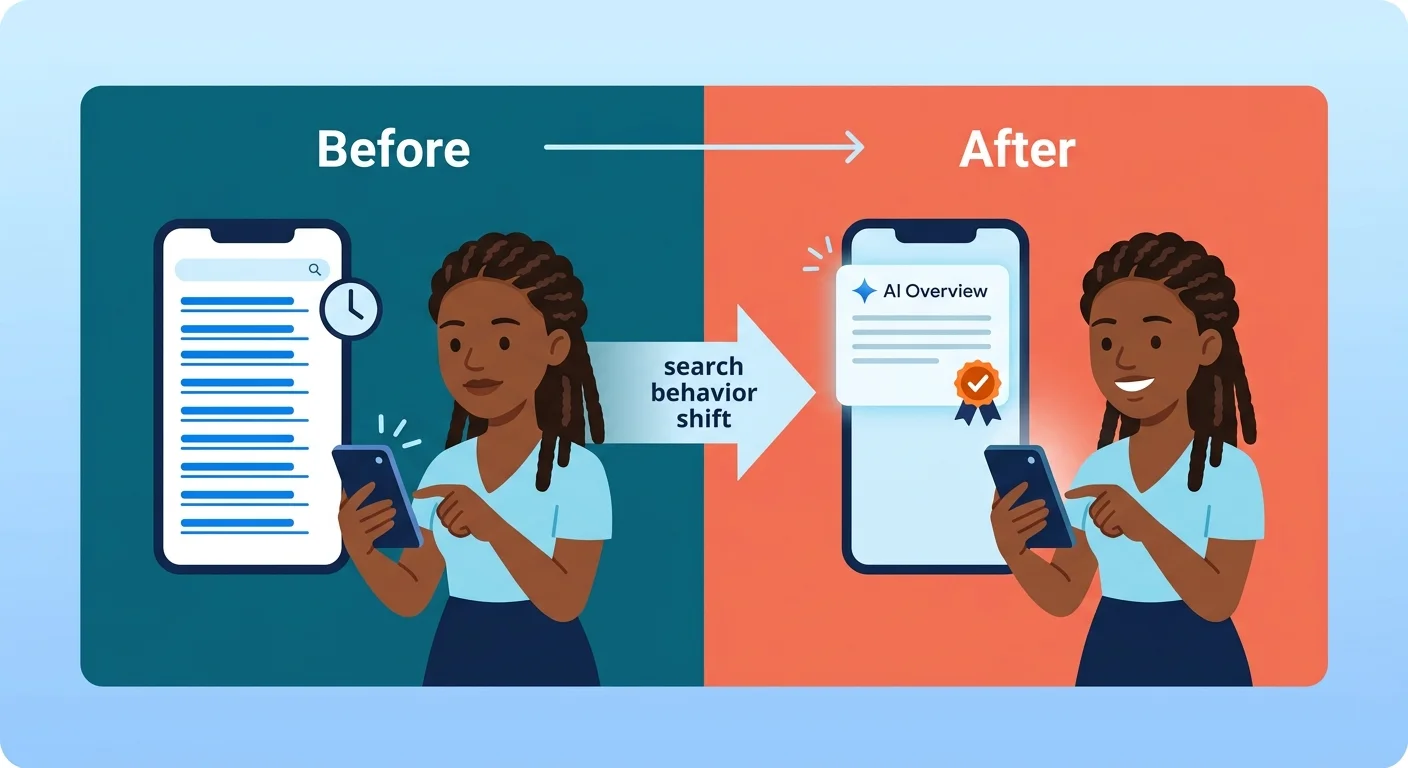
Local search already crossed a line most practices never noticed. AI Overviews showed up in 57% to 80% of local business queries across three major US cities and six industries — an average appearance rate of 68%, per published industry reporting.
And that range covers healthcare right alongside every other local category tracked. So a patient hunting for a nearby provider is now more likely than not to get a generated summary before a single link even loads.
Here's the mechanism most practices misread: they treat this shift as traditional search optimization wearing a new interface. Rankings stopped predicting who gets cited the day generated answers replaced link lists as the default result. A page can sit high on a results page and still never surface inside the answer an AI system actually hands the patient — the two systems pick sources by different rules, and why one method still yields zero AI visibility spells out why that gap keeps growing.
The way patients find providers didn't drift — it flipped. Zero-click search isn't a passing trend riding shotgun next to standard results. It's the new default for a big share of queries, especially on mobile, which is exactly where most patients start looking for care.
What Zero-Click Search Authority Infrastructure Actually Is
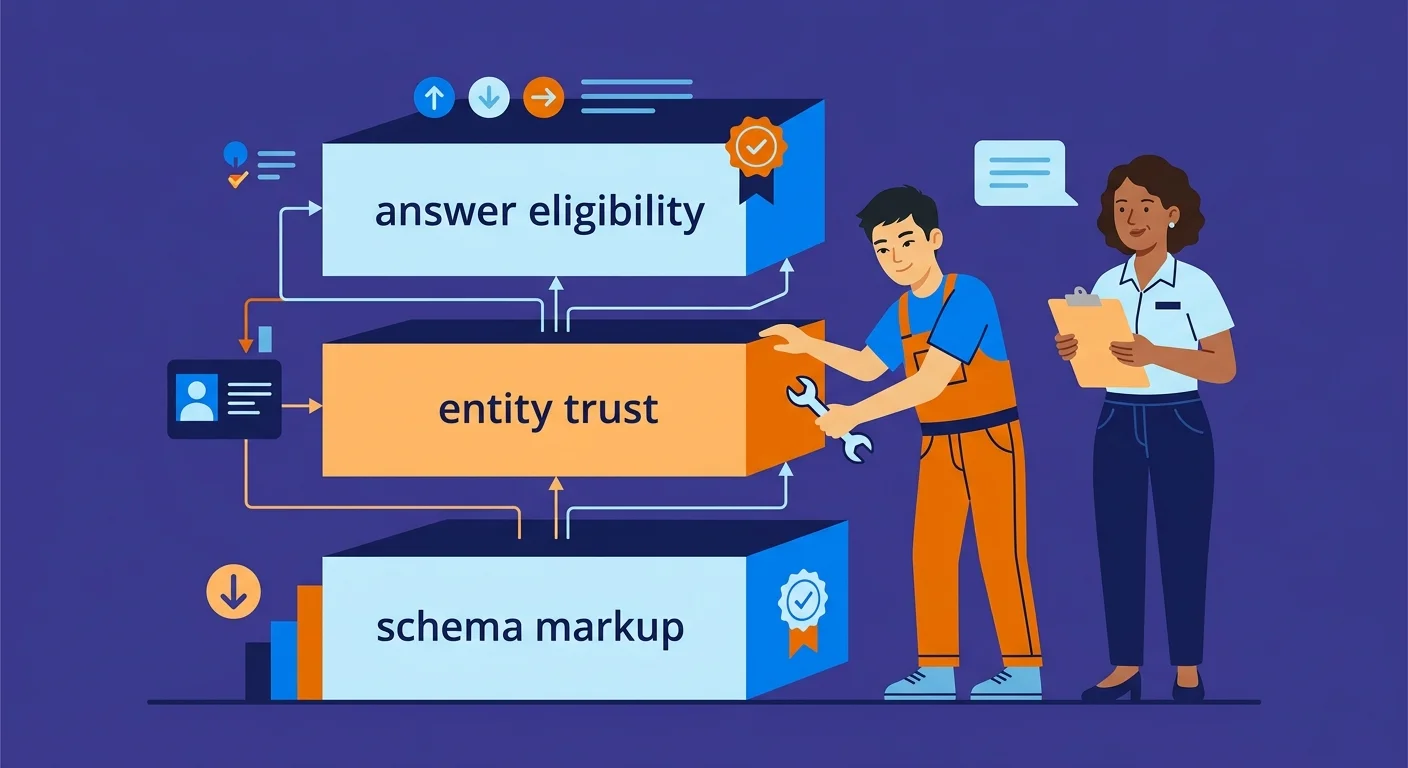
So what is Zero-Click Search Authority Infrastructure, really? It's the permanent, machine-readable assets a practice builds to become the definitive answer for its specific services in its own backyard. This isn't a campaign with a start date and an expiration date.
Here's the thing — think of this infrastructure in layers, not tasks. Each layer pulls its own weight: one makes the practice legible to machines, the other makes it trustworthy to them.
And the last section already proved the stance: being the cited source beats being a listed address. Position chasing belongs to the era the market just left. So the infrastructure a practice owns now matters more than the position it once chased.
The Machine-Readable Layer
The first layer is structural. Structured data markup spells out a practice's services, credentials, and location in a format machines can read without guessing.
But that markup only earns its keep when it's complete. Per Google's documentation, pages with properly implemented structured data markup only qualify for enhanced display in Google Search when every required property for an object is present.
A partial schema block doesn't earn a partial result. It just gets skipped — the way an incomplete form gets rejected instead of processed halfway.
The Entity Trust Layer
The second layer is entity trust. This is where a generative engine decides whether the practice named in that markup is actually worth citing.
Now, a practice can build a technically flawless schema block and still get skipped if nothing beyond the markup confirms its standing. That gap between what a page says and what an engine believes is exactly what the retainer model was never built to close — a failure why traditional retainers stall on this exact gap digs into.
Trust signals compound in a way structured data can't manage on its own. A complete profile, consistent credentials, and reviewed experience all feed the same judgment an AI system makes before it will name a practice out loud.
Why Traditional Search Optimization Retainers Fail the Zero-Click Test
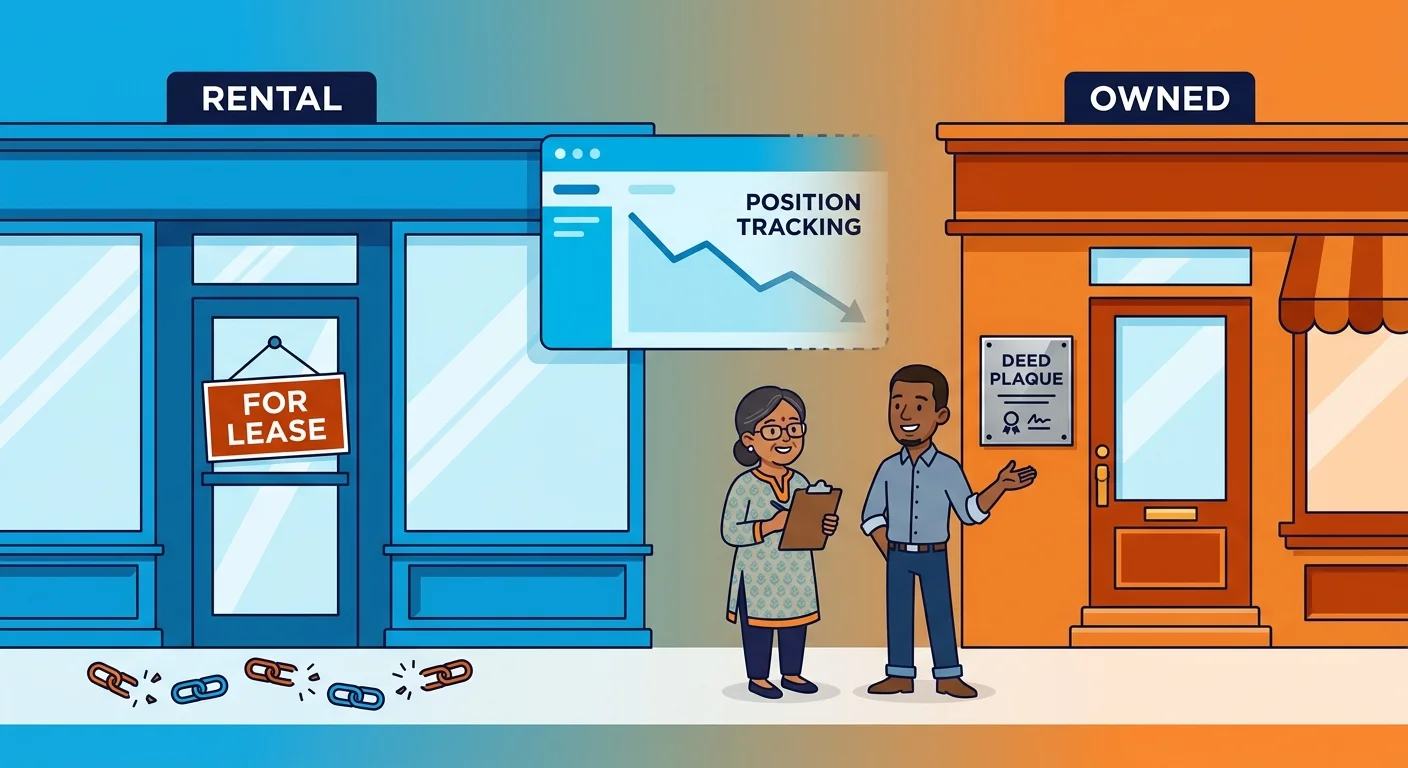
Cheap retainers sell a promise the current search environment can't keep. They lock a practice into a monthly cycle of keyword-targeted articles and position tracking — a machine built for a world where every query still ended in a list of links.
That world isn't the one a patient searches inside anymore. So the retainer keeps billing for a mechanism the market already left behind.
Here's the failure in plain terms: a rented tactic can only chase a ranking, and a ranking no longer decides who gets cited. For a local practice, being the answer now beats being a link — which means the retainer is measuring the wrong outcome by design.
Why Keyword Position Tracking Stopped Predicting Visibility
Keyword position tracking was built to answer one question: where does this page sit in the ranked results. And that question assumes a patient will scroll a list, weigh the options, and click.
But a generated answer skips the list entirely. A page can hold a top spot under the old method and still never surface inside the summary an AI system reads back to the patient — because the two systems aren't scoring the same thing.
So a report showing improved keyword position tracking can sit right next to a practice generative engines never cite. Position and citation quietly became two separate scoreboards, and only one still reflects what the patient sees first.
Why Acquiring Inbound Links Stalls Inside an Answer-First System
Acquiring inbound links was the retainer's other core deliverable — built on the logic that more links pointing at a page meant more authority handed to it. That logic held as long as authority was measured by position in a list.
Now the system measuring authority has changed its inputs. An answer engine weighs structured data, profile completeness, and trust signals before it ever considers who linked to a page — a shift what actually qualifies a practice to be cited as an AI-sourced answer walks through.
That doesn't mean inbound links vanished as a signal. It means they stopped being the deliverable that decides whether a practice gets cited — which is exactly the deliverable most retainers still bill around.
How the Rented-Tactic Model Fails Under Measurement
Put the two tactics together and the retainer model fails a simple measurement test. It optimizes for a scoreboard the market stopped using to decide who gets shown.
The monthly invoice for keyword-targeted articles and acquired links still arrives right on schedule. But the citation the practice actually needs doesn't arrive with it, because nothing in that invoice builds a permanent, machine-readable asset.
The citation never checks the scoreboard the retainer reports on. A rented tactic renews every month and produces nothing that survives the renewal — while the infrastructure a practice owns keeps working long after the invoice stops.
What Determines Whether a Practice Gets Cited
So what actually decides whether a generative engine cites one practice over another? Not the factors a rented retainer bills for. The determinants are measurable, and they live entirely inside the infrastructure a practice owns — not the tactics it leases month to month.
Owned infrastructure stays on the books. Rented placement walks out the door with the last invoice, and no monthly campaign changes that arithmetic.
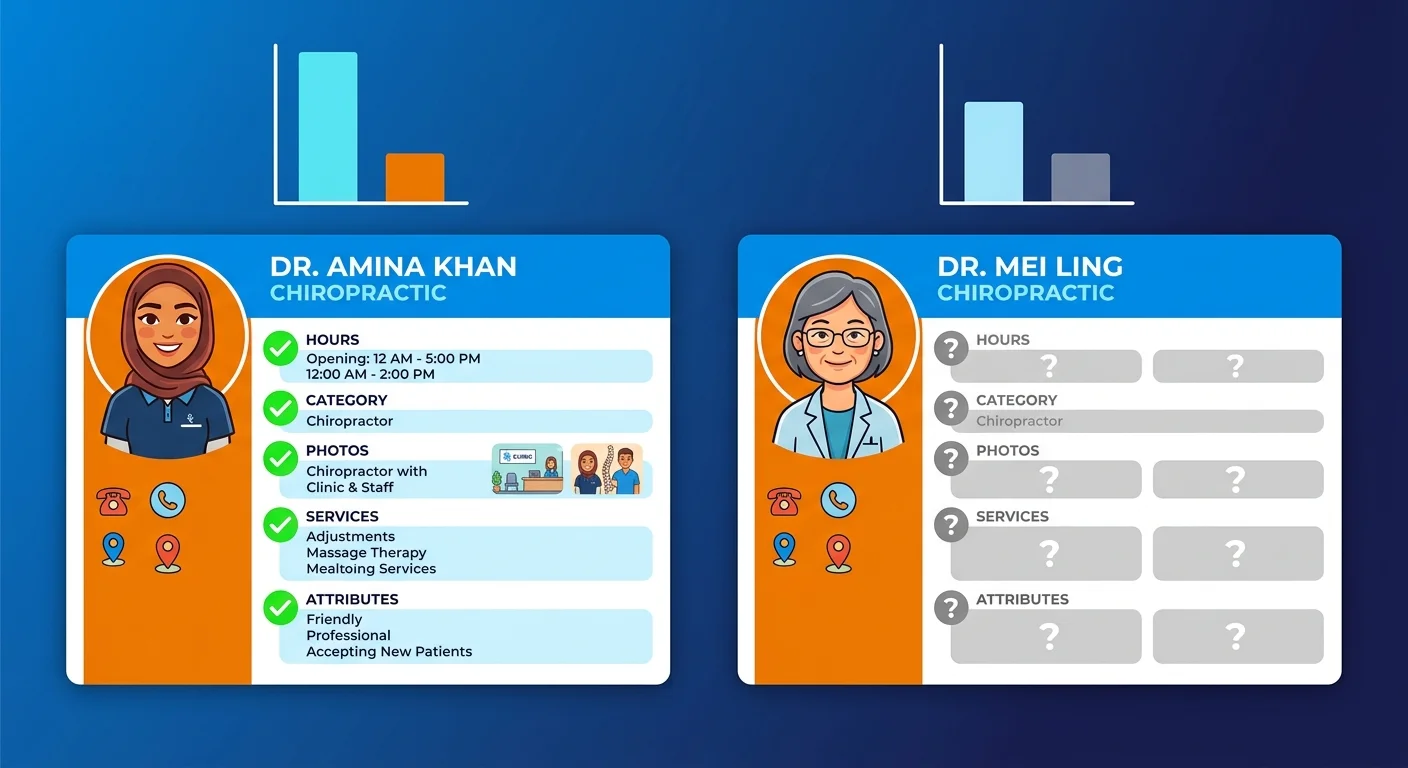
Two levers carry most of the weight: structured data completeness and Google Business Profile completeness. Both are measurable, both are documented, and both explain far more about who gets cited than any position in a list of links ever did.
| Signal | Practices With It | Practices Without It | Measured Outcome |
|---|---|---|---|
| Google Business Profile completeness (all eight basic criteria) | 42.7% of profiles ranking #1 | 17.2% of profiles ranking #11 or lower | Completeness functions as a measurable ranking signal, not a formality |
| Article and BreadcrumbList schema markup | Cited 2.3× more often in AI Overviews | Comparable unstructured pages without schema markup | Structured pages outperform unstructured ones after controlling for domain authority |
| Endorsement from health professionals or health and regulatory organizations | Higher stated trust in AI-generated recommendations | Recommendations lacking any professional or regulatory endorsement | Trust in AI-sourced medical and wellness guidance rises with third-party endorsement |
Structured Data as a Qualifying Signal
Here's the edge structured data actually buys you. Pages carrying Article and BreadcrumbList schema markup get cited 2.3× more often than otherwise-comparable pages without it, based on a Google AI Overviews sample from April 2026.
That gap isn't a rounding error. It's the difference between a practice a generative engine can parse with confidence and one it has to guess about — and guessing loses the citation almost every time.
Google Business Profile Completeness as a Qualifying Signal
Now look at what happens inside Google Business Profiles specifically. Only 42.7% of profiles ranking #1 meet all eight basic completeness criteria, against just 17.2% of profiles ranking #11 or lower, per published business listing data.
So completeness itself works as a ranking signal, not a formality. A profile kept current as a permanent asset outperforms one treated as a one-time setup task, and comparative citation research shows the same pattern holding across schema markup. Building and maintaining both is exactly what our authority infrastructure services are structured around — work that keeps paying after setup ends, unlike a retainer that stops the day the check does.
Building the Infrastructure: The Operational Sequence

So those two layers don't get built at random. There's a right order, and skip it and you waste the work you already did.
Entity data first. Structured data and profile completeness second. Content expansion last — and only once the first two hold, or every new page inherits the same gap an engine already refuses to close.
| Step | What Gets Built | Why the Order Matters |
|---|---|---|
| Entity Consistency | The practice's name, credentials, location, and services stated identically across every platform where they appear | An engine has to identify the practice before it will trust anything published under its name |
| Structured Data Audit | A full review of existing schema markup against every required property for each object type | A markup block missing one required property gets skipped entirely, so gaps must close before new work compounds on top of them |
| Profile Completeness | Every field inside the Google Business Profile filled in and kept current rather than set once and left alone | Completeness itself functions as a standing signal, not a one-time setup task, so it has to be locked before content expansion begins |
| Content Expansion | New pages and keyword-targeted articles published on top of a verified entity and structured data foundation | Content built on an unverified foundation inherits the same gap an engine already refuses to close, wasting the work instead of compounding it |
| Asset Type | Owned or Rented | Decays Over Time |
|---|---|---|
| Structured data markup (schema) | Owned | No — stays accurate as long as it is audited and kept current |
| Google Business Profile completeness | Owned | No — decays only if fields are left stale or unmonitored |
| Keyword position tracking reports | Rented | Yes — resets to zero the moment the retainer stops |
| Acquired inbound links | Rented | Yes — value fades as the tactic loses relevance to citation |
| Entity data consistency (name, credentials, location, services) | Owned | No — a one-time correction holds unless the practice itself changes |
Sequencing Entity Data Before Content Expansion
Here's why order comes before anything else: an engine can't trust a practice it can't first identify. Entity data — the practice's name, credentials, location, and services stated the same way everywhere they show up — is what makes that identification possible.
But inconsistent entity data does something worse than get ignored. It actively confuses the matching a generative engine runs before it'll name any source, and confusion reads as risk.
So this step lands before a single new article gets published. A practice with clean entity data and thin content still beats one with heavy content sitting on messy entity data, because the engine has to trust the source before it cites the page.
Auditing Structured Data Before Publishing New Content
Now the second step: auditing the structured data that already exists, before adding more of anything. Most practices assume their markup works simply because someone installed it once, ages ago.
That assumption is exactly what the earlier gap already exposed. A schema block missing a required property doesn't partially qualify — it gets skipped entirely, the way an incomplete form gets rejected instead of processed halfway.
So an audit checks every required property against what's actually published, not what was meant to be. Only once that audit closes every gap does new content start compounding the Zero-Click Search Authority Infrastructure already in place — instead of quietly stacking pages on a foundation that was never really finished.
Frequently Asked Questions
The rent-versus-own line always draws the same questions from a practice hearing it new. So here are the mechanical answers, stated flat.
How is Zero-Click Search Authority Infrastructure different from traditional search optimization?
Traditional search optimization rents attention through recurring tactics that die the second the check stops. Zero-Click Search Authority Infrastructure is the opposite — an owned, permanent asset built from entity data, structured data, and profile completeness that keeps working with no monthly renewal attached to it.
What counts as structured data markup for a chiropractic practice?
The core types are Article schema, BreadcrumbList schema, and service-specific structured data documenting a practice's credentials and offerings. And every required property has to be there, because an incomplete block gets skipped whole, not credited in part.
How does Google Business Profile completeness get measured?
Completeness gets measured against a fixed set of basic ranking criteria — categories, hours, services, and the rest of the profile fields. Profiles that hit every criterion consistently beat half-filled ones on ranking position, the exact pattern this article already laid out earlier.
How does a generative AI engine decide which practice to cite in an answer?
An engine weighs how confidently it can identify a practice before it'll even think about citing it. Consistent entity data, complete structured data, and trust signals like credentials and reviewed experience all feed that confidence call at once.
What happens to a practice's visibility when a search platform changes its AI answer algorithm?
Here's the counter-intuitive part: owned infrastructure survives an algorithm change better than any rented tactic does. Entity data, structured data, and profile completeness are foundational signals every generative system still needs, no matter how its ranking logic gets rewired.
How do patient reviews factor into an AI-generated answer summary?
Reviews work as a trust signal an engine reads right alongside credentials and professional endorsements before it names a source. A practice with consistent, current reviews reinforces the same confidence call that structured data and entity accuracy already build.
Where This Leaves the Practice
So picture the practice still writing that check. Month after month, it's paying rent on a scoreboard the market already retired. The rent never stops, and it never converts into a single thing the practice keeps once the invoice does.
Owned infrastructure plays by different rules. Entity data held consistent, structured data completed and audited, a Google Business Profile kept current instead of abandoned after setup — none of that expires on a billing cycle. It compounds quietly, whether or not one more article ever gets published on top of it.
So the question was never whether generative search changed. It did, and no pile of keyword-targeted articles or acquired links drags it back. The only question left is which side of that rent-versus-own line you're still standing on — and the fastest way to find out is to see what a generative engine already says when it's asked about your practice by name: check your practice's current AI visibility.