
A credible chiropractic case report should include a complete description of the patient’s demographics and presentation, the clinical entity targeted, the intervention applied, and documented outcome measures. The intervention section should detail the treatments, techniques, dose, and the number, frequency and duration of visits. The outcome section should report both patient-reported subjective improvements and objective clinical measurements. The sample consent form states the investigator must not disclose identifying protected health information such as name, date of birth or medical record number.
What Makes a Case Summary Credible in the First Place?
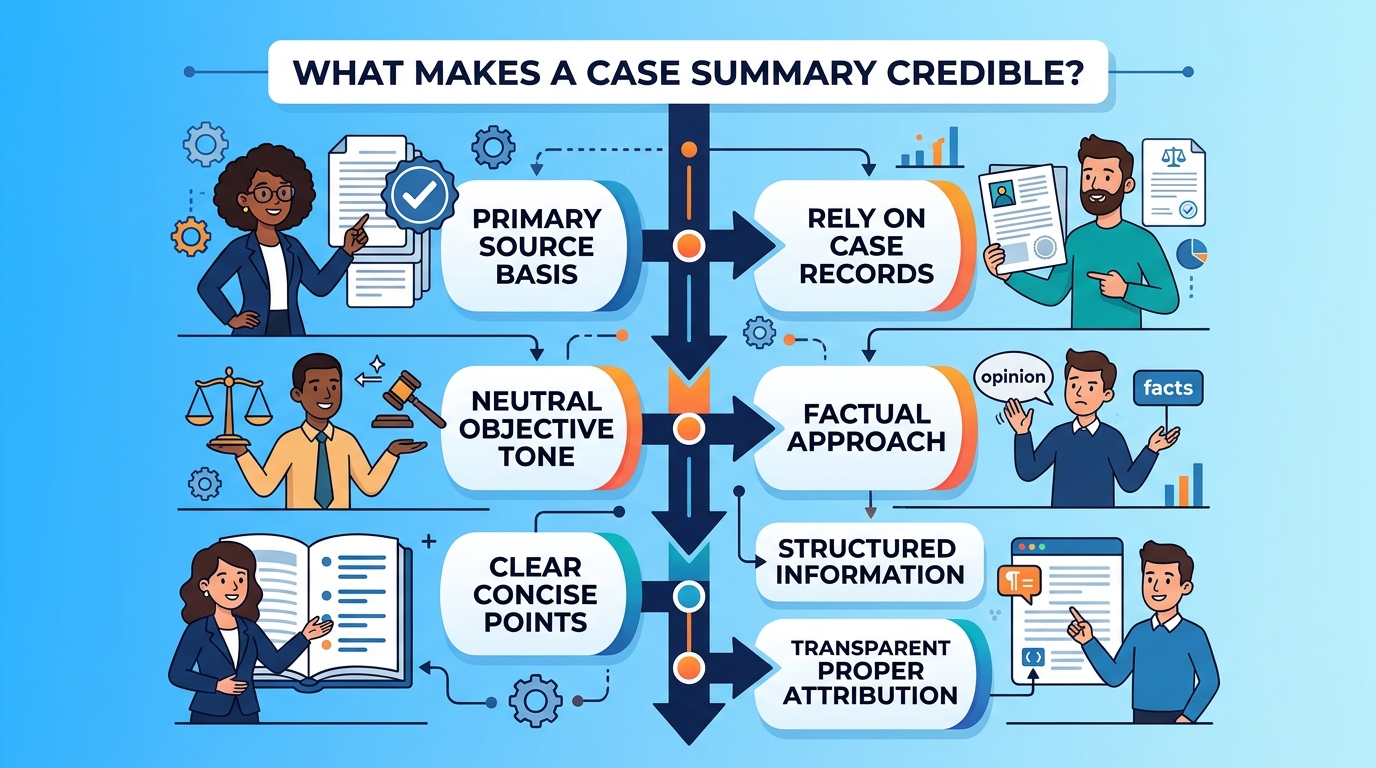
Here’s what most people miss.
In my view, a warm thank-you note tells an AI engine very little. What it reads is structure. And the structure of a credible report is specific.
The Journal of Contemporary Chiropractic lists four parts in Constructing a Credible Case Report: Assembling Your Evidence.
First, a credible report describes the patient’s demographics and clinical presentation. Second, it fully describes the clinical entity the chiropractor identified as the target for clinical intervention.
Third, it describes the intervention in full. Fourth, it documents outcome measures.
Scale is part of the definition.
Chiropractic & Manual Therapies calls case reports uncontrolled descriptions of the clinical course of one to five patients. The Journal of Sports Chiropractic & Rehabilitation adds that a case report is meant to describe and discuss a clinical event. Not to prove anything.
The table below sets a credible case summary beside promotional hearsay. Four elements: clinical entity, intervention detail, outcome reporting, and patient identity.
| Element | Credible Case Summary | Promotional Hearsay |
|---|---|---|
| Clinical entity | Clinical entity targeted for intervention fully described | Clinical entity not described |
| Intervention detail | Treatments, techniques, dose, and number, frequency and duration of visits stated | No information on the primary treatment |
| Outcome reporting | Patient-reported outcomes and clinical measurements both reported | Patient praise with no clinical measurements |
| Patient identity | Name, date of birth and medical record number not disclosed | Testimonial used to promote the practice without written authorization |
What Does the Method Section Need to Show?
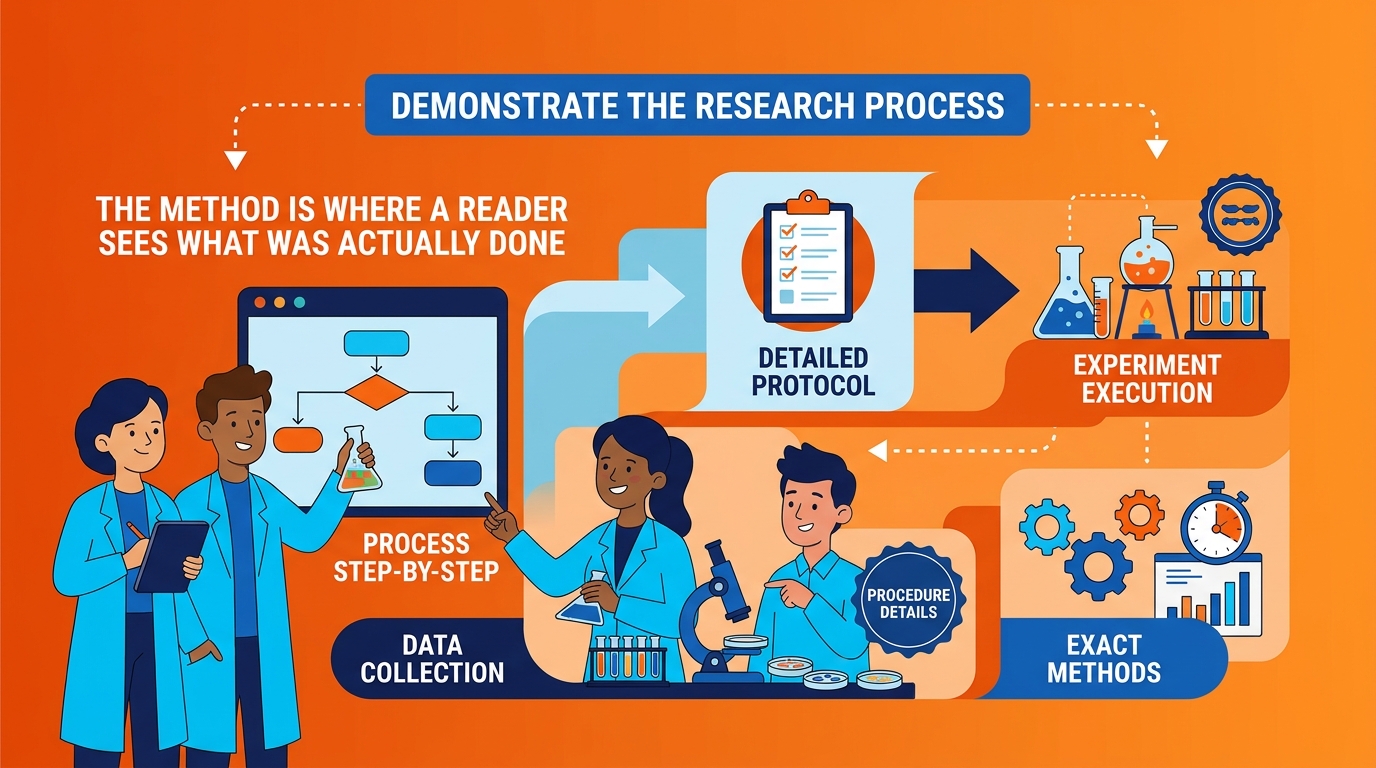
The method is where a reader sees what was actually done.
The Journal of Contemporary Chiropractic says the intervention section should describe the treatments provided. That includes the techniques used and the dose. It also includes the number, frequency, and duration of visits.
This detail gets left out a lot.
In the Journal of Medical Case Reports, the authors point to one study of roughly thirteen hundred (1316) case reports from four peer-reviewed emergency-medicine journals. More than half gave no information on the primary treatment. That’s information that would have increased transparency and replication.
That study looked at emergency medicine, not chiropractic. But in my view the lesson holds for any case summary.
If the method is missing, the reader has nothing to check.
The Journal of Contemporary Chiropractic article A Novel View of Case Reports in Chiropractic Clinical Research: Barriers and Solutions for Clinicians covers the barriers clinicians face in writing case reports. It also covers ways past them.
What Counts as a Measurable Outcome?
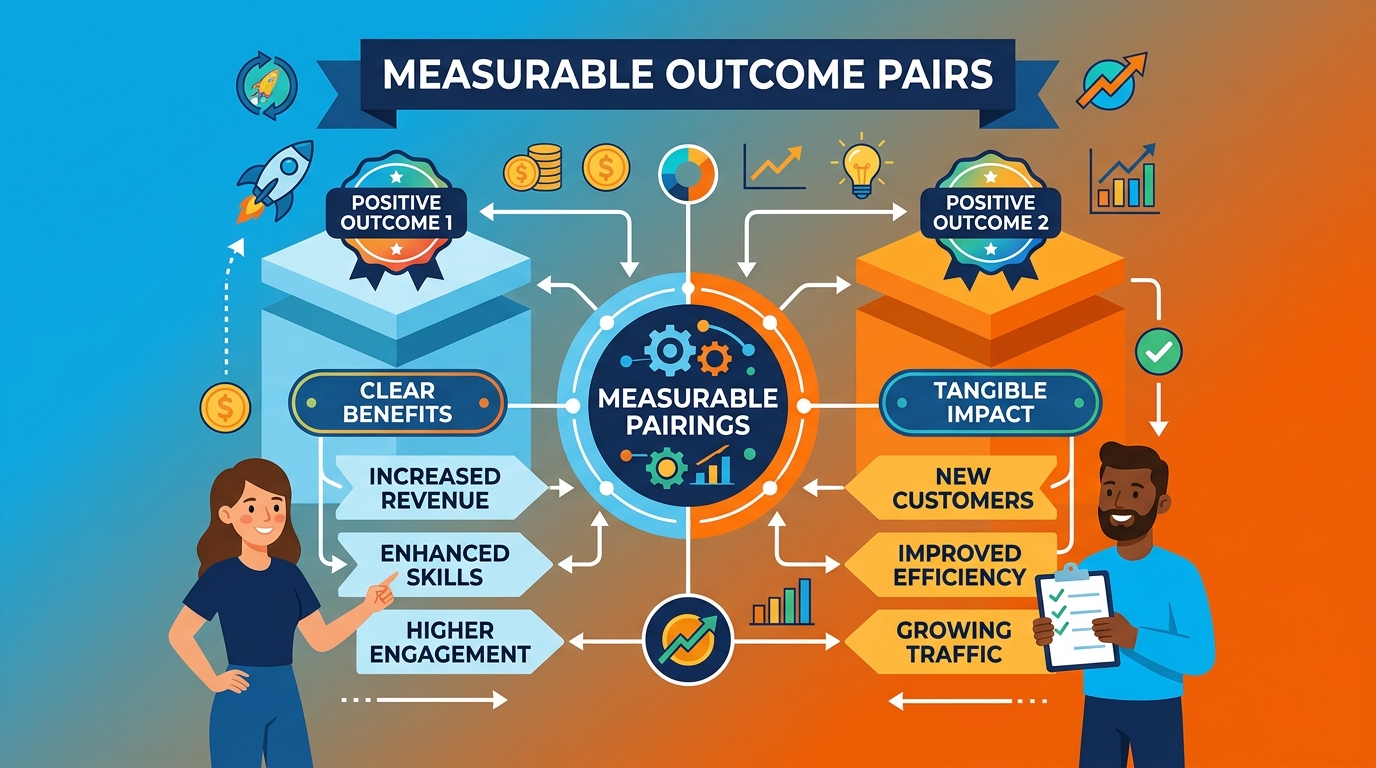
A measurable outcome comes in pairs.
The Journal of Contemporary Chiropractic says to report the patient’s response to care in two ways. One is subjective improvement. That’s what the patient reports. The other is objective findings. Those are clinical measurements.
Chiropractic & Manual Therapies says treatment-focused case reports document improvement in a patient’s condition as objectively as possible.
The review Chiropractic case reports: a review and bibliometric analysis covers this in more detail.
Here’s what separates a measure from a vague claim. I think it’s repeated readings.
The Journal of Sports Chiropractic & Rehabilitation describes the simplest time series design, the “AB case report.” It takes at least three measurements before care, the A phase. Then at least three measurements during care, the B phase.
How Should the Patient’s Voice Be Included Without Becoming an Ad?

The patient’s words belong in a case report.
The Journal of Contemporary Chiropractic says a patient testimonial section is not free advertising space for a clinic. It’s a chance for the patient’s voice to be heard side by side with the clinical findings.
The CARE group gives the patient’s view weight too.
In the Journal of Medical Case Reports, its authors say they advocated patient-reported outcomes and experiences whenever possible.
The patient’s voice sits next to the findings. It doesn’t stand in for them.
How Do You Remove Identifying Details Without Losing Credibility?

Start with consent. And start early.
The Journal of Contemporary Chiropractic says to get consent from the patient before you begin writing. Do it as soon as possible.
Next, know what must stay out.
The sample consent form says the investigator must protect the patient’s privacy. It must not disclose protected health information that identifies the person, such as name, date of birth, and medical record number.
Journals look at this, too.
The Journal of Medical Case Reports notes that medical journals often ask authors to address three things: competing interests, de-identification of patient data, and ethics committee or IRB approval if obtained or needed.
The step-by-step process for removing identifying details is set out in Building an Anonymized Proof Profile: A Step-by-Step Walkthrough.
What Structure Do Recognized Reporting Standards Require?
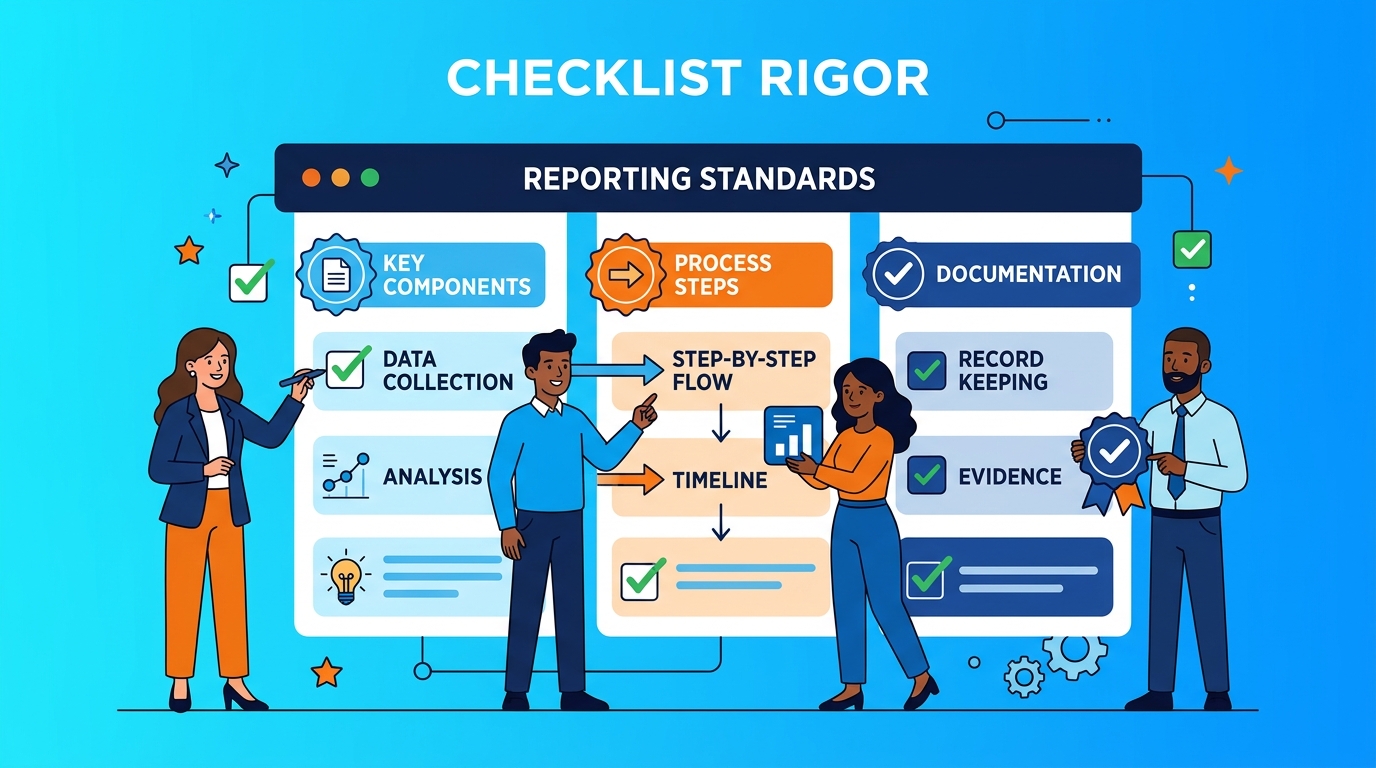
A checklist is one of the plainest signs of rigor. That’s what I think.
The CARE guidelines came from a consensus process with 27 participants. The result was a 13-item checklist for case reports. The Journal of Medical Case Reports describes it in The CARE guidelines: consensus-based clinical case reporting guideline development.
Under CARE, a case report tells a story in a narrative format.
The story includes the presenting concerns, clinical findings, diagnoses, and interventions. It also includes outcomes, with any adverse events, and follow-up.
The CARE Checklist Items
The main items on the checklist are:
- Title
- Keywords
- Abstract
- Introduction
- Patient information
- Clinical findings
- Timeline
- Diagnostic assessment
- Therapeutic interventions
- Follow-up and outcomes
- Discussion
- Patient perspective
- Informed consent
CARE recommends a timeline, shown as a table or a figure. It gives the specific dates and times of the important parts of the case.
Consent and Patient Perspective
Two checklist items deal with the patient: patient perspective and informed consent.
CARE says consent becomes informed when the patient or a relative reads the case report and approves its contents.
What Are the Common Signs of Promotional Hearsay?

Promotional hearsay reads like marketing. Here are the red flags the sources point to.
- Testimonials used as promotion. Paubox explains that patient testimonials used to promote a practice fall within HIPAA’s marketing definition. They need written authorization.
- No reporting standard behind the story. The Journal of Medical Case Reports says case reports written without guidance from reporting standards aren’t rigorous enough to guide clinical practice. They can’t inform clinical study design either.
- A title that sounds bigger than the case. The Journal of Sports Chiropractic & Rehabilitation says titles shouldn’t suggest a large-scale trial was done. That misleads the reader.
How Do AI Systems Judge This Kind of Evidence?

A research paper on arxiv.org tested how large language models judge authority.
Adding webpage text generally made the judgment worse. The authors say this shows authority is not the same as textual style, fluency, or narrative richness.
Here’s why answer engine optimization is its own discipline. In my view, it isn’t old-school search work with fresh labels.
Chasing keyword placements and inbound links misses what an engine is weighing. Can it make sense of a business? Can it believe what the business says?
That takes facts it can check. Laid out clearly.
The same paper tested a second idea.
In a retrieval-augmented generation experiment, filtering the retrieved documents by authority markedly boosted final answer accuracy. It also mitigated misguidance from untrustworthy information.
This is also why sheer output loses.
An engine leans toward the practice whose facts it can follow. Not the one publishing most often. One well-ordered case summary does more than a flood of vague testimonials.
I’d rather be the source an AI cites than one more glowing address on a list. A source can be checked. A listing can’t.
The page Common Mistakes That Make Case Studies Look Fabricated to AI shows what weakens a case study.
What Are the Known Limits of a Single Case Summary?
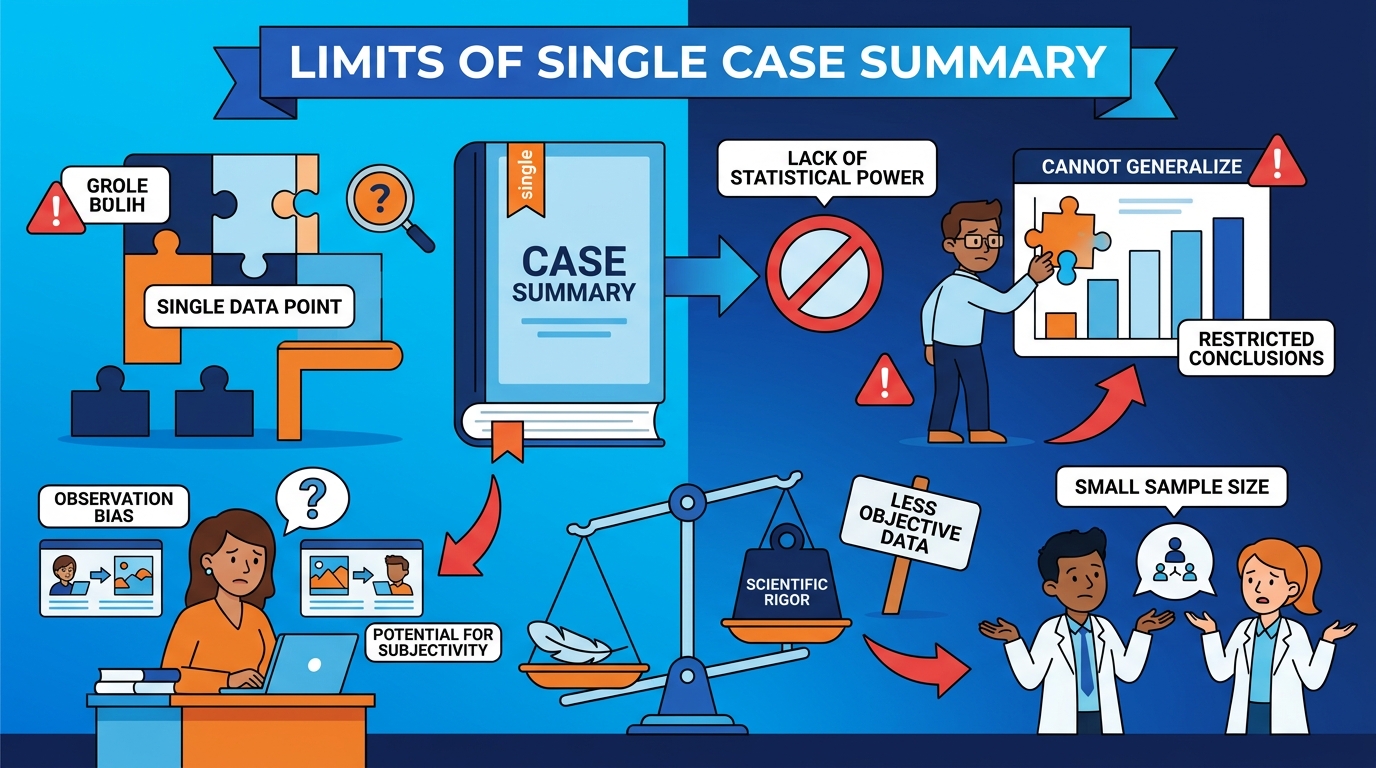
A single case summary has real limits. They belong in plain view.
Where it sits. The Journal of Contemporary Chiropractic describes the familiar evidence pyramid.
Case reports sit above test tube research, animal research, and opinions and editorials. They sit below case control studies, cohort studies, and RCTs. At the top are systematic reviews and meta-analyses.
What it cannot do. The same journal calls case reports and case series low-level evidence.
They can’t support causal conclusions. They’re open to publication bias. They can’t be generalized.
A case series doesn’t allow more generalization than a well-conducted single report. The exception is when it speaks to a proposed prevalence or the serial nature of a disease.
Why causes are hard to prove. The CARE authors, in the Journal of Medical Case Reports, say that working out causality is a challenge for case reports. Even when guidelines are followed.
The Journal of Sports Chiropractic & Rehabilitation, in Writing Patient Case Reports for Peer-Reviewed Journals (Green & Johnson), names limits built into the design:
- Patients are managed in a non-controlled setting.
- A case report can’t be generalized beyond the case to a larger group of patients.
- The natural progression of a disease or dysfunction may explain the results.
It adds that some disorders may undergo spontaneous remission or phases of exacerbation and remission.
And one patient’s results can never show that a management strategy will work for other patients with the same condition.
A common fault. The same journal says one fault of retrospective case reports is simple.
Authors do the best job they can managing a case. But they may not use the best outcome measures available, because they don’t know what they are.
For a plain look at proof when health records aren’t on hand, see Proving Chiropractic Outcomes Without Health Records: A Complete Guide.
Frequently Asked Questions
Can a single patient case summary prove a treatment works?
No. Never.
The Journal of Sports Chiropractic & Rehabilitation says you can never conclude from one patient that a management strategy will work for other patients with the same condition. A case report is meant to describe and discuss a clinical event. Not to prove anything.
The CARE authors add that working out causality is a challenge for case reports. Even when guidelines are followed.
Does a case summary need a title that makes it sound like a clinical trial?
No. The Journal of Sports Chiropractic & Rehabilitation says writers shouldn’t use titles that suggest a large-scale trial was done. Those titles mislead the reader.
What should happen before a case summary is written?
Get consent from the patient. First.
The Journal of Contemporary Chiropractic says to do it before you begin writing, as soon as possible. CARE says consent becomes informed when the patient or a relative reads the case report and approves its contents.
How many measurements make a single-patient outcome convincing?
At least three before care and at least three during care.
The Journal of Sports Chiropractic & Rehabilitation describes this as the simplest time series design, the AB case report. That’s the minimum for that design.
Why do AI tools seem to discount polished, story-like testimonials?
Because polish isn’t authority.
A study on arxiv.org found that adding webpage text generally made large language models’ authority judgment worse. The authors say this shows authority is not the same as textual style, fluency, or narrative richness.
Does using a patient testimonial require special authorization?
Yes, when it’s used to promote a practice. Paubox says such testimonials fall within HIPAA’s marketing definition. They require written authorization.
Build the Proof Profile Once, and Own It
A credible case report describes the patient and the presentation. It describes the clinical entity and the intervention in full.
It documents outcomes with both patient-reported and objective measures. It keeps name, date of birth, and medical record number out.
In my view, credibility comes from structure, named specifics, and checkable detail. Not from polish or volume.
The Journal of Contemporary Chiropractic adds one more test.
To be effective, a case report must be novel, have educational value, or both.
As I see it, a case summary you’ve built and own keeps earning trust year after year. Paid attention stops the moment the payments do.
That’s why I treat it as an asset, not an expense.
How the work is done is laid out on the iTech Valet Service Plans & Pricing page. To start turning your own cases into a proof profile, Run My AI Visibility Check.