
A study by Wix and Peec AI found that query intent, which is what a person is trying to find out or do, predicted which type of content AI answers cite better than either the industry or the AI model used. For health and wellness, articles were the most cited content type at about 20 percent (19.66%), and product pages came next at about 15 percent (14.77%). The study’s advice for health and wellness is to invest heavily in authoritative articles. A second study recommends online health campaigns about low back pain that explain the causes, the red flag symptoms to watch for, and when to seek advice from a healthcare professional.
What Gets a Page Cited: Matching the Question Patients Ask
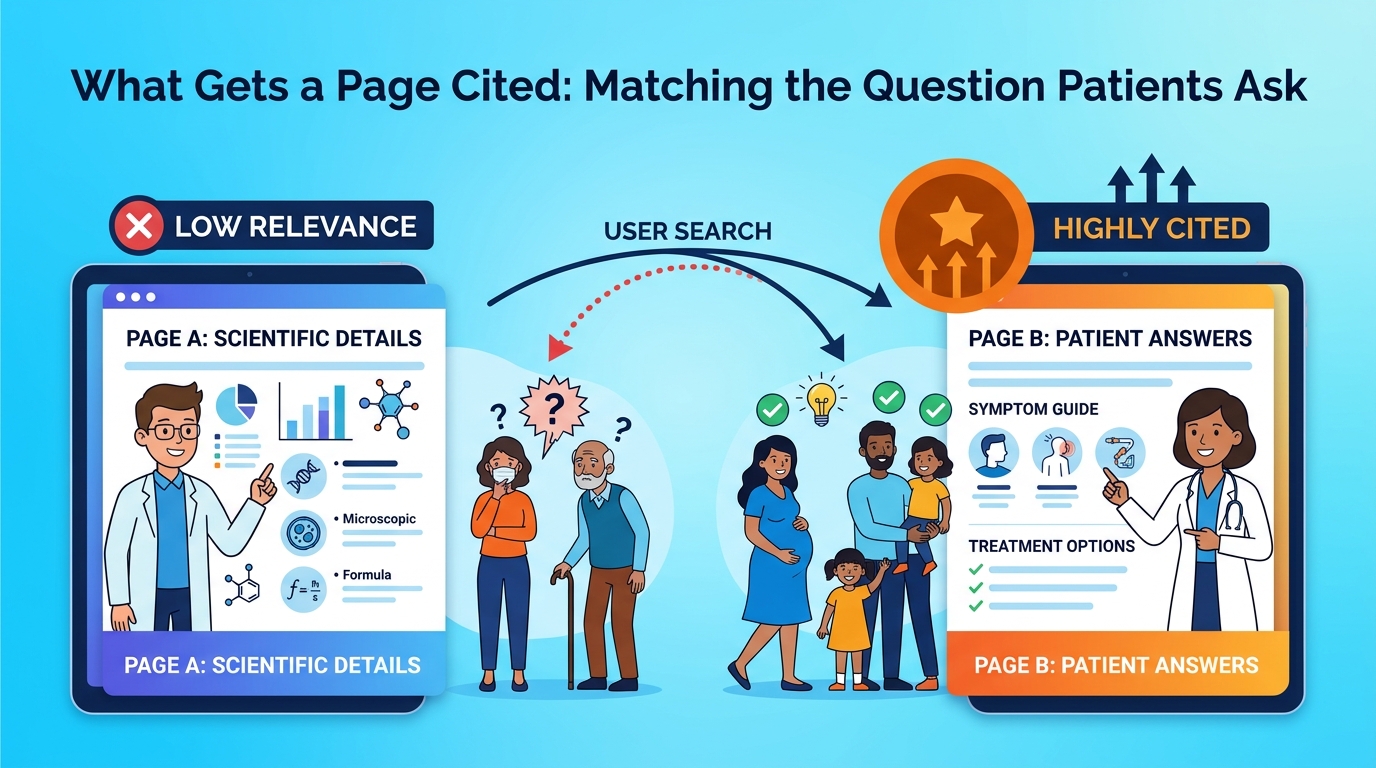
Take two pages on the same website. One has a title and paragraphs that match the question a person asked. The other doesn’t. The first one gets cited more. According to a study on arxiv.org, that’s the one way content matters inside a single site. The same study says FAQ (frequently asked questions) blocks, structured data (labeled facts about the page), summary boxes, and page speed appear effective only across websites.
The high-influence pages share some traits. They tend to be longer, more structured, and closer in meaning to the question. They’re also richer in evidence an AI can lift straight out of the page: definitions, numerical facts, comparisons, and procedural steps.
So I don’t count posts. I’d take one clear, factual page that answers a real patient question, in a sensible order, over a month of filler. I build for an AI that has to grasp your practice’s information easily. Not for a publishing calendar.
The pieces around this work are laid out in Setting Up a Full AI Authority Engine: How the Pieces Fit Together.
Which Content Types AI Answers Cite, by Query Intent
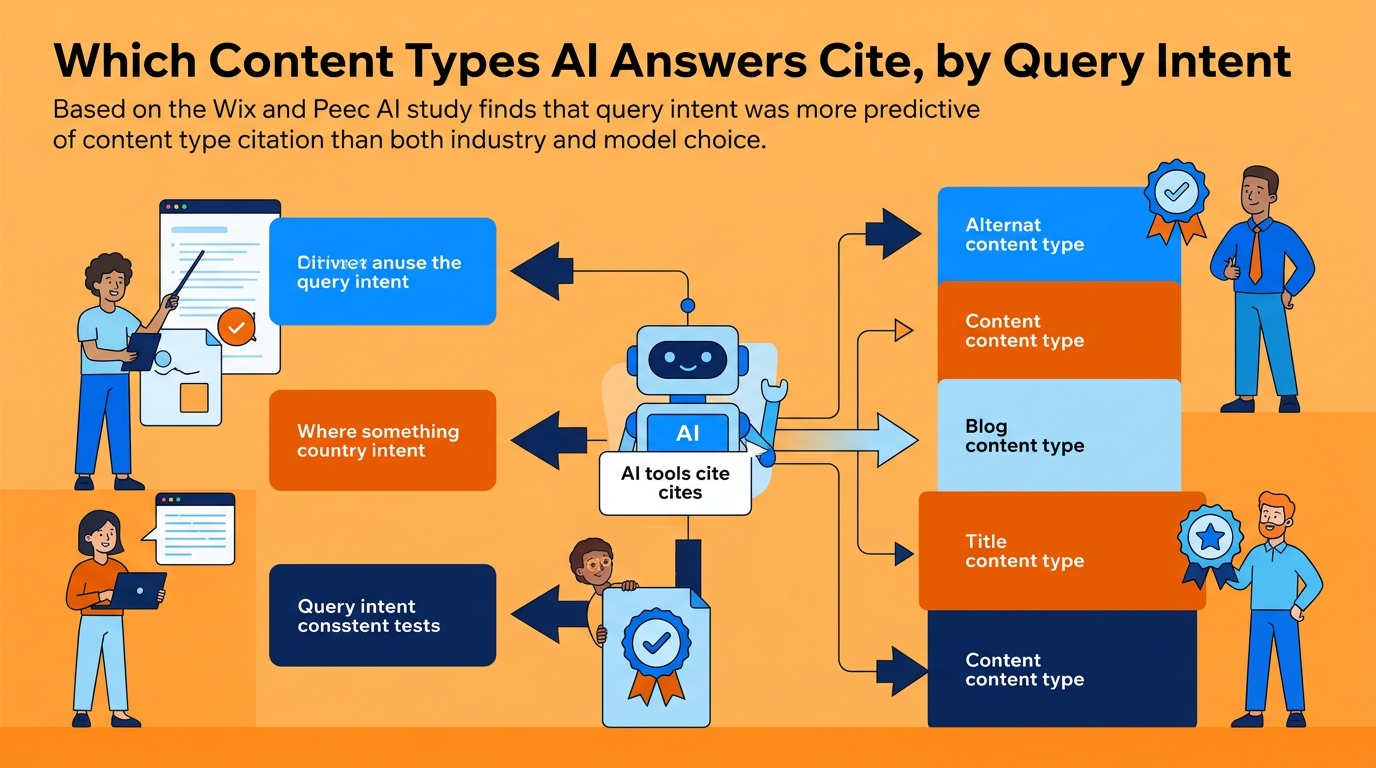
The Wix and Peec AI study found that query intent was more predictive of content type citation than both industry and model choice. In its words, understanding what users are trying to accomplish matters more than what industry you’re in, or what model you are optimizing for. The full write-up is on the source page, The content types most cited by LLMs.
For informational prompts, three types led:
- Articles: about 45 percent (45.48%), which is 172.7 percent above average.
- Listicles (list-style posts): about 22 percent (21.68%), which is on par with average.
- How-to guides: about 9 percent (9.21%), which is 48.3 percent above average.
Listicles and articles together made up about two-thirds (67%) of the content cited for informational queries.
Queries where people already know what they want look different. Say someone is looking for an architecture consultant in their local area. The study says large language models (AI chatbots) prefer to cite product pages and category pages for that kind of search. Homepages and profiles become critical navigation hubs, cited far more often than average.
The table below lines up the top cited content type for each kind of intent.
| Query intent | Top cited content type | Finding |
|---|---|---|
| Informational | Articles (45.48%, 172.7% above average) | Listicles and articles made up 67% of the content for informational queries |
| Navigational / local | Product and category pages; homepages and profiles | Homepages and profiles cited far more often than average |
| Health and wellness industry | Articles (19.66%) | Health and wellness inverts the trend, with articles outpacing listicles |
Health and Wellness: Articles Ahead of Listicles
In the study, articles were the most cited content type for health and wellness AI citations, at about 20 percent (19.66%). The study ties that to medical credibility and authority. Product pages came next at about 15 percent (14.77%), mostly supplement and wellness products.
Health and wellness flips the usual pattern. Articles outpace listicles. The study says this points to a need for authoritative, educational content in a field where trust matters. Its advice for the field is to put heavy investment into authoritative articles.
I’d rather your practice be the source an AI names and draws on than one more name in a list of practices. Being relied on beats being present. So for health topics, I write the authoritative article.
Back Pain Topics Patients Look For
A paper in International Health, Online health information-seeking behaviours for low back pain, recommends online health campaigns about low back pain awareness. These could explain the causes of low back pain, the red flag symptoms (warning signs) to be aware of, and when to seek advice from a healthcare professional.
The paper also names barriers that get in the way of seeking care. They include knowing when to seek help, knowing what the red flags are, and physical barriers such as mobility issues. It says these barriers prevent the prompt and accurate diagnosis of low back pain.
Two plain sources cover the basics: Back Pain Symptoms, Types, & Causes from the National Institute of Arthritis and Musculoskeletal and Skin Diseases (National Institutes of Health), and Back Pain Causes, Treatment & Pain Relief from Cleveland Clinic.
Basic Facts About Back Pain
The National Institute of Arthritis and Musculoskeletal and Skin Diseases says back pain is one of the most common medical problems in the United States.
It also gives time frames. Subacute back pain can come on suddenly or over time and lasts 4 to 12 weeks. Chronic back pain may come on quickly or slowly, lasts longer than 12 weeks, and occurs daily.
Age matters too. Back pain becomes more common with age, particularly after the age of 45.
Causes and Treatment Options
Cleveland Clinic says back strains and sprains are the most common causes of back pain.
It lists chiropractic adjustment as one of the integrative medicine therapies a provider may recommend. The others on that list are acupuncture, massage therapy, and yoga therapy.
Cleveland Clinic also takes on a common habit. Your instinct might tell you to lie down and rest when your back hurts. But in many cases, gentle movement can help more than bed rest.
When to Seek Care
The National Institute of Arthritis and Musculoskeletal and Skin Diseases says you should see a doctor if your pain does not get better after a few weeks. You should also go if any of the symptoms on its list happen along with your back pain.
Cleveland Clinic says to call a healthcare provider if you have severe back pain, or if your back pain doesn’t get better after one week.
What UK Chiropractic Patients Said Went Unaddressed
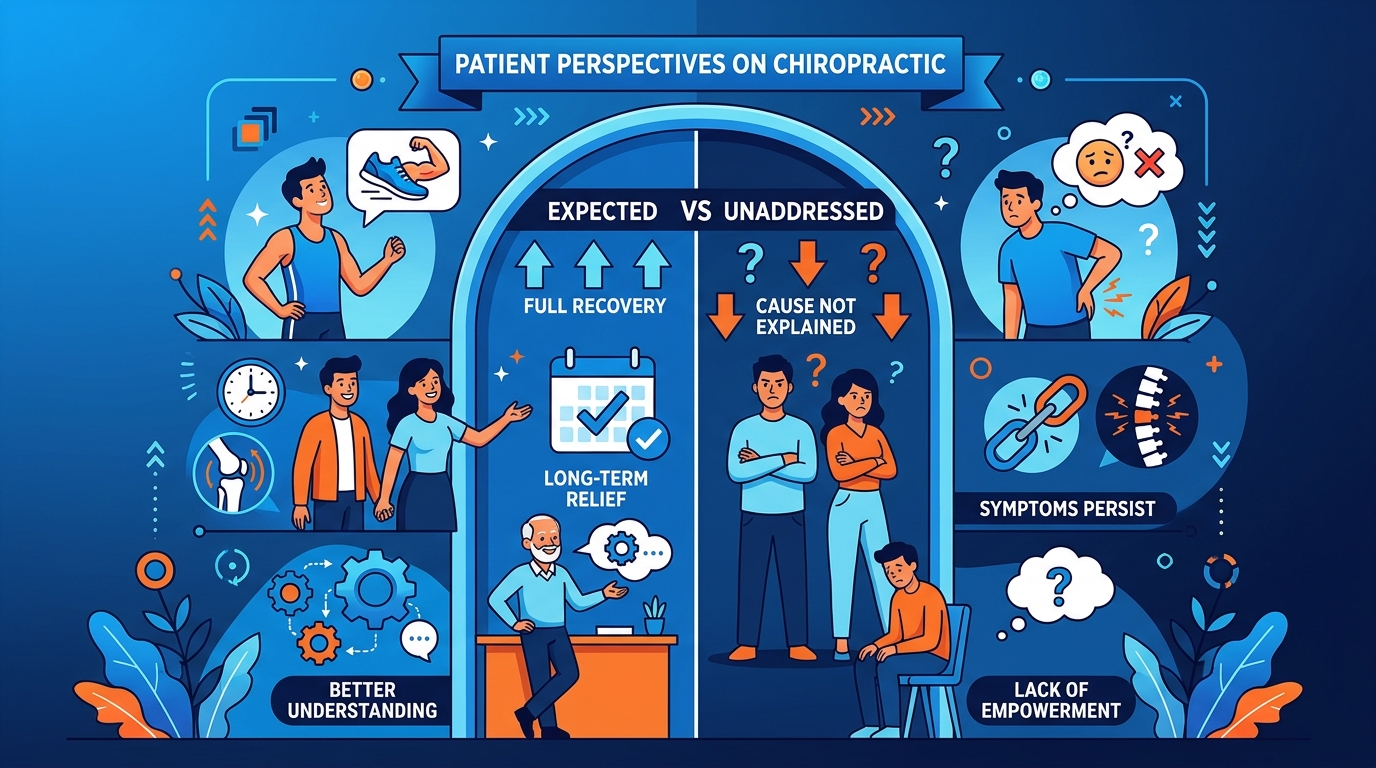
One survey asked chiropractic patients what they expected. The study is Patients’ experiences and expectations of chiropractic care. It found expectations were least well met in four areas:
- Having more information on the cost of the treatment plan at the first consultation. Eight in ten (80%).
- The chiropractor contacting the patient’s general practitioner (GP, the regular family doctor) if necessary (62%).
- Having a discussion about a referral to another healthcare practitioner (62%).
- Providing a way to give feedback in confidence. About two-thirds (66%).
Each of these is a topic a practice can answer in plain words: what a first visit costs, when the chiropractor contacts the GP, how referrals come up, and how to give feedback in confidence.
The Accuracy Bar Health Topics Must Clear
Here’s the bar. Google says that when a topic could greatly affect people’s lives or well-being, the content must be highly accurate and agree with what experts widely agree on. Google calls these YMYL topics, short for Your Money or Your Life.
Google also says its automated ranking systems are built to put helpful, reliable information first. Information made to benefit people. Not content made to manipulate search engine results.
Its ranking systems aim to reward original, high-quality content that shows E-E-A-T. That stands for expertise, experience, authoritativeness, and trustworthiness. Google explains this in Google Search’s guidance about AI-generated content.
I treat getting picked by AI answer tools as its own job. It isn’t classic search work with a new name. I don’t chase keywords, inbound links or ranking position, because I count that as aiming at the wrong target. I build for systems working out who your practice is and whether it can be trusted. So the effort goes into making your accuracy and credibility easy for them to see.
What AI Engines Currently Cite for Health Questions
Here’s what one study found. Between half and nine in ten (50% to 90%) of the answers from large language models (LLMs, AI tools that write answers) are not fully backed up by the sources they cite. Sometimes the sources contradict them.
Another study looked at which websites get cited. YouTube was the most frequently cited site. It came out ahead of well-known health authorities such as Mayo Clinic, the U.S. Centers for Disease Control and Prevention, and the World Health Organization.
Answers their own sources don’t fully back. Citations that put YouTube ahead of health authorities. That’s a poor guide for picking your topics. Your patients’ questions and the accuracy bar above are the better guide.
Bylines and Author Markup on Each Article
Google says you should think about adding accurate author bylines (the writer’s name) when readers would reasonably expect it. That means any content where someone might wonder, “Who wrote this?”
Google also says to make sure all the authors shown as authors on the web page are included in the page’s markup. Markup is the extra code that describes the page. So every name a reader sees as an author should also be in the markup.
The page that explains how the work is done is iTech Valet Service Plans & Pricing.
Frequently Asked Questions
Can AI help write the monthly articles?
Yes. Google says appropriate use of AI or automation is not against its guidelines. What is against its spam policies is using AI to create content primarily to game search results positions.
Does Google hold health topics to a higher standard?
Yes. Google says that on topics where information quality is critically important, like health, civic, or financial information, its systems place an even greater emphasis on signals of reliability. So check each health claim against a trusted source before it goes into an article.
Will Google show an AI Overview for health questions?
Google doesn’t give you a yes or no. It says that for topics like news and health, it already has strong safeguards in place. Don’t plan your topics around whether an Overview appears. Write careful, accurate health articles either way.
Should monthly topics be written as listicles?
Not as a rule. The Wix and Peec AI study found that profile and discussion formats stayed minimal across all industries. It says this shows AI citations currently favor structured editorial content over pages for single businesses or community discussions. For health topics, the health and wellness findings above show how articles and listicles compared.
Monthly Topics That Keep Paying Off
Pick topics from the questions your patients ask, and pick the format the intent calls for. Articles lead in health and wellness citations. iTech Valet builds monthly AI Authority nodes. It describes them as deep, structured Answer Engine Optimization content (content built to be picked up by AI answer tools) that covers all five intent layers AI uses to judge expertise.
Every article is built with iTech Valet’s proprietary two-AI content validation system. One engine builds, and another audits. It is engineered to help AI engines like ChatGPT, Gemini, and Grok recognize and recommend your practice.
I put your practice’s money into articles it owns, not ads or paid placements. Clear, credible information about your practice is visibility that keeps paying off and grows over time. Bought visibility stops the moment the spending stops.
iTech Valet writes and builds AI Authority content for chiropractic practices and other local service businesses. Will you Run My AI Visibility Check and see where your practice stands today?