
What Entity Authority Actually Means to an Answer Engine
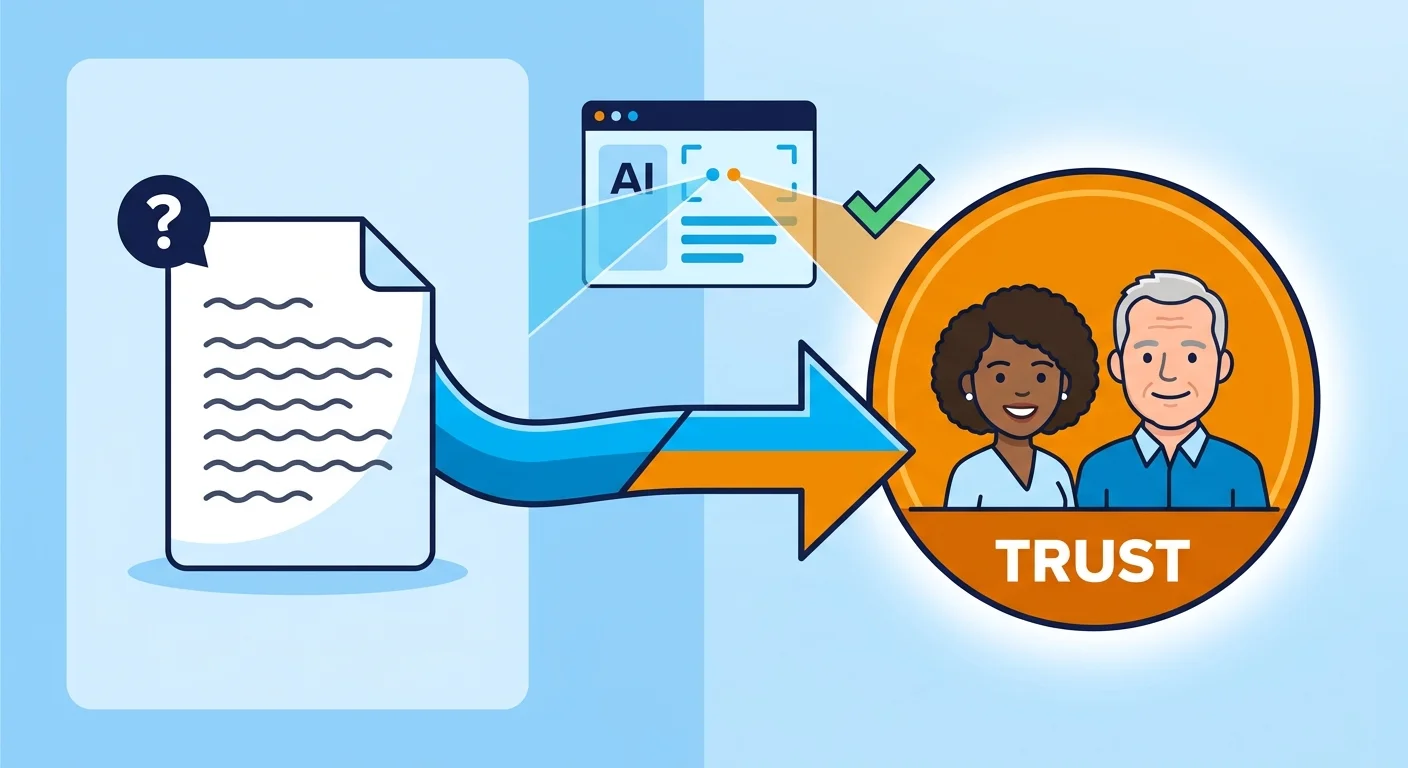
Entity authority is how confident an answer engine is that one name, a person or a brand, actually knows what it's talking about on a topic. That confidence isn't handed out for free. It's built, tracked, and re-tested against every new signal the engine can dig up.
Here's the thing: a decade ago, that confidence came almost entirely from text. Backlinks, mentions, and steady bylines were enough to tell a crawler that a name was a real source.
That doesn't hold up anymore. Answer engines are moving from analyzing what an author writes to verifying who they actually are in the real world, and that shift changes what counts as evidence.
So the question stops being what did this author publish. It becomes can this author be independently confirmed to exist, practice, and know the subject. Founders with a well-documented real-world background, including how Gerek Allen's two decades of hands-on experience anchor client trust, start that verification with a structural edge over an anonymous byline.
From Keyword Match to Trusted Name
Traditional search optimization treated a keyword match as the finish line. Say the right phrase enough times, in the right spots, and the algorithm surfaced your page.
Answer engines work differently. They're trying to name a trusted source, not just match a phrase, so the entity behind the words matters more than the words themselves.
Why Answer Engines Verify the Messenger, Not Just the Message
Why verify the messenger at all? Because the message alone is cheap to produce and easy to fake at scale.
That means an answer engine treats the written page as a paper trail, useful but unconfirmed on its own. A consistent, recognizable human presence reads more like proof of life, and that's exactly why founders who show up on camera are the ones these systems end up citing.
Why Text-Only Signals Leave Answer Engines Guessing
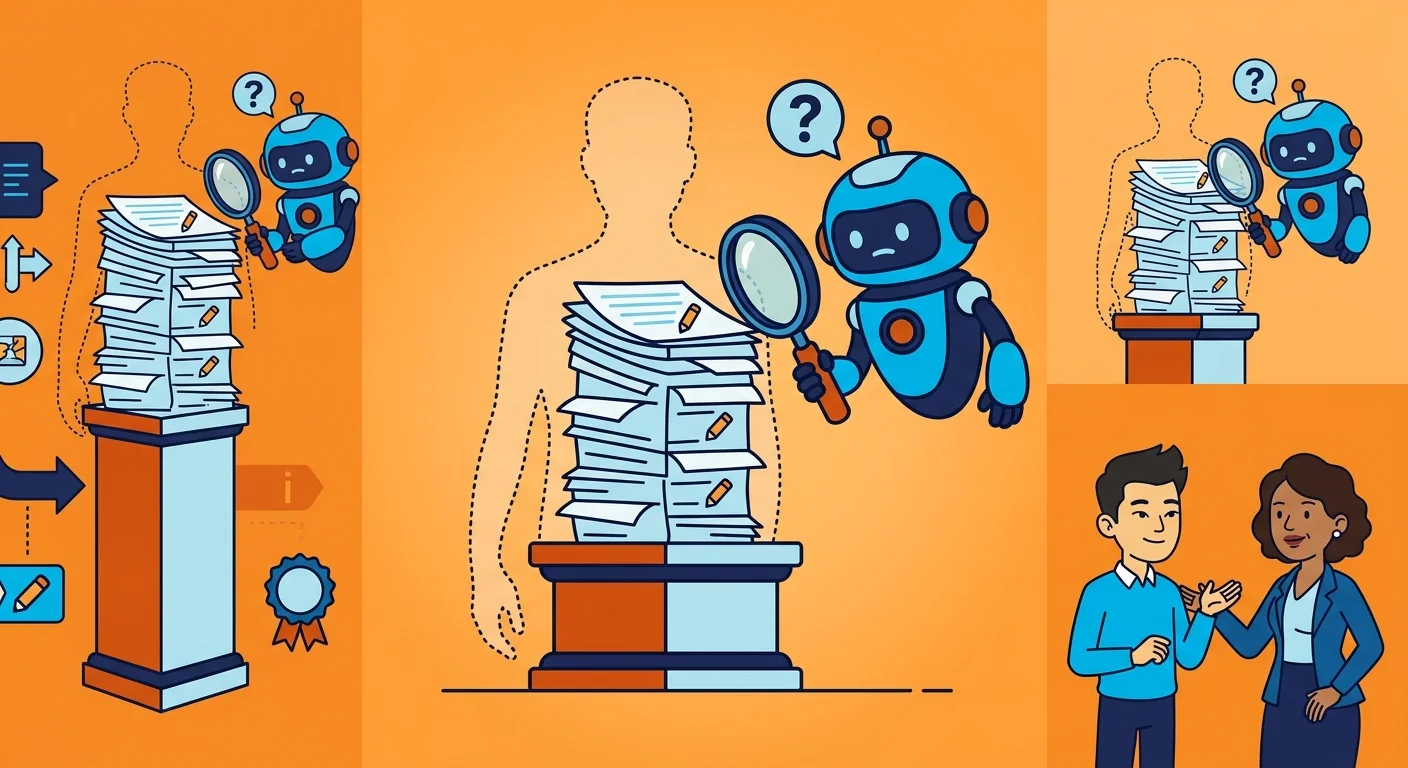
Text-only optimization hits a verification ceiling, and that ceiling is the whole problem. Anyone can hire a writer, publish under any name, and slap the label thought leadership on it.
An answer engine reading that page can't confirm a real human matching that name actually holds the expertise being claimed. It measures word count, structure, and topical coverage. None of that tells the system whether the byline is real.
That's the gap multimodal verification exists to close. Volume of text never proved anything except that words got produced, which is why the next question is what happens when publishing more of them stops working.
| Signal Type | What It Proves | What It Cannot Prove |
|---|---|---|
| Written Bylines and Articles | Topical coverage, publishing frequency, and stated credentials | Whether a real, consistent human matching that name actually holds the claimed expertise |
| Backlinks and Citations | That other sources reference the named author or domain | Whether the underlying author is active, knowledgeable, or even a single consistent person |
| Video Appearances | A consistent face, voice, and speaking pattern tied to a name and topic over time | Nothing it claims goes unconfirmed on its own, which is precisely why it functions as corroboration rather than a gap |
| Structured Data on Text Alone | Machine-readable metadata about a page's topic and author label | Whether the labeled author is a real, verifiable entity rather than a placeholder name |
Why Publishing More Articles Fails to Prove a Real Author Exists
Here's the reaction first: publishing more articles doesn't make an author more real to an answer engine. It just makes them louder. More pages doesn't equal more proof.
The mechanism explains why. Answer engines already assume text can be mass-produced, templated, or generated at scale, so a growing archive of articles reads as output, not identity.
That means a hundred well-optimized pages under one name can still leave an engine unsure whether a single consistent human sits behind them. Quantity answers a question nobody asked.
The question that actually matters is whether the founder behind those pages can be corroborated somewhere outside the text, and this is exactly where a founder's documented real-world background closes the verification gap that pure publishing volume cannot. Without that outside corroboration, the archive stays a paper trail no matter how big it grows.
The Problem With Treating Text Volume as a Trust Signal
So why did the industry ever treat text volume as trust? Because for years, that was the only signal crawlers could reliably measure.
That assumption is outdated now. Treating word count or publishing frequency as a stand-in for authority made sense when engines had nothing else to check against, but it never confirmed a real, consistent expert was behind the name.
That's the flaw multimodal signals are built to correct. A paper trail can be typed by anyone with a keyboard and a deadline, while proof of life demands a consistent human who can be seen, heard, and cross-checked, which is exactly why the founders who show up on camera are the ones answer engines end up citing.
How Video Becomes a Verification Layer, Not a Content Format
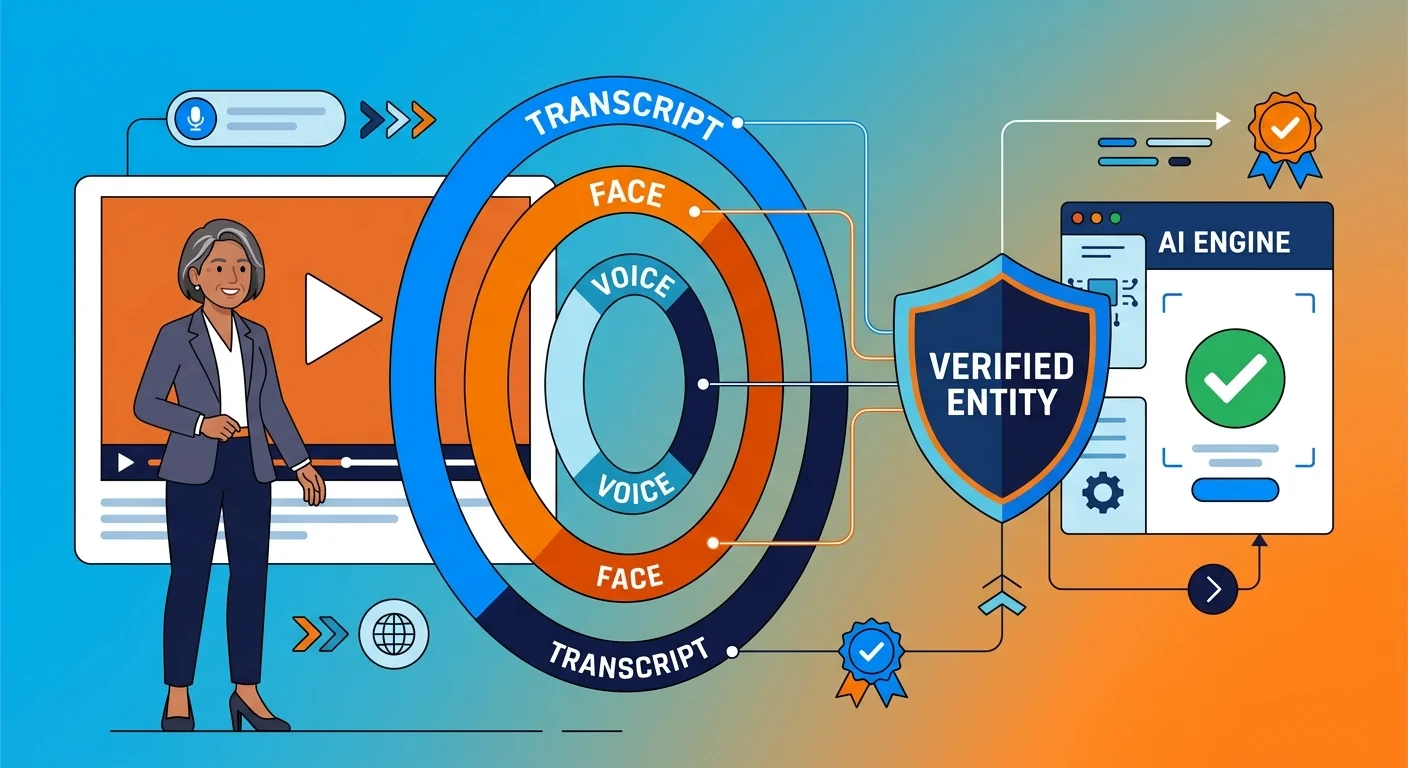
Video doesn't carry authority because it's polished. It carries authority because you can't fake it at scale the way you can fake a paragraph.
Anyone with a deadline and a topic outline can assemble a written page. A video needs a real human to show up, speak, and hold a line of reasoning in real time.
That difference is what turns video from a content format into a verification layer. Text hits a ceiling, and video is the thing that clears it, handing over the corroborating proof a byline alone never can.
| Metric | Reported Figure | What It Signals |
|---|---|---|
| Median Subscriber Count | 520,000 | Top-ranking YouTube videos already sit on channels a large audience has vetted, giving the entity a scale advantage no fresh byline can match. |
| Video Model Accuracy Gain on Long-Form Content | 38.75% | Answer engines are getting measurably better at parsing long, unedited video as evidence, which is exactly the format that captures sustained, consistent human presence. |
| Long-Video Threshold Evaluated | 4 minutes to beyond an hour | The systems reading video are tuned to sustained appearances rather than short clips, rewarding the kind of extended, unscripted presence a paper trail cannot fake. |
| Verification Value of Multimodal Signals | Not a numeric metric | Video and audio provide a layer of verifiable proof that plain text cannot replicate, because tone, cadence, and appearance are far harder to fake at volume. |
The Technical Handshake: Schema, Transcripts, and Byline Data
So how does an answer engine actually confirm a video belongs to the named author on the page? It reads the machinery around the video, not just the footage.
Structured markup on a video page tells a crawler who's in the video, what it covers, and how it ties back to the surrounding site. That markup is a direct handshake between the content and the entity claiming it.
Transcripts stretch that handshake into language the system already knows how to parse. Spoken words become searchable text tied to a topic, which lets an answer engine cross-check what was said against what the author claims to know elsewhere, including the ideas explored in how founder brand assets compound into faster citation outcomes.
Byline data closes the loop. One name attached consistently across a video description, a transcript, and a published article hands the engine three independent points that all agree, and agreement across formats is exactly what a single paper trail can never produce on its own.
What the Data Shows About Video-Backed Authority
None of this is theoretical. The channels already dominating video-driven answers show a measurable pattern of scale sitting behind them.
Channels with top-ranking YouTube videos carry a median subscriber count of 520,000, according to Search Engine Journal's reporting. That's not a vanity metric. It's a signal that a large, sustained audience already vetted the human behind the channel long before any answer engine ever did.
And the systems reading that video are getting better at treating it as evidence, not just footage. Research published on the arXiv preprint server found the QMAVIS model outperformed leading baseline video language models VideoLlama2 and InternVideo2 by 38.75% on the VideoMME dataset, which is more than half long videos running from 4 minutes to beyond an hour. That gain matters here, because the systems judging long, unedited video are getting sharper at pulling out exactly the sustained, consistent presence that separates a real expert from a well-written page.
Who This Approach Is Not Built For
Let's be blunt about who this isn't for. It's not for founders who want a faster way to crank out more traditional search optimization content and call it authority. That exact confusion is what this whole approach exists to correct.
If the goal is another stack of keyword-targeted articles with a name pasted on top, this framework is going to disappoint you. It was built for founders willing to show up, not founders willing to outsource the appearance of showing up.
| Pipeline Stage | Count | What Happens Here |
|---|---|---|
| Results Returned | Wide | Every search the pipeline runs surfaces a broad pool of candidate pages, most of them unverified and untested against the entity behind them. |
| Pre-Fetch Filter | Narrowing | Pages get screened for basic relevance and structure before anyone bothers fetching them, cutting the pool without confirming who actually wrote anything. |
| Fetched And Extracted | Smaller Still | The surviving pages get pulled and checked for substance, but a well-written page with no corroborating human presence can still make it this far. |
| Citation Stage | Smallest | Only sources an answer engine can independently corroborate reach this stage, which is exactly where an anonymous byline or a faceless content stack runs out of road. |
Reading Citation Behavior at Scale
So how does anyone actually prove this pattern holds at scale, past a single channel or a single founder? You watch which sources answer engines keep citing across a whole content cluster over time.
Here's the data behind that question.
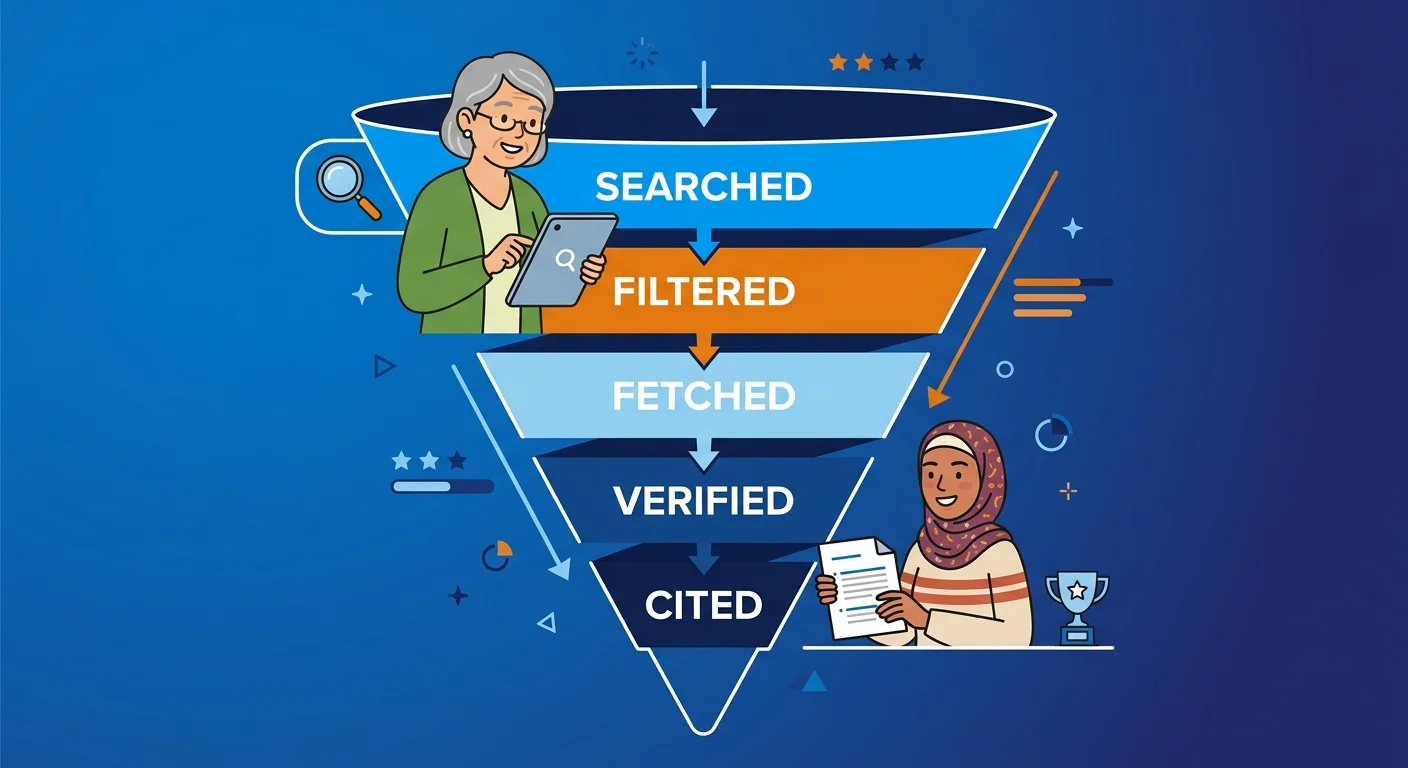
Across 22 production runs of a 12-article AEO/SEO content cluster, the pipeline's searches returned 785 results; 681 passed its pre-fetch filter, 503 were fetched, 201 were verified by an extractor, and 76 were ultimately cited — roughly one citation for every ten search results returned.
That funnel is the whole argument in miniature. Most of what gets surfaced never survives contact with a verification step, and only the sources that can be corroborated make it to the citation stage — a pattern examined in iTech Valet's measured pipeline data.
Building the Verification Trail Without Overproducing
So does this mean founders have to publish constantly to stay visible? No. That assumption is exactly backwards.
Overproducing text doesn't build a verification trail. It just adds more paper to a stack an answer engine already treats as unconfirmed.
That means the smarter move is fewer, verifiable appearances tied consistently to one name, one face, one voice. Founders weighing this trade-off, right down to whether a smaller, verifiable presence beats sheer scale, are better off understanding why boutique founder visibility can outweigh corporate anonymity before they add a single new page.
Frequently Asked Questions
That walkthrough leaves a few sharper questions sitting underneath it. Here are the edge cases founders actually ask once they see how the verification works.
How does Google technically connect a person in a video to an author's online entity?
It reads the structured markup, the transcript, and the byline attached to the video. Then it checks whether that name matches the author claiming credit elsewhere on the site. Consistency across those points is what closes the connection.
Is a high-production video more valuable for authority than a simple, authentic one?
No. Authority comes from a consistent, verifiable human showing up over time, not from lighting or editing quality. A plain, authentic video that matches the founder's byline everywhere else beats a polished one that looks disconnected from the rest of the entity.
Can a business build entity authority with faceless videos or animations?
Not for author entity authority specifically. Faceless video can still support a brand, sure. But it can't produce the proof of life an answer engine needs to confirm a named human expert stands behind the claims.
Does the platform where a video is hosted affect its authority signal strength?
The platform matters less than whether it supports the structured data and transcript access an answer engine needs to verify the content. A large, established audience adds corroborating weight. It's not the deciding factor, though.
What is the role of structured data like VideoObject schema in validating a video's author?
VideoObject schema tells a crawler who appears in the video, what it covers, and how it ties to the surrounding site. It's the direct handshake between footage and the entity claiming authorship. Not a decorative tag.
Beyond video, what other multimodal signals do answer engines use to verify entity authority?
Audio, transcripts, and consistent byline data across formats all work the same way video does. Each one hands an answer engine another independent point to cross-check against the others.
How quickly can video content begin to influence an author's perceived authority in generative search?
There's no fixed timeline in the available data, so any specific number of weeks or months would be a guess. Here's what actually matters: consistency. A single video proves less than a sustained, corroborated pattern under one name.
The Bottom Line
So here's the bottom line. A paper trail proves someone typed words. Proof of life proves someone actually knows what they're talking about.
That means the founders who show up on camera, consistently, under one name, are the ones answer engines trust enough to cite. Text can't carry that weight by itself anymore.
Here's the move: treat video as evidence, not decoration, and you build a presence an answer engine can actually verify. That starts with an honest look at where your visibility stands right now, and you can get that clarity with iTech Valet's AI Visibility Check.