What Changed in Search, and Why the Hiring Question Changed With It

Search stopped being a list of links the moment generative answers started closing the loop for the user. Rankings stopped predicting who gets cited once answers replaced links as the thing people actually see first. A position in a results page no longer guarantees a reader's attention, because the system now hands over a synthesized answer before any list of sites loads.
That shift is exactly why vetting an agency now requires different questions than it did five years ago. The specifics of what changed, and what an agency should be doing about it, are covered in choosing the right AI search partner. An agency's own vocabulary during that vetting process is the first signal of whether its methodology was built for citation or just relabeled for it.
Why Agencies Still Pitching Position Numbers Are Selling a Dead Game
The pitch that still leaks through is dead simple: track results-page position numbers, report the movement, call it progress. It fails on its own terms, because those numbers score a game the generative answer already skipped right past. A ranked list assumes somebody scrolls it, and a direct answer assumes they don't.
Citation selection has been studied directly. Research published through Sprinklr found topical relevance and list position may be the biggest drivers of a source being cited first in competing two-source comparisons. An agency that cannot speak to entity consistency or citation-focused structure, and whose credentials deserve scrutiny before any contract is signed, as detailed in what qualifies an answer engine agency, is still measuring the wrong outcome.
How Legacy Metrics Quietly Fail Once Answers Replace Links
A rank-tracking report measures a position that a generative answer never creates. That mismatch is the quiet failure buried under most legacy dashboards.
AI visibility treated as traditional search optimization with new vocabulary is a renaming, not a strategy shift. The metric stayed the same while the thing it was measuring disappeared.
The Mechanism: Why Click-Based Metrics Break Down
A click-based metric assumes someone scans a list before landing on a page. Once a system writes the answer itself, that scanning step just doesn't happen.
Reference links and citations significantly increase trust in generative AI search results. Research published through MIT found reference links and citations may significantly increase trust in generative AI search results, even when those links and citations are incorrect or hallucinated, although participants trust generative AI search less than traditional search on average. That trust effect holds even when the cited link turns out wrong. The study measured how much readers trust an answer, not what a citation is worth to the business being cited.
What This Costs When It Goes Unnoticed
Here's the kicker: a legacy dashboard can't even see the cost. Search position reports can sit perfectly steady while citation frequency drops to zero, and nothing in that report raises a flag.
A business paying for rank-tracking reports is paying to monitor a shrinking fraction of total search behavior. The specific work that replaces it is covered in what a citation-focused engagement builds, where the deliverable is entity structure rather than a list position.
What an Agency's Technical Process Should Actually Look Like

A technical process built for citation starts with eligibility, not tactics. Google reports AI Overviews and AI Mode may have no additional technical requirements beyond being indexed and eligible to be shown in Search with a snippet. That baseline reframes the entire engagement. An agency's real work begins after eligibility, in how clearly a page's entities and claims are structured for a system to extract.
| Process Component | Legacy Agency Focus | Answer-Engine-Ready Agency Focus |
|---|---|---|
| Schema and Structured Data | Treats schema as a checkbox task, added once and left static regardless of page changes | Builds schema as a living layer that mirrors entity details across every page and updates as claims change |
| Content Architecture | Writes pages around keywords and search intent, structured for a reader scrolling a list | Structures pages around a single claim, the entity behind it, and verifiable context a system can extract |
| Entity Consistency | Leaves names, locations, and credentials to vary slightly across the web presence | Audits and aligns entity details across every surface so a system can confirm them before citing |
| Reporting Dashboard | Centers on search position reports and rank-tracking reports as the primary success measure | Tracks citation presence and authority visibility, treating a position number as a secondary signal at best |
| Technical Eligibility Review | Assumes legacy indexing alone is sufficient and skips a review of extraction readiness | Confirms indexing eligibility first, then audits how cleanly entities and claims can be parsed for a snippet |
| Platform Scope | Optimizes for a single results page without distinguishing between how different AI systems select sources | Accounts for how multiple AI platforms weigh relevance, structure, and entity trust differently before citing |
Content, Entities and Structured Data
Content built for citation is organized around one specific claim, the entity behind it, and the context that backs it up. Entity consistency matters because a system assembling an answer cross-checks names, locations, and credentials across a whole web presence before it trusts any single one of them.
Marketing teams are already adjusting to this shift. The Medill Spiegel Research Center reports marketing professionals are integrating AI into their search workflows, and the study examined the business outcomes they achieve and where capability gaps may persist. That gap between adoption and capability is where a technical process earns its keep. Our done-for-you AEO services exist for exactly that gap.
Trust, Structured Data and Schema
Trust signals run through structured data, not through a position number. Schema markup tells a system what an entity is, what it claims, and how to verify it against the rest of a web presence. A process without a schema strategy is asking a system to trust an entity it cannot confirm. There is more on done-for-you AEO services if this is the part that matters to you.
The Twelve Questions, in Order of What They Expose
Twelve questions, asked in order, move from the easiest thing to fake to the hardest. The right questions surface an agency's actual methodology fast, and that methodology either targets the new landscape of AI-driven search or it doesn't.
| Question Category | What a Weak Answer Sounds Like | What a Qualified Answer Sounds Like |
|---|---|---|
| Technical eligibility and structured data | "We make sure your pages get indexed and we submit a sitemap." | "We build entity consistency across every page so a system can confirm what you claim and who you are." |
| Content architecture for citation | "We write keyword-targeted articles optimized around search volume." | "We structure every page around a specific claim, the entity behind it, and the context that confirms it." |
| Reporting and measurement | "Here's your monthly search position report, with movement highlighted in green." | "Here's where your business is being cited inside a direct answer, and where it isn't yet." |
| Handling legacy work already in place | "We'll just keep running your old-school search work the same way, alongside whatever this is." | "We'll show you exactly where traditional search optimization still pulls weight and where it's measuring a shrinking slice of the landscape." |
| Vocabulary under pressure | Falls back on winning the old results-page game, rank-tracking reports, and a place among the ten blue links. | Speaks fluently about citation, entity consistency, and becoming a cited source inside a generative answer. |
Questions That Expose Technical Readiness
Ask what happens to a page after it's indexed and eligible to show in Search. No specific answer means the agency treats eligibility as the finish line when it's really the starting gun. Then ask how entity consistency gets verified across a web presence, because a vague answer here tells you no real process exists.
Questions That Expose Measurement Honesty
Ask what lands in the monthly report, then listen for results-page position numbers wearing a new outfit. More published pages doesn't mean more citations. An agency that can't tell those two apart is still counting the wrong thing (which is kinda the whole problem).
Questions That Expose Strategic Depth
Ask how the agency handles a business already running traditional search optimization alongside this work, and what its content architecture actually builds toward. Now… this part matters. These answers split a strategy built for citation from one still describing legacy search optimization in shinier words.
Reading the Answers: What a Qualified Response Sounds Like
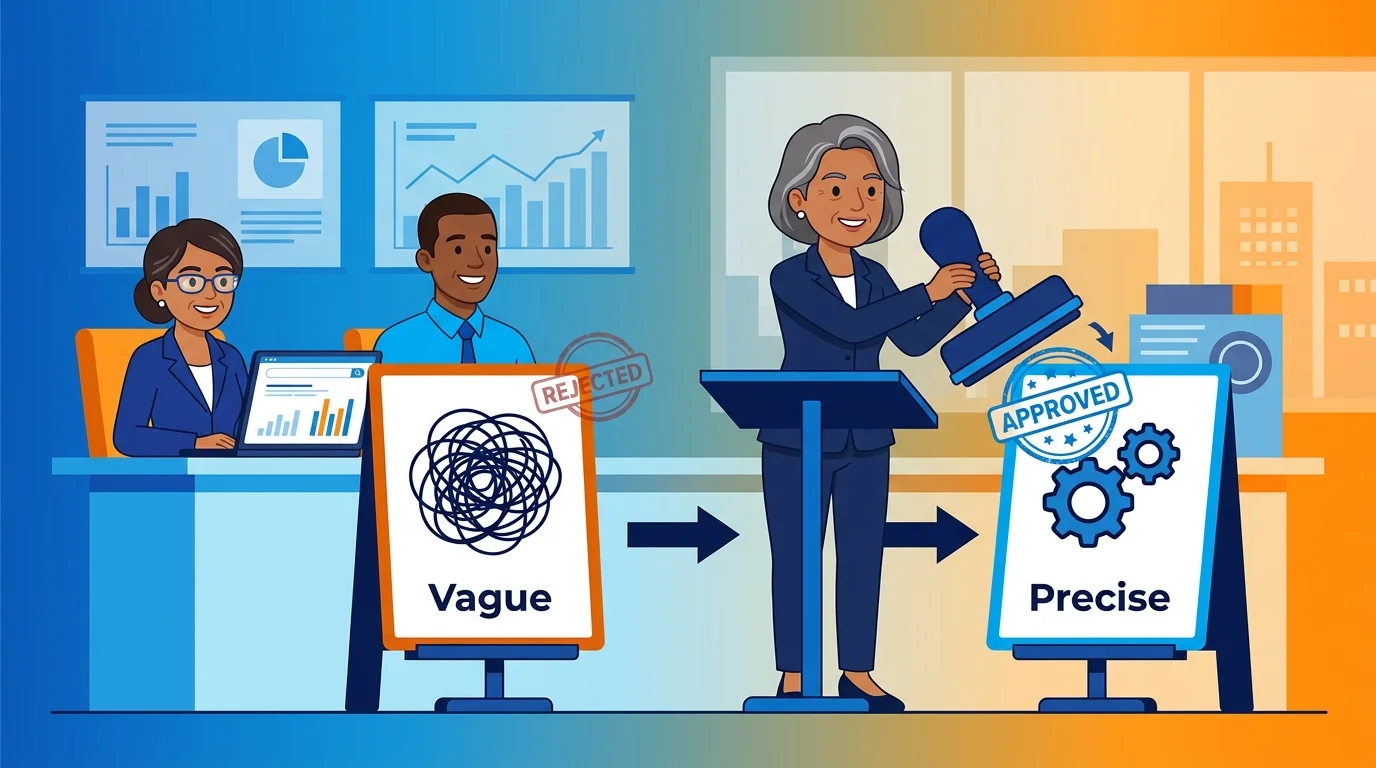
An answer sitting in the question column means nothing on its own. What matters is whether the words used to answer it describe a citation outcome or a ranking outcome dressed up in new vocabulary.
An agency that answers in results-page language, however fluent, is still applying for a job that no longer exists. The right response names entities, structured data, and citation behavior as the actual deliverable, because that is the only deliverable a generative answer still rewards.
| Response Pattern | Underlying Methodology Signaled |
|---|---|
| Describes tracking search position reports or rank-tracking reports as the core deliverable | Still operating a legacy search optimization process relabeled for the current landscape |
| Names entity consistency, structured data, and citation behavior as what gets built and measured | A technical process built around citation eligibility and entity verification, not list position |
| Treats being indexed and eligible to appear in Search as the finish line of the engagement | A shallow process that stops at baseline eligibility instead of structuring content for extraction |
| Explains how claims, entities, and context get structured so a system can confirm and cite them | A content architecture process built for how generative answers select and trust a source |
| Cannot separate published page counts from actual citation outcomes when asked directly | No real methodology distinguishing output volume from the metric that actually matters now |
Frequently Asked Questions
A few questions keep popping up after the twelve above. They're mechanical, not strategic. But they still trip up a vetting conversation.
How is Answer Engine Optimization (AEO) different from the traditional RESULTS-PAGE OPTIMIZATION I'm used to?
Traditional search optimization chases a position in a scrollable list. Answer Engine Optimization structures an entity's facts and claims so an AI system can find, understand, and confidently cite them directly, without a list involved at all.
What specific metrics should be used to measure the success of an AEO campaign?
Position numbers and site visits measure the wrong thing now. The metrics that matter are citation frequency, entity consistency across a web presence, and whether a synthesized answer names the source at all.
How long does it typically take to see measurable change in AI citation activity?
No fixed window exists, and a credible agency says so rather than promising a specific timeline. Structural changes like schema and entity consistency take hold at different speeds depending on how fragmented a business's existing presence already is.
Can an agency guarantee a business will be cited in Google's AI Overviews?
No agency can guarantee citation inside Google's AI Overviews. Eligibility starts with being indexed and able to appear in Search with a snippet, but what a system chooses to cite from there is never a guaranteed outcome.
Does a business need to continue traditional search optimization alongside AEO work?
Yes. Traditional search optimization still determines whether a page gets indexed and eligible to appear in Search in the first place, and that eligibility is the floor Answer Engine Optimization builds on, not a replacement for it.
What role does structured data play in whether an AI system cites a source?
Structured data tells a system what an entity is, what it claims, and how to verify that claim against the rest of a web presence. A source without that structure is harder for a system to trust enough to cite.
The Bottom Line
The goal moved, and it's not moving back. Holding a spot in a list of links doesn't matter the way being the cited source of truth inside a direct answer does.
Twelve questions won't fix an agency that's still selling the old game. But they'll expose it fast, before a contract locks you into another year of search position reports tracking a shrinking slot nobody scrolls to anymore. An agency that answers in results-page language is interviewing for a job that disappeared, and you don't owe it the offer.
The agency worth hiring treats entities, structured data and citation behavior as the deliverable itself. Everything else is vocabulary from a game that already ended. So start with where your own presence actually stands, and run an AI Visibility Check to see what AI says about you right now.