
What Counts as Answer Engine Work Versus Old-School Search Work
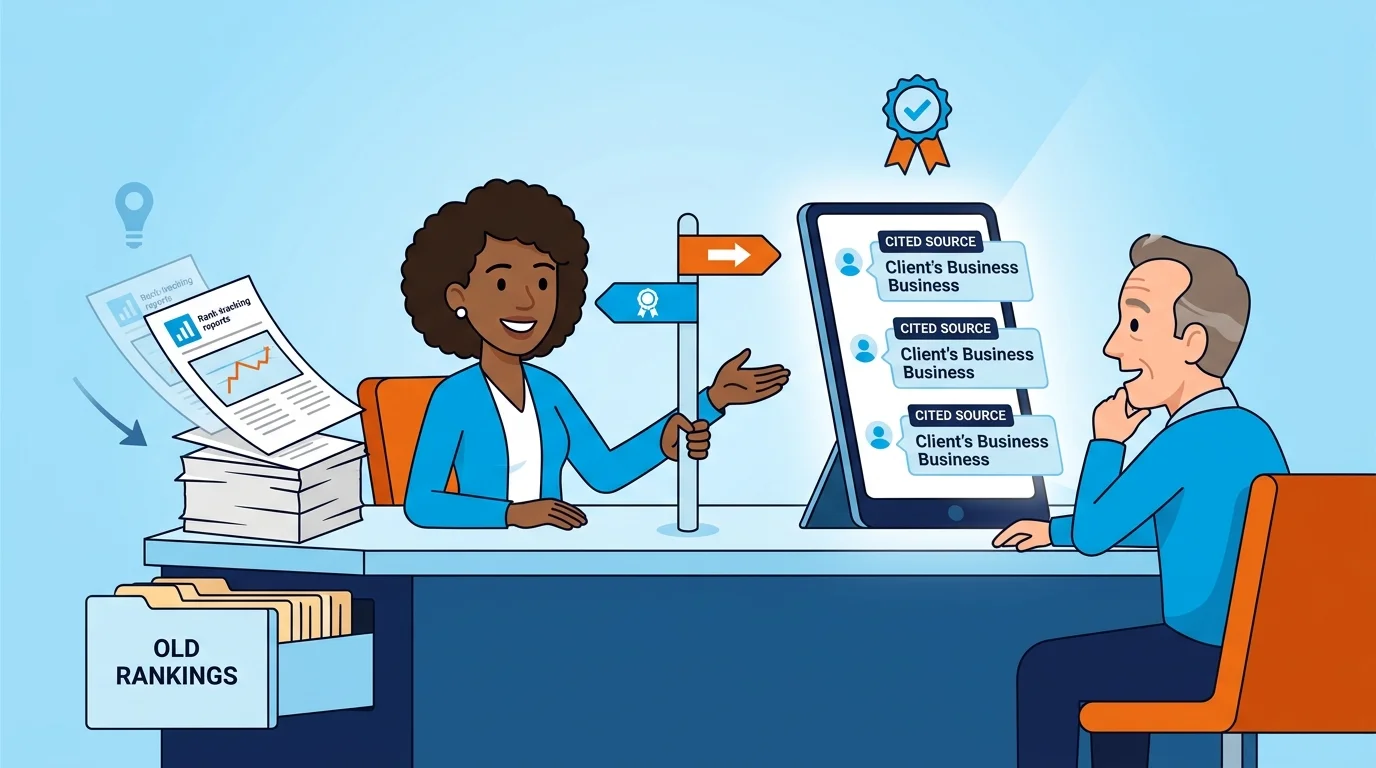
Here's the line between the two. Old-school search work chased keywords and backlinks to win a spot in the classic ten blue links. Answer engine work builds entities, schema, and verifiable authority instead, because that's exactly what a generative system checks before it cites anyone.
The vocabulary shift is real, but the mechanism underneath it is not just a rebrand of old-school search work. Where a page sits no longer tells anyone who gets cited, and that single fact changes what counts as the actual deliverable. For a fuller breakdown of what separates a credible provider from one still selling the old game, see how business owners should vet an AEO provider.
Why Chasing Classic Search Listings Misses the Point Now
Here's the thing: plenty of agencies are still selling a game that's already over, waving search position reports around as proof of progress. That number measured something real once. Now it can't tell a business whether a generative system trusts it enough to cite it.
Holding a spot in classic search listings is rented attention, and the rent comes due every month the campaign keeps running. A verifiable authority layer works differently, because it stands on its own once built instead of disappearing the moment payment stops. The goal has shifted from placing in traditional ranked results to becoming the source an AI-generated answer actually names. Before hiring anyone to chase either outcome, criteria for evaluating an AEO provider is worth reading first.
How AI Engines Actually Decide What Gets Cited

Citation isn't some mystery an agency gets to guess at. It's measurable, and the numbers don't flatter the old model one bit.
AI Overviews don't show up for every search, and they sure don't show up evenly. Research published through Washington University in St. Louis found AI Overviews appeared for 13.7% of all queries in the study, and the rate varied based on how users worded their search. That swing alone kills the logic of chasing one numeric position, because the surface is already inconsistent before a business even walks into the room.
Why Position Tracking Keeps Agencies Looking Busy While Doing Nothing
So why do position reports keep landing in inboxes? Because they're easy to produce and even easier to screenshot, while measuring a results list that a growing share of queries never fully render.
A business can place near the top of the results list and still never get named in a generated answer. The two outcomes are tracked by different mechanics, and a provider still reporting rank-tracking reports as the main deliverable is measuring the wrong surface. For a clearer picture of what a provider should actually report on once that shift happens, what to expect post-migration lays out the practical difference.
Where Maps Visibility and AI Citation Visibility Split Apart
Local visibility splits into two separate systems: the map pack and AI answer surfaces.
A business optimized only for the map pack is optimizing for one surface while the other surfaces move on without it.
The Architecture Behind a Specialized Answer Engine Service
The architecture stacks in a fixed order, because each layer depends on the one beneath it. Skip a layer and the ones above it have nothing solid to stand on.
Technical groundwork goes first. Entity data, schema, and content each build on what came before, and solid AI Authority System services follow that order instead of rushing straight to the visible layer.
| Layer | Function | What Breaks Without It |
|---|---|---|
| Technical Audit & Schema Markup | Maps every claim on a page, from credentials to service areas, into a format AI systems can parse without guessing | Pages read as unverified text, and a generative system has nothing structured to confirm before it cites a source |
| Entity Reconciliation | Aligns a business's name, location, and operational details consistently across every platform an AI model might draw from | Inconsistent data reads as two different businesses, and schema layered on top of it just adds noise instead of confidence |
| Content Development | Targets the specific question formats AI systems pull from, prioritizing directly answerable writing over keyword density | Keyword-targeted articles may still exist, but none of them answer the question format a generative system is actually checking |
| Verifiable Authority Layer | Builds source authority through cited external evidence and consistent entity signals rather than page volume | Authority never compounds, and every gain stays tied to continued ad spend instead of standing on its own |
Entity Reconciliation and the Schema Layer
Schema markup only works if the entity behind it is consistent everywhere a machine might check. A business name spelled two different ways across two directories reads as two different businesses to a system reconciling entities.
Reconciliation closes that gap before schema is layered on top. Markup describing a business that the rest of the web cannot confirm just adds noise, not confidence.
Authority That Is Owned, Not Rented
Rented attention from a classic ad placement dies the day payment stops. An authority layer built from cited evidence and consistent entity signals does not depend on that payment.
The Implementation Sequence an Answer Engine Service Follows
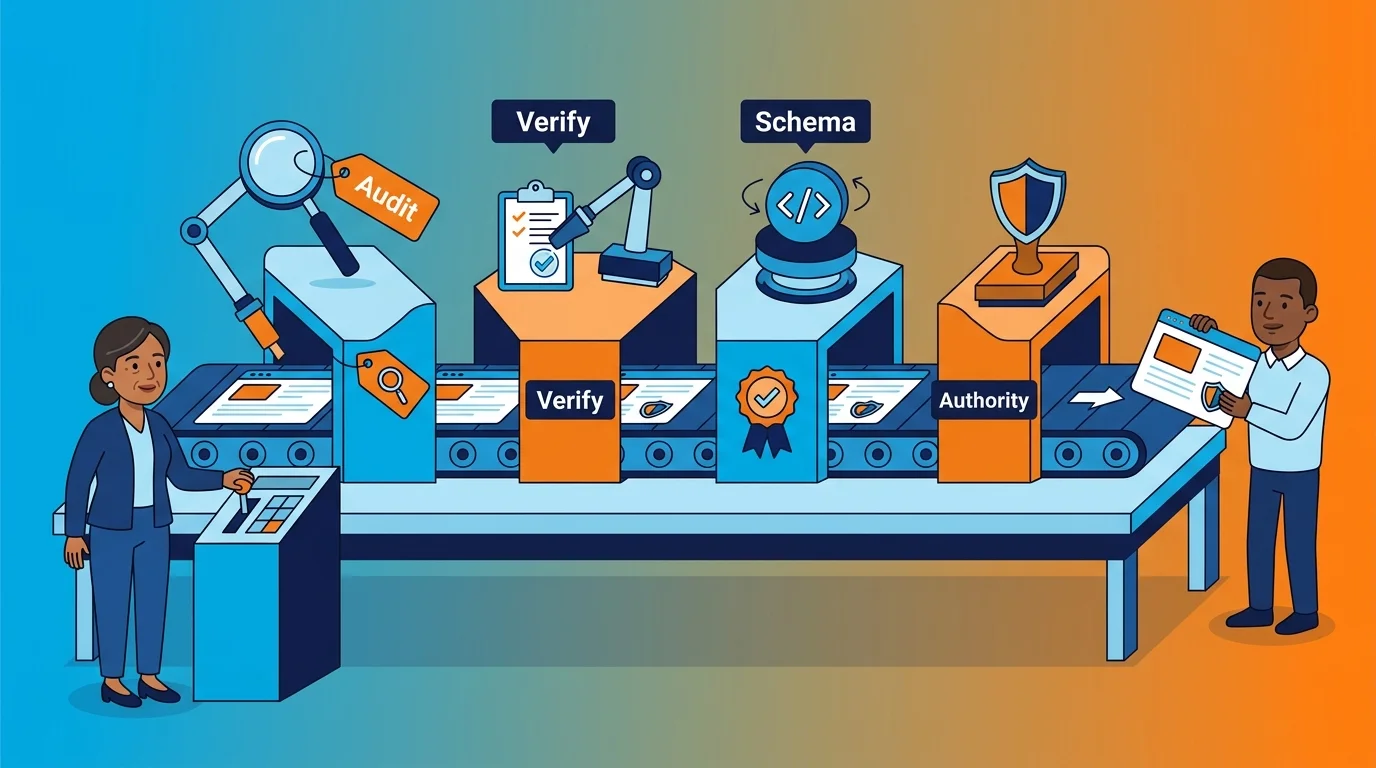
Architecture is the blueprint. Sequence is what decides whether it actually holds weight, because every phase runs in a fixed order and the layer on top only stands if the layer underneath is already solid.
| Step | What Happens | Primary Output |
|---|---|---|
| Technical Audit | Map existing site structure, schema markup, and entity data against what a machine can currently confirm | A gap analysis identifying where claims and verifiable data diverge |
| Structured Data Build | Apply schema markup so every credential, service, and location maps to a format large language models can parse | Machine-readable markup layered across existing site pages |
| Entity Reconciliation | Align name, location, and operational details consistently across every platform an AI model might draw from | A single consistent entity record recognizable across the web |
| Content Development | Write directly answerable, factual content targeting the question formats AI systems pull from | Published material structured for citation rather than keyword density |
| Authority Layer | Draw on cited external evidence and consistent entity signals to reinforce credibility beyond page volume | A verifiable authority layer that compounds independently of continued spend |
| Ongoing Monitoring | Track whether the business is actually surfaced and cited in AI-generated answers | Visibility into citation performance, replacing numeric position tracking |
The Technical Audit Phase
The audit kicks off by mapping what already exists against what a machine can actually confirm. That gap (not a wishlist of shiny new pages) defines every step after it.
Here's the kicker: more pages won't close that gap on their own. A business can publish nonstop and still read as unverifiable, because the system checks entity consistency and schema accuracy long before it cares about volume.
Building and Verifying the Machine-Readable Layer
So building the machine-readable layer means turning a business's expertise into formats a system can parse, not piling on more of it. Verification runs on the same logic, since a site stuffed with content still fails reconciliation when its entity data conflicts across platforms. Volume without consistency is just noise to a system trying to confirm a source, which is exactly why the order goes audit, then structure, then verification (output never comes first).
Frequently Asked Questions
The same handful of questions comes up every time this gets explained. Here are the straight answers.
How is Answer Engine Optimization different from traditional search optimization?
Legacy search optimization chased a position in the classic ten blue links. Answer engine work targets entities, schema, and verifiable authority, because that is what a generative system checks before naming a source.
What is the role of structured data in getting cited by AI?
Structured data maps a business's claims, credentials, and service details into a format large language models can parse without guessing. A page can say something true and still go uncited if the markup behind it is missing or inconsistent.
How long does implementation typically take before changes are measurable?
No fixed timeline applies, since the work depends on how much entity inconsistency and schema gaps exist at the start. The sequence runs audit, then reconciliation, then schema, then verification, and each layer has to hold before the next gets added.
Can a business build its own machine-readable authority without a specialized service?
A business can attempt its own entity reconciliation and schema markup without outside help. Most underestimate how much cross-platform inconsistency exists until an audit surfaces it, and that gap is where a specialized service earns its keep.
What specific deliverables come out of a technical audit phase?
A technical audit maps what a business actually offers against what a machine can currently confirm about it. The output is a gap list, not a new page count, and that gap defines every phase that follows.
Does structuring entities and schema replace the need for ongoing content?
Structuring entities and schema is not a substitute for content. Question-formatted, directly answerable writing is what actually gets pulled into generated answers, so the foundation and the content layer both have to hold.
The Bottom Line
Rankings became a vanity metric the day answers replaced links. The goal was never a spot on a results page. It was always about becoming the source an AI-generated answer actually names.
A specialized answer engine service builds that structure in a fixed sequence, audit, then entity reconciliation, then schema, then verifiable authority, because each layer depends on the one beneath it holding steady. That structure stands on its own once built. A rented spot in classic search listings disappears the moment the payment stops.
Owned authority compounds, while rented attention expires the day the check bounces. If an outside read on where your business actually stands with AI systems would help you see the gap clearly, start with an AI Visibility Check.