
Why Most Businesses Are Publishing Claims AI Engines Refuse to Trust
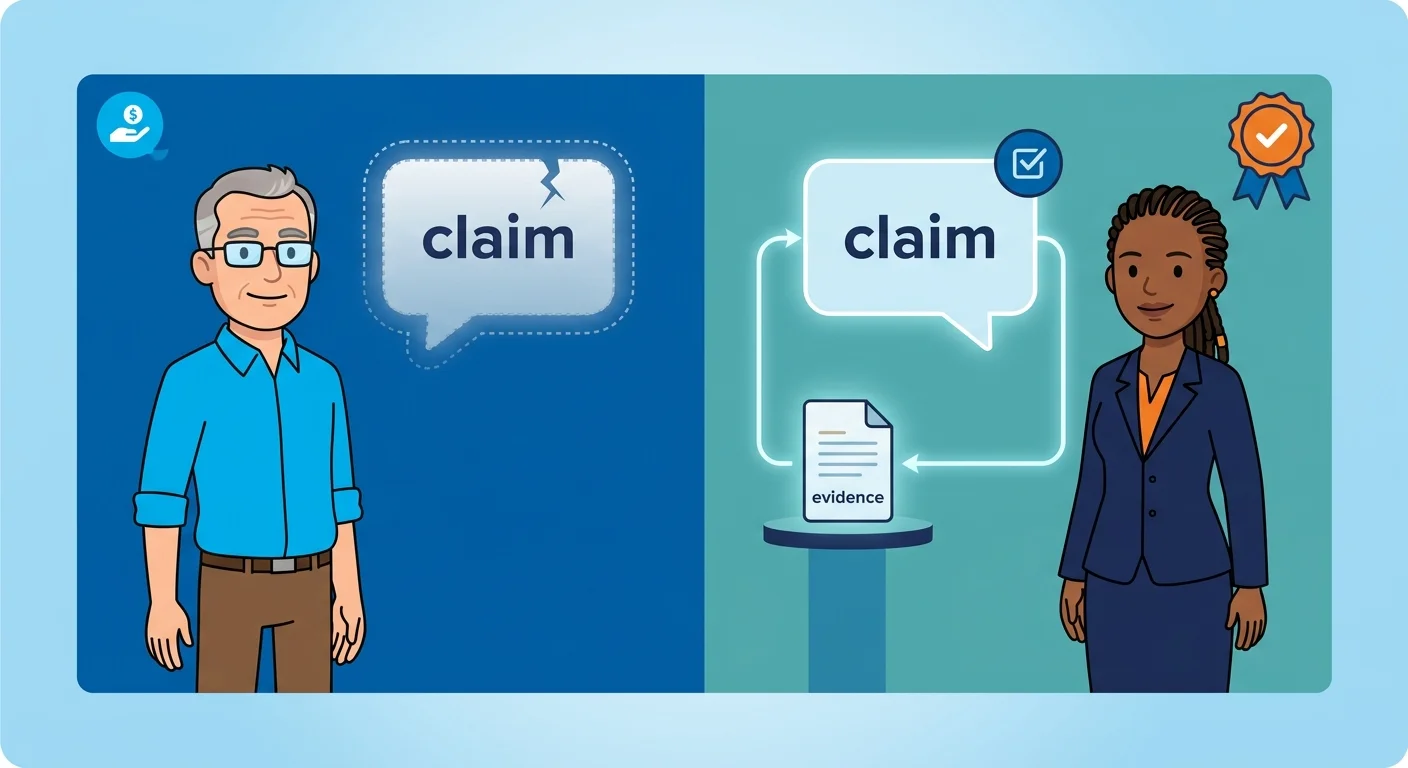
Here's the gap almost nobody closes: businesses publish content, but they never build a case file. A claim sitting alone on a service page is just a statement made in an empty room, with nobody there to back it up.
So think about what a courtroom does with testimony nobody can support. It gets struck from the record, no matter how sure the witness sounded. Generative engines run that same filter on every sentence you put online, deciding in milliseconds whether a claim has an exhibit behind it.
And that filter has real stakes in 2026, because the whole fight for visibility has moved. It's not about ranking first in a list of blue links anymore. It's about becoming the trusted, cited source inside one definitive AI-generated answer. Aim at the old target and you're aiming at a spot that's already empty.
This is the entire premise behind Answer Engine Optimization: structure your information so AI models can understand, verify, and cite a claim with confidence, not just index it. A proof graph built specifically for AI citation treats every statement as evidence to be checked, not copy to be read. That's the distinction most publishing schedules were never built around.
And the cost of skipping this step is already measurable. Recent Pew Research Center data on Google searches found that people who hit an AI summary clicked a traditional result in just 8% of visits, against 15% for those who saw no summary. Nearly half the click-through vanishes the second an AI answer forms without your evidence attached.
Why Keyword-Targeted Articles Alone Can't Survive an AI Fact Check
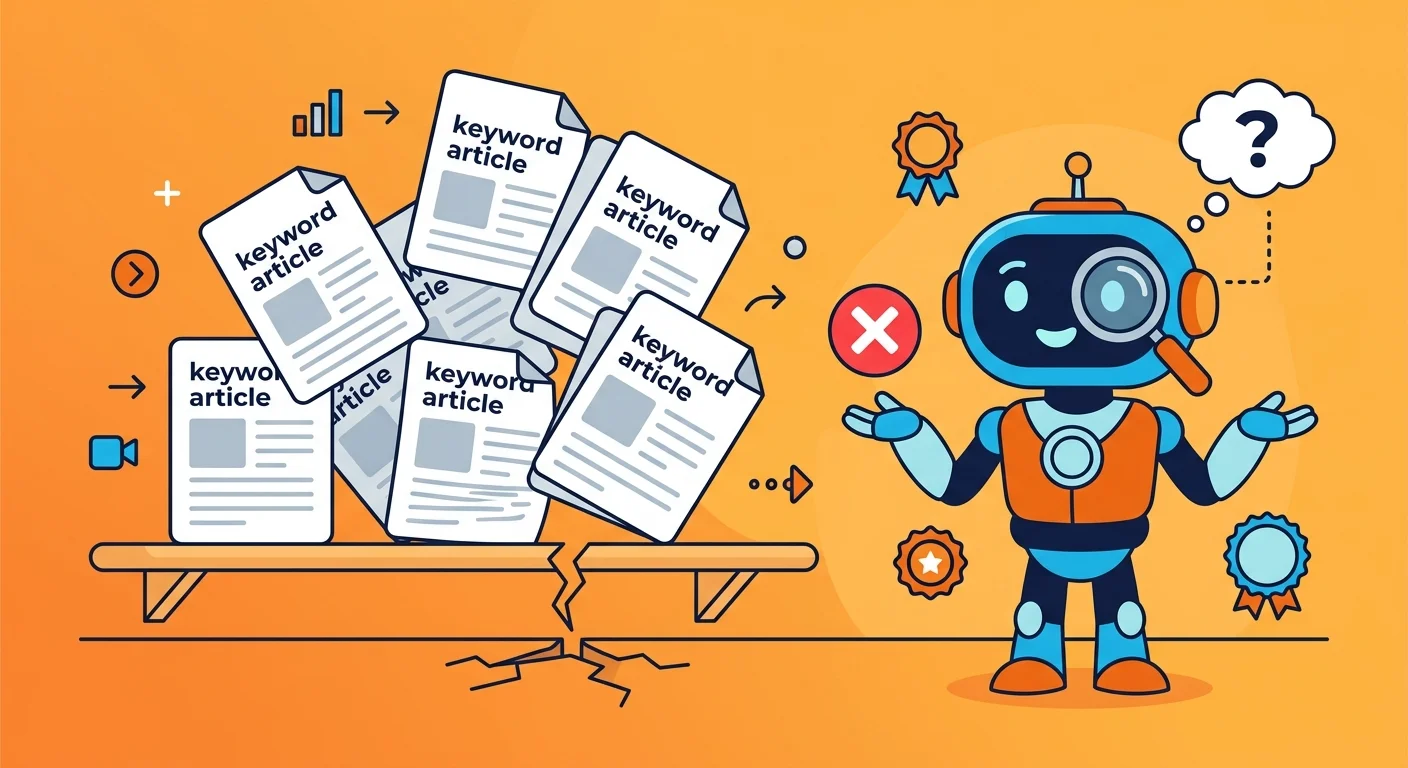
Keyword-targeted articles were built to signal relevance to a ranking algorithm. Traditional search optimization rewarded density, placement, and repetition of a target phrase, while proving that a claim was actually true was never part of the scoring.
AEO flips that priority on its head. It asks whether a claim can be verified, not whether you worded it nicely. So an article optimized only for keyword position tracking has no defense the moment a generative engine starts checking its work.
The Failure Mechanism Behind Keyword-Only Content
Here's the failure mechanism, plain as it gets. A keyword-targeted article states a fact once, alone, with no structured link to a source a machine can actually parse.
So when a retrieval system pulls that page alongside competing documents, it has nothing to weigh the claim against. Research on retrieval-augmented generation, detailed in the arXiv preprint server, shows utility-based attribution methods hold real promise for sorting competing sources. But complex inter-relationships among retrieved documents such as redundancy, complementarity, and synergy still create significant challenges for tying a claim back to its evidence.
That means an unwired claim doesn't just fail to stand out. It becomes noise the retrieval system has to filter around, and filtered-around content never makes it into a cited answer.
What Gets Lost When Content Has No Evidence Layer
What gets lost isn't visibility in the old sense. It's inclusion in the actual conversation a generative engine is having with the person who asked the question.
Businesses leaning only on keyword-targeted articles can't assume a searcher will scroll a page of results to find them anymore. A comparative study of practical search tasks, drawn from a U.S. representative sample and reported in published research data, found that participants using ChatGPT were faster and more likely to find the correct solution than those using Google.
So the article itself is now competing to become the answer, not a link beside it. And a business still leaning on unverified anecdotes should read how to tell whether published case studies hold up as real evidence or read as AI-generated filler before it publishes another one.
The Machine-Readable Proof Architecture: How Claims Get Wired to Evidence
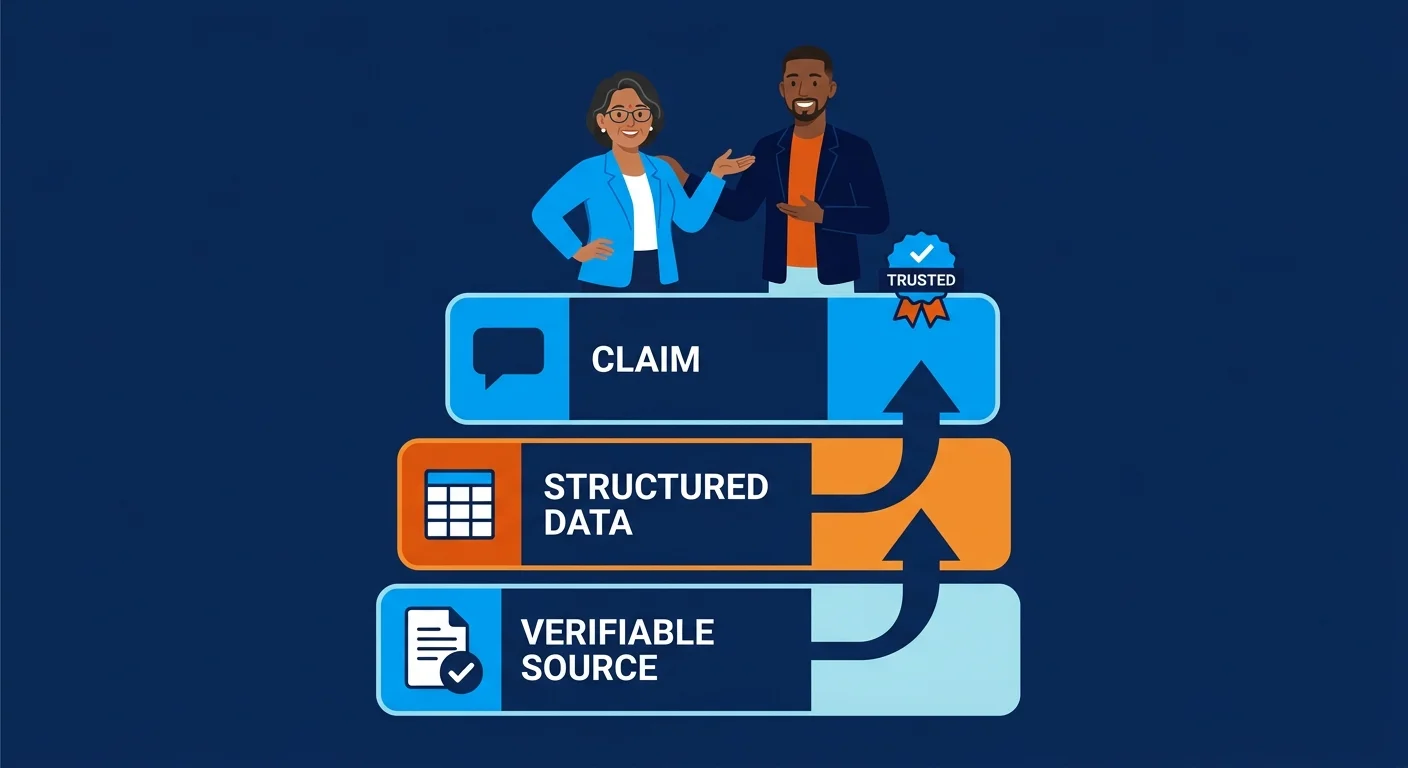
So what does the working structure actually look like once the mapping's done? Call it the Machine-Readable Proof Architecture: a setup where every claim on a website carries its own attached exhibit, ready for a generative engine to inspect the second it asks.
And this isn't another content format. It's a wiring standard that treats a business's whole digital footprint as one interconnected evidence graph, not a stack of separate pages.
Here's what changes. Instead of writing a claim and hoping it reads as credible, the business writes the claim and attaches the record that proves it, in a form a machine can parse without a human to explain it first. Businesses that want to see how that holds up for a single location or service area can look at how to build an auditable proof graph for local service businesses, where the same wiring gets applied at a narrower scale.
| Approach | What It Signals | AI Engine Trust Outcome |
|---|---|---|
| Isolated Claim, No Markup | A statement asserted with no structured data or source attached | Treated as unverifiable noise, excluded from cited answers |
| Keyword-Targeted Article Alone | Relevance to a topic through wording and repetition | Recognized as content, not confirmed as evidence, low citation weight |
| Claim Plus Structured Markup | Entity and relationship data a retrieval system can parse directly | Improved machine readability, but still lacking a traceable source |
| Claim Wired to a Machine-Readable Proof Architecture | A verifiable exhibit attached to every assertion across the site | Confirmed as trustworthy evidence, eligible for citation inside a generated answer |
The Three Layers of a Wired Claim
A wired claim isn't one document. It's three layers stacked on top of each other, and each one does a different job.
The first layer is the claim itself, written plainly enough that a retrieval system can isolate it as a single unit of meaning. The second is the structured markup, Schema.org and its relatives, that names the entities involved and how they relate. The third is the underlying evidence graph, the network of sources, records, and cross-references that lets an AI model trace the claim back to something verifiable.
That third layer is where most publishing schedules quietly stop. Knowledge graphs used for retrieval attach authority estimates to entities and their relationships, then propagate that evidence along the network's own links to strengthen how the system understands both, a mechanism confirmed by published research data. A business that never builds those links has a graph with nothing to propagate.
Who This Approach Is Not Built For
Now, this isn't for everyone. If a business wants one keyword-targeted article a month and nothing structural underneath it, this approach was never built for that ask.
And businesses chasing a quick placing in the classic ten blue links, with zero interest in what happens after a generative engine reads the page, aren't the fit here. The wiring takes real structural work, not a single publish button.
But that filtering's already happening at the generative layer, and it removes the choice to skip it. Every claim a business makes online is now subject to automated fact-checking, and the evidence behind it has to be exactly as clear as the claim itself. There's no version of 2026 visibility that lets a business opt out of that scrutiny and still get cited.
How Structured Data and Knowledge Graphs Carry the Evidence Load
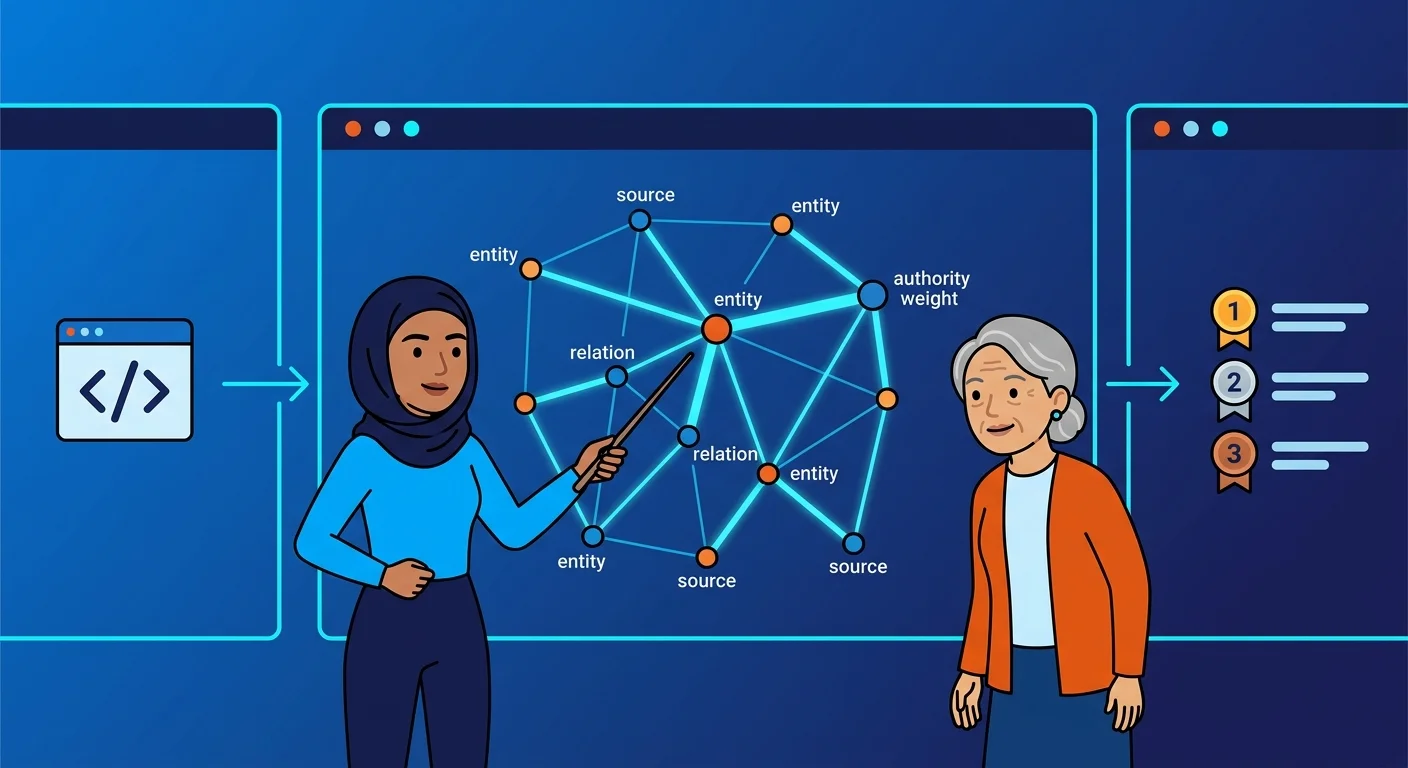
So what actually does the wiring, at the technical level? Two systems carry almost the whole evidence load: structured data markup and the knowledge graphs that read it.
Neither one is new. What changes in 2026 is how much weight generative engines put on them when they decide whether a claim gets cited or gets filtered out.
| Source Selection Method | Precision Improvement | What It Measures |
|---|---|---|
| SourceRank ranking method | Approximately 40% precision improvement over CORI and Coverage | How reliably a system ranks competing sources by authority when tested against online book databases |
| CORI and Coverage baseline methods | Outperformed by approximately 40% margin | Traditional source selection approaches used as the comparison baseline for precision testing |
| Structured data markup (Schema.org and related) | Not a precision percentage; a comprehension mechanism | Whether Google Search can identify entities such as people, books, or companies mentioned in a page's markup |
| Knowledge graph authority propagation | Not a precision percentage; an evidence-weighting mechanism | How authority estimates attached to entities and relations get propagated along network links to strengthen the model |
What Structured Data Actually Tells an AI Engine
Here's what structured data is actually for. Google Search reads the markup it finds on a page to understand what's on it, and to gather information about entities across the wider web such as people, books, or companies named in that markup, a process detailed by Google Search Central.
So markup isn't decoration. It's a translation layer that turns a human sentence into something a machine can classify without guessing.
A business that skips this layer is still making claims. It's just making them in a format only a person can read, which shuts out every system working at machine speed, including the one deciding what to convert patient outcomes into AI-readable schema markup for.
How Knowledge Graphs Rank Competing Sources
Structured data tells an engine what a claim is. A knowledge graph decides which competing version of that claim to trust.
This is where that earlier authority-propagation mechanism does its real work, ranking one entity's claim above another's on the strength of its connections, not the confidence of its wording. Research on source selection for online book databases found a ranking method built on that same authority-propagation logic improved precision over two established methods by approximately 40%, according to published research data.
That gap isn't a rounding error. It's the difference between a claim a generative engine trusts enough to cite and one it quietly routes around.
Who Should Not Bother Building a Proof Graph Yet
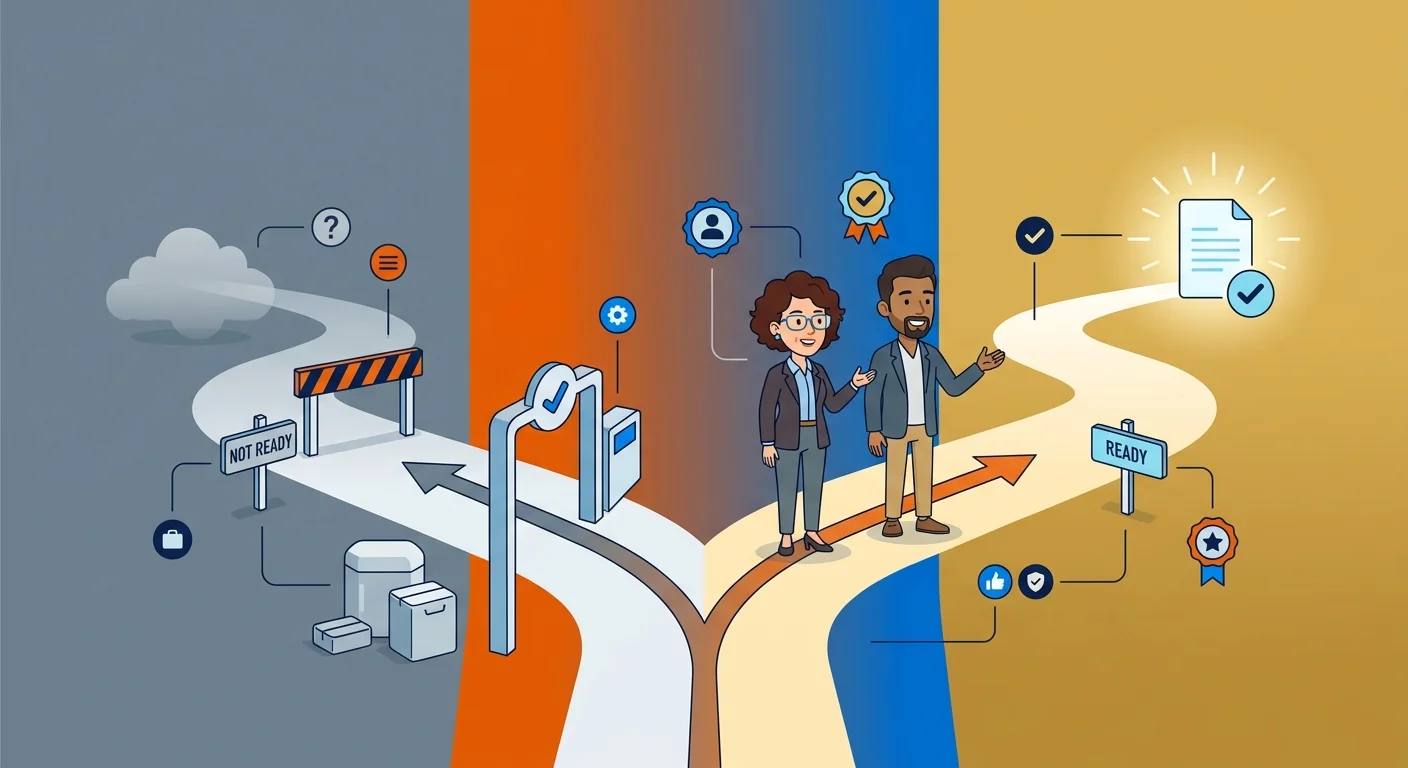
Let's be blunt about who this is for. It's not for a business that wants one keyword-targeted article a month and nothing else touching it.
So if the goal is a quick placement in the classic ten blue links, and there's zero interest in what a generative engine does with the page after, this wiring is wasted effort. It solves a problem that business hasn't decided to have yet.
But here's the deeper reason it isn't optional forever, even for them. Generative models already carry a documented failure mode where they hand back confident, unverified answers, and researchers have built a method that estimates the odds a model hallucinates when it's working through in-context learning with example data, detailed on the arXiv preprint server. A claim with no wired evidence behind it is exactly the kind of gap that failure mode fills in on its own.
So the real question was never whether to build a proof graph. It's whether the business is ready to have every claim it publishes checked at machine speed, starting now.
Building the Wiring: A Section-by-Section Blueprint for Claim-to-Evidence Mapping
So let's leave the qualification behind and get to the actual build. A deposition is only as strong as the exhibits stapled to it. Building the wiring means producing an exhibit for every claim a business is already making in public.
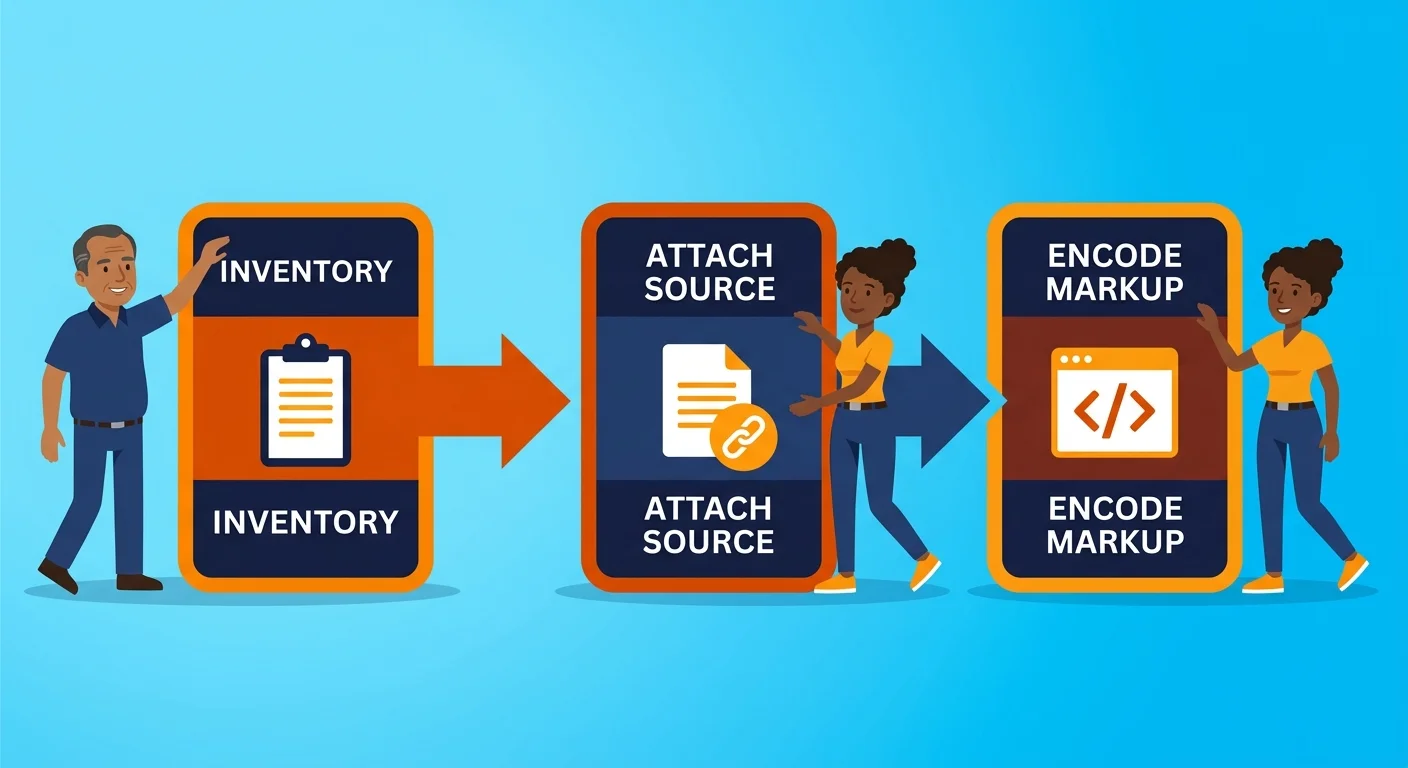
This isn't a redesign. It's three steps, in order, run over the content that already exists, then run again over everything published after.
| Step | What Gets Built | Evidence Type Used |
|---|---|---|
| Claim Inventory | A literal sentence-by-sentence list of every claim currently published, marked for whether backup evidence exists | None yet — this step audits existing prose to find unwired claims |
| Source Attachment | A verifiable source placed directly next to each isolated claim, replacing vague references to expertise | Published studies, regulatory filings, original case files, or documented results the business can stand behind |
| Structured Markup | Schema.org markup that names the entities and relationships involved, translating the claim-source pair into machine-readable form | Entity and relationship markup that lets a generative engine parse the connection without human explanation |
| Graph Reinforcement | Cross-references between wired claims so authority propagates across the site instead of sitting isolated on one page | The knowledge graph formed by the site's own interlinked, sourced claims |
Step One: Inventory Every Claim Already Live on the Site
Start by treating the website like a deposition transcript nobody's ever cross-examined. Every page, every service description, every result mentioned in passing is a claim sitting on the record.
And the inventory has to be literal. List each claim, sentence by sentence, and mark whether anything actually backs it up. Most businesses find the list runs longer, and the backup thinner, than they figured.
Step Two: Attach a Verifiable Source to Each Claim
Here's the part most businesses skip. Once a claim's isolated, it needs one verifiable source sitting right next to it, not buried three clicks away on some separate page.
That source can be a published study, a regulatory filing, an original case file, or a documented result the business can stand behind under scrutiny. What it can't be is a vague nod to expertise with nothing a machine can trace.
Step Three: Encode the Wiring in Structured Data Markup
Now the claim and its source both live on the page. The third step is telling a machine how the two relate, and that's exactly what structured data markup does.
This builds straight on how retrieval systems already read the web. Structured markup lets a page name its own entities and their relationships instead of forcing a machine to guess them from prose, the same mechanism that lets a search engine gather reliable information about the people, companies, and claims on a page. That's what turns an inventoried, sourced claim into something a generative engine can actually verify and cite.
Frequently Asked Questions
Same objections come up every single time. So here are the straight answers, no qualification rounds.
How is wiring claims to evidence different from traditional acquiring inbound links?
Acquiring inbound links says other sites vouch for your page. Claim-to-evidence wiring proves the claim itself, stapling a specific verifiable source to a specific sentence instead of borrowing somebody else's credibility.
What is a machine-readable proof graph and why does it matter for AI search?
It's the web of sources, records, and cross-references that lets a generative model trace a claim back to something real. Without that graph, your claim is just an unsupported sentence sitting on a page.
Can AI engines tell the difference between a real case study and a fabricated one?
Not on their own. That's exactly what the wiring handles, because a case study with a traceable source reads differently to a retrieval system than one with nothing behind it. Generative models already tend to hand back confident, unverified answers, and an unwired claim gives that tendency room to fill the gap.
What role does structured data play in making claims verifiable?
Structured markup lets a page name its own entities and how they connect, instead of making a machine guess from prose. That's the mechanism a search engine uses to gather reliable information about the people, companies, and claims on a page.
If my site already places well in the classic ten blue links, why does claim-to-evidence wiring matter?
Placing in the classic ten blue links answers a different question than the one generative engines ask. An engine deciding what to cite checks whether a claim has verifiable evidence attached, not whether the page ranks for a keyword.
How does a knowledge graph connect to the evidence AI Overviews use?
A knowledge graph attaches authority estimates to entities and their relationships, then pushes that evidence along its own links. AI Overviews lean on that same propagated evidence when picking which cited source to trust over another.
What are the biggest mistakes businesses make when trying to get cited by AI search engines?
Publishing a claim with no verifiable source next to it is the most common failure. A close second is treating structured markup like decoration instead of the translation layer that lets a machine read the claim at all.
The Bottom Line
So walk it back to the deposition one last time. A claim with no exhibit stapled to it is testimony a generative engine throws out before a reader ever sees it. Wire that same claim to a verifiable source and it stands, it gets cited, and it keeps standing the next time somebody asks the question.
Here's the actual stakes in 2026. Businesses still publishing isolated claims and calling it done are building a case file nobody can cross-examine. The ones wiring every claim to its evidence are the only names a generative engine trusts enough to say out loud.
So here's the whole shift, plainly: authority now belongs to whoever built the Machine-Readable Proof Architecture, not whoever wrote the most confident sentence. Look at what your site actually claims, and ask how much of it survives an audit. If the honest answer is not much, see where your evidence is missing with an AI visibility check.