
Why Citations Are Replacing Rankings as the Real Scoreboard
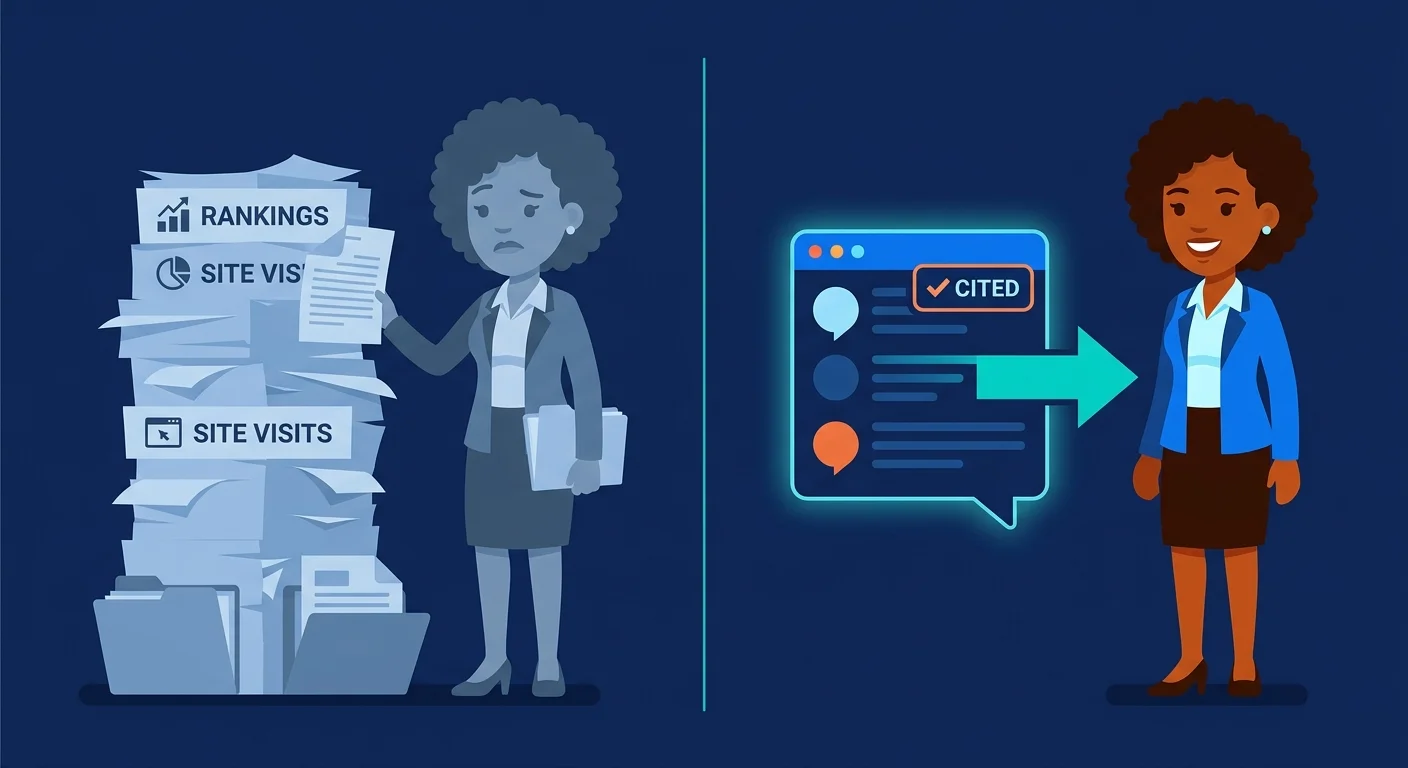
So the scoreboard changed. Rankings told you where a page sat in a list. Citations tell you whether an AI system trusts a source enough to name it right there in the answer.
And that's a whole different game. The old game was rankings; the new one is citations. Keep scoring yourself by the old rules and you'll never notice you stopped competing in the one that counts.
Here's the thing: a top spot in the classic ten blue links tells you nothing about whether an AI system will cite the page behind it. Position and citation get measured by completely different machinery.
Gerek Allen puts it plainly: you can win every keyword position tracking metric a commodity retainer brags about and still be invisible inside AI-generated answers. Closing that gap is exactly what how a founder's twenty-year background anchors entity trust is built for, because the answer lives in entity trust, not position.
| Metric | What It Measures | Relevance to AI Search |
|---|---|---|
| Keyword Position Tracking | Where a page sits inside placing in the classic ten blue links for a given search term. | Tells a business nothing about whether an AI system trusts or cites the page behind that position. |
| Site Visits | How many people land on a page after clicking through from a search result. | Shrinks as a measure of value when readers get their answer directly inside an AI-generated response and never click at all. |
| Citation Rate | Whether an AI system names a business as the source directly beside the claim it supports. | Reflects the entity trust an AI system has built for that source, which is the mechanism that now decides visibility. |
| Mention Frequency | How often an AI system references a brand or business without linking that reference to anything. | Builds recognition inside the model but does not send a reader anywhere, unlike a citation. |
What Counts as an AI Citation Versus a Mention
A citation is the AI system naming the source right beside the claim it backs up. A mention is the AI system talking about your brand without linking that reference back to anything.
And that gap matters more than most retainers will admit. According to published research data, only 23.1% of brand mentions in AI-generated responses across tracked platforms come with a citation to the brand's website in that same response.
Why a Mention Without a Citation Still Has Value
So does an uncited mention still count for something? Yeah, it does. It still shapes how an AI system frames the brand when a reader asks a related question down the line.
But a mention on its own can't send a reader anywhere. It builds recognition inside the model, not a path back to the business, which is a different kind of value than a commodity retainer is wired to report.
The Problem With Retainer-Based Content Production
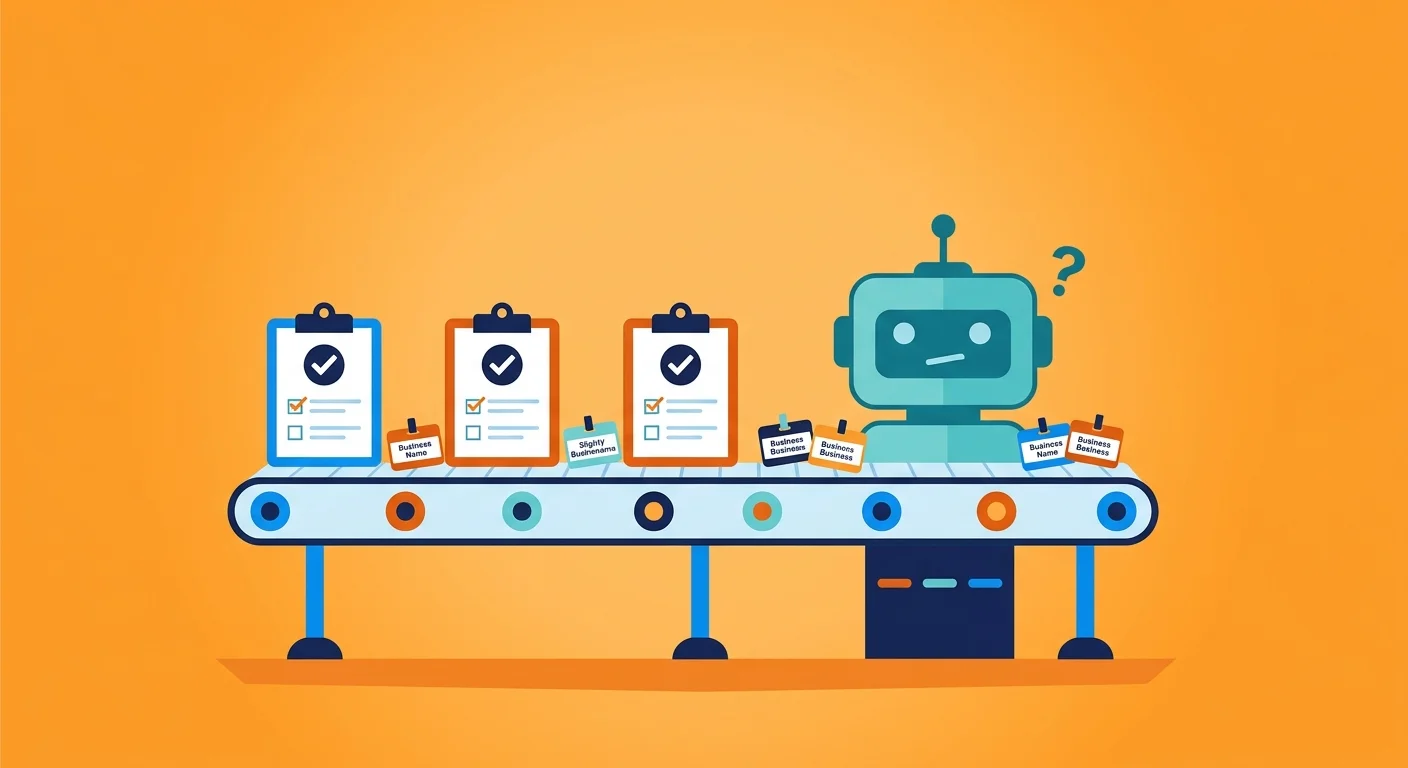
A commodity retainer was built to serve a monthly checklist, not a citation engine. And that one distinction is the whole problem.
Here's the thing: retainers exist to justify a recurring invoice. So the work gets sliced into countable units. A set number of keyword-targeted articles, a stack of social posts, a report full of keyword position tracking movement.
But none of those units were ever built to answer the question an AI system actually asks. Can this entity be corroborated across a lot of independent references? A checklist has no line item for that.
Why Monthly Deliverable Checklists Fail AI Trust
Here's the thing about a monthly checklist: it rewards output, not coherence. Twelve keyword-targeted articles delivered on time looks like progress on an invoice.
But volume and coherence aren't the same asset. Commodity agencies, built on the logic of traditional search optimization, chase metrics that matter less and less in an AI-first search world.
And that's not a minor miss. It's a structural mismatch between what the retainer measures and what a citation actually needs.
So this explains something a lot of owners are quietly figuring out right now. Their big investment in traditional online promotion isn't making them visible where discovery now happens, inside the AI-generated answers themselves.
How Entity Inconsistency Creeps Into Retainer Work
So where does the inconsistency actually come from? It creeps in through rotation.
A retainer runs on staff turnover, contractor swaps, and account handoffs. Each new writer describes the business a little differently. Credentials get phrased a fresh way, and a bio gets trimmed for one platform and left long on another.
No single change looks damaging on its own. But an AI system reading across all of it sees contradiction where it needs corroboration, which is the exact failure this piece on why clinic owners are better served by a boutique founder than a faceless corporate agency was written to unpack.
How AI Systems Actually Decide What to Cite
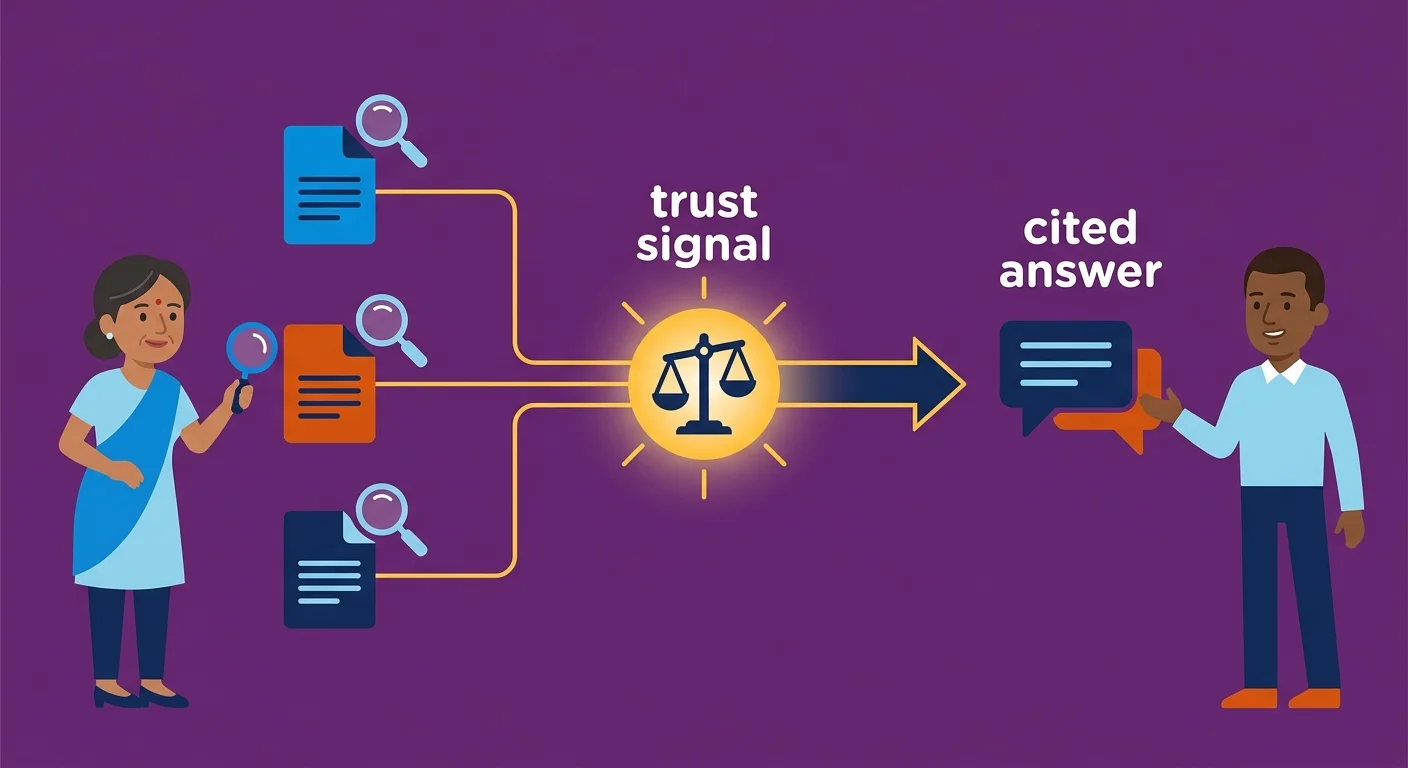
So how does an AI system actually pick who earns the citation? It runs a credibility check most retainers have never even heard of.
And that check isn't a content audit. It's an entity audit, and it works nothing like a checklist of deliverables.
Here's the thing: knowing that mechanism is the whole gap between guessing at visibility and architecting it. The next two sections break down exactly what the model rewards, and where the old scoreboard still earns its keep.
| Organic Position | AI Overview Citation Likelihood | What This Signals |
|---|---|---|
| Position 1 | 43% of the time | A top organic slot still earns a strong share of AI Overview inclusion, but inclusion is not citation trust. |
| Position 20 | 7% of the time | Citation likelihood declines steadily as organic position slips, showing position alone cannot sustain visibility. |
| Any position | Governed by cross-source corroboration, not rank | What actually decides the citation is corroboration across distinct sources describing the same entity, not where a page ranks. |
Cross-Source Corroboration Over Raw Content Volume
Here's the core mechanic. In parametric language models doing closed-book generation, citation probability tracks cross-source corroboration far more than raw document count. The model isn't counting how many pages a retainer cranked out.
It's counting how many distinct, independent sources describe the same entity the same way. That's a structural check, not a volume check.
So a business with fewer pages but tight corroboration beats a business with hundreds of contradictory ones. Gerek Allen built the AI Visibility Architect model around that exact mechanic, because it's what what published research data confirms about how these systems really weigh trust. A faceless retainer optimized for output volume is optimizing against the wrong variable entirely, the same failure mode unpacked in how automated bots get used to mimic real human authority.
Where Placing in the Classic Ten Blue Links Still Matters (and Where It Stops)
Now, none of this means placing in the classic ten blue links has gone worthless. It still shapes whether an AI system ever lays eyes on the page in the first place.
URLs holding the top organic spot show up in AI Overviews 43% of the time, per seoClarity's research, and that figure slides steadily as position slips, dropping to just 7% by position 20. So a strong position still buys you visibility inside the pool AI systems pull from.
But position alone doesn't buy the citation itself. It buys entry into a room where entity trust and cross-source corroboration decide who actually gets named, which is exactly why a commodity retainer chasing position without architecting the entity behind it keeps losing the citation it was never built to earn.
Who Should Not Hire an AI Visibility Architect

So who shouldn't hire an AI Visibility Architect? Start with any business still measuring itself by site visits and keyword position tracking alone.
If those numbers still make you happy, entity-first work is going to feel slow, abstract, and tough to justify against a tidy monthly checklist.
This isn't for businesses chasing a quick spike before one seasonal push. Entity consistency compounds; it doesn't spike on schedule. And it isn't for owners who want a faceless team swapped in and out behind the scenes, because the model runs on a named, accountable architect.
It's also not for a business unwilling to touch its own structured data, credentials, or bios, and why identity coherence outranks a fragmented content footprint spells out what gets lost when it won't. If a commodity retainer's checklist still feels like enough, nothing here changes that. But if the citation gap already feels real, that discomfort is the signal.
Building the Foundation: What Entity Architecture Actually Involves
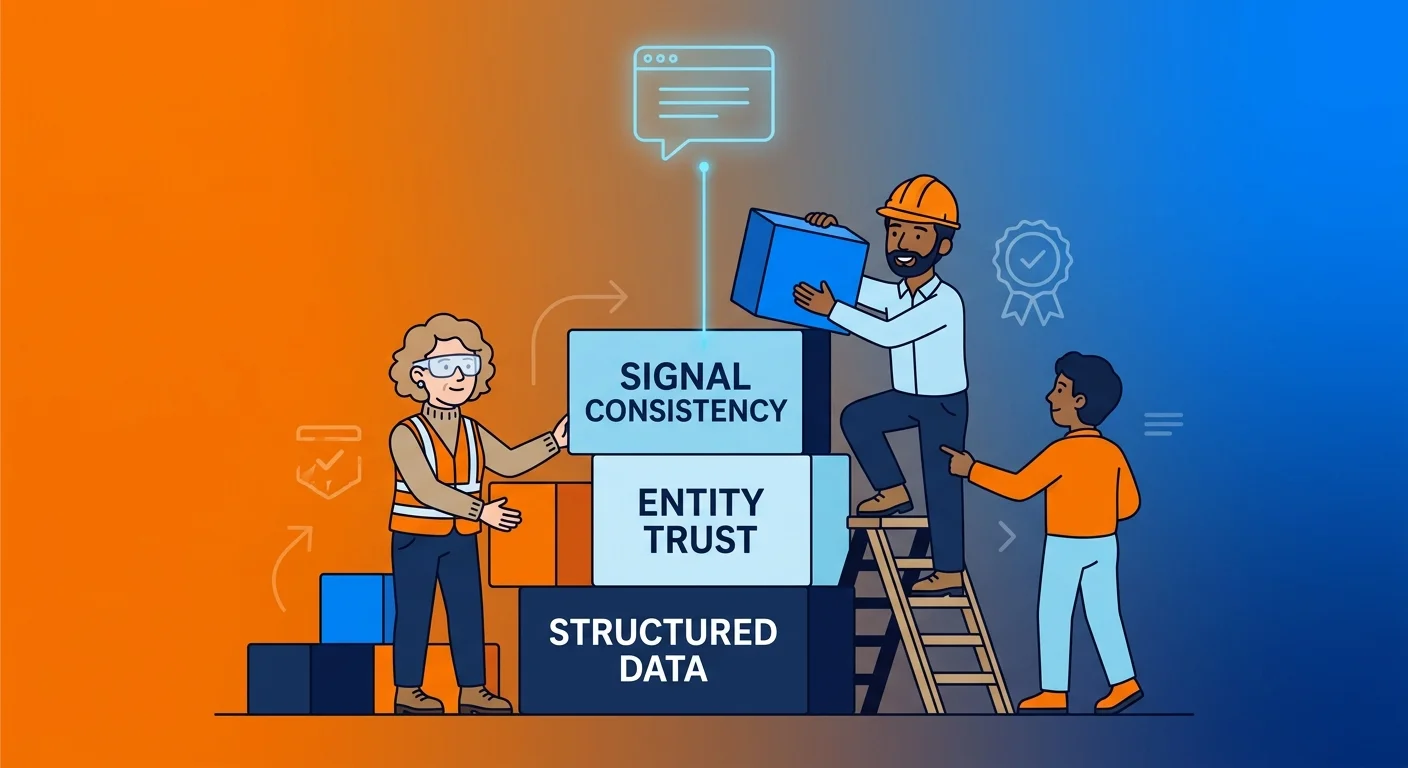
So what's actually in the foundation? Not a mission statement, not a tagline. It's a set of concrete, verifiable signals that describe the business the same way everywhere an AI system might run into it.
Sounds simple. It rarely is, because most businesses have never once audited their own footprint for contradiction.
Building the foundation means fixing that before you stack another layer of content on top. And two components carry the real load.
| Foundation Component | What It Does | Who Typically Owns It |
|---|---|---|
| Structured Data Markup | Declares who the business is, what it does, and how its credentials connect to it, in a format built for machine reading rather than human skimming | A named architect who treats markup as foundation work, not an afterthought bolted onto a finished page |
| Credential and Bio Consistency | Repeats the same name, title, and description of expertise identically across every profile and platform an AI system might cross-reference | A single accountable owner who holds the entity picture steady, rather than a rotating cast of contractors |
| Cross-Source Corroboration | Builds independent references to the same entity across distinct sources, the exact signal citation probability tracks most closely | An AI Visibility Architect coordinating the footprint on purpose, instead of a checklist assigning it to whoever is free that month |
| Ongoing Signal Maintenance | Catches drift before one contradictory bio undoes consistency built everywhere else | Continuous ownership by the same architect, not a one-time deliverable closed out on a monthly invoice |
Structured Data as the First Load-Bearing Wall
Structured data is the first one. It's markup added straight to a website that tells a machine, in its own language, exactly who the business is, what it does, and how its credentials connect.
Without it, an AI system is left guessing at meaning from loose text. With it, the same facts get declared out loud, in a format built for machines to read, not humans to skim.
A commodity retainer rarely bothers with this. There's no visible deliverable to point at on a monthly report, so it gets skipped for one more article.
Maintaining Signal Consistency Once the Foundation Is Set
Pouring the foundation once isn't the finish line. Signal consistency has to hold across every profile, every bio, every credential mention the business has out in the world.
That means the same name, the same title, the same description of expertise, repeated identically everywhere an AI system might cross-reference. One contradictory bio undoes work done everywhere else.
This is maintenance, not a launch task. An entity picture drifts the second nobody's responsible for holding it steady, which is exactly the gap a rotating retainer team leaves wide open.
Frequently Asked Questions
A foundation-versus-paint-job argument invites the obvious pushback. So before we close, a few direct questions deserve direct answers. No hedging, no "it depends" — just the reasoning behind the position this piece has taken.
Isn't 'AI Visibility' just a new name for traditional search optimization?
No. Traditional search optimization was built to win position in the classic ten blue links, a different scoreboard entirely. AI Visibility Architecture targets whether independent sources corroborate an entity enough for a model to trust and cite it, which is a structural question, not a ranking one.
My current agency says they 'do AI.' How is an AI Visibility Architect different?
Ask what specifically changed in the deliverables. If the checklist still counts keyword-targeted articles and keyword position tracking with "AI" slapped on the label, nothing structural moved. An entity audit, corroboration across sources, and structured data work look nothing like a repackaged retainer.
How can I tell if my commodity agency's work is actually earning AI citations?
Check whether your business gets named and cited inside AI-generated answers themselves. Not just whether pages still hold position in the classic ten blue links. If nobody has measured citation frequency at all, that absence is your answer.
Why do AI citations matter if they don't always result in a click to my website?
Because a citation builds trust and reach even without a click. A mention still shapes how an AI system frames your business to someone who never visits the site. That matters more as fewer brand mentions carry a linked citation back at all.
What is the first step in transitioning from a commodity agency retainer to working with an AI Visibility Architect?
Start with an entity audit, not another content order. Find every place your name, credentials, and description already live. Then find every place they contradict each other, before you add a single new page.
Does placing higher in the classic ten blue links guarantee an AI citation?
No. A strong position gets a page into the pool AI systems draw from, but that's entry, not the citation. Entity trust and cross-source corroboration decide who actually gets named.
Where This Leaves You
So here's where all this actually lands. A commodity retainer keeps repainting the outside of a building that was never structurally sound to begin with. Fresh keyword-targeted articles, another round of keyword position tracking, one more report on site visits, and none of it ever touches the foundation underneath.
An AI Visibility Architect does something else entirely. It pours the foundation first, entity consistency, structured data, corroboration across independent sources, so the exterior work finally has something solid to sit on. That's the only model built for a search world that cites entities instead of ranking pages.
Here's the thing: the business that wins the citation is the one whose foundation got poured with intention, not the one with the freshest coat of paint. If a commodity retainer has had your business repainting the same exterior for months without ever touching what sits underneath, that's the gap worth closing now. Start with an AI visibility check.