
What Actually Happens When AI Engines Decide Who to Cite
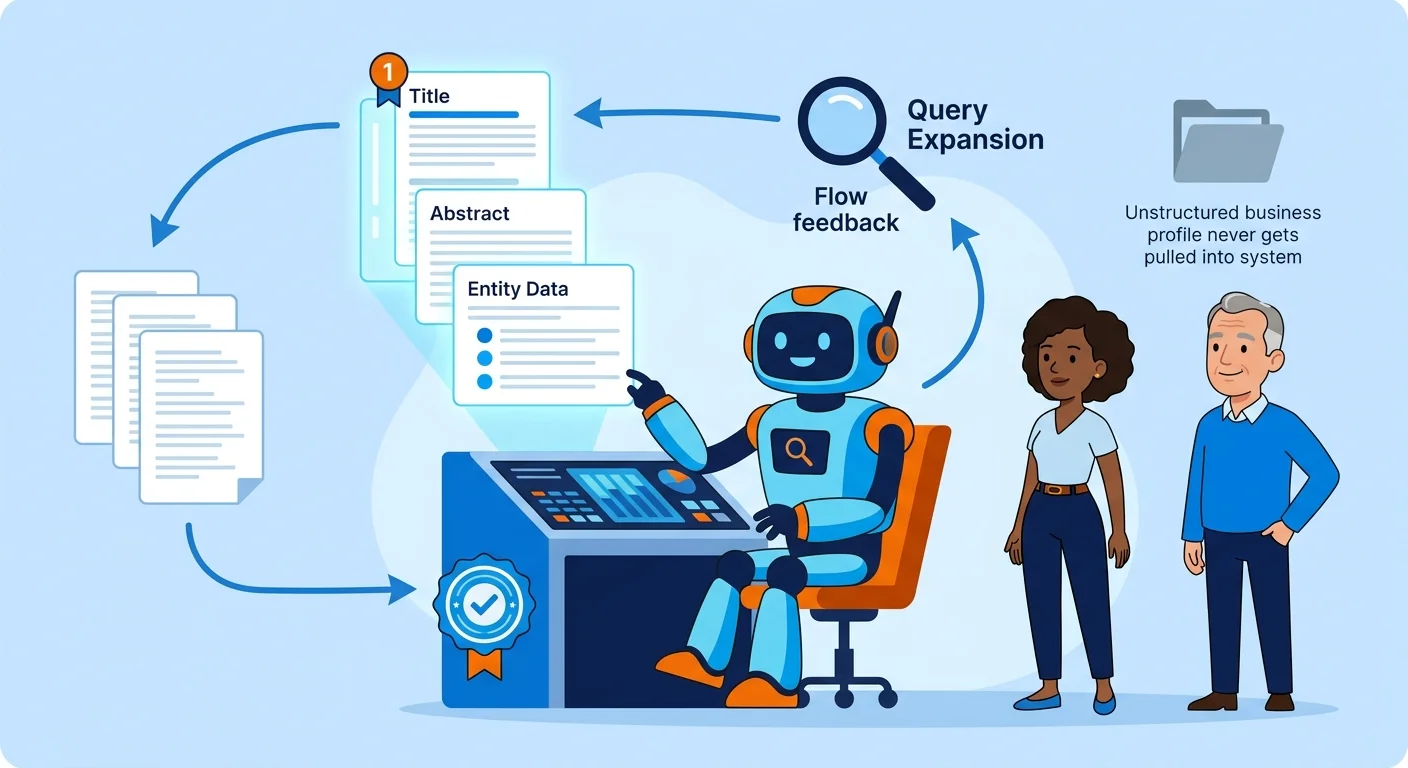
So how does a generative answer engine actually pick who to trust? It starts narrow. A retrieval system queries the unstructured fields first — a title, a short description — long before it ever touches the deeper structured data a business hands it.
From there, it pulls named entities out of documents it already trusts and uses them to widen its own search. National Institute of Standards and Technology research on precision medicine search documented this exact pattern, where structured fields reinforce the unstructured ones. Built for scientific literature, but the logic maps straight onto how an AI system picks which business to cite.
That's the piece raw infrastructure misses. A lone schema file feeds no named entities back into anything and gives a retrieval system nothing to expand against. Only an assembled, consistent profile generates that loop, which is exactly the comparison explored in how compounding authority assets stack up against rented visibility over time.
Why a Pile of Disconnected Tools Never Becomes a Knowledge Graph
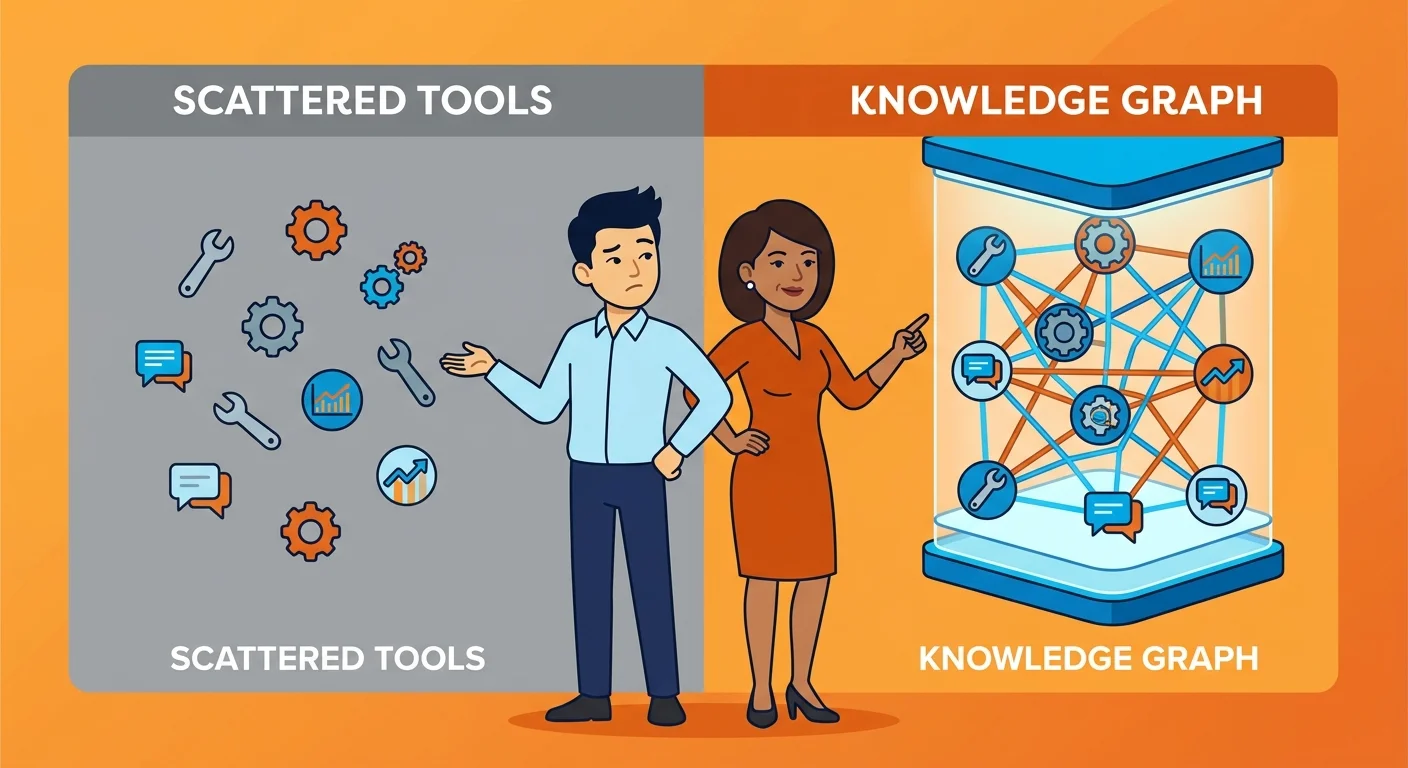
So why does a pile of infrastructure never turn into a working profile on its own? Because assembly is its own discipline, separate from buying the parts. And nobody sells assembly for $2,000.
A structured data file, a directory listing, a citation — three separate objects. Owning all three does nothing to make them reference each other, confirm each other, or settle their conflicts.
That's the gap the car parts picture was built to explain. You can inventory a garage full of components, price them, photograph them — and none of that makes them drivable. A knowledge graph built the same way sits just as parked.
| Infrastructure Component | Assembled Knowledge Graph | Disconnected Tool Pile |
|---|---|---|
| Structured Data Markup | Cross-referenced against every other fact about the business so an answer engine can verify it rather than merely read it | Sits alone as a single file, unconnected to any entity profile or citation that could confirm it |
| Entity Profile | Functions as the anchor record every other component maps back to, kept internally consistent across services, credentials, and locations | Exists as an isolated listing with no mapped relationships, easily contradicted by other fragments an engine finds elsewhere |
| Citations | Feed named entities back into the retrieval system as confirming signals for the same underlying profile | Sit as standalone mentions with nothing tying them back to a verified profile, offering no confirming signal at all |
| Ongoing Consistency | Maintained through an engineered system built to absorb changes without manual rework at every step | Requires manual intervention at each update, the exact bottleneck that limits scale and slows every correction |
The Knowledge Graph Question Nobody Asks Before Buying Infrastructure
Here's the thing: almost nobody buying $2,000 infrastructure asks whether it produces a knowledge graph at all. They ask whether it includes schema markup, whether it includes a profile, whether it includes citations. Checklist questions, not systems questions.
But a knowledge graph isn't a checklist item. It's the connective layer that lets every one of those pieces confirm the others, and that's exactly what how to audit and track the compounding return on an infrastructure investment has to measure against — because a return only exists where connection exists.
Skip that connective layer and a business can own every component on the checklist and still have nothing an AI system can cite with confidence. Owning the parts isn't owning a system.
Why Manual Knowledge Graph Maintenance Quietly Becomes a Full-Time Job
Now consider what happens after the parts are bought. Someone still has to keep them consistent as the business changes — a new location, a new credential, a service that gets renamed.
Current knowledge graph construction pipelines still lean on manual intervention at multiple stages, and that dependency is well documented in the arXiv preprint server's research on graph construction methods. That manual burden caps how far a pipeline can scale. It slows down every update a graph needs.
So a $2,000 setup doesn't just skip integration once. It leaves someone holding an ongoing, manual maintenance job with no system built to absorb it — the exact recurring labor a permanent, engineered graph is designed to erase.
What Happens When AI Search Gets Your Business Wrong
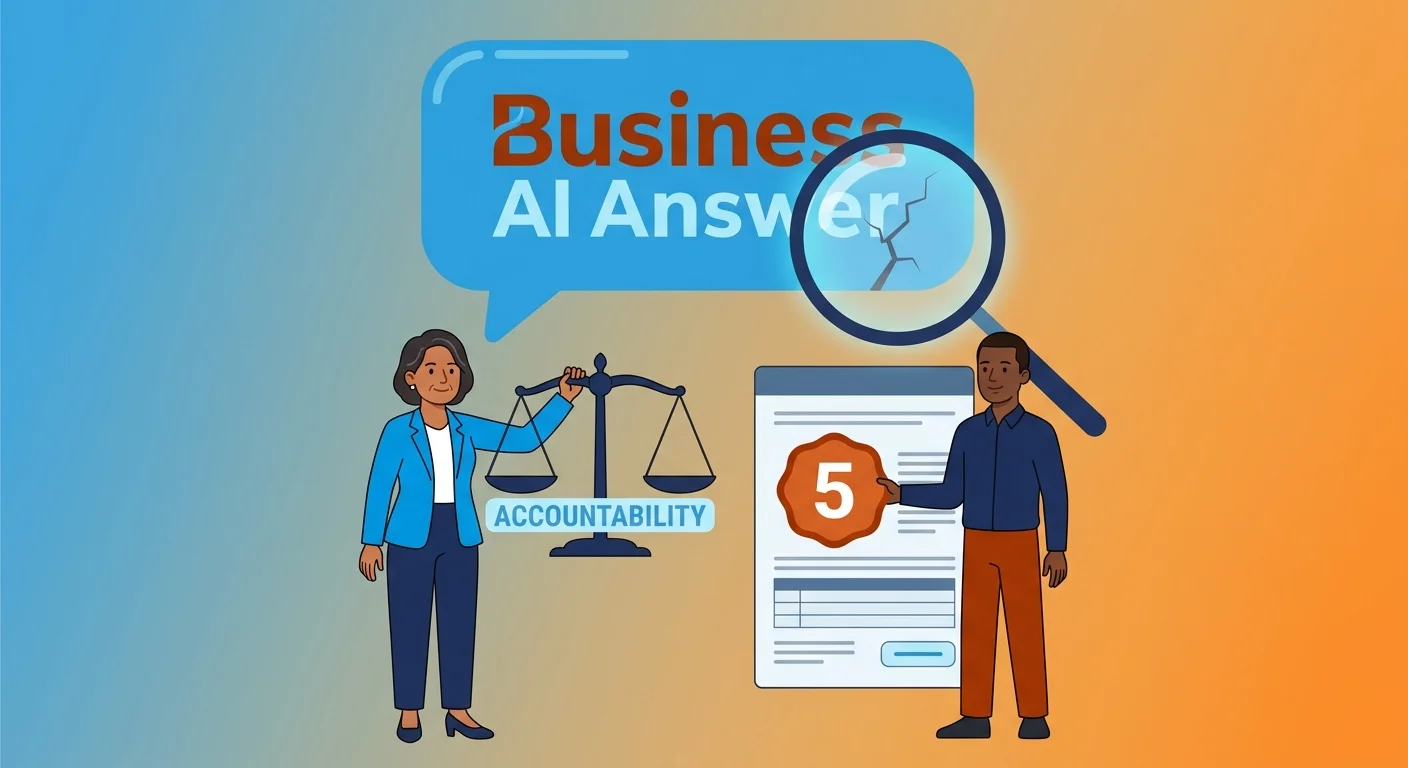
So what actually happens when that connective layer never gets built? This isn't hypothetical.
Generative answer engines already get things wrong at a measurable rate. And the errors don't announce themselves. A business just vanishes from an answer, or shows up with a detail that stopped being true a while ago.
That failure rate is documented. And it's worth sitting with before you assume a $2,000 setup is good enough.
| Finding | Scope | What It Means for a Business Entity |
|---|---|---|
| Unsupported claims in AI-generated answers | 98,020 atomic claims decomposed from Google AI Overview responses | A business with a thin entity profile has no guarantee its facts survive translation into a generated answer. |
| Rate of claims unsupported by cited sources | 11.0% of decomposed claims, with omission as the dominant failure mode | Omission, not fabrication, is the likelier outcome, which means a weak profile is more likely to disappear than to be misquoted. |
| Regulatory exposure for steered or altered outputs | AI companies altering outputs in ways contrary to consumer expectations, evaluated under Section 5 of the FTC Act | A business cannot rely on a platform correcting its own record, since accountability for accuracy still traces back to the source data supplied. |
Reading the AI Overviews Accuracy Data Correctly
One analysis of Google AI Overviews ran across 55,393 queries and broke the responses down into 98,020 atomic claims. Of those, 11.0% weren't supported by the pages the answer engine actually cited.
Here's the kicker: the dominant failure wasn't fabrication. It was omission. The system didn't invent facts nearly as often as it simply left something out of the picture it built.
That distinction matters if a business runs a thin entity profile. An answer engine facing incomplete signals doesn't stop and ask for more — it fills the gap with whatever fragment ranks, or it drops the business from the answer entirely, a risk explored further in why cheap monthly retainers fail to compound into a durable authority asset.
Who Is Actually Accountable When an AI Answer Gets a Business Wrong
Now the harder question. When an AI-generated answer gets a business wrong, who actually owns that mistake?
The regulatory answer isn't comforting to anyone hoping a platform will quietly fix itself. The Federal Trade Commission has said that AI companies steering system outputs in ways that contradict consumer expectations may be running afoul of deceptive-practice rules under Section 5 of the FTC Act.
And that standard holds even when the steering happens to comply with state law, a point the FTC has been blunt about. So accountability doesn't land on the answer engine alone. It lands on whoever failed to hand that engine a verifiable, unambiguous record in the first place — the same manual correction that raw infrastructure at the arXiv preprint server still leans on instead of preventing the problem structurally.
Pricing the Two Paths Honestly, Line by Line
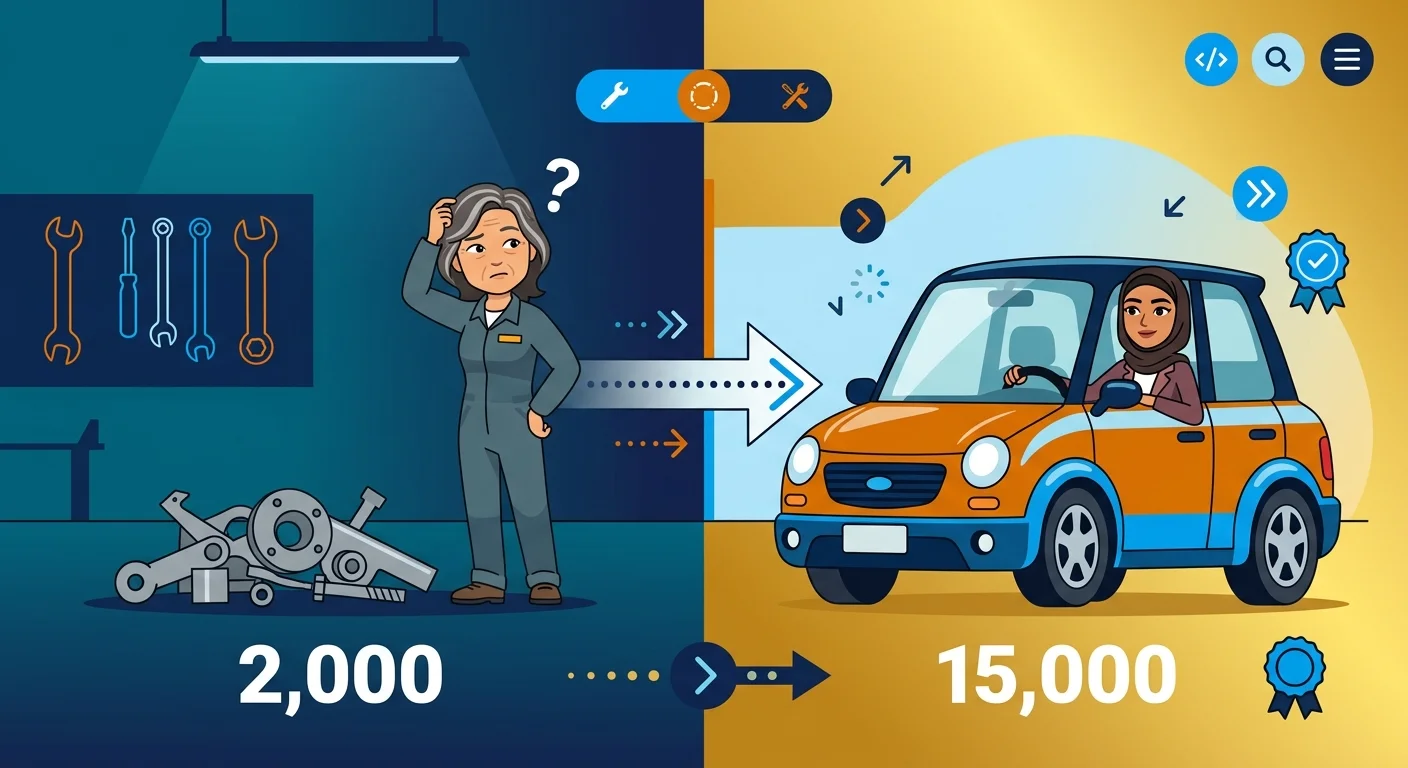
So let's lay the two paths side by side. Not as a pitch — just a plain accounting of what each dollar figure actually buys.
Owners staring at the two numbers feel a real jolt of sticker shock. That reaction makes sense on its face.
But the skepticism dissolves the second you separate the line items, because $2,000 and $15,000 were never buying the same category of thing.
| Investment Path | What Gets Built | Ownership Model | Long-Term Outcome |
|---|---|---|---|
| Foundational Infrastructure (starting near $2,000) | Isolated components — a schema file, a directory listing, a citation, purchased separately with no cross-referencing between them | Ownership of individual parts, each functioning as a standalone object with no connective layer tying them together | Fragments that require ongoing manual correction and remain vulnerable to omission or misrepresentation in generated answers |
| AI Authority Engine (a one-time build near $15,000) | An integrated knowledge graph — the same categories of components, plus the assembly labor that makes each piece confirm and reference the others | Ownership of a permanent, internally consistent data asset engineered to be read as a single coherent record | A structurally sound profile that continues functioning as one system rather than depreciating into disconnected fragments |
What $2,000 Actually Buys You
Here's the plainest way to say it: $2,000 buys a pile of car parts. $15,000 buys a fully assembled, functioning vehicle.
A pile of parts isn't worthless. It just isn't a vehicle, and nobody expects it to drive.
Same logic with a structured data file, a directory listing, and a citation bought separately. Each piece is real. But none of them, alone or sitting together on a shelf, forms a system an answer engine can trust.
What the Full $15,000 Build Assembles Together
The full build assembles those same parts, then adds the labor of making them reference each other, into one coherent object. That labor is what turns a garage of components into a vehicle that starts.
Look at what happens when a business skips that assembly step and grows the infrastructure piece by piece instead. The gaps that approach leaves behind get covered in detail in what a structurally incomplete authority setup quietly costs a business over time, and the pattern repeats: pieces bought in isolation stay isolated.
An AI Authority Engine, once built, keeps working as one integrated record — not a collection of separately purchased fragments. That's the structural difference the $15,000 figure is actually pricing.
Frequently Asked Questions
The comparison above settles the structural question. But the real objections show up in the specifics, so here are the ones that come up most.
Can I build a true AI Authority Engine piece by piece over time?
No. Buying it piece by piece just stacks isolated components and never builds the connective layer between them.
So that approach recreates the manual maintenance burden knowledge graph construction already struggles with, instead of erasing it.
What is the real ROI on a $15,000 upfront data infrastructure investment?
The return is a permanent, verifiable entity profile that generative search can cite with confidence instead of skip.
And it compounds because it stays coherent as the business changes, unlike rented activity that resets every single month.
How is an AI Authority Engine different from a high-end traditional search optimization retainer?
A traditional search optimization retainer sells recurring activity aimed at the classic ten blue links, billed monthly for as long as it runs.
An AI Authority Engine is a one-time build of a structured, cross-referenced record made for a completely different kind of answer.
How long does it take to see tangible results from an AI Authority Engine in search answers?
It depends on how fast answer engines re-index the business entity, and that varies by platform and query volume.
What doesn't vary is the asset underneath. Once it's assembled, it stays consistent instead of degrading between updates.
What happens to my investment if Google fundamentally changes its generative AI algorithm again?
A permanent, structured entity record doesn't lean on any single algorithm to stay valuable.
Its job is accurate, verifiable representation, and that job holds no matter how a given system's retrieval logic shifts.
Does an AI Authority Engine replace the need for content creation?
No. Content still matters, but content without a structured entity profile behind it has nothing to reinforce.
The engine gives content somewhere to attach, so keyword-targeted articles and everything built after actually compound instead of sitting isolated.
The Bottom Line
So here's the bottom line, plain as it gets. A pile of car parts and an assembled vehicle can share every last component and still not share a single function.
One sits in a garage. The other drives.
The $2,000 figure buys parts. Isolated schema, a directory listing, a citation, none of it cross-referenced.
The $15,000 figure buys the assembly that welds those same parts into one citable record. That's what generative search rewards now, because visibility means being the cited source inside an answer, not a listing in a ranked column.
Look, a business can keep buying parts forever and never own a system.
Or it can fund the assembly once and own a permanent, verifiable entity profile that AI search can trust. iTech Valet built the AI Authority Engine to be that second path, and the fastest way to see where an entity profile stands today is to request an AI Visibility Check.