
Why Your Old Scorecard Is Lying to You About Real Growth

Here's the problem. The metrics most businesses track were built for a search era that's already gone.
Most businesses are still grading themselves on vanity numbers from a dead era of search, and those numbers never turn into durable value. A visit count or a temporary placement won't tell you the one thing that matters now: is your brand trusted enough to get cited as a source?
So what actually changed? Pew Research Center studied 68,879 Google searches by 900 U.S. adults in March 2025, and per published government guidance, people who hit an AI summary clicked a traditional result in just 8% of visits, versus 15% when no summary showed up. That gap is the whole scorecard problem in two numbers. If your plan still calls a click the finish line, you're timing a race fewer runners even show up for, and why authority infrastructure pricing starts where it does lays out what those same dollars build when you aim them at citation instead.
The Vanity Metric Trap Most Businesses Never Escape

Vanity metrics feel like progress because they move. A visit count climbs, a position ticks up a spot, the dashboard flips green. None of that motion is equity. Stop paying and the number reverses on itself, with nothing durable ever built underneath.
That's the trap. Businesses rent the same shelf space every month, then mistake the rent receipt for an asset statement. No landlord confuses a tenant's check for owning the building, yet that's how most brands treat their own presence.
The Problem With Chasing Keyword Position Tracking Alone
Keyword position tracking rewards you for owning a slot on a given day. It says nothing about whether an answer engine trusts you enough to cite you. Your position can hold while your citation count sits at zero.
So what happens the day the spending stops? The position erodes within weeks, because nothing about it was ever yours. Compare that to the compounding curve in the actual return math behind an authority asset, where every new signal stacks on a base instead of renting a spot that dies the second payment lapses.
Why Site Visits Without Context Hides the Real Story
Site visits without context hide the real story, because a visit tells you someone showed up, not that anything got trusted. A brand can watch its visit count climb while its authority with answer engines stays flat. Volume is not the same asset as trust.
That gap matters more now than it ever has. The data already shows fewer clicks landing on any result once an AI summary enters the mix. So a visit count judged against yesterday's search behavior is measuring a shrinking pool, not a growing one, and treating it as the scorecard just buries how much of the real opportunity already moved to citation.
What Actually Counts as an Authority Infrastructure Asset
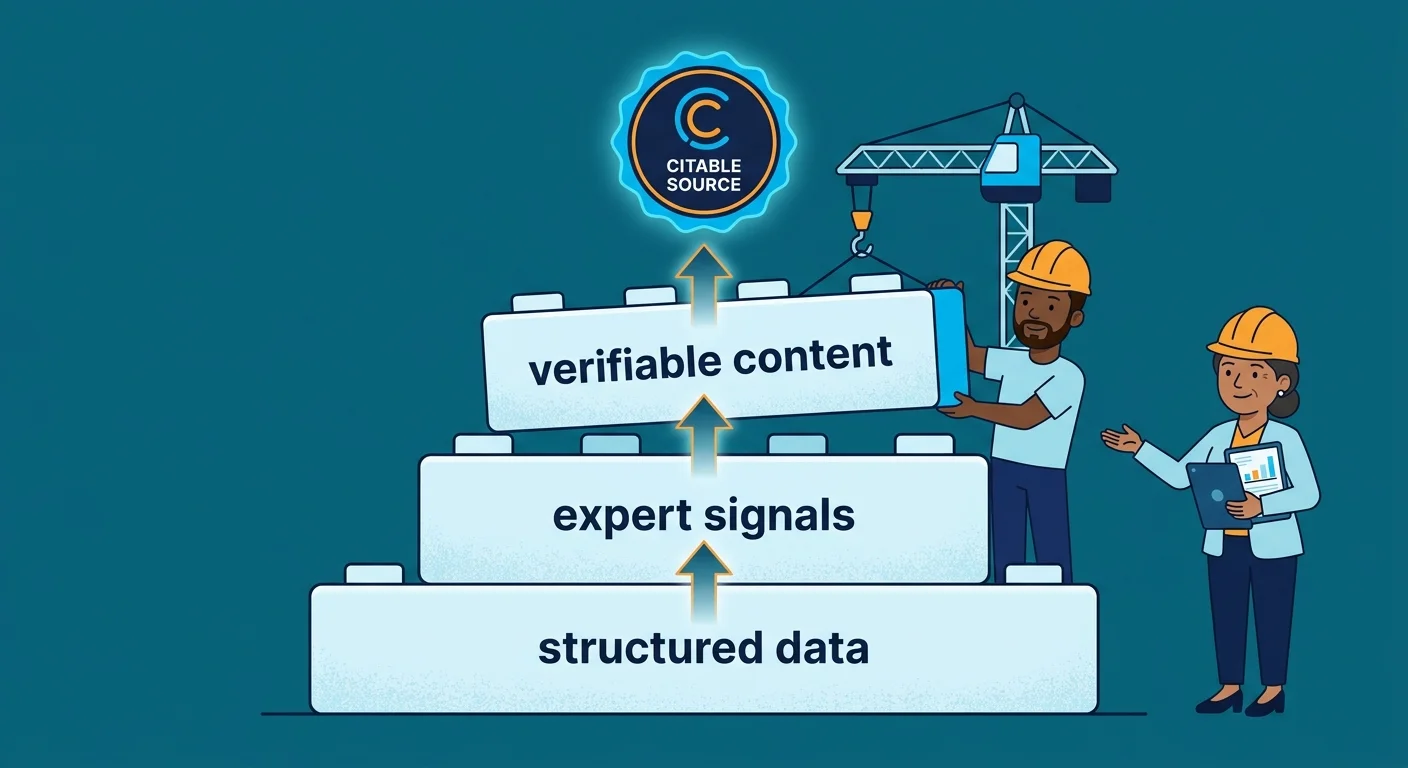
So what actually belongs on the balance sheet? Authority Infrastructure is the whole ecosystem of verifiable, high-quality content, structured data, and expert signals that makes a brand a primary source of truth for AI-driven answer engines.
That definition draws a hard line. Paid media and traditional search optimization tactics rent your visibility, but building this kind of authority is an investment in a capital asset that appreciates over time, and the gap hits home fastest for anyone who's watched a cheap monthly retainer produce nothing that outlasts the invoice.
| Asset Type | What It Signals to AI Engines | How It Compounds Over Time |
|---|---|---|
| Structured Data Markup | Confirms facts are machine-readable and verifiable, letting an answer engine extract discrete claims rather than guess at meaning buried in prose | Each new markup implementation adds another confirmable fact to the same base, so coverage broadens instead of resetting with every publishing cycle |
| Verified Expert Signals | Ties content to a credentialed author whose identity and track record can be checked, giving an answer engine a reason to trust the claim behind it | Every additional credential, bio confirmation, or consistent byline stacks onto the same authorship record instead of starting a new one |
| Topical Content Depth | Shows comprehensive coverage of a subject rather than a single isolated page, signaling the kind of interconnected expertise answer engines favor when selecting a source | Each new piece links back into the existing library, widening the topics where the brand is treated as the authoritative source instead of merely present |
| Durable Brand Mentions | Reinforces entity recognition across independent sources, helping an answer engine confirm the brand exists as a consistent, trusted reference point | Mentions accumulate across time and platforms, reinforcing the same entity record rather than expiring the way a rented placement does |
How Structured Data Turns Content Into a Machine-Readable Asset
Structured data is what turns a page from a static document into something a machine can actually reason over. Knowledge graphs store accurate facts and let an engine draw explicit inferences, filling the gap left by what a language model picks up from broad training and its own read of your prose.
That pairing is the whole point. Under a structure-oriented retrieval augmented generation approach, laid out in findings hosted by PubMed Central, an answer engine pulls structured facts off your otherwise messy pages and retrieves them later to check its own answer against something verified. A page without that structure is invisible to the exact mechanism doing the checking.
Why Expert Signals Compound the Same Way Content Does
Expert signals behave just like the structured data sitting right next to them. Every credential, verified bio, and consistent authorship record adds one more confirmable fact to the same growing base.
None of those signals reset when the month ends. They stack, quietly, the way a verified content library stacks, and that stacking is the real mechanism behind the compounding curve this whole audit exists to measure.
The Structural Layers That Make a Brand Machine-Readable

So what's actually inside the asset? Crack the balance sheet open and it splits into distinct structural layers, each one doing a different job for the machine trying to read your brand.
Knowledge graphs, entity recognition signals, and topical content depth aren't interchangeable line items. Each layer compounds on its own timeline, and each one fails differently when it's missing.
Knowledge Graphs and Why Explicit Facts Beat Broad Guesses
A knowledge graph doesn't guess. It stores a fact as a fact, then lets an answer engine draw an explicit inference from it instead of pattern-matching against loose language.
That's a different kind of reliability than a language model's broad training gives you on its own. Explicit structure plus broad comprehension beats either one working alone, which is exactly why your own structured data still matters even when the model already knows plenty about the topic in general terms.
Where Entity Recognition Fits Into the Machine-Readable Stack
Entity recognition answers a narrower question: does the machine know this brand exists as a consistent, verifiable thing everywhere it shows up? Fragmented naming and inconsistent bios weaken that recognition, even when the content sitting behind them is strong.
That same inconsistency is often the exact hesitation that keeps a skeptical owner from committing to this build, a resistance mapped out in why some practice owners resist premium authority assets. But stack entity recognition, structured facts, and topical depth together, and the machine stops guessing at who the brand is. It's confirming something it already has on file.
Why Renting Visibility Every Month Never Builds Equity
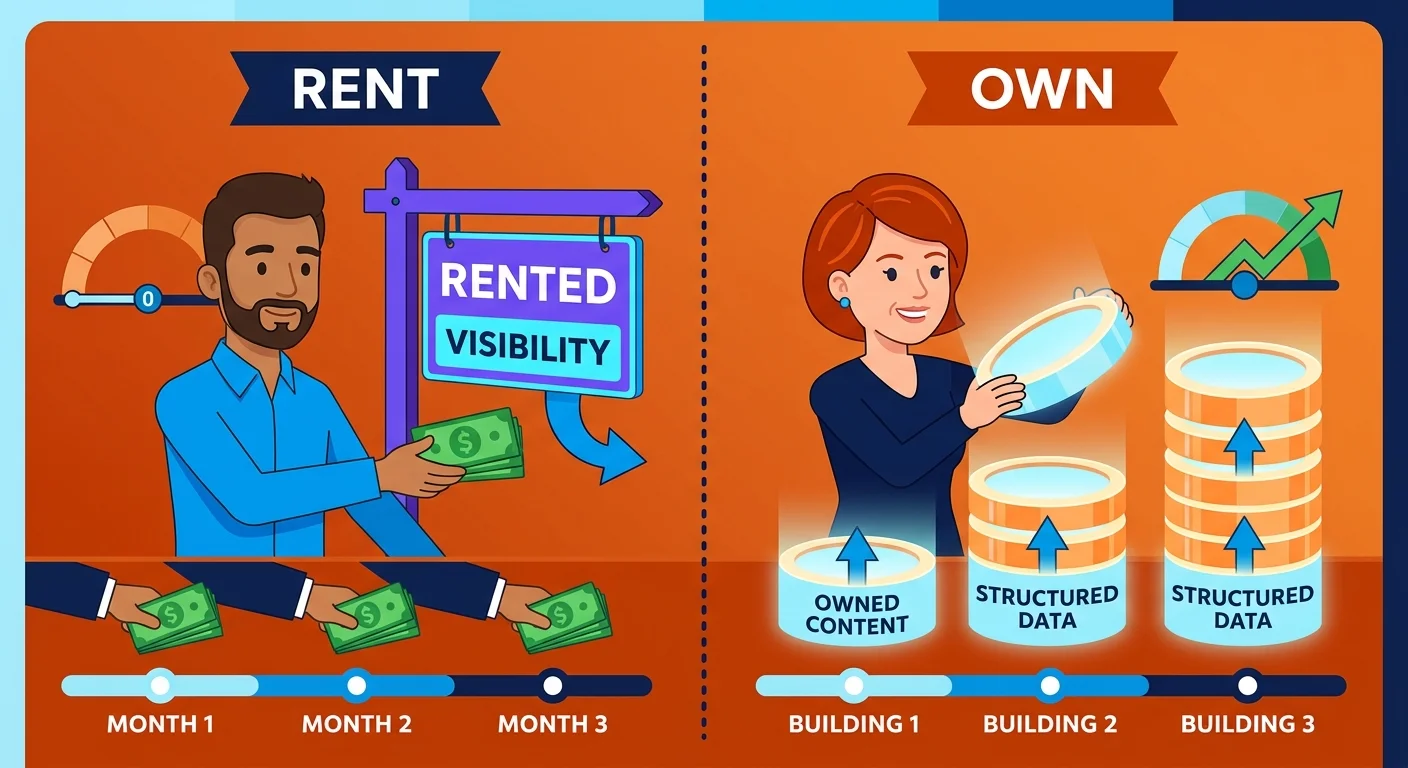
Look at what just got built. Knowledge graphs, entity recognition, topical depth — layer by layer, they stack into something that's still standing long after the invoice clears.
Now put that next to the monthly retainer this industry still sells. The generative shift changed what a dollar even buys: being the cited source inside an answer engine pays back differently, and often better, than a click ever did. So a retainer priced to chase clicks is pricing the wrong outcome entirely.
| Investment Model | Ownership at Month 12 | What Happens if You Cancel |
|---|---|---|
| Rented Visibility (Monthly Retainer) | A stack of disconnected outputs with no verified structure tying them together | The output stops immediately, and the visibility it produced erodes within weeks |
| Authority Infrastructure (Owned Asset) | A compounding base of structured data, entity recognition, and credentialed content that answer engines already trust | Nothing is lost, because the signals persist independent of any single month's spending |
| Keyword-Targeted Article Purchased Alone | One isolated content unit with no structured data or entity layer reinforcing it | The article remains online but contributes nothing further to citation frequency |
| Structured Data Plus Verified Content Library | A layered asset where each new signal reinforces the last, building toward a primary source of truth | The existing structure keeps compounding, since the layers were never rented in the first place |
Why Cheap Monthly Retainers Produce Zero Compounding Asset Value
A cheap monthly retainer rents a task, not an asset. You get a keyword-targeted article here, an inbound link there — and none of it stacks into anything an answer engine reads as a consistent, trusted source.
So the day the check stops, the output stops with it. There's no balance sheet under a retainer, just a to-do list — and a to-do list has no compounding curve, because nothing about it was ever yours.
How to Actually Audit What You've Already Built
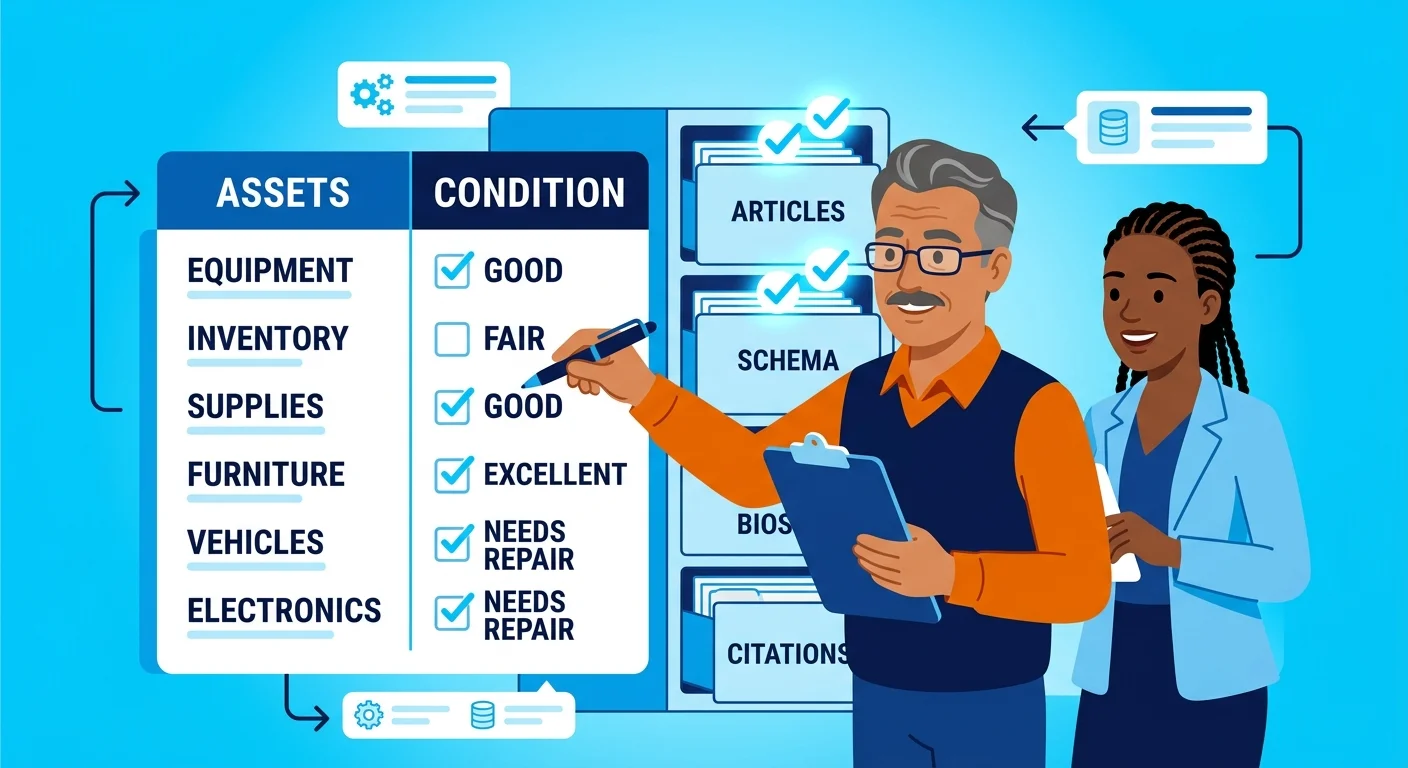
So how do you actually check what you already own? Start with a plain inventory. Not a fresh purchase.
Here's the thing: most brands can tell you what they spent last month. Almost none can tell you what they own right now, because nobody ever held the asset still long enough to count it.
Inventorying Your Content Library as a Balance Sheet
Treat your content library the way a balance sheet treats inventory. Every piece gets logged, dated, and checked against one question: does it still hold a verifiable fact an answer engine could cite?
That check separates real holdings from clutter. A page with no expert signal, no structured markup, and no update history isn't an asset sitting quietly on the books. It's dead weight wearing an asset's clothing, and telling the two apart is the whole job of the audit.
Checking Whether Your Structured Data Is Actually Working
Structured data isn't judged by whether it exists. It's judged by whether it works.
So the test is simple: pull a page and ask whether its markup resolves into something a machine can confirm, a real credential, a real entity, a real fact, instead of a template filled in for its own sake. A structured data field with nothing verifiable behind it is decoration, not infrastructure. That's exactly the line between a page building equity and a page that only looks finished.
The Citation Signals Worth Measuring Every Quarter
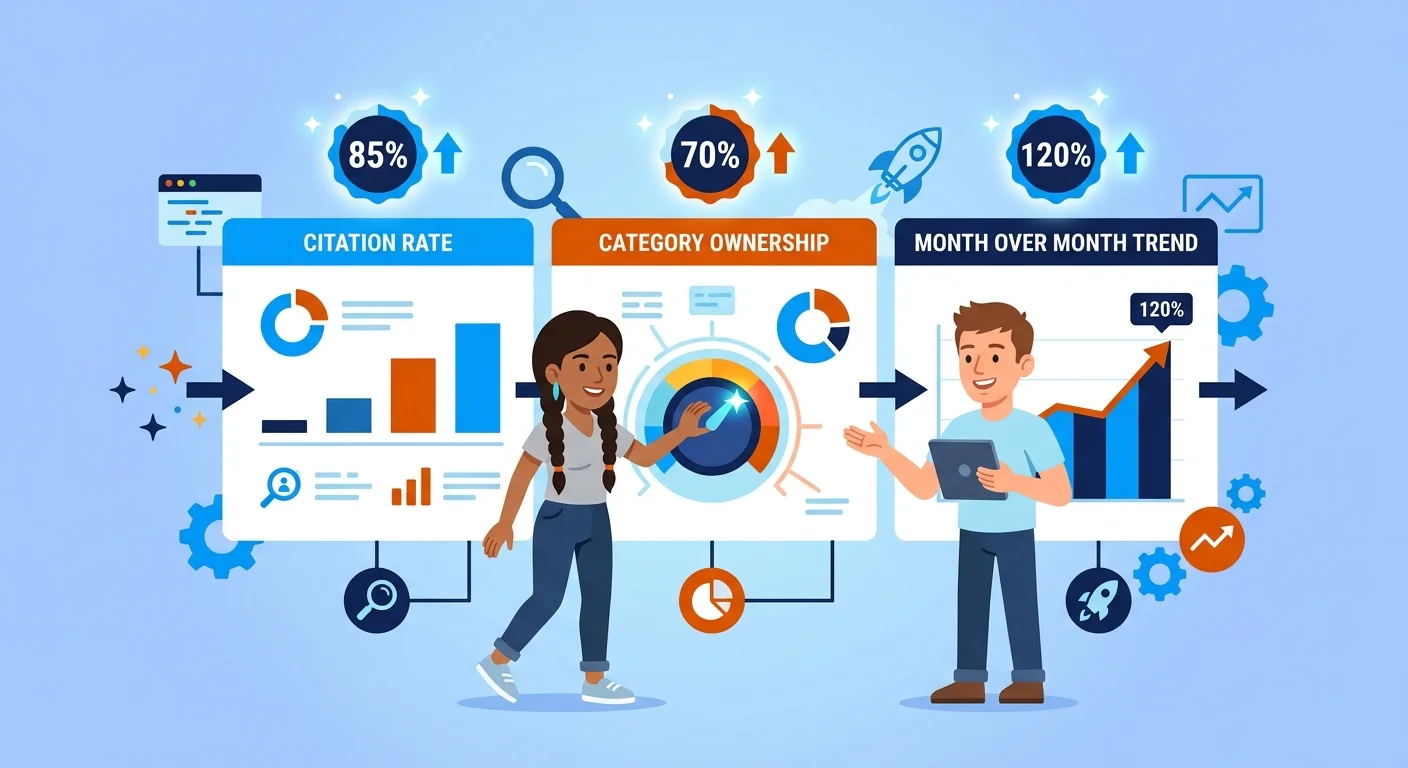
So which numbers actually earn a spot on this quarterly audit? Two signals matter more than the rest. And both come straight from how generative engines behave, not from a dashboard built for yesterday's scorecard.
The first tells a brand how often it gets cited at all. The second tells it whether that citation holds its ground month after month. Track both, and the audit stops being a guess.
| Signal | What the Data Shows | Why It Matters for Compounding ROI |
|---|---|---|
| AI-Generated Source Citation Rate | Generative search engines cite AI-generated sources in approximately 16% of their cited sources, a pattern that holds across ChatGPT, Copilot, Gemini, and Perplexity. | A brand competing for that citation pool needs verifiable content strong enough to beat machine-assisted sources already accepted as legitimate. |
| Category Leader Retention Rate | A clear leader inside a US category keeps the top spot in 90.4% of month-over-month comparisons measured between January and June of 2026. | This is the compounding curve itself: a category lead barely moves month to month, unlike a rented position that vanishes when spending stops. |
| Cross-Engine Citation Consistency | The same 16% citation pattern for AI-generated sources shows up across all four generative search engines tracked, not just one. | Consistency across engines means the signal is a structural feature of generative search, not a quirk worth ignoring in the audit. |
Tracking How Often AI-Generated Sources Get Cited
Here's the first number worth watching. Generative search engines cite AI-generated sources in roughly 16% of everything they cite, and that pattern holds across ChatGPT, Copilot, Gemini, and Perplexity alike.
That figure, drawn from findings on the arXiv preprint server, means a real chunk of what these engines already trust came from AI-generated content in the first place. So a brand's own structured, verifiable content is fighting for a citation slot that already treats machine-assisted sources as legitimate. That's no excuse to cut corners on verification. It's a reason to make damn sure the content in that pool is yours, not a competitor's.
Watching for the Category Ownership Signal in Month-Over-Month Data
The second signal is category ownership, and it behaves nothing like a keyword position. Once ChatGPT settles on a clear leader inside a US category, that leader keeps the top spot in 90.4% of month-over-month comparisons run between January and June of 2026, according to published research data.
That is the compounding curve made visible in a single statistic. A rented position can vanish the moment the spending stops. A category owner's lead barely moves from one month to the next. So the audit question isn't whether a brand shows up once. It's whether the machine has already decided who owns the category, and whether that call is still holding the next time anyone checks.
Reading the Entity Recognition Trail Across AI Engines

So the audit can't stop at one engine. One citation from one answer engine tells a brand almost nothing about whether the entity underneath it is actually recognized.
Here's the thing: every platform builds its own version of who a brand is, from its own crawl, its own training data, its own retrieval habits. Reading the entity recognition trail means checking whether those separate versions agree.
Cross-Checking Mentions Across Multiple Answer Engines
Ask the same direct question of ChatGPT, Gemini, Perplexity, and Copilot, back to back, without touching the wording between them. The answers themselves matter less than whether the brand shows up at all, and whether it shows up the same way each time.
That month-over-month leadership pattern only holds inside a single platform's own memory of a category. Cross-checking mentions is how a business finds out whether that lead shows up everywhere, or whether it's a strength trapped inside one engine's training window.
Spotting Gaps Where One Engine Recognizes You and Another Doesn't
Now hunt for the opposite pattern: the spots where recognition just breaks. One engine names the brand as an authority on a topic while another returns a competitor, or nothing at all, for the exact same question.
That split is a diagnostic, not bad luck. It usually points to a structured data gap, an inconsistent entity name, or a thin patch in the content library that one engine's retrieval happened to surface and another one missed. Fix it the way the audit treats any missing asset: log it, verify what should be there, and rebuild the structure until every engine reads the same brand.
This Isn't a Fit for Businesses Chasing a Quick Site visits Spike
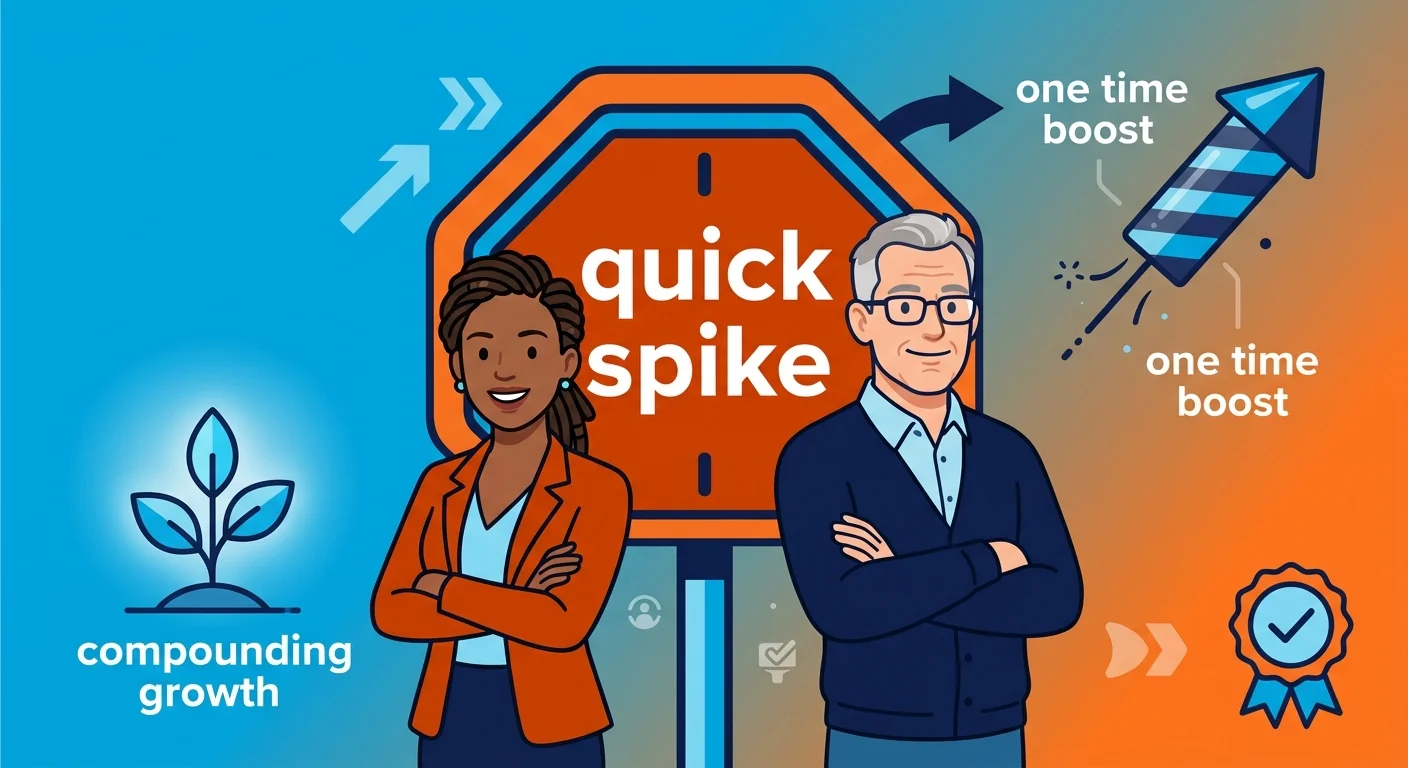
Let's keep it real: this audit isn't for a business that wants a bigger number on next month's site visits report. It's for a business willing to log an asset, verify it, and let it compound quietly for longer than a single quarter.
So if the goal is a fast spike and nothing else, this build is the wrong purchase. A citation inside an answer engine already pays back differently, and often better, than a click ever did — and chasing the click means optimizing for the exact metric this whole shift is busy making worthless.
Turning Quarterly Signals Into a Compounding Growth Curve

So the qualification's settled. For the businesses still reading, here's where the audit stops being a diagnostic and turns into a growth mechanism.
One quarter of signals tells a brand almost nothing on its own. The trend line is the real product of this whole exercise, not any single number inside it.
Building a Trend Line Instead of a Single Snapshot
Look at one citation count by itself and it reads like noise. Stack it against last quarter's number, and the quarter before that, and the noise turns into a direction.
That direction is what a balance sheet actually shows an owner. So the audit log you built earlier stops being a static inventory and becomes a running record, one quarter stacked on the next.
Connecting Citation Growth to Category Ownership Over Time
Here's the thing: citation growth and category ownership aren't the same signal, but they move together. A brand that shows up as a cited source in more queries every quarter is quietly laying the groundwork for the kind of lead that holds steady month after month.
So the quarterly trend line is really an early read on category ownership before it fully sets. Watching it climb, or stall, or slip is how a business catches the shift while there's still time to move, instead of finding out only after a competitor already grabbed the spot.
Setting Up the Reporting Cadence That Proves the Curve Is Real
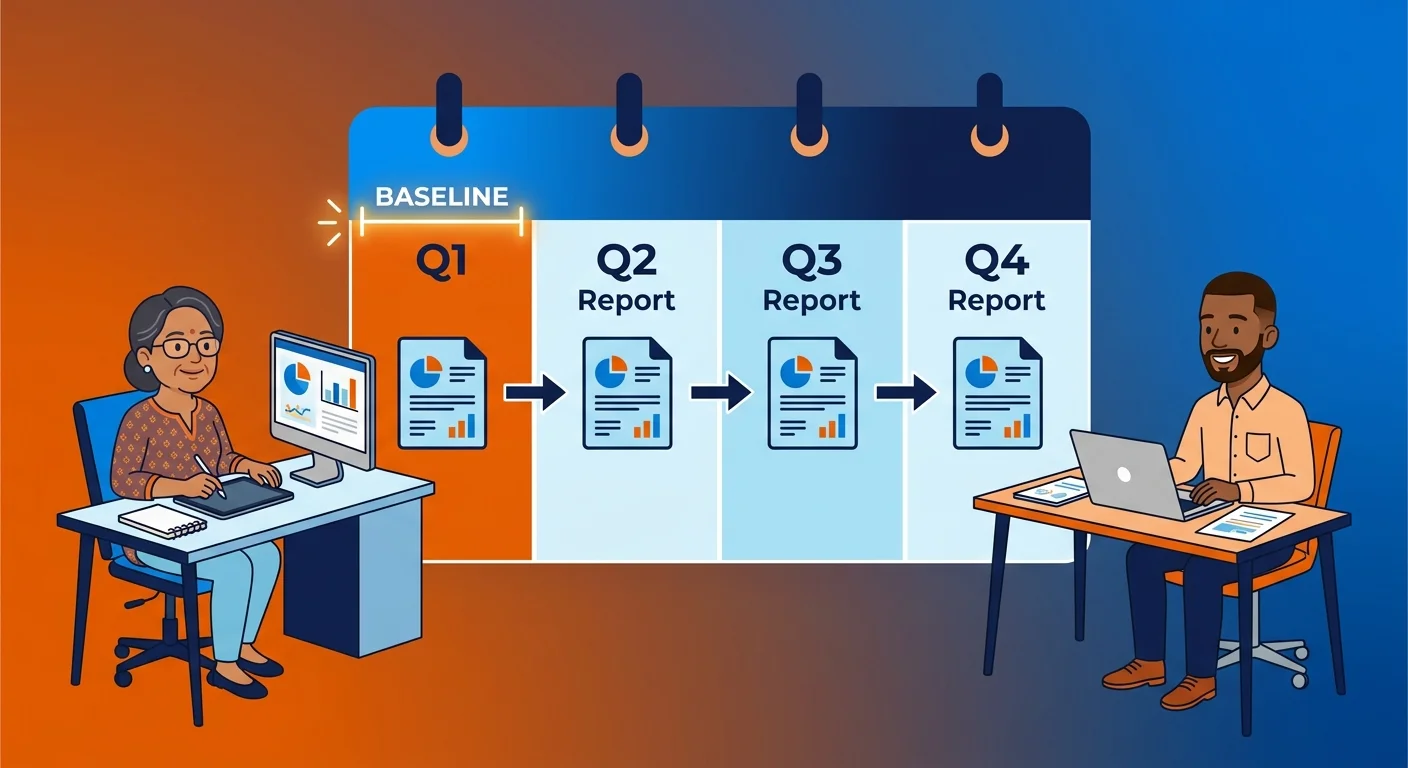
A quarterly trend line is only as good as the cadence that makes it. So set the reporting rhythm once, then hold it. A compounding curve only shows up when the same measurements land on the same schedule, every single time.
| Reporting Milestone | Timeframe | What Gets Measured |
|---|---|---|
| Baseline Snapshot | Before any new asset is added | The opening count of citations, category standing, and cross-platform recognition, fixed as the reference point every later quarter compares against |
| First Quarterly Review | End of the first reporting period | Whether citation count moved from baseline, and whether the same brand name is surfacing consistently across engines |
| Category Standing Check | Each quarterly cycle, same schedule held steady | Whether the brand's position inside its category is holding, climbing, or slipping against the prior quarter's read |
| Cross-Platform Recognition Read | Each quarterly cycle, run back to back across engines | Whether the answer engines agree on who the brand is, or whether a gap has opened between how one platform reads the entity and how another does |
| Trend Line Consolidation | Ongoing, compounding each quarter | The full run of prior quarters stacked together, showing direction rather than any single isolated count |
What Belongs in a Quarterly Authority Infrastructure Report
Here's the thing: a quarterly report isn't a highlight reel. It logs the citation count, the category ownership check, and the cross-platform recognition read, right beside last quarter's numbers. The report's job is comparison, not celebration. If a thing can't be measured against last quarter, it doesn't belong in the report.
Setting Baselines Before You Can Prove Compounding Movement
Now, none of that comparison means a thing without a starting point. A baseline gets set the same way the first audit did: one clean count of citations, category standing, and cross-engine recognition, taken before you add a single new asset. That number looks unimpressive sitting alone in quarter one, and it's not supposed to impress, it's the fixed point every later quarter gets measured against, the way a balance sheet needs an opening figure before it can show growth at all.
Frequently Asked Questions
The audit logic holds across a full quarterly cycle. But a few edge cases keep coming up, so let's answer them straight.
What's the difference between tracking traditional search optimization ROI and Authority Infrastructure ROI?
Traditional tracking watches site visits and keyword position tracking. Both reset the day the spending stops. Authority Infrastructure ROI watches citation counts, category ownership, and cross-platform recognition — signals that compound quarter over quarter no matter what a business spends next month.
How long does it typically take to see a compounding return on authority-building content?
There's no fixed timeline in the data behind this article. So resist any number handed to you as a guarantee. What the audit shows instead is a trend line, and that only appears once a business has logged more than one quarterly baseline to compare against.
What are the most important non-financial metrics to track for authority ROI?
Three things. Citation frequency across answer engines, category ownership stability month over month, and cross-platform recognition agreement. These three replace the old scorecard of keyword position tracking and site visits entirely.
Can you still measure the ROI of authority if AI Overviews result in fewer clicks to my website?
Yes, and that's the whole point of this shift. A citation inside an answer engine carries its own return, independent of a click. So fewer clicks doesn't mean less value when the brand is the one being cited.
What tools can I use to audit my brand's entity recognition and topical authority?
The audit doesn't depend on a named platform. Ask the same direct question of ChatGPT, Gemini, Perplexity, and Copilot back to back. Then compare whether each one recognizes the brand the same way.
How do I calculate the asset value of my content library?
Value each page by whether its structured data resolves into something verifiable, not by whether markup exists at all. A verified page earning repeat citations is an appreciating asset. A page with no expert signal and no update history is not.
The Bottom Line
So here's the bottom line. A rented retainer draws a flat line that snaps back to zero the day payment stops. A verified content library draws a curve that keeps climbing on its own.
One of those is a capital asset. The other was only ever an expense wearing an asset's language. The audit exists to prove which one a business actually owns — quarter over quarter, citation over citation, until the curve is undeniable.
That's the choice sitting in front of every business reading this. Keep paying for a position that disappears the day the invoice does, or start logging the infrastructure that compounds whether or not anyone renews a thing. If it's the second path, the next move is simple: grab an AI Visibility Check and find out exactly what an answer engine already thinks the brand owns.