The Zero-Click Reality Nobody Budgeted For

Here's the scale of what changed. Researchers pulled 10.2 billion Google searches between October 2024 and December 2025. Nearly half, 46.96%, ended without a single click, per published research data.
That's not some niche quirk. That's the default outcome for search now.
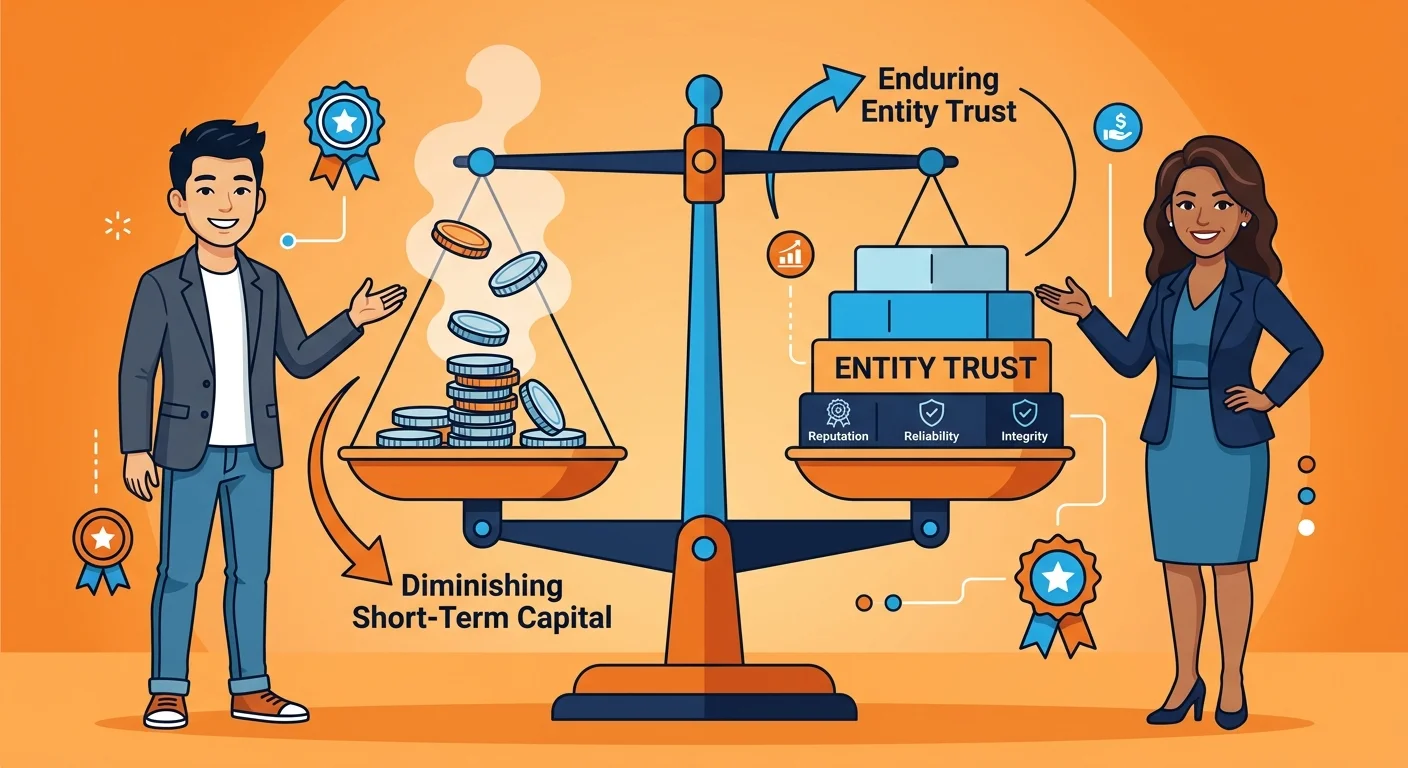
For years, the online promotion playbook stayed simple: need visibility, rent it with paid ads. Attention became a commodity you buy, a boost that lasts exactly as long as the budget holds. But that whole logic assumed a click was the endpoint, and the zero-click data just killed that assumption.
So the real question shifts. This isn't about paying for a spot inside a shrinking pool of clicks anymore. If you're wondering why building this kind of standing authority takes real money, look at why authority infrastructure carries upfront cost — it explains what a rented click was never built to deliver.
Why the Rent-Attention Playbook Is Breaking Down
So why does the rental model keep failing even when a business runs it perfectly? The mechanics of an AI Overview answer that fast.
When an AI Overview swallows a query, it settles the question before a single ad even loads. Paid placement was built to catch intent at the exact moment of search. That moment now belongs to a generated answer.
Here's the counter-intuitive part. Paid click-through rates don't just collapse when an AI Overview shows up. They shift in a specific, telling way.
| Attribute | Rented Visibility (Paid Ads) | Owned Visibility (Entity Trust) |
|---|---|---|
| Underlying Mechanism | Attention rented per click, per campaign, at ongoing cost | Trust established once through verified records, then referenced repeatedly |
| What Happens When Spending Stops | Placement disappears immediately with no residual position | Verified entity record persists and keeps generating citations |
| Relationship to AI Overviews | Competes for a shrinking pool of clicks the answer already resolved | Becomes the standing reference the generated answer can cite directly |
| Value Trajectory Over Time | Static or declining; each dollar spent evaporates the instant spending ends | Compounding; structured data and citations accumulate into durable authority |
| What the Business Owns Afterward | A transaction record, nothing left standing once the budget ends | An appreciating, cross-platform asset independent of any single campaign |
The Problem With Treating Visibility as a Recurring Expense
Look at branded queries, where a business's own name already gets recognized. When clients showed up in an AI Overview, their paid click-through rates climbed from 7.89% to 11%, per independently reported findings.
That's not proof paid ads are thriving. It's proof of the opposite mechanism doing the work.
The click-through gain happens because the AI Overview already did the trust-building the ad used to do alone. The paid placement is riding on entity recognition it didn't build and can't keep once the spending stops.
So the ad isn't generating trust anymore. It's borrowing trust the Knowledge Graph already established, and paying rent on someone else's asset.
What Happens the Moment the Ad Budget Stops
That borrowed-trust dynamic is exactly why the whole decision comes down to one thing: what's left after the campaign ends.
The instant you pause the budget, the placement vanishes completely. No residual position. No lingering citation. No standing reference left behind for a generative system to reuse.
Compare that to a verified entity record inside the Knowledge Graph, which keeps generating citations with no ongoing payment. Businesses weighing that gap should understand the compounding cost of skipping this groundwork, because the rented apartment never turns into equity no matter how long the lease runs.
What Permanent Entity Trust Actually Means
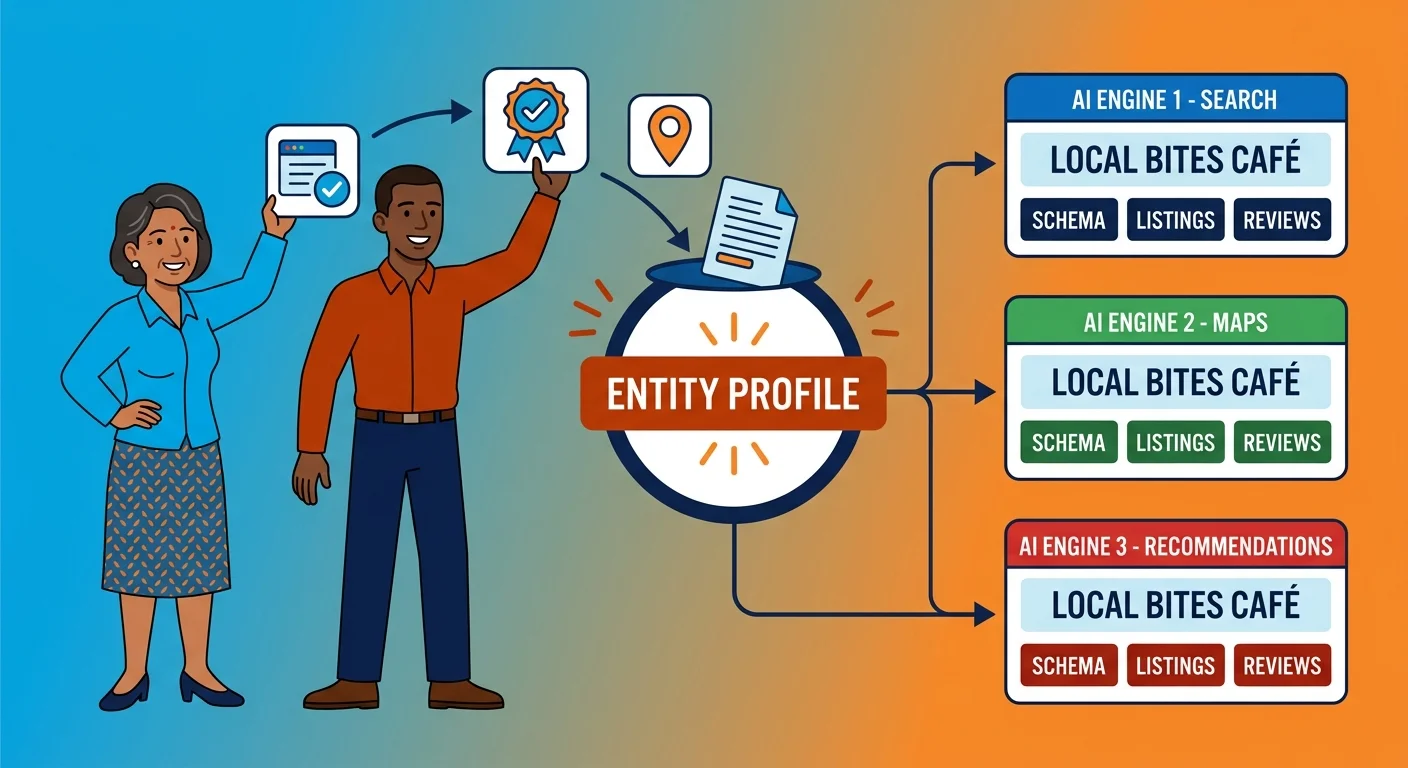
So what does this asset actually consist of? Permanent entity trust is Google's verifiable, cross-platform read on who a business is, what it does, and why it deserves to be trusted.
And that read isn't a ranking. It's recognition — built once and held for good, not repurchased with every new campaign.
Here's the shift that matters. The choice isn't which channel costs less this quarter. It's what asset you're left holding once the campaign ends.
| Ranking Position | Citation Likelihood in AI Overviews |
|---|---|
| Position 1 | Appears in AI Overviews 43% of the time |
| Position 20 | Drops to just 7% citation likelihood |
The Verifiable Data Points That Build an Entity Profile
That recognition isn't abstract, either. It's built from specific, checkable data points scattered across the web.
Structured data markup tells Google's systems exactly what a business is. It hands over the facts in a format machines read without guessing.
Consistent business listings do the reinforcing. They repeat the same facts everywhere they appear, and that repetition is what corroborates the record.
Trying to figure out where to start building that record? Look at why practices need authority infrastructure over another rebuild, because the underlying data points matter more than any single page's design.
How Ranking Position Still Shapes Who Gets Cited
But ranking position hasn't vanished either. It still shapes who gets pulled into a generated answer in the first place.
On desktop searches that triggered AI Overviews in the United States as of October 2025, first-position URLs showed up in those overviews 43% of the time, according to seoClarity's research.
That likelihood drops steadily further down the page, all the way to just 7% by position 20. Position opens the door. Entity trust decides who gets cited again and again once inside.
Who This Approach Is Not Built For
Look, this isn't built for every business. Want a quick placement spike before a seasonal push? This isn't your fit.
And it's not for businesses chasing a single campaign win they can walk away from next quarter.
It's also not for anyone unwilling to invest in the data record instead of the surface-level placement. The asset only compounds for those willing to build it once and maintain it.
The Shrinking Real Estate for Rented Ad Visibility
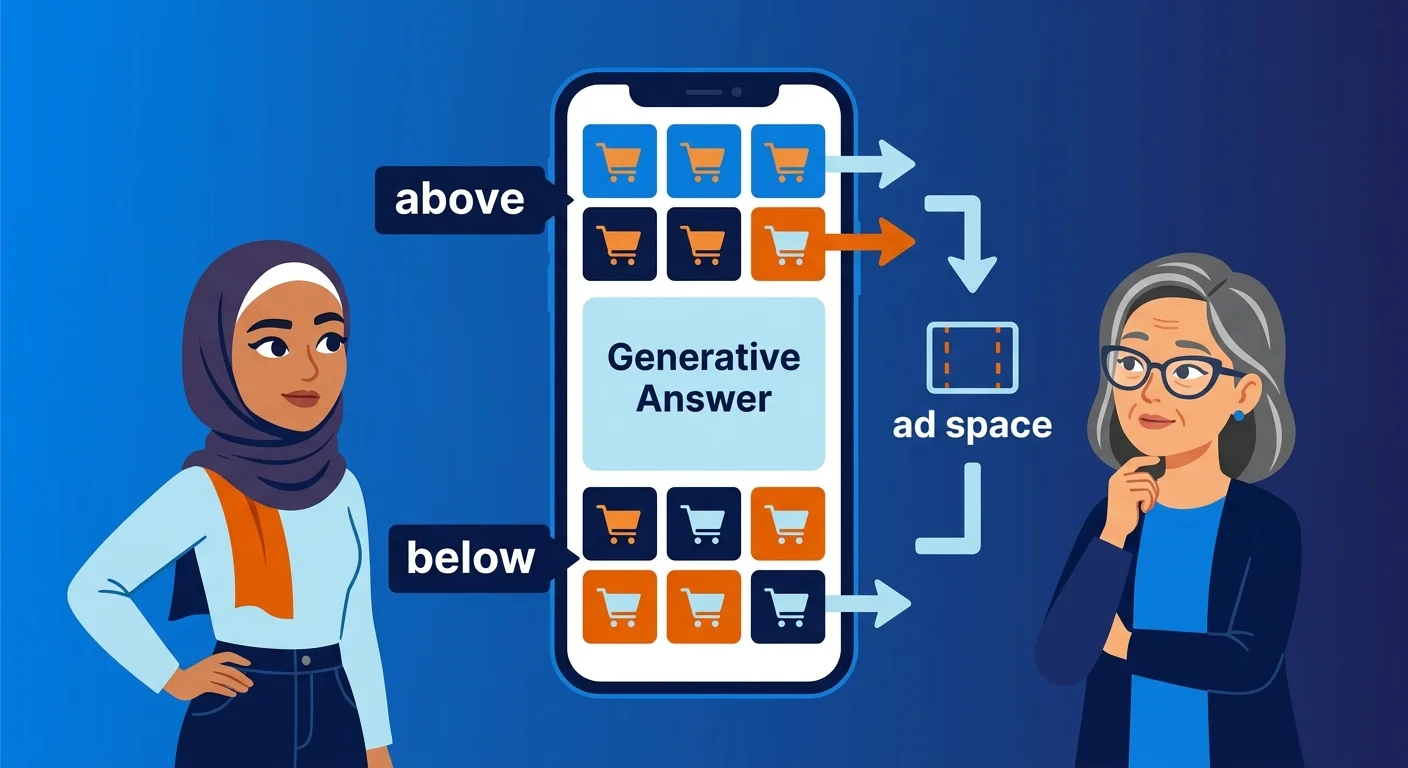
Look at the page itself. That rented strip keeps shrinking. Paid placement used to sit in a predictable band above the organic results, just waiting on a click.
But that band isn't guaranteed real estate anymore. Generative answers now claim the space paid ads once owned outright, and the ad has to squeeze in around them.
So the rental model isn't only losing customers to click-free outcomes. It's losing the physical shelf space it was built to stand on in the first place.
| Signal Type | What It Verifies | Where It Lives |
|---|---|---|
| Structured Data Markup | Confirms what a business is, does, and offers in a format machines parse directly | Embedded in a business's own site code, feeding directly into the Knowledge Graph |
| Consistent Business Listings | Corroborates identity facts by repeating them the same way across independent sources | Directories, review platforms, and third-party citation sources across the web |
| Ranking Position | Signals which pages are eligible to be pulled into a generated answer at all | Classic ten blue links results page, feeding candidate selection for the overview |
| Paid Ad Placement | Verifies nothing about entity trust, only that a budget was spent for temporary space | Strips above, below, or inside the generated answer, contingent on the answer existing |
Where Paid Placements Now Sit Inside Generative Results
Here's what that looks like in practice. Google has dropped Shopping ads straight inside AI Overviews, sitting above and below the generated answer when they fit the query.
That placement got demonstrated at Google Marketing Live, where Search and Shopping ads showed up inside the overview itself instead of beside it.
So the ad isn't a separate strip you scroll past on the way to an answer. Now it's a fragment lodged inside the answer, and it only exists if the overview does.
That dependency is the whole problem. If the overview never surfaces a business, no shopping placement buried inside it saves that business either.
Turning Verified Signals Into Machine-Readable Structure
So how does a business actually get pulled into that space instead of paying to sit beside it? It starts with structure, not spend.
Structured data markup turns a business's own facts into a format generative systems read directly. No guessing meaning out of messy page text.
Wondering where that structural investment actually pays off? Look at the long-term math behind owning versus renting authority, because the comparison flips once citations compound instead of expiring.
Reading the Signals That Show Whether an Entity Is Trusted
But structure alone doesn't prove trust. Google still has to corroborate the record before an entity earns citation again and again.
Earlier in this decision, ranking position opened the door to citation. That likelihood keeps declining the further down the results a page sits.
So position still matters for getting seen. But it's the corroborated, cross-platform entity record behind that position that decides whether a generative system keeps citing a business or moves on to the next one.
Frequently Asked Questions
Same objections come up every time. Here are the straight answers, no hedging.
If paid ads still work, why should I stop using them entirely?
Paid ads still grab demand the exact second someone searches. But renting attention was never owning it. Stop the budget and the visibility stops right along with it.
How long does it take to build enough entity trust to see a return?
There's no universal countdown here. Entity trust compounds the longer your structured data and corroborated listings stay consistent. And it keeps paying after the work's done instead of expiring on some date.
Can I still use paid ads to supplement my entity strategy, or are they mutually exclusive?
They're not mutually exclusive. But paid ads should never be the whole plan. They quit the moment spending quits, while entity trust keeps generating citations underneath them.
What is the first technical step my business should take to start building permanent entity trust?
Structured data markup comes first. It turns your own business facts into a format generative systems read directly. No guessing meaning out of messy text.
How do I know if Google sees my business as a trusted entity in its Knowledge Graph?
Look for consistency, not rankings. When the same facts show up identically across listings, directories, and your own site, that corroboration is what tells Google the record's trustworthy.
Is entity trust just another name for brand recognition?
No, and treating them the same is the mistake. Brand recognition lives in a customer's memory. Permanent entity trust lives in Google's verifiable, cross-platform record of who you are and why you're authoritative.
What's more important for the Knowledge Graph: my website's content or my business listings on other sites?
Neither one wins alone. Content explains what a business does. Listings on other sites corroborate that the explanation's accurate, and the Knowledge Graph needs both to keep citing you.
Where This Leaves Your Visibility Strategy
So it all comes back to the apartment and the house. Renting buys you comfort today, but the payment's gone the second it clears, and nothing ever builds in your name. Buying costs more upfront, sure — but every payment turns into equity that stays yours.
Paid ads are the apartment. They rent a strip of space that generative answers now grab first, and that space vanishes the instant your budget stops. Permanent entity trust is the house — it lives inside the Knowledge Graph, appreciating with every corroborated listing and every piece of structured data you add.
The choice was never about which channel costs less this quarter. It's about what you still own once the campaign ends and the rented placement disappears. The house doesn't vanish when the spending stops, and that's the whole case for building one instead of leasing somebody else's. Start with an AI visibility check.