
What Is Actually Breaking Inside the Agency Burn Cycle
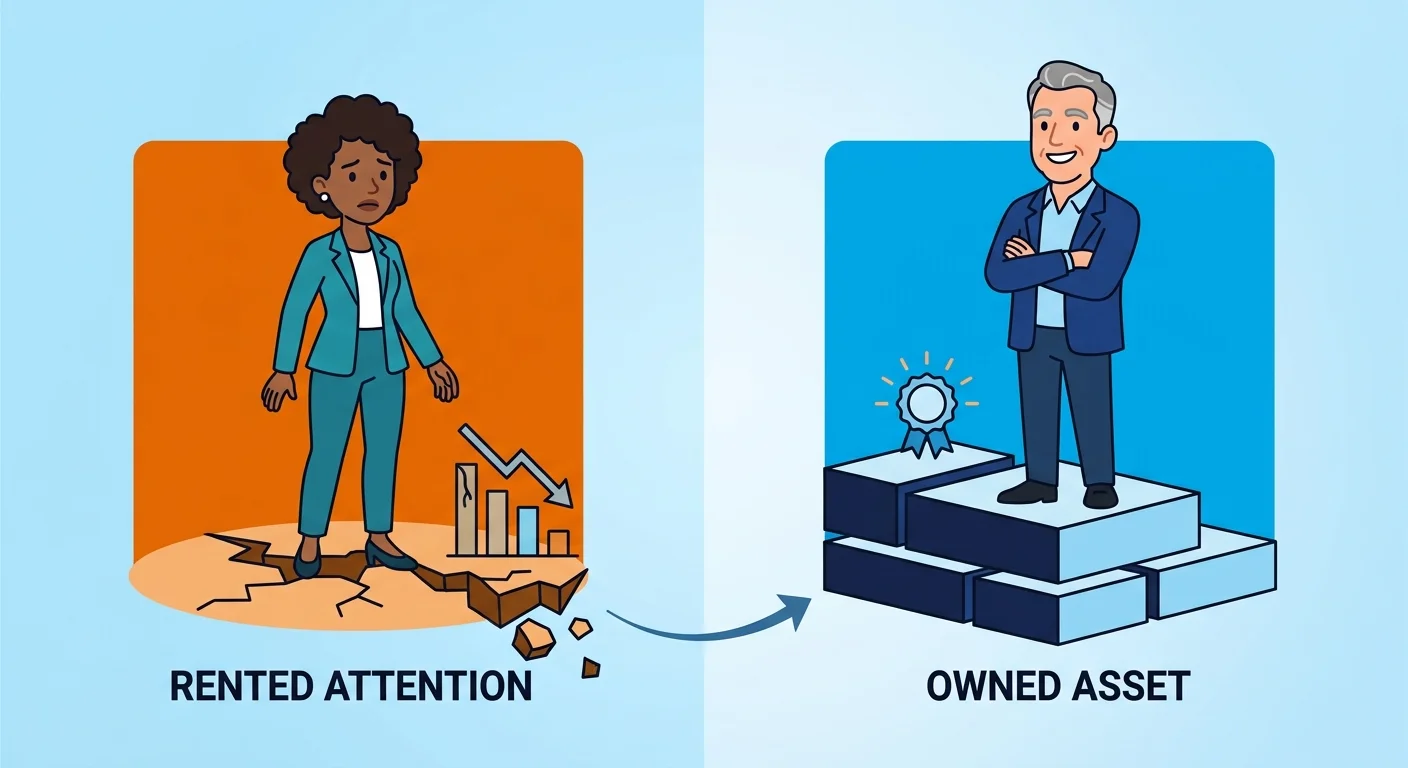
Here's what's actually breaking: businesses keep paying for a lease and expecting a deed. Every renewed retainer buys another month of visibility on land they never own. Stop paying, and the visibility disappears with it.
That rent-versus-own tension isn't some side effect. It's the whole engine behind the churn businesses keep running into with traditional search optimization vendors.
The retainer model, built on chasing temporary rankings, is the direct cause of the churn and burnout everyone in this industry complains about. Businesses don't leave because the work was sloppy. They leave because the model was never built to produce anything that outlives the cancellation.
Now, here's the part worth sitting with: this isn't a failure of execution. It's a structural feature of selling perishable activity instead of a standing asset.
The Rent Versus Own Problem in Traditional Retainers
Under a typical retainer, a business pays every month for keyword position tracking, acquiring inbound links, and keyword-targeted articles. And none of it is owned once the invoice clears.
It's rented. Cancel the retainer, the agency stops renewing the activity holding up whatever visibility existed, and the numbers slide back toward zero within months.
Why the Churn Feels Structural, Not Accidental
But the churn isn't random, and it isn't a sign of a bad vendor. It's structural — baked into how the retainer model has to work to stay profitable for the agency selling it.
AI Authority Infrastructure isn't a promotional line item — it's a permanent, appreciating digital asset that makes a business a citable source for AI engines. That distinction is everything, because it changes what survives cancellation. Most businesses start by comparing costs head-to-head, which is exactly what understanding the real cost difference behind these two models is meant to clear up.
How Generative Engines Actually Decide Who Gets Cited
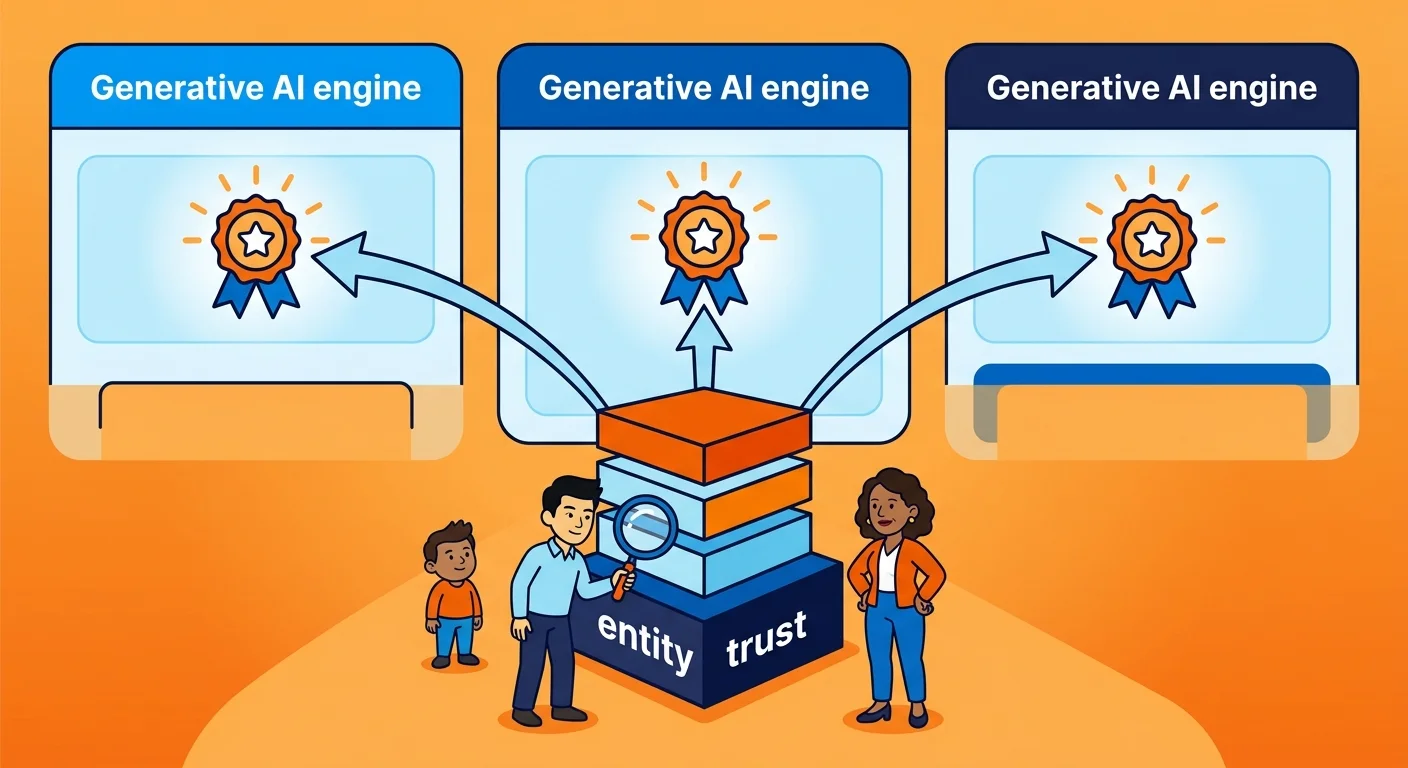
Generative search systems cite based on one thing: how confidently they can trace a claim back to a defined, trustworthy source. These models increasingly run attribution mechanisms built to improve factuality and verifiability. That means the system checks whether a claim leads back to something recognizable before it ever repeats that claim to a user.
And that single mechanism is the whole game. A business that never built recognizable structure around its expertise hands these systems nothing to attribute a claim to — no matter how many keyword-targeted articles it published.
So the real question isn't whether a page ranks. It's whether the system building an answer has any reason to treat that page's author as a defined entity worth citing.
Why Chasing Rankings Keeps Producing the Same Churn
Chasing keyword position tracking keeps producing the same churn because it optimizes for a signal generative systems are walking away from. Ranking well for a phrase says nothing about whether a system trusts the business behind it.
Here's the thing agencies rarely explain: a ranked page and a citable entity are not the same asset. One is a temporary spot in a list. The other is a standing reputation the system references no matter which list it's building that day.
Businesses trying to figure out whether their current vendor is producing either one can start by learning how to tell a marketing retainer apart from a genuine authority build, since the two look nearly identical on an invoice but land in completely different places when a system decides who to cite.
Attribution Mechanisms Inside Generative Search Systems
Attribution inside generative search doesn't reward the loudest page. It rewards the clearest one. Research reviewing these systems, published through the arXiv preprint server, documents attribution mechanisms built specifically to improve factuality and verifiability — not just to surface relevance.
But relevance and authority aren't the same filter, and most retainer work still optimizes for the first one alone. Generative information retrieval research catalogued in the ACL Anthology found that existing methods mostly optimize semantic relevance while overlooking document authority — a gap the same research flags as a real risk in high-stakes fields like healthcare and finance, where trustworthiness has to be verifiable. That gap is exactly where authority infrastructure does its work.
The Role of Entity Recognition and Structured Data in Machine Trust
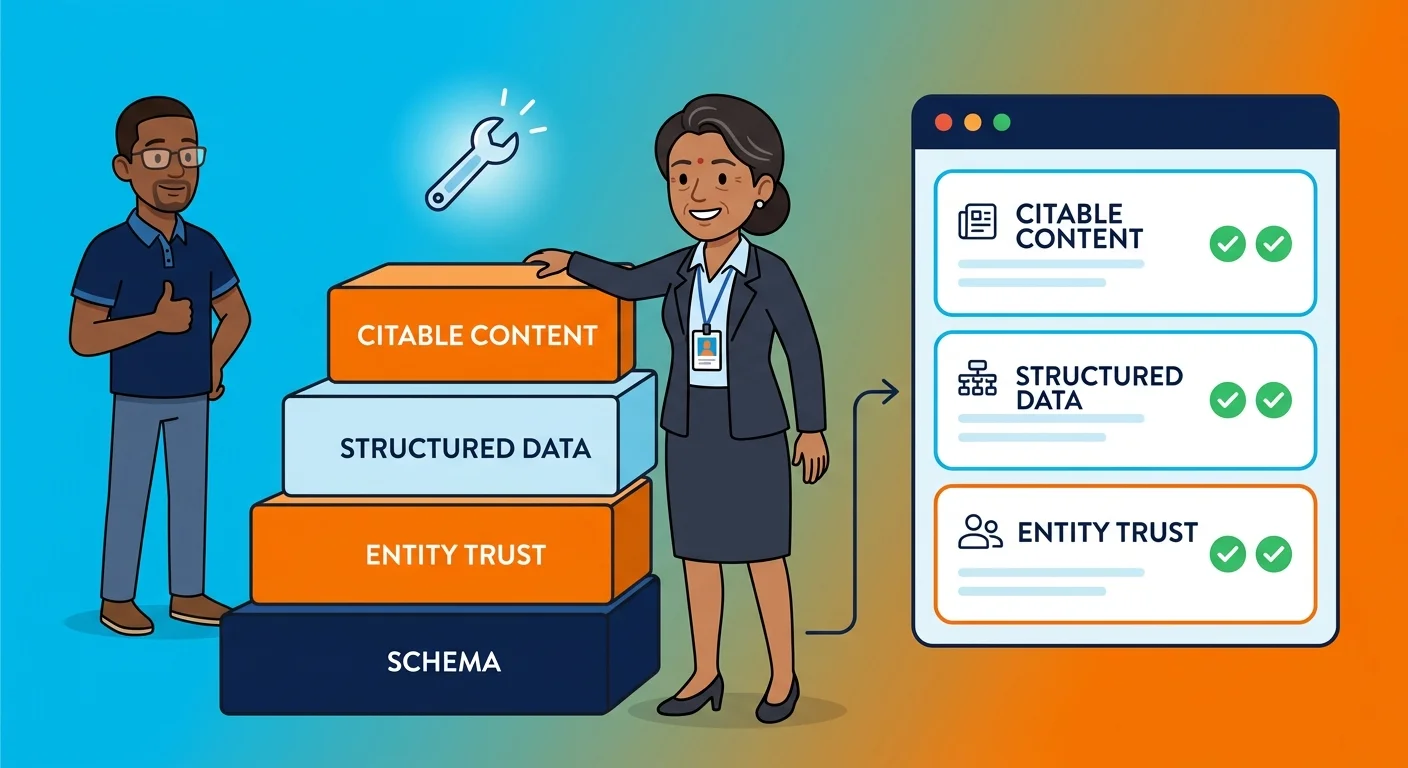
Entity recognition is the mechanical layer sitting under everything above. It's how a generative system decides that a name, a business, or a claim points to one defined thing — not a scatter of unrelated mentions.
So the trust these systems hand out never lands on a page. It lands on an entity the system can confidently pin as the same subject everywhere that subject shows up.
Large language models pull their entity-recognition ability from instruction-following and text-generation training, not from memorizing fixed lists of names. With parameter-efficient fine-tuning and structured formats, open-source models tuned this way have closed the gap with older encoder-based systems. That's exactly why the structure a business puts around its own name now matters more than how much content carries that name.
| Signal Type | What It Establishes | Where It Lives | Who Reads It |
|---|---|---|---|
| Structured Data Markup | That a business is a defined, disambiguated entity with a specific offering | Schema code embedded in a business's own properties | Generative systems parsing a page for machine-readable entity relationships |
| Consistent Entity Naming | That every mention of a business across the web refers to the same subject | Directories, profiles, citations, and owned properties tied to one identity | Attribution mechanisms deciding whether a claim can be traced to a trustworthy source |
| Instructional Content Structure | That expertise is organized clearly enough for a model to extract and attribute | Long-form pages built around a defined subject rather than scattered keyword targets | Large language models generating answers that lean on instruction-following, not memorized name lists |
| Cross-Property Linking | That a business's separate assets reinforce one coherent authority rather than isolated pages | Internal architecture connecting owned pages, profiles, and structured records | Retrieval systems evaluating whether authority signals converge on a single entity |
| Search Behavior | PC Search Pattern | Mobile Search Pattern |
|---|---|---|
| Query resolution without a click | Zero-click satisfaction occurs, but at a lower rate than on mobile devices | Zero-click satisfaction occurs at a substantially higher rate than on PC |
| Interpretation of query abandonment | Abandonment without a click is weighed less heavily as a sign of information need being met | Abandonment without a click often represents successful information satisfaction rather than search failure |
| How the system builds entity trust | Entity recognition draws on instruction-following and text-generation ability rather than memorized name lists | Entity recognition draws on instruction-following and text-generation ability rather than memorized name lists |
How Structured Data Signals a Trustworthy Entity
Structured data is the clearest signal a business can hand that recognition layer. Markup that spells out who a business is, what it offers, and how its properties connect gives the system the exact disambiguation it's built to look for.
Here's the thing most retainer work skips entirely: keyword-targeted articles rarely include this structural layer at all. A business can publish like clockwork and still stay unrecognizable as a defined entity, because publishing volume and entity structure aren't the same investment — and only one of them is what understanding the trust gap that keeps skeptical owners from investing in this layer actually addresses.
Why the Old Goal of Getting the Click Is Losing Relevance
Now think about what a click was always standing in for. It was a rough signal that a searcher's need hadn't been met yet by the results page sitting in front of them.
That signal is breaking down. Research across both PC and mobile search — a pattern documented in published research data and drawn from figures published through arXiv — found mobile shows a substantially higher rate of good abandonment than PC, meaning the need got satisfied without a click at all.
What Counts as Infrastructure Instead of a Tactic

So here's the plain test. Infrastructure is anything that keeps working after the invoice stops. A tactic dies the moment payment does.
Here's the thing: the goal of search visibility already changed. It's no longer about ranking for keywords — it's about becoming a trusted, recognizable entity that AI models will reference. That's the dividing line between infrastructure and activity, and most retainer scopes never cross it.
So what's the asset actually made of? Structured data, entity consistency across properties, and a defined body of expertise tied to one recognizable name. None of it expires when a contract lapses — which is exactly why it's infrastructure and not just output.
| Element | Tactical Retainer Approach | Authority Infrastructure Approach |
|---|---|---|
| Keyword Position Tracking | Chases movement for a phrase this week, then repeats the same chase next month once the position slips. | Builds a recognizable entity a generative system can attribute a claim to, regardless of which phrase a searcher used. |
| Acquiring Inbound Links | Rents borrowed authority from other domains that can vanish the moment those domains change policy or disappear. | Establishes structured data and entity consistency the business owns outright across every property carrying its name. |
| Keyword-Targeted Articles | Produces volume tied to a rented slot in a results page, valuable only while the retainer keeps renewing it. | Produces a defined body of expertise tied to one recognizable name, which a system can reference long after publication. |
| Reporting Metric | Reports whether a number moved this week, a proxy that says nothing about whether the business is trusted. | Reports whether the business functions as a citable source, the actual signal generative systems are checking for. |
| What Survives Cancellation | Nothing. The activity stops the moment payment does, and visibility drifts back toward zero. | Everything. Structured data and entity recognition do not expire when a contract lapses. |
Who This Approach Is Not Built For
This isn't built for a business that wants a monthly report showing movement and calls that progress. If the only thing that matters is whether a number moved this week, authority infrastructure is going to feel slow and frustrating.
And it's not built for a business that won't make the shift away from perpetually repurchased activity. Someone can spend years comparing what cheap monthly retainers actually return against what an owned asset compounds into and still pick the lease — if certainty about next quarter matters more than owning next decade.
But Doesn't Better Traditional Optimization Solve This Instead
But can't a sharper, more disciplined version of traditional search optimization just fix this? No. The ceiling here was never execution quality — it's what the model was built to produce in the first place.
Here's the kicker: in the world of AI-driven answers, the businesses that own their authority infrastructure become the sources. The ones renting attention through tactical retainers go invisible. A faster keyword report doesn't change which side of that line you land on.
How a Citable Authority Asset Actually Gets Built
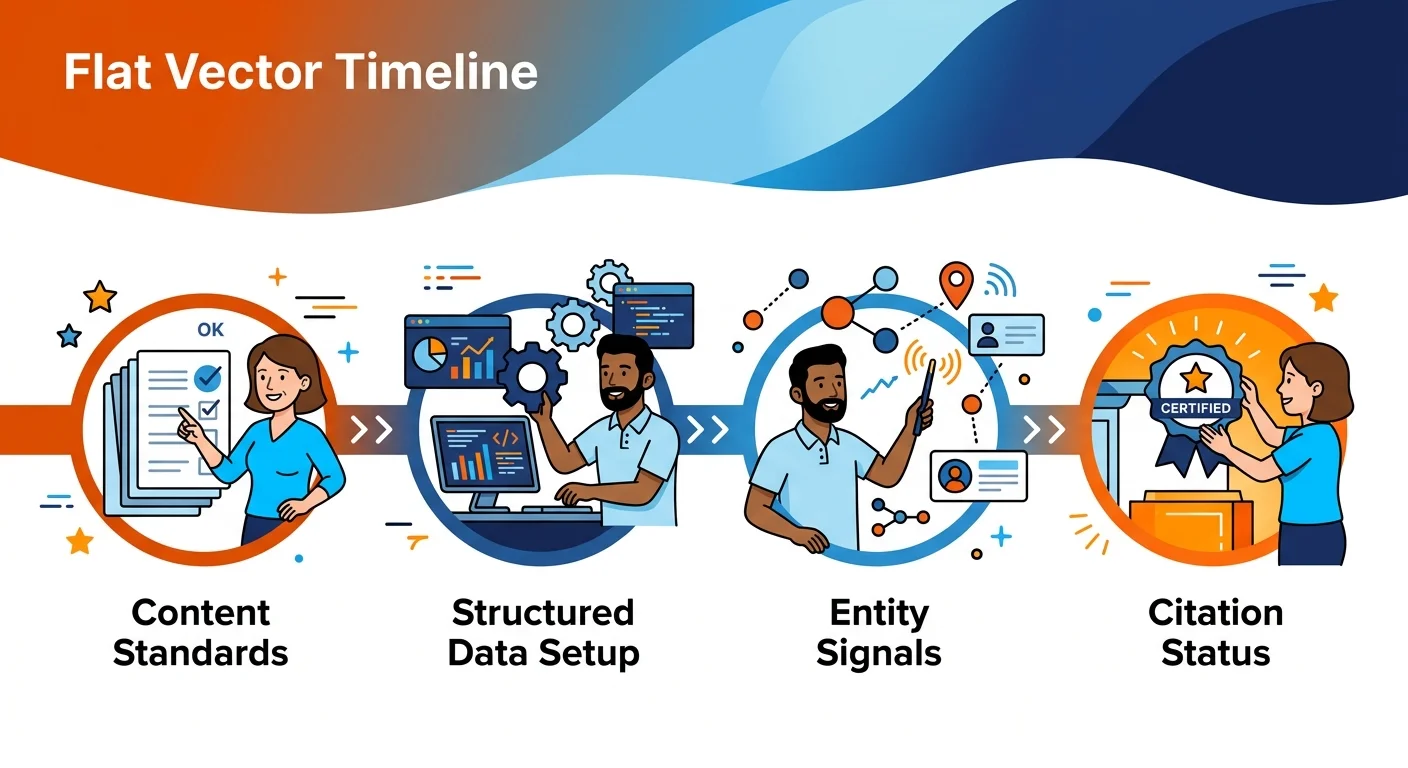
So what does a citable authority asset actually look like once it's built instead of promised? It's not a folder of keyword-targeted articles sitting around hoping to rank.
It's a defined structure that ties a recognizable name to a verifiable body of expertise — built in order, not thrown together at random. Skip the sequence and it never coheres into something a generative system can confidently attribute a claim to.
| Build Phase | Primary Focus | What It Produces |
|---|---|---|
| Structural Foundation | Structured data defining who the business is and how its properties connect to one another | A disambiguated entity a generative system can recognize as one defined subject rather than scattered mentions |
| Entity Consistency | Aligning the business name, credentials, and properties so every reference points back to the same recognizable entity | A stable identity a system meets the same way everywhere it looks, regardless of which page it is reading |
| Compounding Expertise | Publishing verifiable expertise on top of the structural and consistency layers already in place | A growing body of citable material a generative system can attribute a claim to with confidence |
Content Standards and Compliance Inside Generative Systems
Here's the thing that trips up businesses moving fast: generative AI can draft content in a hurry, but drafting speed was never the standard that counts. That content still has to clear Search Essentials and Google's own spam policies — same as anything written by hand.
And Google's guidance here is specific, not vague. Using generative tools to pump out page after page without adding value for users can violate the policy on scaled content abuse, according to Google Search Central's own guidance.
That's not a technicality. It's the line between a page a generative system can actually attribute and a page it just has to filter past.
The Sequence From Foundation Work to Citable Entity
So the build starts underneath the visible content, not on top of it. Structured data goes in first — defining who the business is and how its properties connect — before a single new page ever ships.
From there, entity consistency gets locked across every property that carries the name, so a generative system meets the same defined subject wherever it looks. Only once that foundation holds does published expertise start compounding into something a system can confidently cite, instead of another batch of pages fighting for a click that may never come.
Frequently Asked Questions
A handful of objections come up every single time this conversation happens. So here are the ones worth answering straight, no hedging.
What exactly is the agency burn cycle and how does it relate to traditional search optimization?
It's the pattern of chasing temporary rankings, watching them fade, then buying the same tactic all over again. And that cycle isn't a side effect of the churn and burnout draining the industry. It's the direct cause of it.
How does authority infrastructure differ from a standard monthly marketing retainer?
A retainer buys recurring activity that stops the second payment stops. AI Authority Infrastructure builds a standing entity a generative system can recognize and cite long after any single invoice clears.
What are the first signs that a traditional search optimization retainer is failing in the age of generative AI search?
Rankings hold steady while inquiries quietly slip. That gap is the tell: the system has stopped treating the business as a trusted, citable source, even while the old metric still looks perfectly fine.
Is high-investment authority infrastructure only for large companies, or can small practices afford it?
Scale sets the pace of the build, not whether it's possible at all. A smaller practice locking in entity structure now skips years of repurchased activity that never turned into an asset.
What does the process of building a citable authority infrastructure actually involve?
Structured data defining the business goes in first. Then entity consistency gets locked across every property, and only then does published expertise compound on top of that foundation.
How long does it take to see a return on investment when building authority infrastructure compared to tactical retainers?
Tactical retainers can show movement in weeks because the metric is shallow. Authority infrastructure takes longer to land, but what it produces doesn't expire when the comparison window closes.
Why can't an agency just do better traditional search optimization to compete in 2026?
Because the ceiling was never execution quality. A faster, tighter version of traditional search optimization still optimizes for a click, not for the entity trust generative systems now demand.
The Bottom Line
So here's the verdict sitting under all of it. A lease is a lease no matter how well you manage it. A retainer built around keyword position tracking is still rented attention on land the business will never own.
And a deed is a deed even when the build runs slow. AI Authority Infrastructure is the deed — the only version of this work that still belongs to the business after the invoices stop. The businesses renting attention in 2026 will spend 2027 explaining why a generative system never learned to cite them, while the ones building the entity now are already the answer.
So that's the whole choice, plainly: keep paying to occupy a temporary spot, or build the permanent one. Businesses ready to see which side of that line their setup actually falls on can start with an AI visibility check.