What Answer Engine Optimization Actually Covers (And Where It Stops)
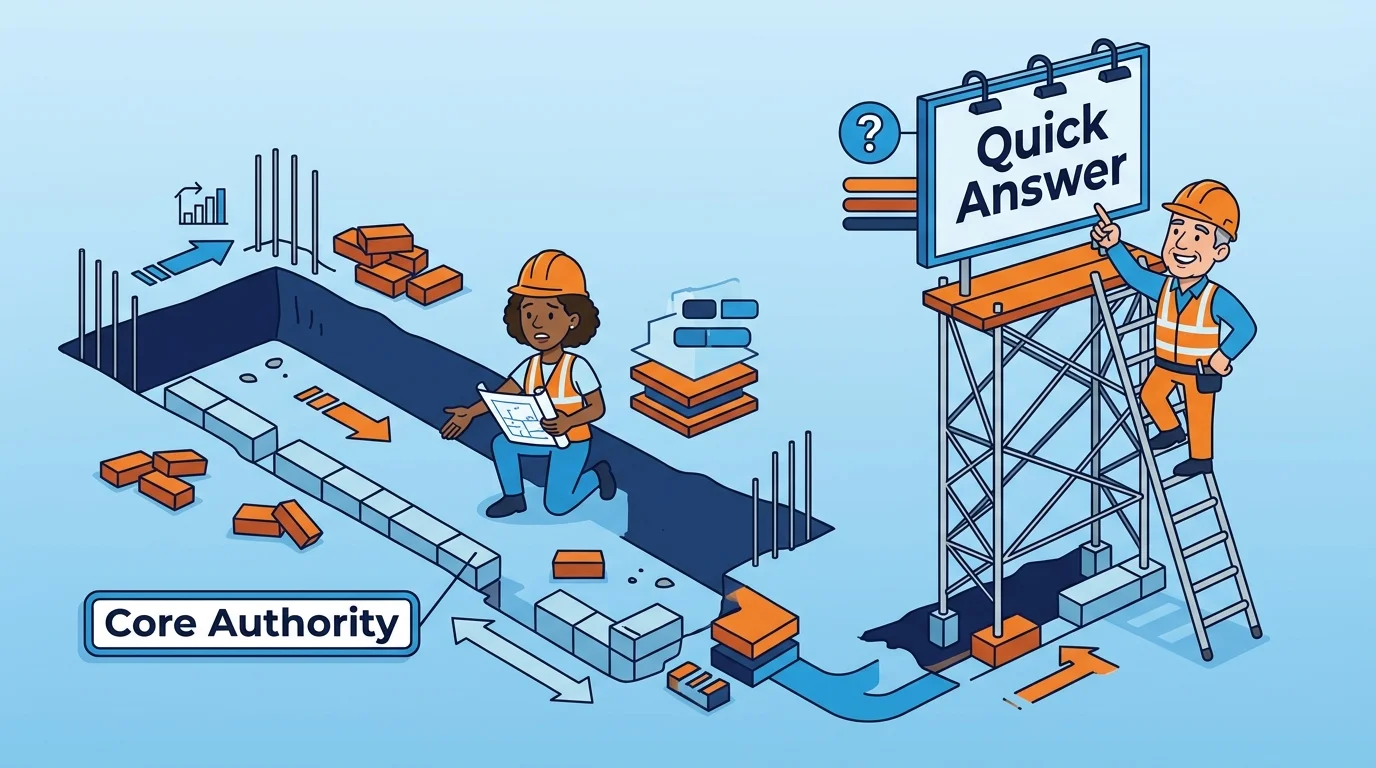
Answer Engine Optimization refers to the practice of structuring content so generative search tools can extract and cite it directly. The shift from a list of blue links to a single, AI-generated answer has fundamentally changed what it means to be visible online. Being listed is no longer the goal. Being the sentence an AI engine repeats is.
Answer Engine Optimization is best understood as an optimization layer focused on making existing content extractable and citable by AI, not as a standalone growth strategy. Much of the current conversation around AI visibility simply renames old-school search work without changing the underlying mechanics. Clear headings, concise answers, and schema markup still matter, but they format content rather than build the trust that decides whether a brand becomes a cited source. A machine can read a page perfectly and still have no reason to trust what it says, the way authority architecture for a medical practice depends on signals AEO formatting alone does not create.
Why Formatting-Only Thinking Leaves Brands Invisible
Many businesses are discovering that surface-level AEO tactics provide diminishing returns without a robust, underlying authority structure to support them. Treating AEO as a simple checklist of formatting tactics is a critical mistake. It is the final step in a deeper process, not the whole strategy.
Why Being a Listed Address Fails
A listed address just sits in a directory, waiting for something else to decide it matters. Formatting alone only ever produces an address, never a source an AI engine trusts enough to repeat. That exact gap is what the hidden cost of cheap infrastructure digs into in practice.
What the Click-Through Data Actually Shows
The click data shows what is at stake. University of Pennsylvania documents that removing AI Overviews and AI Mode from Google Search may increase click-through rates to publishers, as observed in a preregistered field experiment with about 1,100 participants.
| Experiment Condition | Measured Effect | Dataset or Scope |
|---|---|---|
| Removing AI Overviews and AI Mode from Google Search | Click-through rates to publishers increased | Preregistered field experiment, about 1,100 participants |
| AI Mode-only search experience | Click-through rates reduced, trust in information eroded | Preregistered field experiment, about 1,100 participants |
| Best large language models tested for citation support | Complete citation support missing 50% of the time | ELI5 dataset, ALCE benchmark |
Why Citation Support Breaks Down at the Model Level
And citation support breaks down before a click is even on the table. Work available through published research data indicates even the best large language models evaluated may lack complete citation support 50% of the time on the ELI5 dataset. So a model trained on the open web still comes up short on complete sourcing half the time, which is exactly the gap covered head-on in the upkeep an authority engine needs.
How a Full-Stack Authority Engine Is Structured
| Layer | Primary Function | What It Replaces |
|---|---|---|
| Entity Consistency Layer | Keeps brand name, description, and credentials identical across every platform an AI engine checks | Scattered, conflicting directory listings and inconsistent bios |
| Topical Depth Layer | Builds a connected body of content covering a domain fully, not just isolated keyword pages | One-off articles chasing a single search position report |
| Third-Party Validation Layer | Earns mentions and citations from sites the brand does not own, the layer AEO formatting cannot create on its own | Self-published claims with no outside source to vouch for them |
| Extraction Formatting Layer | Structures individual pages with clear headings, schema, and concise answers so a machine can pull a sentence cleanly | Dense, unstructured prose that buries the answer inside paragraphs |
The Trust Layer: Why AI Grounds Answers in Third-Party Sources
Grounding reveals the pattern plainly. Across 167,551 citations spanning 128 brands, AI grounds brand answers overwhelmingly in third-party sources: 85.7% of citations point to sites the brand does not own, against 14.3% owned. Estonian Entrepreneurship University of Applied Sciences documents that AI grounds brand answers overwhelmingly in third-party sources, with 85.7% of citations pointing to sites the brand does not own, against 14.3% owned. A brand's own pages are rarely the default source. Being a listed address in that owned 14.3% means waiting; being the cited source inside the 85.7% means an outside signal already vouched for the claim.
The Content Layer: Depth, Not Just Density
And no, cranking out more pages won't build that outside signal. An authority architecture rewards depth across one topic over scattered pages chasing keywords, which is exactly the structural gap authority infrastructure services are built to close.
Where the Flawed Practice Breaks Down in Production
| Build Stage | Operational Task | Failure If Skipped |
|---|---|---|
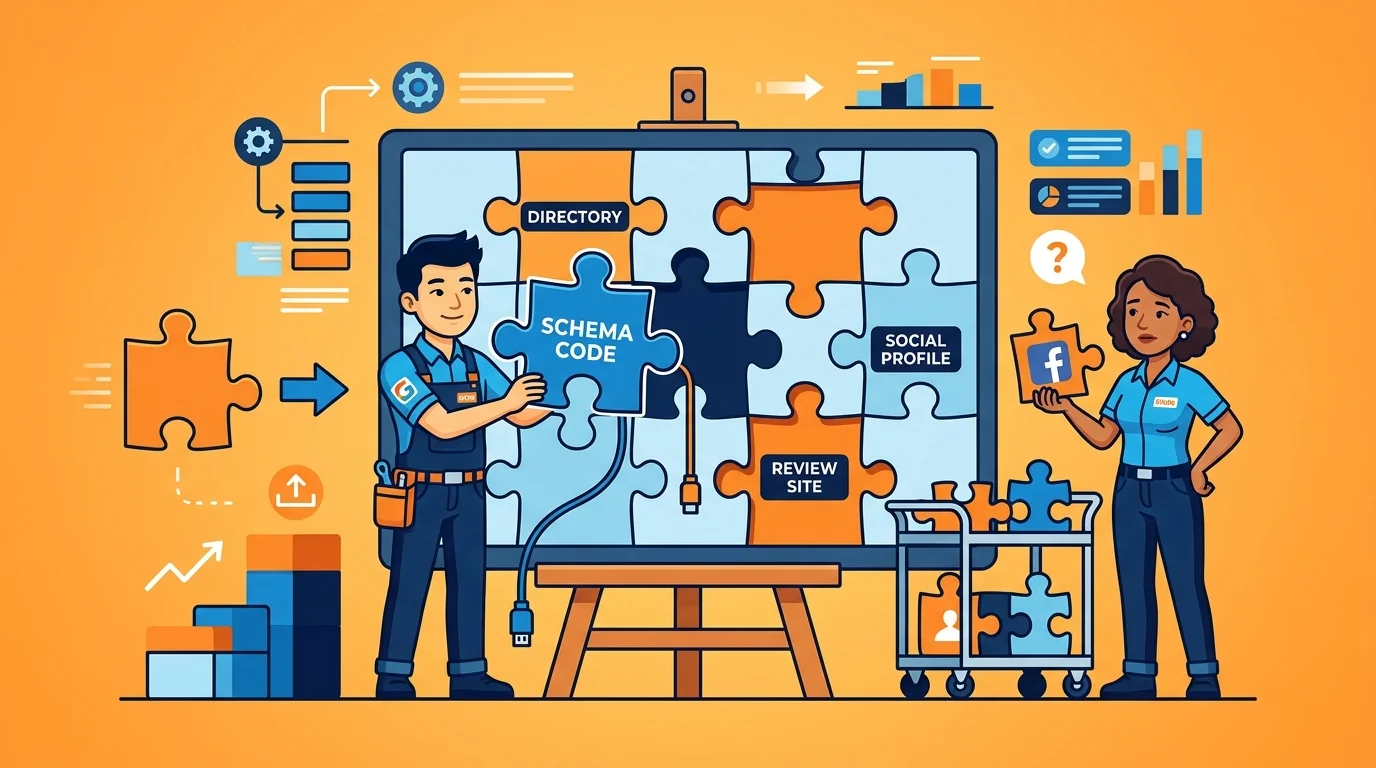
| Entity Definition | Establishing consistent brand identity and facts across third-party sources an AI engine already trusts | Skipping this step leaves a brand as an unverified name; the model has no outside confirmation and defaults to a competing source instead |
| Topical Depth | Building coverage across an entire subject area rather than publishing scattered, disconnected keyword-targeted articles | Without depth, a brand owns no authority over the topic, so the model treats each page as an isolated fragment rather than part of a trusted body of work |
| Cross-Platform Consistency | Reinforcing the same entity facts across multiple trusted channels so the signal compounds instead of fragmenting | Inconsistent descriptions across channels confuse the model's confidence in the entity, weakening the chance any single page gets cited |
| Formatting and Schema | Structuring the finished content so a model can extract and present it once trust already exists | Applying formatting first, without the prior layers, produces a page that is easy to read but has no reason to be the one a model repeats |
The Checklist Trap: How Schema-Only Deployments Fail Without Entity Signals
Schema markup alone cannot force a citation. A page can carry perfect structured data and still get skipped, because the model has no outside signal confirming the brand behind it. The checklist trap treats formatting as the finish line rather than the last step in a longer process.
Building the Engine in Sequence: What Comes First, Second, Third
Entity definition comes first: establishing who the brand is, consistently, across the sources a model already trusts. Topical depth comes second, building coverage across a subject rather than scattering single keyword-targeted articles. Formatting comes last, only once the first two layers give a model a reason to cite the page at all.
Entity Consistency Across Platforms
Here's what I know: piling on more content won't buy visibility by itself, because scattered pages never reinforce one entity. Describe the same brand the same way across trusted third-party sources, though, and that consistency compounds into a citation signal. A model checks consistency, not count, before it repeats a claim.
Frequently Asked Questions
All that architecture talk raises some practical questions. So here are straight answers to the ones that come up most.
Is AEO enough to stay competitive in 2026, or is a full-stack approach necessary?
No. Answer Engine Optimization alone formats content for extraction, but extraction without trust rarely earns a citation. A full-stack authority engine is what makes the formatting worth anything.
What's the main difference between optimizing for answers and building an authority engine?
AEO edits pages that already exist so they're easy to extract. An authority engine builds what decides whether a model cites them at all. That's entity trust, topical depth and third-party validation.
How much more resource-intensive is building an AI authority engine compared to a standard AEO campaign?
It requires more sustained investment, since it builds entity consistency and topical depth across many sources rather than formatting single pages. The payoff is a brand a model trusts, not just a page it can read.
Can a brand start with AEO and then scale up to a full-stack authority engine over time?
Yes, but sequencing matters. Formatting fixes alone build nothing to scale toward. So authority foundations should start early, not after the AEO tactics stall out.
What are the key components of a full-stack AI authority engine that AEO alone doesn't cover?
Entity consistency across trusted third-party sources, topical depth across a subject rather than scattered keyword-targeted articles, and cross-platform signals that confirm who the brand is. AEO formatting addresses none of these directly.
How is the return on an AI authority engine measured compared to an AEO initiative?
AEO initiatives get measured on formatting and extractability. An authority engine gets measured on something tougher. Do trusted outside sources describe the brand consistently enough to earn citations?
What's the biggest risk of focusing only on AEO and ignoring the underlying authority architecture?
The biggest risk is mistaking a well-formatted page for a trusted one. A page can read perfectly and still get skipped, because no outside signal ever told the model to repeat it.
The Bottom Line
Here's my verdict: a full-stack AI authority engine is the foundation that gives Answer Engine Optimization any meaning at all. Skip it, and formatting without entity trust only gets you a listed address. And a listed address just sits there, waiting to be found.
Here's the thing: generative search engines already have a trusted shortlist for most topics. Entity consistency, topical depth, and third-party validation decide who sits on that shortlist, not clean headings. A brand that skips those layers is optimizing a page nobody with authority has agreed to repeat.
So the call is directional, not conditional: build the authority architecture first, and your formatting finally has something worth citing. Want to see where you actually stand? The AI Visibility Check shows you.