What Actually Counts as an Answer Engine Agency Credential?
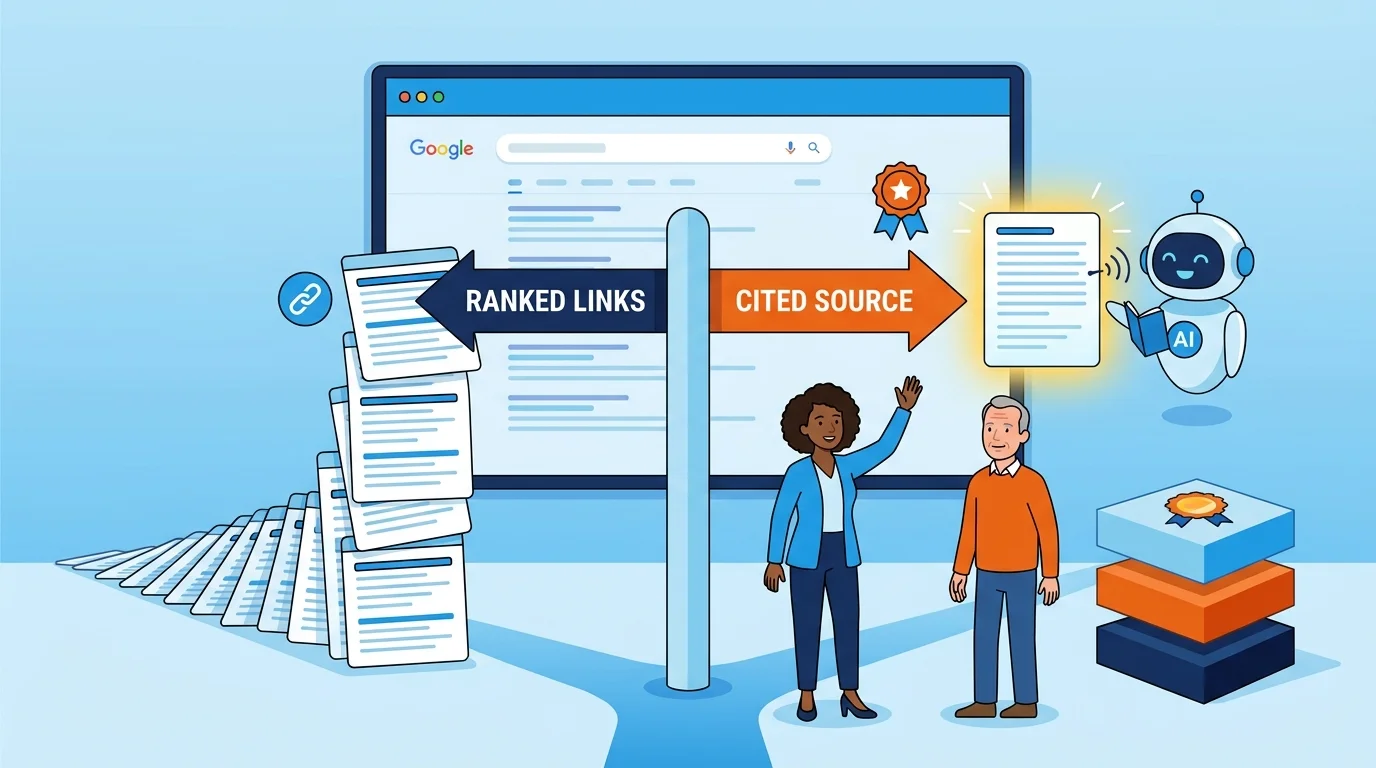
A credential only counts if it proves an agency can do one specific thing: make a brand's expertise machine-readable enough that an AI system understands it, trusts it, and cites it. That is what an answer engine agency actually sells, whether or not the agency itself uses that language.
Here is the uncomfortable mechanism underneath most pitches. A results-page position number and a results-page position number dressed up as an AI visibility metric are the same measurement wearing a new label, because the underlying skill set built for a list of links was never built to win a single authoritative answer. That shift in what gets optimized for is explained in agency selection criteria, and it is the dividing line separating relabeled legacy work from an agency equipped for generative search.
Why a Repainted Search Optimization Checklist Doesn't Qualify as an AEO Credential
A renamed service sheet is still a listed address. Sure, it gets a brand indexed somewhere, but it doesn't make that brand the thing an AI system reads aloud when someone asks a question.
The distinction matters because a phone book listing and a cited source answer two different needs. One proves you exist. The other proves you're trusted enough to quote — and only one of those outcomes is what a credentialed agency should be hired to build.
What the Relabeled Checklist Leaves Out
Look at what the relabeled checklist actually keeps: acquiring inbound links, rank-tracking reports and keyword-targeted articles, all sitting exactly where they were under shiny new language. None of that teaches a page to carry a clean, self-contained answer a machine can lift without editing.
For a closer look at what separates a relabeled vendor from one built for this work, see evaluating an answer engine partner. Entity resolution, structured data discipline, and extraction-ready content are the parts no rename can substitute for.
How the Old Playbook Was Built to Fail the New Test
The old playbook was built to win a list of ten blue links, so it measures position, not citation. That design choice makes it structurally unable to pass the new test, no matter how its service sheet gets renamed.
And Google's own guidance draws a related line around effort and originality in AI-produced content. Google documents that using generative AI tools to generate many pages without adding value for users may violate Google's spam policy on scaled content abuse, and the Search Quality Rater guidelines in section 4.6.5 can be used to evaluate it. A checklist renamed into AEO language, without being rebuilt for extraction and trust, risks landing on the wrong side of that exact standard.
How a Flawed Credential Set Fails Once AI Overviews Take the Click
More content is not the fix, because volume alone does not make a page citable. Even the best-performing large language models lack complete citation support 50% of the time on the ELI5 dataset. Princeton University documents that even the best large language models may lack complete citation support 50% of the time on the ELI5 dataset. That gap sits on the model's side: it counts how often a model's own statements are backed by the sources it cites. It is not something a higher page count fixes. A rebuilt credential set has to prove extraction and trust, which is the subject of what changes after agency onboarding.
| Measurement | Old Search Model | AI Answer Model |
|---|---|---|
| Citation reliability of the answer itself | Not measured — a ranked link required no citation support to appear | Even the best large language models lack complete citation support 50% of the time on the ELI5 dataset |
| What a credential set is built to win | A listed position among ten ranked links, measured by position number | A cited, trusted answer a generative system reads aloud, measured by whether the brand appears inside the response |
What the Technical Architecture Behind a Real Credential Looks Like
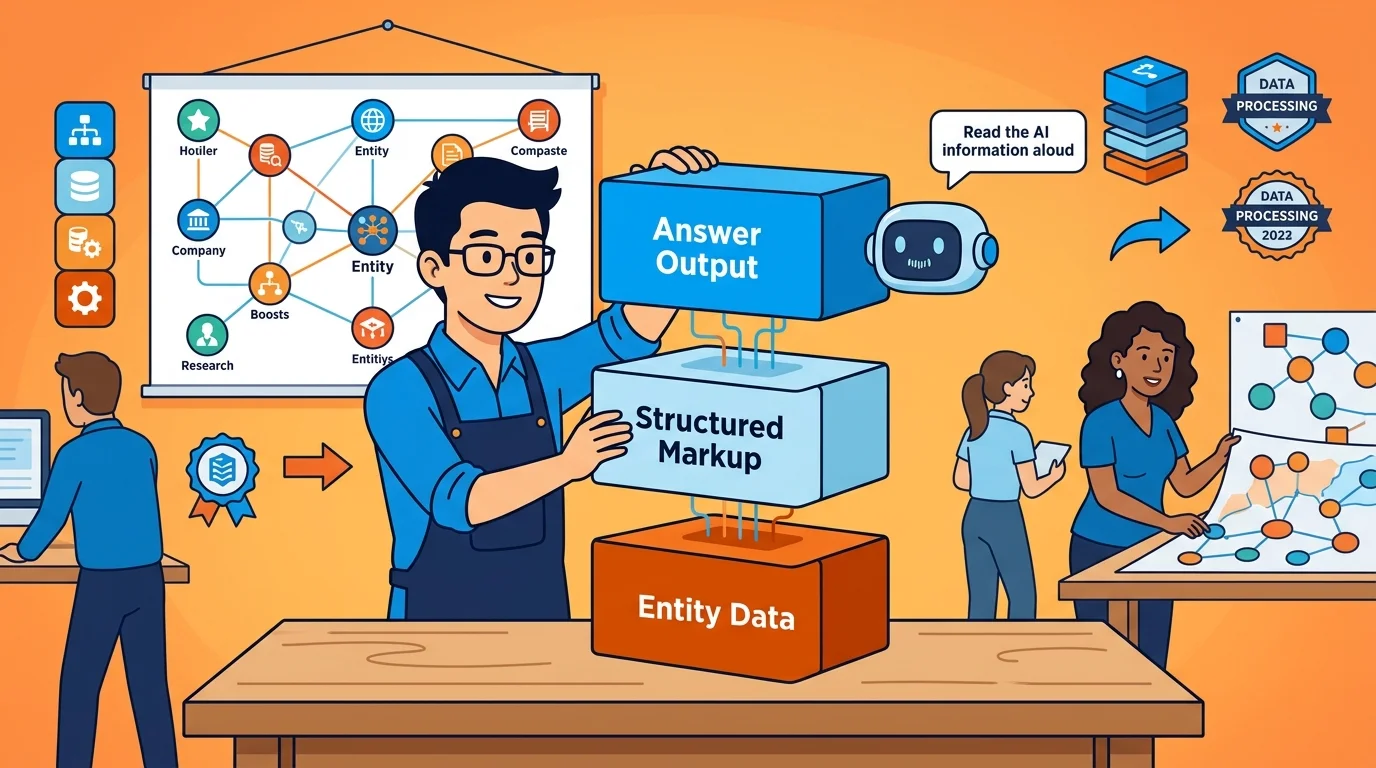
Technical architecture is the one part of a credential a renamed service sheet can't fake. You see it in how an agency builds entity signals, structures data, and shapes content so a machine can lift it, not just skim it.
The eligibility bar for appearing inside a generative answer is already low on paper. According to Google, Google states that AI Overviews and AI Mode have no additional technical requirements beyond being indexed and eligible to appear in Search with a snippet. That low bar means the real competitive gap sits entirely in how well a brand's entity signals and content structure earn the citation once eligible.
| Architecture Layer | What It Does | Why It's Checked |
|---|---|---|
| Structured Data Implementation | Schema markup that tells machine readers what a page actually contains, matched exactly to the visible content | Mismatched or decorative schema fails the standard that structured data must reflect what the page shows, and a generative system treats the mismatch as a trust signal against the page |
| Entity Clarity | Establishing a brand as a single, consistently recognized subject across the web rather than a scattered set of mentions | A generative system resolves entities before it decides what to cite, so an unclear or fragmented entity never enters the pool of trusted sources |
| Content Architecture for Extraction | Structuring pages so an answer can be lifted cleanly, without editing, rather than written only for a human skimming a results list | Extraction is the mechanical step that precedes citation, and content built for skimming rather than lifting rarely survives that step intact |
| Citation-Focused Measurement | Tracking whether a brand actually appears inside generative answers, not just whether a page holds a position in traditional ranked results | A credential set still reporting search position reports cannot show whether any of the other three layers are working |
Entity Resolution and Knowledge Graph Fluency
Being a listed address and being the cited source are two different outcomes, and only one needs entity resolution. A page can place well among the ten blue links and still be invisible to the entity graph a generative system checks before it picks who to quote.
Checking search position reports doesn't tell you much about an agency anymore. What matters is whether that agency gets knowledge graphs, entity resolution, and how large language models actually behave when they pick a source to cite.
Structured Data That Matches What's Actually on the Page
Google's rules require structured data to match what the page actually shows, not what a schema tag claims it shows. An agency offering done-for-you AEO services should be able to demonstrate that discipline directly, line by line, rather than describe it in the abstract.
What Counts as Measurable Proof of an Agency's Work?
Real proof shows up inside generative answers, not inside a rank tracker, and the GEO framework was built to test exactly that by measuring how specific content changes move a page's odds of getting pulled into a generative response. According to research from IIT Delhi and Princeton University, the GEO methods may boost content visibility in generative engine responses by up to 40%, with effectiveness observed to vary across domains — a laboratory finding rather than a study in people. That is a benchmark result under test conditions, not a figure an agency can promise a client. What a credentialed agency should be able to do is explain which content changes it made and why.
Why Keyword Reports and Backlink Counts Stopped Being the Scorecard
Search position reports and acquiring inbound links stopped functioning as a scorecard once citation, not position, became the thing worth measuring. Those metrics describe a game built around a list of links, and that game no longer determines whether a brand gets read aloud as the answer.
An agency still leaning on them is measuring the wrong outcome, and no amount of reporting polish fixes a scorecard built for a different contest.
What a Credentialed Engagement Actually Builds, Step by Step
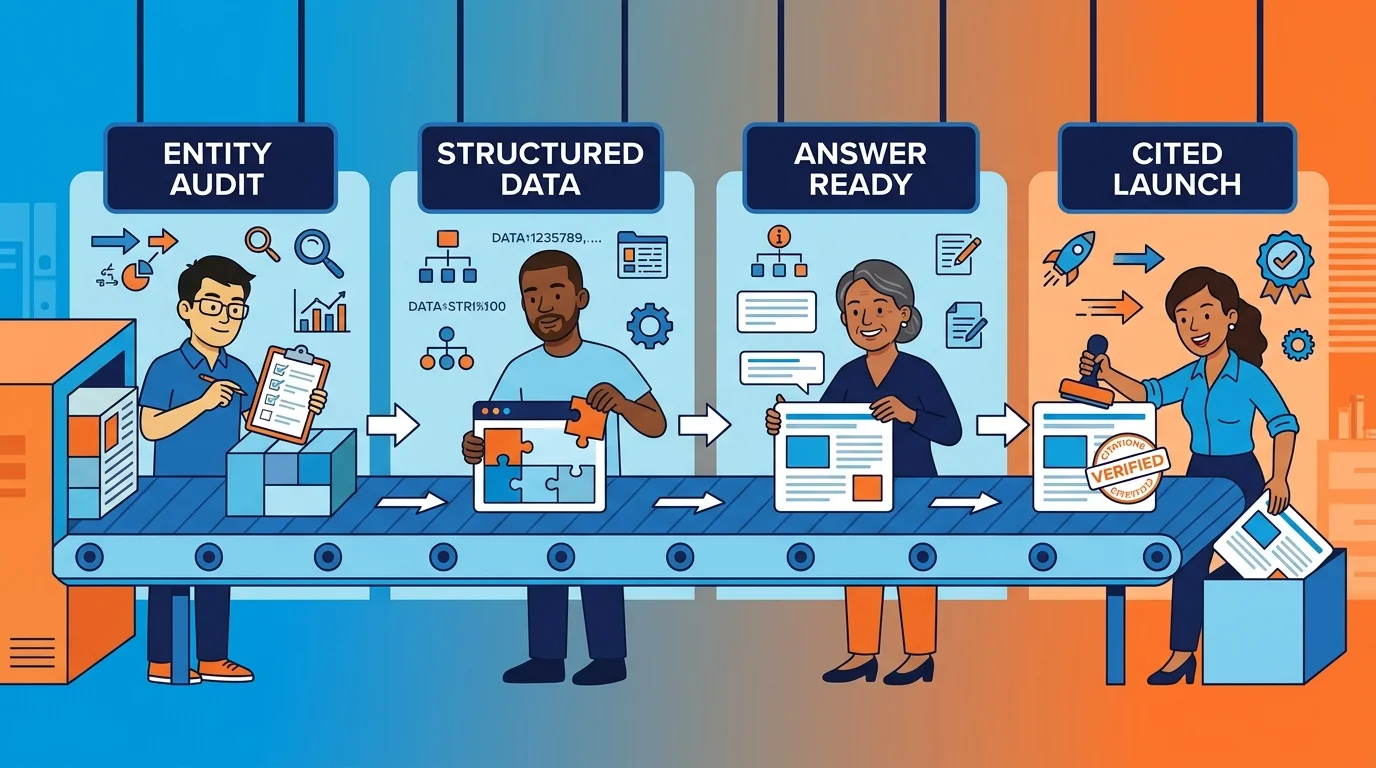
A credentialed engagement does not start with content. It starts with an audit of what a brand's expertise actually looks like to a machine reader, because an answer engine agency's whole value rests on making that expertise understandable, trustworthy, and citable to AI systems.
| Step | What Happens | What It Produces |
|---|---|---|
| Entity Audit | Maps where and how consistently a brand already appears across the web, checking whether machine readers can resolve it as one coherent source. | A clear picture of existing entity gaps and inconsistencies a generative system would stumble over. |
| Structured Data Cleanup | Aligns schema markup with what a page actually shows, closing the gap between claimed and visible content. | Machine-readable signals that match the page, built to satisfy a machine reader rather than decorate a report. |
| Content Rebuilt For Extraction | Restructures existing pages so a clean, self-contained answer sits where a generative system can lift it without editing. | Pages structured to be quoted, not skimmed, with the answer surfaced rather than buried in narrative. |
| Citation Tracking | Confirms whether the rebuilt entity and content are actually surfacing inside generative answers, not just indexed. | Ongoing evidence of whether the work is earning citations, used to refine the next round of structural changes. |
The Build Sequence from Entity Audit to Cited Content
Step one is an entity audit that maps where a brand already shows up across the web and how consistently it shows up. Next come structured data cleanup, content rebuilt so a machine can lift it instead of skim it, and checks on whether that work is actually surfacing inside generative answers. Each step earns eligibility against the technical bar that already exists (no invented hoops required).
Frequently Asked Questions
These questions come up every single time this topic does. So here are straight answers, no committee hedging.
How is Answer Engine Optimization (AEO) different from traditional RESULTS-PAGE OPTIMIZATION?
Old-school search work chases a spot in a list of links. Answer engine work builds the entity signals and structure behind the answer. That's what lets an AI system lift it and cite it directly.
What specific technical skills should an AEO agency have?
Entity resolution, structured data that matches the visible page, and content architected for clean extraction are the core skills. Anything short of those three is a renamed version of the old service sheet.
How can claims about getting brands cited in AI answers be verified?
Ask for the specific structural changes an agency made and what shifted in how a brand surfaces inside generative answers. A credible agency explains the mechanism rather than promising a number.
What kind of reporting should an Answer Engine agency provide?
Look for reporting on entity consistency, schema accuracy, and citation appearances inside generative answers. Search position reports alone? Not a substitute for that evidence.
Are keyword position tracking and backlinks still relevant for AEO work?
Sure, they still help with basic discoverability. But neither one decides whether a brand gets cited inside a generative answer. Entity trust and structured content carry that weight now.
What does a credentialed AEO engagement look like in the first 90 days?
The engagement opens with an entity audit, followed by structured data cleanup and content rebuilt for extraction. Citation tracking closes the loop, confirming the work is actually surfacing where answers get read aloud.
The Bottom Line
Here's the verdict: most agencies still selling legacy search optimization are selling a listed address. Sure, they can get a brand into a directory, but a directory entry isn't what a generative system reads aloud when someone asks it a question.
A credential only means something when it proves the second outcome, not the first. Entity resolution, structured data discipline, and content built for extraction are the capabilities that decide whether a brand gets cited — acquiring inbound links and search position reports decide nothing in that contest anymore.
So judge an agency by whether it can make a brand's expertise machine-readable enough to be trusted and quoted, not by how well it renamed the old service sheet. Want to see what that looks like for your own brand? Start with the AI Visibility Check.