
Under HIPAA’s Safe Harbor method, information counts as de-identified when 18 specific identifiers are removed. These include names, geographic data below state level, dates other than year, phone numbers and email addresses. The California Health and Human Services Agency (CalHHS) de-identification guidelines define aggregate data as collective data about a group or category of services or individuals. It may be shown as counts, percentages, rates, averages or other statistical groupings. The CalHHS guidelines also state that record-level data inherently has higher risk than summarized data.
The Two Ways to Make Outcome Data HIPAA-Safe
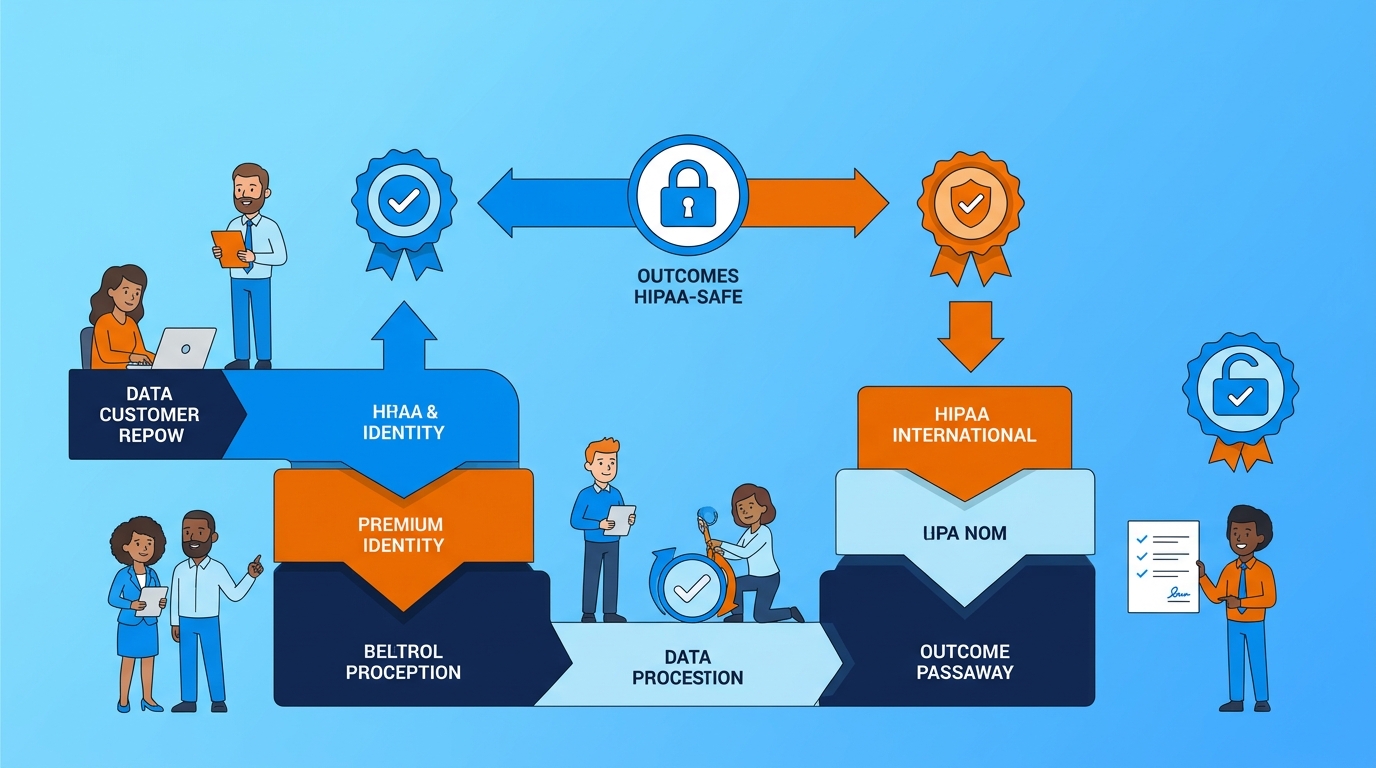
Outcome data becomes HIPAA-safe in one of two ways. Safe Harbor de-identification. Or aggregate reporting.
Safe Harbor works by removal. Under HIPAA’s method, data is de-identified when 18 specific identifiers are gone.
The list includes names, geographic data below state level, dates other than year, phone numbers, email addresses and more.
Aggregate reporting works by grouping.
The CalHHS de-identification guidelines say aggregate data is collective data about a group or category of services or individuals. It can be shown as counts, percentages, rates, averages or other statistical groupings.
The same guidelines say record-level data inherently has higher risk than summarized data.
For a deeper look at this approach, read Proving Chiropractic Outcomes Without Health Records: A Complete Guide. The rules above come from the CalHHS Data De-Identification Guidelines Template Edition 2.0.
Here’s where answer engine work parts ways with traditional search optimization.
Keyword lists. Inbound links. Results-page position numbers. None of them tell an AI engine whether it can rely on a practice.
What it wants is a business it can read clearly and believe.
Data handled to a known standard? Grouped so no patient shows through? That’s the kind of discipline that earns belief.
Remove the 18 Safe Harbor Identifiers
Safe Harbor works like a checklist. Information is de-identified when 18 specific identifiers are removed.
These include names, geographic data below state level, dates other than year, phone numbers, email addresses and more.
Two items on the list come with specific conditions.
- ZIP codes. You may keep the first three digits only if the area formed by all ZIP codes with those same three digits contains more than 20,000 people.
- Ages. All ages over 89 must be removed. The one exception is grouping them into a single category of age 90 or older.
Publish Aggregate Figures Instead
Aggregate reporting describes a group, not a person.
In the CalHHS guidelines, aggregate data is collective data about a group or category of services or individuals. It’s shown as counts, percentages, rates, averages or other statistical groupings.
The same guidelines say record-level data inherently has higher risk than summarized data.
They also say exactly where the risk comes from. Disclosure risk becomes a concern when released data reveal characteristics that are unique in both the released data and in the underlying population.
Before you publish a figure, check whether it does that.
Why De-Identified Data Can Still Identify Someone
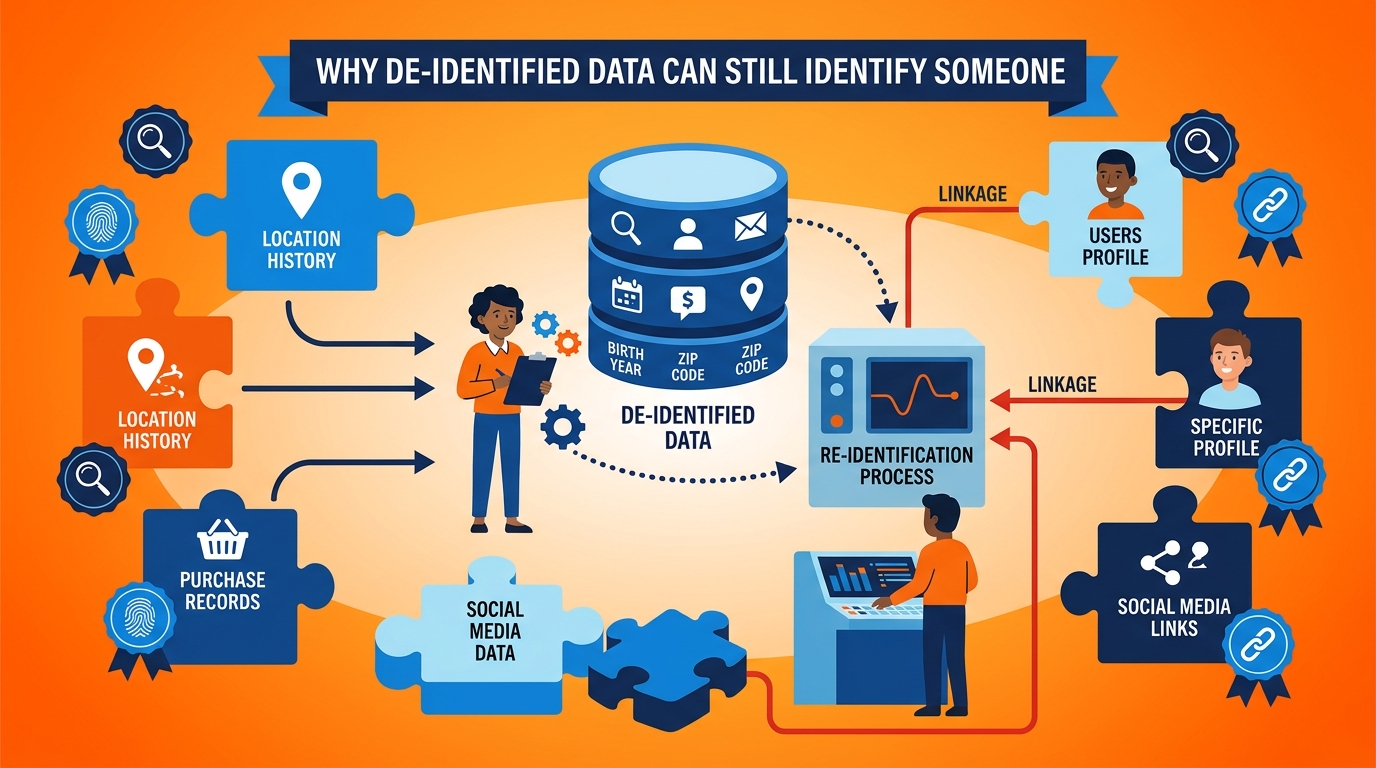
Removing the obvious fields doesn’t always finish the job. Three things can still give a patient away.
Quasi-identifiers. CalHHS explains that some variables commonly used in published information aren’t unique by themselves. In the right combination, though, they can become unique.
Rare traits. CalHHS says unique or rare personal characteristics, such as height above 7 feet, raise the chance that someone can tie released data to a person.
So does information that isolates people into small demographic subgroups, such as American Indian Tribal membership.
Free text. The European Journal of Psychotraumatology notes that open-text responses might unintentionally include direct or indirect identifiers.
I’d rather see a practice publish a handful of grouped, well-ordered facts than a steady stream of case detail.
An AI assistant names the practice it can make sense of. Sheer output doesn’t earn that. A clear sequence of facts does.
And every extra detail is one more quasi-identifier.
Spreading numbers across many sites? Read Should You Publish Outcome Data Across Multiple Platforms? first.
What Counts as PHI When You Use Patient Testimonials
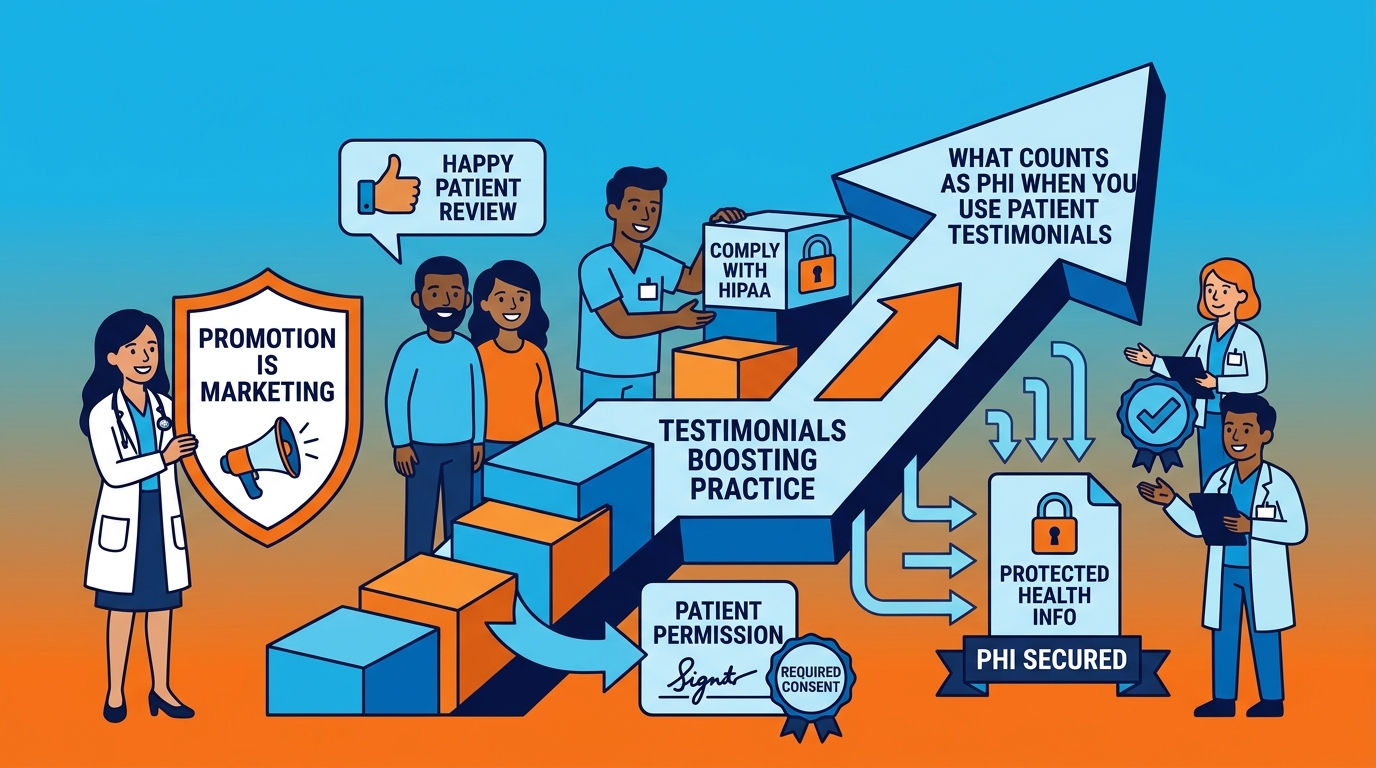
A testimonial that promotes your practice falls within HIPAA’s marketing definition. So it requires written authorization.
The exception? A testimonial that’s truly de-identified.
The rule reaches far.
A testimonial that reveals PHI needs written Patient Authorization before it goes public. PHI here includes names, images, voices, conditions, dates and even recognizable contexts.
Text quotes. Videos. Before-and-after photos. Ratings. Social posts. All covered.
Verbal permission is never enough.
Your staff training should cover that point. It should also cover what counts as PHI, when to talk to your compliance officer, and the consequences of a violation.
For related reading, see What Credentialing Bodies Say About Publishing De-Identified Outcomes. The testimonial rules above come from Paubox’s guide to patient testimonials in email marketing and Accountable’s HIPAA and Healthcare Advertising: Compliance Guide for Marketers.
Getting a Valid Marketing Authorization
A valid HIPAA marketing authorization must include:
- A description of the PHI to be disclosed
- The purpose of the disclosure
- Who will receive or have access to the information
- An expiration date or event
- A clear statement that the patient can revoke the authorization at any time
For testimonials, Accountable adds two more items.
Include a notice that third parties may re-disclose the information once it’s public. And state whether any remuneration is provided for the testimonial.
Patients can revoke at any time. But revocation only applies to future uses.
It doesn’t undo disclosures that have already happened.
Using De-Identified Testimonials Safely
A properly de-identified testimonial needs no authorization.
Paubox gives this example: “A patient in their 40s who came to us after years of managing a chronic condition shared that our care team changed their life.”
It contains no PHI. So it needs no authorization and carries no compliance risk.
Keep these points in mind:
- Stay inside the permission. If a patient allows only a first name and a general description, you can’t later publish their full name, photo or diagnosis details. You’d need a new authorization.
- Public reviews are not permission. A public Google or Yelp review doesn’t count as HIPAA authorization to reuse that content.
- Avoid unique facts. Accountable advises using de-identified testimonials when possible and avoiding unique facts that could re-identify a person. It also says to pair stories with accurate disclaimers and disclosures about typical results.
Public Replies Are Disclosures Too

A reply to a review is a public statement. If it names or confirms a patient, it’s a disclosure.
HIPAA bars covered entities from disclosing a person’s PHI. There are only two exceptions. HIPAA requires or permits the disclosure, or the person has authorized it.
OCR has said a covered entity may not confirm or deny that a person was a patient. It also may not disclose other identifiable information, such as name or address.
In its recent enforcement actions, OCR has also stressed that covered entities should have policies that specifically address PHI and social media.
The full reply playbook and the enforcement cases are covered in the separate guide on disputed outcomes. For the source of these points, see Disclosing Patient Information in Responses to Online Reviews: Recent OCR Enforcement.
What HIPAA Violations Actually Cost
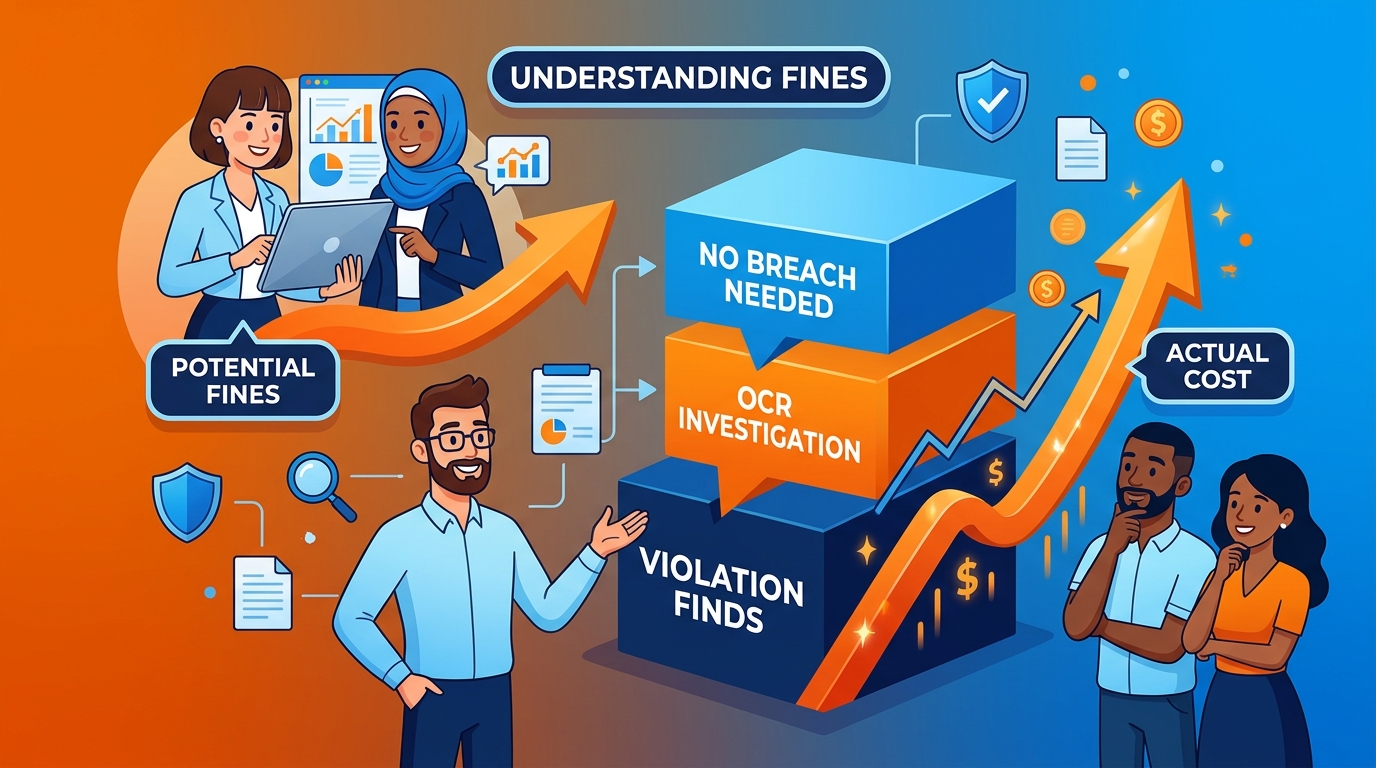
OCR can fine a HIPAA violation even if no breach of PHI has occurred.
The fine range depends on culpability. This table shows three culpability tiers.
| Culpability Tier | Fine Range |
|---|---|
| Ignorance of the rules | $145 to $36,505.50 |
| Violation despite reasonable vigilance | $1,461 to $73,011 |
| Willful neglect, uncorrected after 30 days | $73,011 to $2,190,294 (maximum per violation category, per year) |
For willful neglect, the maximum penalty is $2,190,294 per violation category, per year.
OCR still issues penalties. It resolved 16 HIPAA violation cases with financial penalties in 2024 and 21 in 2025.
You can browse the cases at HIPAA Violation Cases – Updated 2026.
After an OCR settlement, OCR monitors the entity for compliance with the HIPAA Rules for a set period, typically one to three years.
OCR isn’t the only regulator that can act.
State attorneys general can also impose financial penalties on HIPAA-covered entities and business associates. Some states are active enforcers, including California, Connecticut, Indiana, Massachusetts, New Jersey and New York.
HIPAA has no private cause of action. A person can’t sue a HIPAA-regulated entity for a HIPAA violation itself.
Vendors, Tracking Tech and Other Overlooked Leaks
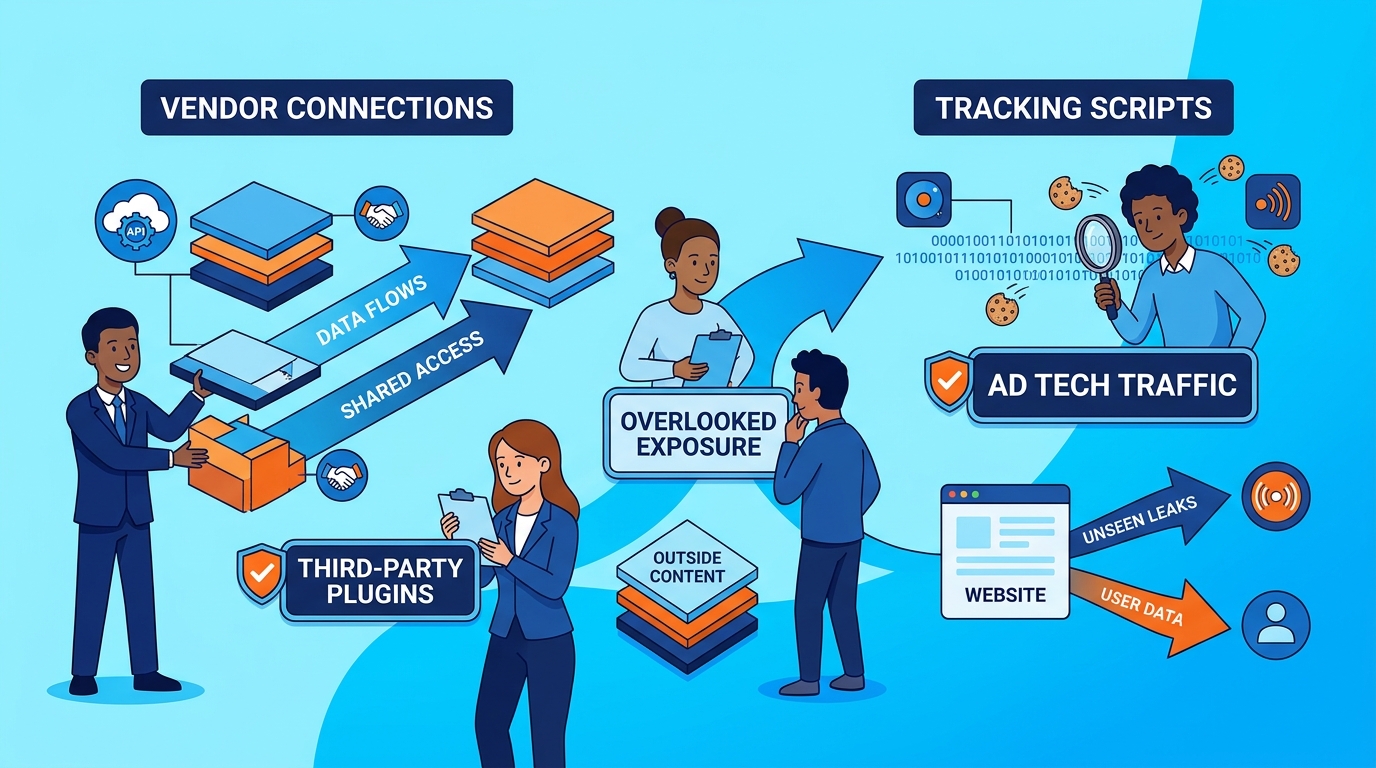
Two more exposure points sit outside the published content itself.
Vendors. Any vendor who handles PHI on your behalf must sign a Business Associate Agreement.
Tracking tools. Pixels, SDKs, session replay and tags on appointment pages, patient portals or symptom content can capture PHI. One example is an IP address plus a page path.
Frequently Asked Questions
Can I publish a patient’s age and ZIP code along with their outcome?
Only within the Safe Harbor limits. You may keep the first three digits of a ZIP code only if the area formed by all ZIP codes with those digits contains more than 20,000 people. All ages over 89 must be removed. The one exception? Grouping them into a single category of age 90 or older.
Does a patient’s positive Google review give me permission to repost it?
No. A public review doesn’t count as HIPAA authorization. To reuse that content, you still need the patient’s written authorization. Unless the content is truly de-identified.
Can OCR fine my practice even if no patient data actually leaked?
Yes. OCR can fine a HIPAA violation even when no breach of PHI has occurred. After a settlement, OCR monitors the entity for compliance for a set period, typically one to three years.
Can a patient sue my practice directly for a HIPAA violation?
No. HIPAA has no private cause of action, so a person can’t sue a HIPAA-regulated entity for a HIPAA violation itself.
But state attorneys general can impose financial penalties. Some states are active enforcers, including California, Connecticut, Indiana, Massachusetts, New Jersey and New York.
Do I need a Business Associate Agreement with the vendor who builds my outcomes page?
Yes, if the vendor handles PHI on your behalf. Any such vendor must sign a Business Associate Agreement.
Watch for tracking tools too. Pixels, SDKs and tags on appointment pages or patient portals can capture PHI, such as an IP address plus a page path.
Publish Aggregate Data First, and Get Written Authorization for the Rest
Start with aggregate reporting. The CalHHS guidelines state that record-level data inherently has higher risk than summarized data.
Publishing individual-level information? Remove all 18 Safe Harbor identifiers first. These include names, geographic data below state level, dates other than year, phone numbers and email addresses.
If anything is still identifiable, get written authorization before you publish.
Our iTech Valet Service Plans & Pricing page explains how we do this work.
When you’re ready to see what AI says about your practice today, Run My AI Visibility Check.