
Indexed by Google vs Recommended by AI: The Line Legacy Providers Never Crossed
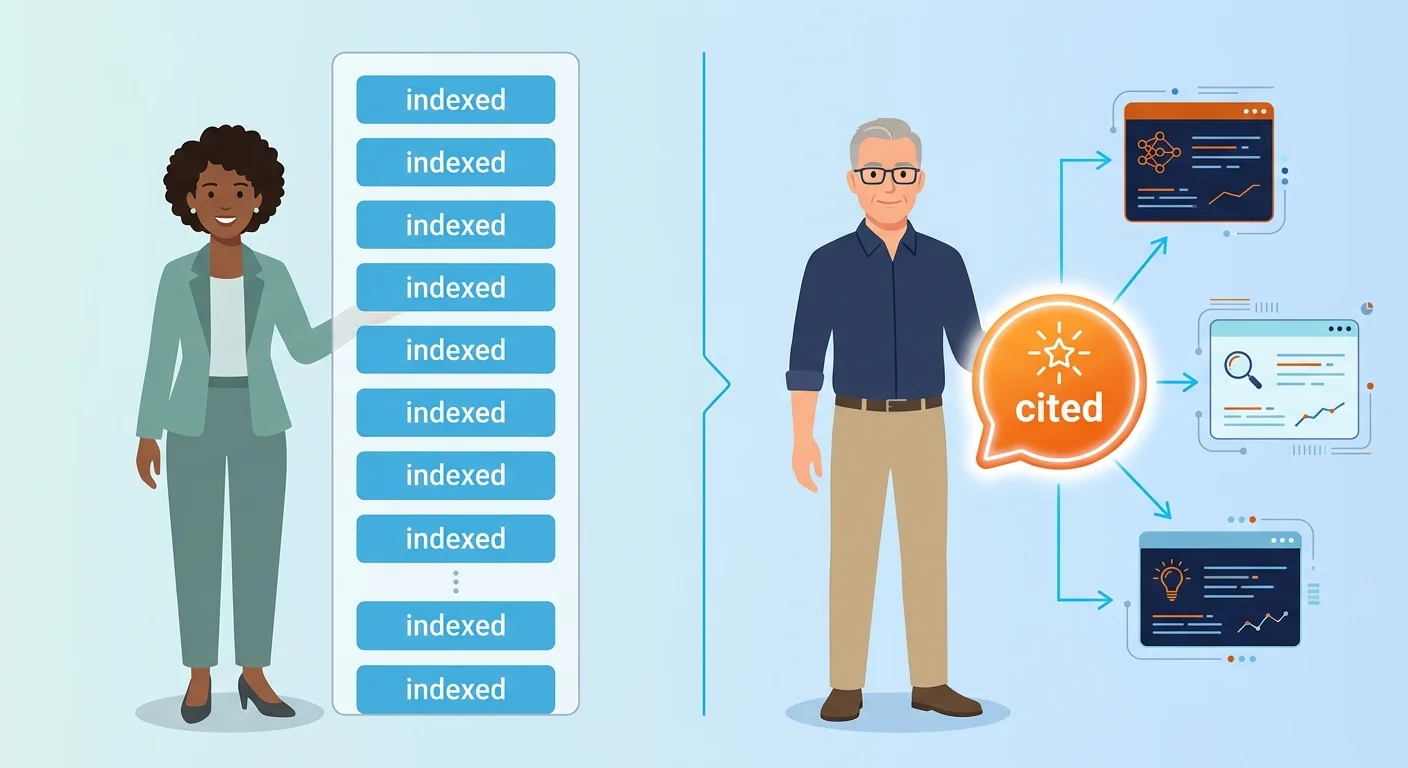
Being visible online used to mean one thing: a high spot on the results page. That world's gone.
So the old scoreboard still exists. It just stopped measuring anything that matters. A clinic can hold a strong position there and never get named in a single AI-generated answer.
Here's the line legacy providers never crossed. Being listed and being cited are two different games played on the same board.
When generative answers pushed aside scrollable results, rank stopped being a guide to who gets quoted. A listed address expires the moment a user quits clicking through a results page. A cited source keeps getting pulled into new answers long after it was first verified.
What Indexing Actually Measures
Indexing measures whether a crawler can find a page, read it, and drop it into a results list. It's a technical inclusion test. It is not a trust test.
So a page can pass every indexing check and still flunk the test a generative system runs. Traditional search optimization sold inbound links and keyword position tracking, metrics that rank a page against other pages, not ones that prove it's a credible source of fact. A clinic weighing whether its current provider actually understands generative search is really asking whether indexing signals were ever built to answer that, and they weren't.
What Citation Actually Requires
Citation asks for something else entirely. An AI engine has to judge a source credible enough to quote, consistent enough to trust, and structured clearly enough to pull from.
That judgment rests on structured data, consistent entity signals across directories, and content built around verifiable expertise. Not one of those three depends on where a page sits in a results list. A source earns repeated citation by staying verifiably accurate everywhere it appears, and that compounds over time in a way a ranked position never does.
Why Traditional Search Optimization Retainers Can't Buy Citation Trust

Here's the thing about retainer-based traditional search optimization agencies: they're built to sell a game that already ended. Their whole infrastructure exists to move a needle generative answers stopped reading.
So the retainer keeps billing. The reporting keeps showing movement. But none of it maps to whether an AI engine ever names the clinic as a source, and that gap is structural, not a performance problem more effort fixes.
Legacy authority providers are usually traditional search optimization agencies, and they built their infrastructure to win the old game of ranking. They were never built to win the new game of being cited.
| Legacy Retainer Activity | What It Was Built to Win | What AI Engines Actually Check |
|---|---|---|
| Acquiring inbound links | Signal authority to a crawling algorithm counting connections between pages | Whether a source is verifiably accurate and consistent across independent references |
| Keyword position tracking | Move a page up the ranked results for a target phrase | Whether the content answers the underlying question clearly enough to extract and quote |
| Monthly reporting on ranking movement | Demonstrate progress against a scoreboard built for scrollable results pages | Whether the practice appears as a cited source inside a generated answer |
| Optimizing the clinic's own web pages | Control the one channel the retainer can directly edit and bill against | Independent editorial and reference sources the retainer never touches |
The Retainer Model's Blind Spot
Now, the retainer model assumes the scoreboard is stable. It bills monthly against tactics that assumed a human would scroll a results page and click one of ten links.
That assumption is the blind spot. When an AI engine decides whether to name a clinic or scroll past it, the retainer's core deliverables never enter the calculation at all.
Sit with that: a retainer can hit every benchmark it promised and still leave a clinic absent from every AI-generated answer about its own specialty. The contract gets fulfilled. The citation never shows up.
Where Acquiring Inbound Links Stops Producing Results
Acquiring inbound links was built to signal authority to a crawling algorithm counting connections between pages. But a generative system isn't counting connections. It's judging whether a source is verifiably accurate.
Those are different tests, and a page can ace one while flunking the other completely. Acquiring inbound links tells an algorithm a page is popular among other pages. It says nothing about whether the page's clinical claims are true.
So this is where the tactic stops producing results that matter. A link profile can grow every quarter while a clinic's actual citation rate in AI answers stays flat, because the two numbers were never measuring the same thing.
The Cost of Optimizing for a Crawler Instead of a Synthesizer
Optimizing for a crawler and optimizing for a synthesizer aren't two versions of the same discipline. The fundamental flaw in the legacy model is treating them as one. Its whole method chases signals that impress a crawling algorithm, not signals that build verifiable trust for a synthesizing AI.
That flaw shows up clearest outside healthcare, where the pattern is easiest to isolate. Across Search Engine Journal's reporting on IT and solutions services, business-owned web pages account for only 2% of the top citation sources AI engines pull from for local service queries, while independent editorial and reference sources make up 47%. A retainer built to optimize a clinic's own web pages is optimizing the 2% share, while the sources actually earning citation sit almost entirely outside anything the retainer controls.
The Anatomy of an AI-Citable Chiropractic Page
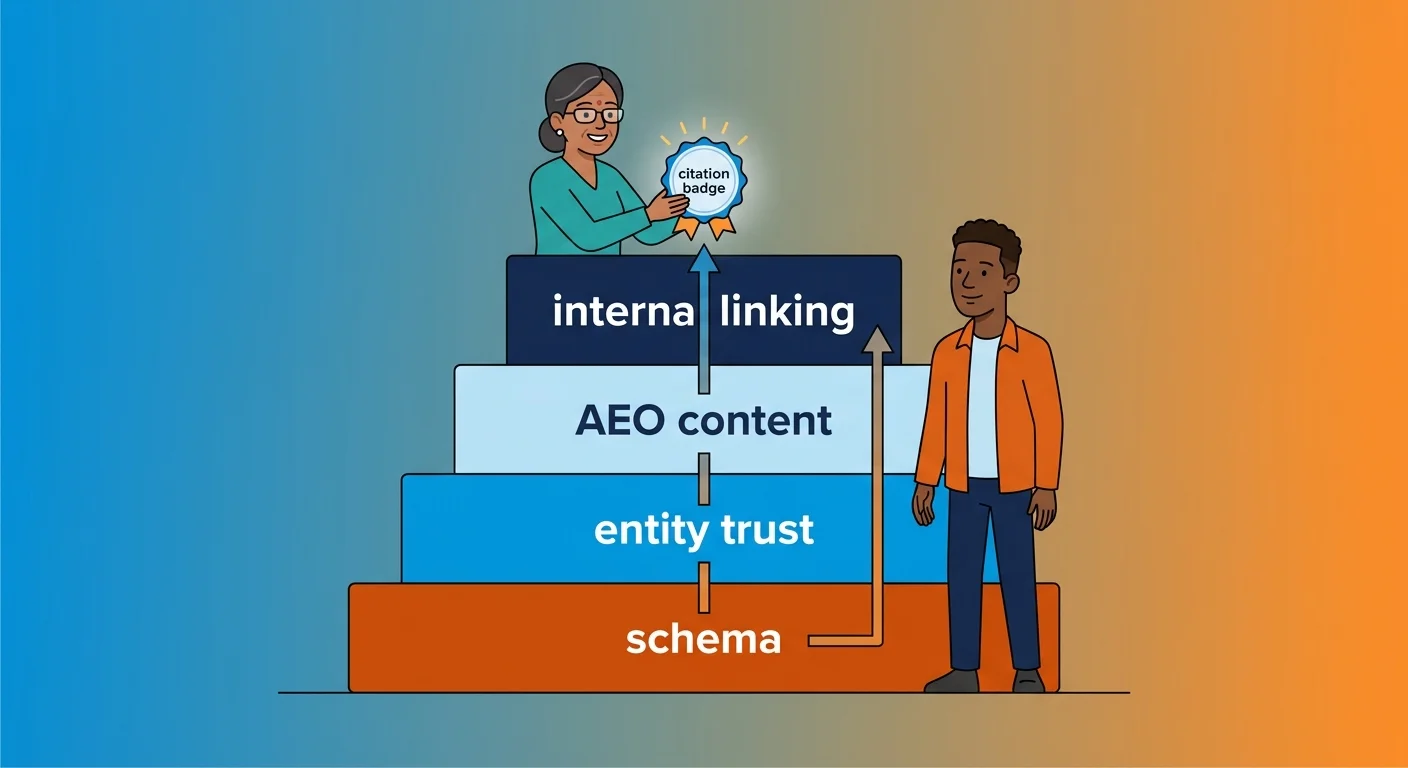
An AI-citable page isn't defined by word count or keyword density. It's defined by whether a generative system can verify the claims on it without ever leaving the page.
That verification runs through three layers working together. Structured data tells a machine what the content means, entity consistency tells it the source is stable, and institutional corroboration tells it the source is credible.
Miss any one layer and the page stops qualifying as citable, no matter how well it reads to a person. Here's the thing: most legacy-built pages were never assembled with these three layers in mind at all.
| AI Overview Citation Signal | Citation Rate Advantage | What It Confirms to the Engine |
|---|---|---|
| Article and BreadcrumbList Schema Markup | Cited 2.3× more often than structurally equivalent unstructured pages | The page's structure is machine-parsed rather than inferred, giving the engine a verified shortcut to what the content means |
| Institutional Source Corroboration | Institutional sources account for over 75% of citations in sampled health responses | Independent, credible sources echo the same claims, which raises the engine's confidence in citing the practice as accurate |
Structured Data Layers
Structured data is markup that labels a page's content in a format a machine parses directly, instead of inferring it from the surrounding text. A chiropractic page carrying Article and BreadcrumbList schema hands an AI system a verified shortcut to what the page is and how it fits the site around it.
That shortcut measurably changes citation behavior. Within Google AI Overviews citation patterns tracked in April 2026, pages carrying Article and BreadcrumbList schema were cited 2.3× more often than structurally equivalent pages without that markup.
So the markup isn't decoration sitting behind the page. It's one of the clearest machine-readable signals a clinic controls directly, and it costs nothing in ranking terms to implement correctly.
Entity Consistency Beyond the Website
A single well-marked-up page can't carry a clinic's credibility alone. Generative systems cross-check what a page claims about itself against how consistently that same information shows up everywhere else the practice is named.
That consistency spans directory listings, review platforms, professional association records, and any third-party site referencing the practice's name, address, or credentials. A mismatch in any one of those places reads to a synthesizing system as a source that can't be fully trusted.
This is exactly where retainer-built infrastructure tends to fall short, because how a practice's ongoing spend is tracked against its actual citation standing rarely accounts for entity consistency beyond the clinic's own web pages. The billing keeps running while the underlying signal drifts uncorrected.
Institutional Corroboration as a Trust Signal
Corroboration is the final layer, and it may be the one legacy infrastructure understands least. An AI system weighs a clinic's own claims more heavily when independent, credible sources say something similar.
This pattern holds even in healthcare, a field with an unusually high bar for trust. Across a sample of 100 questions, published industry reporting found that over 75% of the sources cited in ChatGPT's health-generated responses came from established institutional sources such as Mayo Clinic, Cleveland Clinic, Wikipedia, National Health Service, and PubMed, a pattern examined further in the arXiv preprint server. Authority a practice owns outright, like verified schema and consistent entity records, compounds with every citation it earns. A rented results-page position is only as durable as the next algorithm shift.
How the Rented-Attention Model Collapses Under a Zero-Click Search Environment
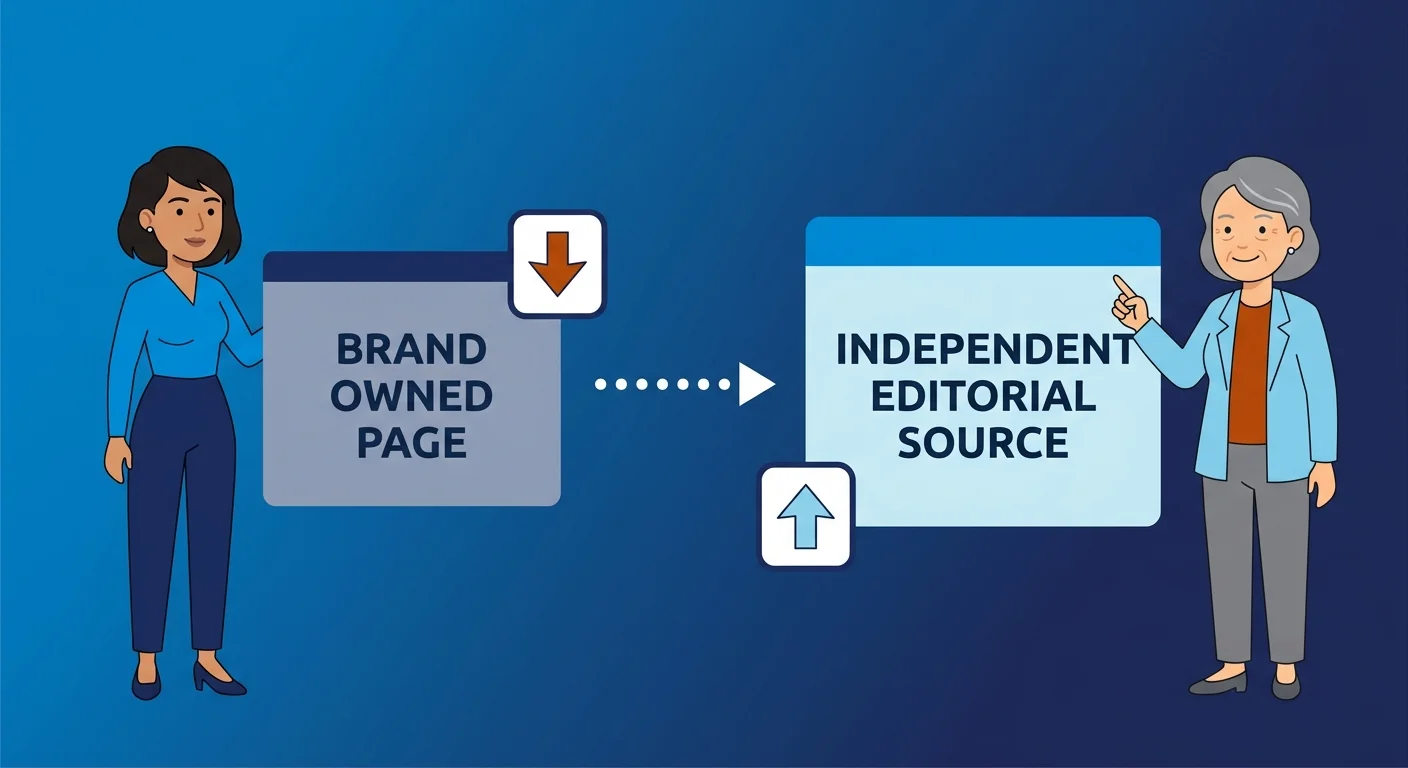
Rented attention is the model built on paying for a position instead of earning a citation. You lease a results-page slot, you don't own it, and the lease ends the second the underlying pattern shifts.
So the collapse isn't a slow decline. It's a currency change. Clicks were the unit that made a ranked position worth anything, and a zero-click answer pulls that unit out of circulation entirely.
The Mechanics of Citation Displacement
Citation displacement is what happens when an AI engine answers the question itself instead of sending anyone to a page. The mechanism is simple: a synthesizing system pulls a fact, states it flat out, and the click that used to follow never happens.
A page still ranked at the top gains nothing from that position once the question above it gets answered directly. The rented slot is technically intact. It's just no longer where anyone's attention lands.
This is the failure mode retainer infrastructure was never built to catch. A dashboard can show a stable position for months while the actual source of the answer moves somewhere else, and nothing in the reporting flags it.
What Independent Sources Are Filling the Vacuum
The vacuum left behind doesn't stay empty. Something always fills it, and it's rarely the practice's own site.
Independent editorial and reference sources are the pages actually filling that space. A generative system reaches for a source it can verify against other sources, and a business's own page is the least independently verifiable thing it can cite about itself.
That pattern is exactly why the earlier share held outside healthcare, where practice-owned pages made up almost none of the top citation sources while independent editorial and reference carried nearly half. Clinics facing the same shift can work with done-for-you AEO services built around structured data, entity consistency, and institutional corroboration, not the reporting a rented-attention retainer was built to produce.
Building AI Authority in Practice: The Sequence That Actually Works
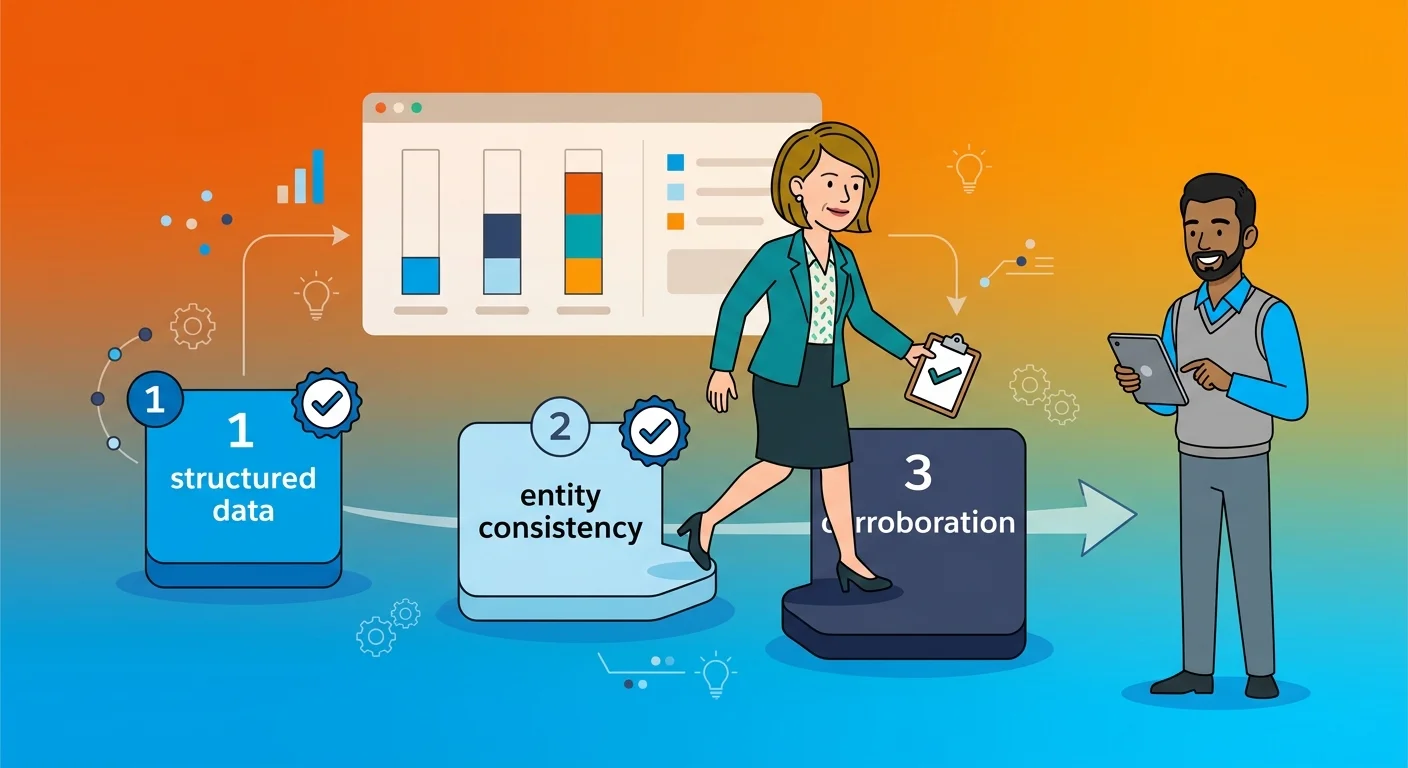
Diagnosing the failure is one job. Building the sequence that dodges it is a different one entirely.
A clinic doesn't earn citation trust by publishing more pages. It earns it by ordering the work so each layer of verification is already standing before the next one leans on it.
| Implementation Stage | Primary Task | What Confirms It's Done |
|---|---|---|
| Structured Foundation | Apply Article and BreadcrumbList schema markup across every page a clinic wants an AI engine to find | A generative system can parse the page's meaning and site hierarchy without inferring it from surrounding text |
| Entity Consistency | Align name, address, and credential details across directory listings, review platforms, and professional association records | The clinic's identity reads identically everywhere it appears, closing the gaps a synthesizing system flags as unverifiable |
| Institutional Corroboration | Earn mentions and references from independent, credible sources outside the clinic's own web pages | AI-generated answers begin citing outside sources alongside or instead of the clinic's own claims |
| Ongoing Verification | Monitor entity consistency and citation standing on a recurring basis rather than a single setup pass | Drift in any one layer gets caught and corrected before an AI engine stops naming the clinic as a source |
Sequencing Structured Data Before Content Expansion
Structured data comes first, not last, because everything after it needs a machine-readable foundation to grab onto. A page a generative system can't parse cleanly gains nothing from the content stacked on top of it.
So the sequence opens with Article and BreadcrumbList markup applied across the pages a clinic wants an AI engine to find. Content expansion before that step is just content a synthesizing system still can't verify.
Cheap retainers flip this order because volume is easier to bill than markup discipline. Cheap retainers are a trap for exactly that reason: they optimize for output a client can count, not for the machine-readable foundation an AI engine checks first.
Verifying Third-Party Corroboration
Once the foundation is set, the sequence moves outward. A clinic's own pages can only carry a page's own claims. Third-party corroboration is where those claims get checked against the world.
That means directory listings, review platforms, and professional association records all have to state the same name, address, and credentials as the clinic's own site. Any one of them drifting out of sync reopens the exact gap a synthesizing system reads as unverifiable.
And this verification work rarely lands on a retainer's monthly report at all. A dashboard built to track a ranked position has no field for entity consistency across a dozen outside sources, so the gap goes unmeasured until an AI engine simply stops naming the clinic as a source.
Frequently Asked Questions
A few mechanical questions always surface once the architecture and sequence click. Here are the straight answers to the ones that come up most.
How is AI Authority different from traditional search optimization for a chiropractic clinic?
Traditional search optimization chases a crawling algorithm that ranks addresses in a list. AI Authority targets a synthesizing system that checks structured data, entity consistency, and institutional corroboration before it names a source at all.
What specific technical elements determine whether an AI engine cites a chiropractic page?
Three layers decide it together: machine-readable structured data, consistent entity records across every outside listing, and independent corroboration from credible third-party sources. Miss any one layer and the page usually fails to qualify as citable, no matter how well it reads to a person.
Why would a clinic's site visits go down even while its AI citation visibility goes up?
Citation displacement means a synthesizing system now answers the question itself instead of sending the click. So site visits can drop even while a clinic gets named more often as the source behind that answer.
Does a Google Business Profile carry more weight than website content for AI citation?
Neither wins alone, because they verify different things. A Google Business Profile anchors entity consistency, while website content supplies the structured claims a system checks that profile against.
Can structured data be added to an existing site, or does it require a rebuild?
Structured data adds to an existing site without a rebuild. Article and BreadcrumbList markup layers onto current pages, which is exactly why sequencing it first costs nothing in ranking terms.
What role does NAP consistency across directories play in AI-generated local answers?
NAP consistency is what lets a synthesizing system trust a clinic's identity across sources it didn't create. A mismatch between one directory and another reads as an unverifiable source, not a minor formatting slip.
How does acquiring inbound links compare to structured data as a citation signal?
Acquiring inbound links was built to signal authority to a crawling algorithm. Structured data signals meaning and verifiability straight to a synthesizing system, which is the check that actually decides citation now.
Where This Leaves the Legacy Retainer Model
Two games, one board. The old one paid off for being listed. The new one pays off for being cited, and no amount of money poured into the first game ever buys a seat at the second.
A legacy retainer polishes a clinic's own pages for a crawler that ranks addresses. AI Authority builds the same clinic into a source a synthesizing system checks against structured data, entity consistency, and institutional corroboration. One model chases a position. The other earns a citation, and only the citation survives a zero-click answer.
So the verdict's simple. A listed address expires the second scrolling habits shift, while a cited source compounds with every question an AI engine answers using it. To see where your clinic falls between those two, start with an AI visibility check.