
What Zero-Click Search Actually Measures
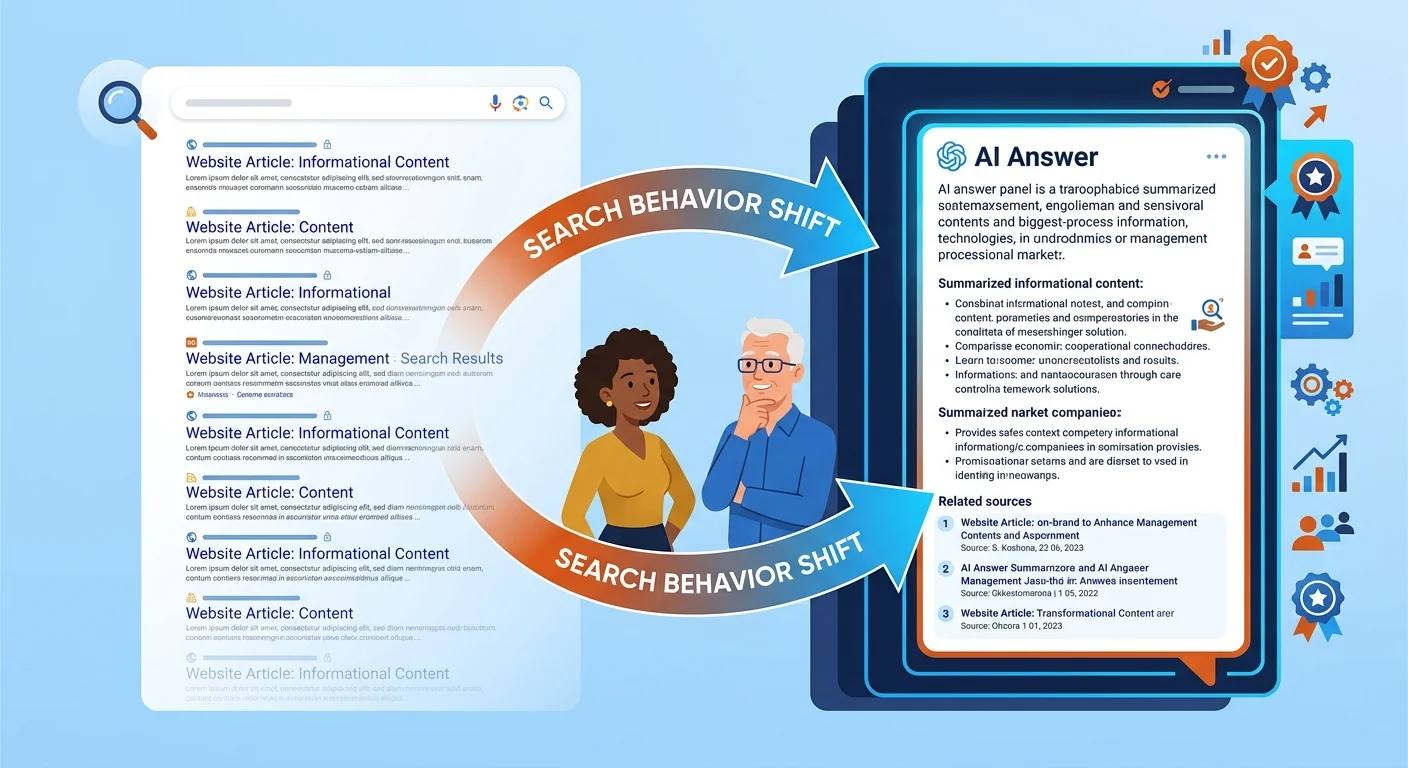
Zero-click search isn't a vibe. It's a measurable condition. Across 10.2 billion Google searches between October 2024 and December 2025, nearly half, 46.96%, ended without a single click to any organic or paid result.
That figure is the whole query landscape a healthcare practice competes in. It's the denominator every monthly retainer has to be judged against.
A retainer sold on the promise of a clicked visit is a retainer sold against half the available outcomes before the campaign even starts. The other half is where the answer engine just resolves the query itself.
Why that resolution happens comes down to which query types trigger it and which don't, and the next two sections pull them apart. It ties straight into how a retainer's yield on today's answer engines gets diagnosed, because the query mix a practice ranks for decides how much of that 46.96% actually lands on its own traffic.
| Query Intent Type | AI Overview Trigger Rate | What This Means for Practices |
|---|---|---|
| Informational | 98% | Symptom and condition questions almost always resolve inside the answer engine, leaving little click-based visibility for a retainer to protect. |
| Commercial | 40% | Comparison and provider-selection searches split roughly evenly, meaning citation-based authority carries as much weight as classic-ten-blue-links placement. |
| Navigational | 35% | Searches for a known practice or service name still surface an AI answer over a third of the time, reducing the reliability of a branded search as a retainer's safety net. |
| Transactional | 0% | Booking-intent searches remain untouched by AI Overviews, meaning any retainer's residual value is concentrated almost entirely in this narrow slice of the query mix. |
| All query types combined | 46.96% | Across the full search landscape, nearly half of all queries end without a click, defining the ceiling on what any click-based retainer can ever deliver. |
Defining the Zero-Click Query
A zero-click query is any search where the user's need gets satisfied right on the results page. No click follows, because none is needed.
That's confirmed by published industry reporting analyzing billions of real Google searches across more than a year. The sheer scale of that dataset is what turns the 46.96% figure into a structural fact instead of a sampling fluke.
How AI Overviews Change What Counts as a Search Outcome
AI Overviews didn't invent zero-click behavior. They concentrated it by intent type. For informational queries, AI Overviews got triggered 98% of the time, versus 40% for commercial, 35% for navigational, and 0% for transactional.
That distribution matters enormously for a healthcare practice. Most of the searches a practice cares about, symptom questions, condition explanations, treatment comparisons, are informational queries, sitting inside that 98% figure documented by published research data on query-type triggering. A transactional query, by contrast, still resolves the old way at 0%, which means the zero-click shift isn't uniform. It's concentrated exactly where healthcare content lives.
Why the Retainer Model Assumes a Click That No Longer Comes
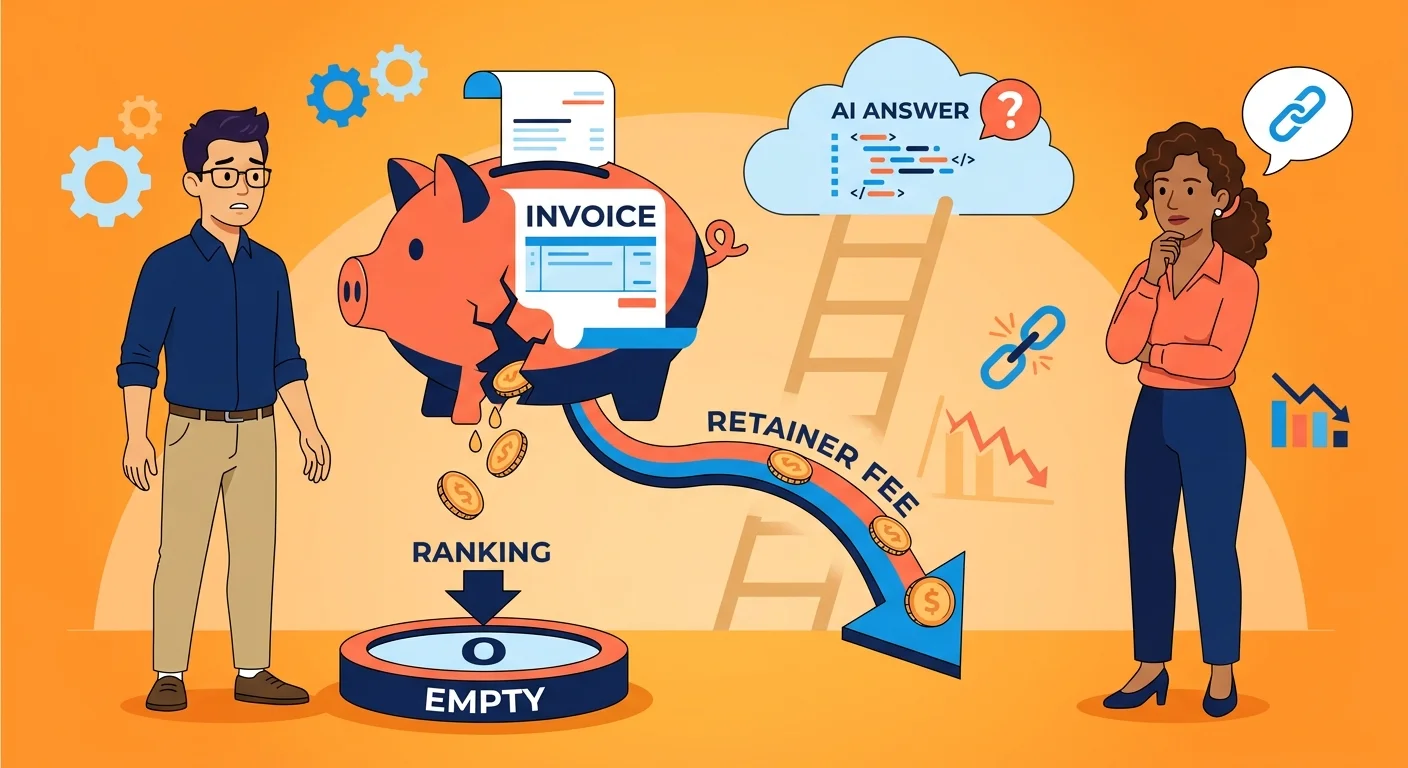
Here's the promise healthcare practices have been sold for years: pay a monthly retainer, get a spot on the first page of Google.
That whole promise leans on one assumption. Visibility equals a website click.
The measurement data says otherwise. For queries where AI Overviews show up, organic click-through rate dropped from 1.41% to 0.64% year-over-year, a collapse documented in published industry reporting.
The Cheap Retainer Trap
Rankings stopped predicting who gets cited the moment generative answers replaced the list of links sitting underneath them.
So a retainer priced around page-one placement is priced against a metric the market is walking away from.
The cheap version of this trap is the one you see most. A practice pays a modest monthly fee, watches its position hold, and figures stability means return.
But position and payoff have split apart. The 0.64% figure describes what a held position is worth now, not what it used to be worth.
Why Rankings Became a Vanity Metric
Calling this shift traditional search optimization with fresh vocabulary is a comfortable way to dodge rebuilding the retainer.
It's also wrong. Traditional search optimization was built to win a click; the mechanism behind an AI-generated answer picks a source to cite, and citation needs no click at all.
That's exactly what separates a page ranked for humans from a source an answer engine trusts, which is the deeper question behind how a chiropractic practice's zero-click standing gets built. A rankings retainer optimizes for the wrong output once the output itself has changed.
How Preferred Source Selection Fails Practices Built Only for Rankings

Preferred Source selection is the mechanism deciding which entities an AI engine trusts enough to cite. It runs completely independent of where a page lands in organic results.
A practice built only for rankings has no play for this mechanism at all. It has a play for a results page that a shrinking share of relevant searches even bother to show.
Position never enters the room where a citation gets decided. That's how the citation system picks its sources now, not a hot take.
| Trust Signal Measured | Reported Figure | Source Population |
|---|---|---|
| Unique Preferred Sources selected | 345,000 | Users of Google's AI Overviews |
| Trust in AI-generated summaries, Republican respondents | 54% | US Republicans surveyed by Pew Research Center |
| Trust in AI-generated summaries, Democratic respondents | 53% | US Democrats surveyed by Pew Research Center |
How Preferred Source Selection Works
Users have already picked more than 345,000 unique sources as Preferred Sources for Google's AI Overviews, per Google's own reporting on the feature.
That selection process rewards entity-level signals: structured data, verifiable authorship, consistent factual claims across a whole domain. A ranked position carries none of those signals on its own.
Where the Rented Attention Model Breaks Down
The rented attention model assumes a held position keeps paying rent forever. Preferred Source selection blows that up, because the rent was always priced in clicks.
Trust in the answer format isn't the roadblock it used to look like. Survey data from Pew Research Center found 54% of Republicans and 53% of Democrats report at least some trust in information from AI summaries.
That parity means the audience isn't sitting around waiting to be convinced the format is legit. The real question is the one dug into in how a chiropractic practice's visibility metrics can mislead its own standing: whether a listed address in a directory ever counted as citable authority to begin with. Being a listed address was never the same asset as being a Preferred Source, and a rankings retainer was never built to close that gap.
What Structured Data and Entity Recognition Actually Do
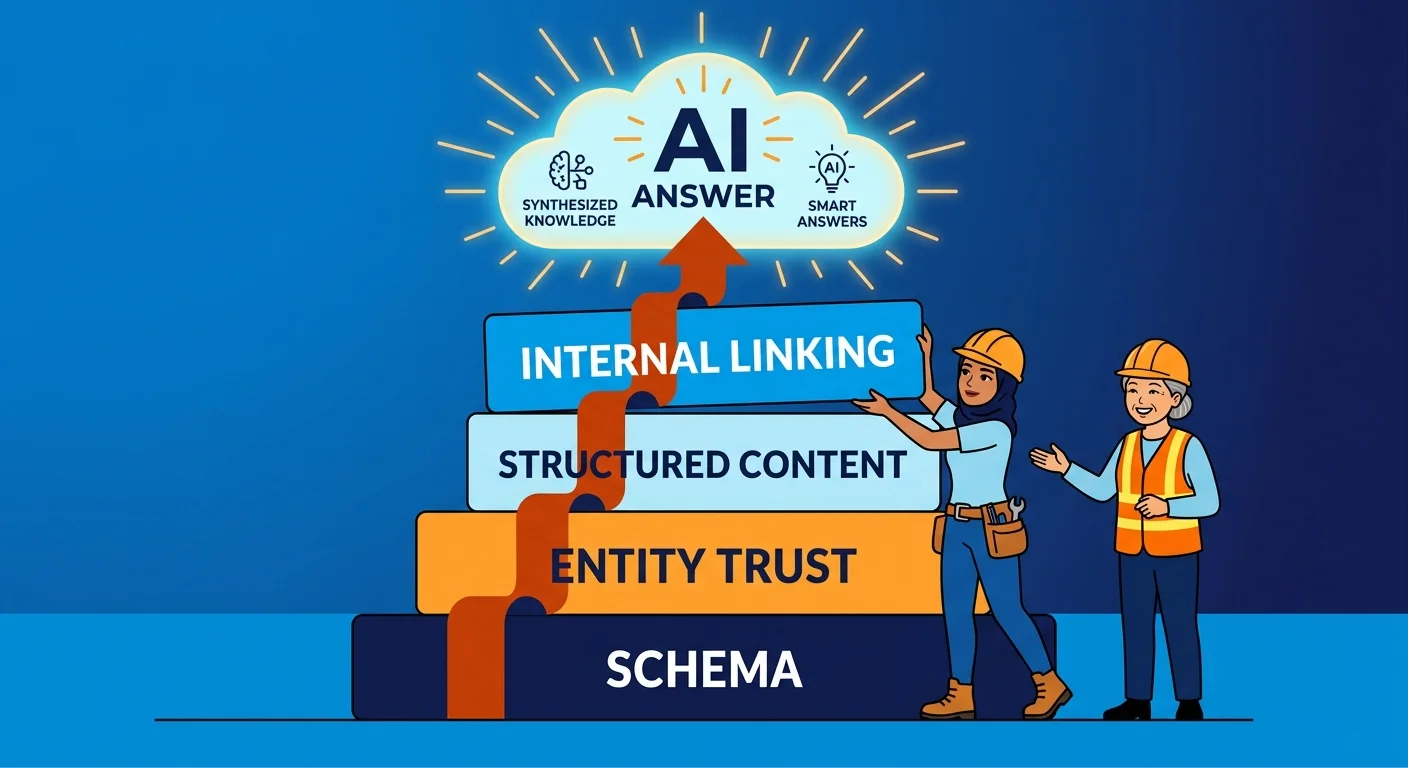
Structured data is a machine-readable layer bolted onto a page, describing what an entity is instead of what a page happens to say. Entity recognition is how an AI engine checks that description against everything else it already knows.
Being the cited source beats being a listed address. That verdict already showed up in how Preferred Source selection rewards entity signals over classic-ten-blue-links placement, and structured data is the mechanism that makes an entity legible enough to get picked.
A retainer built around list position has zero reason to touch this layer. It works a page's position, not the machine-readable description of the entity sitting behind that page.
| Architecture Layer | Function | Failure Without It |
|---|---|---|
| Structured Data Markup | Describes what an entity is in machine-readable form, independent of page wording | A page reads correctly to a human but stays illegible to an engine deciding what to cite |
| Entity Recognition | Cross-references a claim about a practice, provider, or credential against everything else the engine already knows | A verifiable fact gets treated as an unverified guess and gets passed over for a source that structured itself |
| Rankings-Based Placement | Optimizes a page's position in ranked search results | Position holds while citation share erodes, since position was never the input the citation mechanism reads |
| Authority Infrastructure | Builds the entity-level signal set an AI engine checks before selecting a Preferred Source | Without it, a practice remains a listed address rather than a citable entity, no matter how it ranks |
How Machine-Readable Formatting Changes What Gets Cited
Machine-readable formatting turns loose claims into verifiable facts an AI engine can pull without guessing. And that conversion isn't theoretical.
A generative AI system using ChatGPT converted unstructured breast cancer pathology reports into structured format with 99.61% accuracy, a result documented in a peer-reviewed PubMed Central study. It ran on unstructured clinical text, the same dense, inconsistent language that fills most healthcare pages before anyone structures a word of it.
That accuracy figure describes pathology reports specifically, not healthcare content across the board. But it proves the underlying mechanism: structured formatting lets an AI system parse and trust a claim that plain prose leaves fuzzy, and a citation engine runs that same parsing against a practice's pages before it decides whether to quote them.
Entity Recognition Versus Keyword Matching
Keyword matching asks whether a word shows up on a page. Entity recognition asks whether a claim about a real-world entity, a practice, a provider, a credential, can be verified and cross-referenced.
Traditional Answer Engine Optimization chases the click; modern authority infrastructure chases becoming the answer itself. That's the gap professional AEO implementation is built to close, structuring entity data so an AI engine has something verifiable to cite instead of a ranked page to guess at.
Building the Citable Entity: What the Work Actually Looks Like

Building a citable entity isn't one deliverable you hand off. It's structural work that has to happen in a specific order.
Skip a step and you don't move faster. You just make the finished structure unverifiable, which kills the whole point before an AI engine ever looks at it.
| Build Stage | Primary Output | Dependency |
|---|---|---|
| Entity Clarification | A single verifiable record establishing the practice, its providers, and their credentials as one entity instead of scattered mentions | None; this is the foundational layer every later stage points back to |
| Structured Data Implementation | A machine-readable description of what each page is about, written in terms an AI system can parse without guessing | Depends on entity clarification being complete, or the description points back to an unverified entity |
| Content Restructuring | Existing prose converted into dense, verifiable claims that citation engines are built to extract | Depends on structured data existing underneath it, or restructured content is still guessing at its own authority |
| Ongoing Reinforcement | New credentials, providers, and published research folded back into the same verifiable record over time | Depends on all three prior stages; reinforcement has nothing to reinforce without a completed structure |
Sequencing the Build: From Foundation to Citation
The build starts with entity clarification. That means pinning down the practice, its providers, and its credentials as one verifiable record instead of scattered mentions bouncing around a domain.
Structured data comes next, the machine-readable layer that tells an AI system what each page is about without making it guess. Then content restructuring, converting existing prose into the dense, verifiable claims that citation engines are built to pull.
And each layer leans on the one under it. Structured data describing an unverified entity has nothing solid to point at. Restructured content sitting on incomplete entity data is still guessing at its own authority.
What Ongoing Maintenance Looks Like After the Build
Once the structure exists, the work shifts from building to reinforcing. New credentials, new providers, new published research, all of it folds back into the same verifiable record.
And this is where the two models split for good. A rankings retainer runs on a meter that resets every month, paying for a position that expires the day the payment stops. Authority infrastructure behaves differently once it exists: the asset keeps its value between invoices, and the maintenance after the build reinforces it instead of repurchasing a position.
Frequently Asked Questions
The build sequence handled the how. Now the specific stuff a practice asks once the architecture actually clicks. Every answer here holds the same line as the sections above it: qualitative where the data doesn't exist, exact where it does.
Is a traditional AEO retainer ever a good investment for a new healthcare practice?
Sure, a traditional retainer can buy something real early on, initial visibility while an entity has no track record at all. But that window is narrow. And it slams shut the second a practice needs to be cited instead of just listed.
How can I tell if my current AEO retainer is focused on outdated blue link rankings?
Look at what the monthly report measures. If keyword position tracking and placing in the classic ten blue links are the headline metric, it's built for a search format that's shrinking. A report that never once mentions citation, structured data, or entity signals is a rankings report wearing an authority costume.
What is the difference between placing in the classic ten blue links and having Zero-Click Search Authority?
Placing in the classic ten blue links is a page's spot on a results list, a metric chained to a click that may never happen. Zero-Click Search Authority is the practice cited straight inside the answer, where no click is needed for the citation to pay off.
How does a focus on AI-generated answers change the type of content a medical practice should create?
Content stops getting written to rank for a phrase and starts getting structured to answer a question completely on its own. That means dense, verifiable claims, consistent entity data, and prose an AI system can pull without guessing, not longer articles chasing keyword-targeted articles conventions.
If a practice stops its traditional AEO retainer, does it become invisible online?
No. Invisibility was never the alternative to a rankings retainer, and it isn't now either. The alternative is authority infrastructure that keeps a practice citable with no recurring toll, because a verified entity doesn't un-verify itself the day the payments stop.
How does Google decide which sources become Preferred Sources for AI Overviews?
Selection favors entities with verifiable, structured, consistent data over pages riding strong keyword position tracking alone. A source earns Preferred Source status by being cross-referenceable, not by holding a high spot in the classic ten blue links.
Where This Leaves the Practice Still Paying the Old Toll
Here's the thing about that toll road, it was never really a metaphor. A retainer priced against a results-page position is just a meter running on a bridge the market already routed around.
Rented attention dies the second you stop paying for it. Owned authority does the opposite, because a citable entity doesn't get repurchased every month to stay verifiable.
So a practice still paying the old toll is funding a position that fewer and fewer relevant searches even bother to show. And the fix isn't a bigger retainer. It's a one-time infrastructure build that makes your practice the entity an AI engine already trusts enough to cite, and the fastest way to see where that build stands today is to get a complimentary AI visibility check.