


How Do I Build a Patient Acquisition Funnel for My Chiropractic Practice? (Complete Guide)

by Gerek Allen ~ Last Updated: November 25, 2025 ~ 10 Min Read
by Gerek Allen
~ Last Updated: November 25, 2025 ~
~ 10 Min Read ~
For solo practitioners or small practices with 1-3 chiropractors, build a systematic patient acquisition funnel with four core stages: awareness (content marketing and local SEO), interest (lead magnets and email nurturing), decision (new patient offers and easy booking), and loyalty (referral programs and patient engagement). This structured approach typically costs $300-$500 monthly and generates 15-25 qualified new patients within 90 days.
Most chiropractors lose potential patients because they treat patient acquisition like random marketing activities instead of a systematic process. You post on social media here, run a Facebook ad there, maybe update your website once a year. These disconnected efforts miss how modern patients actually make healthcare decisions.
According to industry research, approximately 77% of patients use online reviews as their very first step in finding a new healthcare provider. The patient journey starts long before they walk through your door, and without a structured funnel to guide them, you're leaving money on the table at every stage.
A patient acquisition funnel changes this entirely. Instead of hoping random marketing generates patients, you create a predictable system that moves prospects from initial awareness all the way through becoming loyal, referring patients who bring you more business.
Understanding Patient Acquisition Funnels for Chiropractors
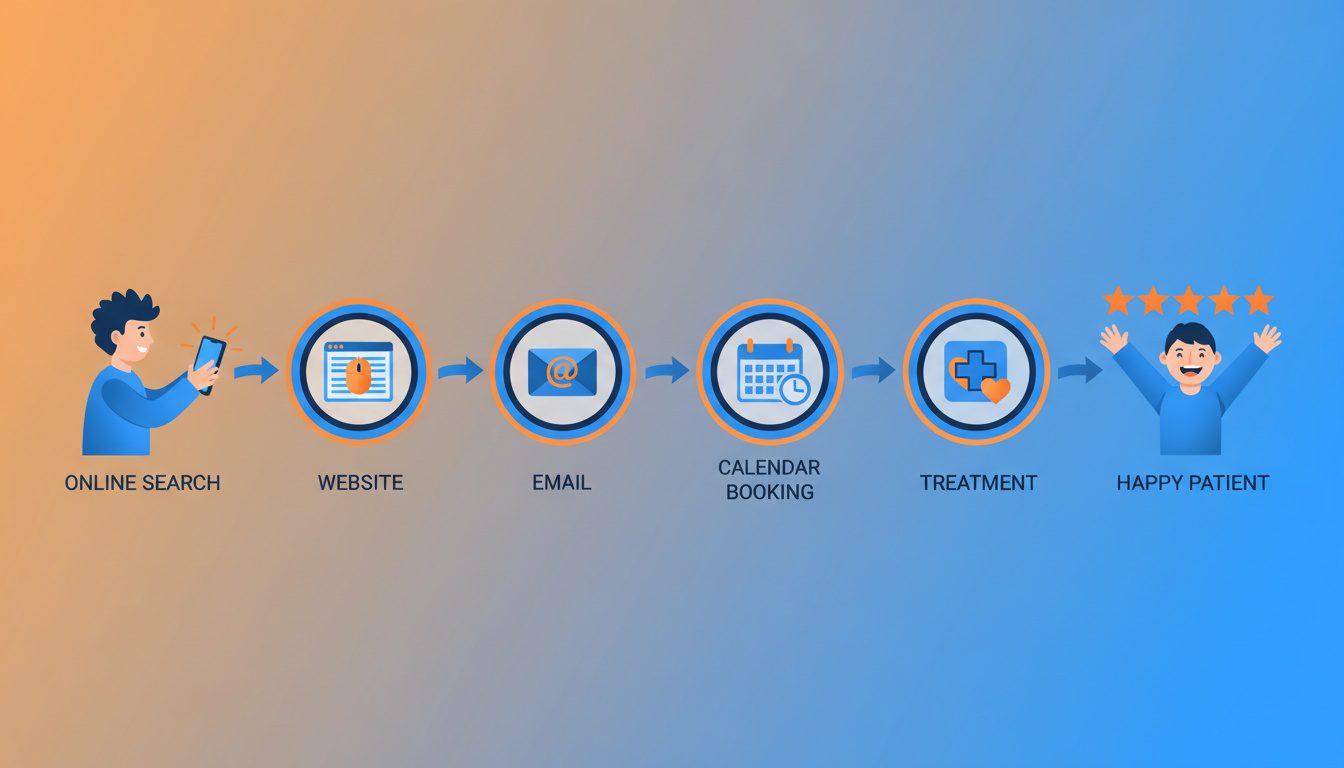
A patient acquisition funnel describes the complete journey someone takes from first hearing about your practice to becoming a patient and eventually referring others to you.
Think of it like an actual funnel you'd use in your kitchen. You pour a lot of people in at the top, and as they move down through different stages, some drop off. The ones who make it to the bottom are the right people for your practice.
The key difference between traditional marketing and funnel marketing is structure. Traditional marketing throws tactics at the wall hoping something sticks. Funnel marketing creates a systematic process with measurable stages, allowing you to identify exactly where prospects drop off and optimize accordingly.
Why Chiropractic Practices Need Systematic Funnels
The global chiropractic market reached $19.6 billion in 2024 and competition for patients has never been fiercer. Over 70,000 licensed chiropractors now practice in the United States, which means potential patients have more options than ever.
Without a systematic approach, you're competing on price and proximity alone. A well-designed funnel allows you to build relationships before the first appointment, differentiate your practice, and convert more prospects at every stage.
Research shows that average website conversion rates for healthcare services range from 2-5%, but practices with optimized funnels regularly achieve 5-8% conversion rates. That difference means 50-100% more new patients from the same traffic.
The Psychology Behind Patient Decision-Making
Modern patients don't make instant healthcare decisions. According to recent studies, 47% of consumers spend more time researching before making B2B or service purchases.
They go through a predictable psychological journey. First, they become aware they have a problem. Then they research solutions and evaluate options. Finally, they choose a provider and decide whether to stay long-term.
Your funnel needs to match this natural decision-making process by providing the right information at each stage. Push for an appointment too early and they disappear. Wait too long to ask and they book with a competitor.
The Four Stages of a Chiropractic Patient Acquisition Funnel
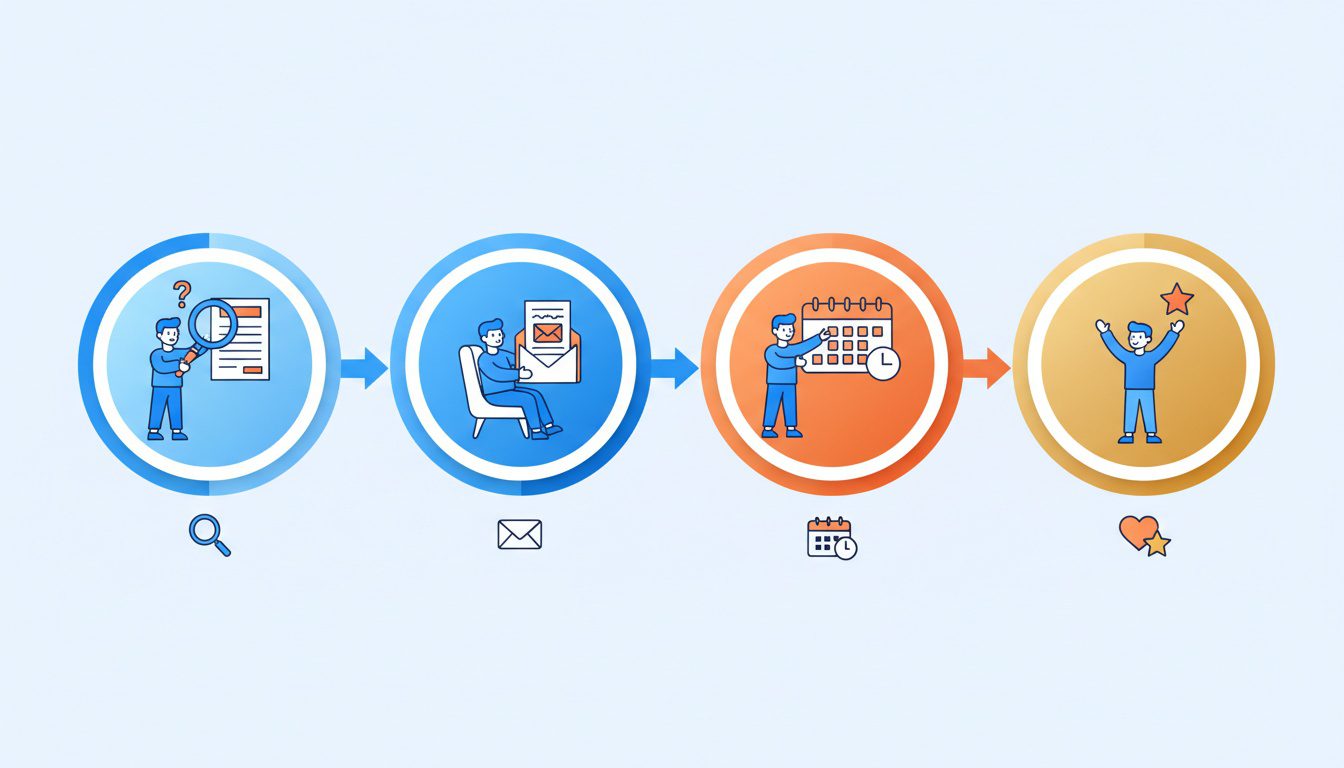
Building an effective patient acquisition funnel requires understanding four distinct stages, each with specific goals, strategies, and metrics.
The beauty of this framework is that it allows you to diagnose exactly where prospects drop off and focus your optimization efforts where they'll have the biggest impact. Let's break down each stage.
Stage 1: Awareness – Getting Their Attention
This is the very top of your funnel, where people might not even know they need a chiropractor. They just know they have a problem.
Your job at this stage is not to sell chiropractic care but to make potential patients aware that you exist and you can help. This is where content marketing becomes essential.
Here's what works at the awareness stage:
- Educational blog content - Write helpful articles addressing common problems your ideal patients face, like "Why Does My Lower Back Hurt When I Sit Too Long?" or "5 Desk Stretches That Prevent Neck Pain"
- Short-form video content - Create 60-90 second videos on social media explaining common conditions, demonstrating exercises, or debunking chiropractic myths
- Local SEO optimization - Ensure your Google Business Profile is fully optimized so you appear when someone searches for chiropractors in your area
- Social media presence - Share valuable health tips and patient education content on platforms where your target audience spends time
The key metric at this stage is reach and traffic. You're measuring how many people become aware of your practice through website visitors, social media impressions, and local search appearances.
Stage 2: Interest – Building Trust
Now you have their attention, but they're still weighing options and trying to figure out if they can trust you.
This middle part of the funnel is where you build relationships by offering something more substantial in exchange for their email address. This could be a downloadable guide, a short email course, or access to exclusive content.
Effective lead magnets for chiropractors include:
- "7-Day Back Pain Relief Protocol" - A daily email series with exercises and tips
- "Desk Worker's Posture Guide" - A downloadable PDF with ergonomic tips and stretches
- "Should You See a Chiropractor? Self-Assessment Quiz" - An interactive tool that provides personalized recommendations
- Free 15-minute consultation - A low-risk way for hesitant prospects to talk with you
Once you capture their email, start automated nurturing sequences. These emails should provide value first and subtly position your practice as the solution.
A well-designed email automation system typically includes 5-7 emails over 2-3 weeks that educate, build trust, and gradually move toward booking.
Stage 3: Decision – Converting to Appointments
This is the bottom of the funnel where prospects trust you and believe you can help. Now you need to make booking incredibly easy.
Your offer is critical at this stage. Many chiropractors find success with a "New Patient Special" that reduces financial risk. For example, a $49 consultation, exam, and first adjustment when the regular price is $150.
Key elements for high conversion at the decision stage:
- Clear, compelling landing pages - One focused offer with a single call-to-action and no distractions
- Online scheduling 24/7 - Tools like Acuity Scheduling, Jane App, or SimplePractice remove friction by allowing prospects to book immediately
- Retargeting advertising - Show ads to people who visited your website or watched your videos but haven't booked yet
- Social proof - Display patient testimonials, reviews, and before/after stories prominently
- Clear pricing and what to expect - Remove uncertainty by explaining exactly what happens during the first visit
According to conversion rate benchmarks, the opportunity to closed customer stage typically converts at 15-30%. With optimization, chiropractic practices can push this to 35-50%.
Stage 4: Loyalty – Creating Raving Fans
Getting a new patient is just the beginning. The real value comes from turning them into long-term patients who refer others.
The U.S. chiropractic market sees high patient satisfaction rates, with 77% of patients rating chiropractic treatment as "very effective." But satisfaction doesn't automatically create loyalty.
Build loyalty through consistent engagement:
- Regular email newsletters - Monthly health tips, office news, and wellness advice keep your practice top-of-mind
- Patient appreciation events - Host quarterly events or wellness workshops for existing patients
- Birthday and milestone recognition - Automated emails with small discounts or offers make patients feel valued
- Care plan follow-up - Automated reminders when patients are due for their next visit or when their care plan is ending
Most importantly, create a formal referral program. Offer existing patients a credit or discount for every new patient they refer. Make it easy by providing referral cards or a simple way to share your practice online.
According to practice management research, the average lifetime value of a chiropractic patient ranges from $1,500 to $3,000 depending on location and treatment type. Patients who refer others typically have 2-3 times higher lifetime value because they stay longer and engage more deeply.

NEED MORE CLIENTS?
Free conversion-focused analysis uncovers the 3 biggest problems killing your bookings — we'll walk you through your results personally

Real-World Example: David's Patient Journey
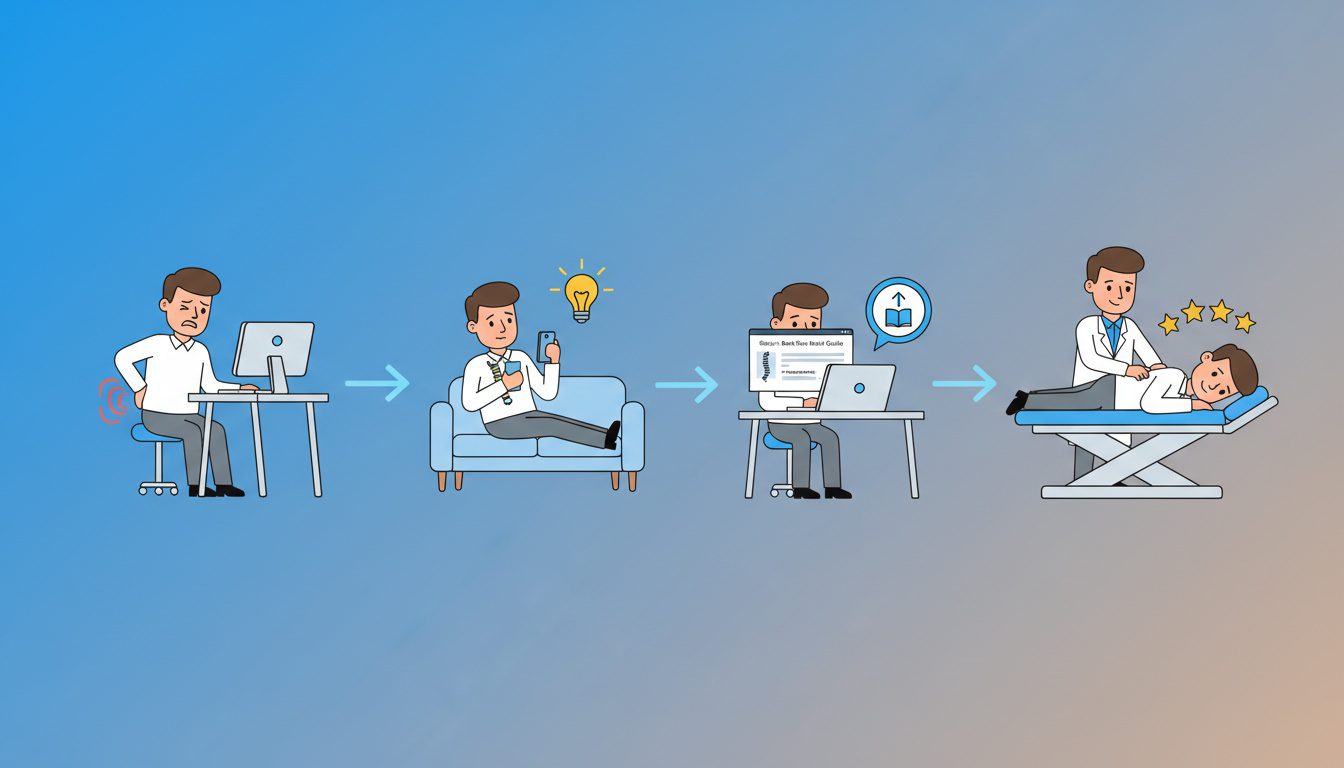
Let's walk through how this works for a real person going through your funnel.
Meet David, a 40-year-old accountant dealing with nagging back pain for months. He thinks it's just something he has to live with.
Awareness Stage: The First Touchpoint
One evening while scrolling Facebook, David sees a short video from your clinic titled "3 Reasons Your Low Back Hurts (And It's Not Old Age)." The video speaks directly to his problem, so he watches it.
He clicks through to read a related blog post about back pain on your website. He's now in the awareness stage of your patient acquisition funnel.
Interest Stage: Capturing the Lead
On that blog post, a strategically placed pop-up offers him a free guide: "5 Daily Habits to Bulletproof Your Lower Back." David exchanges his email address for the guide.
Over the next two weeks, he receives three automated emails from your nurturing sequence. The first shares a video testimonial from another accountant you helped. The second provides tips on office ergonomics. The third invites him to book a free 15-minute phone consultation.
Decision Stage: The Tipping Point
David is still hesitant. But a few days later, he sees a Facebook ad from your practice because you're retargeting people who visited your website.
This ad promotes your New Patient Special: "$49 for Full Exam, X-Rays, and Consultation (Regular $150)." He recognizes your clinic, trusts you from the helpful emails, and the offer reduces his financial risk.
He clicks the ad and uses your online scheduling tool to book his appointment for next Tuesday at 4:00 PM. He's now converted from prospect to scheduled patient.
Loyalty Stage: Creating a Promoter
After a few visits, David's back pain is significantly improved. Your office sends him an automated email asking about his experience and includes a link to leave a Google review.
A few weeks later, he receives another email about your referral program. He tells two coworkers about your clinic, and both book appointments mentioning David's referral.
David just increased his lifetime value to your practice by 3x, and those two referrals will likely refer others as well. This is the power of a complete patient acquisition funnel.
Essential Tools for Your Chiropractic Funnel
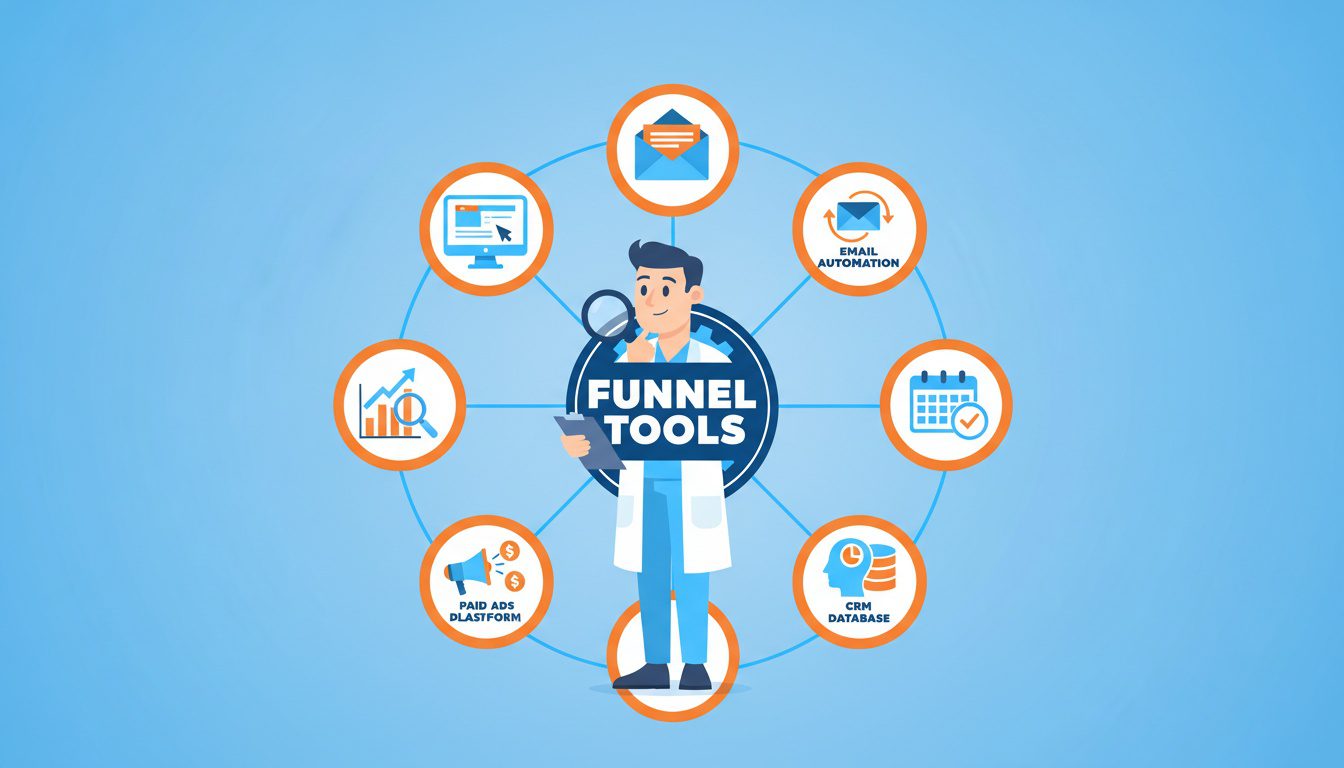
You don't need to be a tech wizard, but you do need the right tools to make your patient acquisition funnel run smoothly.
The good news is that modern marketing technology has become increasingly affordable and user-friendly. Here's what you need and realistic budget expectations.
Website and Landing Page Builder
Your website is your home base, and you need the ability to create focused landing pages for specific offers.
DropFunnels provides pixel-perfect design control with WordPress flexibility, making it ideal for chiropractors who want professional websites without technical headaches. Other options include Leadpages or ClickFunnels specifically for landing pages.
Critical features to look for:
- Mobile-responsive design (over 60% of healthcare searches happen on mobile)
- Fast loading speed (pages loading in 1 second convert at 40% versus 29% for 3-second loads)
- Easy form builder for lead capture
- Integration with your other tools
Budget: $50-$150/month depending on features and complexity
Email Marketing Software
Email nurturing is the backbone of your middle-funnel strategy. You need software that allows automated sequences triggered by specific actions.
Popular options include:
- Mailchimp - User-friendly with a free tier for up to 500 contacts, though automation features require paid plans starting at $13/month
- ActiveCampaign - More powerful automation and CRM features, starting at $29/month
- ConvertKit - Designed for creators with excellent automation, starting at $25/month
The right choice depends on your technical comfort level and budget, but all offer the core features you need: automated sequences, segmentation, and analytics.
Online Scheduling Software
Making it easy to book 24/7 is non-negotiable in 2025. Research shows that chiropractic practices lose 15-20% of potential revenue due to poor appointment management.
Top scheduling solutions for chiropractors:
- Acuity Scheduling ($16-61/month) - Best for solo practitioners wanting customization without paying for unused features, includes online booking and automated reminders
- Jane App ($79-149/month) - Built specifically for healthcare practices with multiple providers, excellent patient experience with dedicated patient app
- SimplePractice ($29-99/month) - All-in-one practice management including scheduling, billing, telehealth, and notes
All three integrate with your website, send automated reminders to reduce no-shows, and accept online payments.
Customer Relationship Management (CRM)
A CRM helps you track every potential patient through your funnel, from first website visit through becoming a loyal patient.
Many practice management software systems include basic CRM features. Standalone options like HubSpot (free tier available) or Keap (starting at $249/month) provide more advanced tracking and automation.
At minimum, your CRM should track:
- Lead source (where did they hear about you?)
- Current funnel stage
- All interactions and communications
- Appointment history
- Referral information
This data allows you to calculate metrics like cost per lead by source and patient acquisition cost by channel.
Analytics and Tracking
You can't improve what you don't measure. Analytics tools show you exactly what's working and what's not.
Essential analytics tools:
- Google Analytics (free) - Track website traffic, user behavior, and conversion paths
- Google Search Console (free) - Monitor your search performance and identify which keywords drive traffic
- Facebook Pixel - Track ad performance and build retargeting audiences
- Call tracking software - Attribute phone call conversions to specific marketing campaigns
Many chiropractors also use specialized marketing analytics tools that consolidate data from multiple sources into one dashboard.
Total Technology Investment
Here's a realistic monthly budget for a complete funnel technology stack:
| Website/Landing Pages | $50-150 | Home base and conversion pages |
| Email Marketing | $25-50 | Automated nurturing sequences |
| Scheduling Software | $30-150 | 24/7 appointment booking |
| CRM System | $0-100 | Patient tracking and management |
| Analytics Tools | $0-50 | Performance monitoring |
| Total Monthly | $105-500 | Complete funnel infrastructure |
Most practices find that $300-$400/month provides all the tools needed for a highly effective patient acquisition funnel.
Measuring Funnel Performance: Key Metrics
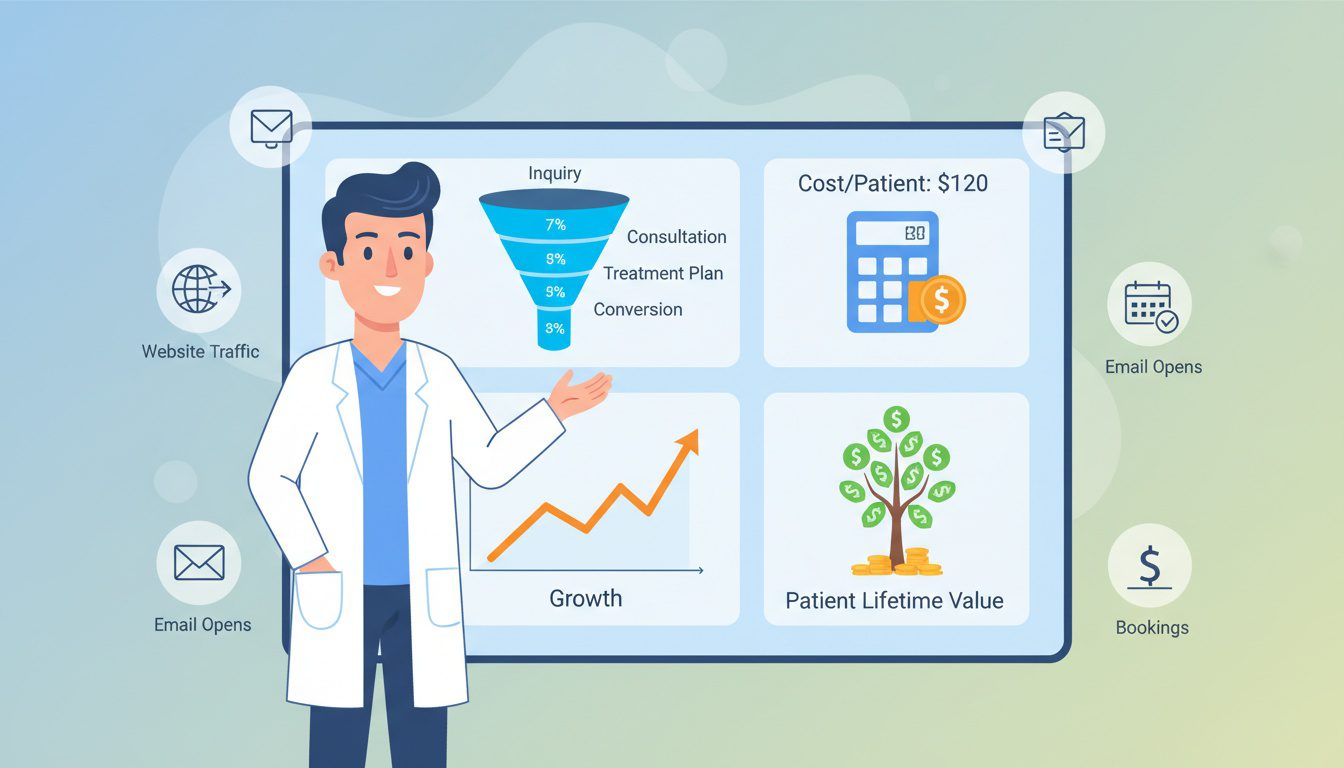
The beauty of funnel marketing is that you can track everything and make data-driven decisions rather than guessing.
You're not just throwing money at marketing hoping something works. You can look at specific numbers and see exactly what's happening at each stage.
Critical Funnel Metrics to Track
Focus on these key performance indicators:
- Website Traffic - How many people are entering the top of your funnel? Track total visitors, organic search visitors, and traffic sources
- Conversion Rate - What percentage of visitors take your desired action at each stage? This is your most important optimization metric
- Cost Per Lead (CPL) - How much are you spending on marketing to get one new email subscriber or contact? Calculate by dividing total marketing spend by new leads
- Patient Acquisition Cost (PAC) - Total marketing cost divided by number of new patients. This reveals your actual cost to acquire each new patient
- Lifetime Value (LTV) - Total revenue a typical patient generates over their entire relationship with your practice
The relationship between PAC and LTV determines your marketing profitability. If you spend $150 to acquire a patient who generates $2,000 in lifetime revenue, that's an excellent 13:1 return.
Stage-by-Stage Conversion Benchmarks
According to recent funnel conversion rate research, here's what to expect at each stage:
| Website Visitor → Lead | 1-5% | For every 100 website visitors, 1-5 provide contact information |
| Lead → Marketing Qualified | 25-35% | About 1 in 3 leads show genuine interest in chiropractic care |
| Marketing Qualified → Scheduled | 13-26% | Roughly 1 in 5 interested prospects actually book appointments |
| Scheduled → Showed Up | 70-85% | Most scheduled patients show up (automated reminders help significantly) |
Your overall funnel conversion (visitor to paying patient) will typically be 2-5%, with optimized funnels achieving 5-8%.
If you're significantly below these benchmarks at any stage, that's where you focus optimization efforts first.
Calculating Your Patient Acquisition Cost
Let's walk through a real example of calculating PAC.
You spend $500/month on marketing:
- $200 on Google Ads
- $150 on Facebook Ads
- $100 on email marketing software
- $50 on content creation
This month you gained 8 new patients. Your PAC is $500 ÷ 8 = $62.50 per patient.
Now, if your average patient generates $1,800 in lifetime revenue, your LTV:PAC ratio is $1,800 ÷ $62.50 = 28.8:1. That's exceptional.
According to practice management research, target PAC should be $75-$200 per patient, representing 20-25% of lifetime value.
What Good Performance Looks Like
Here's what a healthy, profitable patient acquisition funnel produces:
- 100+ qualified website visitors per month
- 3-8% conversion rate from visitor to lead
- 15-30% conversion rate from lead to scheduled appointment
- $75-$200 patient acquisition cost
- 4:1 or better LTV:PAC ratio
- 30%+ of new patients from referrals (indicating strong loyalty stage)
If you're hitting these numbers, you have a functioning funnel that's profitably bringing in new patients. Now you just need to scale by increasing traffic at the top of the funnel.
Common Funnel Mistakes and How to Fix Them
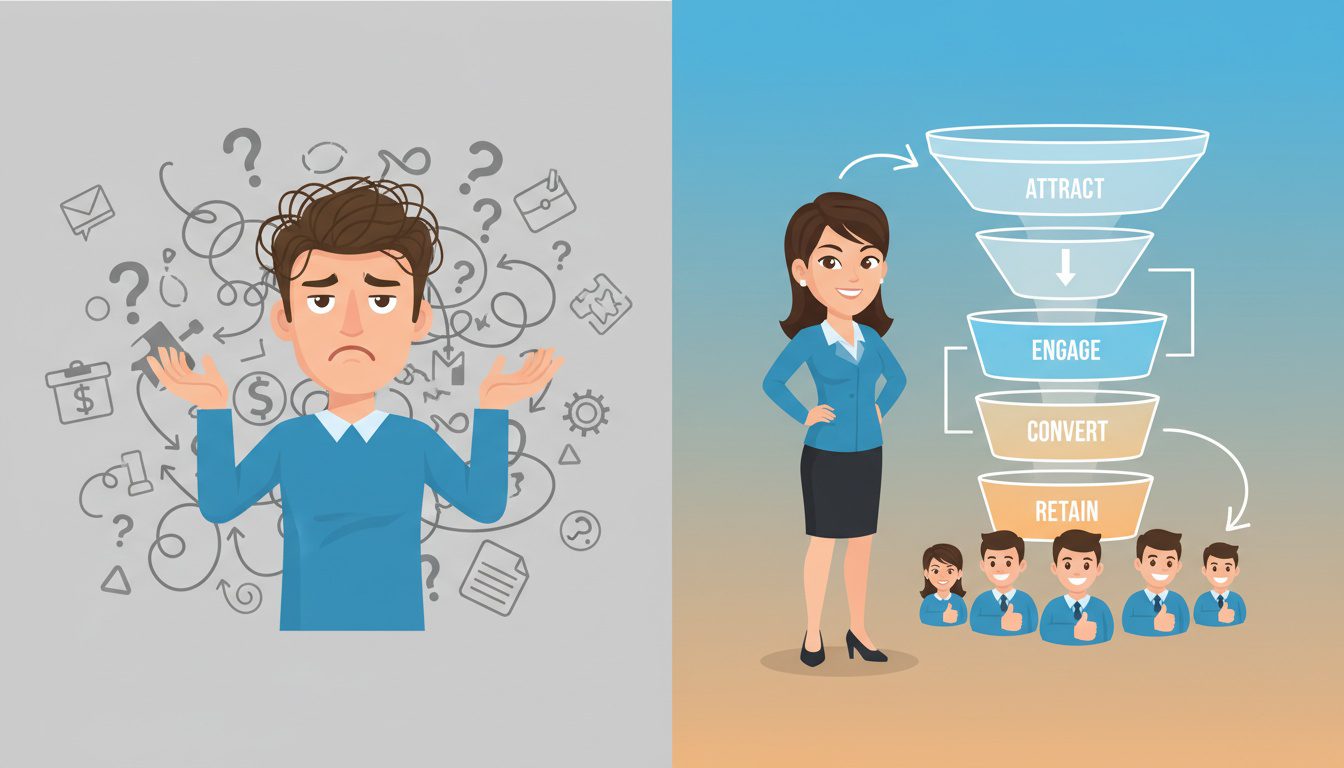
Even with a solid understanding of funnel stages, chiropractors make predictable mistakes that kill conversion rates.
Let's look at the most common problems and how to fix them so you don't waste time and money.
Mistake 1: Asking for the Appointment Too Soon
The biggest funnel killer is trying to convert awareness-stage prospects directly to appointments.
Someone discovers your practice through a blog post about back pain. They click through to your website, and immediately you're asking them to "Book Your Appointment Now!" They're not ready yet. They just met you 30 seconds ago.
The fix: Create distinct pathways for different funnel stages. Awareness-stage visitors should see offers for educational content (guides, webinars, email courses). Only show aggressive appointment calls-to-action to people who've engaged with your middle-funnel content or visited multiple times.
This is where retargeting shines. Show soft educational offers to first-time visitors, but show your New Patient Special to people who've read 3+ blog posts or spent 5+ minutes on your site.
Mistake 2: No Middle-Funnel Nurturing
Many practices jump from awareness (blog content) straight to decision (appointment booking) with nothing in between.
According to research on B2B funnel conversion rates, proper middle-funnel engagement and lead management can increase response rates by 4-10 times.
The fix: Build a 5-7 email automated sequence that runs over 2-3 weeks. Each email should provide value, share a patient success story, answer common objections, or educate about chiropractic care. Only the final 1-2 emails in the sequence should explicitly ask for an appointment.
This nurturing builds trust and positions you as the obvious choice when they're ready to book.
Mistake 3: Making Booking Too Difficult
You'd be shocked how many chiropractors lose patients at the final stage because booking is too complicated.
If your only option is "Call during business hours," you're losing appointments to competitors with 24/7 online scheduling. Research shows that chiropractic practices lose 15-20% of potential revenue from poor appointment management.
The fix: Implement online scheduling that's available 24/7. Most prospects make healthcare decisions in the evening after work. If they can't book immediately when motivated, they'll forget or choose someone else.
Your scheduling system should require the minimum information necessary and confirm the appointment instantly with automated reminder emails.
Mistake 4: Ignoring the Loyalty Stage
Most chiropractors spend all their energy acquiring new patients and zero energy on retention and referrals.
This is backwards. According to practice management data, acquiring a new patient costs 5-7 times more than reactivating a past patient. Plus, referred patients have 2-3 times higher lifetime value because they arrive with pre-built trust.
The fix: Create formal systems for the loyalty stage. This includes automated birthday emails, quarterly patient appreciation events, monthly newsletters with health tips, and a structured referral program that makes it easy for happy patients to send their friends.
Advanced Funnel Optimization Strategies
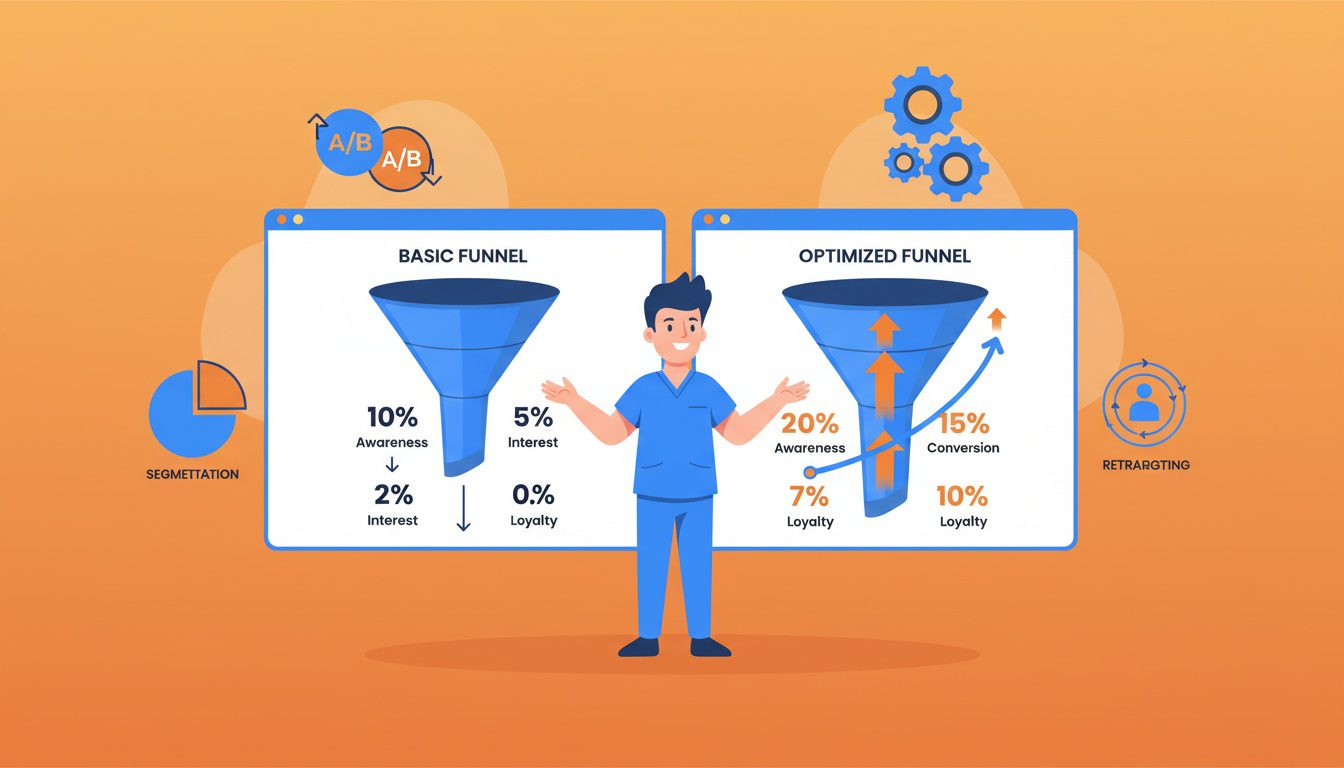
Once you have the basics working, these advanced strategies can significantly boost performance at each funnel stage.
Segmentation and Personalization
Not all prospects are the same, so why treat them that way?
Segment your funnel based on:
- Pain point/condition - Someone with sports injuries needs different messaging than someone with desk-related back pain
- Demographics - Messaging for athletes differs from messaging for seniors or expectant mothers
- Engagement level - Hot leads who've visited 5+ times need different follow-up than cold leads who filled out one form
- Lead source - People from Google search may need more education than warm referrals from existing patients
Create specific email sequences for each segment. The chiropractic email automation guide walks through how to set this up properly.
Retargeting for Maximum ROI
Website visitors who don't convert on their first visit aren't lost. You can bring them back through strategic retargeting.
Install Facebook Pixel and Google Ads remarketing tags on your website. Then create custom audiences based on behavior:
- Visited pricing page but didn't book → Show New Patient Special offer
- Read 3+ blog posts → Show patient testimonials and reviews
- Downloaded lead magnet but didn't book → Show limited-time offer
- Abandoned scheduling process → Direct message: "Finish booking and get 20% off"
Retargeting typically has 5-10x better conversion rates than cold traffic because you're targeting warm prospects who already know you.
Conversion Rate Optimization (CRO)
Small improvements in conversion rates compound dramatically.
If you improve your visitor-to-lead conversion from 2% to 4%, you just doubled your leads with the same traffic. If you then improve lead-to-appointment conversion from 20% to 30%, you added another 50% more patients.
Focus CRO efforts on:
- Testing different lead magnet offers
- A/B testing landing page headlines and calls-to-action
- Simplifying forms (fewer fields = higher conversion)
- Adding social proof (reviews, testimonials, credentials)
- Improving page load speed
- Testing different new patient offers and pricing
The complete guide to chiropractic website conversion optimization provides specific tactics for each element.
Marketing Automation for Scale
As your funnel matures, automation allows you to handle more prospects without increasing workload.
Advanced automation includes:
- Behavior-triggered emails - Send specific emails based on what pages someone visits or which emails they open
- Lead scoring - Automatically identify your hottest prospects based on engagement level
- Appointment reminders - Reduce no-shows with automated text and email reminders 24 hours before
- Post-appointment follow-up - Automatically request reviews from patients after their third visit
- Re-engagement campaigns - Automatically reach out to patients who haven't booked in 60+ days
The chiropractic marketing automation guide provides detailed workflows for setting this up.
Implementation Timeline and Expectations
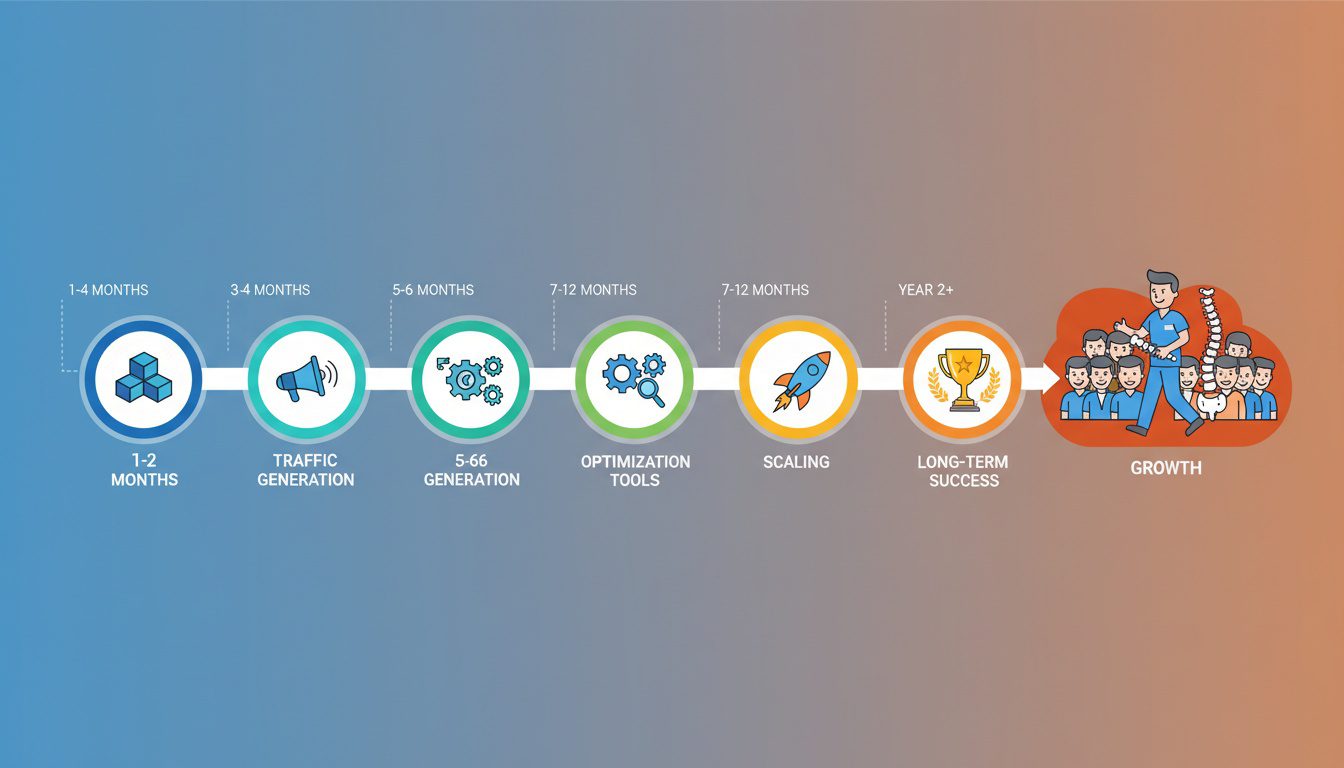
Understanding realistic timeframes helps you plan properly and avoid getting discouraged.
Here's what to expect as you build your patient acquisition funnel:
Month 1-2: Foundation Building
Focus on infrastructure and foundational content:
- Set up email marketing software and create your first nurturing sequence (5-7 emails)
- Install online scheduling and integrate with your website
- Create 2-3 high-value lead magnets (downloadable guides or email courses)
- Build dedicated landing pages for each offer
- Install tracking (Google Analytics, Facebook Pixel)
- Create foundational content (8-10 educational blog posts)
Don't expect significant patient flow yet. You're building the machine that will generate patients for years to come.
Month 3-4: Traffic Generation
Now shift focus to driving traffic into your funnel:
- Launch Google Ads campaign targeting high-intent keywords
- Start Facebook retargeting to website visitors
- Publish 2-3 new blog posts weekly
- Optimize Google Business Profile for local search
- Begin building email list through lead magnets
You should start seeing 5-10 new patients monthly from funnel activities at this stage. Conversion rates will be lower than optimal because you're still learning what works for your specific market.
Month 5-6: Optimization Phase
Data starts revealing what works and what doesn't:
- Analyze funnel metrics to identify bottlenecks
- A/B test landing pages and email sequences
- Adjust ad targeting based on which demographics convert best
- Create more content around topics that drove the most leads
- Launch referral program for existing patients
Expect 15-20 new patients monthly as your funnel matures. Focus optimization efforts on the weakest-performing stage first.
Month 7-12: Scaling and Refinement
Your funnel is working, now scale it:
- Increase ad budget on highest-performing campaigns
- Expand content creation to 3-4 posts weekly
- Add advanced automation for re-engagement
- Create segment-specific email sequences
- Test new lead magnets and offers
Well-optimized funnels at this stage generate 25-40+ new patients monthly. Your local SEO efforts start paying dividends as you accumulate more reviews and content.
Long-Term Performance (Year 2+)
After 12 months of consistent execution:
- Organic search drives 30-50% of new patient leads
- Email list grows to 500-1,000+ engaged subscribers
- Referrals increase to 25-35% of new patients
- Patient acquisition cost drops as organic channels mature
- Monthly new patient flow becomes predictable and scalable
The key insight is that funnels compound over time. Content you create in month 3 continues generating leads in month 24. Email subscribers from month 6 might convert in month 18. This compounding effect makes funnel marketing incredibly profitable long-term.
Frequently Asked Questions About Chiropractic Patient Acquisition Funnels
What is a patient acquisition funnel for chiropractors?
A patient acquisition funnel is a systematic process that guides potential patients from first becoming aware of your practice through booking their first appointment and becoming loyal, referring patients. It consists of four key stages: awareness (getting their attention), interest (building trust), decision (asking for the appointment), and loyalty (creating raving fans). Rather than treating patient acquisition as random marketing activities, a funnel provides a structured framework that moves prospects through predictable stages, allowing you to optimize each step and measure results.
What happens at the top of the funnel in chiropractic marketing?
At the top of the funnel, the goal is awareness. Potential patients might not even know they need a chiropractor - they just know they have a problem like headaches or low back pain. Your job is to show up where they're looking for answers through helpful blog posts, short videos, or social media content that addresses their pain points. Local SEO is crucial at this stage so when someone searches for "chiropractor near me" or uses location-specific keywords, you appear on the first page of results.
What's the middle of the funnel in patient acquisition?
In the middle of the funnel, potential patients know who you are but they're still weighing their options and trying to figure out if they can trust you. This is where you build relationships by offering something valuable in exchange for their email address, like a downloadable guide or email course. Once you have their contact information, you can start email campaigns that continue to provide helpful information, build trust, and keep your practice top-of-mind without being pushy. This nurturing stage typically lasts 2-4 weeks and dramatically increases conversion rates.
How much does it cost to acquire a new chiropractic patient?
Patient acquisition cost (PAC) for chiropractors typically ranges from $75-$300 per new patient, though this varies significantly based on your market, competition, and marketing channels. The target PAC should be 20-25% of a patient's lifetime value. For example, if the average patient generates $1,500 in lifetime revenue, your target PAC would be $300-$375. Practices spending $300-$500 monthly on focused marketing efforts typically see sustainable patient acquisition without overspending. Digital channels like SEO and email tend to have lower PAC than paid advertising.
What conversion rate should I expect from my chiropractic funnel?
Healthcare and service-based funnels typically convert at 2-5% from website visitor to appointment booking, with top-performing practices achieving 5-8%. Your funnel will have different conversion rates at each stage. According to recent industry benchmarks, expect lead to marketing qualified lead at 25-35%, marketing qualified lead to sales qualified lead at 13-26%, and opportunity to closed patient at 15-30%. These rates improve significantly with systematic optimization of each funnel stage through better offers, simplified booking, and targeted nurturing.
How long does it take to see results from a patient acquisition funnel?
A well-implemented patient acquisition funnel typically shows initial results within 60-90 days, with full optimization taking 6-12 months. The awareness stage (SEO and content marketing) takes 3-5 months to gain traction, while paid advertising can generate leads within 1-2 weeks. Email nurturing sequences typically convert prospects within 2-4 weeks of signup. Most practices see a 20-30% increase in new patient bookings within the first quarter of implementing a systematic funnel approach. The longer you run your funnel, the more profitable it becomes as content and SEO compound.
What tools do I need to build a chiropractic patient acquisition funnel?
Essential tools include a website with landing page capability, email marketing software like Mailchimp or ActiveCampaign for automated sequences, online scheduling software such as Acuity Scheduling or Jane App for 24/7 booking, and analytics tools like Google Analytics to track performance. Many practices also use CRM software to manage patient relationships and track prospects through the funnel. Expect to invest $150-$400 monthly for a complete funnel technology stack, though you can start with basic tools for $100-$150 monthly and upgrade as you scale.
How do I measure if my patient acquisition funnel is working?
Track key metrics including website traffic, conversion rate (visitors to leads), cost per lead, patient acquisition cost, and lifetime value of patients. The most critical metric is patient acquisition cost divided by lifetime value - aim for a ratio of 1:4 or better. Monitor conversion rates at each funnel stage to identify bottlenecks. For example, if many people download your lead magnet but few book appointments, your middle-of-funnel nurturing needs improvement. Use Google Analytics and your CRM to track these metrics monthly and adjust strategies based on what the data reveals.
Conclusion: Your Path to Predictable Practice Growth
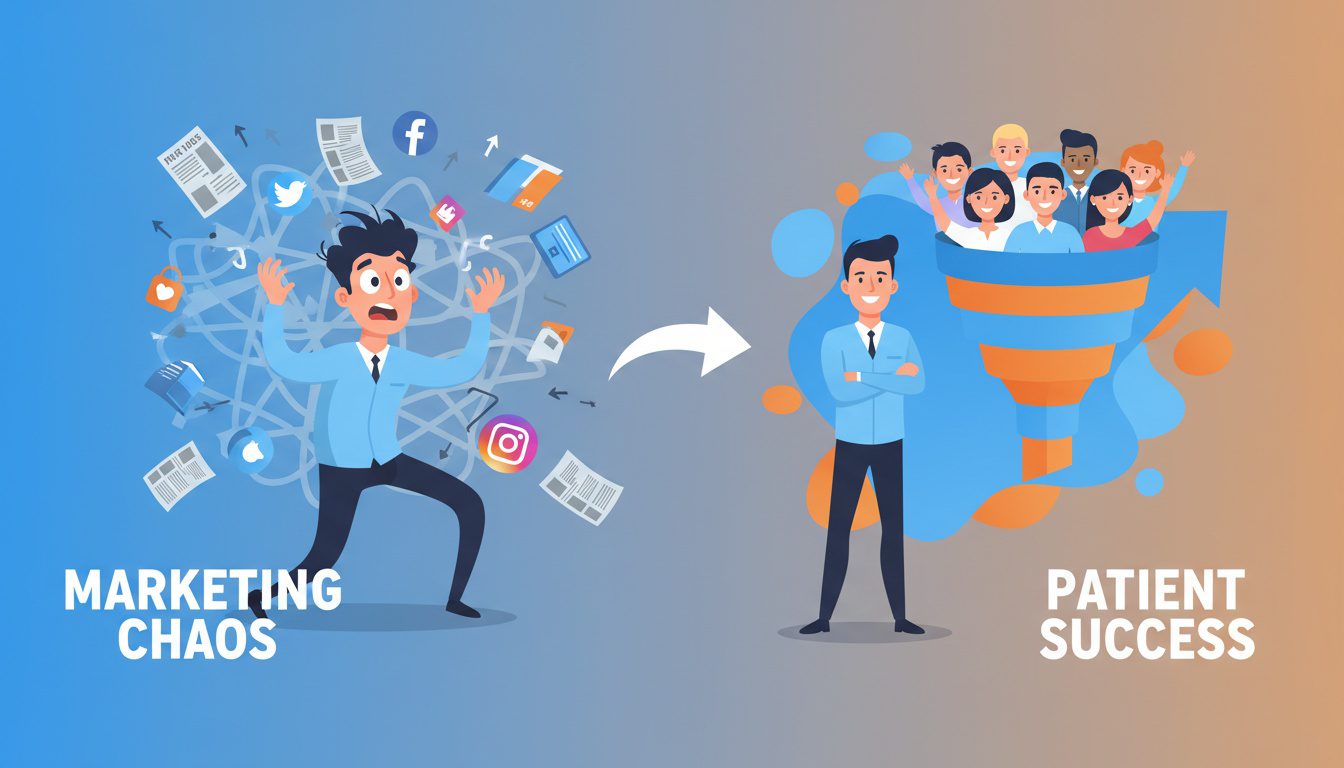
Building a predictable system for practice growth isn't fantasy - it's completely achievable with a well-structured patient acquisition funnel.
The difference between struggling practices and thriving ones isn't talent or location. It's whether they have a systematic process for moving prospects from awareness to loyal, referring patients.
A smart patient acquisition funnel shifts you from being a hunter (always chasing the next patient) to being a farmer (nurturing relationships and harvesting predictable results). The U.S. chiropractic market growing at 26.3% annually proves practices using these systems are dominating their local markets.
Your funnel smooths out the peaks and valleys, generating a steady stream of new patients month after month. You can finally stop worrying about where your next patient will come from and focus on what you do best: helping people feel better.
It starts by understanding the journey your patients take and systematically guiding them every step of the way. Build your awareness stage through helpful content and local SEO. Capture leads with valuable offers and nurture them through email. Make booking frictionless with online scheduling and compelling offers. Then create raving fans through consistent engagement and formal referral programs.
This systematic approach will transform how you grow your practice.
Free Website Conversion Analysis — Get a personal walkthrough showing the 3 biggest problems costing you clients (plus instant case study)
We'll analyze your current digital foundation, identify your highest-impact opportunities, and show you exactly how practices in your market are attracting 15-25 qualified patients monthly through strategic funnel marketing. Get your free analysis here.

Gerek Allen
Co-Owner iTech Valet
Entrepreneur, patriot, CrossFit junkie, IPA enthusiast, loves to travel to tropical destinations, and knows way too many movie quotes.


About iTech Valet
iTech Valet specializes in web design and content marketing for online entrepreneurs who want to share their expertise.
Services Include:
- Web Design
- Graphic Design
- Sales Copy
- Funnel Building
- Authority Sites
- Membership Sites
- Course Creation
- Email Systems
- Content Marketing
- Competitive Analysis
- Tech Integrations
- Strategic Planning
NEED MORE CLIENTS?
Free conversion-focused analysis uncovers the 3 biggest problems killing your bookings — we'll walk you through your results personally

621 Enterprises, Inc. | Copyright 2022 | All rights reserved