
Google says its review of a Business Profile verification can take up to five business days after you finish the required steps. If Google offers verification by postcard, most postcards arrive within 14 days, and the code runs out after 30 days. Your business information can take between 1 and 6 months to start showing up on the sites in a local data aggregator’s network. A local data aggregator is a company that collects business details and passes them to many websites. Google says it tries to check and index pages in a reasonably timely way, and for most sites that takes three days or more.
What Comes First: Research Before Any Copy or Site Changes
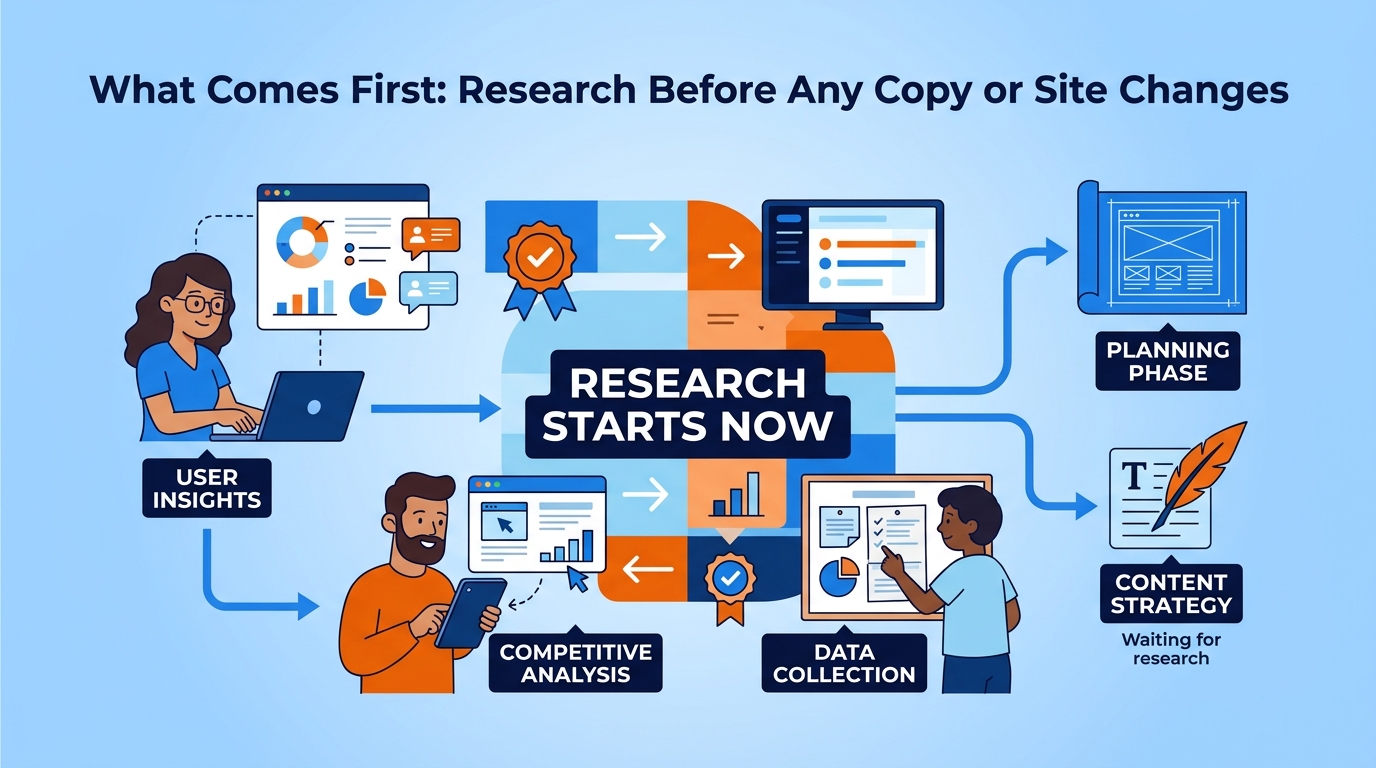
The build opens with research. Before iTech Valet writes a single word of copy or touches your website, it runs 14 steps of research across four phases. The full set of pieces is laid out in Setting Up a Full AI Authority Engine: How the Pieces Fit Together.
I treat getting picked by AI answer tools as its own discipline. To me, it’s not classic search work with a new name. I don’t chase keywords, inbound links, or ranking position. I aim the work at the questions I believe these systems are trying to settle. Who is your practice? And is it credible?
So the research goes into how the engines read your practice. And how to make that easy for them.
How Long Google Business Profile Verification Takes
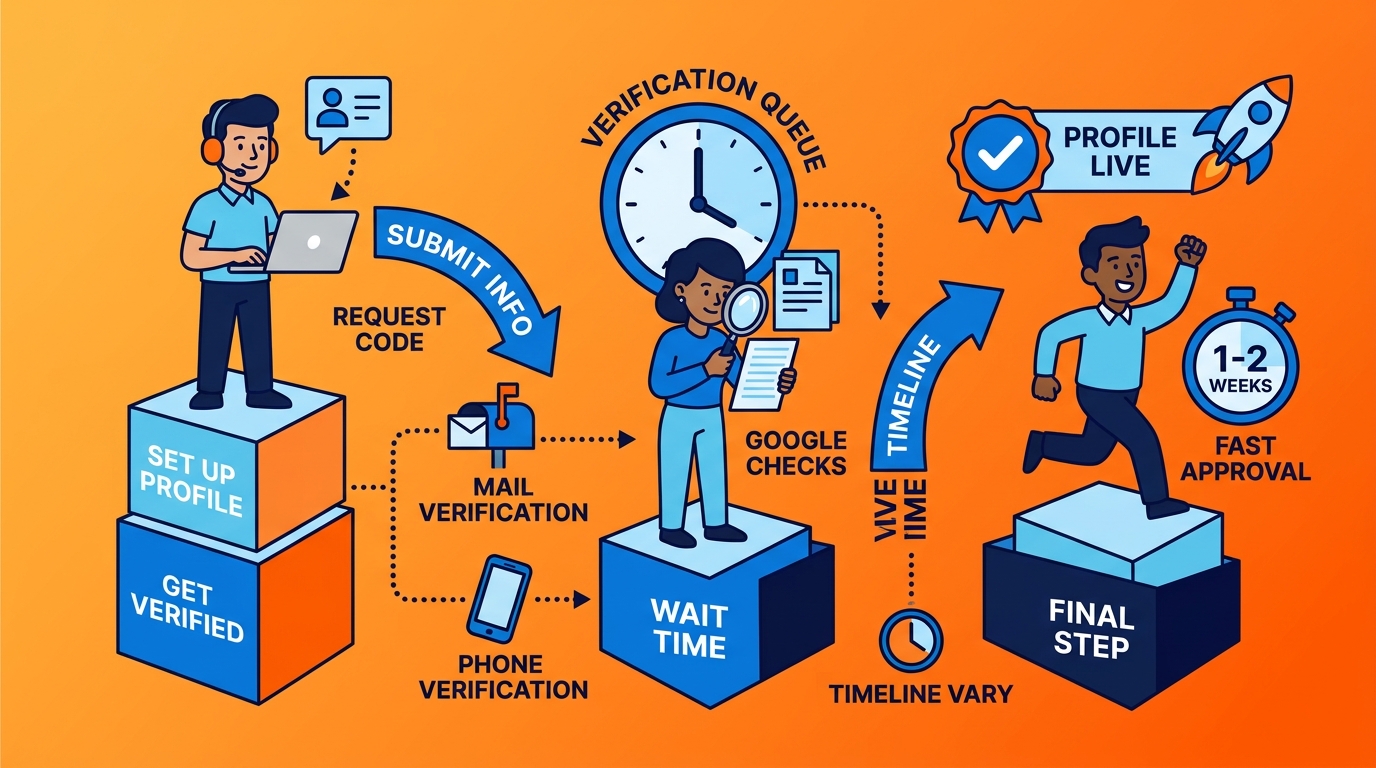
Here’s the timeline. Google says its review can take up to five business days after you finish the required steps.
Some profiles may be verified sooner, or even right away. But the timing varies.
If Google offers you a postcard, most postcards arrive within 14 days. That’s the delivery time. Once the code is issued, it expires after 30 days.
If Google asks for a video, it has to be unedited and continuous. It has to run at least 30 seconds. And it has to show all required evidence.
What does it cost? Nothing. Google does not charge eligible businesses to add, claim, manage, or verify a Business Profile.
The table below lines up each step with its typical time.
| Step | Typical time |
|---|---|
| Google’s review once the required steps are done | Up to five business days |
| Postcard delivery | Most arrive within 14 days |
| Postcard code life | Expires after 30 days |
| Verification video | At least 30 seconds, unedited and continuous, showing all required evidence |
Wondering what needs sign-off before installation can start? That’s covered in Who Needs to Approve What Before Installation Can Start?.
The times above come from Housecall Pro’s page, Google Business Verification: How to Verify Your Profile.
How Long Citation Listings Take to Go Live
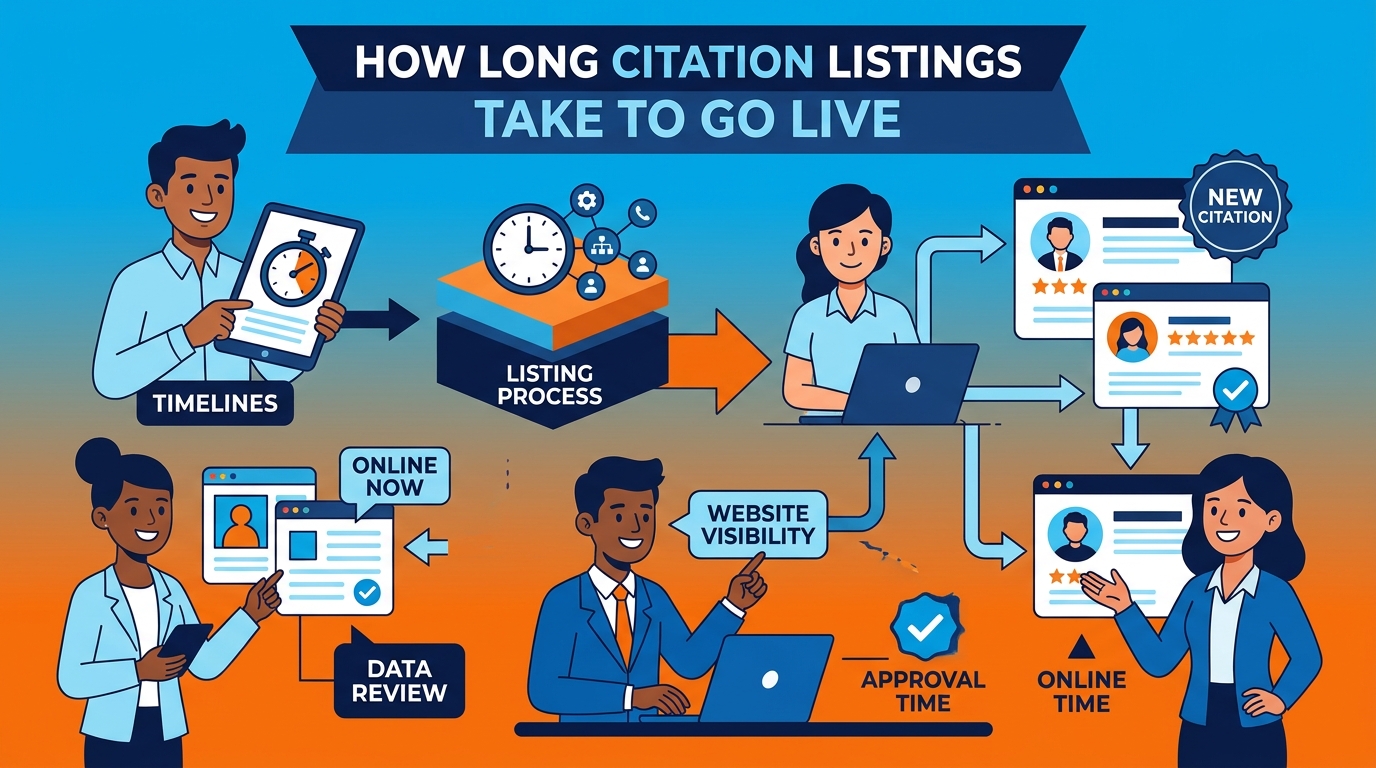
A citation is a listing of your business on another website. Some citation sites put your listing live right away. Others take longer. A few days, or up to a few weeks, depending on how the site works and how busy it is.
The table below shows typical times for each step. The figures come from BrightLocal. Its page What to Expect Once You’ve Submitted a Citation Campaign covers the campaign timing. Its page Manual Citation Submissions vs. Local Data Aggregator Submissions covers the submission effort.
| Step | Typical time |
|---|---|
| Manual submission, per site | 5-20 minutes, about 10 on average |
| Submission to the five main US data aggregators | About 100 minutes in all |
| First quality check of each citation | Around Day 14 |
| Citation sites making listings live | Within two weeks for some; others may take four weeks or more |
| Aggregator data appearing on network sites | Can take 1 to 6 months to start appearing |
Submission Effort: Single Sites vs. Data Aggregators
Here’s what submitting by hand looks like. Sending your business details to one site takes anywhere from 5 to 20 minutes. Plan on about 10 minutes on average.
Then there’s the local data aggregator. That’s a company that collects your business details and passes them to many websites. Submitting to one takes about 20 minutes. There are five main ones in the United States, so submitting to all five should take you about 100 minutes.
Publication and Propagation Times
BrightLocal’s first round of quality checks on each citation typically happens around Day 14 of a campaign. And it checks live listings twice. Why? Some sites make listings live within two weeks after you submit. Other sites may take four weeks or more.
The aggregator route is slower. Your business information can take between 1 and 6 months to start showing up on the sites in an aggregator’s network.
How Long Google Takes to Find and Index New Pages
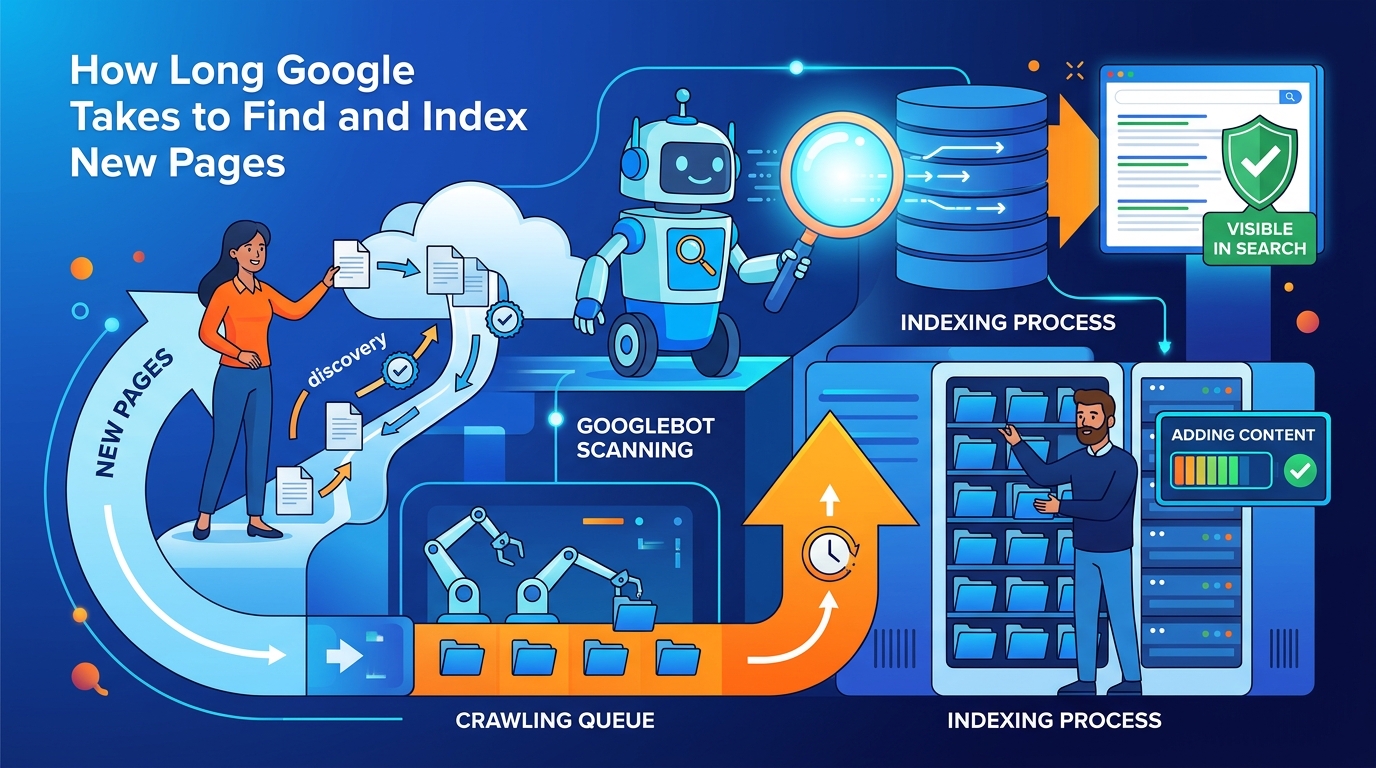
Google says it tries to check and index pages in a reasonably timely way. Indexing just means Google adds your page to its list of pages. For most sites, that takes three days or more.
Google also says it may take several days after you publish a page for it to find and crawl that page.
In general, the most common reason a site isn’t indexed is that it’s just too new. Google’s advice is to be patient and ask Google to crawl and index it.
How Long Structured Data and Robots.txt Changes Take to Register
Crawling is Google visiting your pages to read them, and Google gives two ranges for how long it takes. In one statement, Google says crawling can take anywhere from several days to several weeks, depending on how often its systems decide your content needs to be refreshed. In another, Google says it can take anywhere from several days to several months, depending on how often its systems decide a page needs to be refreshed.
Robots.txt is the file that tells search programs what they may visit. For search results, OpenAI says it can take about 24 hours after your site updates its robots.txt file for its systems to adjust.
Want to know how the work gets done? iTech Valet Service Plans & Pricing explains it.
Frequently Asked Questions
What happens if the practice’s name or address changes while a postcard code is in the mail?
You’ll need to ask for a new code. While a postcard code is on its way, changing your business name, address, or category makes the original code useless. Asking for another code does the same thing. So keep those details fixed until the code arrives.
Does a verified Business Profile guarantee a place in local results?
No. Verification does not guarantee you’ll rank well in local search results. Your verified profile may not appear in the local pack, which is the short list of businesses shown on the map. It may not rank above your competitors. And it may not show up for every relevant search.
Does a small clinic site need to worry about Google’s crawl budget?
Not if your site passes Google’s own test. Google says you don’t need to read up on crawl budget if your site doesn’t have a large number of pages that change rapidly, or if your pages seem to get crawled the same day you publish them.
How long should we wait after a Google core update before reading the results?
Google recommends waiting at least a full week after a core update finishes before you look at how your site did in Search Console. A core update is a big change to Google’s search system. When I read those week-later numbers, I don’t score the result by rank position. Since AI tools started giving direct answers instead of lists of links, I’ve stopped using a site’s spot in a results list to judge whether a business gets found. I treat position tracking as an outdated success measure: it looks good on a report without driving outcomes.
Does submitting a sitemap make Google index pages faster?
Google makes no such promise. Google says a sitemap file can help it learn about your site. But it does not guarantee indexing, and it does not raise your site’s place in search results.
Putting the Stage Times Together
Here is the realistic picture. Research comes first: 14 steps across four phases before any copy is written or your website is touched. Google’s verification review can take up to five business days. Citation sites put listings live anywhere from right away to four weeks or more. Aggregator data can take 1 to 6 months to start appearing. Google’s crawling can take from several days to several months. The infrastructure is front-loaded, and the monthly execution builds on that foundation every single month.
And the foundation starts with research. Before iTech Valet writes a single word of copy or touches your website, it runs 14 steps of research across four phases.
iTech Valet does that work through its Local AI Authority Engine and its AEO Content Writing Services. Want to see how artificial intelligence (AI) assistants describe your practice today? Run My AI Visibility Check