Why Chasing Clicks Is Already a Losing Strategy
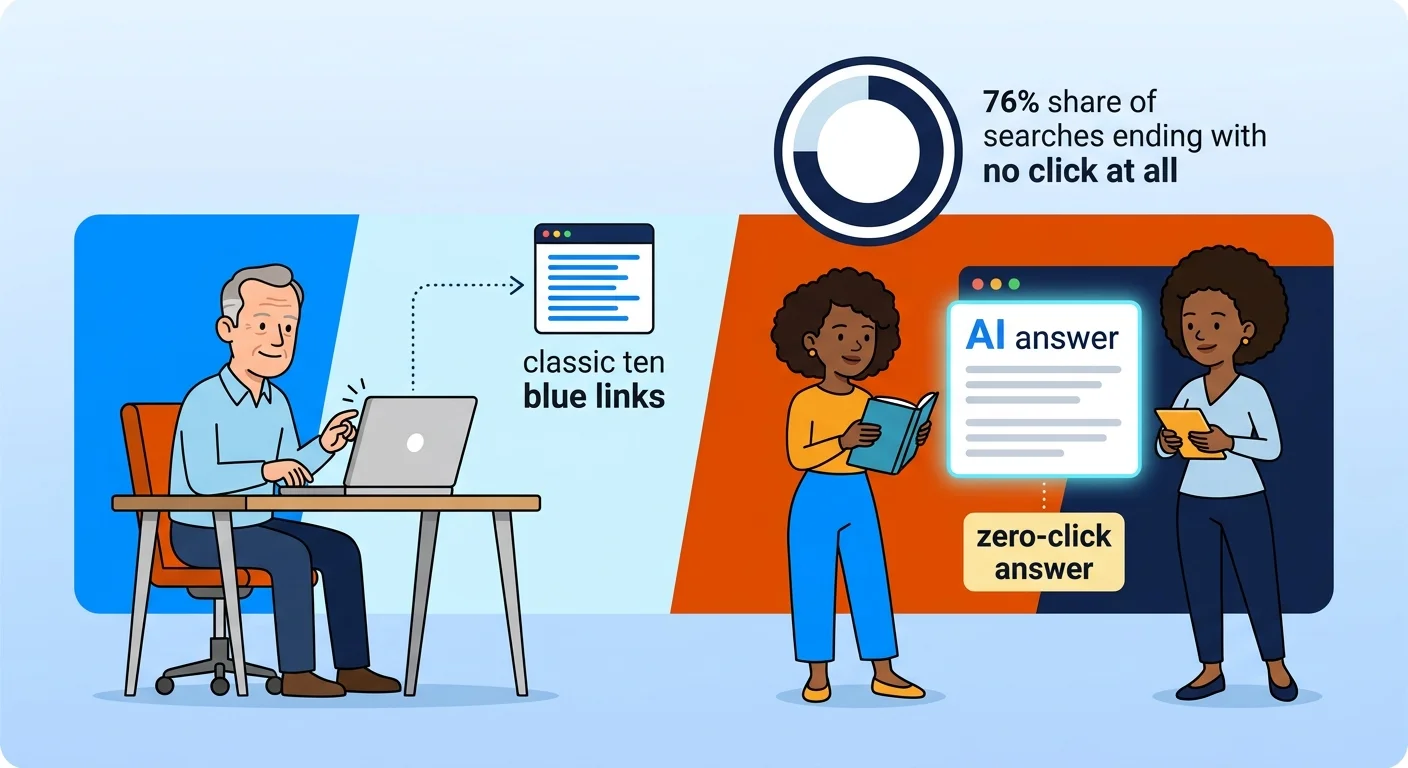
Here's the thing about a scoreboard nobody bothered to update: the game changed right underneath it. And most brands? Still counting site visits like that number decides who wins.
But a click was never the actual goal. It was always a stand-in for something bigger — being trusted enough to get chosen.
Now that trust gets handed out without a single click. An AI engine reads the landscape, picks its winner, and drops the answer straight in the searcher's lap.
So the brand that spent years chasing site visits can still lose — even with an analytics dashboard that looks perfectly healthy. It was never seen, never cited, never even in the running.
This is exactly why a defensive authority moat strategy beats one more shove for placing in the classic ten blue links. One protects your brand inside the answer engine. The other guards a spot nobody scrolls to anymore.
What the Zero-Click Numbers Actually Show
The scale of this shift is not subtle. In the first four months of 2026, 68.01% of Google searches in the US ended without a click, per SparkToro's clickstream study.
That means more than two out of three searches never sent anyone to a website. The answer just showed up, and the searcher moved on.
So a brand built purely to be clicked is built for a shrinking sliver of searches. Meanwhile the real prize — the AI-composed answer — goes to whichever entity the engine trusts enough to cite.
Why the Old Scoreboard No Longer Measures the Game
Old local optimization measured success by position: did the business land near the top of a results page? That scoreboard assumed a human was still scrolling a list.
The era of winning local search by simply placing in the classic ten blue links is over. Now the fight is for the single, definitive answer inside an AI overview — one seat at that table, not ten.
How AI Overviews Actually Decide Who Gets Cited
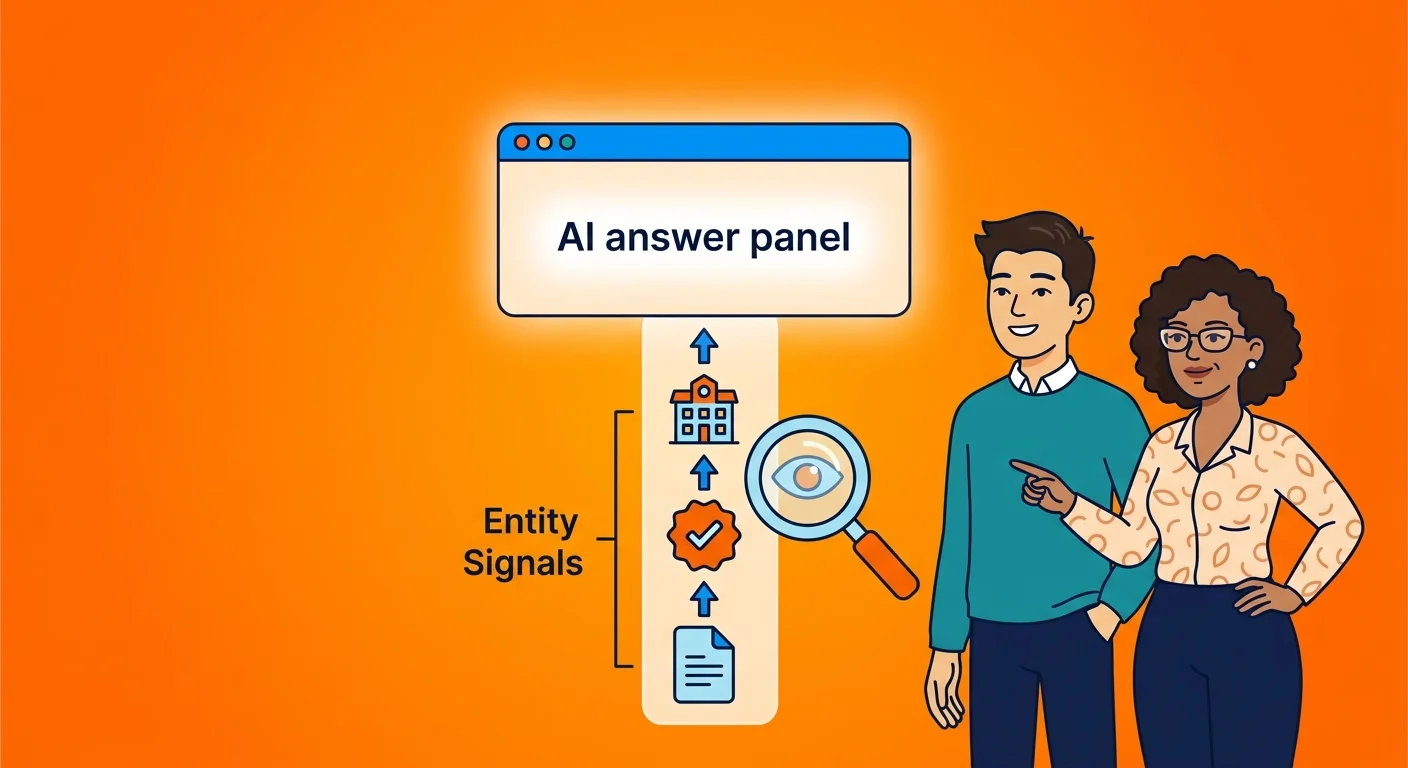
So if a click is the wrong scoreboard, what's the right one? It's buried in the mechanics — how an AI engine actually picks who to cite.
Here's the thing: generative AI doesn't rank websites the way an old results page did. It stitches together answers from a bunch of sources and cites the entities it trusts most.
And that one distinction flips where your money should go. There's no list of ten to climb anymore — just one answer getting built on the spot.
This is also where why traditional local answer engine optimization leaves citation share exposed matters to any brand still keeping score the old way. The engine underneath AI citation rewards specificity, not just being visible.
| Query Type | Citation Share | What This Signals |
|---|---|---|
| Broad shipping query (parcel-services sector) | 60.9% | The general local page still gets cited, but weaker specificity caps the citation share far below what a named-intent page earns |
| Named specific service intent (parcel-services sector) | 84.1% to 89.1% | Content built around a named intent becomes the main answer, showing precision beats general category coverage |
| Any query synthesized by generative AI | No fixed ranking position | AI does not rank pages in the traditional sense, it synthesizes sources and cites the entities it trusts most |
Synthesis Instead of Rankings
An AI system reading a query isn't asking which page ranks highest. It's asking which source answers the exact question, dead on.
So broad category content fights on much weaker ground than content built around a named service or product intent. In this model, precision beats prominence.
The Entities AI Engines Trust Most
Look at what happens inside one industry — it's stark. In parcel services, a broad shipping query still tended to cite a general local page, but only at a 60.9% citation share.
Once the query named a specific intent, the whole pattern flipped hard. Pages built around that named intent grabbed 84.1% to 89.1% of AI citations, per published industry reporting tracking how these patterns actually play out.
That gap is the lexical moat argument in miniature. The brand answering the specific question, in its own exact words, wins the citation the general-answer brand never touches.
Why Traditional Local Optimization Tactics Stop Working Here
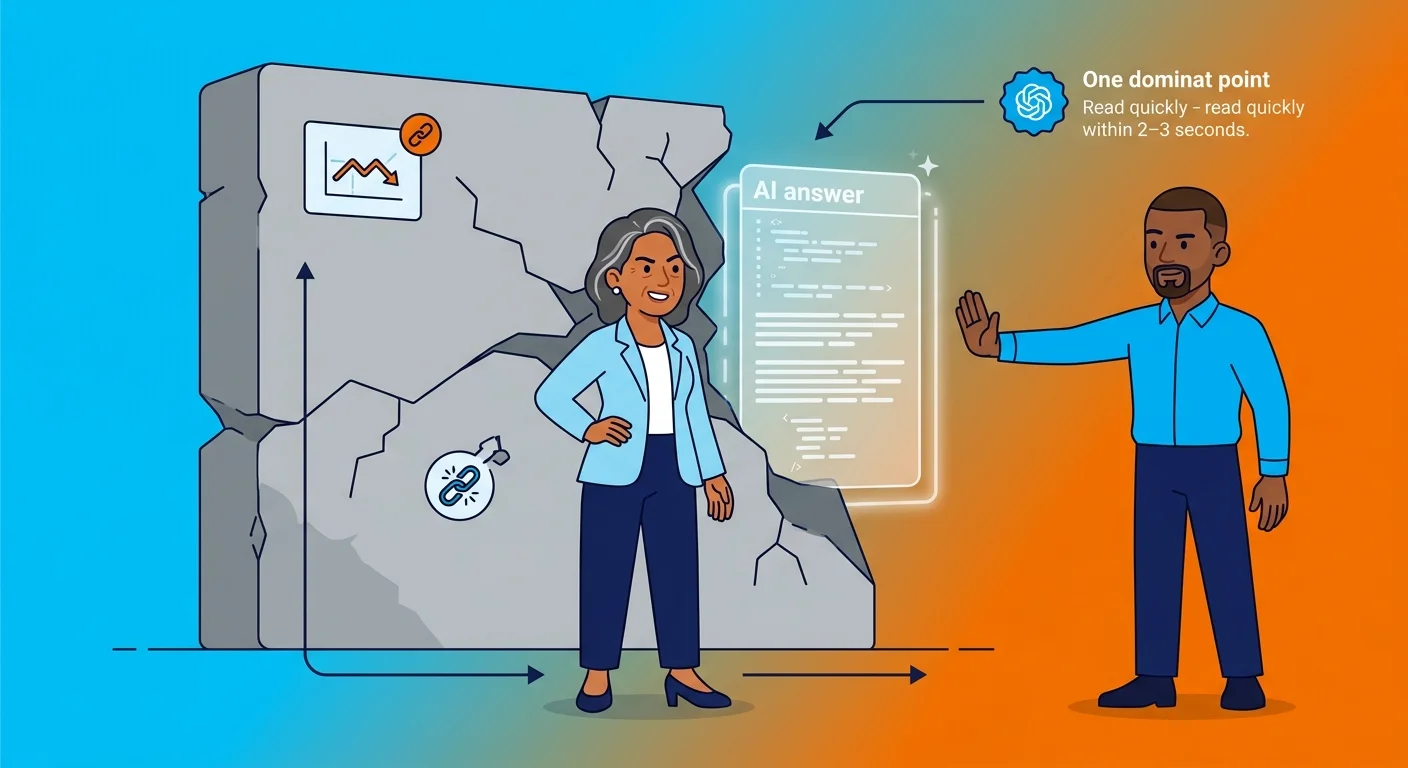
Traditional local optimization was built for one thing: a human scrolling a list of links, picking one. That world is vanishing fast.
So the tactics built for it are breaking — and most of the people running them don't see it yet. Chasing a spot near the top of a page assumes someone's still looking at the page.
Here's the problem: an AI-composed answer never shows a page. It shows a synthesis, credited to whichever entity the engine trusted most while building it.
That one shift breaks three tactics at once — keyword position tracking, acquiring inbound links, and general-purpose content aimed at broad categories instead of named intent. Each one fails for its own reason. But they all fail against the same mechanism.
Why Chasing Keyword Position Tracking Fails an AI Reader
Keyword position tracking measures where a page sits on a list nobody scrolls anymore. That's the whole flaw, in one sentence.
And an AI engine building an answer isn't reading a rank order. It's asking which source answers the exact question with the least ambiguity — then citing that source directly.
So a business can dominate the old scoreboard and still never touch the answer that reaches the searcher. Position and citation aren't the same currency, and only one still pays out.
Why Acquiring Inbound Links Alone Doesn't Build Trust
Acquiring inbound links ran on a simple idea: other sites pointing at a page signals authority. There's still some truth in that. It was just never the whole picture.
A link tells an algorithm somebody else found a page worth pointing to. It says almost nothing about whether the business is described consistently, verified across platforms, or named precisely enough for an AI system to trust it as fact.
That's a completely different kind of trust. It's the exact distinction our own analysis of an AI recommendation share defense inside a medical clinic was built to show — link volume didn't save that citation share. Entity consistency did.
The Businesses This Moat-Building Approach Isn't Built For
This approach isn't built for a brand chasing a quick bump in site visits before next quarter's numbers get pulled. A lexical moat takes sustained, deliberate entity work — not a short campaign.
It's also not built for a business that won't fix inconsistent information across its own listings, profiles, and structured data. An AI engine punishes ambiguity, and a brand that won't clean up its own facts keeps feeding it.
Look, if the goal is still placing in the classic ten blue links, this isn't your investment. But if the goal is being the answer an AI engine has no choice but to trust, the moat is exactly what gets built.
Laying the Foundation: Entity Signals AI Engines Trust
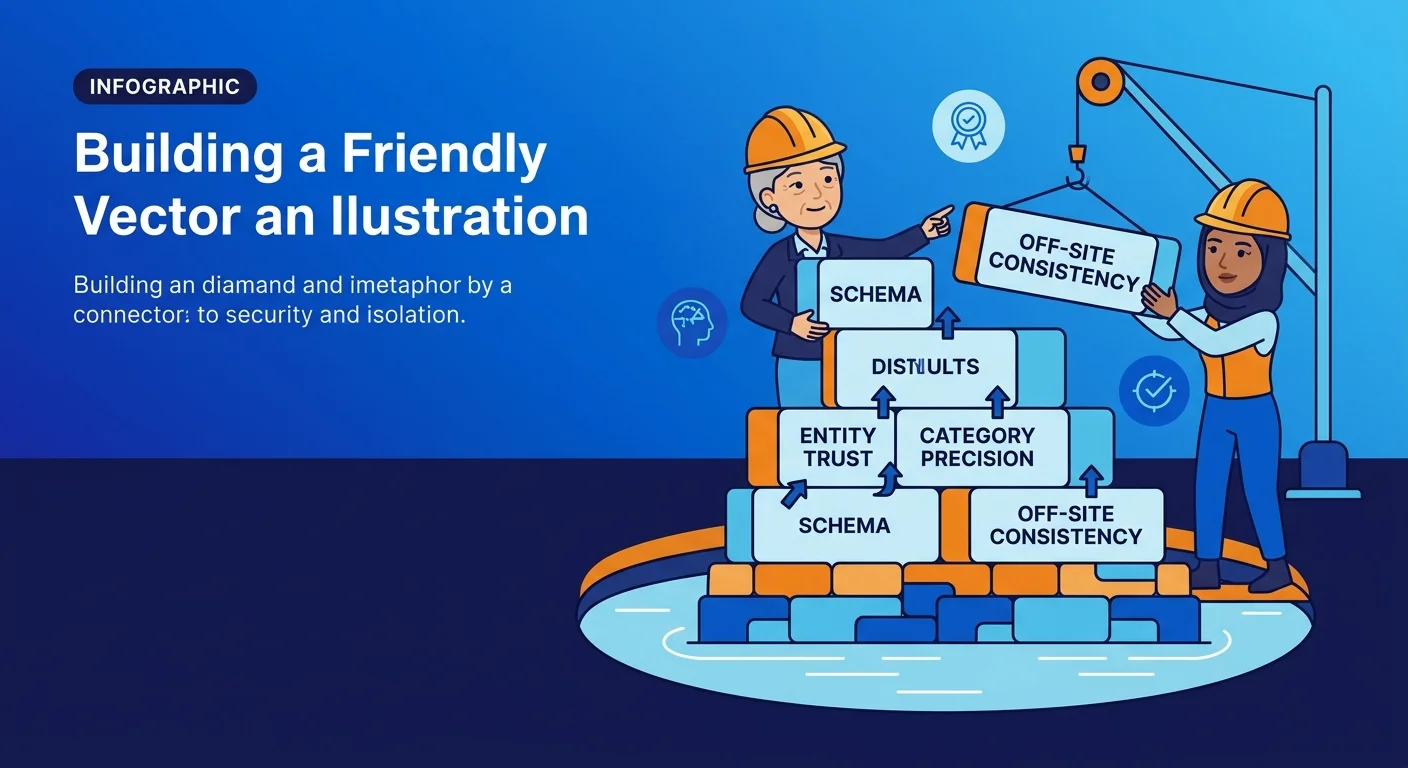
So what actually holds a lexical moat up? Not a slogan, not a vibe — structured facts an AI engine can verify without guessing.
A lexical moat is an information barrier built around a brand's expertise, engineered so an AI system finds it the most logical, authoritative source to cite for a specific local query.
That barrier has a foundation, and the foundation is entity signal work. Not copywriting, not another push for keyword position tracking — structured, verifiable, machine-readable facts about who a business is.
Everything else in a moat strategy sits on top of this layer. Get the foundation wrong and nothing built above it holds weight.
| Foundation Layer | What It Establishes | Where It Lives |
|---|---|---|
| Schema Markup | Machine-readable proof of what the business is, what it offers, and where it operates | Structured code embedded directly in the business's own website |
| Business Profile Consistency | Confirmation that the same facts appear identically everywhere an AI system looks | Directory listings, business profile platforms, and third-party citations |
| Verified Credentials | Standing that compounds when the same credential is confirmed across multiple trusted locations | Industry associations, licensing bodies, and platform verification badges |
| Named Service Intent | Precision that matches the exact question a local query is asking, not a broad category | Service pages, structured data fields, and profile category selections |
Structured Data and Schema as Load-Bearing Walls
Schema markup is the clearest example of load-bearing entity work. It tells an AI system, in structured code, exactly what a business is, what it offers, and where it operates — no interpretation required.
Without that structured layer, an AI engine is stuck inferring meaning from raw page text. Inference breeds ambiguity, and ambiguity is the one thing a lexical moat exists to kill.
But schema alone isn't the whole wall. It has to name the specific service intent, not a broad category — because AI citation rewards the source matching the exact question being asked.
Off-Site Consistency: Where the Moat Extends Beyond Your Website
Here's where most brands stop too early. A moat doesn't end at the edge of your own website — it reaches into every platform an AI model pulls from when it builds an answer.
So business profile listings, directory entries, and third-party citations all need to say the same thing, in the same language, about the same business. A brand already watching for attempts to displace its position inside an AI-generated recommendation gets that this extension isn't optional.
Inconsistency across those platforms reads as ambiguity to an AI system, and ambiguity is disqualifying.
Verified credentials reinforce the same wall from another angle. A credential listed once, in one place, does far less work than one confirmed consistently everywhere a brand shows up.
The stronger and more consistent those off-site signals get, the harder it becomes for a rival entity to dig underneath them.
Naming Your Niche: Category Precision as a Citation Trigger
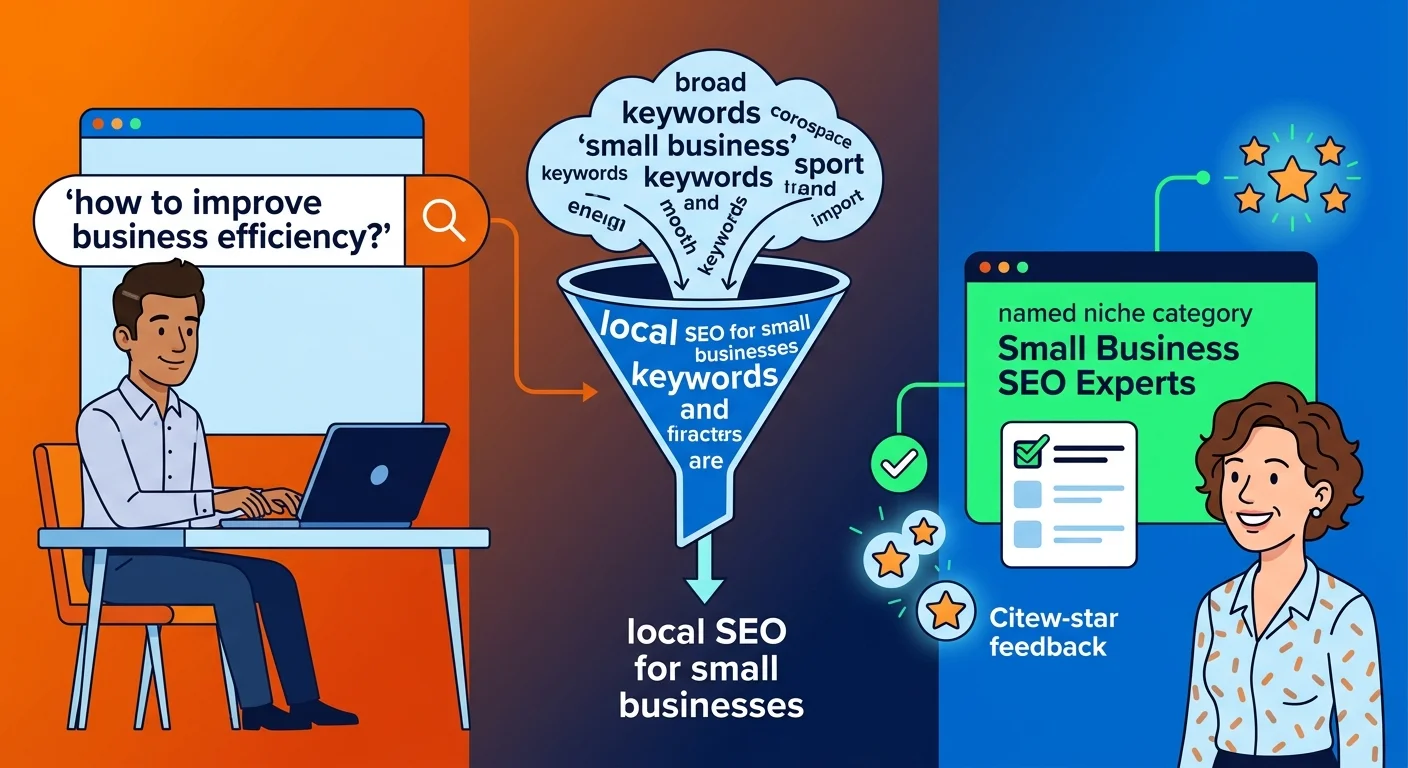
So all that off-site consistency has to point somewhere specific. It points at the name a business gives itself — in the exact language a searcher types.
Here's the thing: a broad category label describes a business to a human scanning a directory. It does almost nothing to help an AI engine match that business to a precise question.
Category precision is the lever. It decides whether a brand gets cited on the narrow query that actually converts, or gets skipped for whoever named the intent more exactly.
| Page Type | Query Match | Citation Outcome |
|---|---|---|
| Broad category page | General shipping or service query with no named intent | Cited as the local answer 60.9% of the time |
| Named-intent page | Query naming a specific service or product intent | Cited as the main answer 84.1% to 89.1% of the time |
| Review-summary layer | Searcher scanning AI-generated review summaries before clicking through | Summary synthesized entirely from place attributes and reviewer sentiment |
| Build Step | Milestone | What It Unlocks |
|---|---|---|
| Audit existing category labels | Every listing, profile, and structured data field uses the same named category instead of a vague general one | A consistent starting signal an AI engine can match against a specific query without guessing |
| Rewrite for named intent, not broad category | Page copy, headings, and schema all describe the exact service a searcher would name, not the industry it sits inside | Eligibility for citation on the narrow question that actually converts, instead of competing in a crowded general category |
| Align off-site language to the same named intent | Directory entries and third-party citations echo the identical category language used on-site | A single, reinforced signal across every platform an AI system draws from when assembling an answer |
| Monitor review language for category drift | Reviewer wording is checked against the brand's named intent rather than left to describe the business however customers happen to phrase it | Early warning when the review layer starts contradicting the category the rest of the moat was built around |
Building the Intent-Specific Pages That Win Narrow Queries
A generic local page answering a generic category question is already fighting every other generic page saying roughly the same thing. Nothing there earns a citation.
But a page built to answer one specific, named intent stands on completely different ground. It has almost no competition, because most brands never bothered to build it.
That's the same pattern this article already laid out: the more precisely a page names what it answers, the more an AI engine trusts it as the citable source for that exact question. Category naming is where that precision either starts or dies.
Structuring Pages So Machines Can Extract the Answer
Naming the category right only matters if the page around it is built for extraction, not persuasion. An AI engine has to pull a clean, unambiguous answer off the page without guessing.
That means the direct answer sits up top, stated plainly, before any narrative framing gets in the way. Structure beats storytelling when a machine is the first reader.
So headings, structured data, and category language all have to agree with each other on the page. An AI system checking for consistency has zero patience for a headline that promises one thing while the body copy delivers another.
Reading the Signals: Reviews, Sentiment, and the AI Summary Layer
Category precision and page structure cover what a brand controls outright. But an AI engine also pulls signal from something a brand only half controls: its own reviews.
AI-powered review summaries on Google Maps draw entirely from user reviews, not from anything a business writes about itself. Per Google's documentation on how these summaries get built, the system synthesizes attributes and sentiment straight out of that review text — then hands a searcher a high-level summary before they ever click through.
That means the words customers use in a review become part of a brand's lexical footprint, whether the brand planned for it or not. A moat built entirely on-site still leaves a gap if the review layer contradicts it.
Frequently Asked Questions
A few questions keep coming up once the build is on the table. So here are the straight answers.
How is a lexical moat different from traditional local optimization?
Traditional local optimization chases a spot on a list. A lexical moat chases something else entirely — becoming the entity an AI system trusts enough to cite outright, no list involved.
Can a small local business actually influence AI-generated answers?
Yes, and size isn't what decides it. An AI engine cites the most unambiguous entity for a query, so a small brand with clean, consistent facts can out-verify a bigger one that never bothered.
What's the first technical step to building lexical authority?
Structured data comes first. Schema markup that spells out what a business is, what it offers, and where it operates strips the guessing an AI system would otherwise be stuck doing.
How long does it take to see results from building a zero-click moat?
There's no fixed clock on it. A moat gets deeper the longer entity consistency holds across every platform an AI model pulls from — and that work never really wraps.
Does this strategy replace the need for a Google Business Profile?
No. A Google Business Profile still matters — it's one more surface an AI system checks for consistency, not a swap for the entity work sitting underneath it.
What kind of content best supports a lexical moat strategy?
Content built around one named, specific intent — not a broad category — hands an AI engine the exact unambiguous match it's hunting for. That's the content a moat gets built on.
The Bottom Line
So here's the bottom line. A moat isn't a slogan, and it isn't a one-time project. It's a barrier that gets deeper the longer a brand keeps digging.
The businesses still chasing placing in the classic ten blue links are digging the wrong direction entirely. The lexical moat rewards the brand that made itself unambiguous, not the brand that made itself visible on a list nobody scrolls anymore.
Look, once that moat is dug deep enough, a competitor can't just outspend their way across it. They'd have to out-verify a brand's entity from scratch. If that's the wall worth building around your expertise, the next move is a straight look at where the gaps sit right now, and that starts with an AI visibility check.