
The Local Search Scorecard Just Changed and Nobody Sent the Memo
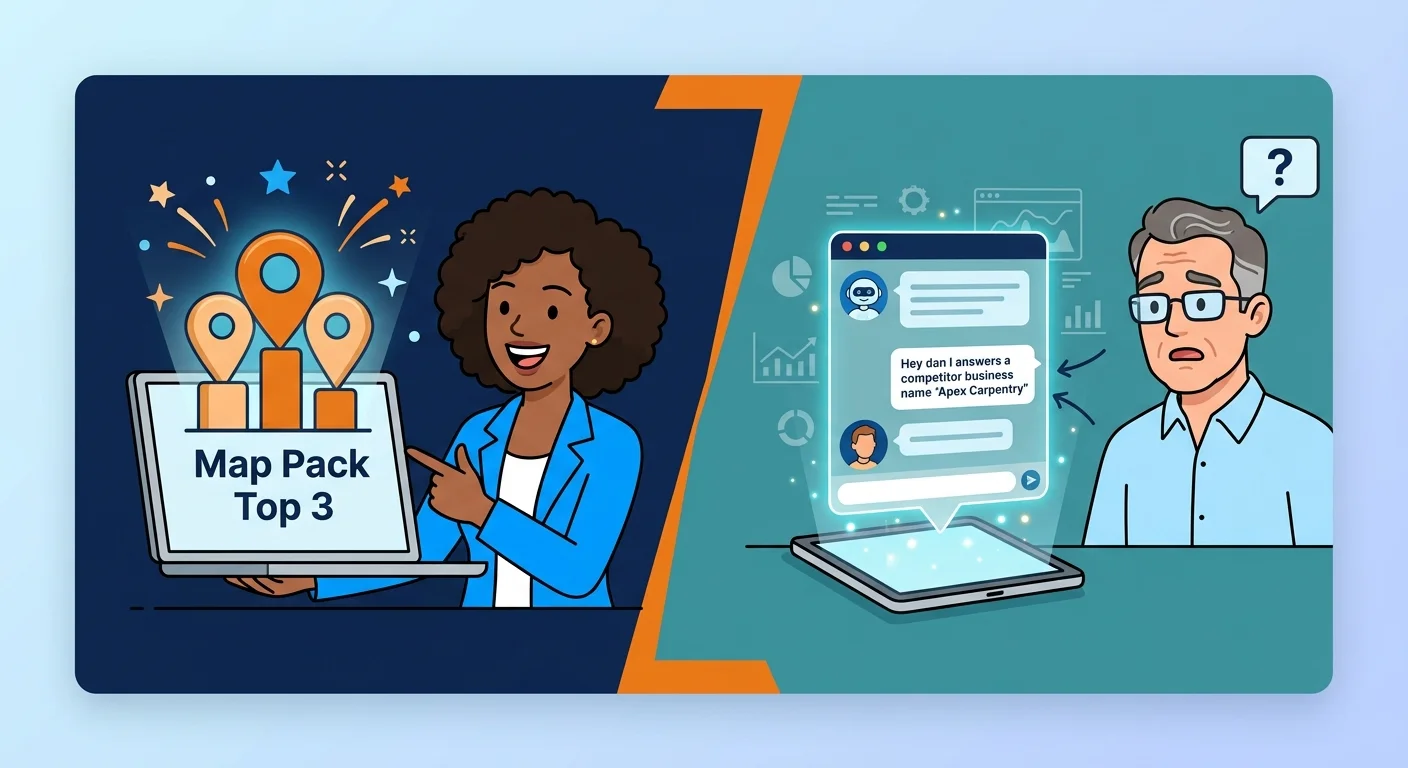
For decades, local optimization had one simple, visible scorecard: the map pack. Land in the top three, and you were winning. Everybody could see the leaderboard, and everybody knew the rules.
Here's the thing: that scorecard's gone. AI Overviews rewrote the game, and the goal now isn't to rank, it's to be cited as the source of truth. So every business still chasing the old three-pack is optimizing for a leaderboard generative engines never even show.
Here's the thing: you can win the old scorecard and lose the one that actually counts now. Nobody sent the memo, which is exactly why so many local businesses are bleeding citations and have no clue it's happening. Grasping what a Defensive Authority Moat actually requires is the difference between reacting to that loss and building something that stops it cold — because a business still measuring itself by placing in the classic ten blue links is flying blind to the instrument that now decides whether AI engines recommend it at all.
Why Chasing the Map Pack Is a Losing Bet Now
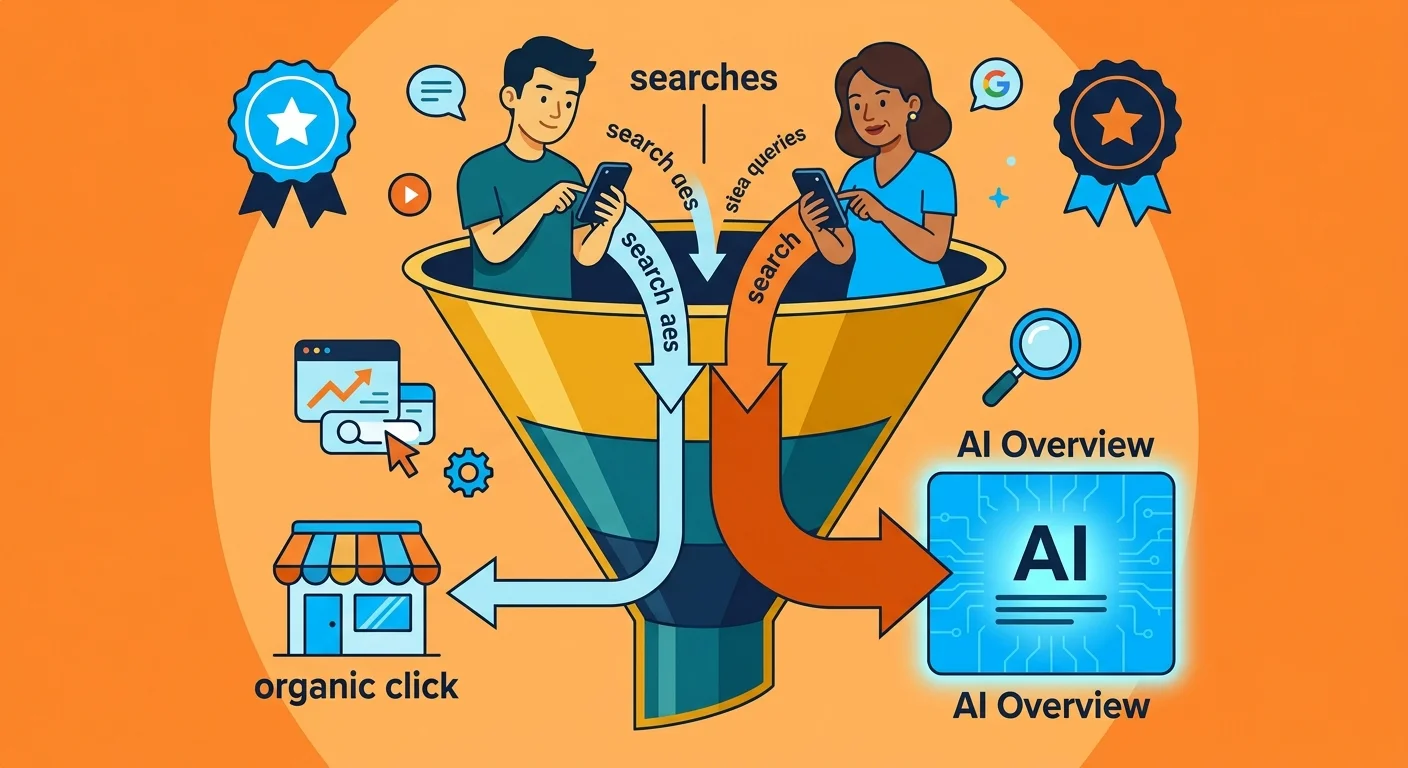
A top-three map pack spot buys a business almost nothing now, because the surface that scorecard was built for is fading from view. Generative answers don't show a ranked list of ten links you scroll and compare. They show one synthesized answer, and that answer either names your business or it doesn't.
So the whole premise of local optimization falls apart. There's no position to climb when the screen hands back one answer instead of a leaderboard. A business sitting at the top of the old scorecard can be flat-out absent from the new one.
Here's the thing: this isn't some future risk. It's already measurable in how often people click through to a website at all. Learning how a zero-click lexical moat changes what gets cited matters more right now than another month spent defending a map pack spot fewer people even see.
| Query Intent Type | AI Overview Presence |
|---|---|
| Local-Intent Queries | Appears for 15% of queries studied |
| Informational-Intent Queries | Appears for 92% of queries studied |
| Hybrid-Intent Queries | Appears for 97% of queries studied |
| Organic Results Without AI Overview | Click-through holds at 2.94% |
| Organic Results With AI Overview | Click-through falls to 0.84% |
When the Click Disappears Before It Ever Happens
Look at the click-through data and the collapse is stark. No AI Overview above the results, and click-through sits at 2.94%. Let one appear, and that same number drops to 0.84%.
That's not a modest dip. It's the difference between a results page that still sends someone to a website and one that answers the question before a click ever happens. Rank well underneath an AI Overview and you're still losing the interaction that used to justify the ranking.
This is why site visits stopped being a reliable read on whether AI engines trust you. According to published industry reporting, the click itself is vanishing for a huge share of searches, no matter your position. You can hold your spot and still lose the visit, because the answer already satisfied the searcher one screen up.
The Query Types Where AI Answers Are Already Standard
But the collapse isn't spread evenly across every kind of question people ask. Local-intent queries and informational ones don't trigger generative answers at the same rate. And that gap tells you exactly where the pressure is building fastest.
On average, AI Overviews surface for 15% of local-intent queries. For informational-intent queries, that jumps to 92%. For hybrid-intent queries, it climbs to 97%.
That gap won't hold. As generative engines get better at resolving local entities the way they already resolve informational ones, local coverage moves toward those same numbers, not away from them. According to published industry reporting, the trajectory is already visible inside the informational and hybrid figures, and waiting for local queries to catch up just means noticing the shift after it's already happened.
What AI Engines Actually Read Before They Ever Read Your Rank
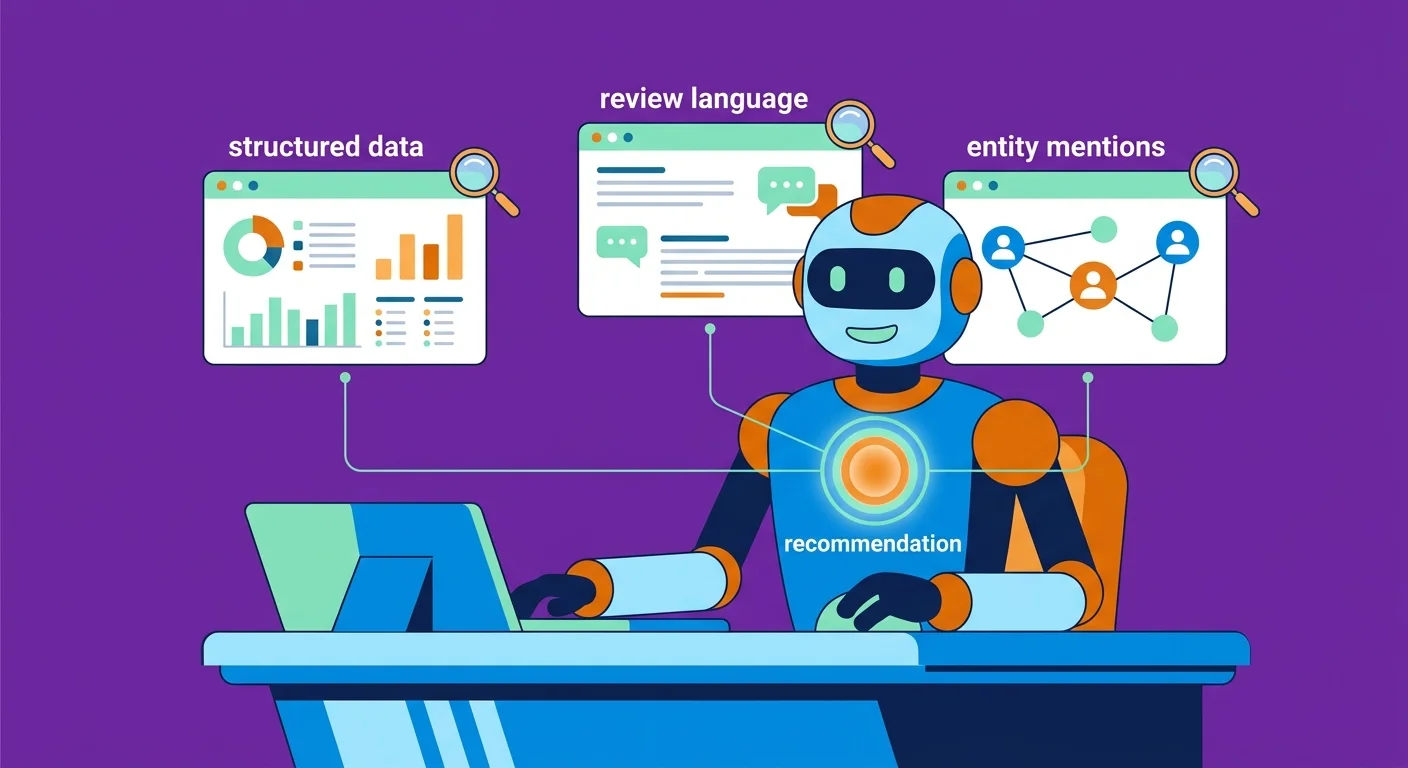
So if the old scorecard's gone, what takes its place? AI engines read a completely different stack of inputs, and not one of them looks like a ranking factor checklist.
They read structured data first, because structured markup is how a business tells a machine exactly what it is, instead of hoping the machine guesses right from prose. According to Google Search Central, structured data is what search systems use to understand a page's content and to pull information about the entities inside it, including the companies named in that markup.
That one mechanism is the foundation under everything else in this section. Without it, an AI engine is guessing at what a business is instead of reading a confirmed answer.
The Data Sources That Replace the Ranking Factor Checklist
Look at the actual inputs replacing that old checklist, and a pattern shows up fast. Answer Engine Optimization is the practice of structuring a business's information so AI models can parse it, trust it, and recommend it without guessing.
This isn't the same old tactics wearing a new label. It's a different discipline, built around machine comprehension instead of human scanning.
Here's the thing: a business can publish gorgeous, beautifully written pages and still flunk this test, because pretty prose was never the input the machine needed most. Structured markup, consistent entity data, and content an AI can extract cleanly now outweigh keyword-targeted articles ever did. Understanding what happened when one clinic's citation share came under threat shows just how directly this discipline decides whether an AI engine recommends a business, or quietly recommends someone else instead.
How Review Language Gets Parsed for Meaning, Not Just Stars
Now consider reviews, because AI engines don't read a star rating the way a person glances at one. They read the language inside the review, parsing sentiment at a level of detail a simple average score can never touch.
According to published research on sentiment analysis, GPT-4 caught subtle sentiment with more precision than simpler models, uniquely spotting mixed sentiment inside detailed customer reviews that those simpler models missed completely. A four-star review with one sharply negative sentence buried inside isn't read as a flat four stars anymore. It's read as mixed, nuanced, and reported that way to whoever the AI engine is answering.
Structured Data Is the Language AI Engines Trust
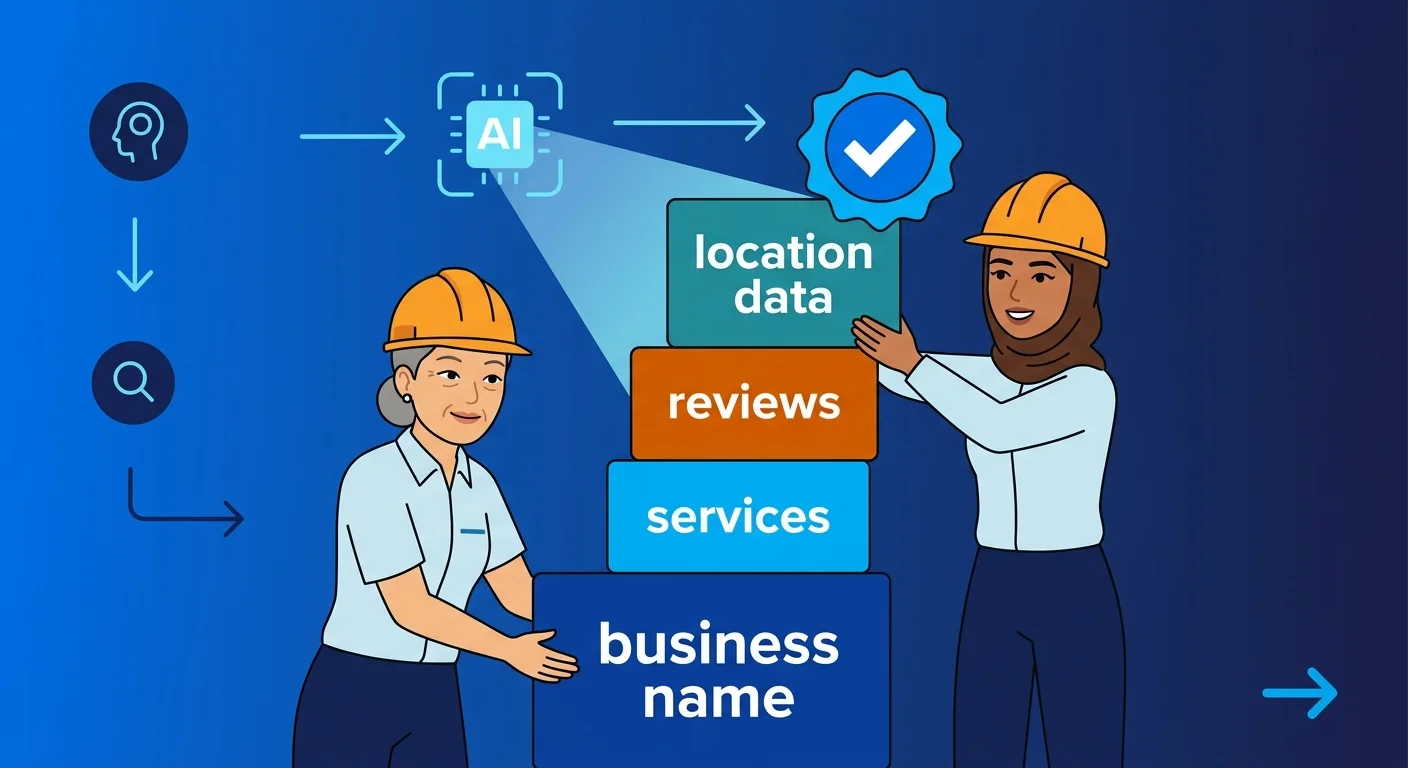
Narrow that list far enough and one input sits under all the rest. Structured data. It's the one thing a business actually controls.
Reviews ride on your customers. Directory consistency rides on third-party platforms. Structured data rides on nothing but the business publishing it right.
So that's why this section treats it as the single most controllable lever inside the Defensive Authority Moat. Everything else on the list gets nudged from the outside. This one you write yourself.
Why Schema Markup Is No Longer an Optional Add-On
Here's the thing: schema markup used to be a technical afterthought, the bit a developer bolted on at the end. That framing's dead.
Schema is the plain vocabulary a business uses to tell an AI engine exactly what it is, where it works, and how its identity ties together across every mention of it online. Skip that vocabulary and the AI is left guessing meaning out of loose prose. And guessing is where the ambiguity creeps in.
A business that skips structured markup isn't playing it safe. It's handing an AI engine a harder, riskier guess, and a business already fending off aggressive competitor spamming of its AI citations can't afford to make that guess any easier to win for someone else.
The Difference Between Being Findable and Being Citable
So here's the distinction that matters most. Findable and citable aren't the same win, even though local optimization has treated them like twins for years.
A findable business turns up when somebody searches for it by name. A citable business gets named inside an answer nobody asked about it by name, because its structured data made that recommendation safe for the AI engine to make.
Where Local TRADITIONAL SEARCH OPTIMIZATION Tactics Quietly Become Liabilities
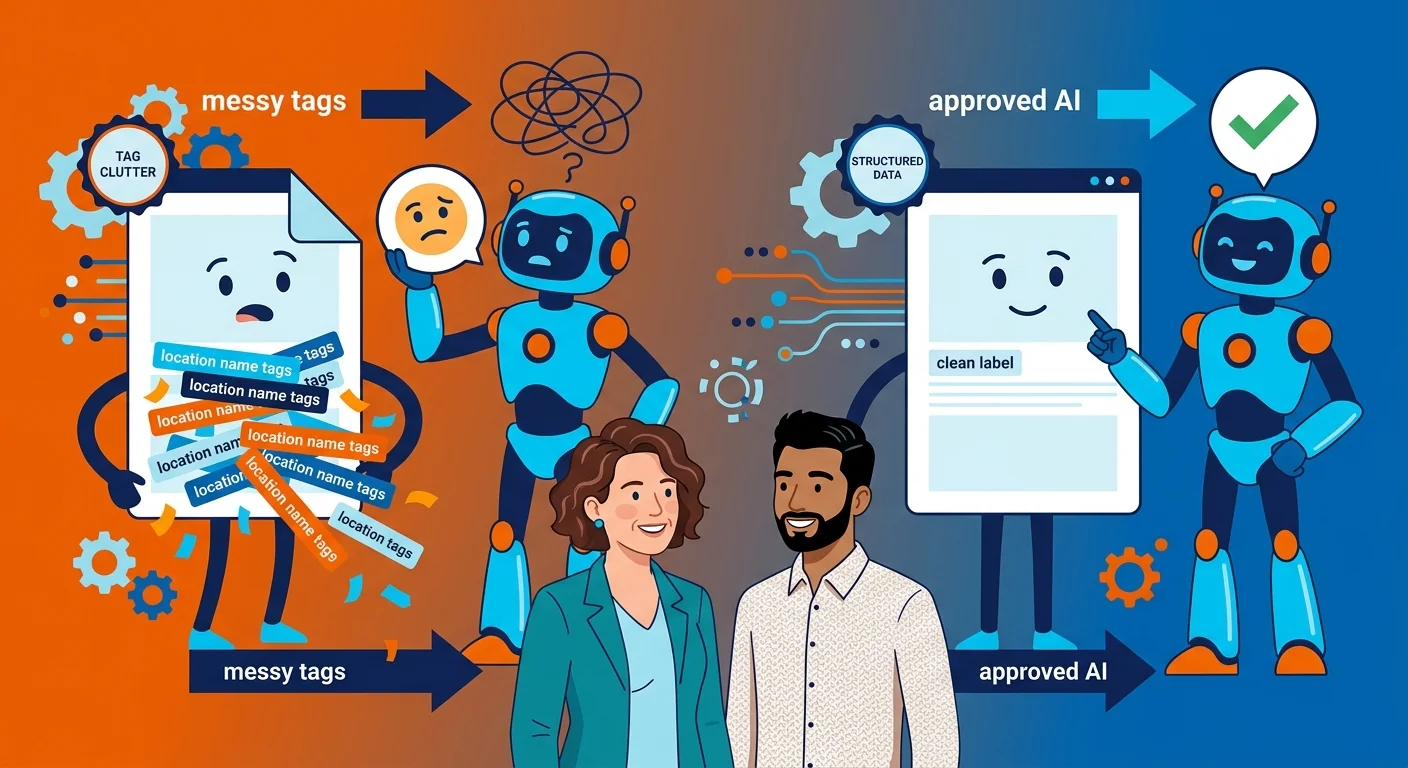
Findable versus citable isn't some abstract split. It shows up right there in the tactics still crowding most local checklists, and a handful of them have quietly flipped from asset to liability.
Nobody updated the playbook when the shift hit. So businesses keep running the old moves with full confidence, never realizing the same move now reads as ambiguity to the system deciding whether they get recommended.
Many of the tactics that defined local optimization, like keyword-stuffing location pages, are now liabilities that create ambiguity for AI models. Sit with that one for a second. It flips decades of accepted practice into its exact opposite.
Why Keyword Stuffed Location Pages Backfire on AI Models
Here's the problem. A keyword-stuffed location page was built for a crawler counting how often a term shows up, not a model trying to work out what a business actually is.
Cramming a city name in eleven times doesn't make your identity clearer to an AI engine. It muddies it, because now the model's parsing unnatural repetition instead of pulling one clean, confirmed fact about where you operate.
Here's the thing: ambiguity kills citation. An AI engine that can't confidently resolve what a page is describing just declines to cite it, and moves on to a competitor whose page reads like a plain statement instead of a keyword exercise.
The Problem With Chasing Directory Volume Over Data Accuracy
Directory volume sells the same false promise. Landing on forty directories feels like progress, and for years it actually counted as one.
But volume without accuracy is worse than no volume at all. Forty listings with even tiny mismatches in name, address, or phone data hand an AI engine forty conflicting versions of the same business, and those reconciliation failures don't break in your favor.
So the question was never how many directories list you. It was always whether every last one of them says the exact same thing, because a machine reading conflicting data has no reason to trust any of it enough to recommend the business behind it.
The One Identity Problem That Breaks Every AI Recommendation
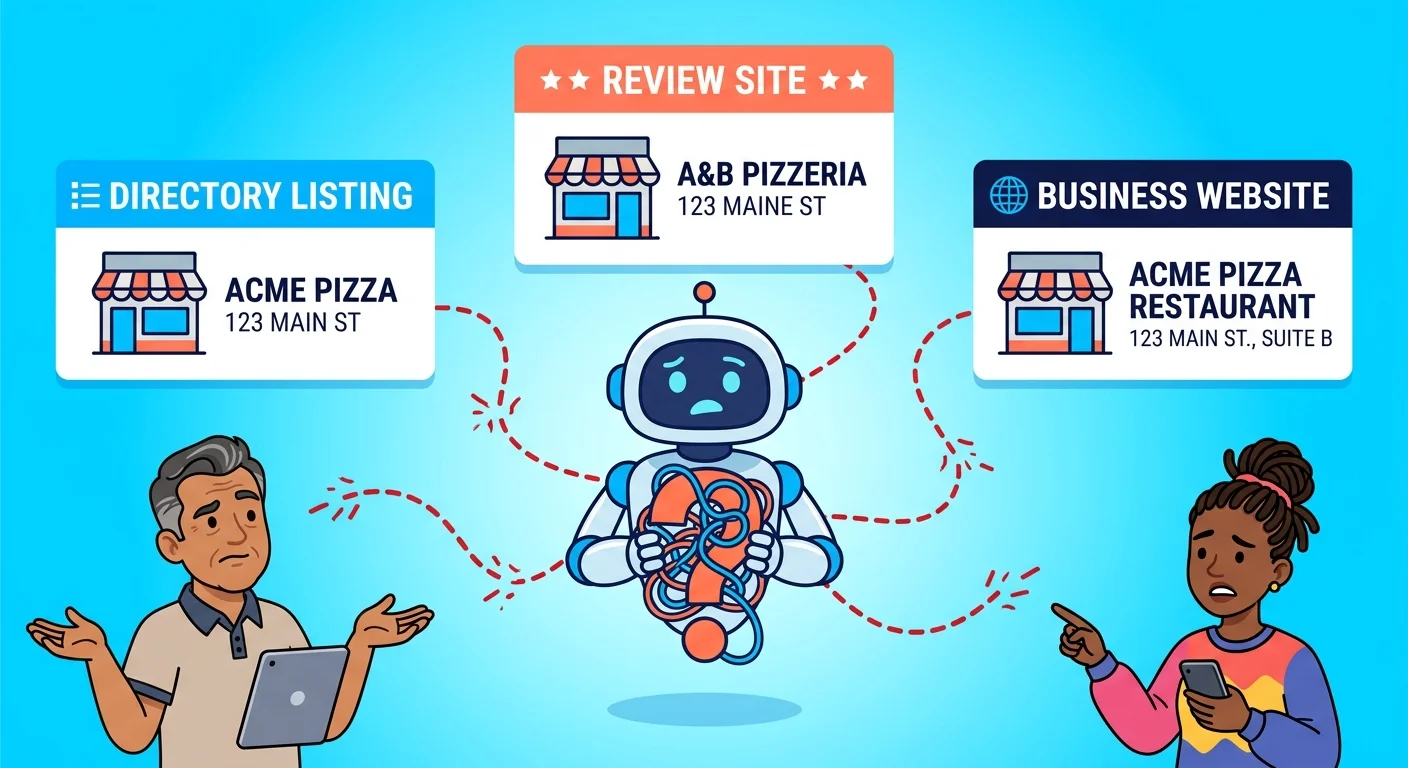
So strip every tactic away and one structural failure sits under all of them. A business's identity is fractured across the internet, and no pile of directory listings or keyword-targeted articles patches a fracture at the source.
Entity consistency is the term that matters here, and it means something tighter than most local checklists assume. It isn't about a name spelled the same way on ten pages.
It's about whether every mention of a business, wherever it lives, resolves to one single machine-readable identity. Miss that, and an AI engine has nothing coherent to recommend, no matter how many listings pile up.
| Signal | Legacy Local Approach | Entity Consistency Approach |
|---|---|---|
| Business Name | Spelled differently across directories, abbreviated or shortened depending on the platform | Written identically everywhere, down to punctuation and suffix, with zero variation across sources |
| Address Format | Suite numbers dropped or reordered depending on which directory a listing sits on | Formatted the same way on every mention, so no reconciliation guesswork is ever required |
| Phone Number | Tracked separately by campaign or directory, producing several numbers tied to one business | One number bound to the entity everywhere, removing any ambiguity about which line is authoritative |
| Descriptive Language | Rewritten per listing to fit each directory's tone, creating inconsistent self-description | Standardized phrasing that describes the business the same way across every source it appears in |
| Underlying Goal | Maximizing directory volume and keyword-targeted articles regardless of consistency | Collapsing every scattered mention into a single machine-readable identity an AI engine can trust |
Why Fragmented Business Data Confuses Every AI Model You Meet
Here's the thing: an older crawler could tolerate a shocking amount of mess and still rank a business on keywords. A slightly different phone number here, a shortened name there, a missing suite number somewhere else — none of it mattered much, because the crawler was matching terms, not resolving identity.
AI engines don't work that way. They lean on Named Entity Recognition to bind every mention of a business across every source into one underlying entity, and according to aggregated identity resolution research, that binding either succeeds cleanly or fails outright.
There's no partial credit in between. If the binding fails, the AI engine isn't looking at one business with a few messy data points. It's looking at what seems like several different businesses, with no reliable way to know they're the same one.
What an Entity Actually Looks Like When AI Can Trust It
So what does a trustworthy entity actually look like from the machine's side? It looks boring, honestly. Same name, same address format, same phone number, same descriptive language, repeated identically everywhere the business shows up.
That sameness isn't a stylistic preference. It's the raw material an AI engine needs to collapse every scattered mention back into one confirmed identity — the precondition for being cited at all, let alone cited as the answer.
This Isn't for Businesses Chasing a Quick Ranking Bump

This isn't for businesses chasing a quick bump in the classic ten blue links.
Want a fast placement to screenshot and forget? The Defensive Authority Moat is the wrong project entirely.
Here's the thing: entity consistency and structured markup don't produce a visible leaderboard the way the map pack once did. That scorecard that used to sit in plain view isn't the instrument that counts anymore, and getting cited as the source of truth inside an AI answer never announces itself with a number climbing on a dashboard.
So a business owner who needs that dashboard, who needs to watch a position tick upward week over week, is going to find this approach unsatisfying by design.
Reading the Signals That Tell You Which Direction to Build In
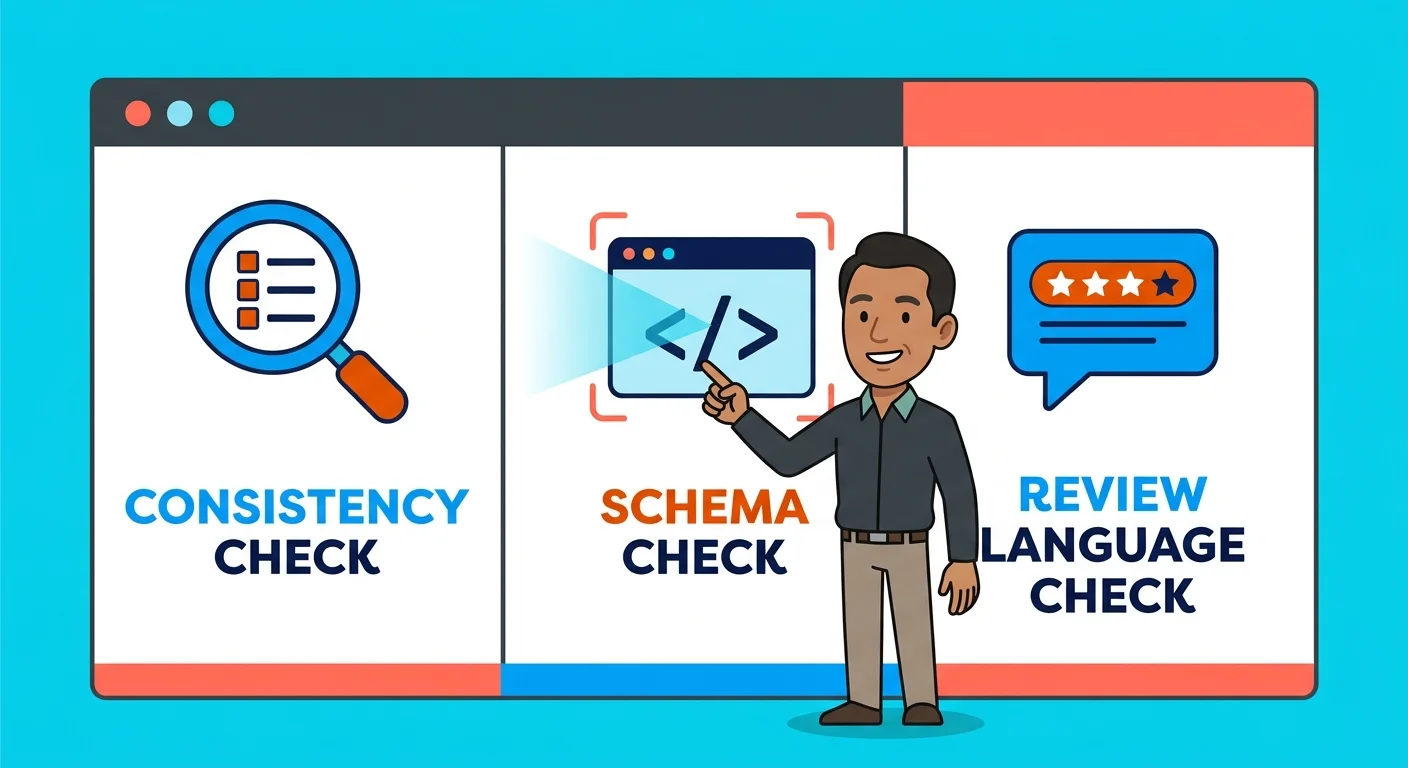
So how does a business know which side of that line it's on before an AI engine ever cites it or skips it? Not from the old scorecard. That scorecard quit measuring the thing that decides it.
Reading the signals means auditing the raw material an AI engine actually eats. Not a position number, not a star average. The underlying data itself.
| Audit Step | What It Reveals | Priority Level |
|---|---|---|
| Name, Address, Phone Cross-Check | Whether every mention of the business resolves to one identity or reads as several conflicting ones | Foundational — nothing else stabilizes until this resolves cleanly |
| Structured Markup Presence Check | Whether the site publishes any explicit machine-readable vocabulary at all, or leaves an AI engine to infer everything | High — an absence here forces inference on every other signal |
| Markup-to-Page Accuracy Check | Whether the structured data actually matches the plain-language content a visitor reads on the page | High — contradiction here is worse than having no markup at all |
| Directory Language Consistency Check | Whether descriptive language about the business stays identical across every listing rather than drifting version to version | Medium — smaller fractures compound if left unaddressed |
| Location Page Readability Check | Whether location content reads as a clean statement of fact or as a keyword exercise built for an older crawler | Medium — a legacy tactic that quietly became a liability |
Sorting Signal From Noise in Your Current Local Data
Start with the plainest test there is. Pull up every place a business's name, address, and phone number show up across the internet, and lay them side by side.
Now hunt for the small inconsistencies that felt harmless for years. A dropped suite number, an abbreviated street type, a slightly different spelling of the name. Each one is a fracture an AI engine has to reconcile, and those reconciliations don't break in the business's favor.
Checking Whether Your Existing Schema Is Doing Any Work
Next, check whether structured markup even exists on the site, because plenty of sites carry none at all. That absence isn't a neutral gap.
Where markup does exist, check whether it actually matches what the page says in plain words, and whether it names the business the same way every other source does. Schema that contradicts the visible page content is worse than no schema. It hands an AI engine two competing versions of the same fact and no way to know which one to trust.
Frequently Asked Questions
So the audit's done and the pattern's clear. But a few sharp questions always survive that process, and they deserve straight answers, not hedged ones.
Does my Google Business Profile still matter for AI search?
Yes, and it matters more than ever. A Google Business Profile is one of the cleanest sources an AI engine has for confirming your core facts. That makes accuracy there non-negotiable, not optional.
If I place in the local map pack, won't I automatically be cited in AI answers?
No, and that assumption is the exact trap this article covers. Map pack placement answers a different question than the one an AI engine asks. It never guarantees a citation on its own.
What's the difference between Answer Engine Optimization and traditional local TRADITIONAL SEARCH OPTIMIZATION?
Traditional local optimization chased eyeballs in a visual interface built for human clicking. Structuring a business's data so AI models can parse, trust, and recommend it is a different project entirely, aimed at machines.
Can AI recommend my business even if my site visits go down?
Yes. Citation depends on entity consistency and structured data. It doesn't depend on how many people are clicking through to your site that week.
How does structured data protect my local citations?
Structured data hands an AI engine a confirmed, machine-readable version of your facts instead of forcing it to guess from page text. That confirmed version is what makes citation safe for the engine to grant.
Will updating my name, address, and phone consistency across directories be enough to secure my AI visibility?
No, not by itself. Consistent name, address, and phone data closes one fracture point. But it says nothing about whether structured markup exists, or whether it matches what the page actually claims.
The Bottom Line
So the map pack was never the finish line. It was a scorecard built for human eyes, one where three blue-bordered listings told a person where to click.
That scorecard still sits right there in plain view. But it stopped being the instrument that keeps score.
AI engines run a different scorecard, one with no leaderboard to screenshot. Entity consistency, structured markup, and clean identity resolution are the inputs now. The Defensive Authority Moat is the only scorecard that still counts — because it measures what the machine reads, not what a human used to see.
Chase the old scorecard and you're polishing an interface that's quietly losing relevance. Build entity consistency and structured data instead, and you're feeding the one an AI engine actually consults before it recommends anyone.
Look, that's the choice sitting under every tactic covered here. The businesses that get this shift now are the ones that get named later, while everyone else keeps buffing a dashboard nobody's reading anymore.
Find out where your own structured data and entity signals actually stand with the iTech Valet AI visibility check.