
What Counts as an AI Recommendation Displacement Attempt

Here's the assumption that gets businesses hurt: whatever caught spam in the classic ten blue links will catch this too. It won't. AI recommendation displacement is a sophisticated attack where competitors manipulate the information ecosystem to make AI models recommend them over you, and the tools built to police keyword position tracking were never designed to see it coming.
So what actually counts as displacement? It's not a single bad review or a slow month of site visits. It's a deliberate campaign to change what a generative engine believes about your business, run through the sources that model trusts instead of the surfaces you control.
The mechanism is the tell. Unlike traditional search optimization spam, which went after ranking algorithms, these new attacks go after the AI's knowledge of your entity. And that distinction matters, because you can build a moat around a page and still get displaced inside an answer you never see, which is exactly the failure mode explored in a defensive authority moat strategy for generative search.
That reframes the target completely. Attackers aren't fighting for a slot on a results page anymore. They're fighting to become the fact a model reaches for first, and every unmonitored gap in your AI Citation Profile is an opening for that fight to happen quietly.
Why Watching Your Google Ranking Won't Catch This
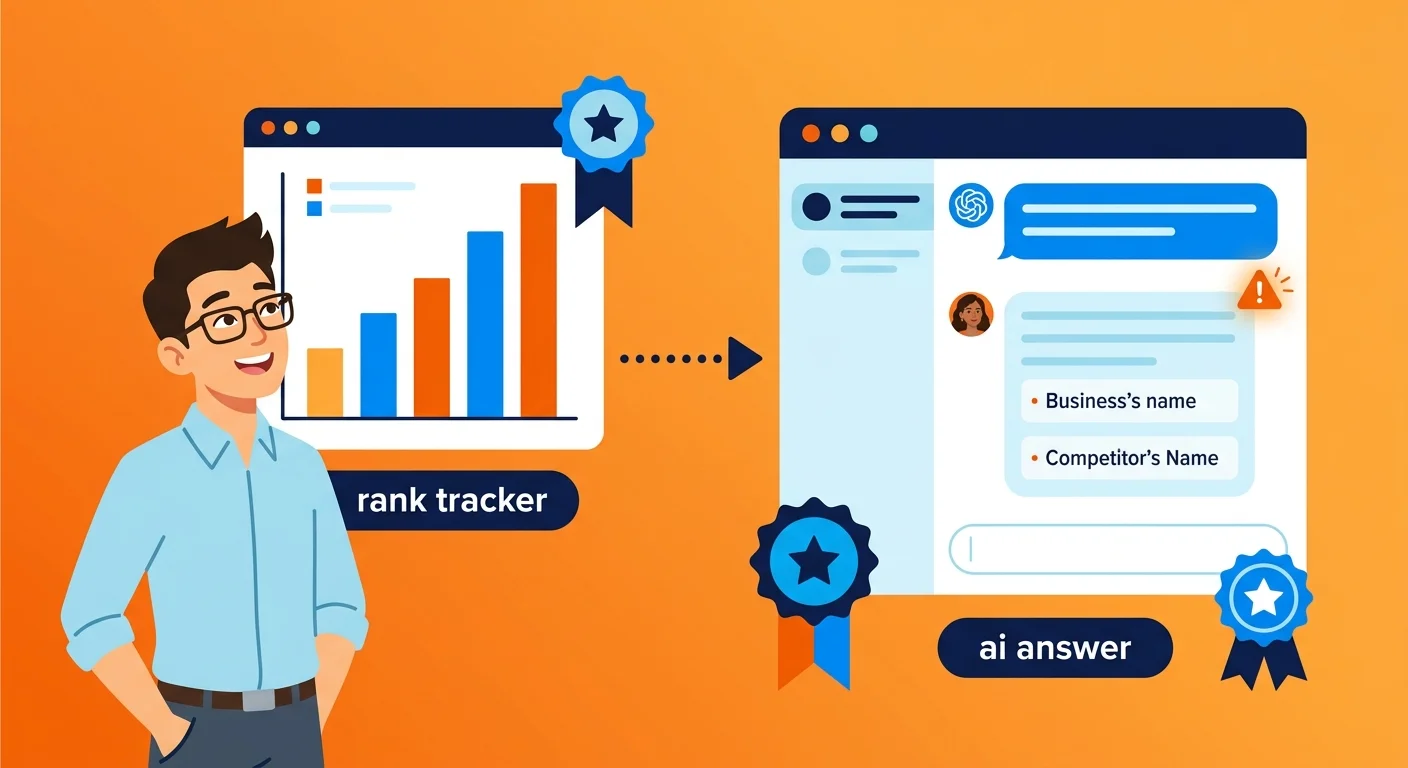
Rank tracking was built to answer one question: where does this page sit in the classic ten blue links? Trouble is, that question no longer covers the surface where most answers get delivered now.
Here's the mismatch. A generative engine can name a competitor, botch a business's service area, or drop that business from a comparison entirely, and not one tracked keyword position moves an inch.
So a dashboard full of green arrows tells a business nothing about what an AI model is actually saying about it. The two systems aren't even measuring the same event.
That gap is exactly what makes displacement viable in the first place. It's why a business needs to understand how competitors reverse-engineer your AI citation profile in 2026 before it assumes its existing tools would ever catch the attempt.
The Problem With Rank-Tracking as an Early Warning System
Rank-tracking software watches a results page refresh. It was never built to watch a model's internal belief about an entity shift, because that belief has no page and no position number attached to it.
And this isn't some minor blind spot. Academic researchers have already pulled off poisoning attacks against low-rank recommendation models, building fake user profiles that target specific subsets of users or items while staying statistically indistinguishable from real rating behavior, a mechanism documented in published research data.
That same undetectability is the whole problem. If a manipulation technique is engineered to blend into a normal distribution of real signals, a tool built to flag ranking volatility has no reason to notice it.
Keyword position tracking answers where a page ranks. It can't answer what a model believes, and those two questions are no longer safe to conflate.
This Isn't for Businesses Chasing One-Time Fixes
This isn't for a business that wants to run one cleanup pass and call the problem solved. Preemptive monitoring is a standing discipline, not a project with an end date.
So if the plan is to check citations once after reading an article like this one and move on, that plan will fail. Displacement doesn't happen once. It recurs, quietly, against a moving baseline.
Look, a business chasing a single fix wants a finished task, and an AI Citation Profile doesn't hand one over. It's an ongoing balance that either strengthens or erodes depending on whether anyone's watching it.
Where Generative Engines Actually Pull Your Business Information From
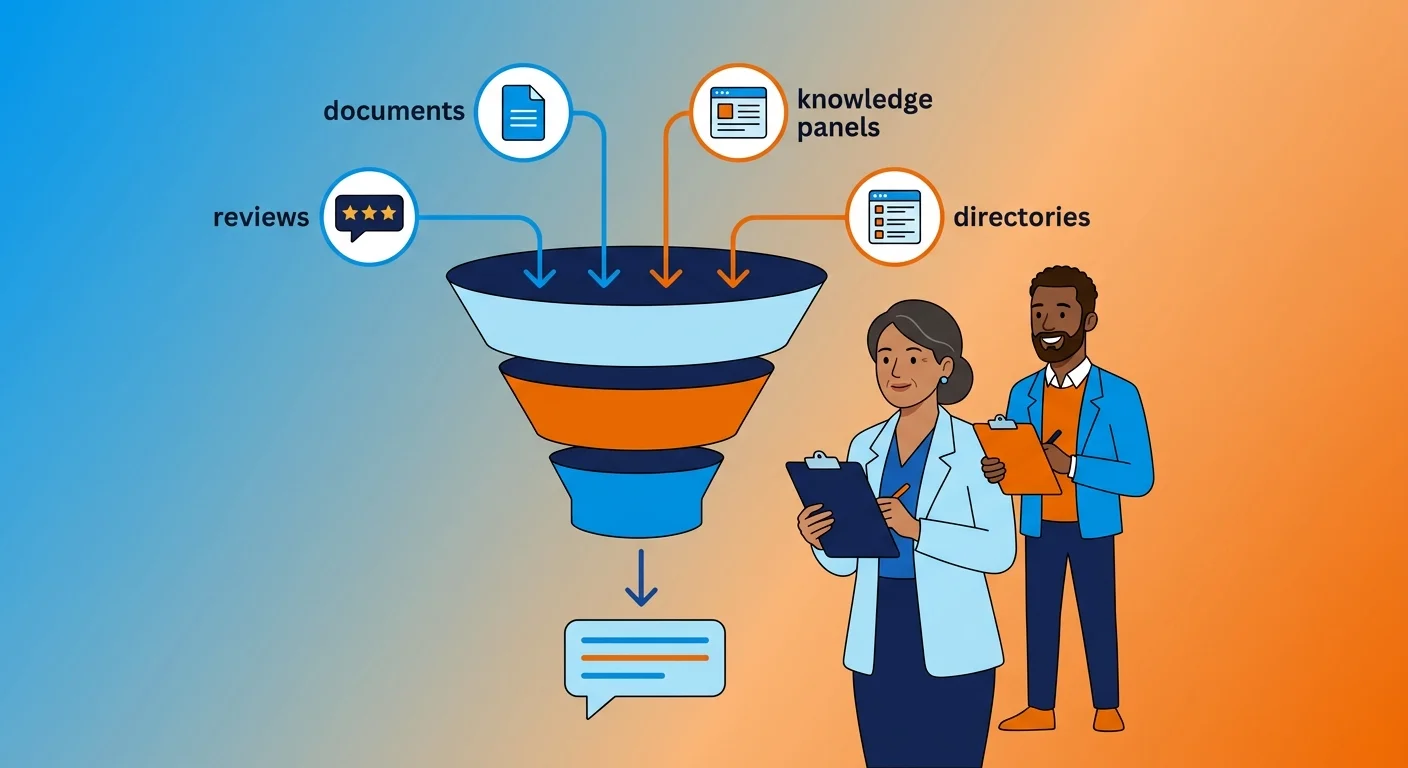
So where does a generative engine actually go to figure out what a business is? Not one database. It's a blended pull from structured data, indexed web content, third-party directories, and review platforms, weighted by how much the model trusts each one.
That blend is the real battlefield. Every source feeding it is a spot where an entity's AI Citation Profile gets reinforced or quietly rewritten, and most businesses have never once looked at the list.
Here's the counter-intuitive part. Slick, well-written web copy doesn't automatically earn more trust from a model than a sparse, well-structured data feed does.
| Source Type | What It Feeds AI Models | Attacker Vulnerability |
|---|---|---|
| Structured Data and Schema Markup | Machine-readable facts a model can lift directly, including business category, location, and service details | Low tolerance for ambiguity, but a business rarely audits it, so a quiet edit can sit uncorrected |
| Knowledge Panels and Verified Listings | An anchor point models treat as a confirmed identity record rather than a claim to weigh | Attackers target the underlying data feed rather than the panel itself, since the panel only mirrors it |
| Third-Party Directories and Licensed Data Partnerships | Cross-referenced confirmation that reinforces or contradicts what structured data already claims | Fragmented ownership across many directories means one stale or hijacked listing can outvote the rest |
| Crawled Web Pages and Prose Content | Context and framing layered around the factual anchors, not the facts themselves | Fluent copy can be manipulated for tone or sentiment without ever tripping a factual accuracy check |
| Review Platforms and User-Generated Content | A sentiment signal the model folds into how favorably it frames an entity | Coordinated or fabricated review activity can shift sentiment faster than any single source can be corrected |
The Data Sources Behind Every AI Answer
Generative engines lean on a mix of knowledge panels, structured markup, licensed data partnerships, and crawled pages to build what they say about an entity. And none of those sources carries equal weight.
Structured data and verified listings tend to anchor the hard facts, while crawled prose supplies the context and framing wrapped around them. That split matters, because context can drift even when the facts underneath it don't.
Here's where the counter-intuitive finding lands. Feeding webpage text into a language model's input generally makes it worse at entity recognition, which means authority is not the same thing as textual style, fluency, or narrative richness, a distinction laid out in arXiv.
That cuts straight against the instinct to fix a citation problem by publishing prettier web copy. A business can out-write a competitor and still lose the entity fight, because the model was never grading prose quality in the first place, which is exactly why defending your AI citations against aggressive competitor spamming has to start with the structured sources, not the sentences.
How Slow-Moving AI Knowledge Creates a Window for Attackers
Now consider the lag baked into every one of those sources. A generative engine doesn't see a change the second it happens. It sees the change once its training or retrieval catches up, and that gap is where displacement gets room to work.
Researchers running LLMLagBench measured that gap head-on, comparing when a model's knowledge cutoff was actually detectable against when its developer said it was. The median discrepancy came out to 1 to 2 months, a window documented in published industry reporting.
That window isn't a rounding error. It's a stretch of time where a model's stated grasp of the world and its real training data flat-out disagree, and nobody watching the public declaration alone would ever know it.
For an entity's citation profile, that lag cuts both ways. A correction pushed into a trusted source won't show in the model's answers right away, and neither will an attacker's manipulation, which means businesses that only check after visibility has already shifted are always reading a stale picture.
How the Trust Bias Baked Into AI Models Changes What You Must Reinforce
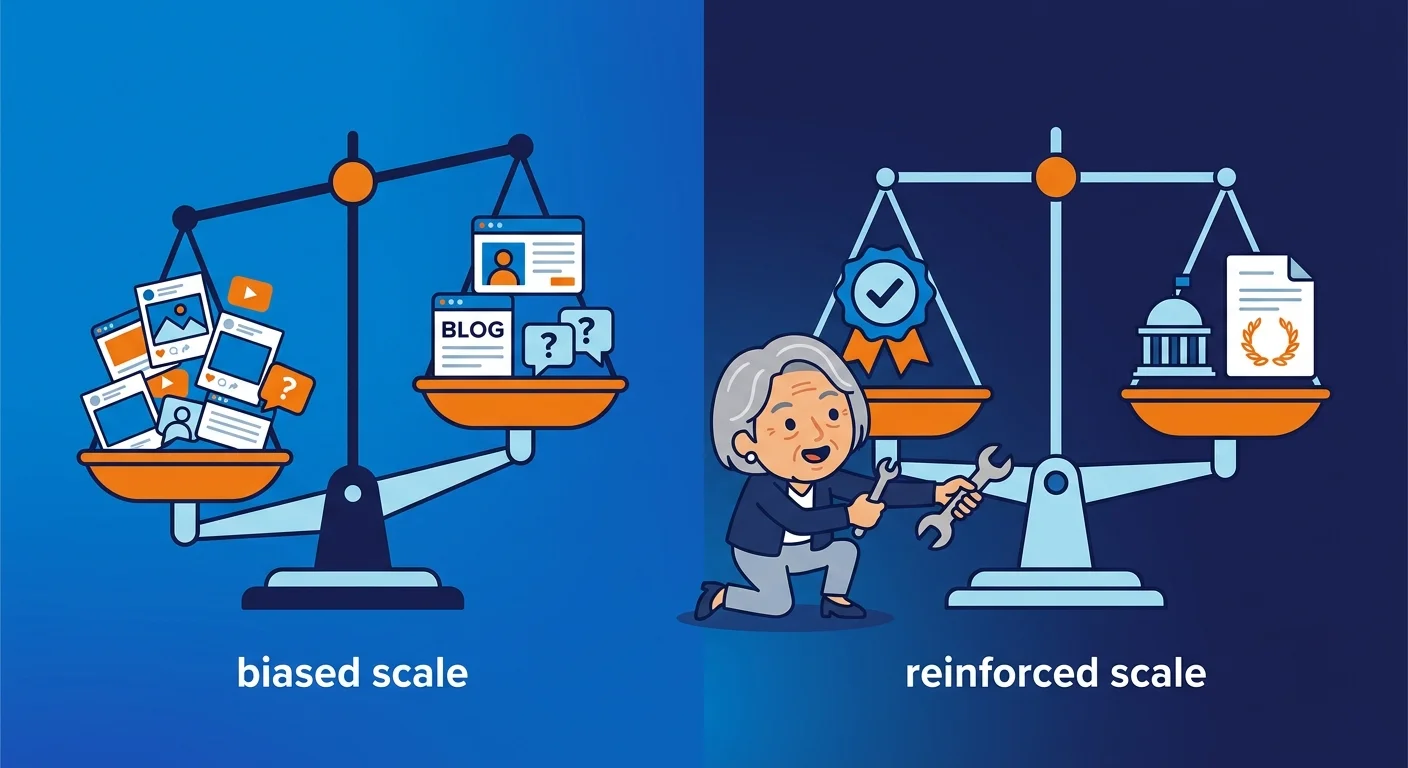
That lag exposes a second weakness, and this one lives inside the model, not inside the timing of its updates. Trust bias isn't a bug that flares up now and then. It's a default setting.
Here's the finding that matters. Every large language model leans liberal in how it rates the credibility of news sources across the political spectrum, which means the starting point for judging a source is already skewed before a competitor spams a single thing.
So an entity's citation profile isn't being graded by a neutral referee. It's being graded by a model that already tilts one way on source credibility, and an attacker who knows that tilt can hand it exactly the sources it's primed to trust.
| Model Behavior | What It Means for Your Entity | Defensive Response |
|---|---|---|
| Default liberal bias in source credibility ratings | An entity's trustworthiness is judged against a skewed baseline before any competitor spamming even begins | Audit which sources a model already favors and make sure the entity's own citations sit inside that favored set |
| Larger models refuse to rate a source when information is thin | Sparse or absent presence in trusted sources reads as an unanswerable question, not a neutral gap | Fill structured, verifiable listings early so the entity is never the reason the model has nothing to say |
| Smaller models hallucinate a rating rather than admit uncertainty | A thin footprint can be filled in by a guess that becomes part of what the model repeats about the entity | Treat every low-authority mention as a liability and displace it with verified, structured alternatives |
| Credibility judgments vary by model rather than converging on one standard | Checking a single model gives a false sense of a stable, agreed-upon reputation | Monitor the entity's AI Citation Profile across multiple models, not just the most popular one |
Quantifying Which Sources AI Engines Actually Trust
Model size changes the failure mode, not the bias underneath it. Bigger models tend to refuse a rating flat-out when information is thin. Smaller ones just hallucinate a rating rather than admit they don't know.
And that split matters for any business leaning on a single model to police its own citation profile. Ask a smaller model about an obscure source and it won't say it's stumped. It'll guess, and that guess becomes part of what it tells the next person who asks about the entity.
This is the exact trust bias researchers found when they studied how language models rate outlet credibility, work you can read through the arXiv preprint server. The businesses least exposed to it are the ones whose own history is documented tightly, a discipline examined head-on in how a medical clinic's AI recommendation share was defended in 2026.
Building a Monitoring System That Catches Displacement Before It Spreads

So what does a monitoring system actually look like? Not one tool and not one check, but a layered practice built to catch drift before it compounds into displacement.
Preemptive monitoring means tracking how AI engines see and cite a business, on purpose, so a weakness surfaces while it's still cheap to fix. That tracking runs on a schedule, not on a hunch.
Here's the uncomfortable part. Most businesses are still fighting the last war, watching keyword position tracking climb while their real authority inside generative answers gets quietly dismantled. A monitoring system exists to close that exact gap.
| Monitoring Task | Frequency | What It Catches |
|---|---|---|
| Weekly generative engine query | Weekly | Wrong entity facts, misstated service claims, or a competitor appearing in the comparison position where the entity should be |
| Structured data and listing audit | Monthly | Stale addresses, outdated service lists, and inconsistent details across directories that give a model room to guess |
| Review platform and sentiment scan | Monthly | Coordinated negative content or sentiment shifts feeding a model's read on the entity before it hardens into a repeated answer |
| Cross-source consistency check | Monthly | Drift between how the entity's name, credentials, and service area read across knowledge panels, directories, and web copy |
| Full citation profile reinforcement pass | Ongoing, triggered by findings above | Accumulated small gaps across structured sources that, left alone, compound into a displaced or distorted AI Citation Profile |
What Belongs on Your Weekly and Monthly Monitoring Checklist
A weekly check should be light enough to actually happen. Ask the same few generative engines what a prospective customer would ask, then read the answer for accuracy, not tone.
Look for the entity's name, its service claims, and where it lands against competitors. Any answer that gets one of those wrong is a signal to log, not to shrug off.
A monthly pass goes deeper. Pull the structured data feeds, the directory listings, and the review platforms feeding a model's understanding, and check each one against what's actually true today.
That monthly pass is where drift gets caught before it hardens into a false fact a model repeats with confidence. A stale address or an outdated service list left alone for months is exactly the gap an attacker's manipulation settles into.
Reinforcing Entity Authority Where AI Engines Actually Look
So the checklist catches a gap. Reinforcement is the next move, and it does not mean publishing more prose.
It means feeding the sources a model already trusts with information that's current, consistent, and verifiable everywhere it shows up. Consistency is the load-bearing word here.
A business whose name, service area, and credentials read identically across every trusted source gives a model fewer places to guess. One whose details drift from listing to listing hands an attacker room to fill in the blanks.
This isn't a one-time cleanup. It's closer to maintaining a credit score than filing a report — the AI Citation Profile moves whenever a trusted source updates, and reinforcement has to move with it.
Structured Data and Knowledge Panels as Your First Line of Defense
Structured data and knowledge panels sit closest to the front of that defense. A model treats them as anchored fact, not as narrative it gets to interpret.
And that's a deliberate choice on the model's side, not an accident. Schema markup, verified business listings, and licensed data feeds carry an authority that ordinary web prose simply doesn't.
So an entity's first line of defense isn't the blog. It's whether the structured record of that entity is complete, accurate, and repeated consistently across every source a model pulls from.
Get that layer wrong and every other reinforcement effort is built on sand. Get it right, and you give a generative engine the fewest possible reasons to reach for someone else's answer instead.
Frequently Asked Questions
A handful of situational questions come up every single time this topic gets raised. Here are the straight answers, no hedging.
How can you tell the difference between natural recommendation changes and a deliberate displacement attack?
Natural drift moves slow and touches one detail at a time. A deliberate attack looks different: a cluster of coordinated changes across several sources inside a tight window. That's the signature to watch for.
What are the first steps to take if you suspect your business is being targeted by AI recommendation spam?
Pull the structured data and directory listings first, because a model treats those as anchored fact. Fix any inconsistency there before you touch anything else. Then re-run the same questions across the same engines to confirm the fix actually landed.
Does responding to negative reviews help defend against AI recommendation displacement?
Reviews matter, but they're context, not the anchor. Responding well helps sentiment. It does nothing for a wrong service claim or a stale listing sitting in the structured layer a model actually trusts.
How often should a business monitor its AI-generated recommendations and citations?
Run the light prompt check weekly and the deeper structured-data pass monthly. Anything slower leaves too much room for drift to harden into a fact a model repeats with confidence.
Can traditional inbound-link tactics actually make a business more vulnerable to AI displacement attacks?
Yes. Chasing acquiring inbound links without vetting the sources behind them plants inconsistent, low-trust signals right where a model already leans. That makes the entity easier to displace, not harder.
Where This Leaves You
Here's the whole point. Visibility in generative search was never about placing in the classic ten blue links. It's about being cited as the answer, and that citation either holds or it doesn't.
So treat the AI Citation Profile the way a lender treats a credit score. It's never finished. It moves every time a trusted source updates, and it moves whether anyone's watching or not.
That's the shift this whole discipline asks a business to make. Stop treating citation health as a one-time cleanup and start treating it as a standing watch, checked on a schedule instead of a hunch. iTech Valet built preemptive monitoring around exactly that watch, and the fastest way to see where an entity's profile stands right now is to start an AI visibility check today.