
Why Your AI Citation Profile Is Already an Open Book
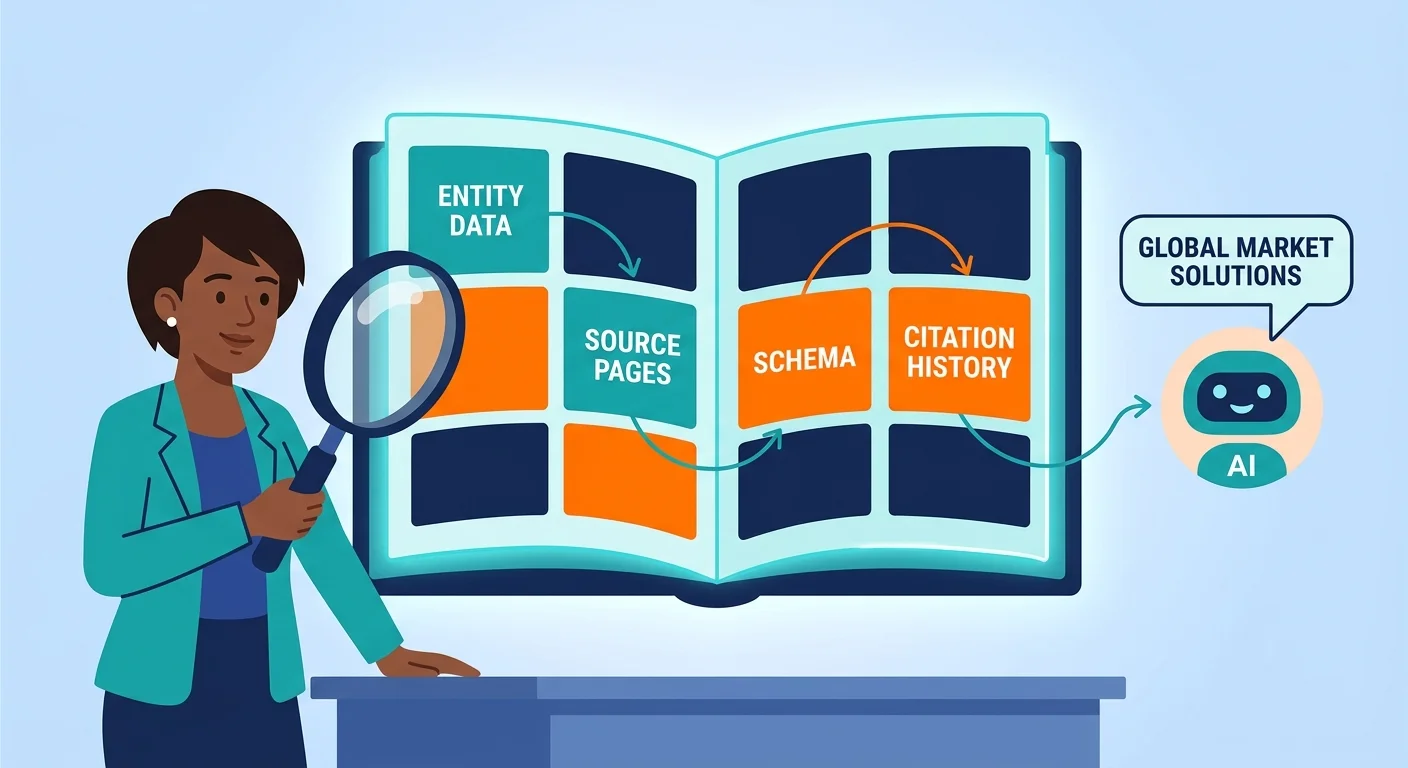
Here's the thing about an AI citation profile: it was never built to be private. It's the full footprint of how, where, and why generative AI models point to a brand and its content as a trusted source. Treat that footprint as hidden and you've already made the first broken bet a competitor will cash in on.
So what raised the stakes? In the world of Answer Engine Optimization, visibility isn't about a list of blue links anymore. It's about being the cited authority inside an AI-generated answer, and anyone who asks the right question can pull that citation back up.
And that difference matters, because a citation isn't a badge you earn once and forget. It's a live position, re-derived every single time a model answers a related prompt. A brand that never engineered that position for resilience is basically publishing its own blueprint and praying nobody reads it too closely.
Look, this is exactly why a defensive authority moat strategy for AI search exists as its own discipline instead of a bolt-on to old habits. A readable blueprint was never the problem. The problem is a blueprint with joints a competitor can flag as weak on first inspection.
The Toolkits Competitors Use to Pull Your Citation Data Apart
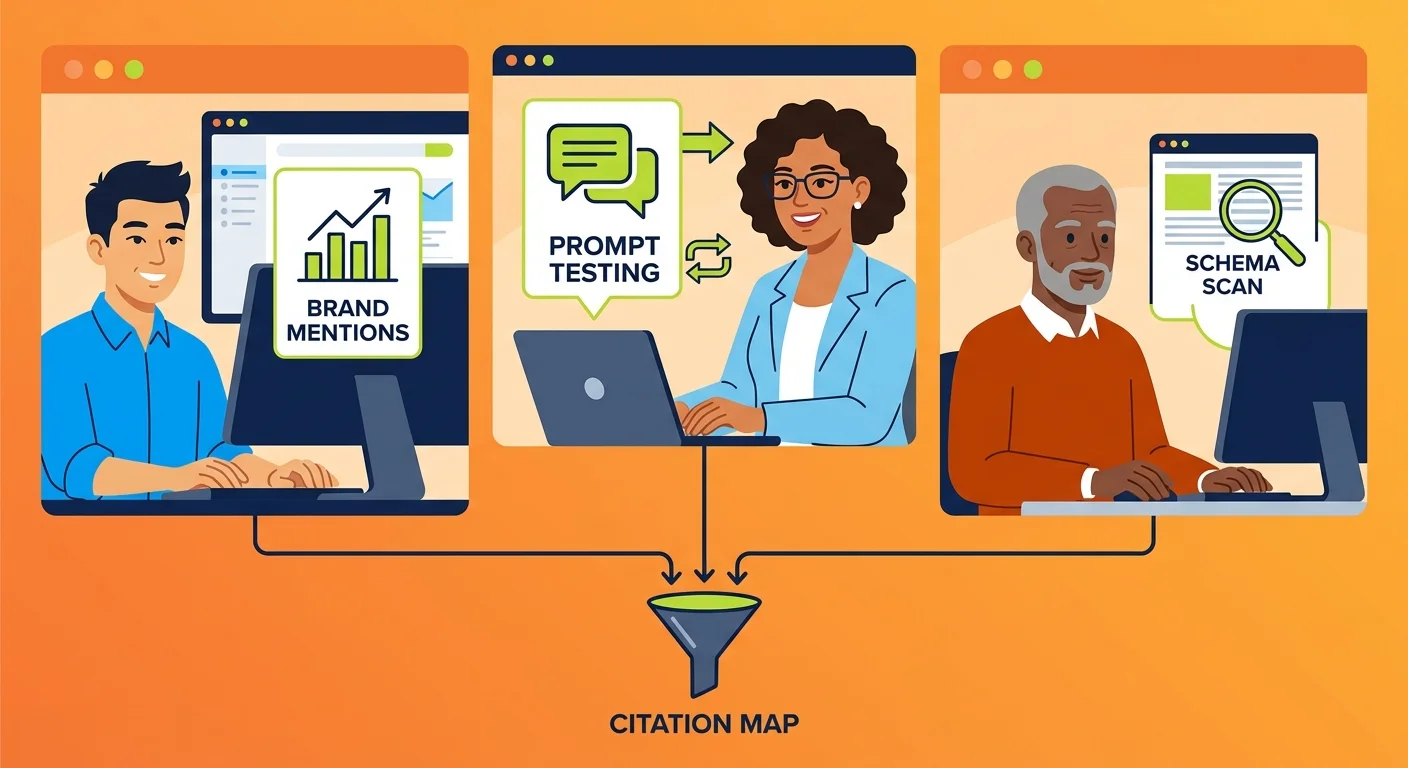
Now the blueprint image gets literal. Nobody reads an AI citation profile by hand anymore. Competitors run purpose-built toolkits that query, capture, and compare what generative platforms say about a brand.
These tools do the same probing at a scale no human analyst could touch. They fire hundreds of prompts across multiple engines, log every cited source, and flag which pages and entities keep coming back.
Then that data gets stacked against a challenger's own footprint. What comes out is a map of exactly where an incumbent is strong, where it's thin, and where a competitor's content could realistically wedge in.
| Method | What It Reveals | Data Source Type |
|---|---|---|
| Automated Citation Tracking | Which domains and pages get pulled into answers across a fixed prompt set, and how that recurrence shifts over time | Direct queries against generative platforms, logged and charted at scale |
| Cross-Brand Comparison Mapping | Where an incumbent's citation footprint is strong, where it is thin, and where a challenger's content could realistically wedge in | Side-by-side output comparison between a target brand's footprint and a competitor's own |
| Manual Prompt Probing | The underlying preference logic a model applies when choosing which entity earns the citation for a given topic | Repeated human-driven querying using varied phrasings of the same question |
| Structured Data and Schema Analysis | Whether machine-readable markup and content formatting correlate with a page's odds of being cited | Direct inspection of a target's published markup and page structure |
| Third-Party Ecosystem Mapping | How review platforms, comparison content, and other external sources feed into a model's retrieval and training layers | Indirect signals gathered from platforms outside the target's own website |
Tracking Platforms That Map Where AI Engines Point
Some platforms don't write anything at all. They just track, monitoring which domains get pulled into AI answers across a set list of prompts, then charting how those citations move week over week.
That charting is where volatility stops being a theory and becomes something a competitor can see. Across eight major AI platforms, roughly 17% of prompts returned a different set of recommended brands than they did the day before, based on a 90-day study of citation behavior.
A number like that tells a competitor plenty. It confirms most citation profiles are already moving targets, so a brand that never locked its own position down is easier to displace than it thinks. That exact volatility pattern is what preemptive monitoring built for detecting displacement attempts is built to catch before a competitor gets there first.
Prompt Probing as a Reverse-Engineering Technique
But automated tracking isn't the whole game. There's a more hands-on technique, where analysts probe a model directly, asking the same question a dozen different ways to see which sources it keeps circling back to.
This is prompt probing, and it surfaces something no tracking dashboard can. It exposes the underlying preference logic a model runs when it decides which entity earns the citation for a given topic.
Here's the discipline behind it. Reverse-engineering a competitor's citation profile is now a core practice for sophisticated teams, well past the old habit of comparing keyword gaps, according to published industry reporting on how these citation patterns hold up under repeated testing.
Why Chasing Citation Counts Instead of Structure Fails
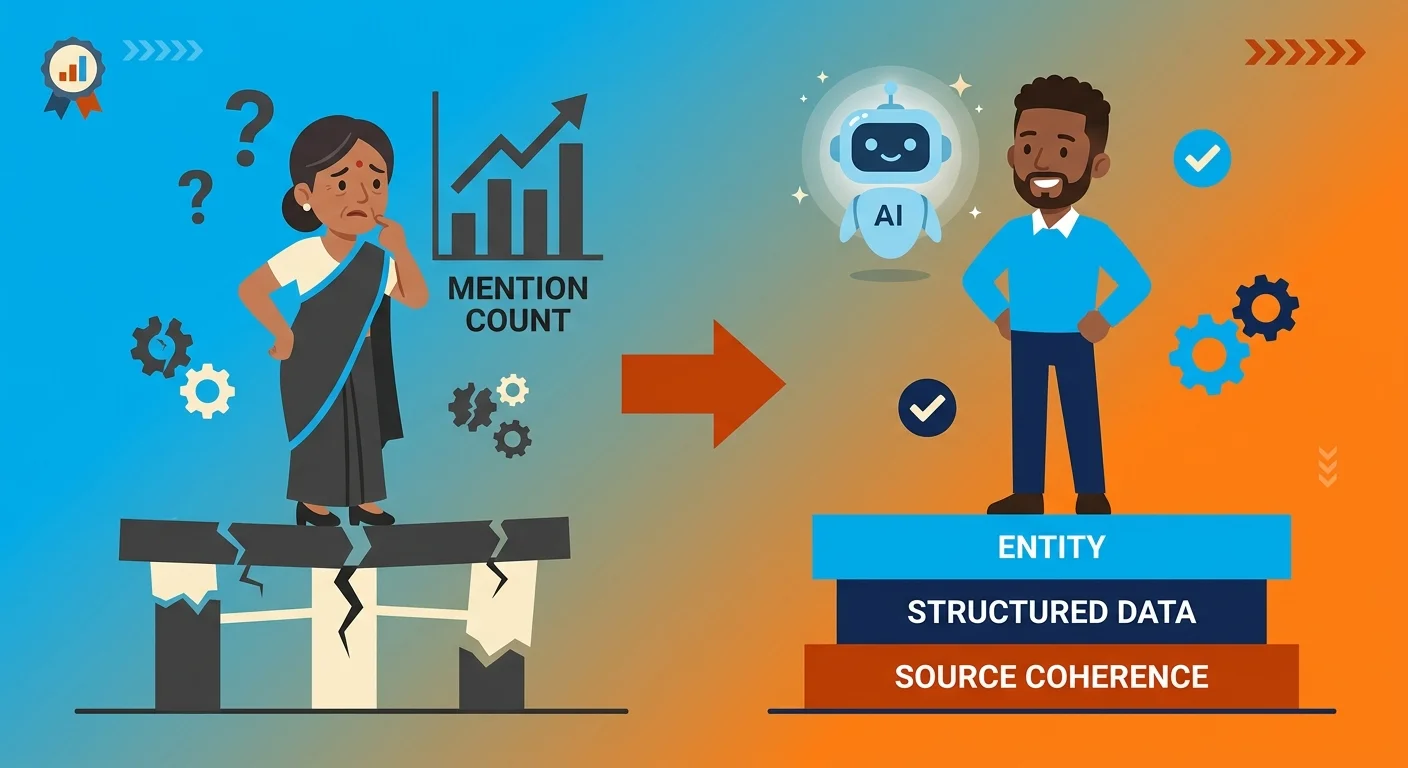
So why does the industry keep counting mentions instead of digging into structure? Because a citation count is easy to screenshot and easy to hand up the chain. A structural audit takes real work.
That habit misreads what a competitor is actually up to. A competitor isn't tallying how many times a brand shows up. They're mapping which specific sources hold the citation, and why those sources qualified in the first place.
Chasing the count mistakes the symptom for the cause. The real vulnerability lives underneath the number, in whether the sourcing behind each citation survives a hard look, which is exactly the gap a defensive citation strategy against competitor spam tactics is built to close.
Why Counting Mentions Misses the Point
A raw mention total tells a team almost nothing about durability. Two brands can post identical counts in the same week while sitting on completely different foundations.
One brand's citations trace back to consistent entity data and sourced, structured content. The other's trace back to thin pages, facts that don't line up, and sourcing that holds right up until someone checks it closely.
Here's what the count can't show you: which of those two brands is actually harder to displace. Only an inspection of the structure underneath reveals that. And structure is precisely what a competitor studies instead of the count.
This isn't a hypothetical distinction. Research on how AI Overviews pull from Reddit found experience-based communities produced treatment effects 2.3 times larger for comments and 2.8 times larger for comment authors than fact-based ones, according to findings published on the arXiv preprint server. That gap proves a citation count alone can't explain why one kind of source outperforms another. The reason lives in the structure of the source, not in how often it gets mentioned.
Where the Real Cracks Show Up in a Citation Profile
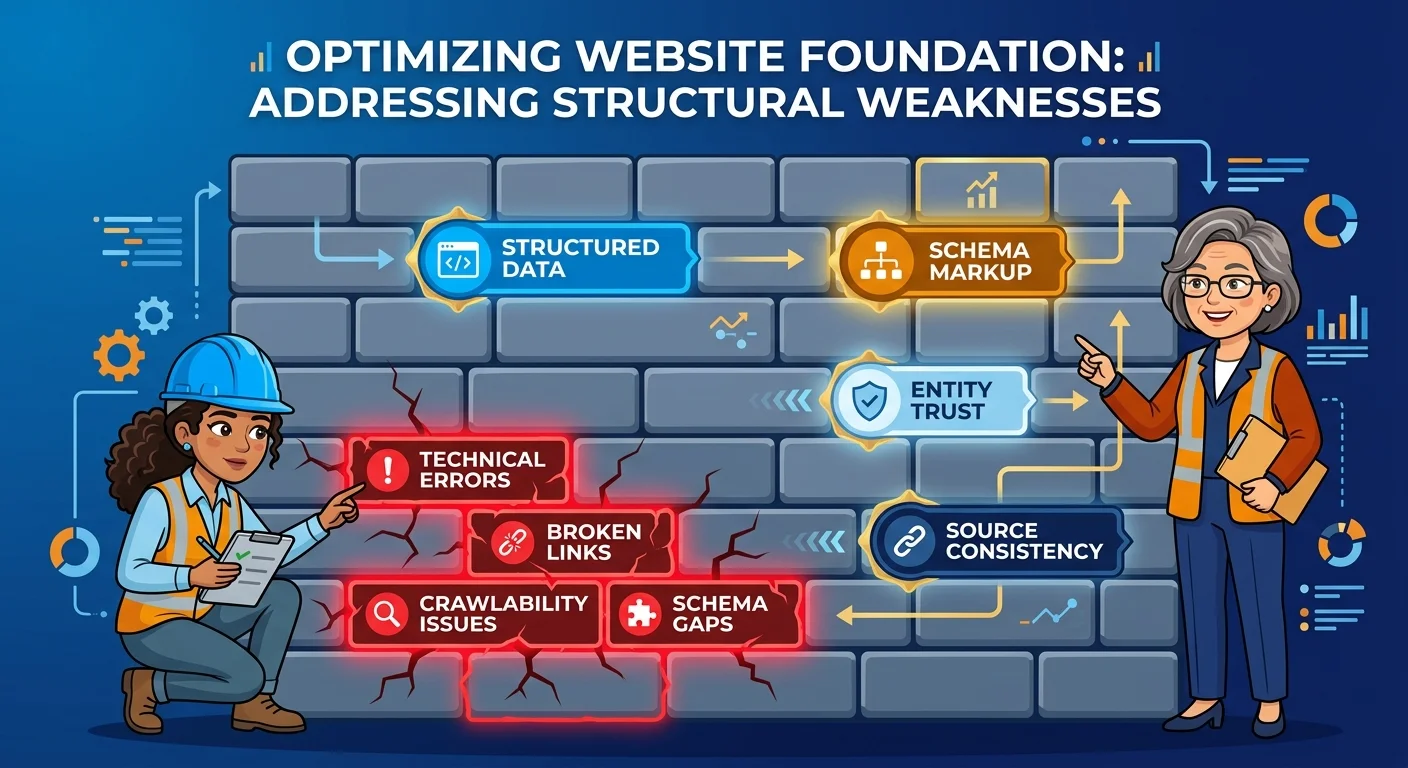
So where do the cracks actually run? Not through the number of citations a brand holds. They run through the structural integrity of the sources sitting behind them.
Every AI citation profile rests on a few load-bearing pieces: entity data, schema markup, source consistency, and retrieval integrity. Weaken any one of them and the whole thing gets easier to knock over.
And these aren't abstract risks. They're specific, findable failure points, and a competitor's tooling is built to spot them before you do.
| Vulnerability | Why Competitors Target It | Structural Fix |
|---|---|---|
| Thin or partial schema markup | It signals incomplete entity description, so a model fills the gaps with inference instead of confirmed fact | Extend schema coverage across every page an entity should be associated with, so nothing is left for inference to fill |
| Inconsistent entity data across the web | Conflicting brand names, addresses, or descriptions read as ambiguity a retrieval system cannot resolve confidently | Standardize entity references everywhere the brand appears, from owned pages to third-party directories and mentions |
| Unaudited content expansion | Volume without review multiplies the surfaces where facts can drift out of alignment, which is easy for tooling to flag | Apply deliberate refinement to existing pages before adding new ones, so coherence scales with volume rather than against it |
| Retrieval knowledge base exposure | A knowledge base that accepts unverified inputs can be seeded with attacker-chosen text designed to alter what a model retrieves | Harden source verification around any system that feeds a model's retrieval layer, treating input integrity as a structural requirement |
Why Thin Schema and Inconsistent Entity Data Fail
Here's where most brands fail without ever noticing. Schema markup that covers half a site tells a generative model half the truth about what that site actually is.
Thin schema doesn't just under-describe a page. It leaves gaps a model fills with guesswork, and guesswork is where inconsistency sneaks in.
Inconsistent entity data makes it worse. A brand name spelled one way on its own site and another way across directories, reviews, and third-party mentions reads as pure ambiguity to a retrieval system.
That ambiguity is exactly what a competitor's analysis is trained to hunt for. A model that can't confirm which entity you mean falls back on the source it can verify with confidence, and that's rarely the one with fractured data.
This is the technical soft spot underneath the entire citation profile. It has nothing to do with how much content you've published and everything to do with whether a machine can state, flat out, exactly who your brand is.
This Isn't for Brands Chasing a Mentions Scoreboard
This isn't for brands treating citation count as the finish line. If the goal is a bigger number on a dashboard, this whole approach is going to feel like a waste of effort.
Look, chasing mentions is a behavior, not just a bad call. It shows up as publishing more pages without auditing the ones already live, and cheering a citation spike without asking if it survives next week's re-crawl.
A brand that behaves this way isn't building resilience. It's stacking more weight onto a foundation nobody checked, which is the exact posture a competitor's structural audit is designed to exploit, a gap covered in depth in why local optimization tactics leave AI citations exposed.
But Doesn't More Content Just Mean More Chances to Get Cited?
But doesn't more content just mean more chances to get cited? Fair question. The honest answer is no, not automatically.
More content only helps if each new page tightens the entity's coherence instead of watering it down. Volume without consistency just multiplies the places where your facts can drift out of line.
That drift is a known attack surface. Retrieval-augmented generation systems can be poisoned by injecting malicious text straight into the knowledge base a model pulls from, per findings on the arXiv repository. Adjacent work on structured refinement backs the same lesson: a Preference-Driven Refinement method cut trial-and-error iterations and produced higher-quality outputs, at a modest cost in refinement time, according to published research data — so deliberate refinement beats raw output every time.
How the Data Gets Pulled Apart, Piece by Piece
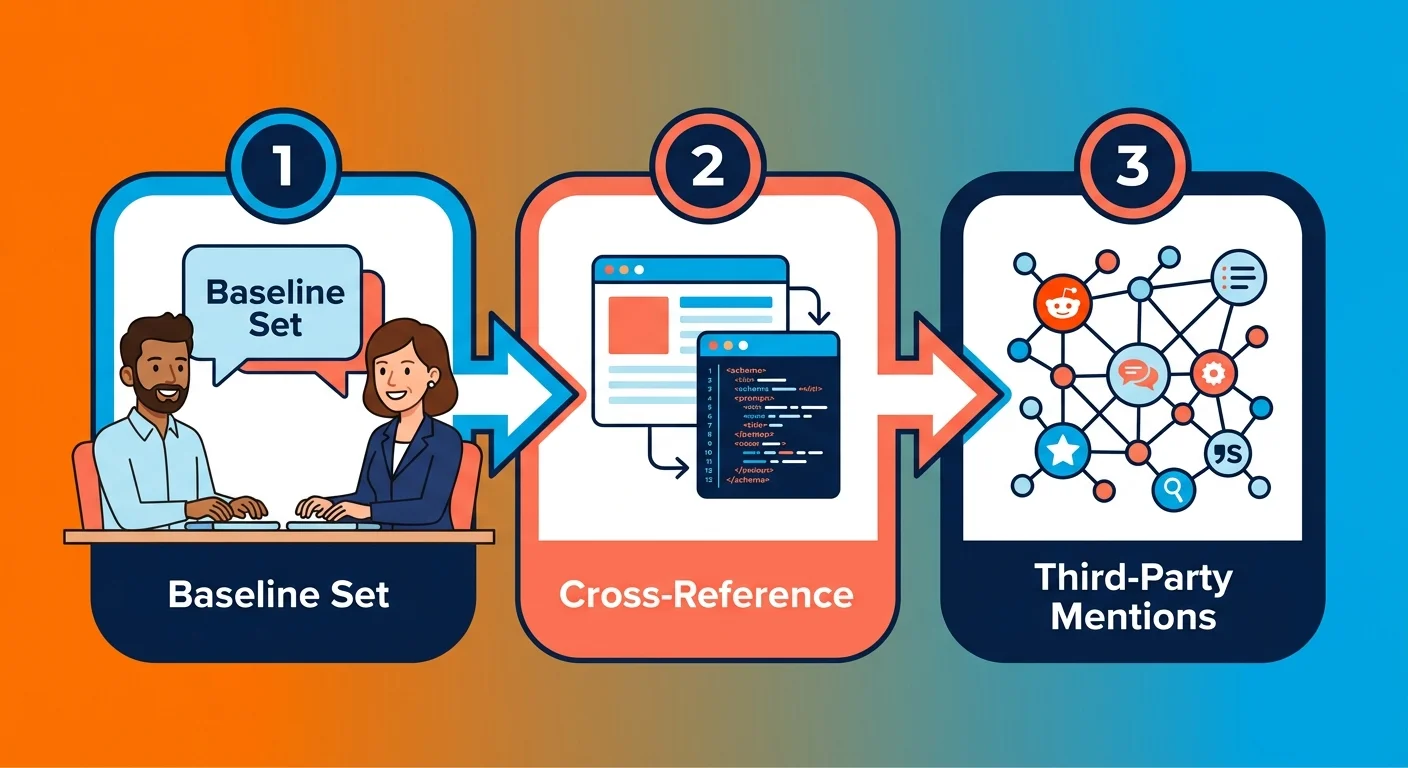
So what does this actually look like, step by step? Not the theory. The literal sequence a competitor's team or tooling runs, in order.
There's nothing mysterious about the method. It's a repeatable three-step workflow: build a prompt set, cross-reference the sources those prompts surface, then map every third-party signal feeding the citation. Each step peels one more layer off the blueprint.
| Extraction Step | Objective | Signal Analyzed |
|---|---|---|
| Prompt Set Construction | Establish a baseline of which entity a model favors under realistic question phrasing | The exact wording, comparison framing, and recommendation framing a customer would plausibly type |
| Schema Cross-Reference | Locate cited pages where the visible content outruns the underlying markup | Gaps between what a page claims and what its structured data actually confirms |
| Third-Party Signal Mapping | Identify off-site conversations a model treats as trustworthy evidence rather than promotion | Forum threads, review platforms, and directory listings that reference the brand outside its own domain |
| Entity Consistency Check | Test whether a brand's identity resolves the same way across every source a model can reach | Naming variations, address mismatches, and conflicting descriptions across owned and third-party pages |
Step One: Establishing the Baseline Prompt Set
Here's where it kicks off. A competitor builds a list of prompts real customers would actually type, then runs each one across several AI platforms instead of just one.
That baseline set isn't random. It's built on purpose to mirror question phrasing, comparison phrasing, and recommendation phrasing. Now the data shows exactly which entity a model favors under each framing.
Step Two: Cross-Referencing Source Pages Against Schema
Once the baseline responses are logged, it gets forensic. Every cited page gets pulled and checked against its own schema markup, line by line.
Here's where the earlier point about thin schema stops being abstract. A competitor is hunting exactly the gaps described above — pages a model cites but can't fully describe — because those gaps mark where a challenger's better-structured page steals the slot.
Step Three: Mapping Third-Party Mentions Across Reddit and Review Sites
Then comes the third layer, and it leaves the site entirely. A competitor maps every place a brand gets talked about off its own domain, from forum threads to review platforms.
That off-site mapping matters because it shows which conversations a model trusts as real evidence instead of marketing copy. A brand with thin or fragmented third-party presence hands a competitor the clearest entry point there is. It's the same weak joint the blueprint metaphor has been pointing at the whole time.
Frequently Asked Questions
So here are the questions that surface the moment a brand sees just how exposed a citation profile really is. Every one gets a straight answer. No hedging.
What specific tools can competitors use to track my AI citations?
Competitors lean on AI citation tracking platforms that log which brands keep showing up across repeated prompt sets, then cross-check those results against the schema and structured data on the cited pages. None of it needs special access. It runs on publicly available prompts and markup anyone can see.
How can I tell if a competitor is actively trying to displace my brand in AI answers?
Watch for sudden shifts in which sources a platform recommends for prompts your brand used to own. A competitor probing your position usually shows up as a spike in their own structured content, timed right after that shift. It's rarely subtle once you know the tell.
Does structured data schema make it easier or harder for competitors to analyze my citation profile?
Structured data makes analysis easier, not harder, for whoever's running it. Complete, consistent schema shows a competitor exactly how a model reads your entity, which only helps them if your data has gaps to exploit. A brand with no gaps gets analyzed and found solid, and that's the entire point of a Defensive Authority Moat.
What is the most common vulnerability in an AI citation profile that competitors exploit?
Inconsistent entity data is the most common failure point. A name, address, or description that shifts across your site, directories, and third-party mentions reads as ambiguity to a retrieval system. Ambiguity is the first thing a competitor's tooling flags.
How quickly can a competitor's actions affect my brand's visibility in AI Overviews?
Fast. Brand recommendation lists from AI platforms already shift day over day. So a competitor's structural upgrades can change who gets cited inside that same short window, not over some slow, gradual timeline.
Can competitors use negative information or fake reviews to manipulate their own citation profile against mine?
Fabricated reviews and manipulated negatives are a real risk, but they attack trust signals, not the structural pieces this article has been about. Schema integrity and entity consistency won't stop that kind of manipulation. They stop the reverse-engineering that comes before it.
The Moat Is Structural, Not Reactive
So the blueprint was always there for the pulling. That part was never the weakness.
The weakness is whether the structure that blueprint shows off has a single load-bearing joint a competitor can lean on.
Here's the stance. A Defensive Authority Moat isn't built by reacting faster than the last team that pulled your blueprint.
It's built by making the entity so coherent, and the sourcing so consistent, that reverse-engineering the profile turns up nothing worth exploiting. That's the whole gap between chasing citation counts and fortifying what sits underneath them.
Here's the truth: a brand still counting mentions while its schema stays thin and its entity data drifts isn't defended. It's just exposed and untested. Gerek Allen built iTech Valet's approach around closing that gap first, so if you want to see where your own blueprint would crack, start with an AI visibility check.