
What Is AI Citation Spam and Why Is It Suddenly Everyone's Problem
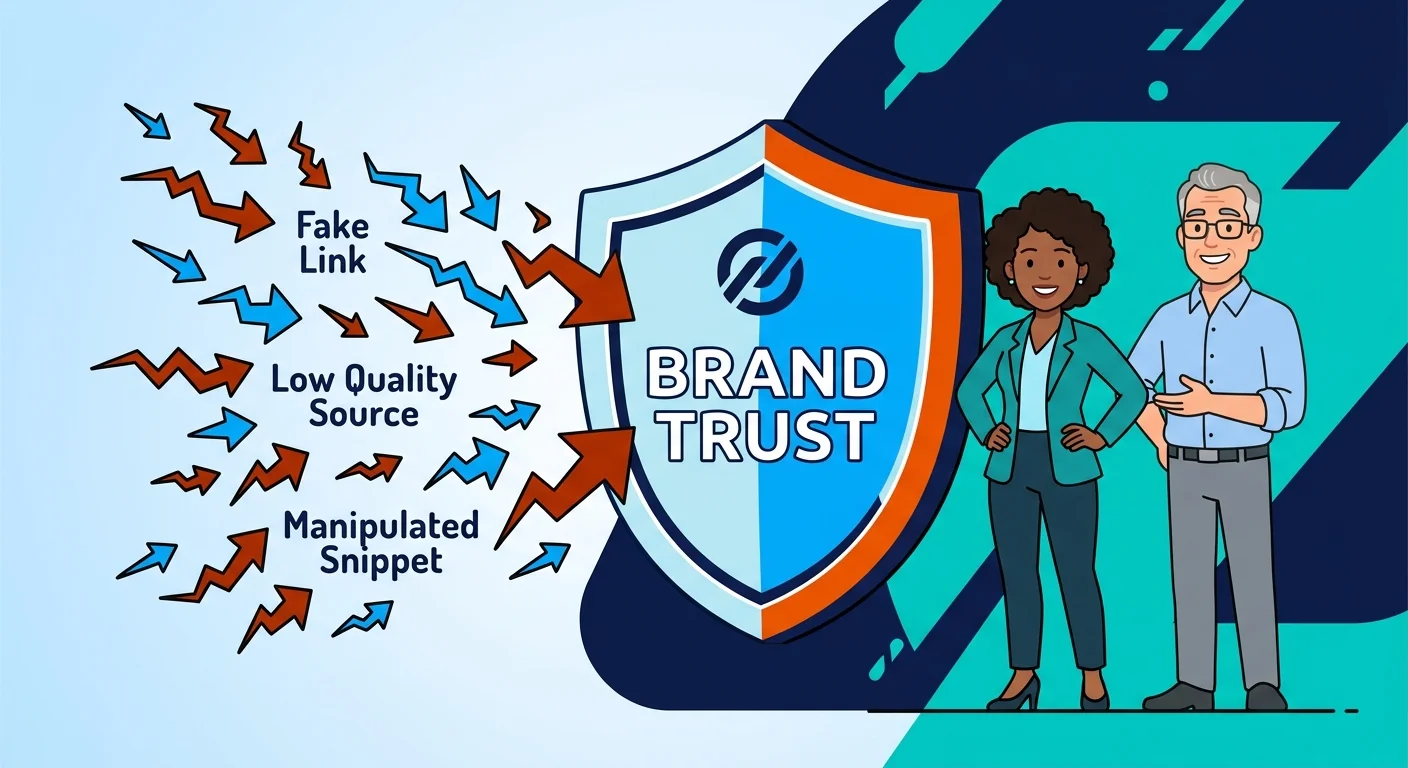
AI citation spam is any attempt to maliciously manipulate generative AI responses, to bump a competitor's content out, to slip in low-quality sources, or to chip away at a brand's perceived authority. That's the plain definition. But it's the mechanics underneath that should worry every brand watching its citations get quietly reshuffled.
This isn't some fringe problem anymore. Visibility in generative search is a battle over citation, and the manipulation tactics get sharper by the month. A brand that used to sweat ranking factors now has to sweat whether an answer engine even recognizes it as real.
Picture a brand's citation profile as a castle. Competitors don't need to storm the gates. They just need one weak wall, and generative answer engines will happily wave them through it.
Here's the thing about a moat: you don't dig it after the first arrow lands. You build it long before the siege starts, which is exactly the mindset shift laid out in what actually makes a citation profile defensible. Get that distinction now, and you decide whether the next few years are spent patching holes or standing on ground competitors can't touch.
Why Chasing Every Spam Signal Never Actually Wins
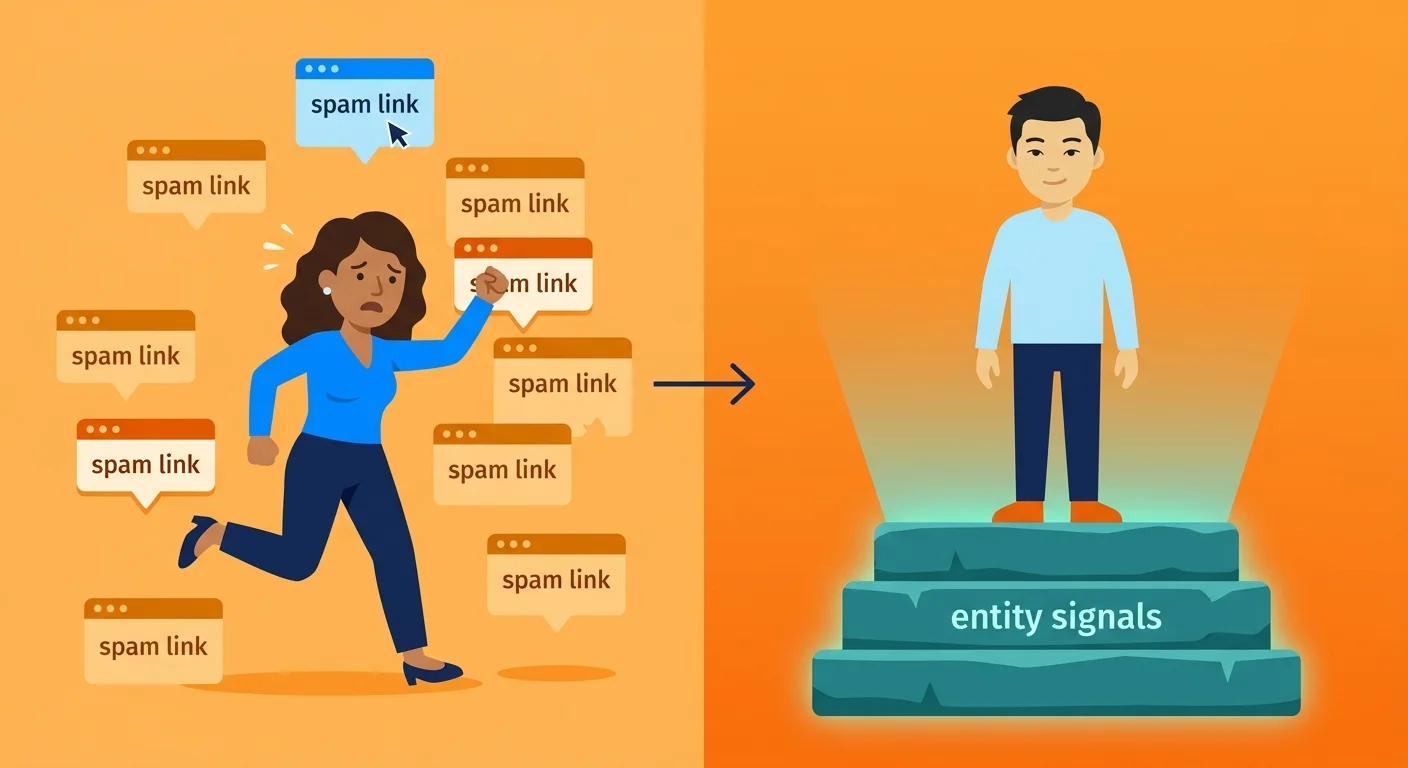
Most brands hit a citation problem the same way: chase the signal, file a report, wait. Feels productive. It almost never is.
Whack-a-mole spam-chasing treats each manipulated citation as an isolated event to be knocked down. But the underlying vulnerability that let it happen in the first place never gets touched.
Another weak signal surfaces the moment the last one gets patched.
Defending your citations was never about playing whack-a-mole with bad actors. It's about an authority profile so resilient AI engines treat it as the canonical source of truth. That's structural, not motivational: a brand either has the entity signals or it spends its days reacting.
Why Reactive Reporting Fails to Keep Up
Reactive reporting assumes the answer engine's citation choice is a mistake waiting to be fixed. Usually, it isn't.
The engine picked that source because its signals, manipulated or not, looked good enough at the moment of the query.
By the time you spot the displacement, draft a report, and wait on review, the queries that mattered have already moved on. Traditional search optimization gives you a slow slide down the page. Losing a key AI citation gives you nothing. One day you're the answer. The next, you're not even mentioned.
That's a whole different kind of risk than anything traditional search optimization ever handed you. A page slipping from position three to position seven still gets seen.
An answer engine that stops citing you erases you from the conversation.
So reporting after the fact treats a structural problem like a support ticket. You close one instance and leave the opening that made it wide open.
That's the reflex this article is arguing against.
The Documented Playbook Competitors Use to Displace You
Knowing why the reflex fails only matters once you see what's actually getting exploited. Competitors don't need to attack a brand head-on to displace it.
They just need to look convincing enough to an answer engine's source-selection logic.
And that logic can be studied. It is being studied. Brands serious about defense are learning to look at their own citation profile the way an attacker would, which is exactly the ground covered in how rivals map the weak points in a brand's citation footprint.
Coordinated content farms are one documented tactic, built specifically to outrank a legitimate original through sheer volume. Manipulated user-generated content is another, seeding forums and review platforms with narratives an answer engine might read as consensus.
Structured data engineered to confuse a source-selection process is a third, quieter play.
None of this requires breaking into anything. Competitors just exploit the same signals a legitimate brand should be strengthening, and the playbook stays undefended until it's already working.
Reverse-Engineering Your Own Citation Profile
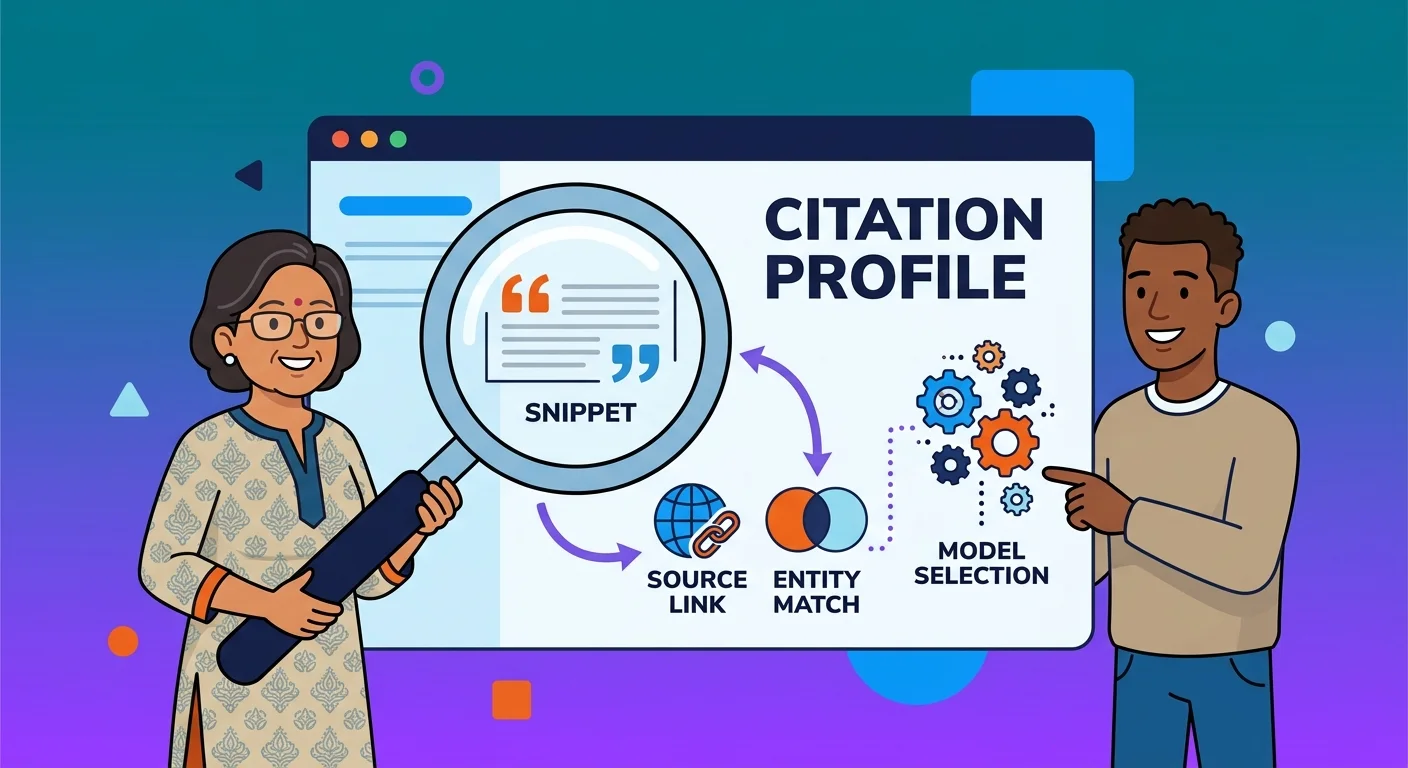
Attackers don't have to guess how an answer engine picks its sources. They reverse-engineer the same logic and go probing for the thin spots.
That's the uncomfortable part behind most citation spam campaigns. The manipulation looks slick, but the process underneath is mechanical and repeatable.
So a brand serious about defense has to study that same process, before a competitor turns it into a map of where the walls are thin.
| Signal Type | What the Engine Cross-References | Why It Matters for Displacement |
|---|---|---|
| Schema Markup Consistency | Entity names, categories, and structured attributes declared across a domain's own pages | Conflicting or sparse markup gives an answer engine a reason to default to a competitor's cleaner structured signal |
| Third-Party Name Consistency | How a brand's name, description, and category appear across independent, trusted platforms | Inconsistent mentions weaken confidence in identity resolution, leaving an opening for a manipulated alternative to look equally valid |
| User-Generated Content Patterns | Forum threads, reviews, and community discussion that reference the brand or its competitors | Seeded or coordinated narratives can be mistaken for organic consensus if a brand hasn't reinforced its own authentic footprint there |
| Content Freshness and Depth | Whether a page's entity signals and supporting detail have been reinforced or left static | Stale signals are easier for a rewritten, more current-looking competitor snippet to displace at the moment of query |
How AI Engines Actually Decide Who Gets Cited
Generative answer engines don't cite a page because it reads well. They cite it because its entity signals resolved cleanly the moment a query hit.
Schema markup, consistent naming across trusted platforms, third-party verification, all of it feeds that resolution. When those signals clash or go stale, the engine has to pick between competing versions of the truth.
And that decision point is exactly where manipulation slips in. A competitor doesn't have to out-write a brand. They just have to look more resolved in that split second.
Why Reinforcement-Trained Snippet Rewriting Changes the Threat Model
Here's why static defense is already outdated. Researchers have shown reinforcement learning can train a small language model to rewrite search snippets so an arXiv is more likely to pick them, which means the manipulation itself can be trained now instead of hand-crafted.
That's not some hypothetical threat model. It's a documented mechanism for gaming the exact source selection a brand's citation profile leans on.
A snippet rewritten to please a summarizing model doesn't have to be accurate. It just has to be shaped the way the model learned to favor.
That shifts the threat from stray bad actors copying a format to an automatable process refining itself against the same selection logic every brand's entity signals are trying to satisfy. Catching that drift before it displaces a citation is the whole discipline behind spotting early signs that a recommendation is about to shift away from a brand, and it's a far cheaper habit than rebuilding trust after the damage is done.
The Ghost Citation Problem Nobody Is Watching For

Here's the blind spot nobody thinks to check. A citation doesn't have to name your brand to bump it clean out of the reader's attention.
An answer engine can pull your page's data, build the whole answer around it, and link back to you as the source, while your name never once shows up in the text a person actually reads. The citation's there. The recognition isn't.
And that gap is measurable, bigger than most brands would ever guess. Across four engines and fourteen countries, 61.7% of AI appearances turn out to be citation-only: linked, never named in the generated text.
That figure comes straight from published industry reporting tracking how often generative answers cite a source without ever saying its name out loud. So a brand can nail every entity signal and still lose the one thing citation was supposed to buy: recognition.
| Citation Outcome | Brand Name Visible to Reader | Business Impact |
|---|---|---|
| Named citation | Yes, the brand appears in the generated text a reader sees | Recognition compounds; the reader connects the answer directly to the brand |
| Ghost citation | No, the page is linked as a source but the brand name never appears in the readable answer | Recognition is lost even though the content itself was used to build the answer |
| Citation displaced entirely | No, the source is dropped from the answer altogether | Complete invisibility for that query rather than a gradual drop in visibility |
Why This Isn't Just Traditional Search Optimization With New Vocabulary
Traditional search optimization never handed you this problem, not really. A ranked listing came with a visible title, a visible domain, a visible snippet — the brand was right there the second a person looked.
Generative answers strip that whole visibility layer away. The engine soaks up your content, restates your facts, and hands the reader an answer that reads like it came from nowhere in particular.
That's a different failure than a ranking drop, and it demands a different kind of watching. Tracking whether citation is even converting into brand mentions is exactly the discipline explored in why a citation stops compounding into recognition over time, and it's the piece most monitoring setups miss entirely.
The Machine-Readable Signals That Make a Brand Hard to Displace
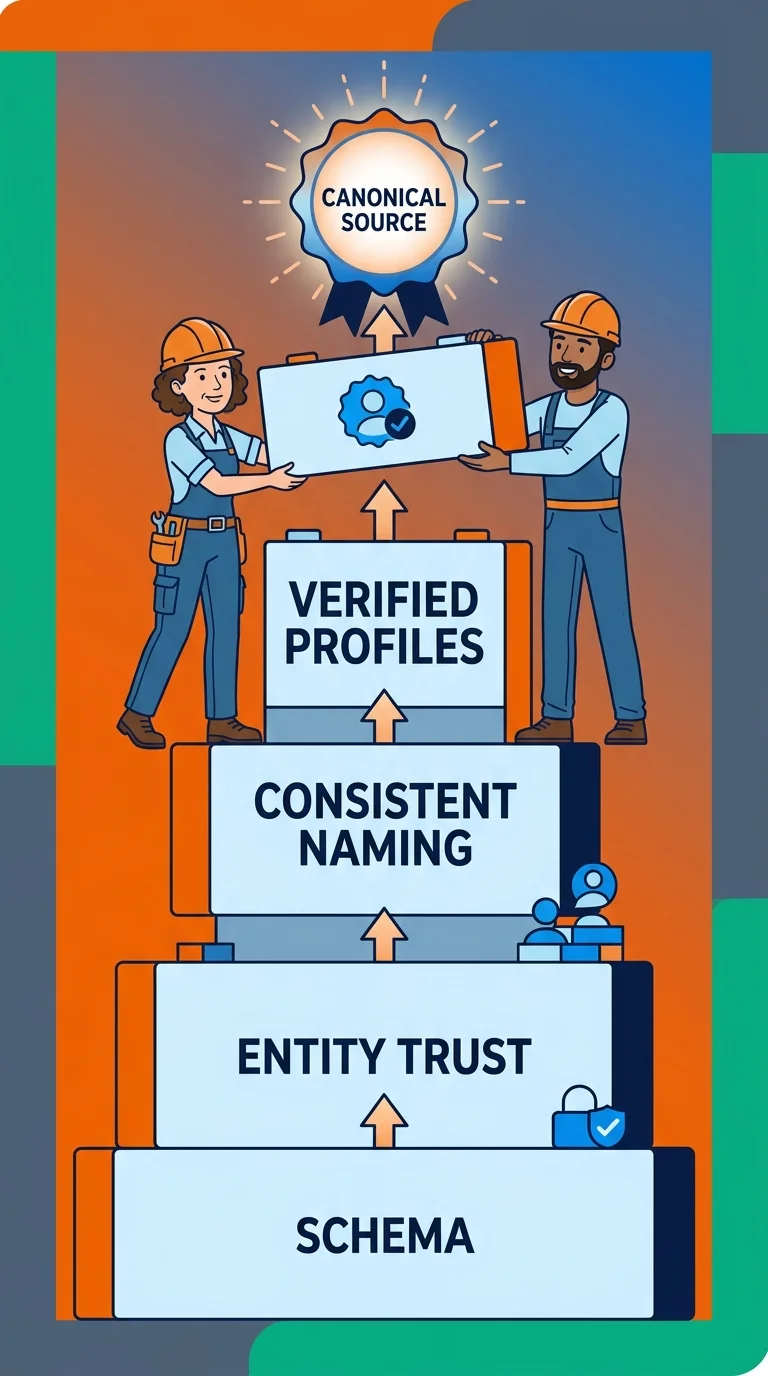
You don't defend a citation profile with good intentions. You defend it with signals a machine can parse without guessing.
Every claim about resilience so far comes down to one question: what actually makes one brand's entity data harder to displace than another's? The answer isn't mysterious. It's structural, and you can build it.
Three layers matter most. Who the signals are for, how structured data holds the entity together, and whether that entity looks the same everywhere a model might go looking.
| Entity Signal | Where It Lives | What It Proves to the Engine |
|---|---|---|
| Schema Markup | Embedded directly in a brand's own site code | That the entity's identity, offerings, and facts are declared by the brand itself, not inferred by the model |
| Consistent Entity Naming | Every directory, profile, and third-party listing where the brand appears | That there's one version of the brand to resolve, not several competing spellings or descriptions |
| Third-Party Verification | External profiles and platforms outside the brand's own control | That an independent source corroborates the entity, giving the model a second signal to cross-check against |
| Structured Relationship Data | Connections between the entity and its credentials, locations, or affiliated pages | That the brand's facts link together as one coherent record instead of scattered, unconnected mentions |
This Isn't for Brands Still Chasing Vanity Metrics
This one's not for brands still measuring success by how many mentions land in a monthly report.
Vanity metrics feel great. A mention count ticks up, somebody screenshots it, and the meeting wraps on a high note.
But a mention count tells you nothing about whether an answer engine trusts the entity behind it. A brand can rack up appearances while its authority signals stay thin and easy to out-resolve. That's not defense — it's a scoreboard with no relationship to the game.
Structured Data as Load-Bearing Wall, Not Decoration
Structured data isn't decoration sprinkled on a page to please a crawler. It's load-bearing.
Schema markup tells an answer engine exactly what an entity is, what it does, and how its facts connect. Strip that structure out, and the model's left inferring meaning from unstructured text the same way it does with a competitor's content farm.
That's the danger. An engine with no clean structure to lean on falls back on pattern-matching, and pattern-matching is exactly what reinforcement-trained snippet rewrites are built to game. The model can't catch a plausible-sounding fabrication once it's already inside a source it treats as reliable. Load-bearing structure keeps that fallback from ever being necessary.
Entity Consistency Across Every Surface That Feeds the Model
None of this holds if the entity looks different depending on where the model finds it.
A name spelled one way on your site and another way on a directory listing isn't a small inconsistency. It's an opening. Answer engines sorting through competing versions of the truth default to whichever one looks cleanest right then, and a fractured entity rarely wins that comparison.
Here's where hallucination risk stops being theory. Answer engines have been shown to hallucinate and favor one-sided answers even with authoritative sources right in front of them, a failure mode documented in research on the arXiv preprint server. If the model can't catch inconsistency when the facts are right, a brand with messy entity signals isn't lowering that risk. It's feeding it.
Monitoring and Response When Displacement Is Already Underway
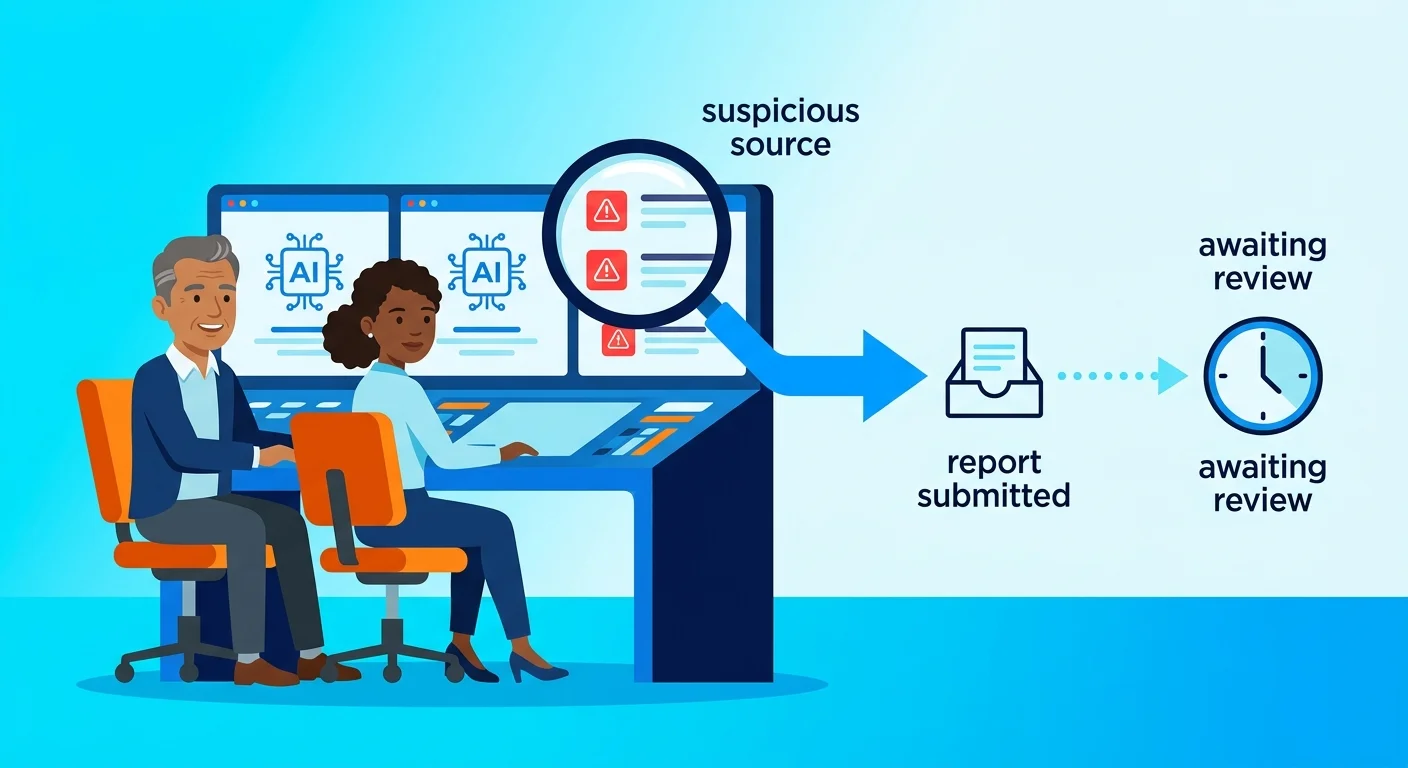
Every wall you've built still needs someone watching it. A moat doesn't call off the siege — it just changes who walks away winning.
So this is where prevention shakes hands with response. Strong entity signals cut down how often displacement lands, but they don't buy you the right to stop watching.
Malicious tampering with a generative answer is still a play to shove out legitimate content, slip in weak sources, or nibble away at a brand's authority. That play doesn't quit just because the walls got taller. It hits less often and fails more often, sure — but the brand that assumes it can't happen anymore is the one that misses it when it does.
| Response Step | What It Confirms | Realistic Outcome |
|---|---|---|
| Audit the query set | Whether the citation loss is isolated or clustered across a brand's highest-value queries | A clear map of which entity signals are actually under pressure, replacing guesswork with a prioritized list |
| Verify the displacing source | Whether the competing content is genuinely more resolved or simply exploiting a stale or inconsistent entity signal | Confirms whether the fix is structural cleanup on the brand's side or a case worth escalating for review |
| Check naming and structured data consistency | Whether the brand's own entity looks identical everywhere a model might resolve it | Either a quiet self-inflicted gap gets closed, or the brand confirms its signals were already clean |
| File the manipulation report | Whether the displacement meets the threshold for formal review rather than routine competitive pressure | A submitted case enters a review process on its own timeline, with no guarantee of a fast reversal |
| Reinforce the underlying entity signals | Whether the brand's structural defenses were the actual weak point or just the visible symptom | A citation profile that's harder to displace next time, regardless of how the current report resolves |
Auditing Your Citation Footprint Before You Report Anything
Before anyone reports a thing, somebody has to actually know what's being reported. That means looking at your own citation footprint the way an outsider would — cold, no assumptions about what's supposed to be there.
Pull the queries that matter most to the business. Then check who's getting cited, whether the brand's named or just quietly linked, and whether the context around it holds up.
Look for the pattern, not the anomaly. One odd result might be noise. A cluster of queries where a competitor's thin content suddenly outranks a brand's verified entity data is a signal worth escalating.
What Happens After You Flag Manipulated Citations
Flagging a manipulated citation doesn't flip an instant switch. It kicks off a review, and reviews run on their own clock — not yours.
That grates on anyone raised on instant dashboards and same-day rank checks. Generative source selection was never built to be that transparent, and it wasn't going to start.
Here's the part worth burning into memory. Reporting's a valid last resort, not a strategy. A brand that treats it as the plan has already caved to a reactive posture — the exact posture this whole approach exists to replace with structure built long before the report ever gets filed.
Frequently Asked Questions
The moat metaphor's fine. Here's what people actually ask once the siege stops being a story and starts being real.
What are the most common tactics competitors use to spam AI citations?
Competitors flood generative answers with thin content built to mimic what a summarizing model likes, then muddy your entity data elsewhere so your real signals look weaker by comparison. Some go further and poison user-generated sources the model treats as trustworthy.
How can I monitor my brand's citations across AI Overviews and other generative answers?
Run the queries that matter to the business on a regular cadence. Log who gets cited, whether the brand's named or just quietly linked, and whether the surrounding context holds up. Treat a cluster of odd results as a signal, not noise.
What's the difference between traditional negative tactics and AI citation spamming?
Older manipulation went after rankings and inbound links — stuff you could see and contest on a visible results page. Citation spamming goes after which source a model picks to summarize, a call made inside a black box with no listing to dispute.
If I detect competitor spam in my AI citations, what are the steps to report it?
First, document the query, the citation, and the inaccuracy or displacement pattern. Then flag it through the answer engine's official reporting channel. And know going in that review runs on the platform's clock, not an instant dashboard.
Can structured data protect my content from being displaced by spam?
Structured data won't stop the attempt. But it hands an answer engine a clean, load-bearing version of the truth to lean on instead of guessing. That's what makes an entity harder to out-resolve the moment a model picks a source.
How long does it typically take to recover from an AI citation spam attack?
There's no fixed clock on it. Recovery hangs on how fast consistent, structured entity signals replace whatever fractured or thin data opened the door. Brands with clean signals already in place watch the model correct itself faster than brands starting cold.
Where This Leaves You
You don't dig a moat the night the siege starts. You dig it years earlier, while the walls still look fine. That's the whole shift: stop patching citation spam like an emergency and start building entity resilience like infrastructure.
Defense was never about catching every bad actor before the arrow lands. It's about building an authority profile so resilient that answer engines treat you as the canonical source of truth, not one plausible option among several.
Whack-a-mole spam-chasing keeps a brand busy. It doesn't keep a brand cited.
Clean entity signals, consistent naming, load-bearing structured data — that's the wall a competitor can't out-resolve in the split second a model decides who gets named. Reacting after displacement already happened is a losing rhythm to build a brand around.
If you want a clear read on where your own entity signals stand right now, before a competitor finds the gap first, check your brand's AI visibility here.