
Whitespark says moving inside the city border or opening a second location there is the only choice that makes the outside-the-border ranking problem go away completely. Sterling Sky says the work you do on your own website directly affects your rankings in the local pack and local finder. It also says longer, more specific search phrases have less competition, so they are easier to rank for even if you are farther away. Whitespark says you may get shown more often in answers from Google AI Mode than in the usual local results, because this tool can quote many different kinds of content. SOCi says plain location pages that just swap in a different city name don’t add much. AI tools are getting better at spotting copy-and-paste template content and giving it less weight when they make recommendations.
What Opening Another Practice Location Costs
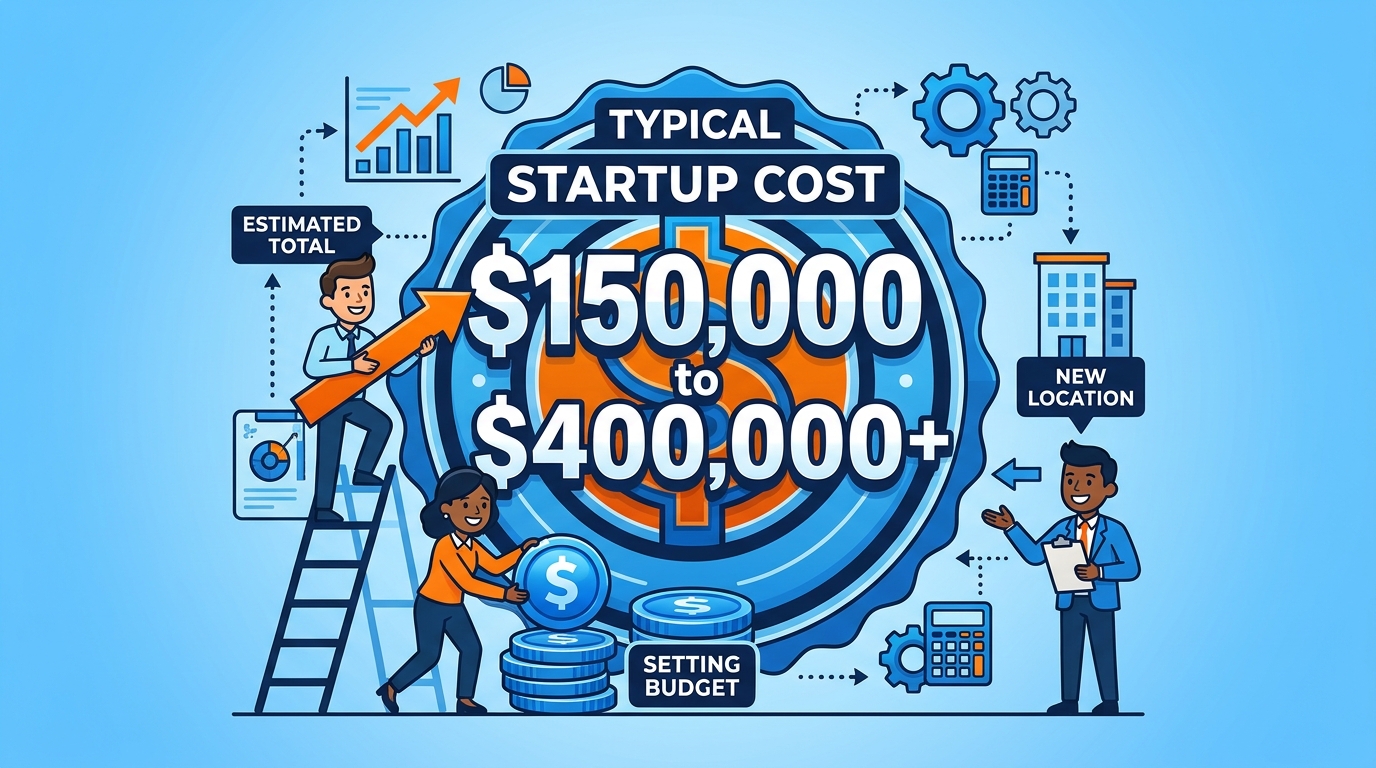
Here’s the number.
Opening a new chiropractic office costs about a hundred thousand dollars ($100,000) on average.
That’s the hard costs. Equipment. Furniture. Fixing up the space.
The space runs about $50 a square foot, depending on where you are.
These figures come from ChiroPreferred (MedPro Group), in 8 Steps to Starting Your Own Chiropractic Practice.
You also need to budget about $1,300 a month for marketing. Then add rent, utilities, insurance, license renewal, billing systems, electronic health records software, and pay if you have staff.
I won’t choose a marketing provider on the lowest monthly price.
I’ve seen the cheap monthly deals. They look like a bargain. They end up costing the client more.
Thin work. Little real progress. Money tied up in a contract that doesn’t build anything.
Here’s what a ready-made option looks like.
The Texas Chiropractic Association’s Practices for Sale/Lease page lists a ready-to-use chiropractic practice opportunity from Adjusted Health & Wellness. It’s $6,000 a month.
Option A is a private treatment room. That’s $1,500 a month.
The table below puts it side by side. The opening cost. The marketing budget. The two Texas listings.
| Option | Cost |
|---|---|
| New practice build-out | About $100,000 average opening cost; build-out about $50/sq ft, depending on location |
| New practice marketing budget | About $1,300/month, plus rent, utilities, insurance, wages and other expenses |
| Turnkey practice opportunity (one Texas listing) | $6,000/month |
| Private treatment room (one Texas listing) | $1,500/month |
What a Second Location Has to Meet: Google’s Rules and One State’s Example

An added office has to pass Google’s rules for Business Profiles.
California’s certificate is shown below as one state’s example.
I cover the wider planning side in Multi-Clinic Expansion and AI Recommendations: What to Know Before You Start.
Google’s Eligibility Rules for an Added Location
Whitespark’s rule: no virtual offices or P.O. boxes. Your location must have its own phone number. Someone must be working there during the business hours you list.
Sterling Sky’s writer would not suggest making service-area listings for doctors.
Google wants doctors to have a Business Profile for each physical place they work out of.
Crowjack, in its guide to opening a second location, puts it plainly.
If your new location is allowed to have its own Google Business Profile, you need to make one for it.
Google needs to know these are two separate physical places.
RankLocal says don’t rent a virtual office or mailbox to fake a storefront.
It calls this the most commonly reported rule-breaking in local search. And it says competitors do report it.
California’s Satellite Office Certificate (Example)
Here’s the California rule.
Under California Code of Regulations Section 308, you must put up a Satellite Office Certificate in a place people can easily see. You need one at each extra office where you give chiropractic care.
The form and fee details are in the California Board of Chiropractic Examiners’ Application for Satellite Office Certificate; Annual Renewal and Cancellation.
A new certificate costs sixty-nine dollars ($69.00) each.
A renewal costs fifty dollars ($50.00) each.
You pay with a check or money order made out to “BOCE.”
You can’t pass a certificate on to someone or somewhere else.
Any change to the satellite location, like moving, needs a new certificate. And you should send the old one back to the Board.
Watch where it goes.
The Board mails your certificate to the satellite office address. Not your main office address.
The table below lines up these four rules.
| Rule | Detail | Applies To |
|---|---|---|
| Display requirement | Certificate displayed conspicuously at each sub-office where chiropractic treatment is provided | Each CA sub-office providing chiropractic treatment |
| Cost | $69 new, $50 renewal, each, by check or money order to “BOCE” | Each new or renewed satellite certificate |
| Transferability | Non-transferable; any change to the satellite location, such as moving, requires a new certificate | Each satellite certificate |
| Mailing address | Mailed to the satellite office address, not the primary practice address | Each satellite certificate |
Why the Verified Address Still Decides Map Rankings
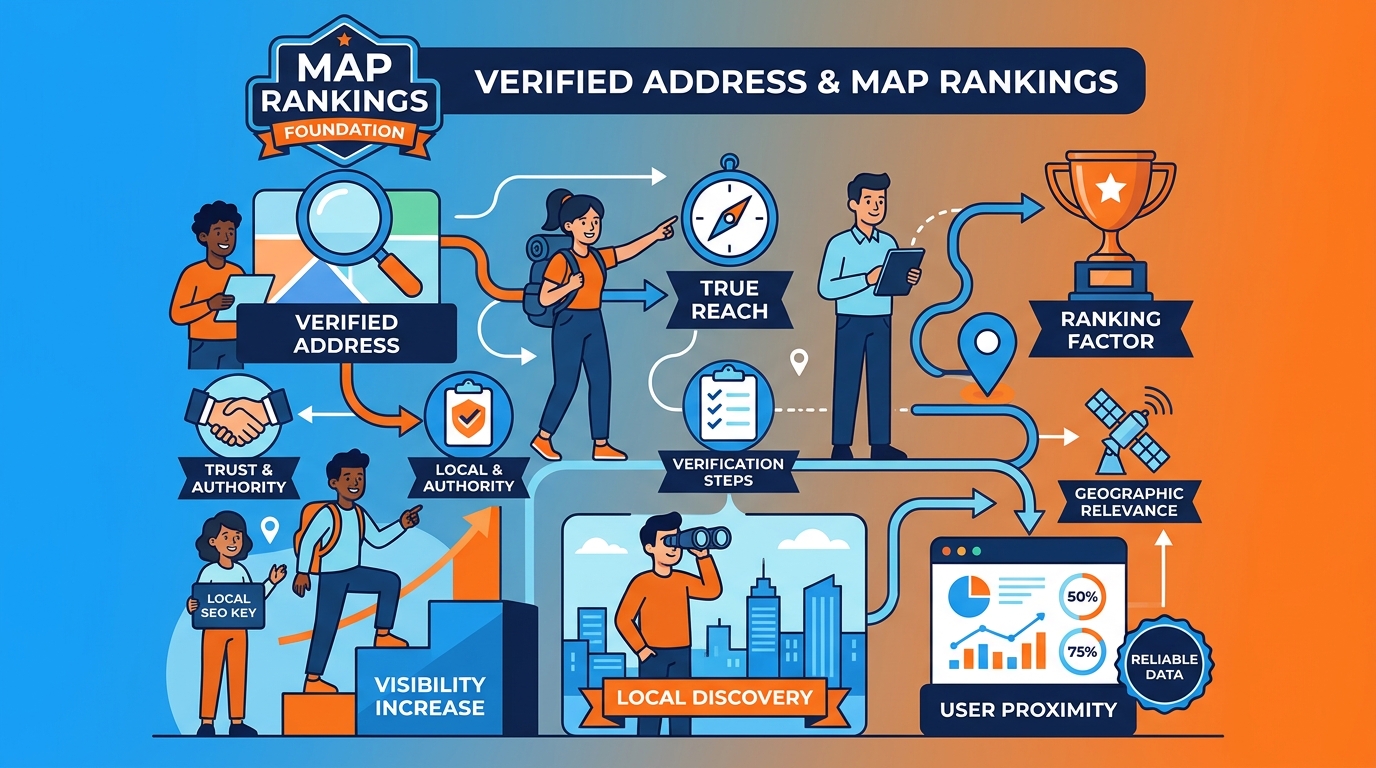
I stopped using rank position as my measure of reach. Map pins included.
AI tools now give direct answers instead of lists of links. So I read a rank report as a number that looks good. It doesn’t tell me whether a business gets found.
The table below shows what the sources report for four options.
Adding a city as a service area. Hiding your address. Adding your address to the site footer. Moving into the city or opening a second location there.
| Option | What the sources report |
|---|---|
| Adding the city as a service area | Does not currently affect rankings; ranking is based on the address used to verify the listing |
| Hiding the address | Rankings stay anchored to the hidden pin |
| Adding the address to the site footer | Organic ranking for “furnace repair” rose, but only within Phoenix’s borders |
| Moving into the city or opening a second location there | The only option that makes the out-of-border disadvantage completely disappear |
The City Border Problem and What Fully Fixes It
Here’s the problem.
Whitespark explains it in How to Rank in Surrounding Cities or Towns.
If your business sits even a little outside Google’s Maps border for a city, Google may not treat it as a good match for people searching from inside that border.
Whitespark’s fix is simple. Move inside the city border. Or open a second location there.
It says this is the only option that makes the disadvantage completely disappear.
Sterling Sky shared a case. A business was in a town of 222 people. The city it served was miles away and had more than 80,000 people. Sterling Sky told them to move their profile address to the other owner’s address, which happened to be in that city. Now they lead the rankings in the area they serve.
Sterling Sky also reports something else.
Google raised a business’s regular ranking for “furnace repair.” But only inside Phoenix’s city limits.
Service Areas and Hidden Addresses Don’t Move the Pin
Does the service area on your Google Business Profile change your rankings?
Sterling Sky answers in Does the Service Area in Your Google Business Profile Impact Ranking?
The answer is: not currently.
Just like storefront listings, ranking is based on the address the business used to verify its listing. The only thing the service area changes is what people see.
Sterling Sky put this to the test on itself.
It listed Toronto, Ontario, Canada as one of the service areas on its own Google Business Profile.
It did not rank in Toronto.
RankLocal covers hidden addresses in Service Area Business vs Storefront: Which Ranks Better?
When you hide your address, customers can’t see it anymore. But Google still uses it.
Your rankings are still tied to that hidden map pin.
People who have tested hiding addresses, including Sterling Sky, have recorded drops in rankings after taking an address off.
Here’s RankLocal’s advice.
If your place of business is real, has staff, and has a sign, keep its address showing. Add service areas on top.
That’s the strongest setup you can have.
You keep the weight your address gives you. And you still show how far you travel.
Whitespark ranked “Address Is Showing on GBP (Not SAB)” as factor number 7.
Profile Signals That Rose in Whitespark’s 2026 Survey
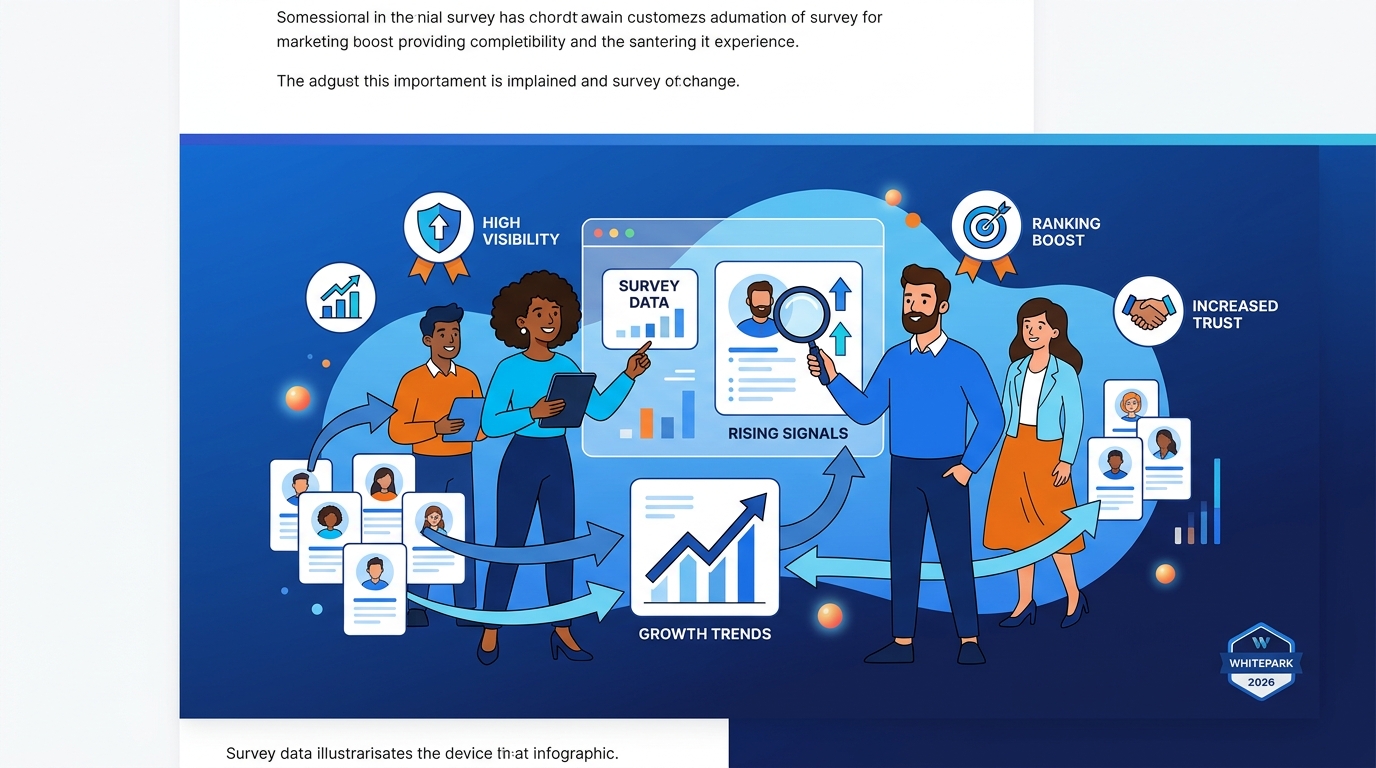
Here’s how the survey worked.
Whitespark invited 47 top local search experts. Each one sat down for a full 2-hour survey. They weighed and scored 187 factors. They also answered open questions about what helps businesses show up in local search today.
Each factor got a score from 0 to 5.
The full results are in Whitespark’s Official 2026 Local Search Ranking Factors Report.
This edition added something new. A new column.
For each factor, the experts also scored how much they thought it affects showing up in AI search answers.
For 2026, the biggest changes are that reviews and how people act with your listing now matter more.
Here’s what changed:
- Open when searched: Whether a business is open when someone searches is a new factor on the survey. It has already jumped to number 5 for how much it affects ranking.
- Hours: Having the right hours set on your Google Business Profile moved up 64 spots, from number 85 to number 21.
- Google’s ready-made services: Having Google’s ready-made services listed on your profile was a new factor this year. It scored high, at number 22 for impact on ranking.
- Keywords in services: Whitespark says it now knows the Services section on your profile affects rankings, so it’s no surprise that having keywords in your services moved up 75 spots, from the bottom of the list at number 110 up to number 35.
- Links from the profile’s main page: Links from your profile’s main page to your other pages don’t matter that much. That is why this factor dropped from number 45 to number 110.
Whitespark also describes the page your profile points to. It is usually your homepage. For a business with more than one location, it can sometimes be a page just for one location. The page should have well-built, well-written content about the topics you want your Google Business Profile to show up for. It also needs lots of links pointing to it, both from other sites and from your own site.
What Service Content Can Reach Without a New Address
Sterling Sky says the work you do on your own website directly affects your rankings in the local pack and local finder. Longer, more specific search phrases have less competition, so they are easier to rank for, even if you are farther away.
SOCi says plain location pages don’t add much. The ones that just swap in a different city name.
AI tools are getting better at spotting copy-and-paste template content. And they give it less weight when they make recommendations.
Whitespark puts it bluntly. It’s 2026. Huge pages of content don’t work anymore.
The new way? Clear, short, good content. Content that answers your reader’s questions. No filler.
I don’t chase volume. I don’t chase frequency.
I write the short, factual answer. I give each page something of its own instead of running a city-swap template. And I put the facts in a sensible order.
Why? I build for AI that favors businesses it can understand easily. Not businesses that publish the most.
I cover page layout in How to Structure Service Pages to Cover a Metro Area.
What AI Recommendations Draw On Besides an Address
Whitespark says you may get shown more often in answers from Google AI Mode than in the usual local results.
The reason? This tool can quote many different kinds of content.
SOCi says AI assistants combine information from Google Maps, Yelp, Facebook, and brand websites.
Brands that show up the same way, with good quality, on several platforms get recommended much more than their fair share.
SOCi’s write-up is How AI Agents Improve Rankings for Multi-Location Brands.
Here’s the twist.
Whitespark says citations have been losing importance as a local search strategy for the past ten years. But optimizing for AI search is bringing them back.
Three of the top five factors for showing up in AI search are citation factors.
Whitespark’s writer scores one profile factor differently by tool.
A zero for ChatGPT. But maybe a 3 for Google’s AI Mode and Gemini.
Why? Google can see this data. Other AI chat tools can’t.
SOCi found that locations ChatGPT recommended had about 4.3 stars on average.
Now look at the other end. Brands with low ratings, close to 3.4 stars, that answered fewer than 1 in 20 reviews (under 5%).
Practically invisible in AI recommendations.
I treat getting picked by AI answer tools as its own discipline. Not old search work with a new name.
So I don’t aim at keywords, inbound links or ranking position.
I put the effort into making it easy for these systems to work out who a practice is. And whether it’s credible. Not into the map pin.
Frequently Asked Questions
Do traveling chiropractors need a satellite office certificate?
No. If you’re a traveling chiropractor and you work out of a car or motorhome, you don’t need this certificate. That’s straight from the California Board of Chiropractic Examiners.
How much space does a solo chiropractic practice need?
About 1,200 to 1,500 square feet. That’s enough for one chiropractor working alone, with treatment rooms and a front desk, and still room to grow. ChiroPreferred says experts agree on that. Cost per square foot swings a lot from city to city. So price your own city before you commit.
Can a new location share a co-working space with another practice in the same category?
Not if the other business uses the same Google Business Profile categories as you. Whitespark warns that Google Maps may hide your new location at its normal zoom level. You’re too close to another business with the same categories.
Can a practice list longer hours on its profile than it is open?
Not if people can walk in. Whitespark says it’s fine for appointment-only businesses. But if you have a real office where people might show up during your listed hours, list only your real hours. Wrong hours can upset customers. They could lead to bad reviews. And they go against Google’s rules.
Did Whitespark add new suspension risks for profiles in 2026?
Yes. The survey added 8 new factors that can hurt you or put your listing at risk of being suspended. Whitespark says you should know them.
Where to Put Your Effort and Money
For the map pack, the facts point one way.
Moving inside the city border or opening a second location there is the only choice that fully removes the outside-the-border problem. And that location has to be real and staffed.
Service content and presence on more than one platform are what AI draws on. Whitespark says Google AI Mode may show you more often than the usual local results. It can cite many kinds of content.
I put money into assets a business controls. Like clear, credible information about itself.
Here’s why. I’ve seen that visibility keep paying off and grow. Visibility bought through ads or paid placements stops the moment the spending stops.
So I weigh owned content against the cost of a new office. Before anyone signs a lease.
The Local AI Authority Engine is built for practices that own one market.
The National AI Authority Engine is built for businesses that compete beyond a single city.
iTech Valet Service Plans & Pricing explains how the work is done.
Want to see how AI describes your practice today? Run My AI Visibility Check.