What a Standard AEO Audit Actually Checks (And Why That's Not Enough Anymore)
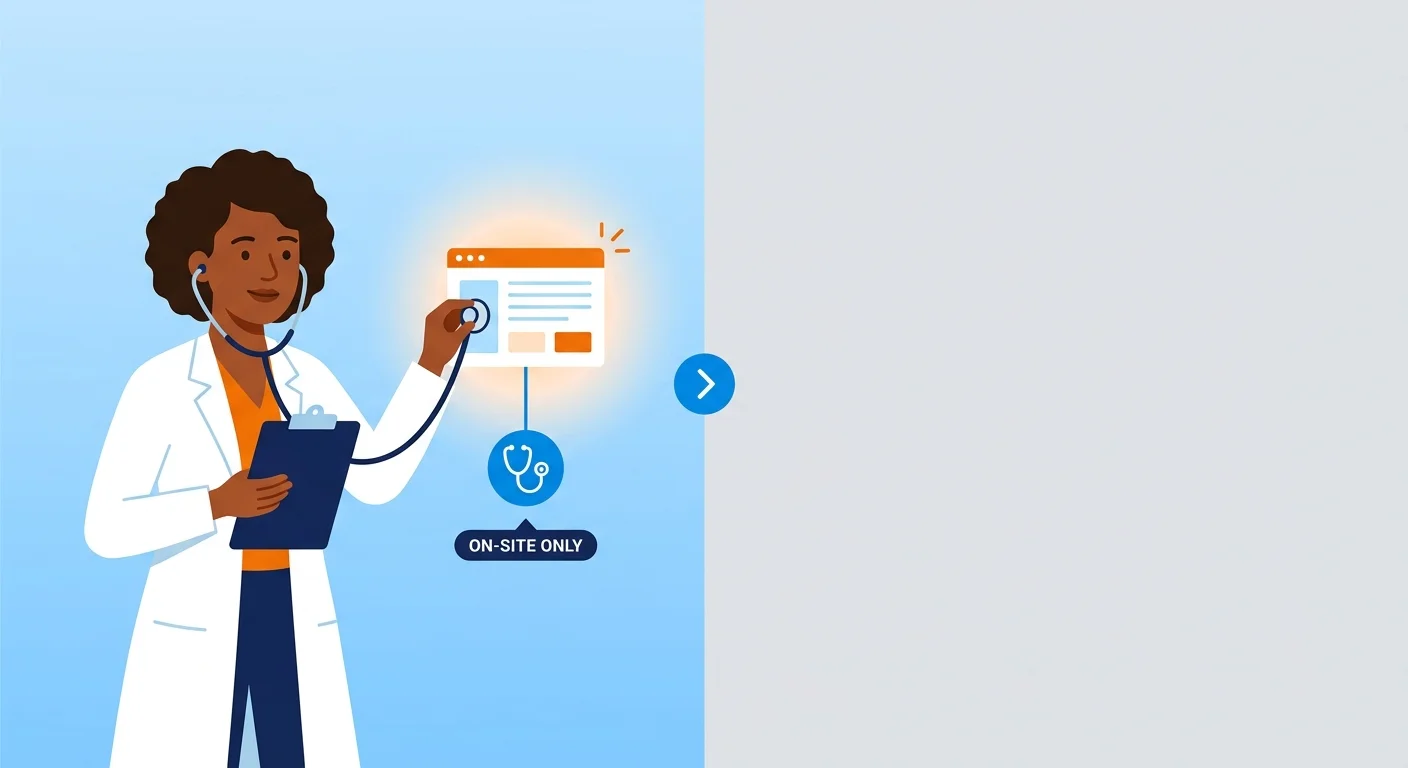
A standard AEO audit checks four things and calls it a day: page structure, question-and-answer formatting, schema markup, and whether your website reads clearly to a language model scanning it alone. That's the whole checklist.
Here's the thing: that scope made sense back when AI engines mostly quoted single pages. It makes a lot less sense now. Traditional search optimization used to reward a clean, well-built site above almost everything else, and the audit format just never caught up when the engines moved on.
So the checklist lives on, unchanged, built for a version of the internet that is rapidly becoming obsolete. It still measures the one room the practice controls. It was never built to check the hallway, the directory listings, or the review platforms actually feeding the engine's answer.
And that gap is exactly why so many practices walk away confused after a call about their phone stops ringing while competitors dominate AI search, even after passing every item on a conventional checklist. An AI Visibility Diagnostic doesn't measure rankings. It measures whether AI engines can describe who a practice is, what it does, and why it's worth trusting, accurately and every single time.
Why On-Site Checkups Miss the Engines That Are Already Answering For You
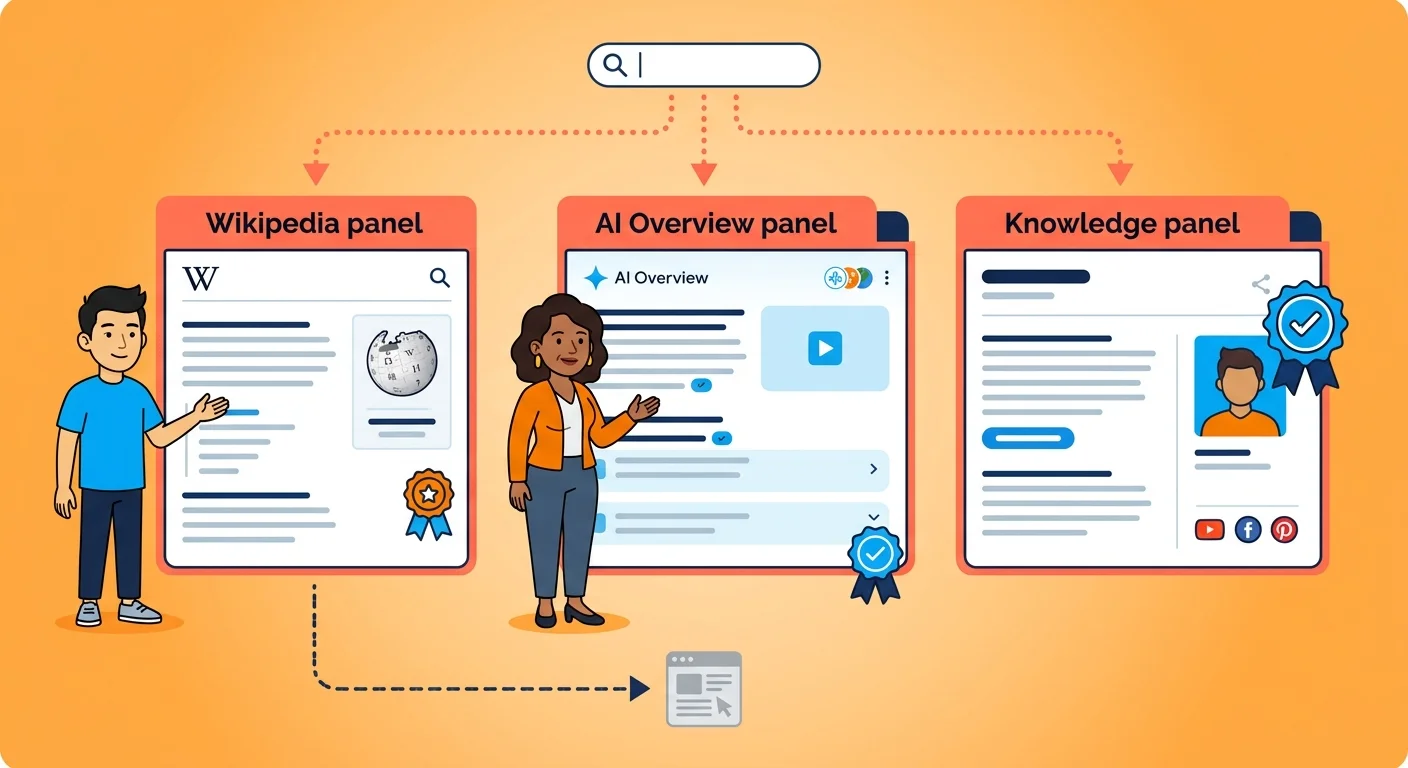
So where does that synthesis actually happen? Not on the practice's website. It happens across a scattered web of directories, review platforms, and knowledge graphs a standard audit never opens.
A conventional checklist has no line item for any of it. It can't flag a wrong phone number on a directory the practice forgot existed. And it can't catch a review platform listing services the practice dropped years ago.
That blind spot is structural, not accidental. The audit was built to inspect one domain. An AI engine's answer gets built from dozens.
| Data Source | What It Feeds | Owner-Controlled? |
|---|---|---|
| Practice Website | On-page structure, question-and-answer formatting, schema markup readable by a single crawling engine | Fully owner-controlled |
| Directory Listings | Name, location, phone, and service details that engines cross-reference for consistency before citing a practice | Partially owner-controlled, often outdated |
| Review Platforms | Service-specific language and reputation signals that engines weigh when describing what a practice actually does | Largely outside owner control |
| Knowledge Graph Entries | Identity data engines use to confirm who a practice is before generating a direct answer | Minimally owner-controlled |
| Third-Party Publishers | Comparative context and citations engines pull into synthesized answers alongside or instead of the practice's own site | Not owner-controlled |
The Data Sources Your Website Audit Never Touches
Here's what a website-only review misses entirely: the directories, review aggregators, and knowledge graph entries generative engines actually cross-reference before naming a practice as an answer.
Practices searching for why their phone stops ringing while competitors dominate AI search usually assume the fix lives on their own site. It rarely does.
Look, the fix usually lives in the gap between what a directory says and what the practice says. Engines punish that mismatch the easiest way they can. They just don't cite the practice at all.
How Search Site visits Gets Intercepted Before It Ever Reaches a Website
Look at what already happens to a source as big and well-built as Wikipedia. Google intercepts roughly 30.5% of the search traffic Wikipedia would otherwise get, answering the query on the page instead of sending the visitor onward, according to published research data.
That same interception shows up locally. In a sample of plumber queries in Houston, Google's AI Overviews pulled from third-party publishers for 60% of the sources feeding those answers, according to published research data. A practice invisible across those sources is invisible in the answer, no matter how clean its own website reads.
How AI Engines Actually Decide Who's Trustworthy Enough to Cite
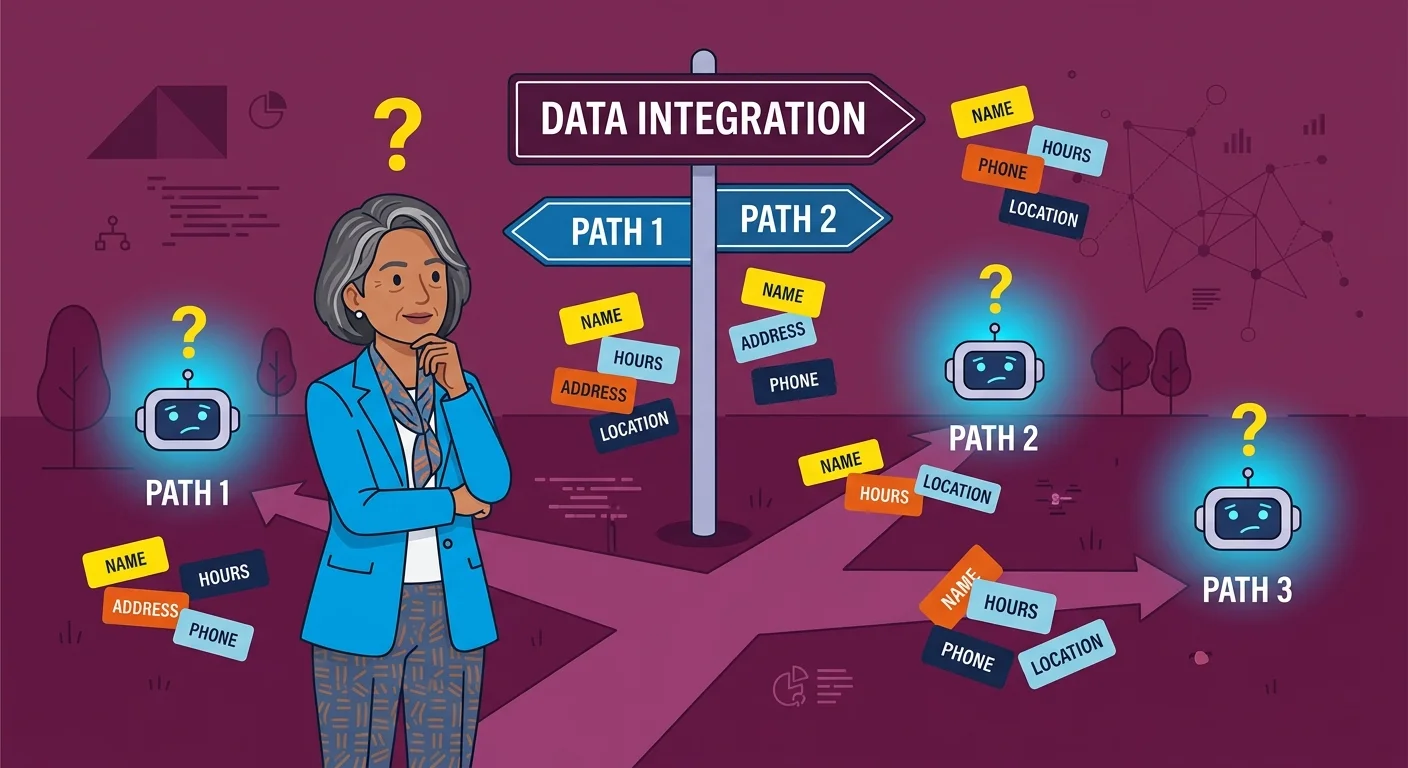
So how does an AI engine actually decide a practice is trustworthy enough to name? Not by ranking pages. It checks whether the same facts about that practice line up everywhere it looks.
That check runs on entity resolution, the model confirming the practice on a directory, a review platform, and a knowledge graph is one and the same. When those sources agree, it treats the entity as verified. When they clash, it hedges, drops the practice, or cites a competitor whose data simply matches better.
Here's the counter-intuitive part: the model can't reliably tell you why it made that call. Research on LLM self-explanations for entity resolution, published on the arXiv preprint server, found those self-generated justifications are often unstable and only weakly tied to how the model actually decided.
| Trust Signal | What AI Engines Evaluate | Business Sector Where It Matters Most |
|---|---|---|
| Entity Consistency | Whether name, location, and service details agree across directories, review platforms, and knowledge graphs | Practices with multiple locations or recent rebrands |
| Model Self-Justification Reliability | Whether the engine's own stated reasoning for citing or excluding an entity can be trusted as accurate | Any sector relying on AI-generated citation explanations |
| Review Language Semantics | Whether review text uses service-specific phrasing rather than generic praise, evaluated separately from star counts | Beauty and food businesses, where review content carries more weight |
| Proximity Weighting | Whether physical distance to the searcher dominates the ranking calculation regardless of review content | Law firms, where proximity remains the dominant factor |
| Public Trust in AI-Generated Answers | Whether searchers themselves treat the engine's synthesized answer as credible enough to act on | Any practice depending on AI summaries to reach new patients |
Why Entity Confusion Is the Silent Killer of AI Visibility
Entity confusion rarely announces itself. A practice never gets a warning that an AI engine has quietly stopped citing it.
It happens in small mismatches. A practice name spelled one way on a directory and another way on its own materials. An old address still sitting somewhere nobody thought to update.
On its own, each mismatch looks trivial. Stack them together and they teach the model this entity's identity is shaky, and a shaky entity is a risky one to cite in a direct answer.
That's the mechanism a standard checklist has no way to catch, and it's exactly what an AI Visibility Diagnostic surfaces before it costs a practice its next citation. Practices trying to read those early warning signs usually start with how to read an AI authority snapshot for the repairs it flags as urgent.
What Review Language Signals to an AI Engine That a Star Rating Doesn't
Trust isn't only built from matching facts. It's also built from language, and that's where reviews come in.
An AI engine doesn't just count stars. It reads what reviewers wrote, treating service-specific phrasing as its own signal apart from the number, which is why a generic five-star review carries less weight than a detailed one. That reading matters more now that trust in AI answers is itself shaky. Only about one in five people surveyed find AI summaries more trustworthy than traditional search results, while 33% say the opposite, per survey findings on AI trust.
Who This Diagnostic Thinking Isn't For
This isn't for practices that just want a checklist. If the goal is ticking a box marked done and moving on, a Multi-Engine AI Visibility Diagnostic is the wrong tool.
Here's the real disqualifier: a practice that treats a mis-cited detail as a minor annoyance instead of a lost patient. If you're fine letting a directory list an old address or a review platform name a service you dropped years ago, a deeper diagnostic won't help you. The findings only matter to someone willing to act on an agency audit built to test AI recommendation readiness instead of filing it away.
So if the plan is to skim the findings once and never touch them again, save your time. A diagnostic exists to drive correction, not to decorate a shelf.
But Doesn't Ranking on Google Maps Already Cover This?
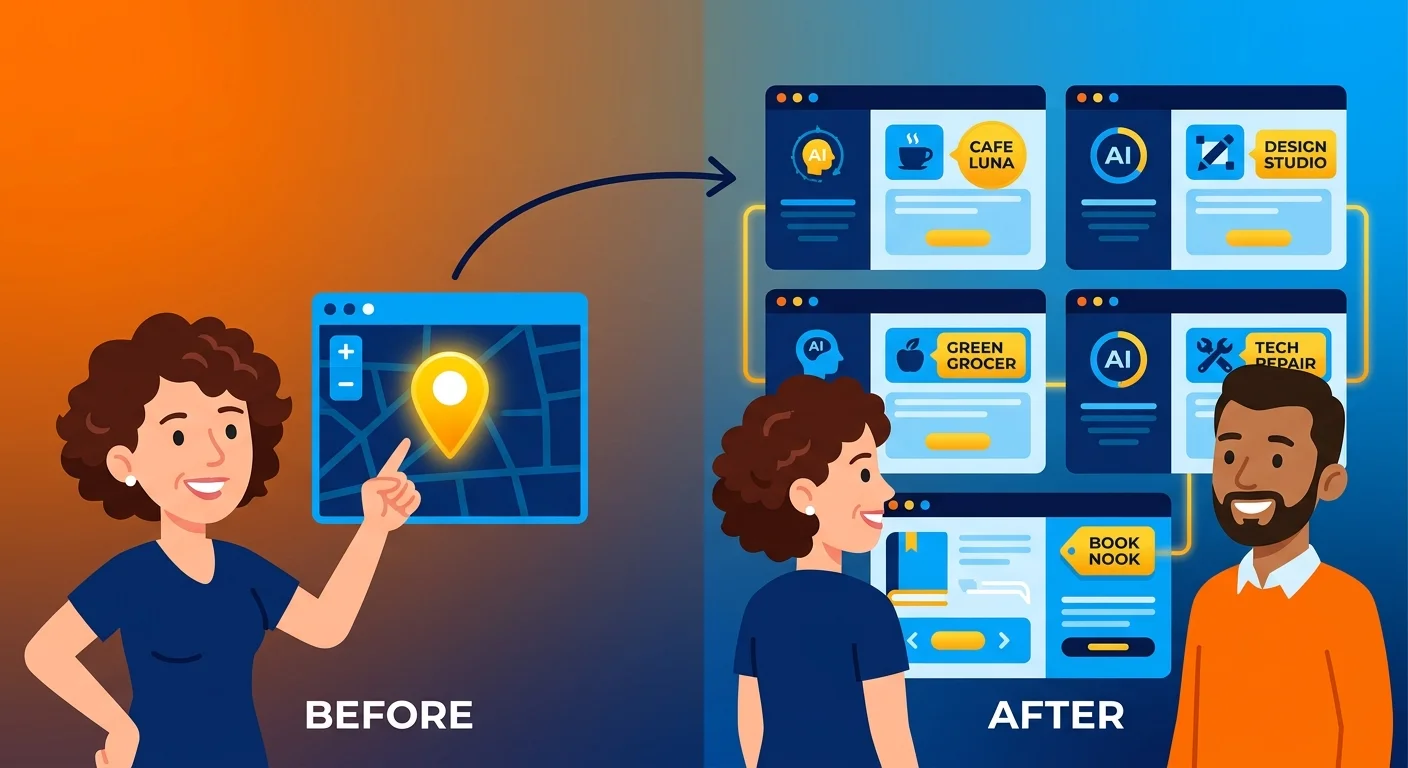
So does placing in the local map pack already solve this? Most practices swear it does. And that assumption is the single biggest blind spot a standard checklist never touches.
Sure, map placement measures something real: proximity, category matching, a few on-platform signals. But it says nothing about whether an AI engine can describe the practice accurately when it's stitching an answer from dozens of scattered sources. Two different questions, and only one of them shows up on a map.
Here's the mechanism that gets missed: map placement was built for the old model, back when the answer was a list of links instead of one authoritative pick. A high placement tells a searcher where to click. It tells an AI engine nothing about whether a practice's identity is consistent enough to cite.
Isn't Reputation Management the Same Thing as an AI Visibility Check?
Reputation management and an AI Visibility Diagnostic sound like the same thing. They're not the same discipline at all.
Reputation management watches star ratings and answers reviews as they land. That work matters. But it treats each platform as its own isolated inbox, not part of a connected authority profile.
An AI Visibility Diagnostic asks something else entirely. It checks whether the facts scattered across those same platforms agree closely enough for a generative engine to trust the entity behind them, the same synthesis problem those third-party publisher citations already exposed earlier.
Reading Your Practice's Authority Signals Across the Full Data Ecosystem
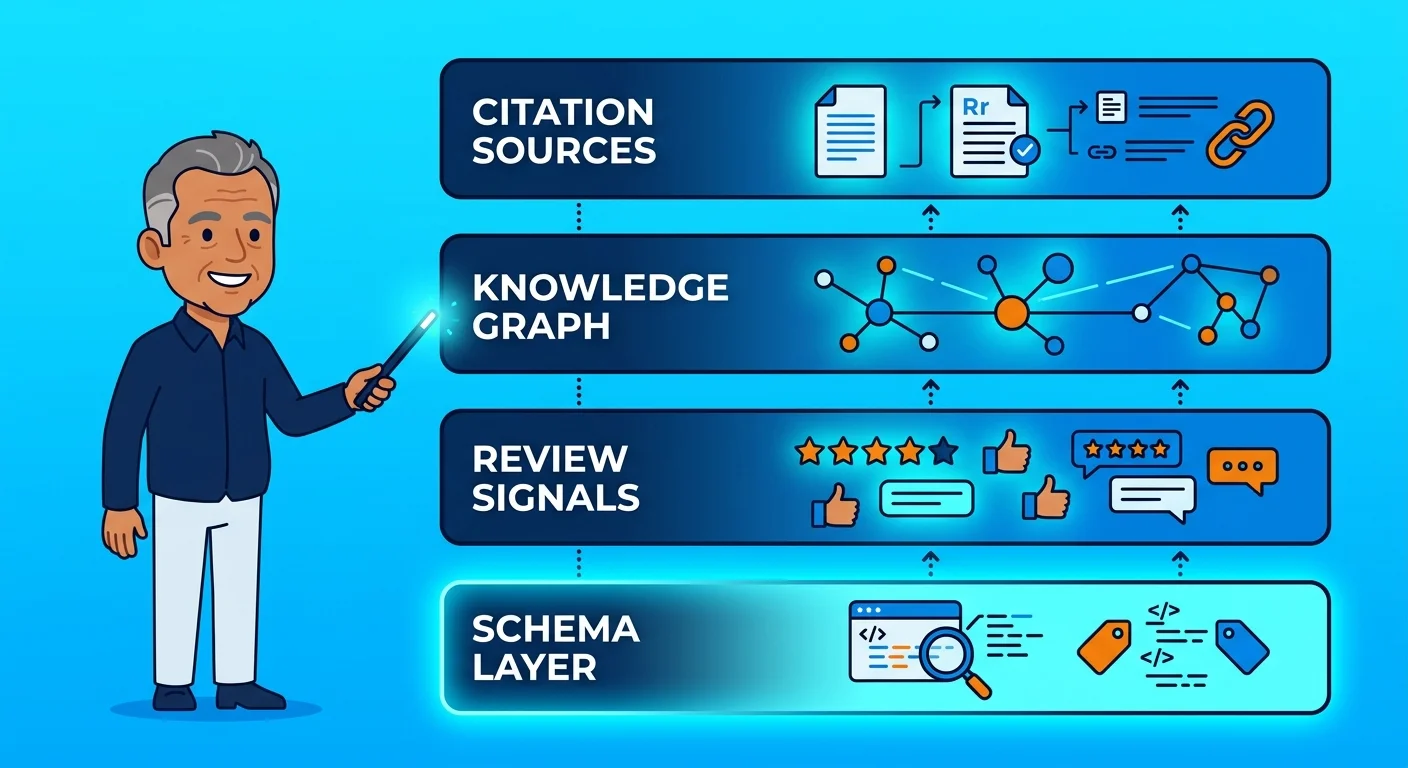
So what does reading the full ecosystem actually look like? You treat every platform that mentions the practice as one instrument in a single scan, not a separate errand to run.
Here's the hospital comparison again, made concrete. A standard checklist checks the vitals in one room and calls the patient healthy. A Multi-Engine AI Visibility Diagnostic scans the whole body, because an AI engine builds its answer from every organ in that body, not just the one behind the practice's own front door.
And that full-body view has to take in the structured data feeding Google's systems, the review language shaping trust signals, and the knowledge graph entries tying it all back to one verified entity.
| Layer | What It Communicates | Who Reads It |
|---|---|---|
| The Practice's Own Site | Owner-controlled claims about services, credentials, and positioning, written the way the practice wants to be seen | Visitors already deep enough into a search to click through, and the crawlers indexing the site itself |
| Directories and Review Platforms | Third-party confirmation of the practice's name, address, hours, and service language, written in the reviewer's or aggregator's own words | Generative engines cross-referencing independent sources before naming a practice as a trustworthy answer |
| Local Business Structured Data | Machine-readable specifics like business hours, departments, and review details, formatted for direct ingestion rather than interpretation | Google's own systems, feeding knowledge panels and map results without requiring semantic guesswork |
| The Knowledge Graph Entry | Whether every scattered fact about the practice resolves to one consistent, verified entity rather than several conflicting ones | The entity resolution process an AI engine relies on before it will cite a practice in a synthesized answer |
Structured Data and the Signals That Separate a Cited Practice From an Ignored One
Structured data is the clearest signal a practice actually controls. Most checklists still treat it as a technical formality instead of a trust mechanism.
Local Business structured data lets a practice hand Google's systems the specifics directly, including business hours, departments, and reviews, so the correct information surfaces in Search and Maps results, according to Google's documentation.
But structured data only earns trust if the reviews beside it say something coherent. Google reads review text semantically, weighing service-specific language as its own signal, and that weight shifts by sector, mattering more for a reputation-built practice than for one where proximity already dominates, according to Search Engine Journal's reporting.
Mapping the Layers a Diagnostic Reads That an Audit Skips
Layer one is the practice's own site, the only layer a standard checklist ever opens. Layer two is the directory and review ecosystem, where facts either reinforce the site or quietly contradict it.
Layer three is the knowledge graph itself, the model's internal record of who the entity is. A diagnostic reads all three together. An audit reads the first and calls the job done.
Frequently Asked Questions
So here's the short list. These are the questions practice owners actually ask once the ecosystem gap finally clicks. The practical ones, right before deciding what to fix first.
What's the difference between a standard audit for traditional search optimization and an AI Visibility Diagnostic?
A standard audit checks your own site and stops there. An AI Visibility Diagnostic checks whether every outside source an AI engine reads agrees with that site closely enough to trust.
If my practice already places in the classic ten blue links on Google Maps, do I still need to worry about AI visibility?
No. Map placement only confirms proximity and category matching. It says nothing about whether an AI engine can describe you correctly when it stitches an answer from other sources.
How long does it take to fix the data inconsistencies that make my practice invisible to AI?
It depends on how scattered your facts are across directories, review platforms, and knowledge graph entries. Fixing them means correcting each mismatch methodically, not editing one page once.
Can a standard audit tell me why my competitor shows up in an AI-generated answer and I don't?
Yes, but only if it looks past your own site. A competitor usually wins the citation because their scattered data agrees with itself, not because their site is built better.
What are the top data sources AI engines use for local practice information besides my website?
Directories, review platforms, and knowledge graph entries carry most of the weight. Structured data and review language both feed those sources. That's why they matter as much as the site.
The Bottom Line
A standard checklist was never built to see any of this. It was built for a single-room checkup, and a single room only ever reports on itself.
So the real choice isn't between two flavors of the same service. It's a vitals check in one room versus a full-body scan of every organ an AI engine reads before it names a practice in an answer. Only the Multi-Engine AI Visibility Diagnostic reads all three layers together, catches the mismatch before it costs a citation, and tells a practice what to fix instead of what to hope for.
Here's the position: a practice that only ever checks its own site is guessing at its own health. Want to find out what an AI engine actually sees before a competitor's cleaner data wins the citation? Start with a fifteen-minute AI Visibility Check.