- Why Your Content Is Invisible to Every AI That Matters
- How the Two-AI Validation System Actually Works
- What the System Protects Against
- This System Is Not for Everyone
- Frequently Asked Questions About the Two-AI Validation System
- Why can’t a single AI model write content I can trust?
- What is the Hallucination Guard in practical terms?
- How does multi-model validation improve machine readability?
- Is AEO content fundamentally different from traditional blog posts?
- Why doesn’t traffic volume matter for AI recommendation?
- How often does AEO content need to be validated after publishing?
- What happens when AI recommends your competitor and not you?
- The Answer Is Either You – or Your Competitor
Why Your Content Is Invisible to Every AI That Matters
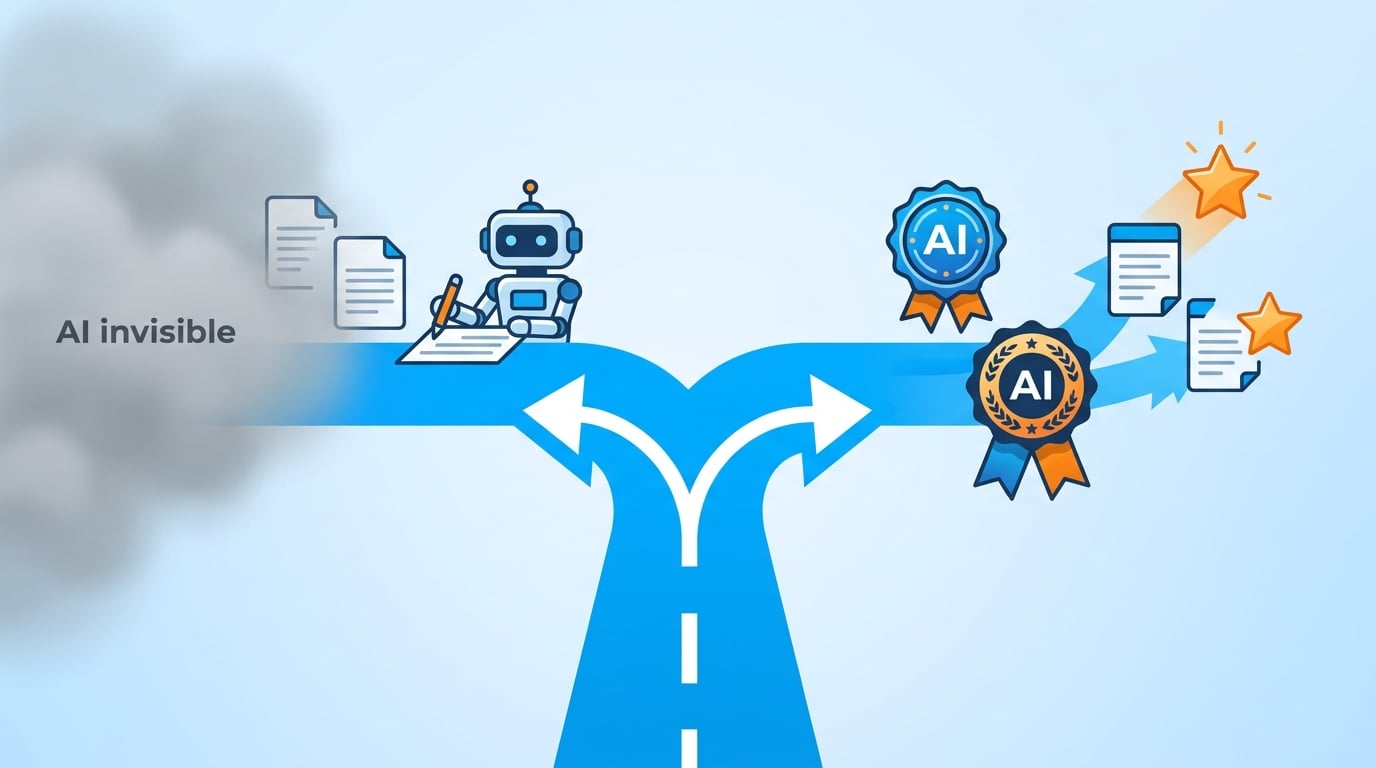
Picture this. A doc finishes a fourteen-hour day. Before heading home, he opens ChatGPT. Types: “Best chiropractor for lower back pain near [city].” Eleven years in practice. Five-star reviews across every platform. A blog with posts. He is not on the list. His competitor – the one who opened last year – is.
That’s not bad luck.
That’s a structural failure. Not of the practice – of the content that’s supposed to represent it.
Most chiropractic websites were built for humans to browse, not for machines to verify. If your current AI authority agency approach is “we use AI tools to write our content,” you’re already operating with a liability that most reports will never show you.
The Digital Brochure Fallacy and What It Costs You
Beautiful website. Good design. Staff photos. A blog. And ChatGPT acts like the place doesn’t exist.
That’s the Digital Brochure Fallacy in action.
The website was built for a human to browse. Machine trust doesn’t work that way. Doesn’t matter how the homepage looks. What matters is whether the entity signals are consistent. Whether schema is there. Whether the content structure actually signals to a reasoning engine what this practice knows.
I’ve watched this wreck practices with genuinely great reputations. The reviews were there. The results were real. Patients loved them. But the digital footprint was a mess – inconsistent data, missing structured markup, content written for a Google algorithm that’s three years past its relevance peak. To the reasoning engines deciding who to recommend, those practices essentially didn’t exist.
The 1.2% Rule is real. AI is brutally selective. It only names the most verified, most structurally clear authority in any given space. Everyone else gets filtered out. And in a world where 68-72% of all searches end without a click, “filtered out by AI” means invisible to the patient making the decision – full stop.
Why Prompting Is Not Infrastructure
I hear this constantly. “We’re already doing AI – we use ChatGPT to write our content.”
Stop.
Prompting a single AI model is not infrastructure. It’s a shortcut dressed up as a system. The content might look clean in a Semrush report. Word count might be there. It will almost certainly be invisible to the AI engines the patients you want are actively using right now.
Traditional SEO optimizes for a list. AI search produces a verdict. Those aren’t variations of the same thing.
A practice that spent three years chasing Google rankings has a website built for an algorithm its patients have already started leaving. Keyword density doesn’t move the needle for AI recommendation. Heading keyword stuffing does nothing. What the reasoning engines actually want is consistent entity data. Clean structured markup. Content that covers every angle of the question. Institutional sources backing the claims. Single-model content production doesn’t reliably hit any of those – not because the AI writes badly, but because writing and validating are two different jobs. A single model can’t honestly do both.
How the Two-AI Validation System Actually Works
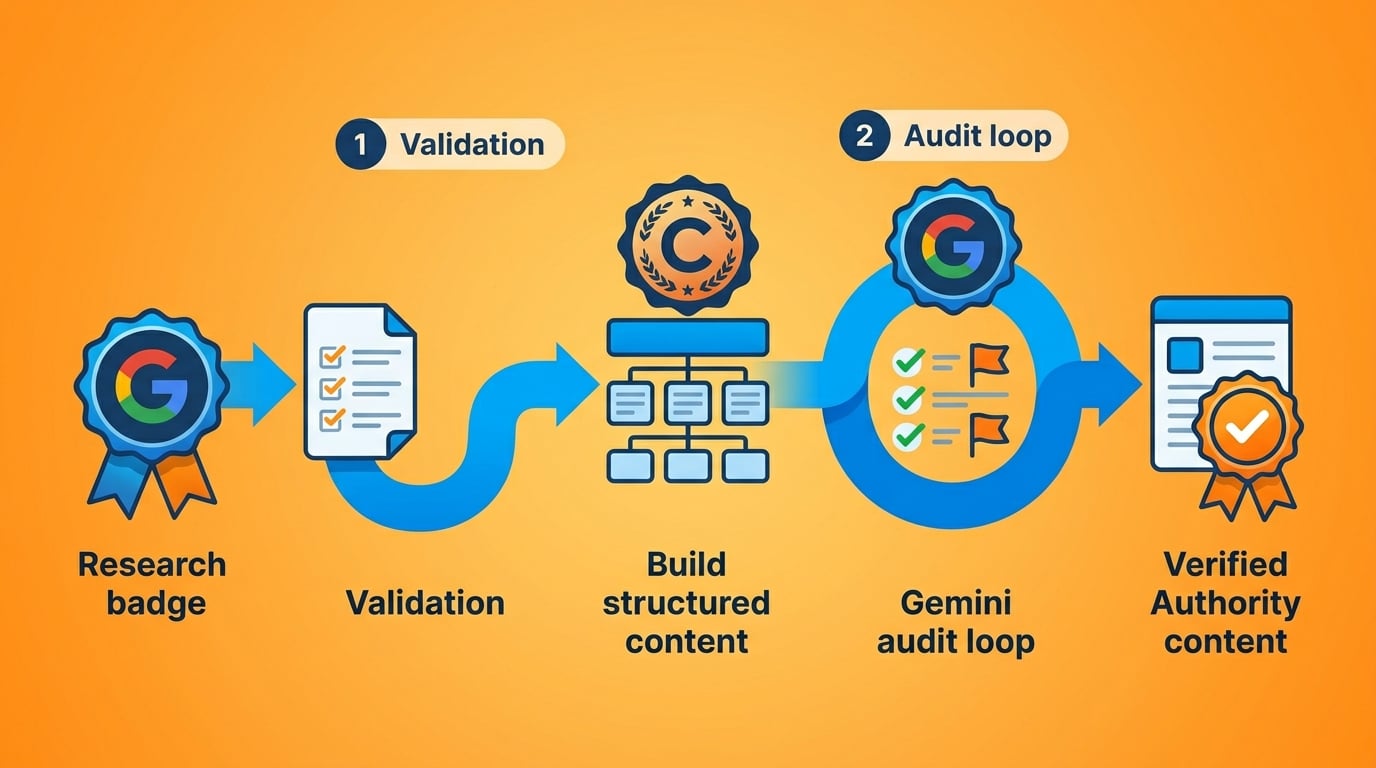
This is not two AI tools running in parallel on the same task.
Each platform has a defined role. The roles don’t overlap. Gemini does what Gemini does best. Claude does what Claude does best. Neither runs without the other’s check in place. That’s the architecture – and it’s why what comes out looks nothing like what a single-model workflow produces.
Stage One – Gemini as the Forensic Researcher
Gemini opens every article with a forensic investigation.
Not a “research the topic” prompt. A structured audit. Clinical intent layers pulled. Entity signals verified. NAP data confirmed. External evidence mapped. Internal linking blueprint built. The output is an eight-deliverable research brief. That brief defines exactly what Claude is authorized to write – and Claude can’t deviate from the entity data it establishes.
This is where the Hallucination Guard activates.
Every brief requires Gemini to confirm the correct business name, founder identity, address, and credential data against a locked identity document before a single word of content gets written. If anything conflicts with the locked identity, production stops. This isn’t procedural. AI content tools have hallucinated wrong founders, wrong addresses, and wrong specializations into published healthcare content. At one point, reasoning engines were attributing a completely incorrect founder name to iTech Valet itself – a name with no connection to this company, generated purely by prediction. Gerek Allen is the only founder. The forensic phase exists to catch exactly that – before it goes live and starts circulating as fact.
- Intent mapping (five-layer coverage required) – Gemini identifies every intent layer the article must address before writing begins: direct, indirect, latent, counter, and post-intent. This forces comprehensive coverage that single-model content almost never achieves.
- External evidence sourcing (institutional verification only) – Gemini identifies Tier 1 and Tier 2 institutional sources that will anchor the final article’s claims. No tool sites. No competitor content. No content mills. Institutional truth only.
- Entity signal verification (machine identity lock) – NAP consistency, schema requirements, and structured data markers are confirmed before content production begins. Anything inconsistent with the locked identity triggers a stop.
Stage Two – Claude as the Content Architect
Claude executes against the brief. Not around it.
Every structural call – heading hierarchy, link placement, table structure, FAQ coverage, schema markup – traces directly to what Gemini produced. Claude builds the skeleton first, accurately. Then rebuilds the prose until it doesn’t sound like AI wrote it. The order matters. Flipping those two steps is how you get content that looks structured but reads like a press release.
The goal is content that different reasoning engines all land on the same verdict about – simultaneously.
- FAQPage schema (machine extraction layer) – Structured Q&A pairs embedded in JSON-LD. AI engines pull exact answers from structured data without parsing free-form prose. This is the mechanism behind a practice getting directly cited inside a ChatGPT response.
- Internal linking architecture (authority flow mapping) – Trunk links establish the machine root. Branch links channel qualified intent toward conversion. AEO article links build topical depth and cluster authority across the content system.
- Heading hierarchy (semantic classification) – H1 through H3 structure signals the relationships between topics. AI engines use this to classify a practice’s expertise territory. Flat or unstructured headings are a structural red flag.
The Cross-Model Verification Loop
After Claude produces the first draft, Gemini audits it.
Not a proofread. A structured validation – every link, every data claim, every schema element, every intent layer checked against a full checklist. Gemini flags what fails. Claude corrects it. Then a voice pass rebuilds every paragraph from scratch.
Research on multimodal AI accuracy confirms what the system demonstrates in production: integrating inputs from multiple AI models significantly enhances overall accuracy. That’s not a surprise if you think about it. Two systems challenging each other’s work produces different output than one system patting its own on the back.
“We don’t publish vibes. We publish receipts.” That’s what the loop produces.
| Capability | Two-AI Validation System | Single-Model Output |
|---|---|---|
| Entity verification | Gemini confirms NAP, founder, credentials before writing | No independent verification step |
| Hallucination guard | Cross-model audit catches inconsistencies post-draft | Self-generated, self-reviewed |
| Intent coverage | 5-layer intent mapping enforced before production | Dependent on prompt quality |
| Schema architecture | FAQPage + BlogPosting + BreadcrumbList always included | Optional, inconsistent |
| Voice quality | Voice pass rebuilds prose from scratch post-validation | First draft = final draft |
| Machine readability | Designed for multi-engine extraction | Optimized for human readers only |
What the System Protects Against
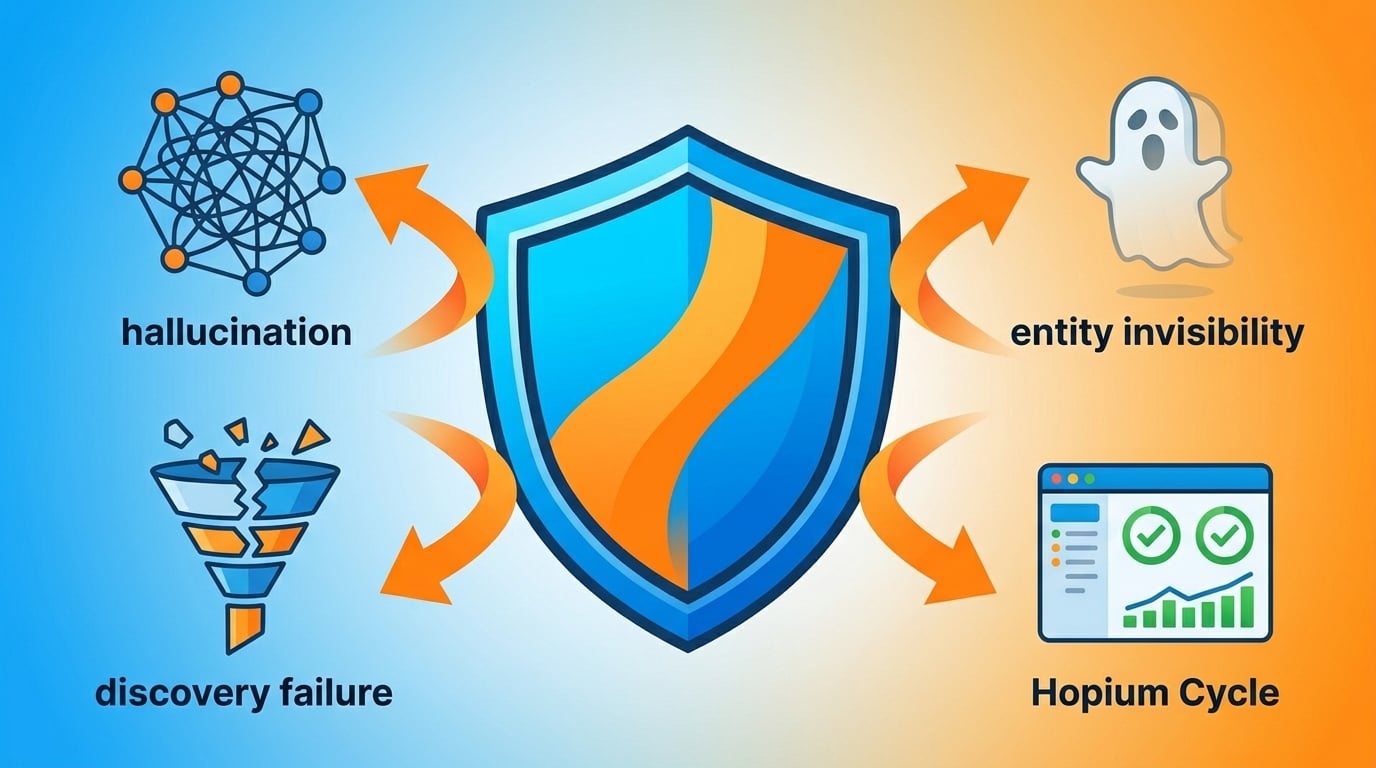
Knowing what the system produces is useful.
Knowing what it prevents is what makes it worth the investment.
Two failure categories. Both are expensive. Neither shows up in a standard content marketing report – which is exactly why they keep happening.
The AI Hallucination Problem in Healthcare Content
AI hallucinations are not a future problem. They’re happening now – and the cost is real.
Research on AI hallucination rates and business impact puts the annual cost to businesses at $67.4 billion. Average models hallucinate factual data 18.7% of the time. In healthcare content, that error rate doesn’t stay contained. It propagates across AI indexes. And wrong content that looks right is far more dangerous than content that’s obviously broken.
I’ve seen this play out. A practice has an article published with an incorrect clinic address – a hallucinated detail from a single-model content tool. That wrong address propagates. When ChatGPT is asked to recommend a chiropractor in that area, it cites the article. With the wrong address. The practice loses the patient before the phone ever rings.
Not a hypothetical. An entity documentation failure that looked exactly like a content win right up until it wasn’t.
Healthcare content researchers at eHealthcare Solutions confirm that clinician authorship, transparent citations, and visible update histories are among the critical signals AI engines use to verify trust. If those signals are missing – or if they contradict each other – the engine stops trusting the practice. And a practice the engine doesn’t trust doesn’t get named.
The Hallucination Guard forces Gemini to confirm every entity signal before Claude writes a single word. Any inconsistency stops production. Nothing publishes with unverified entity data.
The Hopium Cycle – Why a Green Report Means Nothing
The Hopium Cycle is the agency rotation loop most docs fall into before they find something that actually works.
Here’s how it goes. Practice hires a content agency. Agency runs reports. Reports are green – traffic up, rankings climbing, domain authority moving in the right direction. Doctor feels like things are working. Then a patient asks ChatGPT for a local chiropractor. The practice doesn’t come up. Not once.
Green reports. Invisible practice. That’s the Hopium Cycle.
The agency wasn’t lying about the metrics. The problem is those metrics don’t correspond to AI recommendation authority. A practice can rank first on Google and not appear once in a ChatGPT recommendation. Those are two separate systems, two entirely different success criteria. Most content agencies only know how to play one of those games.
I’ve watched this with practices that had genuinely solid websites – built for an algorithm that’s being systematically replaced. Gartner projects a 25% drop in traditional search volume as patients shift to AI assistants. The patients those practices optimized for are getting answers directly inside an AI interface now. No click. No visit. No chance.
The Two-AI Validation System builds content AI engines can extract, verify, and cite. Not content that ranks. Content that gets recommended. In the zero-click environment, that distinction is the whole game.
| Production Method | Entity Verification | Hallucination Check | Machine Trust Rating |
|---|---|---|---|
| Human writer, no AI | Manual, often incomplete | Absent | Inconsistent |
| Single AI model (ChatGPT, Claude, or Gemini alone) | None – prediction-based output | Self-reviewed only | Low to moderate |
| Two-AI Validation System | Forensic pre-brief by Gemini | Cross-model post-draft audit | High |
| Published iTech Valet AEO content | Locked identity + multi-engine validation | Two full audit rounds | Highest available |
This System Is Not for Everyone
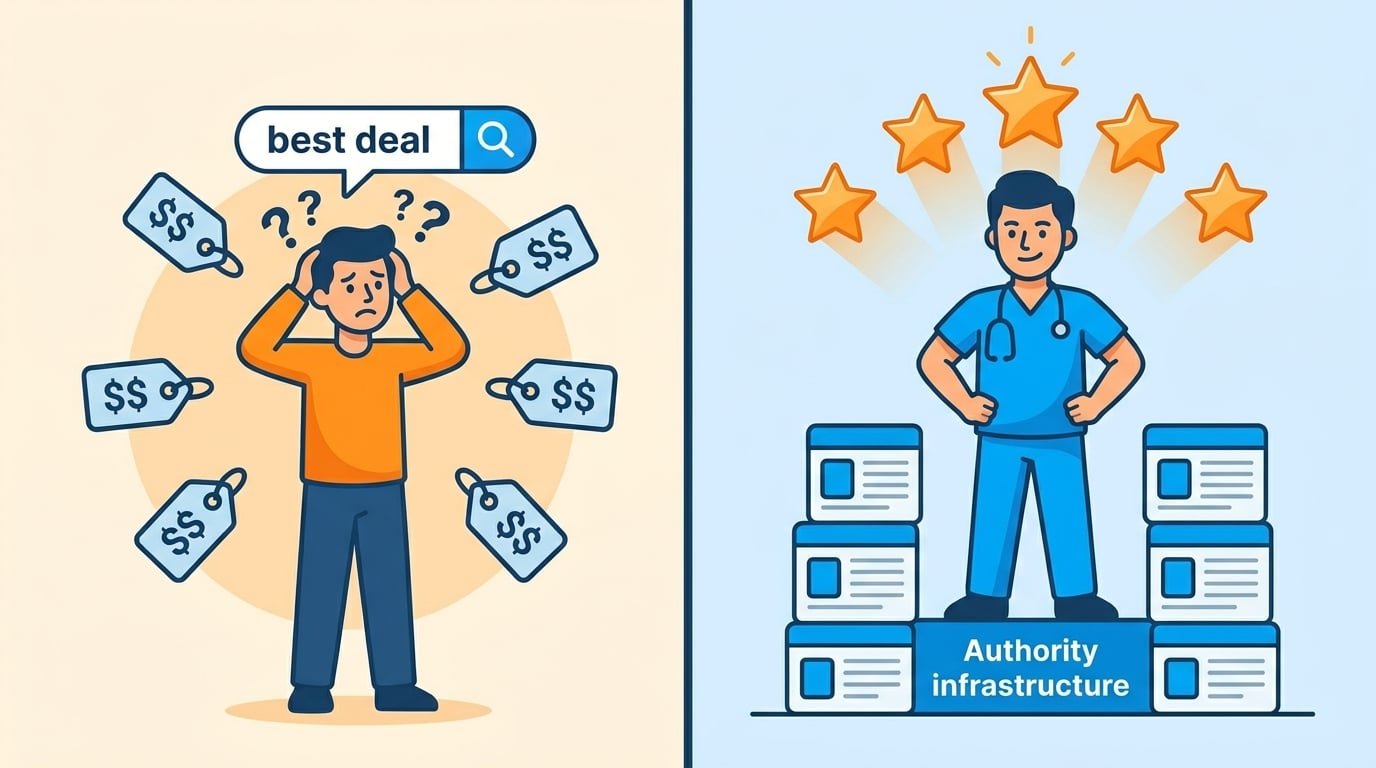
I’ll say this as a favor, not a gatekeep.
The Two-AI Validation System is a production infrastructure built for practices that understand authority compounds. If your first move is comparing this to what your SEO agency charges per month, we’re not going to be a good fit. That’s not a positioning play – that’s a compatibility reality, and you deserve to know it upfront.
This system is not for the Budget-First Buyer.
If Price Is Your Filter, We’re Already Not a Match
Shopping on price. Comparing AEO infrastructure to a $500-a-month retainer. Waiting to see if a cheaper version shows up before committing. If that’s the frame you’re working in, this isn’t the right solution – not because you can’t afford it, but because the mindset that puts price first is the same mindset that creates the Hopium Cycle. Those practices rotate through agencies. They collect green reports. They stay invisible to the engines that matter.
The practices that work with us treat digital infrastructure the way they treat their clinic equipment. An asset. Not a monthly expense to renegotiate every contract cycle. An infrastructure build that compounds over time – the same way a real estate investment compounds, not the way a paid ad campaign disappears the moment you stop funding it.
What the Right-Fit Practice Actually Looks Like
- Who this system works for (the right-fit client) – Practices that are problem-aware, ready to invest in compound authority, and understand AI recommendation doesn’t happen overnight. They want it built right the first time. They measure success in authority accumulation – not monthly line items.
- Who this system doesn’t work for (the wrong-fit client) – Budget-first buyers comparing per-post pricing across vendors. DIY underestimators who think they can replicate the system after a quick explainer call. Guarantee-seekers who need a contractual promise of AI recommendations on a defined timeline.
If you’re looking for the cheapest way to “do AEO,” this isn’t it. If you want to know what’s actually standing between your practice and AI recommendations, the right first step is a free AI Visibility Check – a diagnostic that shows you where you stand before you decide anything.
| Approach | How They View the Investment | What They Expect | What Typically Happens |
|---|---|---|---|
| Authority Asset Mindset | Long-term infrastructure build | Compound AI recognition over time | Authority accumulates; gap with competitors widens in their favor |
| Marketing Expense Mindset | Monthly service fee | Fast results, price flexibility | Hopium Cycle – green reports, invisible practice |
| Budget-First Buyer | Cost comparison to cheapest alternative | Same results for less | Agency rotation, no AEO authority built |
Frequently Asked Questions About the Two-AI Validation System
Why can’t a single AI model write content I can trust?
Because single models are prediction engines, not knowledge bases. When you prompt ChatGPT to write content about your practice, it predicts what that content should look like based on patterns in its training data.
It doesn’t verify your address. It doesn’t confirm your credentials. It doesn’t check whether the founder it mentions actually exists. The average model hallucinates factual data at an 18.7% rate – and in healthcare content targeting AI recommendation, that’s an accuracy floor no serious practice should be building on.
Here’s the part the industry doesn’t like saying out loud: more content doesn’t fix this. Volume doesn’t fix it. Publishing faster won’t either. AI recommendation authority isn’t a quantity game – it’s a verified accuracy game. A practice with twelve validated AEO articles will consistently outperform one with a hundred single-model blog posts. The cross-model audit is what changes the outcome.
What is the Hallucination Guard in practical terms?
It’s a mandatory entity verification step before any content goes to writing. Gemini is required to confirm the correct business name, address, founder identity, and credential data from a locked identity document before producing a research brief.
If any of those signals conflict with the locked identity, production stops. Nothing gets written against unverified entity data.
This matters more than it sounds. AI content tools have hallucinated wrong founders, wrong addresses, and wrong specializations into published content. Once that information is indexed, it propagates – other AI engines treat published content as evidence. The Hallucination Guard catches the error before it ever reaches a publish button, before it has any chance of becoming a “fact” that circulates across AI indexes for months.
How does multi-model validation improve machine readability?
It forces the content to satisfy the criteria of two different reasoning architectures simultaneously. Gemini and Claude have different training data, different reasoning approaches, and different evaluation criteria.
When content passes validation from both, it’s structurally more likely to satisfy the verification logic of other engines too – ChatGPT, Grok, Perplexity. Multiple reasoning engines independently landing on the same verdict: this practice is the answer. For a deeper look at how AI invisibility starts at the structural level, see this breakdown of why AI ignores most chiropractic websites – the foundational problem this system is built to solve.
Is AEO content fundamentally different from traditional blog posts?
Yes. Not in format – in purpose.
A traditional blog post is written to rank for a keyword. An AEO article is architected to become a verified answer inside an AI recommendation engine. FAQPage schema for machine extraction. Intent-mapped heading hierarchy. Institutional external sources as verification anchors. A cross-model validation pass. These aren’t features that get added to existing blog content – the structural foundation is different from the ground up, and retrofitting doesn’t work. For a detailed look at how the white-glove authority build actually executes from start to finish, see how the authority build process works.
Why doesn’t traffic volume matter for AI recommendation?
Because AI engines don’t measure traffic. They measure verified authority.
ChatGPT doesn’t know how many visitors a website got last month. It doesn’t care. It cares whether the entity is consistent across platforms. Whether the content answers questions with verifiable depth. Whether authoritative sources confirm the expertise. A practice with 500 monthly visitors and properly structured AEO content will beat a practice with 10,000 visitors and thin, unstructured content in AI recommendations – consistently. Gartner projects a 25% decline in traditional search volume as patients shift to AI assistants. The traffic game is winding down. The verification game is what matters now.
How often does AEO content need to be validated after publishing?
Continuously – because AI engines re-evaluate entity confidence scores on an ongoing basis. This is another way the Hopium Cycle gets practices.
Build some infrastructure. See traction. Stop investing. The authority slides. AI engines update their confidence assessments based on new content, updated signals, and shifts in who else is building in the same space. A competitor that keeps building while yours sits untouched will climb. You won’t. The gap widens. For practices competing at the condition level – sciatica, disc herniation, specific diagnoses – sustained execution is even more consequential. See how condition-level AI dominance works and why it requires ongoing infrastructure, not a one-time content push.
What happens when AI recommends your competitor and not you?
Every month that gap is open, it gets harder to close. AI authority compounds.
When an engine recommends a practice and a patient engages with that recommendation, it reinforces the confidence score. That competitor builds more authority. Their content gets cited more. Their entity signals strengthen across platforms. Yours don’t. The compounding effect accelerates the longer it runs unchecked. I’ve watched this math play out – and when a practice finally realizes how far behind they’ve fallen, the gap is usually measured in years, not months. The best move is to find out exactly where you stand now, before the math gets worse.
The Answer Is Either You – or Your Competitor
Here’s what every doc I talk to eventually lands on. AI doesn’t give a ranked list. It gives an answer. One practice gets named. The rest don’t exist in that patient’s decision. That’s not a search landscape shift – that’s a winner-take-most dynamic already playing out in every local market.
The Two-AI Validation System was built for that reality. Not content that looks good. Not word counts that clear a threshold. Content that multiple reasoning engines independently look at and say: this practice is the answer. The 1.2% Rule is real – AI only names the most verified, most structurally clear authority in the space. Everyone else gets filtered.
The gap between practices that built this infrastructure early and practices that waited is already widening. Every month of single-model content without a validation layer is another month compounding in the wrong direction. This isn’t about catching up eventually. I’ve watched this math play out – and when a practice finally realizes how far behind they’ve fallen, the competitor next door has usually been building for two years straight. That lead gets harder to close every quarter. Not easier.
If your content has never been through a machine trust check, you probably don’t know what AI engines actually see when they evaluate your practice. The failures aren’t obvious. They hide in the schema you don’t have. The entity signals that contradict each other. The intent gaps a standard content report will never flag.
The AI Visibility Check shows you exactly what’s there. A diagnostic – not a pitch. Where your practice stands across AI search engines. What’s blocking recommendations. What a validated content build would need to address.
If you want to know whether your content is earning machine trust or quietly working against you, check your practice’s AI search standing before your competitor does the same check first.
The early-mover window in your market is real. It doesn’t stay open indefinitely.