
AEO for Chiropractors: The AI Authority System™ in Action
 by Gerek Allen ~ Last Updated: February 6th, 2026 ~ 10 Min Read
by Gerek Allen
~ Last Updated: February 6th, 2026 ~
~ 10 Min Read ~
AI search engines recommend chiropractors based on something called "Consensus Trust." Basically, does the internet agree you're the local expert on back pain? Not your opinion. Not your marketing. What everyone else says about you.
Here's the thing... this isn't about keywords anymore.
When someone asks ChatGPT for a chiropractor, the AI checks dozens of sources to decide if you deserve the recommendation. Your Google reviews. Your Foursquare listing (yeah, that still matters). Whether your address matches everywhere. Whether your content actually answers the question.
And here's the kicker: ChatGPT recommends just 1.2% of local businesses. Compare that to Google's local 3-Pack showing 35.9% of businesses.
That makes AI nearly 30 times more selective than traditional search.
No fallback list. No second page. If you're not in that 1.2%, you're invisible when a patient asks for help with their back pain.
The old playbook? Dead. Ranking on page one doesn't mean ChatGPT will mention you. Most practices are completely unprepared for this shift in the future of chiropractic search.
Let's break down exactly how AI decides who gets recommended—and what you can do about it.
The AI Recommendation Loop: How LLMs Actually Pick Chiropractors
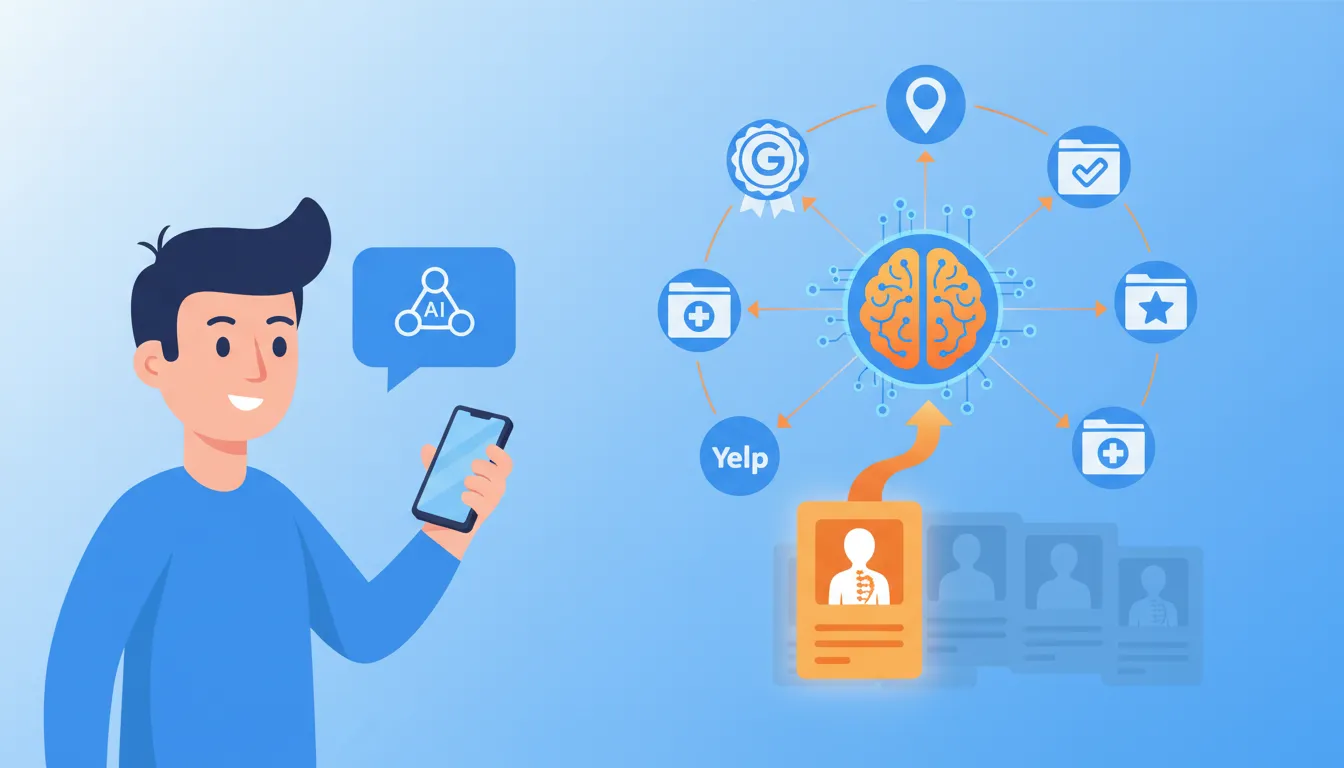

Most docs think ChatGPT works like Google. Type in a search, get a list of options.
Nope.
When someone asks an AI assistant for a chiropractor, the AI has to pick one answer. Maybe two or three. Not ten blue links—an actual recommendation.
That changes everything.
Where ChatGPT Actually Gets Its Data
Here's something that'll surprise you: ChatGPT doesn't pull from Google Maps.
Research on LLM local search shows over 70% of local results in ChatGPT come from Foursquare. Remember Foursquare? That check-in app from 2012? Still powering AI recommendations in 2026.
So while you're obsessing over your Google Business Profile (which you should), ChatGPT literally can't find you if your Foursquare listing is garbage.
The data sources AI actually uses:
- Foursquare Places API (ChatGPT's main source) - Your name, category, address, photos, ratings
- Bing's Search Index (secondary) - Website content, business info, citations
- Review Platforms (reputation) - Yelp, Healthgrades, Google Reviews
- Structured Data (verification) - Schema markup on your website
- Third-Party Citations (authority) - Healthcare directories, local news mentions
Sound like a lot? It is. And if any of these sources contradict each other, AI gets confused and skips you entirely.
The Three Things AI Evaluates
AI judges your practice on three criteria. Miss any one of them and you're out.
Entity Strength is whether your practice information matches everywhere. Same name. Same address. Same phone number. Across 50+ platforms. If "Suite 100" appears as "Ste 100" somewhere, that's a problem.
Clinical Wedges are your specific specializations. "We treat back pain" describes every chiropractor. "Spinal decompression for herniated discs" gives AI a reason to recommend you for specific queries.
Consensus Trust is what the internet collectively says about you. Not just star ratings—the actual content of your reviews, whether other sites cite you as an authority, how comprehensive your content is.
| Entity Strength | Identical NAP data everywhere | Inconsistencies = AI doesn't trust you |
| Clinical Wedges | Specific condition expertise | Generic positioning = no match to queries |
| Consensus Trust | Reviews, citations, content depth | Low trust signals = skipped |
| Data Freshness | Recent reviews, updated info | Stale data = inactive practice |
| Structured Data | Schema markup on site | No schema = AI can't verify you |
Why Your Google Ranking Doesn't Matter Here
Alright, quick reality check.
You can rank #1 in Google and still be invisible to ChatGPT.
SOCi's 2026 research found only 45% overlap between brands that dominate traditional local search and those that AI actually recommends.
Less than half.
Traditional SEO rewards backlinks, keyword optimization, technical stuff. AI recommendations reward clarity, consistency, specificity, and reputation.
Different game entirely.
Onely's research on ChatGPT found that 28% of ChatGPT's most-cited pages have zero organic Google visibility. The brands winning in AI aren't necessarily the brands winning in traditional search.
The 1.2% Rule: Why AI Is So Brutally Selective
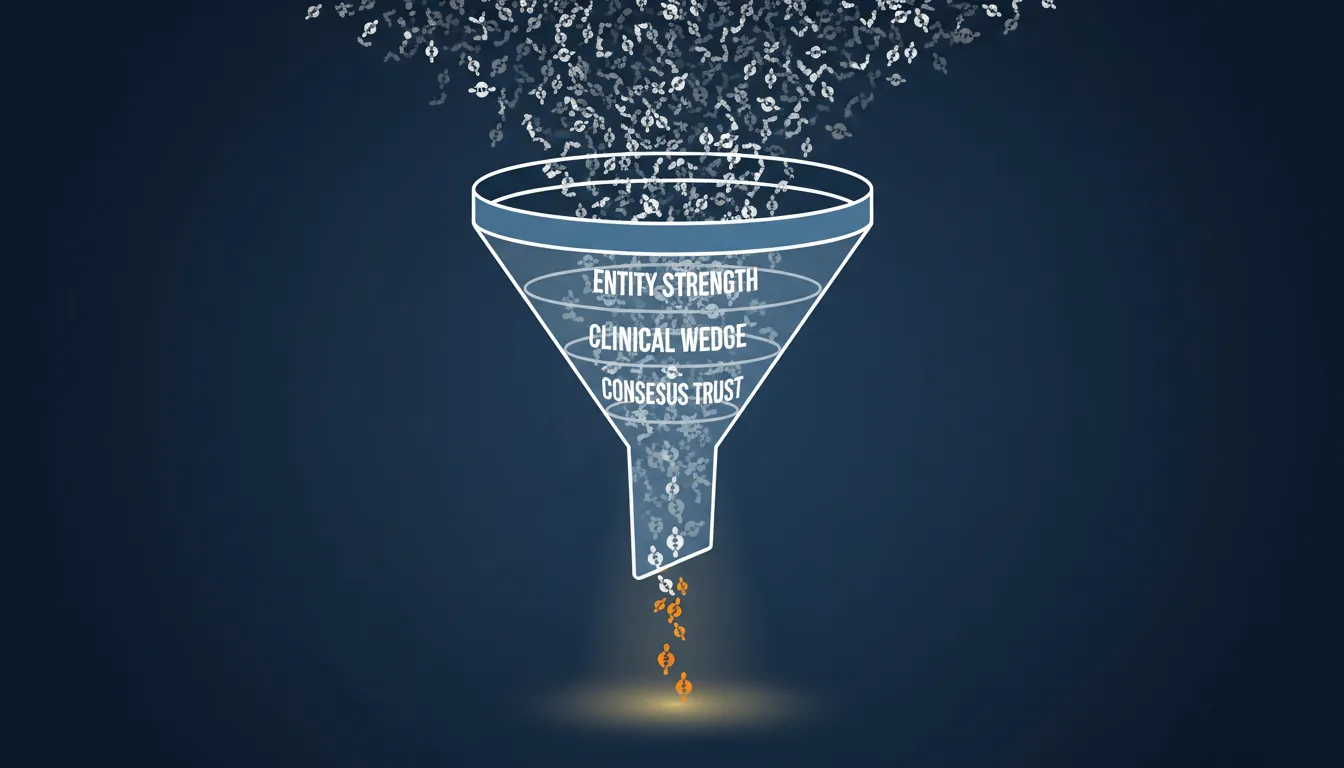
Let's talk about that 1.2% number because it should scare you.
ChatGPT recommends 1.2% of local business locations. That means 98.8% are invisible to AI-driven discovery.
This isn't a bug. It's by design.
Why AI Has to Be Picky
Think about how traditional search works. Google shows ten blue links because it's hedging. Not sure which result is best? Here are ten options—figure it out yourself.
AI assistants don't work that way.
When someone asks ChatGPT "who's the best chiropractor for my sciatica near downtown," they want an answer. Not options. An answer.
So AI has to choose. And when you have to choose, you get really picky about who makes the cut.
SOCi's data shows locations recommended by ChatGPT average 4.3-star ratings. That's not a minimum—it's an average. AI favors practices with stellar reputations because recommending a bad chiropractor makes the AI look bad.
Here's the thing... weak local signals in traditional search mean lower rankings. Weak local signals in AI discovery mean complete invisibility.
Big difference.
What "Consensus Trust" Actually Means
Consensus Trust isn't one metric. It's what happens when AI cross-references everything the internet says about you and decides whether you deserve a recommendation.
Think of it like this: if a stranger asked 100 people in your town about chiropractors, would your name come up? Would people mention specific conditions you treat? Would they have good things to say?
That's Consensus Trust.
Building it requires:
- Review Sentiment - AI reads review content, not just stars. "Dr. Smith's spinal decompression fixed my sciatica after three sessions" beats "great chiropractor" every time.
- Citation Consistency - Your practice name, specialties, and credentials appearing identically across directories, news mentions, and professional associations.
- Content Depth - Comprehensive content explaining conditions, treatments, outcomes. Stuff AI can actually cite.
- Recency Signals - Fresh reviews, updated content, active engagement. Signs you're still in business and thriving.
The Review Quality Problem
Most chiropractors think their 4.8-star rating means they're set.
Nope.
AI analyzes what reviews actually say. A review that just says "fixed my back" tells AI nothing useful. A review that says "Dr. Johnson's flexion-distraction technique resolved my L4-L5 disc bulge after insurance denied surgery" tells AI exactly when to recommend you.
Research on ChatGPT recommendations shows the platform considers authoritative list mentions (41%), awards and accreditations (18%), online reviews (16%), customer examples (14%), and social sentiment (11%).
Reviews are only 16% of the equation. And that 16% is about content quality, not star counts.
| "Great chiropractor, highly recommend!" | Low | No specifics, applies to anyone |
| "5 stars, fixed my back" | Low | Generic condition, no treatment detail |
| "Dr. Smith's activator technique helped my 8-year-old with torticollis" | High | Specific technique, condition, patient type |
| "After 3 months of failed PT, the decompression protocol here addressed my herniated disc" | High | Shows differentiation, outcome, specific treatment |
NEED MORE CLIENTS?
Free conversion-focused analysis uncovers the 3 biggest problems killing your bookings — we'll walk you through your results personally
Clinical Wedges: Why Generalists Get Ignored
Here's a pattern I see constantly: chiropractors marketing themselves as "we treat back pain."
Cool. So does every other chiropractor in your city.
When your entire online presence says the same thing as everyone else, AI has no reason to pick you over competitors. You're all equally generic.
Clinical Wedges fix this.
What Makes a Good Clinical Wedge
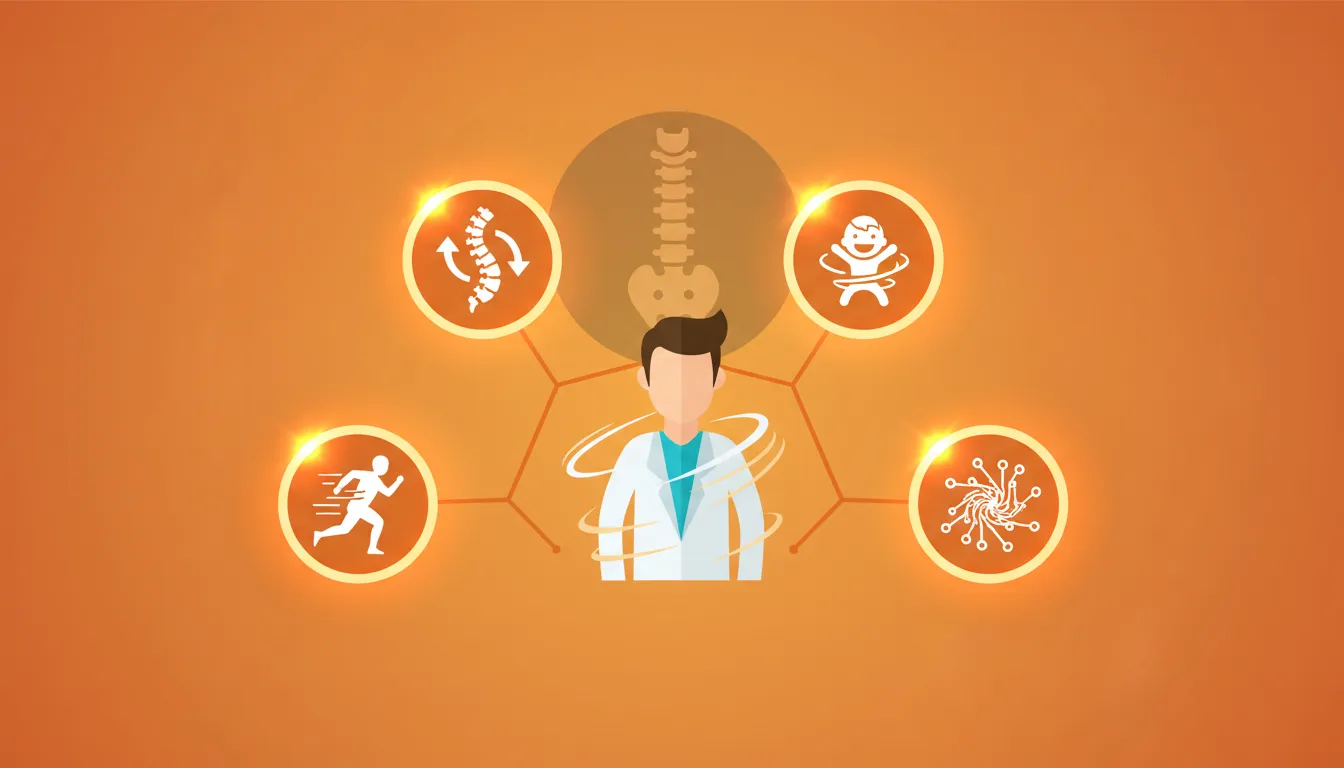
A Clinical Wedge is a specific focus that AI can match to specific patient queries. The best ones combine three things:
Condition Specificity - Not "back pain" but sciatica, herniated discs, spinal stenosis, degenerative disc disease. Each condition represents different patients with different search behavior.
Treatment Differentiation - Not "chiropractic adjustment" but Cox Flexion-Distraction, spinal decompression therapy, activator method, Graston Technique. Specific techniques give AI a reason to recommend you.
Patient Population - Not "everyone" but athletes, pediatric patients, pregnant women, seniors, post-surgical rehab. Narrower focus means stronger AI matching.
Practices using the chiropractic AI authority system approach get this. Specificity beats generality every single time in AI discovery.
Making Your Clinical Wedge Visible Everywhere
Your specialization can't just live on your website. It needs to appear everywhere AI looks:
- Website - Dedicated service pages for each specialization. 2,500+ words covering conditions, treatments, outcomes.
- Google Business Profile - Primary and secondary categories reflecting your focus. Service descriptions mentioning specific conditions.
- Foursquare - Updated categories and descriptions. (Remember: ChatGPT's main data source.)
- Healthcare Directories - Healthgrades, Zocdoc, WebMD profiles highlighting your clinical focus.
- Review Strategy - Guide patients toward mentioning specific conditions and treatments.
You're not limiting who you treat. You're making sure AI knows exactly when to recommend you.
Clinical Wedge Examples
Here's how this plays out in practice:
| Spinal Decompression | "chiropractor for herniated disc," "non-surgical disc treatment" | Decompression page, case studies, before/after imaging |
| Pediatric Chiropractic | "chiropractor for kids," "infant torticollis treatment" | Pediatric content, age-appropriate explanations |
| Sports Injury Rehab | "chiropractor for athletes," "running injury chiropractor" | Sport-specific pages, athlete testimonials |
| Neuropathy Treatment | "peripheral neuropathy chiropractor," "nerve damage treatment" | Neuropathy protocol content, success rates |
| Prenatal Chiropractic | "pregnancy chiropractor," "Webster technique near me" | Pregnancy content, Webster certification, trimester guides |
Entity Strength: The Foundation AI Needs to Trust You
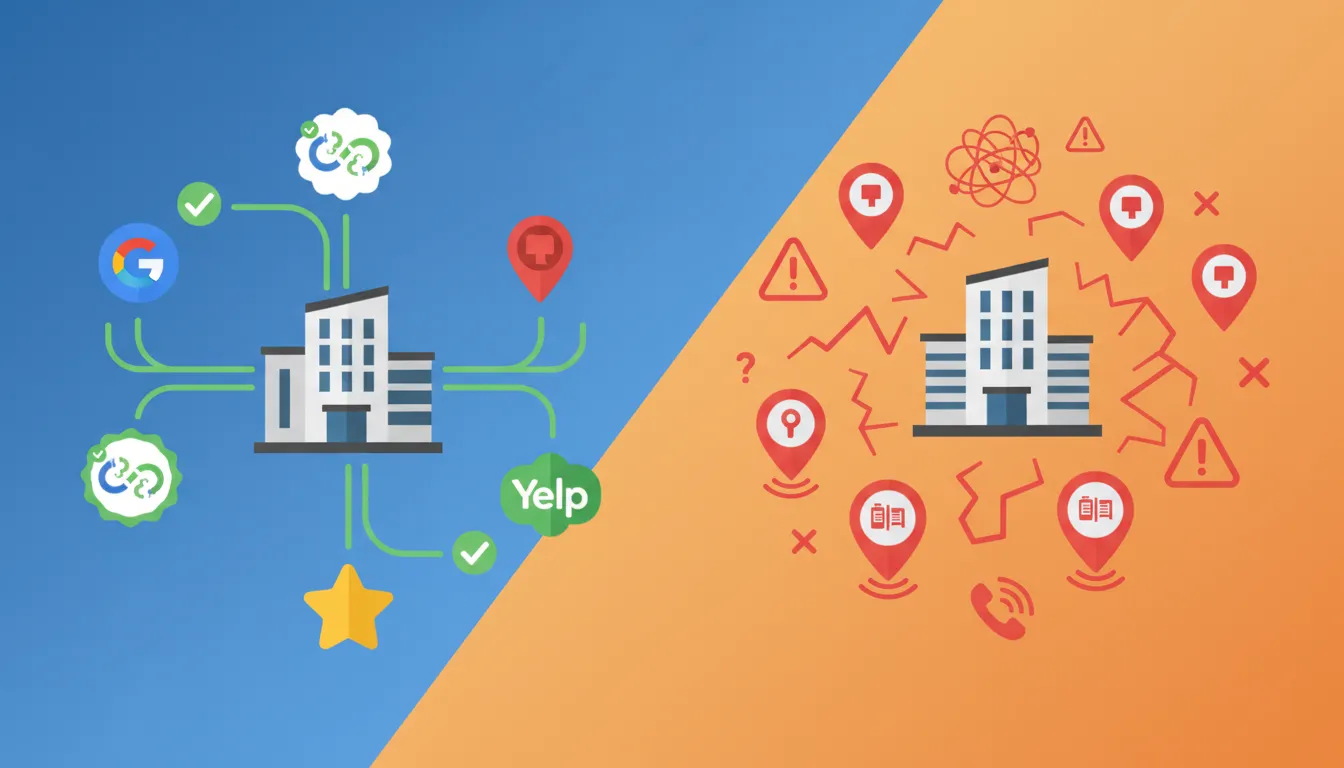
Before AI recommends you, it needs to verify you're legit. Entity Strength is that verification—does your business info match everywhere the AI checks?
Sounds simple. It's not.
The NAP Problem Nobody Talks About
NAP stands for Name, Address, Phone. Basic stuff, right?
You'd be shocked how many chiropractors have inconsistencies they don't even know about.
Common problems that destroy Entity Strength:
- Name Variations - "Smith Chiropractic" vs "Smith Chiropractic Clinic" vs "Dr. John Smith Chiropractic"
- Address Formatting - "Suite 100" vs "Ste 100" vs "#100" vs nothing at all
- Phone Formats - "(555) 123-4567" vs "555-123-4567" vs "5551234567"
- Old Information - Previous addresses or phone numbers on forgotten profiles
AI uses exact-match logic. Even tiny variations can fragment your Entity Strength across what AI sees as multiple different businesses.
Now... this part matters.
AI doesn't just lower your ranking when data conflicts. It skips you entirely. Why recommend a business it can't verify?
Fixing Entity Strength Systematically
You need to audit and correct information across every platform AI sources. Here's the priority order:
Fix first (primary platforms):
- Google Business Profile - Most important for Google's AI Overviews
- Foursquare - ChatGPT's main data source
- Bing Places - Secondary ChatGPT source, primary for Microsoft Copilot
- Apple Maps - Critical for Siri and Apple Intelligence
Healthcare directories:
- Healthgrades
- Zocdoc
- WebMD
- Vitals
- RateMDs
Review platforms:
- Yelp
- TripAdvisor (yes, chiropractors show up here)
Professional directories:
- State chiropractic association
- ACA directory
- Insurance provider directories
Create a spreadsheet with your exact NAP format. Then verify every platform matches exactly. This AI SEO strategy for chiropractors foundation makes everything else possible.
Structured Data: Speaking AI's Language
Schema markup is code you add to your website that explicitly tells AI what your practice offers. Without it, AI has to guess. With it, AI can verify and cite you directly.
Essential schema for chiropractic practices:
- MedicalBusiness - Practice type, medical specialties, accepted insurance
- LocalBusiness - Location, hours, contact info
- FAQPage - Common patient questions formatted for direct AI citation
- MedicalCondition - Conditions you treat with clinical accuracy
- Physician/Person - Practitioner credentials and expertise
HubSpot's AEO research confirms structured data is foundational. Content optimized for chunk-level retrieval is 50% more likely to get selected for AI answers.
Ready to See How We Fix Chiropractic Websites?
We've transformed 150+ service-based websites using our proven 4-step system. See exactly how we combine premium design with conversion science.
The Zero-Click Reality: Traffic Metrics Are Dying
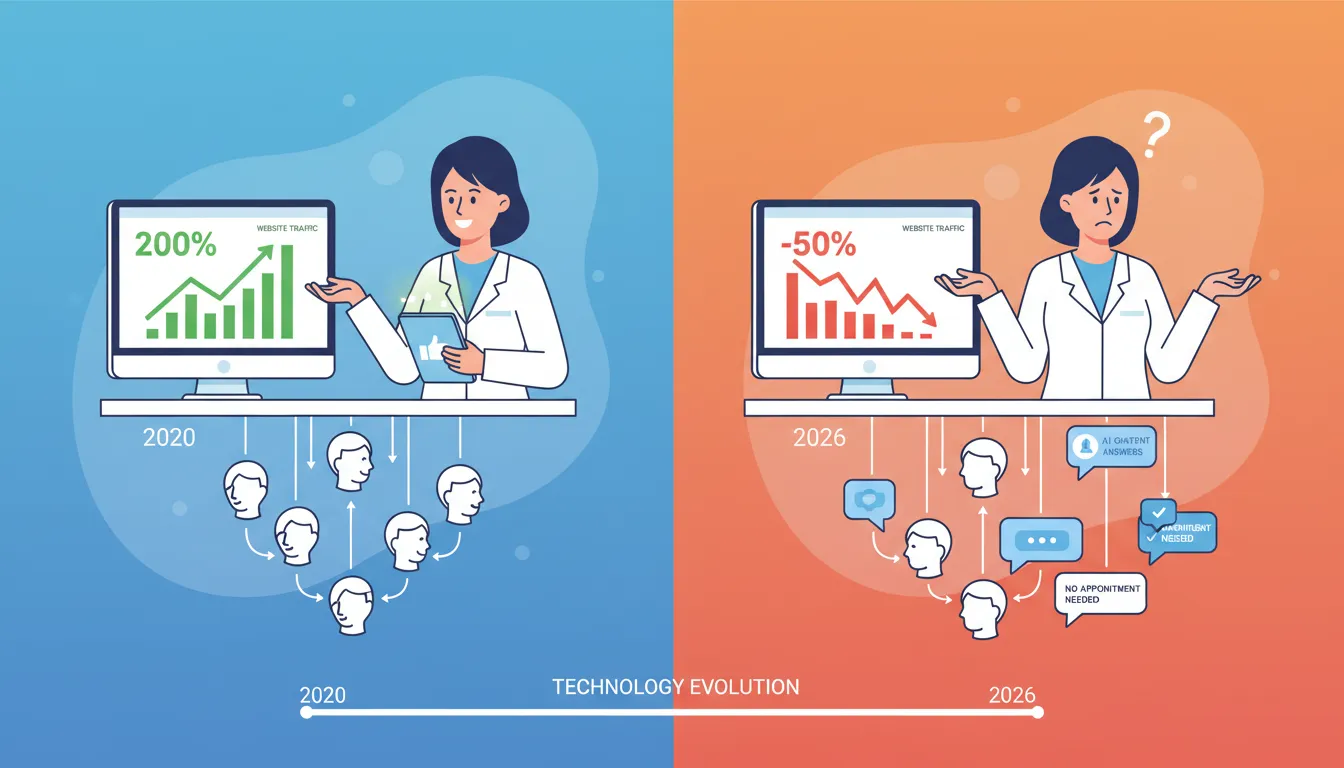
The old marketing playbook assumed success meant driving traffic to your website. More visitors = more patients, right?
That model is collapsing.
Semrush's 2025 data shows 58.5% of Google searches now end without any click to any website. For searches with AI Overviews, the zero-click rate jumps to 83%.
Let that sink in. 8 out of 10 people get their answer without ever leaving the search page.
What Zero-Click Means for Your Practice
When someone asks Google "what causes lower back pain," they're increasingly getting AI-generated answers that pull from multiple sources. If your content gets cited, you've influenced their understanding—but they might never hit your website.
Your content could inform thousands of AI responses without generating a single session in your analytics.
Here's where it gets weird:
- Traffic doesn't equal influence - You might be educating patients who never visit your site
- Rankings don't guarantee visibility - #1 organic ranking can sit below a massive AI Overview
- Attribution breaks - Patients who learn about you through AI might type your name directly later, appearing as "direct traffic"
Seer Interactive research shows organic CTR dropped 61% for queries with AI Overviews. Paid CTR crashed 68%.
The Flip Side: Citations Beat Traffic
Here's the good news.
Brands cited in AI Overviews earn 35% more organic clicks and 91% more paid clicks than uncited competitors.
Being cited is the new ranking.
When AI mentions your practice while answering a patient's question, that's an implicit endorsement. It carries more weight than a traditional search result. Patients trust AI recommendations the same way they'd trust a friend's suggestion.
The practices winning in 2026 aren't chasing traffic—they're chasing citations.
New Metrics You Should Track
Traditional chiropractic marketing tracked website visits, form submissions, phone calls. AI discovery requires different metrics:
| Organic Traffic | AI Citation Frequency | Search your practice in ChatGPT, Perplexity weekly |
| Keyword Rankings | AI Overview Inclusion | Monitor which queries trigger AI mentions |
| Click-Through Rate | Share of Voice | How often you appear vs competitors in AI answers |
| Bounce Rate | Engagement Quality | Focus on patients who convert, not total visits |
Understanding why traditional SEO is dying for chiropractic practices helps contextualize why these new metrics matter more than vanity traffic numbers.
Building Your AEO Strategy: The Practical Roadmap
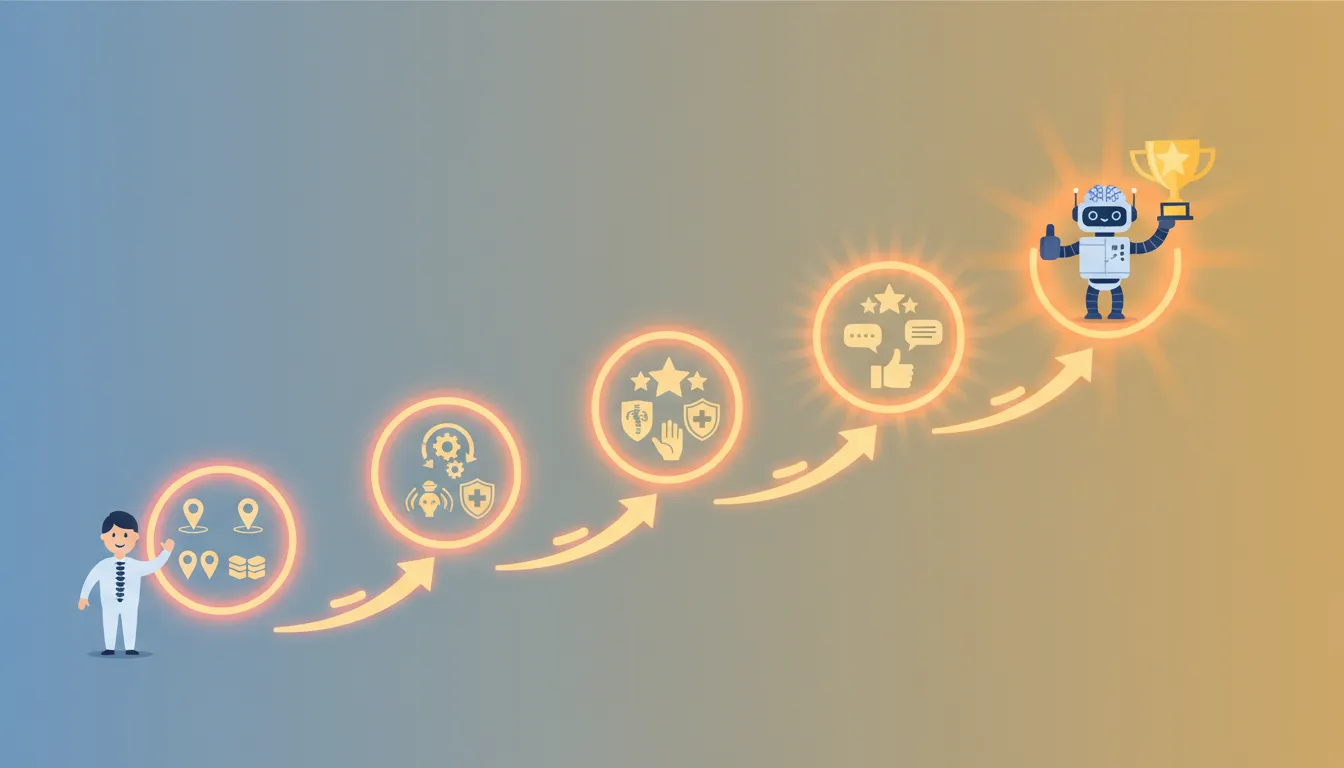
Alright, enough theory. Let's talk about what you actually do.
Answer Engine Optimization isn't a one-time project. It's an ongoing strategy that builds Consensus Trust over time. But you need to start somewhere.
Phase 1: Fix Your Foundation (Weeks 1-4)
Start by fixing the Entity Strength issues that prevent AI from trusting you in the first place:
- Audit every listing - Document your exact NAP format. Check it against every platform.
- Claim missing profiles - Especially Foursquare if you haven't already. (ChatGPT's main source, remember?)
- Add schema markup - MedicalBusiness, LocalBusiness, FAQPage at minimum.
- Fix conflicts - Correct outdated addresses, phone numbers, business names everywhere they appear.
Nothing else matters until AI can verify you exist and trust your information.
Phase 2: Establish Your Wedges (Weeks 5-8)
With your foundation solid, establish your Clinical Wedges:
- Pick 2-3 specializations - Based on what you're actually good at and where you get results
- Create dedicated content - 2,500+ word pages for each specialization covering conditions, treatments, outcomes
- Update all platforms - Make sure your wedges appear in Google Business Profile, Foursquare, healthcare directories
- Train your review strategy - Help patients understand you want them to mention specific conditions and treatments
This gives AI a reason to recommend you for specific queries instead of skipping you as another generic chiropractor.
Phase 3: Build Authority (Weeks 9-16)
Now focus on the Consensus Trust that earns actual recommendations:
- Content depth - Comprehensive resources AI can cite as authoritative answers
- Review velocity - Systems for generating fresh, clinically specific reviews consistently
- Third-party mentions - Get cited in local media, healthcare publications, professional directories
- FAQ optimization - Build content around actual patient questions from "People Also Ask"
This is the long game. Consensus Trust doesn't happen overnight, but it compounds over time.
Phase 4: Monitor and Optimize (Ongoing)
Track your AI visibility and adjust:
- Test regularly - Ask ChatGPT, Perplexity, and Google AI about chiropractors in your area weekly
- Watch competitors - Track who gets recommended and figure out why
- Update content - Refresh pillar content quarterly with new data and patient outcomes
- Manage reviews - Respond to every review, keep encouraging feedback
This isn't "set it and forget it." But once your foundation is solid, maintenance becomes pretty straightforward.
What's Coming: The Future of AI Patient Discovery
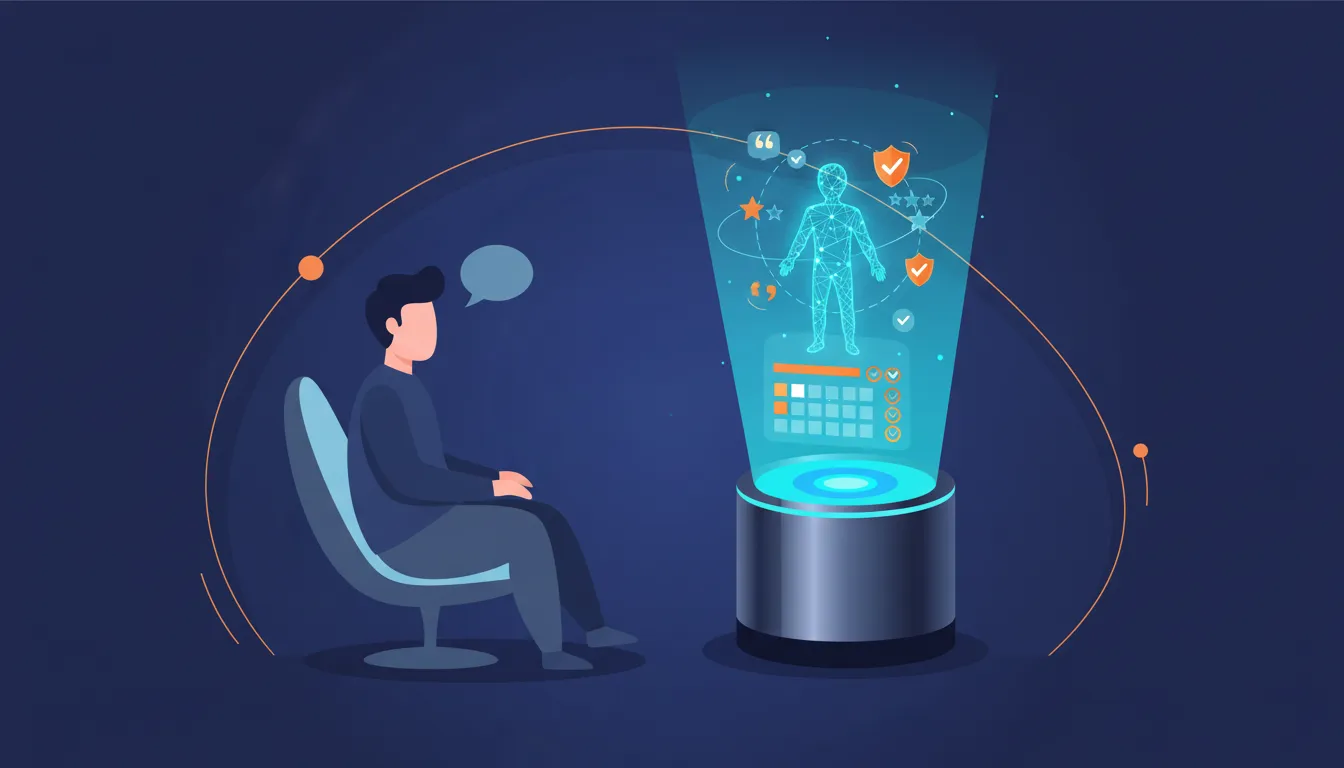
AI-driven discovery is evolving faster than most practices realize. The chiropractors building chiropractic entity authority now will dominate as these trends accelerate.
Voice Search Is Coming for Local Healthcare
Voice commerce is projected to hit nearly $80 billion by 2026. When patients ask Alexa, Siri, or Google Assistant for a chiropractor, the AI gives one answer. Not ten.
Voice queries are longer and more specific than typed searches. "Find me a chiropractor who treats sciatica and takes Blue Cross" vs. typing "chiropractor near me."
Your Clinical Wedge strategy becomes even more critical. Practices optimized for conversational queries capture this traffic. Those optimized only for short keywords won't even be considered.
Direct Booking Through AI
AI assistants are moving toward completing transactions, not just making recommendations. When someone asks ChatGPT for a chiropractor, booking an appointment through the interface is the obvious next step.
Practices with clear booking systems, properly configured structured data, and scheduling platform integrations will capture these conversions. The patient might never visit your website at all—they'll go straight from AI recommendation to booked appointment.
Agentic AI (The Wild Card)
Here's where it gets interesting.
Agentic AI systems don't just answer questions—they take actions. Imagine AI that researches chiropractors, compares reviews, checks insurance, finds appointments, and books visits autonomously.
Sounds futuristic? Major platforms are building toward this right now.
Practices with complete, verified, consistent data across all platforms will be discoverable. Practices with fragmented online presences will be invisible to these autonomous agents entirely.
Frequently Asked Questions
How does ChatGPT choose which local chiropractor to recommend?
ChatGPT evaluates three main things: Entity Strength (does your data match everywhere?), Clinical Wedges (what specific conditions do you treat?), and Consensus Trust (what does the internet collectively say about you?).
The AI pulls data primarily from Foursquare, supplemented by Bing's index and structured data. Locations recommended by ChatGPT average 4.3-star ratings—but star counts matter less than what reviews actually say about specific treatments and outcomes.
What is Entity Strength and how does it impact back pain queries?
Entity Strength measures whether your practice information matches across the internet. Same name, same address, same phone number—everywhere.
When your NAP data matches perfectly across 50+ platforms, AI develops confidence. When there are inconsistencies—even minor ones like "Suite 100" vs "Ste 100"—AI gets confused and skips you entirely for back pain queries.
Do reviews on Yelp and Healthgrades matter for AI recommendations?
Yes, but probably not how you think.
SOCi research shows ChatGPT-recommended locations average 4.3-star ratings. That's table stakes. What actually moves the needle is review content—AI looks for mentions of specific conditions, treatments, and outcomes.
"Dr. Smith's spinal decompression resolved my L4-L5 herniation" is way more valuable than "great chiropractor, highly recommend."
What is a Clinical Wedge in Answer Engine Optimization?
A Clinical Wedge is a specific specialization that differentiates you from generic competitors. Instead of "we treat back pain" (which describes every chiropractor), you position around something specific: spinal decompression for disc herniation, pediatric care, sports injury rehab, neuropathy treatment.
When patients ask AI for help with specific conditions, practices with established Clinical Wedges get recommended. Generic practices get skipped.
Why is ChatGPT's recommendation rate for local businesses so low?
ChatGPT recommends just 1.2% of locations vs Google's 35.9% local 3-Pack appearance rate. That's nearly 30 times more selective.
The difference? AI has to actually pick recommendations, not just list options. When you have to choose, you get really picky. No fallback list, no second page. If you're not in that 1.2%, you're invisible.
How do I implement MedicalBusiness schema for my chiropractic practice?
Add structured data to your website that explicitly tells AI what you offer: practice type, specialties, insurance accepted, services, practitioner credentials.
Essential schema types include MedicalBusiness (practice identification), LocalBusiness (location data), FAQPage (common questions), and MedicalCondition (conditions you treat). This helps AI understand your practice without guessing.
Can AI assistants book appointments directly for patients?
They're getting there. ChatGPT already shows hours and contact info—appointment booking is the logical next step.
Practices with clear booking systems, online scheduling, and proper structured data are positioning themselves for this. The goal is converting AI recommendations into booked appointments without patients ever visiting your website.
How long does it take for AEO changes to show up in AI search?
Usually 2-8 weeks, depending on the platform and change type. ChatGPT relies on Foursquare data that updates periodically. Google's AI Overviews respond faster to website changes.
Consistency matters more than speed. Make sure changes propagate everywhere before expecting visibility improvements. Rushing without proper synchronization can actually hurt your Entity Strength.
Conclusion
Look, the shift from traditional search to AI discovery isn't coming. It's here.
ChatGPT recommends 1.2% of businesses. Zero-click searches are approaching 70% of all queries. The practices that thrive will be those that build Consensus Trust with AI platforms.
That means Entity Strength (consistent data everywhere), Clinical Wedges (specific specializations AI can match to queries), and Authority Signals (reviews, citations, and content that demonstrate real expertise).
The chiropractors winning in 2026 won't be those with the best traditional SEO rankings. They'll be the ones AI recommends when patients ask for help with their back pain.
Look, I get it—this AI stuff feels overwhelming when you're already running a practice, treating patients, and managing everything else.
If you're thinking "this makes sense, but I don't have time to audit 50 platforms and implement schema markup," you're not alone. Most docs we work with felt the same way before they realized their online presence was quietly costing them 15-20 qualified patient leads every single month.
That's why we created our Free Website Conversion Analysis. It's not a sales pitch—it's a genuine walkthrough of the 3 biggest problems killing your bookings, delivered personally via Loom video within 24 hours.
We'll show you exactly:
- Why AI platforms might be skipping your practice entirely
- What's broken in your Entity Strength and Clinical Wedge positioning
- Missing structured data that prevents AI from citing your expertise
- Where you stand vs local competitors in AI visibility
- Simple fixes that improve your AI discoverability this month
You'll also get an instant case study while you wait, showing real examples of how other chiropractors fixed these exact problems.
Get your free analysis here — no credit card, no obligation, just actionable insights you can use whether you work with us or not.
Because every day your AI visibility sits broken is another day patients are finding your competitors instead.

Gerek Allen
Co-Owner iTech Valet
Entrepreneur, patriot, CrossFit junkie, IPA enthusiast, loves to travel to tropical destinations, and knows way too many movie quotes.


About iTech Valet
iTech Valet specializes in web design and content marketing for online entrepreneurs who want to share their expertise.
Services Include:
- Web Design
- Graphic Design
- Sales Copy
- Funnel Building
- Authority Sites
- Membership Sites
- Course Creation
- Email Systems
- Content Marketing
- Competitive Analysis
- Tech Integrations
- Strategic Planning
NEED MORE CLIENTS?
Free conversion-focused analysis uncovers the 3 biggest problems killing your bookings — we'll walk you through your results personally

621 Enterprises, Inc. | Copyright 2022 | All rights reserved