Why Your Snapshot Doesn't Look Like an Old Ranking Report
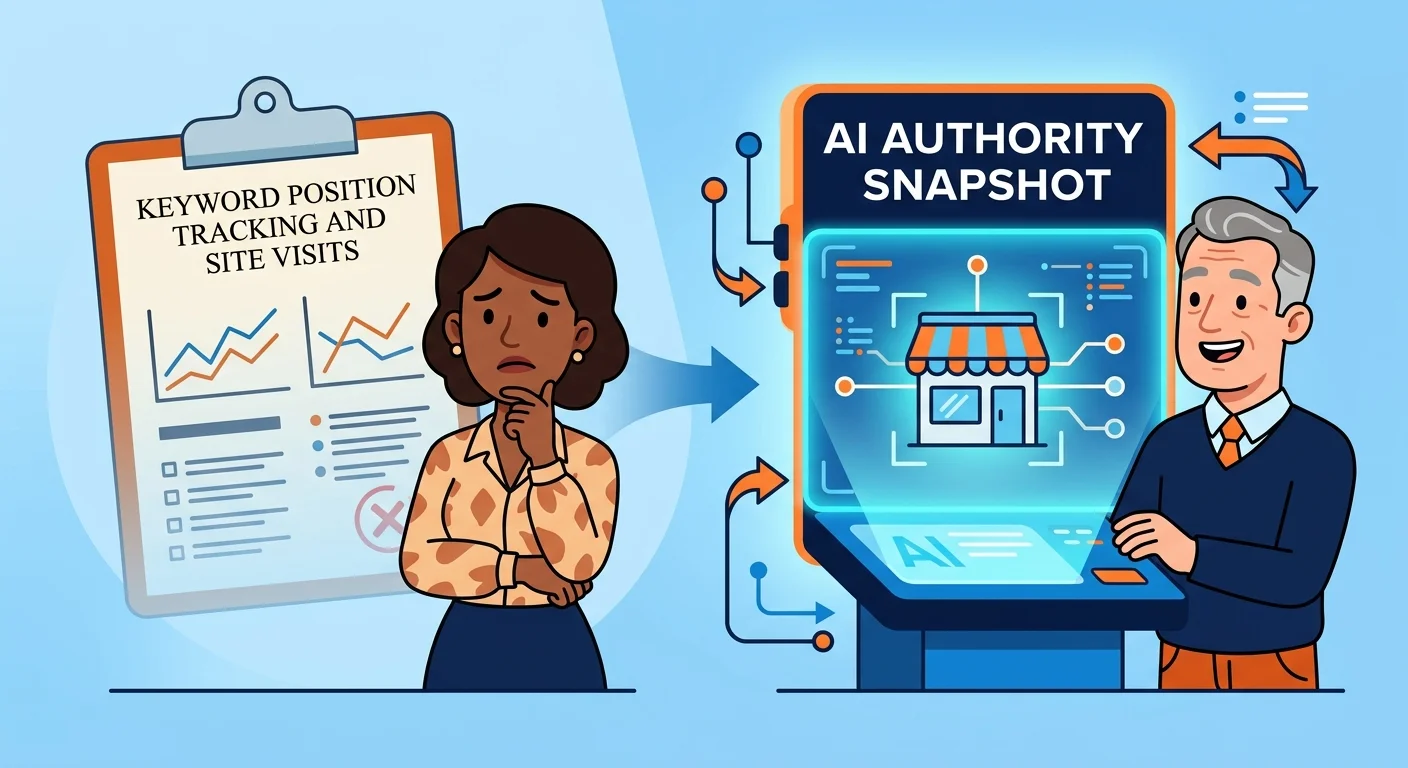
Here's the confusion most people hit first. They open the snapshot expecting keyword position tracking, a placement number, maybe a color-coded grade stacked against competitors. None of that is on there.
And that absence isn't a mistake. Traditional search optimization reports are going obsolete because they measure visibility inside a search landscape that doesn't work the way it used to. A ranking report answers a question generative engines aren't even asking.
So what took its place? A structural read of your entity data, built to expose the exact breakdown covered in why phone calls stop coming in even when a competitor appears to dominate AI search. That comparison matters, because from the outside the symptom looks identical: fewer calls, same site visits.
But the cause sits somewhere a ranking report was never built to look.
An X-ray finds the fracture a mirror can't show. That's the honest description of what this snapshot does. It looks past the surface metrics traditional search optimization trained everyone to expect, and it checks whether the entity itself holds together across the data an AI model actually trusts.
What AI Invisibility Actually Measures
AI Invisibility is the exact condition an AI Authority Snapshot is built to catch. It's what happens when entity-level data conflicts stop generative AI engines from seeing your business as a source worth trusting.
The snapshot answers one question, and only one. Does the entity carrying this business's name, location, and credentials look reliable enough to cite?
And that question lives completely outside traditional search optimization. You can look strong there and still fail here, because the two systems check different things.
So a low score isn't a content problem. It's a trust problem, measured right at the level of the entity itself.
The Entity-Level Data Break Behind a Low Score
Here's the thing about entity-level data breaks: they almost never announce themselves. A phone number listed differently across directories, a credential in one source but missing from another, a former address still hanging around somewhere an AI model crawls.
On its own, each one looks trivial. Stack them together and they tell a generative engine this entity can't be fully verified, which is a whole different failure from just ranking lower in a list.
And that distinction ties straight to the pattern examined in the fifteen-minute diagnostic built to catch exactly this kind of entity conflict. The check exists because these breaks hide in plain sight until someone runs the right diagnostic at them.
Why Most Businesses Never See the Break Coming
Most businesses never see this coming, and the reason is structural. Nobody's watching entity data the way they watch keyword position tracking.
But no alarms doesn't mean no damage. It means the damage piles up quietly, in data sources most owners have never even opened, let alone audited.
An X-ray finds the fracture before the patient feels it. That's exactly why the snapshot matters: it surfaces the break before the business ever notices the silence where the calls used to be.
How Zero-Click Behavior Changed the Scorecard
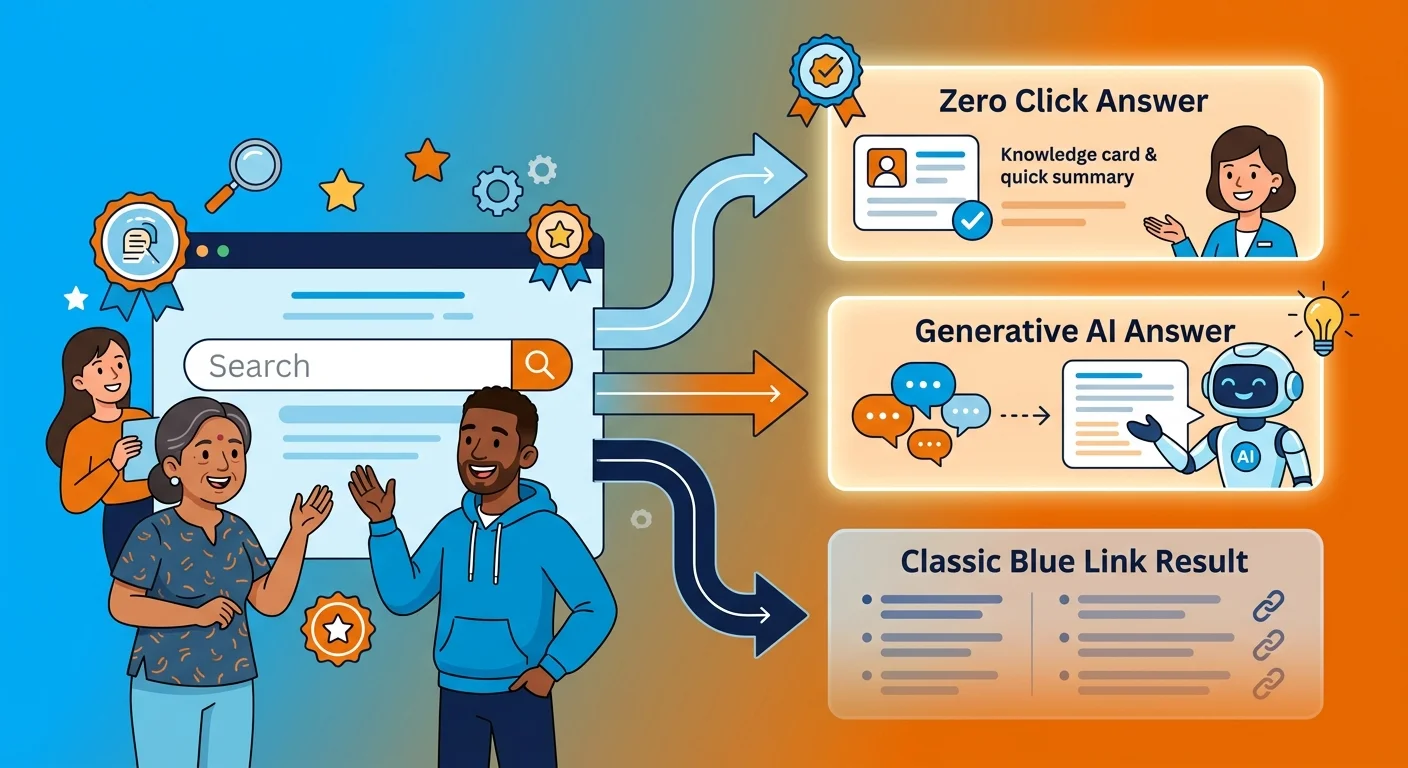
Here's why site visits quit being the number that matters. Across 10.2 billion Google searches between October 2024 and December 2025, nearly half, 46.96%, ended without a single click, per published research data.
That's not a minor dip. That's a search landscape handing over the answer before a user ever lands on a website.
And this didn't happen overnight. The share of first-clicks on Google organic results slid from about 70% in 2016 down to 44% in 2025, a decline logged in published research data.
So an old report counting site visits is counting a shrinking pool. An AI Authority Snapshot checks something else entirely: whether the entity gets named inside the answer, a distinction dug into further in a side-by-side look at how standard optimization checks compare against multi-engine visibility diagnostics.
| Metric | 2016 Behavior | 2025 Behavior |
|---|---|---|
| First-Click Share on Organic Results | About 70% of first clicks landed on an organic result in 2016 | Fell to 44% of first clicks by 2025 |
| Zero-Click Search Share | Clicking through to a website was still the dominant outcome of a search | Nearly half, 46.96%, of Google searches ended without a single click |
Reading the Entity Trust Section of Your Snapshot
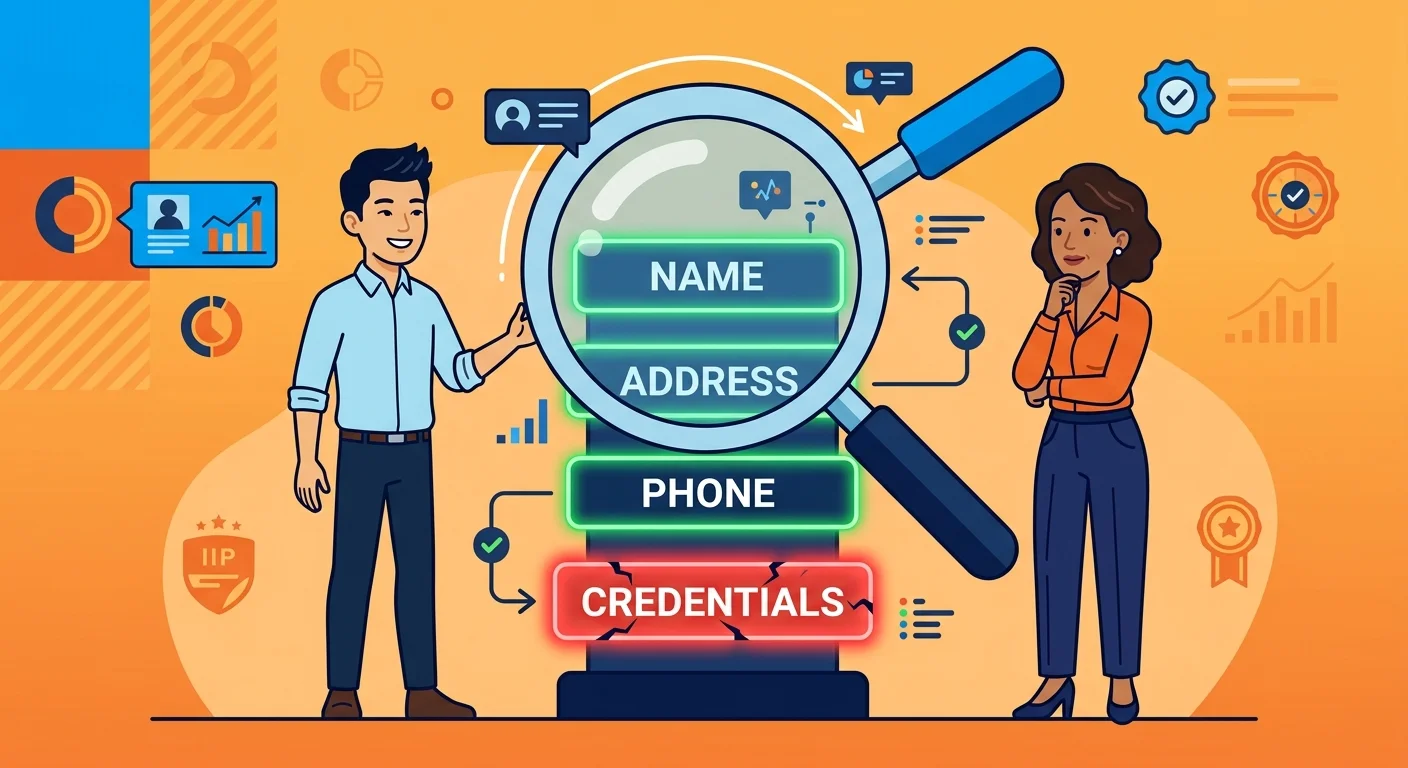
Entity Trust is where this shift gets concrete. It's the section that checks whether your core facts agree across every source an AI model consults.
Name, address, phone number, credentials. Each one either matches everywhere, or it doesn't.
A mismatch here isn't cosmetic. It's the exact break that keeps a business out of a generated answer, no matter how many site visits its own domain still pulls.
Why Schema Errors Undermine Entity Trust
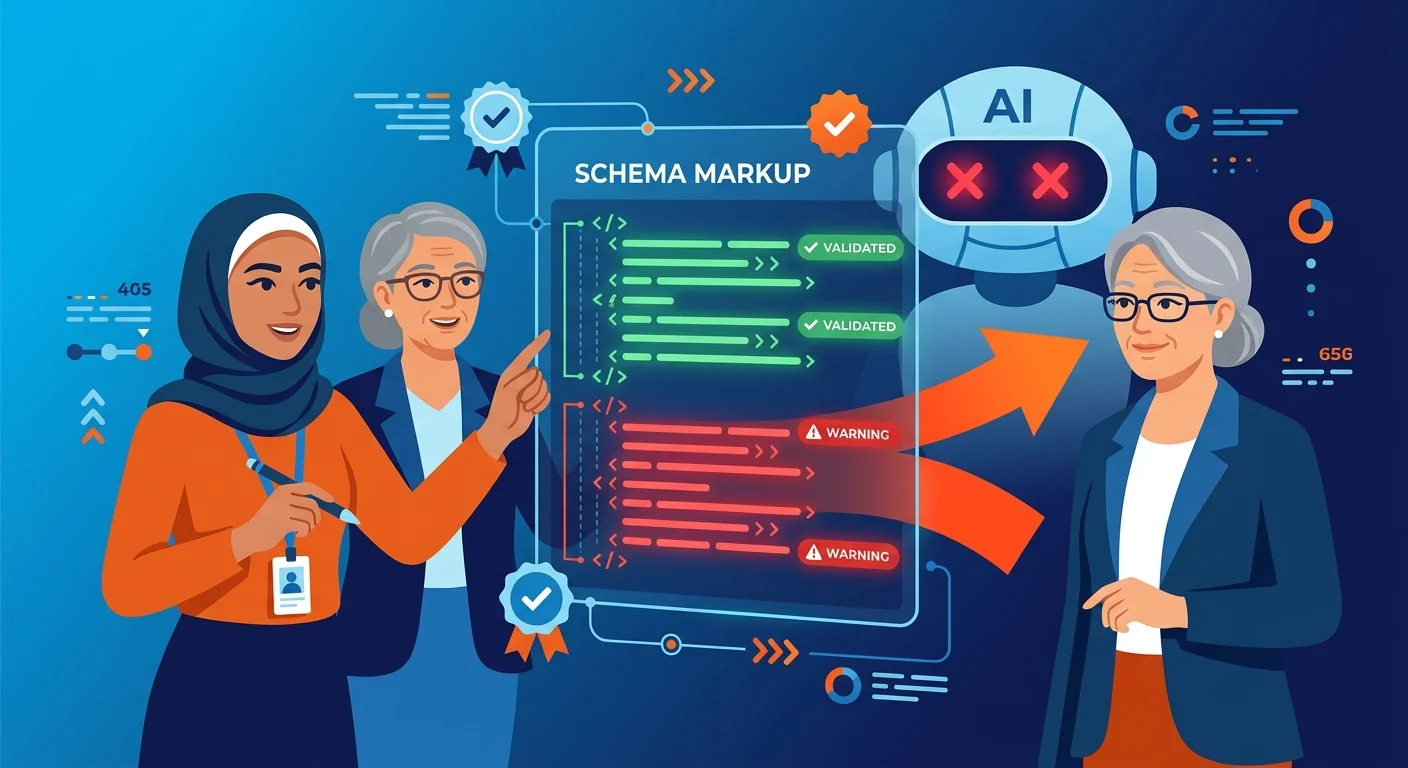
Here's the biggest hidden cause of entity trust failures, and almost nobody audits it: broken structured data. Schema markup is the code layer that tells an AI model what a business actually is, not just what it claims about itself.
So when that code is wrong, the machine reading it draws the wrong conclusion. It doesn't know the code is broken. It just knows the entity doesn't check out.
And that failure is way more common than most owners assume. Research examining Schema.org markups generated by GPT-3.5 and GPT-4 found that 40-50% of that markup came back invalid, non-factual, or non-compliant with the Schema.org ontology, per published research data.
So nearly half of the machine-generated structured data feeding entity systems fails the moment it arrives. Lean on automated tools to build your schema, and you're statistically flipping a coin on whether that code even describes you correctly.
A broken schema block doesn't just sit there harmlessly. It actively misreports the entity to every system reading it, which is exactly the structural failure dug into in why a clinic can look invisible to ChatGPT even while its site visits hold steady.
| Ranking Signal | Classic Search Role | Generative Answer Role |
|---|---|---|
| Structured Data Accuracy | Rarely audited, treated as a background technical detail | Directly determines whether an AI model can verify what a business actually is |
| Keyword Position Tracking | The primary scoreboard for classic optimization efforts | Largely irrelevant, since generative answers are assembled from verified entities, not placement lists |
| Topical Relevance | Helps a page compete for a spot among ten blue links | Works only if the underlying entity is already trusted enough to be considered for citation |
| Name Address Phone Consistency | Treated as a directory hygiene task, often deprioritized | Functions as a core trust signal that either confirms or discredits the entity across every source consulted |
The Problem With Chasing Classic Ranking Signals
Chasing classic ranking signals treats this whole problem as invisible, because those signals were never built to catch it. A placement number doesn't audit whether a business's structured data agrees with its own directory listings.
And that's the core failure of dragging traditional search optimization thinking onto an entity problem. It polishes the parts of a page a human reads and ignores the parts a machine parses.
Here's the thing about a broken schema block: it doesn't cost placement. It costs eligibility.
So a business can hold a strong position in classic search results while its structured data quietly tells AI systems something false or incomplete. The two failures are invisible to each other. Only one of them shows up in a ranking report.
How Generative Engines Choose What to Cite
The other shows up only in an entity-level diagnostic, which is the whole reason the snapshot exists. Generative engines aren't scanning a page and guessing. They're retrieving candidate sources and deciding which ones earned the citation.
Mixed-effects models built to study that behavior show topical relevance and list position are the biggest drivers of being cited first, a finding reported through the arXiv preprint server. Relevance and position decide it, not keyword density.
So a business with broken schema can be dead-on relevant and still lose the citation. The machine can't confirm what it can't trust, and a corrupted entity record reads as unconfirmed no matter how sharp the content underneath it happens to be.
Who This Diagnostic Approach Isn't Built For

This one isn't for a business chasing a placement number. If the whole goal is climbing the classic ten blue links and nothing else, an entity-level diagnostic will feel like the wrong tool entirely.
So let's say it plainly. A business still building its first web presence, with no directory footprint and no schema to audit, has nothing yet for this diagnostic to look at.
An Entity Trust check needs an entity that already exists somewhere across the data AI models consult. Without that footprint, the snapshot has no conflicts to find, because there's no record yet to conflict with.
Where Your Snapshot Still Overlaps With Classic Rankings
But none of this means classic ranking signals suddenly stopped mattering. Generative engines still lean hard on the same organic results traditional search optimization has tracked for years.
An analysis of 432,000 keywords found AI Overviews cite at least one source from the top 20 organic results in 97% of instances, a pattern documented in seoClarity's research. That overlap is real, and it means a business with strong organic performance still holds an edge generative engines respect.
Here's the line worth drawing. If a business has no organic footprint at all, no directory presence, and no structured data to speak of, an entity-level repair has nothing to prioritize yet. This diagnostic is built for businesses AI models can already see, just not trust.
Turning Your Snapshot Into a Repair Sequence
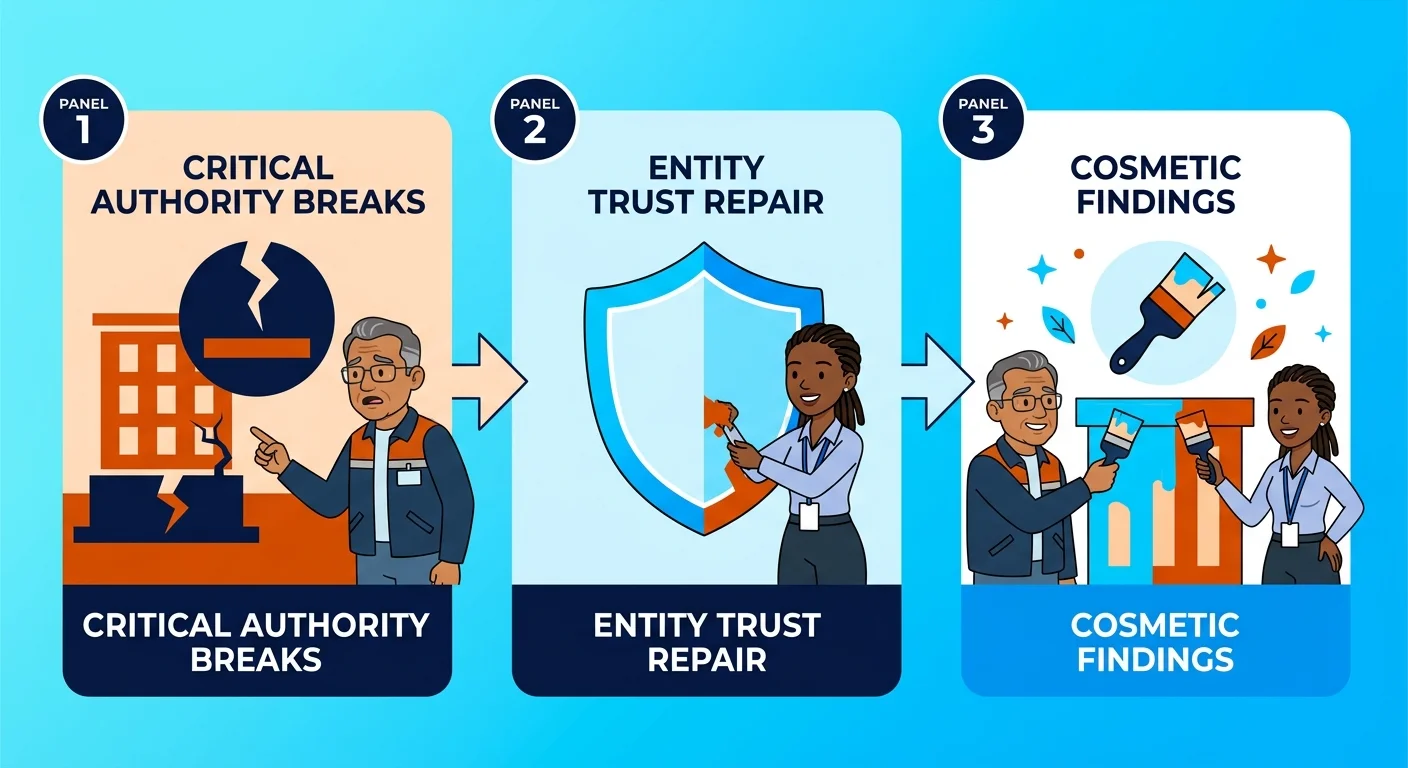
An X-ray without a treatment plan is just a picture of a fracture. The snapshot only earns its keep once you order the findings into a sequence.
Interpreting your snapshot isn't about chasing rankings. It's about repairing the data infrastructure AI leans on to answer at all.
So not every finding on that page deserves the same reaction. Some breaks decide whether the entity gets recognized at all. Others are just noise.
| Repair Tier | Example Finding | Sequence Priority |
|---|---|---|
| Repair Tier 1 — Critical Authority Breaks | A mismatched business name, address, or phone number across the sources an AI model consults before citation | Address first, before any other finding on the page |
| Repair Tier 1 — Critical Authority Breaks | Broken or non-compliant structured data that misreports what the entity actually is | Address first, alongside other Entity Trust conflicts |
| Repair Tier 2 — Cosmetic Findings | An outdated business description or a formatting inconsistency with no bearing on citation eligibility | Address only after every Repair Tier 1 finding is resolved |
| Repair Tier 2 — Cosmetic Findings | Minor inconsistencies in secondary listings that do not conflict with the entity's core facts | Lowest priority, deferred until Citation Eligibility work begins |
Prioritizing Critical Versus Cosmetic Findings
Repair Tier 1 and Repair Tier 2 exist to make that line impossible to miss. Repair Tier 1, the Critical Authority Breaks, covers the entity-level conflicts that kill citation eligibility outright.
Repair Tier 2, the Cosmetic Findings, covers everything else. A slightly stale description. A formatting quirk no system actually weighs.
Here's the mistake most owners make first. They fix the cosmetic item because it's easy, and they leave the critical break sitting there untouched.
That ordering feels productive. It isn't. A polished description does nothing for an entity that still can't be verified across the sources an AI model checks before it cites a soul.
Sequencing Repairs Across Data Sources
So sequencing starts with Entity Trust, not with whatever finding closes fastest. Fix the conflicts that make the entity itself unreliable before you touch anything downstream.
That means a mismatched phone number or an inconsistent business name gets resolved before you rewrite a single description. The entity has to hold together first.
Once the Entity Trust findings clear, the sequence moves to Citation Eligibility. Here the question shifts from whether the entity is trusted to whether it's actually getting surfaced.
But that second step only works once the first one is solid. Fix citation-level issues on top of an unresolved entity conflict, and you've just repaired the wrong layer first.
Frequently Asked Questions
Here's what actually comes up once a business reads its own snapshot. The sequence answers most of it, but a handful of objections deserve a straight answer.
So here they are, one at a time.
What is the difference between an entity mismatch and just having incorrect information online?
Incorrect information is one wrong fact, like an old phone number sitting on a single page. An entity mismatch is that fact disagreeing with itself across the sources an AI model cross-checks. That's the thing that actually breaks trust.
If my practice information is correct in my Google Business Profile, isn't that enough for AI visibility?
No. A Google Business Profile is one source among many an AI model consults. Entity Trust checks whether that same information agrees everywhere else feeding a generative answer, not just in one spot.
How long does it typically take to repair a critical authority infrastructure issue found in a snapshot?
There's no fixed timeline. It hangs on how many sources carry the conflicting fact and how deep the schema error runs. What matters is sequencing Repair Tier 1 first, since that's what unlocks everything else.
Can a low AI Authority score be the reason for a sudden drop in appointment bookings?
It can be, especially when the drop hits with no visible change in classic ranking signals. That pattern usually points to an entity break. The business stays trusted enough to rank, just not trusted enough to be cited.
My snapshot shows a citation inconsistency. What does that mean and how do I fix it?
It means an AI model found conflicting versions of the same fact and cited neither. To fix it, trace the fact back to every source carrying it. Then correct the version that disagrees.
Is the AI Authority Snapshot a one-time fix or an ongoing process?
It's ongoing. Directories change, schema can break again after a site update, and entity data drifts over time even when nobody touches it on purpose.
The Bottom Line
So here's the bottom line. An AI Authority Snapshot was never a report card on placement, because placement was never the thing that broke.
The break lives in the entity itself — the mismatched facts, the corrupted schema, the conflicts that leave Entity Trust unresolved before Citation Eligibility ever gets a shot. Fix those breaks in order, starting with Repair Tier 1, and you've run the only sequence that actually restores what an X-ray was built to find.
An X-ray doesn't treat itself. Once the fracture has a name, the next move is a diagnosis a business acts on instead of just reads — and that's exactly what an AI Visibility Check is built to hand a business ready to fix what the snapshot found.